

What do you think?

The Poetry of Zen
A Zen poem is nothing other than an expression of the enlightened mind, a handful of simple words that disappear beneath the moment of insight to which it bears witness. Poetry has been an essential aid to Zen Buddhist practice from the dawn of Zen—and Zen has also had a profound influence on the secular poetry of the countries in which it has flourished. Here, two of America’s most renowned poets and translators provide an overview of Zen poetry from China and Japan in all its rich variety, from the earliest days to the twentieth century. Included are works by Lao Tzu, Han Shan, Li Po, Dogen Kigen, Saigyo, Basho, Chiao Jan, Yuan Mei, Ryokan, and many others. Hamill and Seaton provide illuminating introductions to the Chinese and Japanese sections that set the poets and their work in historical and philosophical context. Short biographies of the poets are also included.
208 pages, Paperback
First published November 16, 2004
About the author
Sam Hamill
105 books34 followersPoet, editor, translator, and essayist, Sam Hamill is author of more than thirty books including two from BOA Editions, Gratitude (1998), and Dumb Luck(2002). He has been the recipient of numerous awards and fellowships, including ones from the National Endowment for the Arts and the Guggenheim Foundation, the Woodrow Wilson Foundation, the U.S.-Japan Friendship Commission, two Washington Governor’s Arts Awards, the Stanley Lindberg Lifetime Achievement Award for Editing, and the Washington Poets Association Lifetime Achievement Award for poetry. He co-founded Copper Canyon Press, and has worked extensively in prisons and with battered women and children.
Ratings & Reviews
Friends & Following
Create a free account to discover what your friends think of this book!
Community Reviews
Displaying 1 - 30 of 55 reviews

Read
December 10, 2018Hamill, "Poetry often says what cannot be said in prose. It was used for argument, description, ceremony, memorialization, and some were even koans...Poetry is most capable of capturing the essence of a moment's experience. 99% accuracy in poetry is not as good as silence. A good poem says more than the sum of its words, leading the reader into the practice of understanding the great unsaid that is contained, framed in a poem's rhythms, words and silences. In these ways, poetry opens the mind."
Asian influenced poetry is among my favorite poetry. At first glance, it may seem fragmentary, transient. But its purpose is as an assist to meditative practice. Hence, the koan. Somehow, when a poem touches back to nature it solidifies it in our consciousness. It grounds us to the oneness of all that is.
Asian influenced poetry is among my favorite poetry. At first glance, it may seem fragmentary, transient. But its purpose is as an assist to meditative practice. Hence, the koan. Somehow, when a poem touches back to nature it solidifies it in our consciousness. It grounds us to the oneness of all that is.

Read
May 14, 2022The birds have vanished from the sky. Now the last cloud drains away.
We sit together, the mountain and me, until only the mountain remains.
-Li Po
We sit together, the mountain and me, until only the mountain remains.
-Li Po

October 22, 2024
This is a delightful collection of translated poems from the Chinese and Japanese Buddhist traditions. The translations by the two editors, Sam Hamill and J.P. Seaton, can be a bit stiff at times, but that is in the nature of trying to convey originals using Chinese and Japanese originals into English. The Poetry of Zen covers almost 900 years of poetry, some of which will make me return to this book again in the future.

April 12, 2023
Quite pretty, but I keep thinking that some of the charms of Chinese and Japanese poetry are lost in translation; I feel as though I'm missing a lot of the nuance.

September 17, 2017
"Nothing in the cry of cicadas suggests they are about to die."

July 30, 2019
Great book. Swallowed what I could chew. Another continuous read.

April 7, 2017
A masterpiece!

October 16, 2024
''You stay gold, I'll stay gold.''
- Jacob Bannon, Converge
I'm generally not one for poetry. Rather, I'm not one for Western poetry, or what I would call the ''French school of poetry.'' You know the one. The longing. The angst. The sappy melodrama. The whining. It's only written by people who love sniffing their own farts, and it's only enjoyed by people who love sniffing other people's farts. It's like the worst written emo song you ever did hear, sung by the squeakiest voice you could imagine. It gives me second hand embarassment, and I like emo music.
However, I've always made a bit of an exception for East-Asian poetry, or at least the amount of it that I've read. It seems to have more substance, more to say, less fluff, and less tryhard bullshit. I can read it without rolling my eyes more often than Jehova's Witnesses will ask you to read their dumb fucking book. Maybe it's because it's often rooted in religions and beliefs that I find a bit more approachable, maybe it's because no one does a slice of life story like Japanese writers, or maybe it's because I hate French people. I don't know, but I don't need to know. All I know is that I seem to enjoy this kind of poetry a lot more than the quote unquote ''romantic'' style we often see here in the West. This book is even split up into two parts. The first part consists of Chinese poems, and the second part consists of Japanese poems. Neat.
I'm still not a sucker for poetry, and I probably never will be, but I'll take poetry dealing with zen, mindfulness, meditation, Taoism, Buddhism, dharma and so on over some white guy moaning about a woman who rejected him 30 years ago. Just go to therapy, dude.
Jacob Bannon can write some poetic lyrics, even if he sings something entirely different than the written words. But Converge is my favorite band, and 'Concubine' is their most iconic song, so give it a shot, and you'll make me very happy <3
- Jacob Bannon, Converge
I'm generally not one for poetry. Rather, I'm not one for Western poetry, or what I would call the ''French school of poetry.'' You know the one. The longing. The angst. The sappy melodrama. The whining. It's only written by people who love sniffing their own farts, and it's only enjoyed by people who love sniffing other people's farts. It's like the worst written emo song you ever did hear, sung by the squeakiest voice you could imagine. It gives me second hand embarassment, and I like emo music.
However, I've always made a bit of an exception for East-Asian poetry, or at least the amount of it that I've read. It seems to have more substance, more to say, less fluff, and less tryhard bullshit. I can read it without rolling my eyes more often than Jehova's Witnesses will ask you to read their dumb fucking book. Maybe it's because it's often rooted in religions and beliefs that I find a bit more approachable, maybe it's because no one does a slice of life story like Japanese writers, or maybe it's because I hate French people. I don't know, but I don't need to know. All I know is that I seem to enjoy this kind of poetry a lot more than the quote unquote ''romantic'' style we often see here in the West. This book is even split up into two parts. The first part consists of Chinese poems, and the second part consists of Japanese poems. Neat.
I'm still not a sucker for poetry, and I probably never will be, but I'll take poetry dealing with zen, mindfulness, meditation, Taoism, Buddhism, dharma and so on over some white guy moaning about a woman who rejected him 30 years ago. Just go to therapy, dude.
Jacob Bannon can write some poetic lyrics, even if he sings something entirely different than the written words. But Converge is my favorite band, and 'Concubine' is their most iconic song, so give it a shot, and you'll make me very happy <3

December 28, 2024
Excellent collection of both Chinese and Japanese poetry. I particularly enjoyed the early Chinese selections and the later Japanese selections.

June 17, 2026
At the ancient pond
a frog plunges into
the sound of water
a frog plunges into
the sound of water

July 2, 2008
I carried this little book in my backpack for years, occasionally pulling it out to read old Chinese and Japanese poems (in translation, of course). Basho, Tu Fu, and other masterful poets seem as fresh as they must have hundreds of years ago.

May 26, 2021
This is a nice collection of poems. The oldest in the collection is from the 4th Century BCE and many still have relevance here in the 21st Century. Serenity, humor, self-deprecation, truthful observations of humankind, some poems flee by and others catch your breath and others bring a nod as you reflect.
Readers will find something in this collection to share such as these:
I stand here and watch the people of this world:
all against one and one against all,
angry, arguing, plotting and scheming.
Then one day, suddenly, they die.
And each gets one plot of ground:
four feet wide, is feet long.
If you can scheme your way out of that plot,
I'll set the stone that immortalize you name.
--Han San (8th Century)
My poems are poems;
some people call them sermons.
Well, poems and sermons share one thing:
when you read them you've got to be careful.
Keep at it. Get into detail.
Don't just claim they're easy.
If you were to live your life like that,
a lot of funny things might happen.
--Shih Te (8th Century)
Without beginning,
utterly without end,
the mind is born
to struggles and distresses,
and dies--and that is emptiness.
--Ikkyu Sojun (1394-1481)
Lured by the branches
set out to grab them, fish thrash
helplessly about.
Likewise people are enticed
by the lures of ignorance.
--Kobayashi Issa (1763-1827)
And there is more a reader will want to share. While not all the poems will be relevant or meaningful to everyone who reads this collection, readers will find that the poems that resonant are near perfect in what was written and they would agree with Matsuo Basho (1644-1694) comment about one of the poems, "To add another would be like adding a sixth finger to a hand."
Thanks to the translators & editors of the collection for its readability.
Readers will find something in this collection to share such as these:
I stand here and watch the people of this world:
all against one and one against all,
angry, arguing, plotting and scheming.
Then one day, suddenly, they die.
And each gets one plot of ground:
four feet wide, is feet long.
If you can scheme your way out of that plot,
I'll set the stone that immortalize you name.
--Han San (8th Century)
My poems are poems;
some people call them sermons.
Well, poems and sermons share one thing:
when you read them you've got to be careful.
Keep at it. Get into detail.
Don't just claim they're easy.
If you were to live your life like that,
a lot of funny things might happen.
--Shih Te (8th Century)
Without beginning,
utterly without end,
the mind is born
to struggles and distresses,
and dies--and that is emptiness.
--Ikkyu Sojun (1394-1481)
Lured by the branches
set out to grab them, fish thrash
helplessly about.
Likewise people are enticed
by the lures of ignorance.
--Kobayashi Issa (1763-1827)
And there is more a reader will want to share. While not all the poems will be relevant or meaningful to everyone who reads this collection, readers will find that the poems that resonant are near perfect in what was written and they would agree with Matsuo Basho (1644-1694) comment about one of the poems, "To add another would be like adding a sixth finger to a hand."
Thanks to the translators & editors of the collection for its readability.

August 4, 2025
This poetry anthology consists of translations of Chinese and Japanese poetry that play in the Zen aesthetic. They are not Zen Buddhist poetry in the sense of being sutras or sutra-like expositions on Buddhist philosophy or theology (at least, not mostly.) And while there are many monks and Buddhist layperson poets represented, not all of those included were Buddhists. (In fact, there is even some verse from the Daodejing included, though Taoism is certainly philosophically related to Zen.)
About half the book is Chinese poetry, including pieces from Han Shan, Li Bai, Bai Juyi, Wang Wei, Du Fu, and many other greats of Chinese poetry. (Note: my spellings of author names varies from those used in the book because Hamill and Seaton use Wade-Giles spellings.) The other half of the book consists of works by Japanese poets, including: Saigyo, Dogen, Basho, Ryokan, Buson, Issa, and others. The Japanese part includes a few haibun (prose poems interspersed with haiku,) adaptations of Chinese-style poems, as well as the various Japanese fixed form styles (i.e.. haiku, tanka, etc.)
The two translators, Sam Hamill and J.P. Seaton, initial the poems that each translated (some were dually translated and others singularly.) I enjoyed the translations and felt they were fine reading in their own right. With haiku and tanka, the translators stuck fairly close to the traditional form (in as much as the aesthetic could be maintained doing so,) but with Chinese lyric styles they often took a freer approach to form.
If you're interested in poetry that conveys Zen sentiment, this book is worth investigating.
About half the book is Chinese poetry, including pieces from Han Shan, Li Bai, Bai Juyi, Wang Wei, Du Fu, and many other greats of Chinese poetry. (Note: my spellings of author names varies from those used in the book because Hamill and Seaton use Wade-Giles spellings.) The other half of the book consists of works by Japanese poets, including: Saigyo, Dogen, Basho, Ryokan, Buson, Issa, and others. The Japanese part includes a few haibun (prose poems interspersed with haiku,) adaptations of Chinese-style poems, as well as the various Japanese fixed form styles (i.e.. haiku, tanka, etc.)
The two translators, Sam Hamill and J.P. Seaton, initial the poems that each translated (some were dually translated and others singularly.) I enjoyed the translations and felt they were fine reading in their own right. With haiku and tanka, the translators stuck fairly close to the traditional form (in as much as the aesthetic could be maintained doing so,) but with Chinese lyric styles they often took a freer approach to form.
If you're interested in poetry that conveys Zen sentiment, this book is worth investigating.

May 19, 2024
An excellent collection of Zen poetry! The introduction explained that the two translators/editors selected poetry that gets at the essence of Zen, without having to understand specific teachings or theological debates. So most of the poetry is this melancholic reflection on nature and the impermanence of life. These two by Kobayashi Issa delighted me:
From the Great Buddha's
great nose, a swallow comes
gliding out
The field worker
wipes his snotty fingers
on the plum blossom
I was extremely impressed with the translations. I haven't read any Japanese poetry in the original, but I have read a lot of awkward translations, and these translations were not awkward. They felt natural. The poetry itself was perfect for reading in my 7-minute allotment for breakfast (with interruptions from children).
The high quality of this poetry has caused me to reflect on the possibilities for Mormon poetry. Is there any poetry that feels Mormony without discussing specific doctrines? What kind of aesthetic accompanies Mormon theology? Maybe poetry can't encapsulate it, since it focuses so much on sensation and experience--maybe rationality and reflection are just so much a part of the religion that it can't be shown in just poems. Although maybe some Zen practitioners feel the same way about Zen poetry!
From the Great Buddha's
great nose, a swallow comes
gliding out
The field worker
wipes his snotty fingers
on the plum blossom
I was extremely impressed with the translations. I haven't read any Japanese poetry in the original, but I have read a lot of awkward translations, and these translations were not awkward. They felt natural. The poetry itself was perfect for reading in my 7-minute allotment for breakfast (with interruptions from children).
The high quality of this poetry has caused me to reflect on the possibilities for Mormon poetry. Is there any poetry that feels Mormony without discussing specific doctrines? What kind of aesthetic accompanies Mormon theology? Maybe poetry can't encapsulate it, since it focuses so much on sensation and experience--maybe rationality and reflection are just so much a part of the religion that it can't be shown in just poems. Although maybe some Zen practitioners feel the same way about Zen poetry!

August 16, 2017
Perhaps this would be best read on a backpacking trip in the Bitterroot Mountains, or amidst clouds of mosquitoes, sitting on tangled old cedar roots, on the bank of the Manitou River, by the shore of Lake Superior. Chinese, Japanese, Wilderness Anywhere. Anywhere the cherry blossom falls.
So many mountains; so many clouds--and wandering wandering, to temples, away from temples. I liked especially the Japanese poems, again the cherry blossoms, and the autumn crows.
Worth the read even if only for the numerous haiku, deliciously surprising. Put the concept of "Zen" aside, and just be the poet as you are able. (Advice, I see now, for the reading of any poem.) I found that my experience in these pages mirrored the relative clarity of the mind. Muddy mind, mosquito-cloud-mind, muddy mosquito poems. Clear mind, mountain-mist-over-high-resevoir-lake mind, reflection of high rock water poems.
As a student of clarity, one might enjoy this book. The poems are short--the many many poems. Each is experience--as poems are--each attempts communication of directness. A fine resource for the resonance of comings and passings away.
So many mountains; so many clouds--and wandering wandering, to temples, away from temples. I liked especially the Japanese poems, again the cherry blossoms, and the autumn crows.
Worth the read even if only for the numerous haiku, deliciously surprising. Put the concept of "Zen" aside, and just be the poet as you are able. (Advice, I see now, for the reading of any poem.) I found that my experience in these pages mirrored the relative clarity of the mind. Muddy mind, mosquito-cloud-mind, muddy mosquito poems. Clear mind, mountain-mist-over-high-resevoir-lake mind, reflection of high rock water poems.
As a student of clarity, one might enjoy this book. The poems are short--the many many poems. Each is experience--as poems are--each attempts communication of directness. A fine resource for the resonance of comings and passings away.

October 26, 2020
This book gets five stars just for existing as an aesthetic object. Reading it cover-to-cover may be a necessary part of the process, but the best use is probably just keeping it close at hand and opening it at random whenever you have a few minutes, to get an insight like this one from Buson:
With no underrobes,
bare butt suddenly exposed-
a gust of spring wind
With no underrobes,
bare butt suddenly exposed-
a gust of spring wind
March 15, 2022
I guess I don't get it. There's nothing offensive about this collection of Zen poems, and maybe one has to be enlightened to understand the whole idea of the Zen poem, but they bring to mind the tale of the Emperor's New Clothes ! The Old Norse poems, e.g. as in "The Wanderer's Havamal", speak to me much more clearly.

August 21, 2022
A fun little pocket collection of Chinese and Japanese Zen poetry. Not comprehensive but enough to set the mind spinning. Some of the translations didn't include translators, and the introductions were also unclear in terms of authorship. Would have been nice to have a glossary for some of the terms used in the book.

April 20, 2026
A re-read from several years ago. A very broad-ranging survey of Chinese and Japanese Zen poetry. I've read several of them, but there are others that I'd never heard of and have since sought out on their own. A rewarding journey through the ages and through both cultures that can strengthen one's own practice.

January 21, 2020
Many thoughts struck me in this collection, and I have marked many pages to return to. As it neared the end, one haiku stayed with me:
In the midst of the world
we stroll along the roof of hell
gawking at flowers
-Issa, trans. By Sam Hamill
In the midst of the world
we stroll along the roof of hell
gawking at flowers
-Issa, trans. By Sam Hamill
October 13, 2020
The best way to understand many of the principles of zen. A collection of a handful of eastern teachers, each with unique insights on how to handle the mystery that unfolds before us.
"Only one who makes no attempt to possess it cannot lose it."
"Only one who makes no attempt to possess it cannot lose it."

March 6, 2021
Lovely poetry. I just find I have a hard time reading a full book of poetry, cover-to-finish.
I would definitely recommend this to anyone wanting to muse and contemplate over nature, Buddhism, enlightenment, and transience.
I would definitely recommend this to anyone wanting to muse and contemplate over nature, Buddhism, enlightenment, and transience.

June 29, 2021
Sam Hamill is a great translator. He has the necessary insight to translate from asian languages. I noticed that in his anthology of Bashō's works. In this book, I found Seaton excellent. Really enjoyed the translations.

February 9, 2022
Very great read! This is my first introduction into zen poems. As someone that would not claim to be a poet or read poetry regularly, I found myself in a quiet stillness while reading. I became aware of the other tangible and still moments in my own life, and incorporate that into my writing.
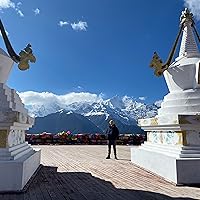
January 3, 2023
“The birds have vanished from the sky.
Now the last cloud drains away.
We sit together, the mountain and me,
Until only the mountain remains.”
+++++
“This cold winter night,
that old wooden-head Buddha
would make a nice fire”
Now the last cloud drains away.
We sit together, the mountain and me,
Until only the mountain remains.”
+++++
“This cold winter night,
that old wooden-head Buddha
would make a nice fire”

January 12, 2023
uni read, some boring, some slap, such as:
Song of the Dream Garden
PILLOWED on your thighs in a dream garden,
little flower with its perfumed stamen,
singing, sipping from the stream of you—
Sunset. Moonlight. Our song continues.
IKKYŪ SŌJUN
Song of the Dream Garden
PILLOWED on your thighs in a dream garden,
little flower with its perfumed stamen,
singing, sipping from the stream of you—
Sunset. Moonlight. Our song continues.
IKKYŪ SŌJUN
July 10, 2017
3.5 stars is more like it
August 7, 2017
I enjoyed the Chinese poems more than the Japanese, except for the incomparable Basho.
December 5, 2017
The best book of Buddhist poetry I've come across so far. I also like the compact size of the book -easy to take in a purse or small bag to read wherever and whenever.

June 22, 2018
An anthology of both Chinese and Japanese poems. Some with only the loosest connection to Zen.
Displaying 1 - 30 of 55 reviews