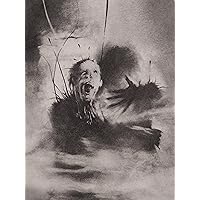
Rudyard Kipling, celebrated author of The Jungle Book, the Just So Stories and other entertaining fictions, was also a master of the short story in which he was able to combine the strange and unnerving in order to draw the reader into the world of his own dark imaginings. This collection presents the best of these strange tales in which ghosts, monsters and inexplicable happenings abound.
Joseph Rudyard Kipling was a journalist, short-story writer, poet, and novelist.
Kipling's works of fiction include The Jungle Book (1894), Kim (1901), and many short stories, including The Man Who Would Be King (1888). His poems include Mandalay (1890), Gunga Din (1890), The Gods of the Copybook Headings (1919), The White Man's Burden (1899), and If— (1910). He is regarded as a major innovator in the art of the short story; his children's books are classics of children's literature; and one critic described his work as exhibiting "a versatile and luminous narrative gift".
Kipling was one of the most popular writers in the United Kingdom, in both prose and verse, in the late 19th and early 20th centuries. Henry James said: "Kipling strikes me personally as the most complete man of genius (as distinct from fine intelligence) that I have ever known." In 1907, at the age of 41, he was awarded the Nobel Prize in Literature, making him the first English-language writer to receive the prize, and its youngest recipient to date. He was also sounded out for the British Poet Laureateship and on several occasions for a knighthood, both of which he declined.
Awarded the Nobel Prize in Literature in 1907 "in consideration of the power of observation, originality of imagination, virility of ideas and remarkable talent for narration which characterize the creations of this world-famous author."
Kipling kept writing until the early 1930s, but at a slower pace and with much less success than before. On the night of 12 January 1936, Kipling suffered a haemorrhage in his small intestine. He underwent surgery, but died less than a week later on 18 January 1936 at the age of 70 of a perforated duodenal ulcer. Kipling's death had in fact previously been incorrectly announced in a magazine, to which he wrote, "I've just read that I am dead. Don't forget to delete me from your list of subscribers."
It was once fashionable to disparage Kipling as a bumptious jingoist, but I believe that era has now passed. Still, it seems he does not often get full credit for the nuance and complexity of his narratives--particularly the short stories, where nuance and complexity are not easy to achieve. His stories about the British in India show rational, methodical people trying to dominate a world that barely conceals depths of spirituality and terror they cannot even begin to understand, and then ironically uses every crisis of faith, every revelation of horror to shed an uncomfortable light on Anglo-Indian power relations. His stories about the Great War are so filled with hatred for the German enemy that they might almost be taken for propaganda, and yet they contain hints of a frank, basic sexuality surprising in the work of a man of his time and place; more disturbing still is the suggestion that the violence and the lust are inextricably linked.
There are mediocre stories here, but 60% of the stories are very good, half of them are excellent, and eight of the twenty ("The Mark of the Beast," "The Return of Imray," "The Phantom Rickshaw," "The Strange Ride of Marrowbie Jukes," "The House Surgeon," "The Wish House, "They" and "The Tomb of His Ancestors") are masterpieces of terror fiction. "The Mark of the Beast," "The Wish House" and "They" transcend genre, and should be read by everyone who admires great short stories.
Note to self: stop reading ghost stories. Once you've lost your belief in the supernatural, they stop working.
This collection of Kipling supernatural shorts isn't bad as such things go, and of course there's always his magnificent writing to enjoy, quite independent of its content. The stories vary in quality from the Boys' Own Paper juvenilia of 'The Mark of the Beast' and the tedious nonsense of 'The Phantom Rickshaw' (whose theme strongly suggests that Kipling must once have had the experience of being pestered by a woman who wouldn't take no for an answer) to the perfectly-realised 'They', an affectionate tribute to the beauty of southeastern England, the claustrophobic stiff-upper-lip nightmare of 'At the End of the Passage' and the psychologically insightful, if implausible 'The Wish House'.
On the whole, this will disappoint Kipling fans, since it contains so much work of indifferent quality. If you want Kipling at his best when tackling supernatural themes, try Puck of Pook's Hill. One story, 'The Lost Legion' did give me a gooseflesh moment, simply from the vividness of description; but for all that, it's not really a very good story.
When I was ten or eleven, I remember reading a story called "The Mark of the Beast." I never forgot the experience, so you can imagine the shiver of recognition I got on discovering it to be the very first strange tale in here. And it isn't the strangest. For irony (and clouded tigers) my other favourite was "The Tomb of His Ancestor."
Éste fue mi libro para la temporada de sustos, una colección de veinte relatos sobrenaturales y extraños del autor de "El libro de la selva".
Algunos son muy buenos, otros más son bastante promedio en la literatura fantástica victoriana y eduardiana. La actitud ante lo extraño es menos de miedo que de curiosidad, más de "resolvamos este misterio". Después de todo estamos en la época del mesmerismo y las sesiones espiritistas, en que hasta los más cultos y educados de la sociedad inglesa consideraban los fenómenos paranormales como posibilidades científicas. En ese sentido, los relatos son interesantes testimonios de la mentalidad y actitudes contemporáneas.
Por supuesto, está el clásico relato de licantropía (o más bien, de hombres-leopardo) "The Mark of the Beast" y el moralista cuento de fantasmas "The Phantom Rickshaw". Ambos son básicos para su género y su tiempo. Me gustó también "A Matter of Fact" que incluye una bestia marina desconocida, en vez de los fantasmas y apariciones que dominan los otros relatos.
Llaman la atención los escritos a partir de la Primera Guerra Mundial "Swept and Garnished" y el extrañísimo "Mary Postgate". Dos de sus relatos, "The Wish House" y "A Madonna of the Trenches" están escritos como conversaciones en dialecto de las clases bajas inglesas, lo que los hace difíciles de leer.
Algunos de sus relatos se ubican en Inglaterra y otros en la India. Los primeros resultan ser los más interesantes y mejores, contrario a lo que esperaba. Sucede que la mentalidad de Kipling es completamente colonialista (él fue quien enunció el concepto de "the white man's burden"). Los nativos de la India son retratados como tontos, supersticiosos y mezquinos; el buen indio es aquel que es servil con su "sahib" (como llamaban a los amos ingleses) y que acepta la sumisión. El buen "sahib" trata a sus indios como niños.
Soy capaz obviar las ideologías chocantes en una obra de arte, pero los cuentos ni siquiera son tan buenos como para que valga la pena, además de que el hecho de que hubiera autores contemporáneos a Kipling que cuestionaban y denunciaban el colonialismo (Wells, Conrad, Orwell) hace más difícil ser indulgente con el autor. Aunque debo admitir que "The Tumb of his Ancestors" resulta de mucho interés para comprender la dinámica entre colonizadores y colonizados (desde el punto de vista de los primeros, claro está).
Entonces, ¿es un buen libro? Es un libro interesante, sobre todo para los que, como yo, sienten afición por la literatura fantástica de esos años. Pero tiene un cuento extraordinario, uno de los mejores cuentos fantásticos que he leído: se titula "They" y es una historia de fantasmas melancólica y muy conmovedora, que el autor escribió (me entero por el prólogo del libro) como parte del proceso para superar la muerte de su pequeña hija. Aunque fuera solo por ese cuento, el libro vale la pena.
This collection by Rudyard Kipling is an eclectic jamboree of weird and wonderful tales, many of them based in India. The content is uneven and some are mere fragments alongside some genuinely creepy classic. Favourites include the ghastly Return of Imray, the compelling Phantom Rickshow, The heartbreaking ghost story They which has appeared in many short story collections and The House Surgeon
I never would have guessed that the man who famously wrote ‘The Jungle Book’ could have had such a macabre imagination. ‘Strange Tales,’ however, is nothing if not a strong testimony that Rudyard Kipling was indeed a very creepy – and very talented – writer of weird fiction. And while he isn’t quite up there with Bierce - or Poe, I guess - there are some stories in this anthology that work exceedingly well at getting right under your skin. They are terrifically written, and with the exception of ‘The Wish House’, they are easy to understand as well. Unfortunately, the excellent first bunch of stories aren’t quite lived up to, as the second half contains tales of a mostly mediocre quality. But all in all, they each serve to entertain and engage the reader. There is not one story here that is boring. Bierce was a consistently satisfying storyteller, whilst Poe was more likely, now and then, to drag his story into tedium – except when he got it right, he got it better than right. That places Kipling a little below these two iconic writers. But something that he does have, which the other two – and most writers – lack, is the firsthand experience in Indian culture, which lends his stories of a more average value the welcome sense of color, fantasy, and intrigue. Many of his India-based stories – which were my favorites – are about the sheer contrast between modernized Britain and its futile attempts to manage a country so far influenced by religion and superstition. The story, ‘The Tomb of his Ancestors,’ cleverly has the British protagonist manipulate the tribes into following the government's rules by assuming the notion that he is his great-grandfather – whom they worshipped – reincarnated. Where as on the other end of the spectrum, ‘The Strange Ride of Morrowbie Jukes,’ tells a nightmarish tale about a British colonel falling into a desert pit, where those cast as “living dead” by their native tribes are thrown into without a chance of escaping. Thenceforth he finds himself stripped of his superiority, and has to resort to the same brutality that the other captives live by every day of their remaining lives. We also have various stories set in England, which personally I found to be a little less remarkable. Although I should point out that ‘They’, and the chillingly hostile ‘Mary Postgate’, were very good ones. And then there are about three stories set amongst The Great War, which affected Rudyard Kipling greatly – seen especially in the just-mentioned ‘Mary Postgate’, in which an innocent housemaid comes across a parachuted German in her backyard, injured by the fall, and merely leaves him to die like a poisoned rat as she tends to everything else. These ones were quite good, and you really get the sense that Kipling was very personally taken by the global tragedy, as they really convey a strong emotional impact. There were a few that I didn’t like at all. ‘The Dog Hervey’, for instance - because I just didn’t understand what was meant to be going on. It calls itself a dog love-story, but I just didn’t get it. And also ‘The Dream of Duncan Parrenness’, which perhaps I was just too dumb to interpret. There was nothing wrong with ‘By Word of Mouth’; it just felt a little too simple to have it right at the end of the book. It might have been more effective placing it near the beginning, so that it wouldn’t have to compete against those that were much better. Because as it is, the best stories do mostly occur in the first half, with the occasional return to form scattered about the rest of the book. The best one, by far, was ‘The Return of Imray’ (sequel to the also excellent ‘Mark Of The Beast’) in which we are not just treated to a spine-tingling account of snakes and rats living inside the thatch-roof of an Indian hut, but something even more horrifying as well. ‘Morrowbie Jukes’ was a terrific story, and I would have even considered it equal to ‘The Return of Imray’ – except the ending was unfortunately a big disappointment. Without giving too much away, let’s just say that the protagonist finds an idea for escaping the pit, which will, however, take him years and years of working out – and then it all just suddenly blows away when something much simpler comes into the mix. ‘Swept And Garnished’ was quite sad – especially as I had just recently seen the film, ‘War Horse’, in which that beautiful French girl gets killed by the Germans. ‘A Madonna of the Trenches’ was another provokingly creepy one. And ‘The Phantom Rickshaw’ told a good story that was quietly unsettling, as well as rather funny, as the selfish protagonist is haunted by the woman he once loved and then threw away. Overall, this was a very enjoyable book by yet another fantastic author from the times when horror-fiction was not the bland, formulaic genre that it is now. It’s only small, and so I would easily recommend anyone who likes the good old-fashioned ghost stories to give this one a go, if ever they come across it. It was always fun and engaging, and most of the time it was also very creepy.
Starts off interesting enough, but the stories gradually feel convoluted and non-sensical, as though he ran out of ideas and he's only putting down any old words and sentences to fill the gaps.
Just as the title says... very strange tales. Some even ghostly and eerie. They were quite interesting, but the style is not really my taste, so it took me a while to finish them.
I didn't find the stories in the collection strange. My favorite, however, would be "The Tomb of His Ancestors". I also liked "They" and for some reasons, I enjoyed "The Bisara of Pooree"