1863-1929 James Moores Ball (1862-1929) was an ophthalmologist in St. Louis, Missouri, who excelled as a medical historian and collector of rare and historic books about the history of anatomy. During his lifetime, he was best known as the author of a comprehensive, authoritative, and popular textbook titled Modern Ophthalmology
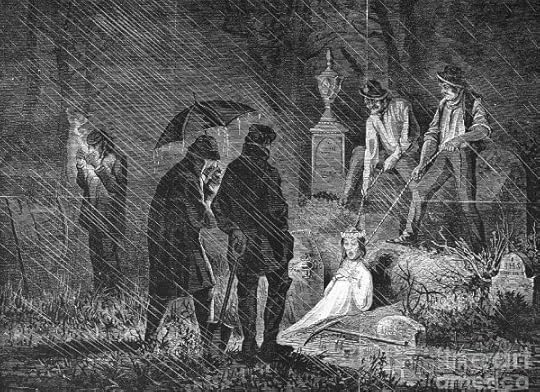
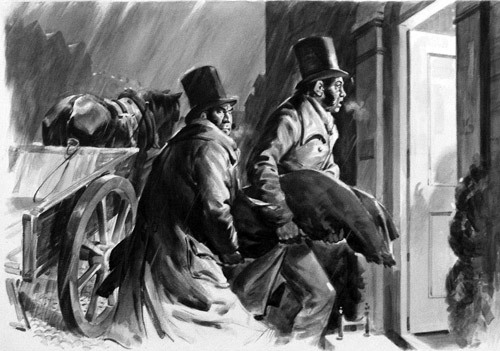
This was neat book about a subject I never knew existed. Body snatching and grave robbing as a means of earning a living. In the 1700s, the United Kingdom saw the rise of private medical schools advancing anatomy and dissecting human bodies. The increase of students always needed bodies and the demand was extremely high. Surgeons and medical professors began secretly paying individuals to gather subjects. This practice was profitable and was a way of life. These gangs of men were called Resurrectionist-Men and Sack-'em Up Men for digging up, bagging, and clandestinely transporting fresh bodies to paying medical schools. Graveyards were not only primary spots for collecting, but funeral homes and murder were used for getting fresh specimens. Rival gangs vied for competition and worked hard to keep an income: bribing church workers, grave-diggers, undertakers' assistants, gathering intelligence on impending funerals, locations of graves, soil consistency, coffin material, and anything else that would aid them in body snatching.
'The large number of these human ghouls were thieves of the lowest grade, belonging to the most abandoned and desparate class of the community.', pg. 75
'A gang of six of seven men disposed of 300 or 1,200 bodies during the winter season. The average price of an adult body was 4 pounds.', pg. 77
'The resurrection-men maintained their monopoly in a different manner. If any teacher of anatomy dared to refuse the extortionate demands of the ghouls, that teacher immediately became a marked man.', pg. 78
'Medical students sometimes dug up bodies and conveyed them on foot to the dissecting room. Their plan was to place a suit of old clothes on the dead, who, supported by a student on each side, was made to stagger along like a drunk man.", pg. 148
This book mostly talks about body snatching in the United Kingdom. The infamous Edinburgh Murders of 1828 by William Burke and William Hare (body snatchers who started killing to increase their profits), Anatomy Act of 1832 which replaced the Murder Act of 1751 (where only executed criminals were to be used for medical dissection), Resurrectionists in literature, and gives a great overview history of medical anatomy and dissection that advanced modern medicine.
I thought this a very informative and interesting book on a little known part of history. Martin Fido's Bodysnatchers: A History of The Resurrectionists was decent but not as thorough and detailed as this book. I would recommend it do anyone looking for something different. Thanks!
Enjoyed this. A factual account of the whole subject of grave robbing: taking us from the very first demonstrations of anatomy carried out by the greeks and romans right through to the 1920s. Written by a Doctor, it discusses why there was a need for bodies in the first place and then how that need was met; the laws and religious constraints that made it necessary to deal outside of strictly legal channels and the people who became famous (and infamous) via the trade.
Not the easiest read of the year but well worthwhile.