

What do you think?

Collected Poems
In 1944, the Australian literary world was rocked by a hoax which was to become a worldwide scandal. 'Ern Malley', deceased motor mechanic and poet, was in fact the invention of two Sydney poets, James McAuley and Harold Stewart, who were intent on proving that modern poetry was a sham. Max Harris published the poetry in the literary magazine 'Angry Penguins' but when the deception was revealed he was mercilessly lampooned, tried and convicted of publishing 'indecent advertisements'.
This definitive edition contains all of the poems, a new introduction by artist Albert Tucker, and historical background by Max Harris and Colin Wilson.
This definitive edition contains all of the poems, a new introduction by artist Albert Tucker, and historical background by Max Harris and Colin Wilson.
78 pages, Paperback
First published January 1, 1944
About the author
Ern Malley
3 books6 followers'Ern Malley' was a fictitious poet created by conservative Australian writers James McAuley and Harold Stewart. Both men believed that modernism had gone too far, and they wanted to create a scandal.
In late 1943, McAuley and Stewart wrote a volume of poems by 'Malley' taking lines from a variety of sources including Shakespeare, dictionaries of quotations, and instruction manuals, and giving them a stereotypical modernist edge. The 17 poems - collected as "The Darkening Ecliptic" - were sent to the left-wing poetry journal 'Angry Penguins' with letters purporting to be from Malley's sister, who had discovered the poems after her motor mechanic brother's tragic death aged 25.
Angry Penguins editor Max Harris published the poems, with Malley's biography, in the Autumn 1944 edition of the magazine. The poems were quickly ridiculed and investigative reporters uncovered the hoax. Harris was prosecuted for publishing obscene material (Australian censorship laws were strict) and lampooned in the press.
The hoax gained attention across Australia as writers and thinkers debated whether modernism had gone too far if it could be so easily mocked and 'exposed'. Regardless, the scandal has remained famous in Australian letters, and excerpts from the poems continue to appear in literary anthologies. Ironically the poems, although written as an intended parody, are now highly considered and McAuley's and Stewart's works remains largely unread.
In late 1943, McAuley and Stewart wrote a volume of poems by 'Malley' taking lines from a variety of sources including Shakespeare, dictionaries of quotations, and instruction manuals, and giving them a stereotypical modernist edge. The 17 poems - collected as "The Darkening Ecliptic" - were sent to the left-wing poetry journal 'Angry Penguins' with letters purporting to be from Malley's sister, who had discovered the poems after her motor mechanic brother's tragic death aged 25.
Angry Penguins editor Max Harris published the poems, with Malley's biography, in the Autumn 1944 edition of the magazine. The poems were quickly ridiculed and investigative reporters uncovered the hoax. Harris was prosecuted for publishing obscene material (Australian censorship laws were strict) and lampooned in the press.
The hoax gained attention across Australia as writers and thinkers debated whether modernism had gone too far if it could be so easily mocked and 'exposed'. Regardless, the scandal has remained famous in Australian letters, and excerpts from the poems continue to appear in literary anthologies. Ironically the poems, although written as an intended parody, are now highly considered and McAuley's and Stewart's works remains largely unread.
Ratings & Reviews
Friends & Following
Create a free account to discover what your friends think of this book!
Community Reviews
Displaying 1 - 5 of 5 reviews
![Profile Image for s.penkevich [hiatus-will return-miss you all].](https://i.gr-assets.com/images/S/compressed.photo.goodreads.com/users/1735525095i/6431467._UX200_CR0,11,200,200_.jpg)
February 6, 2022
Gather around, because if you haven’t heard the story of the Australian Modernist art group The Angry Penguins and how they were brought down by a hoax from rival poets, then do I have a story for you! One of my favorite art stories in fact. The Angry Penguins were a group of avant-garde writers and painters that originated in Adelaide when poet Max Harris started the Angry Penguins literary journal in 1940 at the age of 18. The journal was controversial and in 1944 it all came crashing down when the 4th edition of the journal published 17 poems purported to be written by a recently deceased Australian poet named Ern Malley.
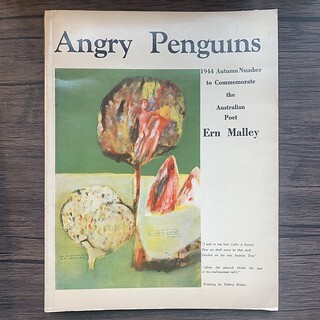
The Ern Malley edition of Angry Penguins. #111 of 1000
Who was Ern Malley really and how did his 17 poems cause such a stir? To understand that a little backstory on the movement is helpful. The Angry Penguins were a contentious group amidst the 1940 Australian arts scene, particularly for their mission to invigorate the Australian art scene they claimed to be stagnated with their own vigorous and revolutionary modernism and inspiration drawn from French surrealists. Adelaide University, where Max Harris attended (if you choose to picture him as Max Fisher from Rushmore for dramatic effect, by all means do so, because that’s my mental image) was a hotbed of young, ambitious artists and under the patronage of poet C.R. Jury, Max formed the Penguins along with Geoffrey Dutton, Donald Kerr and Paul Pfeiffer. And to great effect as the group became recognized as a modernist arts movement.
They caught the attention of John and Sunday Reed, a married couple involved in publishing and funding contemporary arts, who asked to collaborate with Max. They restored a 15-acre estate in Melbourne known as the Heide, which became the home base for the Penguins to work and publish (the location is now the Heide Museum of Modern Art). The group expanded, including artists such as Sidney Nolan (who’s expressionist art was inspired by his time in the military), Joy Hester (the only woman in the Penguins, with haunting portraits inspired by German Expressionism), and her husband, Albert Tucker (who’s time spent painting war wounds for the plastic surgery unit while a patient in Heidelberg Military Hospital during the war would influence his violent artwork). After Joy and Albert divorced, the Reed’s would adopt their son, Sweeney.
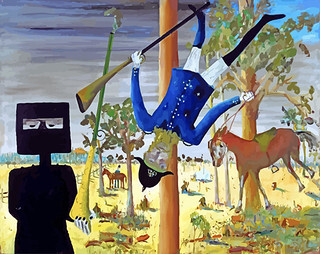
Sidney Nolan
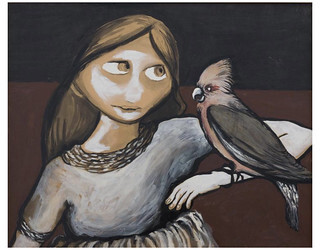
Joy Hester
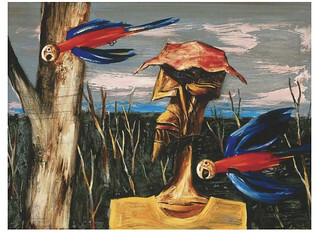
Albert Tucker
Not everyone loved the Penguins, and they had a rival publication, the Jindyworobaks—a nationalist and anti-modernist arts group with mostly white members who sought to promote Australian bush ballads and indigenous culture through their works. Their mission statement was to 'free Australian art from whatever alien influences trammel it,' so naturally the two groups feuded, and quite publicly so. The Angry Penguins were also a frequent target of criticism from the Communist Party, and a 1944 article in The Communist Review openly celebrated their demise and wrote that ‘the new “Angry Penguins” have proved that it has nothing to offer to Australian art, and that its effect will be to destroy, not raise Australian standards.’ Among other criticisms were that the Penguins were educated elites with no attention to the working class. The Penguins publishing writers such as Dylan Thomas, Gabriel García Márquez, or James Dickey also caused uproar amongst traditional Australian writers.
Finally, Ern Malley. In 1944, Max received a 17 page manuscript, said to be the entire body of work of Ern Malley. The manuscript and subsequent correspondence was thought to be from Malley’s sister, grieved her brother had died at the age of 25 from Grave’s Disease and had discovered he had been a poet without ever telling anyone. Harris was overjoyed with the poetry, excited to have discovered a rare specimen of authentic Australian poety and created a commemorative issue in Malley’s honor. The issue included the entire manuscript as well as a 5 page introduction/analysis and two poems written in memorial to Ern Malley, all penned by Max Harris (as well as a full issue of other poems and writings, including six of Max's poems, a lengthy section of American poetry, and new-at-the-time translation of Rainer Maria Rilke). Harris piles on accolades, claiming Malley ‘transcends Angry Penguin writers and contemporary English writers…his sane personal verse is the embodiment in our time.’ To read Max earnestly write that Ern Malley ‘is one of the most outstanding poets that we have produced’ will surely cause you to cringe on his behalf knowing what came next.
Because the catch is Ern Malley never lived. Poet and critic A.D. Hope was so opposed to Max and the modernists he conscripted two anti-modernist poets currently serving in the army, Harold Stewart and James McAuley to ‘get Maxy.’ In one day, they compiled these 17 poems as a joke in their barracks, taking phrases from a dictionary and an essay on mosquito breeding to paste together random sentences in a surrealist fashion believing it would demonstrate their belief that this style of art had no inherent value. They mailed them under the guise of a bereaved sister and the rest is history. Max hired a private detective who uncovered the truth but it was too late. Even his own alma mater’s student newspaper accused Max of writing the poems himself in order to pretend he found a great poet. The Sydney Sunday paper had a front-page story about the hoax and even the Catholic church for some reason thought they should make a statement criticizing at the time 22 year old Max.
His public reputation already in tatters, Max Harris was delivered another blow after Australian police found issue with some of Ern Malley’s lines of verse and charged Max with printing obscenity. He was found guilty and fined in exchange for not serving 6 weeks in jail. But that was the end of Angry Penguins as a publication and the group fractured. English writer C.P. Snow would later remark that the Penguins 'was probably the last flowering of a 'national' modernism that a completely internationalised world of the arts was likely to see.' Max would continue to publish his own work (including the Ern Malley Journal, to show he took everything in stride as well as becoming a well-regarded publisher and critic), own and operate the Mary Martin bookshop, push for the canonization of Mary MacKillip (the first Australian nun to be recognized by the church, for which he was gifted a holy relic for his support) and much later he was awarded the title of Father of Modernism in the Australian Arts by the Alumni Association of Adelaide University. Honestly, Max Harris seems like a chill dude and was simply enthusiastic about trying something different.
'I still believe in Ern Malley.'
-Max Harris
Through all this, Max Harris never wavered on his conviction that the poems, hoax or not, had literary value, saying ‘the myth is sometimes greater than its creator.’ In decades to come he would be affirmed by poets such as John Ashbery and Robert Hughes who would also claim the poetry, fraud or not, had accidentally stumbled upon real value, with Hughes adding ‘The energy of invention that McAuley and Stewart brought to their concoction of Ern Malley created an icon of literary value, and that is why he continues to haunt our culture.’ The Ern Malley poetry has been reprinted the world over and the story is certainly an entertaining, albeit tragic, one. As ‘Malley’ writes, ‘I have split the infinite. Beyond is anything.’ Ern Malley is still a legend, probably more so than his creators. McCauley would form a staunch anti-communist magazine and teach literature in Tasmania, while Stewart would move to Japan and become a Buddhist (in case this story didn't already sound like something from Roberto Bolaño).
'I had read in books that art is not easy
But no one warned that the mind repeats
In its ignorance the vision of others. I am still
the black swan of trespass on alien waters.'
The poems are worth checking out. Particularly if you enjoy surrealism or experimental work. At times you can feel they are taunting Max, at times they are actually quite lovely. At times ‘the pelvis / Explodes like a grenade’ and you think, yep, the police didn’t like that. For further reading, The Ern Malley Affair by Michael Heyward is some good fun with many more details.
The Ern Malley edition of Angry Penguins. #111 of 1000
Who was Ern Malley really and how did his 17 poems cause such a stir? To understand that a little backstory on the movement is helpful. The Angry Penguins were a contentious group amidst the 1940 Australian arts scene, particularly for their mission to invigorate the Australian art scene they claimed to be stagnated with their own vigorous and revolutionary modernism and inspiration drawn from French surrealists. Adelaide University, where Max Harris attended (if you choose to picture him as Max Fisher from Rushmore for dramatic effect, by all means do so, because that’s my mental image) was a hotbed of young, ambitious artists and under the patronage of poet C.R. Jury, Max formed the Penguins along with Geoffrey Dutton, Donald Kerr and Paul Pfeiffer. And to great effect as the group became recognized as a modernist arts movement.
They caught the attention of John and Sunday Reed, a married couple involved in publishing and funding contemporary arts, who asked to collaborate with Max. They restored a 15-acre estate in Melbourne known as the Heide, which became the home base for the Penguins to work and publish (the location is now the Heide Museum of Modern Art). The group expanded, including artists such as Sidney Nolan (who’s expressionist art was inspired by his time in the military), Joy Hester (the only woman in the Penguins, with haunting portraits inspired by German Expressionism), and her husband, Albert Tucker (who’s time spent painting war wounds for the plastic surgery unit while a patient in Heidelberg Military Hospital during the war would influence his violent artwork). After Joy and Albert divorced, the Reed’s would adopt their son, Sweeney.
Sidney Nolan
Joy Hester
Albert Tucker
Not everyone loved the Penguins, and they had a rival publication, the Jindyworobaks—a nationalist and anti-modernist arts group with mostly white members who sought to promote Australian bush ballads and indigenous culture through their works. Their mission statement was to 'free Australian art from whatever alien influences trammel it,' so naturally the two groups feuded, and quite publicly so. The Angry Penguins were also a frequent target of criticism from the Communist Party, and a 1944 article in The Communist Review openly celebrated their demise and wrote that ‘the new “Angry Penguins” have proved that it has nothing to offer to Australian art, and that its effect will be to destroy, not raise Australian standards.’ Among other criticisms were that the Penguins were educated elites with no attention to the working class. The Penguins publishing writers such as Dylan Thomas, Gabriel García Márquez, or James Dickey also caused uproar amongst traditional Australian writers.
Finally, Ern Malley. In 1944, Max received a 17 page manuscript, said to be the entire body of work of Ern Malley. The manuscript and subsequent correspondence was thought to be from Malley’s sister, grieved her brother had died at the age of 25 from Grave’s Disease and had discovered he had been a poet without ever telling anyone. Harris was overjoyed with the poetry, excited to have discovered a rare specimen of authentic Australian poety and created a commemorative issue in Malley’s honor. The issue included the entire manuscript as well as a 5 page introduction/analysis and two poems written in memorial to Ern Malley, all penned by Max Harris (as well as a full issue of other poems and writings, including six of Max's poems, a lengthy section of American poetry, and new-at-the-time translation of Rainer Maria Rilke). Harris piles on accolades, claiming Malley ‘transcends Angry Penguin writers and contemporary English writers…his sane personal verse is the embodiment in our time.’ To read Max earnestly write that Ern Malley ‘is one of the most outstanding poets that we have produced’ will surely cause you to cringe on his behalf knowing what came next.
Because the catch is Ern Malley never lived. Poet and critic A.D. Hope was so opposed to Max and the modernists he conscripted two anti-modernist poets currently serving in the army, Harold Stewart and James McAuley to ‘get Maxy.’ In one day, they compiled these 17 poems as a joke in their barracks, taking phrases from a dictionary and an essay on mosquito breeding to paste together random sentences in a surrealist fashion believing it would demonstrate their belief that this style of art had no inherent value. They mailed them under the guise of a bereaved sister and the rest is history. Max hired a private detective who uncovered the truth but it was too late. Even his own alma mater’s student newspaper accused Max of writing the poems himself in order to pretend he found a great poet. The Sydney Sunday paper had a front-page story about the hoax and even the Catholic church for some reason thought they should make a statement criticizing at the time 22 year old Max.
His public reputation already in tatters, Max Harris was delivered another blow after Australian police found issue with some of Ern Malley’s lines of verse and charged Max with printing obscenity. He was found guilty and fined in exchange for not serving 6 weeks in jail. But that was the end of Angry Penguins as a publication and the group fractured. English writer C.P. Snow would later remark that the Penguins 'was probably the last flowering of a 'national' modernism that a completely internationalised world of the arts was likely to see.' Max would continue to publish his own work (including the Ern Malley Journal, to show he took everything in stride as well as becoming a well-regarded publisher and critic), own and operate the Mary Martin bookshop, push for the canonization of Mary MacKillip (the first Australian nun to be recognized by the church, for which he was gifted a holy relic for his support) and much later he was awarded the title of Father of Modernism in the Australian Arts by the Alumni Association of Adelaide University. Honestly, Max Harris seems like a chill dude and was simply enthusiastic about trying something different.
'I still believe in Ern Malley.'
-Max Harris
Through all this, Max Harris never wavered on his conviction that the poems, hoax or not, had literary value, saying ‘the myth is sometimes greater than its creator.’ In decades to come he would be affirmed by poets such as John Ashbery and Robert Hughes who would also claim the poetry, fraud or not, had accidentally stumbled upon real value, with Hughes adding ‘The energy of invention that McAuley and Stewart brought to their concoction of Ern Malley created an icon of literary value, and that is why he continues to haunt our culture.’ The Ern Malley poetry has been reprinted the world over and the story is certainly an entertaining, albeit tragic, one. As ‘Malley’ writes, ‘I have split the infinite. Beyond is anything.’ Ern Malley is still a legend, probably more so than his creators. McCauley would form a staunch anti-communist magazine and teach literature in Tasmania, while Stewart would move to Japan and become a Buddhist (in case this story didn't already sound like something from Roberto Bolaño).
'I had read in books that art is not easy
But no one warned that the mind repeats
In its ignorance the vision of others. I am still
the black swan of trespass on alien waters.'
The poems are worth checking out. Particularly if you enjoy surrealism or experimental work. At times you can feel they are taunting Max, at times they are actually quite lovely. At times ‘the pelvis / Explodes like a grenade’ and you think, yep, the police didn’t like that. For further reading, The Ern Malley Affair by Michael Heyward is some good fun with many more details.

February 12, 2020
There were two great literary hoaxes in 20th century Australia. The second, surrounding award-winning novel The Hand That Signed the Paper, asked questions about who has the right to tell stories of the past, and the difference between fiction and non-fiction. The first, the 'Ern Malley' scandal, was about the very nature of art itself.
In 1944, the left-wing poetry journal Angry Penguins published a series of 17 poems by a complete unknown, the recently deceased 25-year-old Ern Malley, a motor mechanic who had left his poems in his sister's care upon his early death. The series, with the overarching title The Darkening Ecliptic, appealed greatly to the modernist sensibilities of editor Max Harris and his collaborators such as the painter Sidney Nolan (whose ironic portrait of Malley adorns this volume). Australian writers were in the midst of the great war raging in the Western world of traditional poetry and literature up against the radical, modernist styles that often discombobulated popular audiences.
Shortly after the Autumn 1944 edition of Angry Penguins was published, the media smelled a rat. Soon, it was revealed that Harris had been conned. Two conservative writers - James McAuley and Harold Stewart - had created the figure of 'Ern Malley'. The letters from his sister were counterfeit, and the poems were a concoction of quotations (everything from Shakespeare to instruction manuals) and half-nonsense; indeed, the writers claimed to have written all 17 poems in one day.
The publication was an embarrassment for left-wing authors, suggesting as it did that they had been fooled so easily - McAuley and Stewart saw this as proof that the entire artform was a con job, pretentious and uncontrolled. Harris soon found himself embroiled in a trial on charges of publishing obscenities, since the conservative culture of 1940s Australia routinely charged publishers for material that had sexual content.
Over the coming decades, the 'Ern Malley' poems have continued to be anthologised. This edition includes a reflection by Harris himself, which is especially valuable. Were the poems valueless? Or did their success proof a triumph of surrealism, perhaps even evidence that works can have meaning beyond what their creators intended? (McAuley and Stewart would still say: no.) The debate rages.
I will say two things. First, some of the Malley poems have a yearning, ethereal beauty, regardless of what his creators intended. Think of the final lines of the most famous of the poems, Durer: Innsbruck, 1495:
I had read in books that art is not easy
But no one warned the the mind repeats
In its ignorance the vision of others. I am still
The black swan of trespass on alien waters.
Second, though, I'm certainly not convinced that just because a pastiche was able to fool an editor, that an entire way of thinking can be proven false. No doubt the same could have been done with more classical poetry styles, such as those favoured by the hoaxers. Indeed, some would argue that much of more formal art is exactly that - styles that quickly become tired pastiches of themselves.
75 years on, I don't expect we will see many more poetry scandals making front-page news. So for this reason - and for the love of a good story! - I shall continue to enjoy the 'Ern Malley' poems, and the overarching context.
In 1944, the left-wing poetry journal Angry Penguins published a series of 17 poems by a complete unknown, the recently deceased 25-year-old Ern Malley, a motor mechanic who had left his poems in his sister's care upon his early death. The series, with the overarching title The Darkening Ecliptic, appealed greatly to the modernist sensibilities of editor Max Harris and his collaborators such as the painter Sidney Nolan (whose ironic portrait of Malley adorns this volume). Australian writers were in the midst of the great war raging in the Western world of traditional poetry and literature up against the radical, modernist styles that often discombobulated popular audiences.
Shortly after the Autumn 1944 edition of Angry Penguins was published, the media smelled a rat. Soon, it was revealed that Harris had been conned. Two conservative writers - James McAuley and Harold Stewart - had created the figure of 'Ern Malley'. The letters from his sister were counterfeit, and the poems were a concoction of quotations (everything from Shakespeare to instruction manuals) and half-nonsense; indeed, the writers claimed to have written all 17 poems in one day.
The publication was an embarrassment for left-wing authors, suggesting as it did that they had been fooled so easily - McAuley and Stewart saw this as proof that the entire artform was a con job, pretentious and uncontrolled. Harris soon found himself embroiled in a trial on charges of publishing obscenities, since the conservative culture of 1940s Australia routinely charged publishers for material that had sexual content.
Over the coming decades, the 'Ern Malley' poems have continued to be anthologised. This edition includes a reflection by Harris himself, which is especially valuable. Were the poems valueless? Or did their success proof a triumph of surrealism, perhaps even evidence that works can have meaning beyond what their creators intended? (McAuley and Stewart would still say: no.) The debate rages.
I will say two things. First, some of the Malley poems have a yearning, ethereal beauty, regardless of what his creators intended. Think of the final lines of the most famous of the poems, Durer: Innsbruck, 1495:
I had read in books that art is not easy
But no one warned the the mind repeats
In its ignorance the vision of others. I am still
The black swan of trespass on alien waters.
Second, though, I'm certainly not convinced that just because a pastiche was able to fool an editor, that an entire way of thinking can be proven false. No doubt the same could have been done with more classical poetry styles, such as those favoured by the hoaxers. Indeed, some would argue that much of more formal art is exactly that - styles that quickly become tired pastiches of themselves.
75 years on, I don't expect we will see many more poetry scandals making front-page news. So for this reason - and for the love of a good story! - I shall continue to enjoy the 'Ern Malley' poems, and the overarching context.
July 24, 2024
Read this after watching the roughest drafts video ; total nonsense, but longingly gesturing towards Shakespeare (?) “sweet william” seems to be gay for the bard. can totally see why Sydney Nolan was into it, it carves this Australian identity wherein it feels slightly alien from itself.
November 8, 2007
a well-planned hoax by two frustrated writers picking
lines at random from any and every source possible.
see the "Malley Affair" and Peter Carey's "My Life as a
Fake". some of the poems come off as pretty winning,
though, proof that parody and even outright
charlatanism can yield engaging results.
this is also a good read (as is the
back story) for anyone who knows that
9 out of 10 critics are industry-
and-academia-teat-suckling hacks
who can make bad calls and be duped
just like the rest of us.
lines at random from any and every source possible.
see the "Malley Affair" and Peter Carey's "My Life as a
Fake". some of the poems come off as pretty winning,
though, proof that parody and even outright
charlatanism can yield engaging results.
this is also a good read (as is the
back story) for anyone who knows that
9 out of 10 critics are industry-
and-academia-teat-suckling hacks
who can make bad calls and be duped
just like the rest of us.

August 27, 2016
Quite enjoyable modernist stuff here in spite of Stewart and McAuley's dubious intentions.
Displaying 1 - 5 of 5 reviews