Jump to ratings and reviews
Rate this book

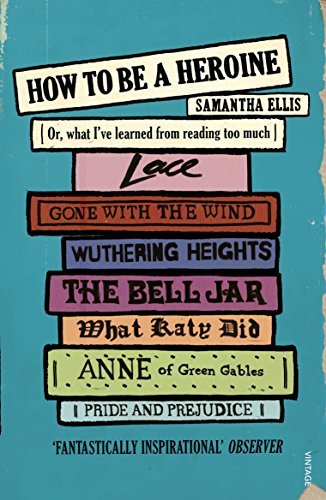
How to Be a Heroine: Or, what I've learned from reading too much by Ellis, Samantha (2015) Paperback

Rate this book
While debating literature’s greatest heroines with her best friend, thirtysomething playwright Samantha Ellis has a revelation—her whole life, she's been trying to be Cathy Earnshaw of Wuthering Heights when she should have been trying to be Jane Eyre.With this discovery, she embarks on a retrospective look at the literary ladies—the characters and the writers—whom she has loved since childhood. From early obsessions with the March sisters to her later idolization of Sylvia Plath, Ellis evaluates how her heroines stack up today. And, just as she excavates the stories of her favorite characters, Ellis also shares a frank, often humorous account of her own life growing up in a tight-knit Iraqi Jewish community in London. Here a life-long reader explores how heroines shape all our lives.

Paperback Bunko

First published January 2, 2014

131 people are currently reading
9470 people want to read

About the author

Samantha Ellis

8 books193 followers
Samantha Ellis is a playwright and journalist. The daughter of Iraqi Jewish refugees she grew up in London. Her non-fiction books are How to be a Heroine (2014) ; Take Courage: Anne Brontë and the Art of Life (2017) and Chopping Onions on my Heart; on losing and preserving culture (2025) which will be published in the US under the title Always Carry Salt. Her plays include Cling to me Like Ivy, Operation Magic Carpet and How to Date a Feminist. She has written prefaces for Anne Brontë's Agnes Grey (Vintage Classics) and Amber Reeves's A Lady and her Husband (Persephone Books).

Ratings & Reviews

What do you think?
Rate this book

Friends & Following

Create a free account to discover what your friends think of this book!

Community Reviews

5 stars
1,014 (22%)
4 stars
1,729 (38%)
3 stars
1,332 (29%)
2 stars
345 (7%)
1 star
99 (2%)
Displaying 1 - 30 of 855 reviews
Profile Image for karen.
4,012 reviews172k followers
January 20, 2021
this is a wonderful book. it's 3/4 memoir, 1/4 lit crit/feminist studies, all laid out in this charming, self-reflective way that's not shrill and agenda-laden; just one woman revisiting the heroines that shaped her life along her reading journey, and reevaluating them as an adult to see if her admiration of them has held up. in many cases, it has not.

i was a little apprehensive at first, reading the table of contents:

The Little Mermaid
Anne of Green Gables
Lizzy Bennet
Scarlett O'Hara
Franny Glass
Esther Greenwood
Lucy Honeychurch
The Dolls (from the Valley)
Cathy Earnshaw
Flora Poste
Scheherazade


of those characters listed, i have only read five. FIVE!!! it's like i have never read a book in my life! fortunately, she doesn't limit herself to what she displays in this TOC, and in the back matter, there are SEVEN PAGES of texts she mentions throughout the book, ranging from Twilight to Just Kids to Marjorie Morningstar to Tess of the d'Urbervilles. and fortunately, i HAD read a lot of the books in that list, but there were some that i had never even heard of, which i think can be explained by her growing up in london, where things like Lace and Consequences are more commonly read. oh, but be warned - she goes into great detail about these books, and doesn't shy away from talking about their endings or reveals. in fact, it was fortunate that i had just finished watching buffy the vampire slayer the week before i read this, because she also talks about that last episode. bullet = dodged.

ellis conceived of this project after a friendly argument she had with her friend emma over their irreconcilable differences in their personal allegiance to jane eyre vs. catherine earnshaw, which is one of those arguments that women who read have been having forever. because it's one or the other, always. me, i am a catherine girl. always have been, always will be. and so was ellis.

…Emma argued that Jane was independent, she knew who she was, she didn't suffer fools and she stuck to her principles. 'And Cathy's just silly.' Ignoring my howls of fury, she continued, 'She's always weeping and wailing, and she says she loves Heathcliff but she marries the rich boy because she's a snob, and that makes everyone unhappy.'

I defended Cathy. She's passionate and headstrong - and gorgeous. 'You can't like her just because she's pretty,' said Emma. All right, but Cathy doesn't mean to marry the wrong man. She's pushed into it. And she regrets it, doesn't she? Emma asked, 'Why not just not marry the wrong man?'


which is a fair point, and one the author takes to heart, spurring her on into this decision to reread all the books she'd read during her formative years - the books that had inspired her, shaped her, made her into the woman she became. and her conclusion was:

My whole life, I'd been trying to be Cathy, when I should have been trying to be Jane.

which is, again, a fair point. but i stay true to my catherine-love. for me, i have never read books as anything other than entertainment or as an appreciation for an author's craft. i have loved characters, but i have never tried to apply the stories to my own life. i certainly didn't want to BE catherine - she was a short-tempered bitch (AHEM!)- but her story has more of that good novelistic meat; more pumping blood and passion than jane eyre. she's horrible, yeah, but every last character in that book is horrible (in the old testament parts, not the second generation). i loved her fire, and i responded to her wildness, because it was relatable. i never felt particularly repressed growing up, so Jane Eyre was less appealing to me, and somehow more farfetched and gothic, with all that bertha and gypsy stuff. (although bertha is still the best thing about that book by far. pumping blood and meat and all.)

but unlike meeeee, ellis does change her affiliation a little, and comes to appreciate jane as a character more than she had on her first reading:

I wondered why I'd written Jane off. She is independent, and brave, and clever, and she really does stay true to herself. And while Cathy ends up a wandering ghost, Jane ends up happily married. The brilliant sunshine was very Jane weather, I thought; pleasant, clear and rational. It would have rained for Cathy, there would have been thunder and lightning. And (said a small, but firm Jane voice) we would have shivered and eaten soggy sandwiches hunched under the hoods of our waterproofs.

this is also a good place to mention how much i love the author's voice in all of this. i really want this woman to be my friend - i love the way she talks about books, and i love how passionate she is about her favorite characters. even though i have never felt as emotionally attached to characters in books as she clearly does, it's just delightful to read lit crit by someone who is. it's so personal, and passages like this:

But there were perils to loving Mr. Darcy. I wish I could tell my twelve-year-old self that not all arrogant men are secretly lovely; some are just arrogant. I had a crush on the coolest boy at Hebrew school. He smouldered (as far as a twelve-year-old could)

and this:

As a teenager I thought the best love was unrequited, so I preferred Scarlett/Ashley to Scarlett/Rhett. The dream of love was fine, but I wasn't so ready for the real thing.

There was a time when, unable to see what a tool Ashley is, I thought impossible love was the best kind. But I hope I'm braver about love now, and I'm tempted to make a rule that any heroine who spends a whole novel in love with someone who can't or won't love her back is not truly a heroine. Because unrequited love is delusional, thankless, and boring.


just made me smile, even though i am still an unrequited love enthusiast.

and this anecdote makes me think we coulda been besties coming up in our youth:

I was still a good Iraqi Jewish girl. In that hectic first week, very late one night, a boy passed out and hit his head. There was blood everywhere. The medical students took charge. Lectures hadn't started yet, so they knew as much about medicine as I did, but I didn't have the nous to do what they did, administering water and painkillers, making up a bed for him on someone else's floor, putting him in the recovery position so he wouldn't choke. I was shocked. I'd never been drunk before. It was only because of Plath that I even recognized 'that strong, silted-up force that makes one move through air like swimming.' Everyone else was so confident and capable. I was frozen in his doorway, the room full of blood and vomit like a crime scene. Then all at once I knew what to do. I got the bucket of cleaning products my mother had packed - enough bleach and antibacterial spray to deep-clean a hospital - and set to work. I cleaned the blood off the walls. I stripped the bed and scrubbed the headboard. I mopped the floor, and cleaned the mop, and washed out the bucket. I boil-washed the sheets. Dawn found me sitting in the hot, empty laundry, waiting for the dryer to finish its cycle. I was so totally my mother's daughter. When in doubt, clean.

because while i was not a good iraqi jewish girl in college, i was definitely always the practical one, squandering my maternal impulses on my besotted friends and i LOVED order and cleanliness and doing all sorts of stoned cooking and tidying for my less ambitiously stoned pals. so, again - relatable.

the Jane Eyre/Wuthering Heights face-off continues throughout the book, and she makes many excellent points:

But is the love in Wuthering Heights really that great? It obliterates the people who experience it. Cathy says it best: 'I am Heathcliff.'

And their love is impossible. Even if miscommunication, heinousness and bad luck hadn't kept them apart, the idea of Heathcliff and Cathy getting married and settling down in some cozy cottage, growing old together, does not compute. This is not one of those romance novels where a kind, daring heroine sees the kernel of good in an edgy, dark-hearted hero and redeems him… Cathy is as moody and savage as Heathcliff, and she couldn't save him if she tried. She doesn't want to. She doesn't want to be kind and sweet and good: she dreams that she goes to heaven and hates it so much that she cries until the angels throw her down to the moors where she belongs. Cathy and Heathcliff's love is too raw and rarefied to exist in the real world, and they know it; they can only be together as restless ghosts… their love is just not realistic. It is the kind of love, in fact, that could only be written by someone who had never been in love.


and

It's hard to root for a man who rages about saying things like 'I have no pity! I have no pity! The more the worms writhe, the more I yearn to crush out their entrails.' It's savage stuff, but it's also just so…can I say it?…melodramatic.

But here's the thing: Wuthering Heights isn't really about Heathcliff as a hero, or Cathy as a heroine. Heathcliff himself cautions against 'picturing in me a hero..' It's about love. Transcendent love, operatic love, excessive, abandoned love. It's unreasonable, this love. It is angsty and probably immature. But tornado love is more appealing than postmodern love.


there's nothing incorrect there, but for her - reading these books is about the characters, while for me, it has always been about the story. Wuthering Heights is one of the most melodramatic stories of destructive love ever written - we are in full agreement there. it just never occurred to me to think of either of them as heroic. for me they are outgrowths of the wildness of their natural surroundings, and it's just glorious reading a human manifestation of all those beautiful, destructive things nature does:


it's romantic, but it's not the kind of romance you want in your life, just in your books.

and although she comes around on jane:

...she becomes a proper heroine when, her marriage ruined by the discovery of Rochester's mad wife in the attic, she refuses to stay and be his mistress.

This didn't always strike me as heroic. I used to think she was cowardly and skittish, a prude without the guts to flout convention. I thought she was the one betraying her heart. Why bang on about passion if you're not going to defy society?


i am still there with my hands on my hips saying "yeah, WHY???" because that's the kind of story i wanna read.

and as much as i can appreciate this nuance:

I've always resented what I saw as Jane's placid preternatural calm but now it seems like enviable self-possession.

self-possession is not a quality that makes for an engrossing book, in my eyes (The Remains of the Day excluded. engrossing, but also frustrating.)

but i will say one thing about this book, it definitely made me want to reread The Bell Jar with adult eyes. i read that book when you're supposed to, in that fragile 15-year-old period, and i dismissed it as unfashionable. i loved her poems, but - hell - i had tori amos - who needed plath after that? i know, typical, right?? but i have always been partial to redheads, and i always felt that one of my favorite songs of hers, mother, was really just a reversal of plath's daddy, although, listening to it now, i have no idea why i thought that. must have been the military imagery, and the whole parental distancing motif. but!! in an interesting parallel to this book, it turns out i still really like tori amos! the opening piano in this song KILLS ME!

but back to plath.

Realising how wrong I was about Tess and Celie makes me think it's time to go back to Plath. I rejected her at the end of that sad first year. I put her books away. I was sick of suffering. I thought Plath was navel-gazing, luxuriating in her own misery. I didn't want to do that any more.

and i had a similar experience with The Bell Jar. it just seemed indulgent, and i never understood what all the fuss was over that book - why it was so revered. as she notes, there were more modern and potent examples of that howling self-destructiveness available to girls coming up in our time:

Angst was everywhere. That same year, Girl, Interrupted came out, a memoir set in the mental hospital Plath went to. In 1994 came Elizabeth Wurtzel's Prozac Nation, with the author on the cover, hair tousled, pouting sulkily, fenced in by barbed wire made of pills. Courtney Love's band Hole released Live Through This that year too, just after her husband Kurt Cobain had killed himself, and I was stunned by her anguished performances and her train-wreck interviews. These women wore their suffering like fairy princesses wore tiaras. The were beautiful and sad and angry and liberated. Who wouldn't want to be them?

and while i was never a big hole fan, courtney love as a symbol of tattered-girl survival shrieking fuck you misery was undeniably attractive and hard to look away from.

but reading about her adult reappraisal of The Bell Jar makes me think i might appreciate it more if i, too, were to revisit it. i want to read the book she reads here. her adult interpretation redeems it for me, secondhand, and i want to see for myself. as she says,

It's embarrassing to admit how wildly I misread A Room with a View when I was 20. Though I'm beginning to think all readings are provisional, and that maybe we read heroines for what we need from them at the time.

which, swap out the word "heroines" for the more general "books" for me, and i'm right there with her. i adore how attached she has gotten to the women in these books. it makes me feel a little flawed for not reading books the same way as she does - as applications to her ownself, although if i did, i certainly wouldn't feel the way i feel about Wuthering Heights, and i wouldn't want to give that up.

and honestly, it seems a little exhausting to read "her" way - to always be on the lookout for lessons

I don't want to give up my heroines. The idea makes me fee bereft. For a few days I consider it. I imagine a life without heroines. I even read a Lee Child novel with a tough title, Killing Floor, as a sort of palate-cleanser, thinking it will be the most male book I've ever read. But there's a heroine in it too, a small-town cop whose supposed strength is constantly undercut by her dependence on the hero; nevertheless, I find myself trying to work out what I can learn from her, and realize I'm doing it again. Maybe I'm too addicted to heroines to stop. But is this addiction damaging? If I don't give up my heroines, will it mean I can't become a heroine myself?

it just feels a little limiting to me, to wait to be inspired by a character in a book, as though novels are intended to be a manual for living, because characters are just that - they are contrivances - cogs in the machine; something that moves the plot forward. which is not a particularly magical or romantic way to look at books, i know, but that's always been my reading style. sure, there are characters that i have found endearing and all, but i have never been like "that is how i shall be! thank you, bella swan!"

but ellis' passion for this kind of ultimate heroine is still charming, to me.

what is NOT charming is how goodreads just cut me off for TOO LONG!!! i will continue in my comments space and HHMPH!!!
Profile Image for Rebecca.
4,180 reviews3,444 followers
December 14, 2014
Well, the subtitle (“Or, What I’ve Learned from Reading too Much”) is just preposterous; there’s no such thing as too much reading. Setting that aside, however, this bibliomemoir is terrific fun. It’s not literary criticism so much as personal enthusiasm, but that’s no bad thing. The early lit crit lite (of Wuthering Heights and Jane Eyre, for instance) is pretty poor, in fact, so it’s for the best that Ellis highlights many less well-known titles with female authors and/or protagonists. She also makes parallels throughout to her own fascinating Iraqi-Jewish family history, which infuses the book with a canny familiarity.

My favorite chapters were “Franny Glass,” with its theme of women’s faith and doubt narratives (my MA dissertation topic), and one on women’s mental health crises that includes Sylvia Plath and What Katy Did. The former helped me see why so many people adore Salinger (even though I don’t get the appeal of Franny and Zooey myself), and also introduced me to Antonia White’s autobiographical quartet that began with Frost in May (1933), which I’m reading now.

It’s not just highbrow literature, though; The Valley of the Dolls and Jilly Cooper also come up for consideration. As in Rebecca Mead’s My Life in Middlemarch, Ellis ponders what lessons particular books have taught her, wondering especially how these have varied at different points in her life: “I’m beginning to think all readings are provisional, and that maybe we read heroines for what we need from them at the time...maybe it’s by appropriating our heroines that we become heroines ourselves.”

I was reminded of the first line of David Copperfield; Ellis might tweak it slightly to read, “Whether I shall turn out to be the heroine of my own life, or whether that station will be held by anybody else, these pages must show.”
Profile Image for Jaylia3.
752 reviews151 followers
February 25, 2015
Those who don’t enjoy reading may assume it’s a solitary activity, and they’d be partly correct because page turning (physical or virtual) is usually done alone. But we literature lovers crave community as much as any social animal. It’s why we join book clubs and haunt web sites like GoodReads, BookLikes, and of course Austenprose. We love to connect with other readers to share passions, recount experiences, and exchange opinions about books. And reading about reading is an irresistible meta-pleasure that’s almost as fun as getting lost in a novel. For all these reasons Samantha Ellis’s “How to be a Heroine: What I learned from Reading too Much” piqued my interest.

Her book opens on the Yorkshire Moors with Ellis and her best friend arguing about which Brontë heroine they’d rather be, Jane Eyre or Cathy Earnshaw. Ellis made what to her was the obvious choice: passionate, gorgeous Cathy. Cathy had been her role model since first reading Wuthering Heights at twelve, and Jane had always seemed too stoic, virtuous, and, well, plain to her. But Ellis’s friend shocked her by disagreeing. Jane is independent, her friend pointed out. Jane doesn’t suffer fools and she sticks to her principals. Her friend thought Cathy looked silly--always weeping and wailing, and marrying a rich boy because she’s a snob even though she claims to love Heathcliff. “Why not just not marry the wrong man?” (2%) Ellis’s friend asked her.

That question sent shockwaves through Ellis’s longtime worldview and started her on a reading quest. Ellis always pictured herself like Catherine Morland in Jane Austen’s Northanger Abbey, “in training to be a heroine” (3%) by reading to find out what kind of woman she might want to be. But what if she had modeled her life on the wrong heroines? If she had been deluded about Cathy, could she have been mistaken about her other literary icons? Ellis decided to challenge her old views by re-reading every book that had been important to her, and reevaluating all her choices.

In the book’s eleven chapters Ellis scrutinizes all her favorite literary heroines and considers how they influenced her, starting with her earliest book loves, like the little Mermaid, and continuing on to the stories that captivated her in young adulthood. It’s a personal and passionate quest, so along the way readers learn a lot about Ellis herself and about the turbulent history of her uprooted Jewish-Iraqi family, who fled the Middle East for England, but still retain many traditions from their former life. A postscript contains a recipe for Iraqi Jewish marzipan called masafan, an homage to Nora Ephron’s “Heartburn”, and an extensive bibliography of every work she read for her project.

Ellis investigates many more heroines than are named in her chapter titles: The Little Mermaid, Anne of Green Gables, Lizzy Bennet, Scarlett O’Hara, Franny Glass, Esther Greenwood, Lucy Honeychurch, The Dolls (from the Valley), Cathy Earnshaw, Flora Poste, and Scheherazade. In the Anne of Green Gables chapter, for instance, Ellis wrote about imaginative Anne Shirley (who first inspired Ellis to be a writer), but also about the life and troubled marriage of author L. M. Montgomery, which shed light on the bland, even dispiriting, choices Montgomery made for Anne’s fictional adulthood. In the same chapter Ellis also considers Louisa May Alcott and her books featuring Jo March (another fictional author Ellis admired), Pollyanna (whose optimism seemed brainless compared to Anne Shirley’s spunk), Frances Hodgson Burnett’s “The Little Princess” (Sara Crewe’s dislocation reminded Ellis of her family’s forced exile) and the movies “When Harry Met Sally” and “Four Weddings and a Funeral”.

Ellis is both a playwright and a journalist, and obviously a woman who takes stories seriously. Though her scope is wide her insights about the heroines are penetrating and thought-provoking, making this an intellectually rich, emotionally moving book. Part of why it’s so compelling is how well Ellis connects her own experiences to those of her heroines. When Ellis was twelve and her friends were relating to Judy Blume’s characters, it was Lizzie Bennet she felt kinship with. Growing up in an expatriate traditional culture in which marriage was woman’s primary goal, Ellis completely sympathized with the plight of the Bennet sisters in Pride and Prejudice.

As I went through How to be a Heroine I couldn’t help thinking about the ways I’ve been influenced by my own literary heroines (for the record I always preferred Jane Eyre to Cathy.) That made reading this book like having a heartfelt conversation about life and favorite novels with an avid, well-read best friend. In the end, Ellis’s verdict on her early book loves is mixed; some heroines no longer seemed worthy of emulation. My verdict on her book however is absolutely positive; I loved it.

I received an advanced review ebook copy of this book from the publisher through NetGalley. Review opinions are mine.

Originally posted on the wonderful Austenprose http://austenprose.com/
Profile Image for Ferdy.
944 reviews1,288 followers
February 3, 2015
Spoilers

A bookish memoir of sorts about Samantha Ellis's complicated and changing relationship with fictional heroines.

-Good chunks of it were engrossing and fun to read, mainly when it was centred on books I knew. Other parts I wasn't as interested in, like when books I was unfamiliar with were discussed or when the author banged on and on about which heroines to look to for advice/inspiration/aspirations/mimicry.

-Found the parts about Samantha's family, her religion, and culture the most interesting element. It was fascinating getting a little insight and taste into a culture (Iraqi Jewish) I knew next to nothing about.

-For the most part I enjoyed the author's perspective on the many different fictional heroines/authors she'd grown up with or read later on in life. It was especially interesting getting to read how her opinions had changed over time and with life experience. Though I didn't always agree with her take on certain characters/relationships her opinions and analysis were still absorbing to read.

-The author mentioned numerous books/authors I hadn't read or even heard of at times. Those sections weren't as enjoyable to read, despite there being plot/character summaries given I still felt disconnected and out of the loop. On the plus side, a few of the heroines/books discussed did sound appealing so I'll be adding them to my to-be-read at some point.

-At times I really didn't connect to or understand the author's experiences/thoughts. Such as her wanting to suffer like her favourite heroines/authors because it'd make her like them or some rubbish. It just made me roll my eyes, there's nothing romantic about suffering (which the author thankfully realised later on).
Also, I was a little surprised at the extent of how certain heroines/stories managed to so thoroughly shape various facets of the author's life. I get that books and characters influence a LOT of people (including me), but the effect and importance of those on Samantha Ellis was on a whole other level. Everything in her life from personality, travel, education, family, seemed to be profoundly or not so profoundly connected to some author/heroine. I don't know if the author was maybe exaggerating, but it was almost like she didn't have her own life or agency because everything that shaped her came from novels/authors/characters instead of from within herself. I couldn't relate to that level of feeling/influence coming from books.

-Enjoyed when feminism was touched upon. It was depressing to see how certain heroines were trapped/oppressed by society/men or were punished for not being perfect little angels or how heroines changed from wild and free and full of dreams to good little wives by the end. It was also great though to look back on familiar heroines and see their journey and development in a different and/or clearer light. Some of the feminism issues bought up was obvious and/or I was already aware of and some I'd completely missed whilst reading.. So it was all rather enlightening.

-I have to say I was frustrated with Ellis's intense focus on love and romance (her own and that of heroines). At times it felt like the most important thing about heroines to Ellis was their love story, and how she wanted the same. I wanted less of that and more of the focus to be on her own growth, her family, and the career side of it all, there was still quite a bit of that but it seemed like background noise in comparison to all the love/romance talk.

Despite its faults, I'd definitely recommend this to book lovers. On the whole the insight, discussion and analysis of the various heroines was well worth the read.
Profile Image for Penny.
342 reviews90 followers
October 30, 2014
Samantha Ellis decides to revisit the books she loved in her youth. The result is a very amusing, often moving memoir - I loved the mix of her own life with that of her literary heroines.

Ellis grew up in England as part of an Iraqi-Jewish family - something she often felt very claustrophobic about and longed to escape. Her family had rigid expectations for her which they were not afraid of expressing and against which she battled. She often looked to her heroines for inspiration - and guidance.

Ellis comes over as a warm, intelligent, funny, strong woman. What an amazing contribution she would be to a Book Group (I envy the group she is a member of). Not all her dreams have come true. She is still looking for love, plus she has to overcome a debilitating illness.

However much I enjoyed this book - and I enjoyed it a lot - it won't be one I'll pass to my husband to read. I feel that it is far more likely to appeal to women than men. I had a quick look at the reviews on here and they all seem to have been written by women!
Profile Image for Melody Schwarting.
2,132 reviews82 followers
November 9, 2020
A solid bibliomemoir, going a bit beyond my remit with second-wave feminist novels, and leaning toward deconstruction with childhood favorites (be warned, lovers of Little Women).

Reading this book made me want to talk books with Ellis, rather than defenestrate the text when our opinions diverged, which testifies to her lovely narrative voice and engaging re-re-readings of her favorite books. We both give failed books a second, even a third chance, and I liked seeing how her interpretations changed over time.

Ellis is a playwright, and I was wholly delighted by her chapter on Ballet Shoes and how it influenced her career. She's read more Streatfeild than I have, and it was fun to see how Streatfeild's adult books compare to her children's books. I haven't re-read Emily of New Moon and its sequels since childhood, but her love for Emily Byrd Starr made me want to pick up the books again.

Some of these repeated readings didn't sit well with me, particularly her sour interpretation of Little Women and Anne's wifehood/motherhood. But, I'm an American Protestant, much closer to Alcott and Montgomery than Ellis, an Iraqui-Jewish-English woman. My teenage years were filled with research into transcendentalism, Alcott's life, and the religious differences Montgomery made so much of. My readings of those books will always be tempered by the knowledge that Alcott was far harder on herself, and more into "being good," than the March girls; Alcott lost her sister and earned the right to immortalize her however she chose, goody-goodiness notwithstanding; and Montgomery only wrote unhappy, unconventional, or tragedic families, unless she looked solely at the children, leaving the adults to fend for themselves. Ellis names Anne's marriage as the spot when Anne's writerly ambitions die, even when the character of Anne dies. I read it differently: it's when Jem is born, because Montgomery never write a happy, conventional family from an adult perspective.

But the "death" of Anne's character doesn't quite happen for me, either. Unlike Ellis, I have no problem with a woman recognizing the limit of her talent and doing something she really loves, like raising children. Ellis wants all her childhood heroines, be they Jo or Amy March or Anne Shirley, to achieve successful careers, and when they don't, she's mad. My perspective is that Amy, like Anne, realizes the limits of her talent (not genius!) and makes a happy, productive life for herself anyway, without betraying her mercenary spirit. She's a village poet, not a poet laureate. Alcott demonstrated that it's okay to be average, that you don't have to betray yourself if you genuinely don't have what it takes to achieve your wildest dreams, and that you can be fulfilled by a quiet life filled with love. Ellis, however, neglected the opportunity to critique the great sin of the 1994 Little Women film: Bhaer publishes Jo's book for her. (!!!) During the 2019 film, I sniffled my way through Beth's death scene, and outright sobbed when Jo watched her book be published, after negotiating the rights herself. True artistic justice, there.

A major flaw for me is that Ellis completely glosses over the racial issues of Gone With the Wind. She even compares the lost way of live mourned in the novel to what her family lost in their exile. I had to read that paragraph twice, just to be sure that Ellis really compares her family's imprisonment and exile for their ethnic and religious heritage to the loss of plantation life. Ellis's brief sentence about the regrettable approval of the KKK in the novel does not atone for thinking the loss of the slaveholding way of life is relatable. However, I have since found the grace to slap "Well, she's English, and Iraqui-Jewish, so I guess she maybe doesn't understand the fullness of what she excuses here" over it, though anti-black racism and enslavement are part of the legacy of the UK, too, and I'd rather have her deal with all of that instead of swooning over Rhett Butler for a whole chapter. (For the record, she does not interpret the stairway scene as rape, FYI.)

Ellis's definition of "heroine" is "single career woman." And that's what her life is, and I have no problem with it. It's why I ultimately liked this bibliomemoir. This is also why I'd like to talk about these books with her, and perhaps find that she can see family as a happy ending for others even if it's not for her. Our lives are very different. I've had perhaps the easiest and most blissful love life of all time, and I've noticed that this aspect of my otherwise not-so-perfect life has greatly influenced my readings of romances. In tortured, tragic stories I scream at the characters: "JUST COMMUNICATE!!! Speak the truth and love the wholeness of each other!" Maybe my bibliomemoir will describe how certain books propped up my life until I got my own happy beginning, and then enriched my life therefrom. Who knows. But I'd still like a chat with Ellis.
Profile Image for Panda Incognito.
4,659 reviews95 followers
August 6, 2015
This book is part memoir and part literary analysis, and I enjoyed what the author had to say about her personal experiences and how books have shaped her. The first few chapters, which were related to characters I grew up with, resonated with me and gave me some new insights. I agree with the author's criticism of "Little Women," but think she was too hard on L.M. Montgomery's Anne. The argument is that Anne lost herself in adulthood when she started a family and gave up her writing, but personally, I think Anne got a good transition into adulthood and was never so serious about writing that it was an integral part of self. Lots of people write when they're young and trying to understand the world, but then let it drop in the future when they're living out their own story. As a wife and a mother, Anne never lost her imagination, so she never lost herself.

After the chapter on Lizzy Bennet, the book went downhill for me. There were still interesting things about the author's life and instructive insights about different heroines, but the feminist tone of the book became overwhelming and I had to skip over pages at a time to get past sexual stuff I really did not want to read. I skipped one whole chapter entirely. I agreed with the author's feminist perspective on "Little Women" and think that was valid, but I have problems with her worldview on other characters and their issues. The second half of the book was overwhelmingly focused on "female problems" and the whole narrative that women are oppressed by marriage and children and need to find themselves. I don't want to dismiss this out of hand, because a lot of women do feel trapped by marriages and struggle with their identity as a woman; however, I disliked the way this book presented rebellion and breaking out of a mold as the core of being female, while presenting men as nothing more than sex objects and obstacles.

Society does have problematic expectations from women, but it also makes it hard to be a man. I resent this kind of feminism for myopically focusing on women instead of seeing society as male and female and trying to make it better for both of them. Men are not cardboard cutouts, but people with beliefs, contradictions, struggles, and their own fight for personal identity. Not all men are bad husbands, not all men want to mold a woman into what they desire, and many appreciate women who are intellectual equals. If a woman wants the complexity of her life to be known and accepted, it is unjust for her to reduce men to oppressors and obstacles without seeing them as human.

I liked aspects of this book, but for the most part, it just served to deepen my loathing of such feminism. I do not find my identity in what a man thinks of me, but I also refuse to blame men for any identity struggles I have. I am who I am and men are who they are, and even though men can be oppressive to women, I refuse to live my life seeing them as dangerously other. This book makes me grateful to know who I am, be established in what I believe, and see the other half of society as fully human and deserving of equal respect and concern.
Profile Image for Girl with her Head in a Book.
644 reviews209 followers
August 20, 2014
By title alone I was always going to want to read this. Reading the synopsis turned it into an over-whelming need, particularly since nearly all the books on the cover were all ones that I had adored passionately too. I wanted this book so bad I didn't even wait for the paperback. Having finished it, I just want to invite Samantha Ellis round for a cup of tea so we can talk things over further. I would even be prepared to bake for the occasion (I really like baking so that isn't a hardship but my point is that I would want to impress). This is a Book To Treasure.

How To Be A Heroine (Or, what I've learned from reading too much) was prompted by a chance conversation; a trip to Top Withens in Haworth with her best friend led to the question of which heroine was best, Jane Eyre or Cathy Earnshaw. Samantha assumed it was Cathy, "Obviously Cathy." Her best friend disagreed. A reread made her feel that she had been living her life like Cathy when she should have been following sensible Jane's example. Naturally this prompted an literary identity crisis as Ellis wondered what other characters' examples she had been unconsciously following and so the book was born. As Ellis takes her trip down her personal literary memory lane, we step with her through each stage of her life and ponder what reading can mean and how far we can ever take advice from the behaviour of fictional characters.

For my full review:
http://girlwithherheadinabook.blogspo...
Profile Image for Rikke.
615 reviews654 followers
February 8, 2014
I loved this, exactly as I knew I would.

"How to be a Heroine" is partly a memoir, and partly a literary analysis of a wide range of some of the most beloved novels. From Andersens "The Little Mermaid" and Brontës "Wuthering Heights" to Shirley Conrans "Lace", Samantha Ellis explores the books that she has loved throughout her childhood and adult life. She returns to "Anne of Green Gables" only to find that Anne Shirley's courage has gradually faded away, and she returns to Jane Austen and find her wit as sparkling as ever.
Ellis' point is of course that a book never can be read the same way twice. The way we read a particular book is influenced by who we are at the exact time we read it. While the sentences remain the same, the reading experience itself is constantly evolving.

Samantha Ellis describes a life lived in between the pages of books, she declares her eternal love to Lucy Honeychurch and tries to figure out whether Jo or Amy is the most admirable of Alcott's little women. She writes with charm and wit, and she breathes new life into the heroines of her past. While I enjoyed reading her personal story, I loved the more critical aspects of this book. I found the chapter about L. M. Montgomery particularly interesting, as it explains why Emily Byrd Starr is a more worthy heroine than Anne Shirley. (An opinion I've always had, but never managed to put into words) Samantha Ellis is informative, well-researched and yet always personal.

I was touched as I read through this book, and realized how fictional characters and heroines have helped me to become who I am today. Books can make such a huge impact on their readers. Which is exactly what Samantha Ellis writes about.

(I loved this book. I would however say, it probably only holds value for those who have read the books, Ellis is writing about. She tends to be very esoteric in her writing, and doesn't explain much about plot or characters. Also, there's quite a few spoilers as well. Ellis discusses the ending of "Little Women" as well as "Emily of New Moon", "Jane Eyre" and so on.)
Profile Image for Reet Champion.
274 reviews16 followers
February 22, 2015
Fictional heroines have inspired girls for generations and generations as well as amassed their own large fandoms. Their wit, their charm and their ability to come through (and not) the most challenging things has even proven helpful in helping some of us soldier through as we learn from their fictional examples that at times prove painfully true in reality. Samantha Ellis takes readers to reexamine their roles and shed a different light on some the world's favorite characters.

Like a lot of things it started out good, but then quickly took a downward spiral. A few pages in I was sensing some of the things to come, but good grief, I never expected it to get so raunchy. This could have been a good book - if quite a few pages shorter - if the cynicism and inappropriate had not been brought into the book. But it completely ruined it for me. I got a little more than halfway through the book when I finally had to call it quits because it was making me feel very dirty. Which is a shame. It had a cute cover, a clever title and the idea behind the book was really good. Unfortunately it is not something I can recommend.

DISCLAIMER: In accordance with the Federal Trade Commission’s 16 CFR, Part 255: “Guides Concerning the Use of Endorsements and Testimonials in Advertising” we would like to note that we did not receive any compensation for our review of “How to be a Heroine".

reetchampionbookreviews.wordpress.com
Profile Image for Rashmirekha Basu.
37 reviews62 followers
November 22, 2016
Some books sing to you. Some books you devour because , as you turn the pages, rapt and eager,you are amazed by the truant familiarity of it! This is the book you would wish you could have written ; that,in your less pragmatic moments, you think you could have written. If you have a friend who was infamous for reading novels surreptitiously during class, who is never without a book and who explains her emotional frame of mind using fictional characters as points of reference, gift her (and it HAS to be a "her") this book. If you do stumble across these lines which inadequately try to explain the lure of this book, chances are you are that person. So please, pick it up,make your favourite beverage,switch off the phone and read. No words or exhortations penned by me can ever do justice to the ubiquitous question, "why should I read this?" .
Profile Image for Krisette Spangler.
1,344 reviews36 followers
March 5, 2015
This book was a huge disappointment. I was expecting a fun book about some of my favorite characters from classic literature, but instead all I got was a lesson on how oppressed the women from these great books were. It was really frustrating to read a book by a woman who professes to love literature, but proceeds to break down all of the reasons these women were not the heroines we believe they are. I realize she is a feminist, but does she realize there were and still are a lot of women who are content with a traditional female role in society? Anne of Green Gables isn't less of a woman, because after she marries Gilbert she decides to stay home and raise her children. I stopped reading the book after the second chapter, because I didn't want my favorite heroines tainted by this author's ridiculous feminist views on what makes a true woman.
Profile Image for John.
2,151 reviews196 followers
January 16, 2017
Initially, I was leery of this one being described as "feminist", but wasn't much of a problem as it turned out. More of an issue was that I hadn't read the books she focused on, or didn't recall many details if I had (common with me); so, a grounding in Little Women, Jane Austen, etc. would help. Her Iraqi Jewish background is also part of the story (she's actually a first-generation native Londoner). Other reviewers have said that they disagree with her perspective, which is fine; I found the writing quality high enough to recommend the book to those who might be interested. I came away impressed with what an interesting person she was.
Profile Image for Good Books Good Friends.
144 reviews20 followers
August 9, 2018
Un vrai plaisir ! L'anglais était parfois un peu ardu pour moi et c'est pour ça que j'ai mis 3 mois à le lire. 😁
Mais j'ai vu mes héroïnes favorites d'un autre oeil et j'ai noté une tonne de nouveaux romans à découvrir !
Profile Image for Lisa (NY).
2,134 reviews824 followers
February 12, 2018
[3.4 stars] I enjoyed reading about the impact of novels on the author's life. I especially liked her writings about re-reads of books that she loved as a child and how she thought about them differently as an adult.

But....I thought Ellis followed her "What I've Learned from Reading" premise too literally, approaching novels like instruction manuals. Her "lessons learned" felt forced rather than truly heartfelt. For every important decision, the author apparently has followed the directive of a particular character. I didn't buy it. But I did buy the book so I guess the title served its purpose!
Profile Image for Deb (Readerbuzz) Nance.
6,423 reviews335 followers
June 15, 2015
Samantha Ellis is a reader. And not just any ol’ reader...she’s a fabulous reader, a careful reader, a thoughtful reader. Just the kind of reader you’d love to have as a friend. Or in your book club. Or as the author of a book.

Here she takes us on a journey through the books that have influenced her life. All the books she shares here contain heroines, and some of them have been strong and happily influential and some of them have not.

I loved this book. A nice trip through some great literature.
Profile Image for Barb.
84 reviews1 follower
October 24, 2015
The title drew me in to this book but as I settled down to read I realized I'd made a big mistake. I did enjoy the author using the 'heroines' from various books, but overall was very 'talky', the substance was hidden from view a lot of times for me. Just did not like it.
Profile Image for Atiya.
151 reviews114 followers
July 17, 2018
My AMAZING AMAZING friend Yusra gave me this book, marking out a special section for me to read. Before I knew it I had finished half of it in (mostly) long, languorous sittings in the Islamabad sun.

This beautiful book does literary essays on plucky heroines like Anne Shirley, Elizabeth Bennet (DUH), Cathy Earnshaw and Jane Eyre. While these are the usual suspects I found out about other awesome heroines in books from other decades like Flora Poste, the women of Lace and The Dolls of the Valley. Ellis draws on personal experience, the stage in life when she was at, what drew her to each heroine and what her failings were in diary-like entries which makes the textual analysis very accessible. Anyone who ever took a decision because she asked herself What Would Jane Eyre Do? or used Lizzie's dialogues as pick up lines (this totally isnt me obvs) will relate to this book.
Profile Image for G.G..
Author 5 books139 followers
September 9, 2018
Samantha Ellis is nothing if not disarming. “After three years of English at Cambridge, being force-fed literary theory, I was almost convinced that literature was all coded messages about Marxism and the death of the self,” she writes. “I crawled out of the post-structuralist desert thirsty for heroines I could cry and laugh with. I was jaded, I craved trash. So I picked up Jacqueline Susann’s salacious 1966 bestseller Valley of the Dolls….”

How to be a Heroine is a memoir told via books and their heroines. We begin on the Yorkshire moors, the author arguing with her best friend over “whether we’d rather be Jane Eyre or Cathy Earnshaw.” And via chapters that examine a huge variety of heroines, from the little mermaid, Anne of Green Gables, Elizabeth Bennet, Scarlett O’Hara, Franny Glass, Esther Greenwood, Lucy Honeychurch, Cathy Earnshaw, Flora Poste, to Scheherazade, Ellis tells the story of her life, frankly and without self-recrimination.

As she says of Lucy Honeychurch, heroine of E. M. Forster’s A Room with a View:
all readings are provisional…maybe we read heroines for what we need from them at the time. And what I needed from Lucy Honeychurch then was an idea about becoming an artist and living an artist’s life. It was because of her that I started writing plays.
At 29, she confesses, “I thought my Cathy moment had come. I wanted intensity. I wanted to be swept off my feet by avalanche love.” Finally, however, she must acknowledge that Heathcliff is a bad man, brutal and vengeful.
But here’s the thing: Wuthering Heights isn’t really about Heathcliff as a hero, or Cathy as a heroine. Heathcliff himself cautions against “picturing in me a hero.” It’s about love. Transcendent love, operatic love, excessive, abandoned love. It’s unreasonable, this love. It is angsty and probably immature. […] Cathy and Heathcliff are not sensible in their love. But the novel holds out the hope that their love could have survived if the world weren’t so petty and stupid. […] But is the love in Wuthering Heights really that great? It obliterates the people who experience it. Cathy says it best: “I am Heathcliff.” […] It is the kind of love, in fact, that could only be written by someone who had never been in love.
The lesson: Wuthering Heights is a terrible template for actually conducting a love affair.

From Flora Poste, heroine of Stella Gibbon’s Cold Comfort Farm, Ellis learns that “being single would mean taking responsibility for enjoying myself, not waiting to be entertained, or trying to live my life by entertaining someone else.”

Then, “seconds away from agreeing to go on a disastrous-sounding blind date,” it occurs to Ellis to reread To the Lighthouse, and it is here that she finds “a happy spinster novel.” The heroine is not Mrs Ramsay, but rather Lily Briscoe, the thirty-something spinster painter who works out how to finish her painting: “she would move the tree to the middle, and need never marry anybody.”

Rereading Thousand and One Nights Ellis realizes that, like Scheherazade, “we all write our own lives.” Ellis doesn’t know if she’ll get a happy ending, but she decides to stop worrying about it. “I don’t know where I’m going next, and for the first time in forever, I don’t want to.”

Perhaps the fortunate among us all eventually arrive at a place like this in our lives. Still, such is astuteness of Ellis's analysis of her heroines, that I can’t help wishing I’d been able to read her memoir earlier in my life, so that I might have got there sooner.
Profile Image for Jenna.
465 reviews75 followers
January 24, 2016
Reading Ladies: Imagine you could isolate the part of yourself that is really passionate about books, that has been really passionate about books since you were but a wee girl, that’s spent years and years turning over pages of the books in your hands and then turning over those pages still more in your mind. And then, imagine that you could clone this part of yourself.

Then – imagine that this clone of yourself got bitten by a radioactive spider, and then imagine that radioactive spider just happened to be Charlotte the spider. So what ends up happening is that this clone of the best part of yourself, the reading part of yourself, gets turned into a super-duper, even better version of that best part of yourself.

Then imagine you get to hold your own awesome private VIP-with-bottle-service book discussion group with that superior clone of yourself. You and Super Clone You dub this the Literary Heroines Lounge book club, and meetings involve reminiscing about and rereading the formative books of your shared youth and reflecting on how strong female characters and their strong female authors have inspired, shaped, and occasionally misled or muddled you throughout your girlhood, young womanhood, and lifetime developmental trajectory to the very present day. Assume that Super Clone You is obviously interested in discussing absolutely everything that you are interested in discussing, only of course is even better at discussing it than you are, so the discussion is endlessly fascinating.

THAT is this book. Samantha Ellis is Charlotte the Radioactive Spider of awesome feminist and retrospective-girlhood-book passion! She's not only wise and perspicacious, but also witty, a skilled and readable writer, and brings to bear upon her bookish discussion some very intriguing personal background as the Iraqi-Jewish child of refugees, as a sufferer of a chronic and mysterious illness, and as a playwright.

If the book's cover didn't already snare you, the chapter titles alone should do it -- Esther Greenwood (of Bell Jar fame), Franny Glass (I needn't elaborate), FLORA POSTE of Cold Comfort Farm (heart heart heart exclamation point!) -- as should the overall framing of the book as a “Cathy Earnshaw vs. Jane Eyre" Celebrity Death Match (um, Jane! Obvi...!) between two good girlfriends on a British literary landmark tour. But please know that there are So. Many. More. books and authors surveyed than these bookends and milestones indicate and than I ever could have imagined when setting out reading. Ellis will see your Anne of Green Gables and raise you an Emily of New Moon. If Pauline shows up, assume Petrova and Posy are just around the corner and Betsy, Tacy, and Tib are right down the street. Ellis grew up thinking her Iraqi ancestors traveled vast distances via magic carpet, and such a magic carpet ride serves as a suitable metaphor for the experience of reading this book.

Ellis ends the book with a discussion of Scheherazade, the heroine whose wonderful storytelling staved off seemingly certain death. I can tell you that Ellis became MY Scheherazade, her little purple-covered paperback fiercely fending off my ability to ever put it down and go to sleep.

Should I ever win the lottery, I’m totally buying this book for all my Goodreads Lady Friends!
Profile Image for Linda.
331 reviews30 followers
July 25, 2015
Samantha Ellis has chosen a magnificent concept for her new book. Literature has had a great impact on her and she has used characters to understand her own life and find solutions. The book mixes characters from different books and time periods, and Ellis herself is one of them. Her own life is woven into the fabric. The reader gets to know how her parents wanted her to marry a Iraqi-Jewish man. How she struggled to be able to leave her home and go to Cambridge – where Sylvia Plath once studied.

Ellis prefers different heroines in different periods in life. In The Bell Jar, Esther Greenwood made her believe that suffering has a value. Her biggest heroine is her mother that left her home in Iraq and moved to a new world. But, eventually, when she herself was struck by a disease, she realized that suffering has no value. She was neither stronger nor more humble. It's interesting to follow Ellis personal development and how it changes her view of the characters.

Occasionally, she returns to the sisters Brontë's characters. It seems that Cathy and Jane are competitors and she has to choose one of them. Why can't both be heroines? Why can't she understand right away that she needed one in her early life and now identify with the other?

It's a book from a feminist perspective. Samanatha Ellis prefers heroines, not passive girls. She likes characters on adventure, that challenge themselves and overcome their fear. That becomes independent individuals and refuse to be governed. She question why Ariel sacrificed her voice to meet a man, or why Anne Shirley stopped writing when she married.

The book is well-written. Books about literature tend to have a hypnotic effect on those interested in literature, especially if it's well written. You learn much about books and how to use them for your own good. You get tempted to read many new ones and form your own opinions. You run the risk of becoming even more interested in literature.

Samantha Ellis take the heroines from the books and make them her friends, in a fascinating way. At one time, in the bad tube, she gathers all the characters to a reunion. Only the imagination is the limit.
Profile Image for erigibbi.
1,127 reviews738 followers
November 21, 2017
How to be a heroine è un saggio scritto da Samantha Ellis, una drammaturga inglese con radici ebraico-irachene.

La riflessione inizia durante una gita a Haworth quando Samantha e la sua migliore amica si ritrovano sulle tracce di Emily Brontë e di Cime Tempestose. Inizia tra le due una discussione in cui l’amica esprime la propria preferenza per Charlotte, apparentemente sciatta ma in realtà pacata e decisa piuttosto che a Catherine che sì, vive un amore assoluto ma resta una persona debole e insicura.

È così che Samantha si impunta sui suoi gusti e decide di tornare su tutti quei romanzi da lei tanto amati per rivalutarne le protagoniste e cercare di darne una valutazione più critica e giudiziosa.

Inizia una riflessione su tutte le sue eroine letterarie preferite, sul modo in cui esse hanno esercitato un’influenza sulla sua vita e sulla sua maturazione in quanto donna. Inizia però anche una sorta di revisione e di aggiornamento delle sue opinioni, mutate nel corso del tempo in seguito alle inevitabili esperienze di vita.

La parte saggistica si intreccia costantemente con la vita personale e privata dell’autrice che impedisce al libro di essere incasellato semplicemente come saggio critico o come autobiografia. How to be a heroine è infatti sicuramente caratterizzato da una critica letteraria accurata e anche approfondita oltre che essere un racconto di formazione.

And anyway, the biggst thing Anne did for me was not to show me I wanted to be a writer but to make me think that imagination, instead of being a flaw, might be my best hope.

Questo percorso di analisi e riformulazione delle proprie opinioni ha portato la Ellis ha sentirsi delusa dai suoi miti e la conclusione a cui è giunta, con cui mi trovo pienamente d’accordo, è che ognuna di noi può essere un’eroina nelle piccole cose quotidiane che facciamo.

Tuttavia, il libro non mi ha colpito particolarmente. L’ho trovato piuttosto noioso e spesso anche ripetitivo e prolisso, credo che l’autrice avrebbe potuto scrivere questo libro con la metà delle parole che effettivamente ha utilizzato.

Trovo bellissima l’idea di fondo (aspetto che mi ha infatti portata ad acquistare il libro) ma probabilmente lo stile di scrittura della Ellis non mi ha conquistato come mi aspettavo sarebbe accaduto.
Profile Image for Kevin.
22 reviews28 followers
March 25, 2015
Upon a literary pilgrimage to the Brontë sisters' isolated Yorkshire home, British playwright Samantha Ellis asked herself several important questions. Who's a better female role model, Catherine Earnshaw or Jane Eyre? Why did Jo March and Anne Shirley apparently quit writing? In a life modeled on classic authors from Jane Austen to Margaret Mitchell, how much is truly her own? Seeking answers, Ellis returns to her beloved library, and rediscovers the controversies of literary womanhood.

Ellis combines literary criticism and intimate memoir to tell her own story, which, unpacked from its context, proves not her own. For Ellis, books aren't artistic creations or cultural artifacts. Where too many academic critics treat literature scientifically, like some distant tribe they research dispassionately, Ellis has cozy relationships with her books. She allows literature to transform her, and she in turn transforms her literature; Laura Ingalls and Lady Lazarus become inextricably part of her.

Growing up amid London's close-knit, often insular immigrant Jewish community, books form Ellis's connection to larger society. Starting with literature's established canon, mostly British with generous samplings of American and Commonwealth, she incrementally molds herself on fictional templates: rebellious wives, headstrong daughters, tempestuous women, unconventional girls. Where her community imposes standards of religious and cultural conformity upon her, she seeks adventure, glamour, satisfaction. She chases what, in books, appears to come easily to her heroines.

Her relationships with books resemble relationships with people. She embraces them, struggles with them, learns from them, and-- to her constant chagrin-- eventually she outgrows them. Just as with friends, our relationships with books change us, revealing our options to us, teaching us to view other people more completely, guiding us to understand ourselves better. Thus, though her books have the same words, in the same order, as yours, each one is unique to her.

"I'm beginning to think all readings are provisional, and that maybe we read heroines for what we need from them at the time," Ellis writes, explaining her supposed misreading of EM Forster's A Room With a View. But this line echoes forward and back throughout this book. Giddy childhood friendships with Louisa May Alcott's Little Women, or LM Montgomery's Anne of Green Gables, soured when both heroines, to please overbearing patriarchal husbands, flatly quit writing.

Sadly, each stage of growing up brings new disillusionments. The heroines of childhood, created by broadly Victorian authors like Frances Hodgson Burnett and LM Montgomery, don't survive Ellis's teenage transition to social consciousness. An astonishing range of literary sexual temptations, from Judy Blume to Jilly Cooper, challenge her parents' chaste authority. Fellow Cambridge alum Sylvia Plath carries Ellis through college, but becomes an albatross afterward. Each life stage's charming mythology falls away with each evolution.

But Ellis also rediscovers why these heroines matter as adults--just because she's written these ideas down doesn't mean they've become fixed. Only as an adult does Ellis finish reading Alcott's novels, and learn that Jo March vetoed her husband and resumed writing. Rereading Plath after adult-onset seizure disorder colored her life, she realizes Esther Greenwood isn't heroic because she suffers; she's heroic because she perseveres. Reading, like love, is a constant process of reinvention.

Diverse readers may find Ellis' experience very particular. Despite her aggressively international reading selections, her story is intensely British, intensely Jewish, intensely female. As a literary critic, she doesn't indulge illusions of thematic transcendence or proclaim erudite judgements as "death of the author" or "chain of signifiers." Ellis isn't an academic; she writes about writers to make them clearer, to herself if nobody else. I contend her particularity, her personal approach, makes her truly universal.

Not that she's averse to scholarly criticism. Alongside her love affair with novels, Ellis describes consciousness-raising encounters with Germaine Greer, Susie Orbach, and other feminist revisionists who influence her outlook. Once she discovers the tools to read favorite novels more critically, she discovers unexamined implications that frequently run so horrifying, I remember twice reeling back from Ellis's text, moaning "holy s***." Ellis also learns that literature sometimes counters critics; it's okay to argue with scholars.

Books, like Swann's famous macaroon, have powerful psychic abilities. Cracking the spine on some childhood favorite instantly transports you back to that moment, that period of your development, your ideas and hopes and loves. Ellis relives her life, sometimes nostalgically, sometimes ruefully, through the novels which once enlivened her. The result is sometimes shocking, but always honest. And, in examining her journey through a lifetime's greedy reading, she encourages us to revisit our journey, too.
1,875 reviews49 followers
May 3, 2015
I am an avid consumer of memoirs written by the women-who-read-too-much brigade, being a card-carrying member myself. So I started this one with great enthusiasm. I immediately sympathized with the author, who grows up in London as the daughter of Iraqi-Jewish refugees. Her family and community seems paralyzed by nostalgia for Baghdad, and the teenaged Samantha Ellis seeks refuge in books. And all the usual suspects show up : Cathy and Heathcliff, Jane Eyre and Rochester, Elizabeth Bennett and Mr Darcy, Anne of Green Gables and Laura Ingalls Winter. So far, so good. The author takes us on a personal tour of her favorite heroines, while her own life moves from high school to university, to first jobs, and finally her decision to become a playwright. At that point, the narrative became a little too generic for my taste : the inevitable infatuations with the wrong guys, the long hours spent talking and drinking with friends, and the gradual realization that she might become - and be perfectly happy as- the spinster aunt of her family.

The reason I can't give this book 3 stars is that I disagreed with her reading of several books. Her insistence that Herman Wouk used "Marjorie Morningstar" to preach morale to girls who wanted to escape the housewife mold, did not ring true to me. Perhaps he was simply trying to tell a sad tale of how life doesn't always work out as we hope? (I don't think Flaubert was trying to write a cautionary tale against adultery when he wrote Madame Bovary - I think he simply wanted to tell a spellbinding story -and he did!). And when she started on Mildred Lathbury from "Excellent Women", I felt almost indignant on Mildred's behalf. Must the little disappointments that crop up in Mildred's life really trigger a description of the book as "sour"? I had always read the book as a miniature, a close look at a single woman who lives her own life, with its own pleasures, duties and disappointments. I had started out being a little suspicious of the author (who in their right mind can aspire to be Cathy from "Wuthering Heights?! And who can read that book without realizing that Heathcliff is a thoroughly nasty customer ?!), and when I reached the part about Mildred Lathbury, I finally realized that the author, and therefore her book, were singularly lacking in a sense of humor.
Profile Image for Ali.
1,241 reviews388 followers
October 15, 2016
This much more than a book about books, it is a work of feminism, literary criticism and memoir – and it is a book about books. I loved every bit of it, meeting up with my own literary heroines, and encountering new ones or ones I had forgotten about.

The book started life as a conversation between the author Samantha Ellis and her best friend Emma. On a trip to the Yorkshire moors – Bronte country – they were arguing about whether they would rather be Cathy Earnshaw or Jane Eyre, Samantha had been trying to be Cathy for years, Emma was firmly on the side of Jane (as I have been since I was eleven). Suddenly Samantha Ellis must face the possibility that she has channelling the wrong heroine all along.

“But when we reached Top Withers, the skies cleared. The clouds vanished and the sun shone, as if this was the backdrop for some moment of revelation. Which it was. I was wrong.
My whole life. I’d been trying to be Cathy, when I should have been trying to be Jane.”

From here we accompany Samantha Ellis on a fabulous journey through the books of her life (it’s a pretty spectacular list – and yes reader there are spoilers) – meeting up and re-examining the heroines who have meant different things to her at significant times in her life. The eleven essays which follow, explore a myriad of books, examining and re-examining the heroines. Some of those re-examinations stand the test of time, heroines like Lizzie Bennet, Mary Yellan and Esther Greenwood, Tess (whom Ellis calls an avenging angel – oh yes!!) – others are something of a disappointment. Katy Carr (What Katy did 1872) she now finds pious, a vapid goody-goody – not at all how she had thought of her originally.

Full review: https://heavenali.wordpress.com/2016/...
Profile Image for Andie.
1,041 reviews9 followers
April 21, 2015
I loved this book and devoured it in one large gulp. Author Samantha Ellis takes us on her journey of trying to make sense of her life through her reading of novels and trying to figure out what or who a heroine is. Starting with a debate with her best friend about literary heroines, she comes to the realization that she's been trying to be Cathy Earnshaw of Wuthering Heights .

This leads her on a retrospective look at the literary characters whom she has loved from childhood. Starting with Sleeping Beauty and the Little Mermaid, she works her way through her early obsession with Little Women, to her love of Elizabeth Bennett and Scarlet O'Hara and her college idolization of Sylvia Plath. She evaluates how these characters stack up to her feminist values today and how each of them helped her to grow out of the claustrophobic Iraqi-Jewish community she grew up in in London and led her to her career as a playwright today.

Told with humor and a great deal of personal insight, she shows how these literary heroines have shaped all the lives of young female readers. If you don't like this book, you just don't like to read.
Profile Image for Roberta.
1,411 reviews129 followers
August 19, 2017
"All my heroines, yes, even the Little Mermaid, even poor dull listless Sleeping Beauty, have given me this sense of possibility. They made me feel I wasn't forced to live out the story my family wanted for me, that I wasn't doomed to plod forward to a fate predetermined by God, that I didn't need to be defined by my seizures, or trapped in fictions of my own making, or shaped by other people's stories. That I wanted to write my own life."

Saggio molto interessante: l'autrice prende spunto da una discussione con un'amica per rivisitare tutte le eroine letterarie della sua infanzia/adolescenza. Il risultato è una disanima avvincente di tutta una serie di libri (di cui parla diffusamente, spoiler inclusi, per cui siete avvisati) letti nell'arco di una vita alla ricerca di un modello. Devo ammettere che io leggo per molto motivi, non esclusivamente per cercare ispirazione per la mia vita, ma Samantha Ellis riesce davvero a trasmettere la passione che prova per i libri e anche la sua storia personale è affascinante e interessante.
Displaying 1 - 30 of 855 reviews

Can't find what you're looking for?

Get help and learn more about the design.