

What do you think?

Големият влаков обир
Докато влакът се носеше с тракане по релсите, плъзгащата врата на фургона внезапно се отвори и разкри отчаяната борба, която се вихреше вътре. Двубоят изглеждаше съвсем неравен: слабичък младеж в опърпано облекло размахваше ръце срещу едрия и набит пазач в синя униформа. Макар и по-слаб физически, младежът се справяше доста успешно и нанесе няколко нелоши удара в тялото на извисяващия се над него противник. И всъщност само по силата на случайността поваленият на колене пазач успя да скочи напред и, заварил младежа неподготвен, да го изхвърли от влака през отворената врата. Тялото му тупна върху земята, подскочи и се затъркаля като парцалена кукла покрай релсите.
Силно задъхан, пазачът погледна към фигурата на падналия младеж, която бързо се изгубваше назад. После затвори вратата. Влакът продължи да лети напред и свирката му пронизително разцепи въздуха. Скоро той плавно се скри зад завоя и и остави зад себе си само затихващото пухтене на локомотива, разсейващия се сив дим, който бавно слягаше над релсите и неподвижното тяло на младежа.
След минута-две той се размърда. Превъзмогвайки силната болка, младежът се надигна на лакът и сякаш щеше да се изправи на крака, но усилията му останаха напразни. Свлече се изведнъж на земята и с последен конвулсивен гърч застина напълно неподвижен.
Половин час по-късно елегантен закрит файтон с боядисани в яркочервено колела се спусна по коларския път, прокаран успоредно на релсите. Файтонът стигна до възвишението и кочияшът дръпна юздите на коня. Мъжът, който се появи отвътре, явно не беше от простолюдието, облечен по модата в тъмнозелен кадифен фрак и висок цилиндър на главата. Той се покачи на хълма, извади бинокъл и обходи с поглед релсите. Почти веднага съзря проснатото тяло на младежа, но мъжът дори не се опита да се доближи до него, камо ли да помогне по някакъв начин. Напротив, той внимателно заразглжда тялото, докато не се увери, че е окончателно неподвижно и чак тогава се обърна настрани, качи се в очакващия го файтон и потегли в посоката, от която беше дпшъл, на север от Лондон.
Силно задъхан, пазачът погледна към фигурата на падналия младеж, която бързо се изгубваше назад. После затвори вратата. Влакът продължи да лети напред и свирката му пронизително разцепи въздуха. Скоро той плавно се скри зад завоя и и остави зад себе си само затихващото пухтене на локомотива, разсейващия се сив дим, който бавно слягаше над релсите и неподвижното тяло на младежа.
След минута-две той се размърда. Превъзмогвайки силната болка, младежът се надигна на лакът и сякаш щеше да се изправи на крака, но усилията му останаха напразни. Свлече се изведнъж на земята и с последен конвулсивен гърч застина напълно неподвижен.
Половин час по-късно елегантен закрит файтон с боядисани в яркочервено колела се спусна по коларския път, прокаран успоредно на релсите. Файтонът стигна до възвишението и кочияшът дръпна юздите на коня. Мъжът, който се появи отвътре, явно не беше от простолюдието, облечен по модата в тъмнозелен кадифен фрак и висок цилиндър на главата. Той се покачи на хълма, извади бинокъл и обходи с поглед релсите. Почти веднага съзря проснатото тяло на младежа, но мъжът дори не се опита да се доближи до него, камо ли да помогне по някакъв начин. Напротив, той внимателно заразглжда тялото, докато не се увери, че е окончателно неподвижно и чак тогава се обърна настрани, качи се в очакващия го файтон и потегли в посоката, от която беше дпшъл, на север от Лондон.
320 pages, Paperback
First published May 12, 1975
About the author
Michael Crichton
219 books21.2k followersJohn Michael Crichton was an American author, screenwriter, and filmmaker whose prolific career left an indelible mark on popular culture and speculative fiction. Raised on Long Island, he displayed a precocious talent for writing, publishing an article in The New York Times at sixteen. Initially enrolling at Harvard as an English major, he switched to biological anthropology after discovering a preference for scientific study over literature. He graduated summa cum laude and received a fellowship to lecture in anthropology at Cambridge. Later attending Harvard Medical School, he earned his MD but chose not to practice, dedicating himself to writing instead. His medical background profoundly influenced his novels, providing authentic scientific and technical underpinnings that became a hallmark of his work. Crichton began writing under pseudonyms, producing suspenseful thrillers as John Lange, including Odds On, Scratch One, and Easy Go, and as Jeffrey Hudson with A Case of Need, earning him an Edgar Award. His first major success under his own name, The Andromeda Strain, established his signature blend of scientific authenticity, tension, and exploration of technological hazards, leading to its film adaptation. Over his career, he wrote 25 novels, including The Terminal Man, The Great Train Robbery, Congo, Sphere, Jurassic Park, Rising Sun, Disclosure, The Lost World, Airframe, Timeline, Prey, State of Fear, and Next, several adapted into major films, with four additional works published posthumously. Crichton also made significant contributions to film and television. He wrote and directed Westworld, pioneering the use of 2D computer-generated imagery, and later directed Coma, The First Great Train Robbery, Looker, and Runaway. He created the influential medical drama ER, which he executive produced and developed with Steven Spielberg, achieving critical and commercial success. Many of his novels, most famously Jurassic Park and its sequel The Lost World, became cultural phenomena, combining imaginative adventure with grounded scientific speculation, often exploring humanity’s overreach in genetics, biotechnology, and complex systems. His literary style was notable for integrating meticulous scientific detail, suspense, and moral cautionary themes. His works frequently addressed the failure of complex systems—biological, technological, or organizational—demonstrating the unpredictable consequences of human hubris. Employing techniques such as first-person narratives, false documents, fictionalized scientific reports, and assembling expert teams to tackle crises, Crichton created immersive stories appealing to both popular and scholarly audiences. His exploration of genetics, paleontology, nanotechnology, and artificial intelligence revealed both fascination and caution about humanity’s technological ambitions, while his early non-fiction, such as Five Patients and Electronic Life, reflected his scientific insight and forward-thinking approach to computers and programming. Standing 6 feet 9 inches tall, Crichton experienced social isolation in adolescence and later pursued meditation and consultations with psychics, cultivating a lifelong interest in human consciousness and alternative experiences. A workaholic, he approached writing with disciplined ritualistic methodology, often retreating entirely to complete a novel in six or seven weeks. He was married five times, fathered two children, and maintained a wide-ranging collection of 20th-century American art. Crichton engaged in political and scientific discourse, particularly regarding global warming, where he was an outspoken skeptic and testified before the U.S. Senate. He contributed significantly to the discussion of intellectual property, technology, and environmental policy, coining concepts such as the Gell-Mann amnesia effect. Throughout his life, he received numerous awards, including Edgar Awards, a Peabody Award for ER, an Aca
Ratings & Reviews
Friends & Following
Create a free account to discover what your friends think of this book!
Community Reviews
Displaying 1 - 30 of 2,172 reviews

December 31, 2012
In the very proper Victorian days of the British Empire, a shocking event caused much consternation, eventually called, "The Great Train Robbery" of 1855, the newspapers are stunned imagine such a crime in this civilized age ! Gold bullion was stolen, from the luggage compartment and the guaranteed, tamper proof safes, ( were not) of the south bound iron horse, from London which was meant to arrive on the English coast, put in a ship for France, and later given to the brave soldiers in the British Army, fighting the Russians during the Crimean campaign. They were opened by the officials in France, but surprise... it did not get there, why? A Mr. Edward Pierce the reason, a handsome, charming gentleman, well almost, the mastermind of this dastardly crime caused the theft, along with his helpers, Robert Agar an expert at making wax impressions of keys, the copies to open the two safes containing the gold bars, Barlow a former thug, Pierce's servant, carriage driver, and muscleman, he can and does the dirty work. Miss Miriam, Edward's pretty mistress, she will keep men distracted, Burgess the train guard, who is being paid not to see too well and Clean Willy, a chimney sweep in the past but is now the best around at breaking into buildings. His quite small frame can squeeze through any window or hole, weighs just a tiny sixty- eight pounds, not afraid of walking on roofs, to seek entrance, he's done it all , in his short life. But Mr. Willy is in Newgate prison, however an escape plan has been conceived , with the perfect distraction... the hanging of a notorious ax murderess, a bloodthirsty crowd of 20,000 people, are expected to watch the public execution ... This was Mr. Pierce's second attempt, the other one did not work according to his designs, Spring Heel Jack, ( love those underworld nicknames) was caught trying to steal the gold, and thrown off the train by a guard , yes by Mr. Burgess ( things change), breaking the neck of the young pickpocket, the locomotive was traveling fifty miles a hour. Edward needs information, he becomes friends with the bankers who have the keys, Henry Fowler at a gentlemen's party, discloses the safeguards against any threats to the gold, in fact boasts about them, Mr. Pierce is very interested . He romances the plain looking daughter Elizabeth of the bank president, Mr. Edward Trent for information, the lady is becoming a burden, to the anxious father, she's twenty- nine . A nervous finale of the robbery, a man insanely jumping on top of the fast moving train, from section to section, Mr. Pierce needs to open the compartment door where the gold is, Agar, is already hidden inside, awaits. While Edward Pierce is ...
precariously dangling on the side, only a rope to keep him alive. It will take courage or stupidity to succeed ... Michael Crichton's novel , (based on a true story ) is a great read, fun, entertaining, a good book one can enjoy, without any serious messages, only recollections of pleasant memories. What could be better...
precariously dangling on the side, only a rope to keep him alive. It will take courage or stupidity to succeed ... Michael Crichton's novel , (based on a true story ) is a great read, fun, entertaining, a good book one can enjoy, without any serious messages, only recollections of pleasant memories. What could be better...

October 25, 2014
In Victorian London, can Edward Pierce and his cronies pull off a train heist and get away with a fortune in gold bullion?
Like quite a few of my reads over the years, this book appeared on my radar courtesy of Kemper. We were discussing the Breaking Bad episode Dead Freight and he asked if I'd ever read The Great Train Robbery. I said I hadn't and promptly forgot about it for a couple years until I ran across the Great Train Robbery in the local used bookstore.
The Great Train Robbery is a gripping heist novel set in the 1850's. Crichton doesn't skimp on the Victoriana, either. The social climate and attitudes of the time are in full force, as is Victorian criminal slang. Critchton throws the reader into the deep end with his talk of bone lays, twirls, drums, and gammons.
As with most capers, the joy is in the planning and watching Pierce deal with getting key impressions, ferreting out key impressions, and dealing with setbacks along the way. Pierce proved to be quite a cracksman and would make Richard Stark's Parker smile with admiration, if such a thing were possible.
The way Crichton tells the story is masterful, alternating the story as it occurred with newspaper clippings from after the caper went off and the subsequent trial. It was excellent way to misdirect readers such as me. I thought I had things pegged pretty early on but Crichton surprised me at the end.
If I had to justify not giving this a five, I would mention that the characters were a bit weak, Pierce included. However, the story is entitled The Great Train Robbery, not An Examination of the Psyche of a Train Robber so some slack must be cut.
Four stars. Now I want to track down the movie version starring Donald Sutherland and Sean Connery.
Like quite a few of my reads over the years, this book appeared on my radar courtesy of Kemper. We were discussing the Breaking Bad episode Dead Freight and he asked if I'd ever read The Great Train Robbery. I said I hadn't and promptly forgot about it for a couple years until I ran across the Great Train Robbery in the local used bookstore.
The Great Train Robbery is a gripping heist novel set in the 1850's. Crichton doesn't skimp on the Victoriana, either. The social climate and attitudes of the time are in full force, as is Victorian criminal slang. Critchton throws the reader into the deep end with his talk of bone lays, twirls, drums, and gammons.
As with most capers, the joy is in the planning and watching Pierce deal with getting key impressions, ferreting out key impressions, and dealing with setbacks along the way. Pierce proved to be quite a cracksman and would make Richard Stark's Parker smile with admiration, if such a thing were possible.
The way Crichton tells the story is masterful, alternating the story as it occurred with newspaper clippings from after the caper went off and the subsequent trial. It was excellent way to misdirect readers such as me. I thought I had things pegged pretty early on but Crichton surprised me at the end.
If I had to justify not giving this a five, I would mention that the characters were a bit weak, Pierce included. However, the story is entitled The Great Train Robbery, not An Examination of the Psyche of a Train Robber so some slack must be cut.
Four stars. Now I want to track down the movie version starring Donald Sutherland and Sean Connery.

June 26, 2017
Do you like Jigsaw puzzles? Imagine you are solving one: we'll start with hundreds of tiny pieces and a picture of the finished puzzle as the reference. That means we know where the puzzle is leading us, but we are not sure how all these tiny pieces are going to come together to form the big picture!
The Great Train Robbery by Micheal Crichton is a similar affair. In the initial pages itself, Crichton reveals where we are going: The Train robbery of 1855 was a success (They stole 2.5 million pounds in today's value) and the culprits were apprehended in later years.
But how did they pull it off?
Meet the Rogues: Robert Agar, the locks specialist, Barlow, the muscle, Clean Willy, the escape artist, Miriam, the actress and Edward Pierce, the master thief.
Without a doubt, Edward Pierce is the fascinating character in this story. He is a unique because of his spectacular planning skills and his ability to navigate both criminal class and upper class with absolute ease. In the introduction, Crichton wrote a line on criminals in general.
Undoubtedly, Crichton wrote those lines with Pierce in his mind.
While we are at it, let's talk about Michael Crichton's writing style. It's incredible! He paints a unique version of 19th century London with help of wonderful facts. He entwines the realities of living conditions, criminal landscape, popular laws and incidents of that era with the central plot to create a special narrative style. It actually reminded me of his first novel he wrote (As Crichton), The Andromeda Strain which uses similar style along with foreshadowing. (Incidentally, The Andromeda Strain is my personal favorite in Crichton novels.)
Remember Chaos theory? Even though no butterfly created tornadoes here, there were many spectacular points in the narrative where an incident happened in Australia or India indirectly affected the story tremendously. That's another reason to love Crichton here. He researched those incidents and made/fictionalized these connections to the story.
After finishing the novel, I took some time to read the actual story behind the Train robbery. I wanted to know how much of this historical fiction was history and how much was fiction. I was a bit disappointed and astonished with the result. I was disappointed because most of the story was fictionalized. At the same time, I was astonished by the fact that Crichton invented most of the planning in this tale by himself!
Nevertheless, the actual crime and the fictionalized version are the prime examples of a classical theft at its best. A theft where planning, patience and the sheer amount of balls are involved.
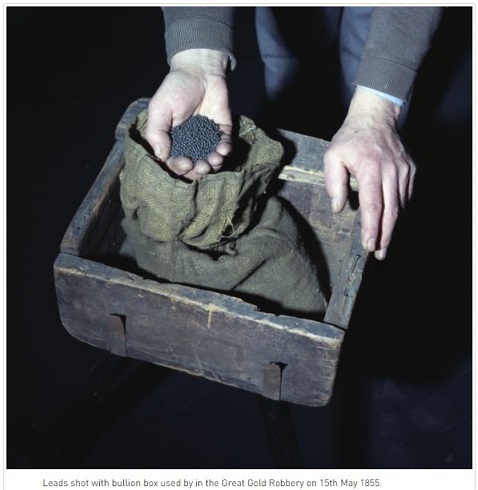
100 KG of lead balls (shots) to be exact.
Recommended.
The Great Train Robbery by Micheal Crichton is a similar affair. In the initial pages itself, Crichton reveals where we are going: The Train robbery of 1855 was a success (They stole 2.5 million pounds in today's value) and the culprits were apprehended in later years.
But how did they pull it off?
Meet the Rogues: Robert Agar, the locks specialist, Barlow, the muscle, Clean Willy, the escape artist, Miriam, the actress and Edward Pierce, the master thief.
Without a doubt, Edward Pierce is the fascinating character in this story. He is a unique because of his spectacular planning skills and his ability to navigate both criminal class and upper class with absolute ease. In the introduction, Crichton wrote a line on criminals in general.
❝ Criminals are not limited in intelligence, and it is probable that the reverse is true. ❞
Undoubtedly, Crichton wrote those lines with Pierce in his mind.
While we are at it, let's talk about Michael Crichton's writing style. It's incredible! He paints a unique version of 19th century London with help of wonderful facts. He entwines the realities of living conditions, criminal landscape, popular laws and incidents of that era with the central plot to create a special narrative style. It actually reminded me of his first novel he wrote (As Crichton), The Andromeda Strain which uses similar style along with foreshadowing. (Incidentally, The Andromeda Strain is my personal favorite in Crichton novels.)
Remember Chaos theory? Even though no butterfly created tornadoes here, there were many spectacular points in the narrative where an incident happened in Australia or India indirectly affected the story tremendously. That's another reason to love Crichton here. He researched those incidents and made/fictionalized these connections to the story.
After finishing the novel, I took some time to read the actual story behind the Train robbery. I wanted to know how much of this historical fiction was history and how much was fiction. I was a bit disappointed and astonished with the result. I was disappointed because most of the story was fictionalized. At the same time, I was astonished by the fact that Crichton invented most of the planning in this tale by himself!
Nevertheless, the actual crime and the fictionalized version are the prime examples of a classical theft at its best. A theft where planning, patience and the sheer amount of balls are involved.
100 KG of lead balls (shots) to be exact.
Recommended.

June 2, 2017
The book came highly recommended to me by Jaya, Tarinee, and Smitha. There must be something special about this book that they've such high regards fof this book. So I put all other books on my current read shelf on hold and started reading this. And I am so glad that I read it. This book is a perfect blend of historical fiction, crime, and heist.
As the title suggests, it is about a train robbery. But once you start reading, you find that it is much more than that. It tell us about the culture, law, politics, society, and industrial revolution and its effect of Britain of that time.
Story revolves around Edward Pierce and how he successfully excutes this robbery. Though robbery came much later in the story, it was a real delight to read how Pierce picked his cronies and planned the heist. He too great care with every minute detail of his delight. I loved specially the scenes where he takes the impression of keys.
Michael Crichton's story telling is top class. It captured my attention right from chapter one. I could not put it down until I read the last page.
Highly recommended to everyone. Once again many thanks to Jaya, Tarinee, and Smitha for recommending this gem to me.
As the title suggests, it is about a train robbery. But once you start reading, you find that it is much more than that. It tell us about the culture, law, politics, society, and industrial revolution and its effect of Britain of that time.
Story revolves around Edward Pierce and how he successfully excutes this robbery. Though robbery came much later in the story, it was a real delight to read how Pierce picked his cronies and planned the heist. He too great care with every minute detail of his delight. I loved specially the scenes where he takes the impression of keys.
Michael Crichton's story telling is top class. It captured my attention right from chapter one. I could not put it down until I read the last page.
Highly recommended to everyone. Once again many thanks to Jaya, Tarinee, and Smitha for recommending this gem to me.

March 26, 2008
If I am capable of guilt when it comes to my literary tastes The Great Train Robbery could be a "guilty pleasure," but how can a man who did his honours thesis on Michael Crichton's The Great Train Robbery feel any guilt over loving The Great Train Robbery?
He can't. And I don't.
It is an exemplar of what I call cinematic writing: novel length prose that the author ultimately intends for the screen.
The characters are skill-based and maleable (sometimes even interchangeable), the chase -- either figurative or literal -- is all important, and the skeletal structure of the plot is all about the goal. As long as the goal remains the same, the pieces that get the writer/filmmaker there can alter to suit mood, economics, aesthetics or any other pragmatic concern without harming the spirit of the tale.
I used The Great Train Robbery in my thesis because it was the one book that Michael Crichton directed himself. He wrote the novel, wrote the screenplay, cast the main characters, and made all the alterations that moved his story from one medium to another. The novels that followed The Great Train Robbery continued to embrace the cinema in their conception, but The Great Train Robbery was the finest expression of Crichton's love for the screen because even he, the author, had to make changes to take his novel to the screen.
For anyone who loves cinema and novels, for anyone who loves screenwriting, for anyone who loves screen adaptation, both manifestations of The Great Train Robbery are essential texts. And how can you beat the teaming of Sean Connery and Donald Sutherland And how can you beat the teaming of Sean Connery and Donald Sutherland? You can't (not even with Harrison Ford or Elliot Gould).
Track down the movie, re-read the book, and appreciate them both for what Crichton was trying to do.
He can't. And I don't.
It is an exemplar of what I call cinematic writing: novel length prose that the author ultimately intends for the screen.
The characters are skill-based and maleable (sometimes even interchangeable), the chase -- either figurative or literal -- is all important, and the skeletal structure of the plot is all about the goal. As long as the goal remains the same, the pieces that get the writer/filmmaker there can alter to suit mood, economics, aesthetics or any other pragmatic concern without harming the spirit of the tale.
I used The Great Train Robbery in my thesis because it was the one book that Michael Crichton directed himself. He wrote the novel, wrote the screenplay, cast the main characters, and made all the alterations that moved his story from one medium to another. The novels that followed The Great Train Robbery continued to embrace the cinema in their conception, but The Great Train Robbery was the finest expression of Crichton's love for the screen because even he, the author, had to make changes to take his novel to the screen.
For anyone who loves cinema and novels, for anyone who loves screenwriting, for anyone who loves screen adaptation, both manifestations of The Great Train Robbery are essential texts. And how can you beat the teaming of Sean Connery and Donald Sutherland And how can you beat the teaming of Sean Connery and Donald Sutherland? You can't (not even with Harrison Ford or Elliot Gould).
Track down the movie, re-read the book, and appreciate them both for what Crichton was trying to do.
April 6, 2021
So you thought Michael Crichton only writes sci-fi techno thrillers? Same here. The Great Train Robbery is proof that the man is far more versatile than I gave him credit for, as he crafts a superb piece of historical fiction. As always I’ll give you the good, the bad and the ugly and tell you why I think you should read this novel. Which you should!
The premise itself is the planning, organisation and execution of one of the most famous heists in history. Crichton brilliantly blends fact and fiction to give us a highly involving and immersive story, where you come away feeling like you’ve learned something. This book could in fact be considered a handbook for robbing a train. In a bustling nineteenth century London, the author precisely portrays the landscape giving us a vivid snapshot of life at the time. The extravagant prosperity of the upper class in Victorian London, existing side by side with the abject poverty. He mixes this with a good slice of humour, illustrating some of the bizarre social conceptions at the time. We get to see a highly questionable cure for syphilis, spring loaded caskets and the excitement of a good public hanging.
"The behaviour of the public reflected some fatal flaw in the character of the English mind"
There’s also some excellent character work in this one. We have Edward Pierce, the mysterious gent and “putter-up” who walks the tightrope of upper class life ,while bringing together a team to carry out the crime of the century. Robert Agar, the Screwsman (locksmith), Clean Willy who specialises in getting through tight holes, Barlow the hired muscle and Miss Miriam the hot bit of stuff. These are all real characters that were involved in the crime and Crichton does a solid job of bringing them to life.
"Even Victoria herself was not immune to the fascination with this most bold and dastardly rogue, whom she should like to perceive at first hand."
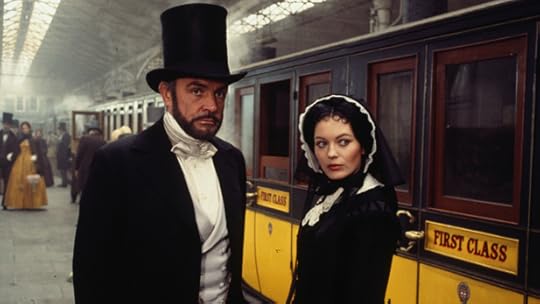
The only real negative is the writing. As I mentioned in my review of The Andromeda Strain, Crichton is not going to knock you over with his prose and he certainly could not be considered a wordsmith. I really appreciate authors that have a flair for the written word and he is quite basic. But it doesn’t interfere with the telling of a good old-fashioned story that has an intense, fast paced conclusion. The dialogue is top notch and feels really reflective of the time, if sometimes a little confusing. It all helps in giving the reader an authentic feel, which from my experience is a Crichton trademark.
What’s left to say, other than if anyone knows how to crack a safe and fancies joining me on a nice bit of criminal enterprise leave me a message. A thoroughly good and enjoyable piece of historical fiction.

April 29, 2014
This one was a a really great and exciting read. I had picked it out from my library without knowing how good it really is. Initially I even thought if the book is fiction or true crime.
Reviewing this book is a bit of a challenge as I don't want to include any spoilers and mar the joy of reading this novel.
As the name suggests, the novel is about a daring train robbery and it was carried out during the Victorian era in London. At that time, the railways were seen as the symbol of progress and technological advancement.
What I really liked about the book was the atmosphere and setting. The author has used the Victorian period to his great advantage. Instead of just focussing on the crime, Crichton has portrayed the period in such a fascinating and often humorous way that it increased the appeal of the story. The story is replete with anecdotes of that era and the narrative encompasses the various aspects of the Victorian society -- the story of the haves and have nots, the idiosyncracies, the underworld and categories of criminals, the stark contrast of wealth & poverty, the hypocrisies of the gentleman, popularity of illegal sports such as boxing and dog sports, the nascent police system and so on. Important historical events such as the Crimean War, the Great Revolt of 1857 (which historians of the West call the Sepoy Mutiny) are also present in the story.
The mastermind, Edward Pierce ( if that is his real name) is the quintessential evil genius. He has the bearing, manners and charm of a gentleman but he is the master manipulator - the way he would enter the lives of unwitting pawns, how ruthlessly he used people, his meticulous planning, his command over accents of different classes, the way he would misdirect the Scotland Yard, the various contingency plans -everything is so exciting. The pains and dangers of carrying out the various stages of the heist and the actual commission of the crime are excellent. Pierce's other accomplices are no less fascinating.The ending was excellent also.
The only flaw with the novel might be that the victims and the Scotland Yard people were shown to be too naive and trusting.
Though Crichton is famous for his science fiction novels, his works in other genres are equally good. I would recommend this book to annyone who likes a good heist novel and to those who like crime stories set in the Victorian era.
Reviewing this book is a bit of a challenge as I don't want to include any spoilers and mar the joy of reading this novel.
As the name suggests, the novel is about a daring train robbery and it was carried out during the Victorian era in London. At that time, the railways were seen as the symbol of progress and technological advancement.
What I really liked about the book was the atmosphere and setting. The author has used the Victorian period to his great advantage. Instead of just focussing on the crime, Crichton has portrayed the period in such a fascinating and often humorous way that it increased the appeal of the story. The story is replete with anecdotes of that era and the narrative encompasses the various aspects of the Victorian society -- the story of the haves and have nots, the idiosyncracies, the underworld and categories of criminals, the stark contrast of wealth & poverty, the hypocrisies of the gentleman, popularity of illegal sports such as boxing and dog sports, the nascent police system and so on. Important historical events such as the Crimean War, the Great Revolt of 1857 (which historians of the West call the Sepoy Mutiny) are also present in the story.
The mastermind, Edward Pierce ( if that is his real name) is the quintessential evil genius. He has the bearing, manners and charm of a gentleman but he is the master manipulator - the way he would enter the lives of unwitting pawns, how ruthlessly he used people, his meticulous planning, his command over accents of different classes, the way he would misdirect the Scotland Yard, the various contingency plans -everything is so exciting. The pains and dangers of carrying out the various stages of the heist and the actual commission of the crime are excellent. Pierce's other accomplices are no less fascinating.The ending was excellent also.
The only flaw with the novel might be that the victims and the Scotland Yard people were shown to be too naive and trusting.
Though Crichton is famous for his science fiction novels, his works in other genres are equally good. I would recommend this book to annyone who likes a good heist novel and to those who like crime stories set in the Victorian era.


September 20, 2011
This is the book which introduced me to Michael Crichton, and his inimitable way of mixing fact and fiction so that the borders are blurred, like shading is done in watercolour paintings. I loved it enough to read almost all of his remaining works.
As some critic once said: "Michael Crichton is too serious to be considered a popular writer, and too popular to be considered serious." Spot on.
As some critic once said: "Michael Crichton is too serious to be considered a popular writer, and too popular to be considered serious." Spot on.

May 19, 2012
Reasons why I implore you to check out this book
The Setting: The 1850's, Victorian England. Rich, colourful and detailed, this is one of the most dynamic periods of English history, forever loved by readers both young and old. It was a world of contradictions: beneath the aforementioned richness, lay the pall of poverty, sickness, prostitution and death, harboured by the ongoing Industrial Revolution. The author, Michael Chrichton flits so seamlessly between the two, that it creates a wonderfully vivid picture!
The Plot: Like another fellow reviewer so correctly said (I could not have put it better), imagine "Oceans Eleven" in Victorian England, and you will get the plot! Edward Pierce, a charismatic 'cracksman', or master thief, plans a heist to steal a shipment of twelve thousand pounds being transported on a train from London for the Crimean War. The novel, written mainly with the help of court proceedings ( It is based on a TRUE incident) talks about how he brought his plans into execution.
The Protagonist: The (anti)hero is so drool worthy that I actually fell in love with him! Yes, he's your typical bad-boy. He uses people for his needs, pretends to be in love with a rich lady with an ulterior motive, and even engages in stealing the government gold. But inspite of all that, he has a spark. His unabashed love for the thrill of flirting with danger makes him quite a thinking woman's sex symbol.
The Structure: The book is divided into 5 parts:
* Preparations
* The Keys
* Delays and Difficulties
* The Great Train Robbery
* Arrest and Trial
With short chapters(which is great as you can leave at any time, though you'd never feel like; instead, they'd make you feel like reading just one more before you go, which will end up making you read the full thing in a couple of sittings), Crichton does a marvelous job of describing the incidents along with providing a very interesting social and criminal commentary on the Victorian Age. Fast paced, and very gripping, this book is a perfect read for those long train journeys.
The Ending: I have hardly ever come across such a stylish book ending. I only wish that the heist had taken place a good 40 years later, so that Dr. Watson might have been able to chronicle Mr. Holmes' reactions to the matter. I would love to see a battle of brains between the enigmatic detective (who I'm sure Scotland Yard would have approached, with the case) and the smartest criminal of the Victorian Era.
Wait. Am I actually blurring the line between facts and fiction? Never mind, that's what stories are for anyway.
Off I go, for another great read. You my dear reader, by the way, do give this book a chance and experience the thrill for yourself!
The Setting: The 1850's, Victorian England. Rich, colourful and detailed, this is one of the most dynamic periods of English history, forever loved by readers both young and old. It was a world of contradictions: beneath the aforementioned richness, lay the pall of poverty, sickness, prostitution and death, harboured by the ongoing Industrial Revolution. The author, Michael Chrichton flits so seamlessly between the two, that it creates a wonderfully vivid picture!
The Plot: Like another fellow reviewer so correctly said (I could not have put it better), imagine "Oceans Eleven" in Victorian England, and you will get the plot! Edward Pierce, a charismatic 'cracksman', or master thief, plans a heist to steal a shipment of twelve thousand pounds being transported on a train from London for the Crimean War. The novel, written mainly with the help of court proceedings ( It is based on a TRUE incident) talks about how he brought his plans into execution.
The Protagonist: The (anti)hero is so drool worthy that I actually fell in love with him! Yes, he's your typical bad-boy. He uses people for his needs, pretends to be in love with a rich lady with an ulterior motive, and even engages in stealing the government gold. But inspite of all that, he has a spark. His unabashed love for the thrill of flirting with danger makes him quite a thinking woman's sex symbol.
The Structure: The book is divided into 5 parts:
* Preparations
* The Keys
* Delays and Difficulties
* The Great Train Robbery
* Arrest and Trial
With short chapters(which is great as you can leave at any time, though you'd never feel like; instead, they'd make you feel like reading just one more before you go, which will end up making you read the full thing in a couple of sittings), Crichton does a marvelous job of describing the incidents along with providing a very interesting social and criminal commentary on the Victorian Age. Fast paced, and very gripping, this book is a perfect read for those long train journeys.
The Ending: I have hardly ever come across such a stylish book ending. I only wish that the heist had taken place a good 40 years later, so that Dr. Watson might have been able to chronicle Mr. Holmes' reactions to the matter. I would love to see a battle of brains between the enigmatic detective (who I'm sure Scotland Yard would have approached, with the case) and the smartest criminal of the Victorian Era.
Wait. Am I actually blurring the line between facts and fiction? Never mind, that's what stories are for anyway.
Off I go, for another great read. You my dear reader, by the way, do give this book a chance and experience the thrill for yourself!

January 21, 2017
3/10
I was not expecting this to be written as a factual book with a little bit of dramatisation thrown in to cover the unknown parts of the history. It didn't work for me in the slightest. The large info dumps were scattered throughout, pretty much every chapter starts with them and then almost as an afterthought parts with characters added in.
I started skimming this about 100 pages in, if this was any larger I'd have quit on it at that point (I'd feel bad for DNF'ing two books in a row too). The characters were bland and not well drawn out but I guess they barely had any time to be drawn out as I was too busy learning about hinges and shit for a safe about 150 years old. Fun times.
The climatic ending was never so, from the introduction we learn the outcome of the heist albeit a small surprise at the end. But at that point no flying shits were given.
In summation, this guy should stick with dinosaurs.
I was not expecting this to be written as a factual book with a little bit of dramatisation thrown in to cover the unknown parts of the history. It didn't work for me in the slightest. The large info dumps were scattered throughout, pretty much every chapter starts with them and then almost as an afterthought parts with characters added in.
I started skimming this about 100 pages in, if this was any larger I'd have quit on it at that point (I'd feel bad for DNF'ing two books in a row too). The characters were bland and not well drawn out but I guess they barely had any time to be drawn out as I was too busy learning about hinges and shit for a safe about 150 years old. Fun times.
The climatic ending was never so, from the introduction we learn the outcome of the heist albeit a small surprise at the end. But at that point no flying shits were given.
In summation, this guy should stick with dinosaurs.

January 15, 2018
Βαθμολογία: 9/10
Αυτό είναι το δέκατο πέμπτο βιβλίο του Μάικλ Κράιτον που διαβάζω και σίγουρα είναι από τα καλύτερά του μέχρι στιγμής. Το είχα τσιμπήσει με τέσσερα ευρώ από το Παζάρι Βιβλίου τον Ιανουάριο του 2011 και από τότε έπιανε σκόνη στη βιβλιοθήκη μου. Τελικά το πήρα απόφαση να το διαβάσω επιτέλους και νιώθω τόσο χαρούμενος που το έκανα, μιας και διάβασα ένα πάρα μα πάρα πολύ ψυχαγωγικό βιβλίο.
Η όλη ιστορία βασίζεται σε αληθινά γεγονότα και διαδραματίζεται στα μέσα του 19ου αιώνα στη Μεγάλη Βρετανία, δηλαδή κατά τη Βικτωριανή εποχή. Ένα μεγαλόπνοο σχέδιο εξυφαίνεται από έναν πανέξυπνο και γοητευτικό εγκληματία, τον Έντουαρντ Πιρς, όπου έχει σκοπό να κάνει την μπάζα του αιώνα, ληστεύοντας μια αποστολή χρυσού από ένα τρένο. Στο όλο κόλπο θα συμμετάσχουν με τον έναν ή τον άλλο τρόπο διάφοροι εγκληματίες, μικρά αλλά σημαντικά γρανάζια μιας μηχανής εγκλήματος...
Ο τρόπος που ο Κράιτον παρουσιάζει την ιστορία αλλά και την εποχή, είναι πραγματικά μοναδικός. Ουσιαστικά έχουμε να κάνουμε με ένα κράμα ιστορικού μυθιστορήματος, περιπέτειας, αλλά και κοινωνιολογικής παρουσίασης. Υπάρχουν διάφορες σκηνές με δράση, συνωμοσίες και κόλπα εγκληματιών, αλλά επίσης γινόμαστε μάρτυρες μιας εποχής, μαθαίνουμε πράγματα για την κοινωνία της Βικτωριανής Αγγλίας, για τον κόσμο του εγκλήματος, για τη ζωή στο Λονδίνο, για διάφορα σημαντικά πράγματα που έχουν σχέση με την πλοκή. Η γραφή είναι πάρα πολύ καλή, ευκολοδιάβαστη και εθιστική, με ρεαλιστικές περιγραφές των διαφόρων καταστάσεων και των χαρακτήρων.
Όπως είπα στην αρχή, είναι σίγουρα ένα από τα καλύτερα βιβλία του Μάικλ Κράιτον που διαβάζω. Ευχαριστήθηκα πλοκή και χαρακτήρες, ενώ επίσης ταξίδεψα σε μια άλλη εποχή, μακρινή και πολύ ενδιαφέρουσα. Γι'αυτό δεν θα διστάσω να το βαθμολογήσω με πέντε αστεράκια στο Goodreads (δεν μπορώ να βάλω τεσσεράμισι), και ας ξέρω ότι έτσι ίσως αδικώ κάποια άλλα βιβλία. Όμως πέρασα τέλεια! Λίαν συντόμως θα δω και την ομότιτλη ταινία του 1978, που σκηνοθετεί ο ίδιος ο Κράιτον. Ευτυχώς ανήκει στην ταινιοθήκη μου.
Αυτό είναι το δέκατο πέμπτο βιβλίο του Μάικλ Κράιτον που διαβάζω και σίγουρα είναι από τα καλύτερά του μέχρι στιγμής. Το είχα τσιμπήσει με τέσσερα ευρώ από το Παζάρι Βιβλίου τον Ιανουάριο του 2011 και από τότε έπιανε σκόνη στη βιβλιοθήκη μου. Τελικά το πήρα απόφαση να το διαβάσω επιτέλους και νιώθω τόσο χαρούμενος που το έκανα, μιας και διάβασα ένα πάρα μα πάρα πολύ ψυχαγωγικό βιβλίο.
Η όλη ιστορία βασίζεται σε αληθινά γεγονότα και διαδραματίζεται στα μέσα του 19ου αιώνα στη Μεγάλη Βρετανία, δηλαδή κατά τη Βικτωριανή εποχή. Ένα μεγαλόπνοο σχέδιο εξυφαίνεται από έναν πανέξυπνο και γοητευτικό εγκληματία, τον Έντουαρντ Πιρς, όπου έχει σκοπό να κάνει την μπάζα του αιώνα, ληστεύοντας μια αποστολή χρυσού από ένα τρένο. Στο όλο κόλπο θα συμμετάσχουν με τον έναν ή τον άλλο τρόπο διάφοροι εγκληματίες, μικρά αλλά σημαντικά γρανάζια μιας μηχανής εγκλήματος...
Ο τρόπος που ο Κράιτον παρουσιάζει την ιστορία αλλά και την εποχή, είναι πραγματικά μοναδικός. Ουσιαστικά έχουμε να κάνουμε με ένα κράμα ιστορικού μυθιστορήματος, περιπέτειας, αλλά και κοινωνιολογικής παρουσίασης. Υπάρχουν διάφορες σκηνές με δράση, συνωμοσίες και κόλπα εγκληματιών, αλλά επίσης γινόμαστε μάρτυρες μιας εποχής, μαθαίνουμε πράγματα για την κοινωνία της Βικτωριανής Αγγλίας, για τον κόσμο του εγκλήματος, για τη ζωή στο Λονδίνο, για διάφορα σημαντικά πράγματα που έχουν σχέση με την πλοκή. Η γραφή είναι πάρα πολύ καλή, ευκολοδιάβαστη και εθιστική, με ρεαλιστικές περιγραφές των διαφόρων καταστάσεων και των χαρακτήρων.
Όπως είπα στην αρχή, είναι σίγουρα ένα από τα καλύτερα βιβλία του Μάικλ Κράιτον που διαβάζω. Ευχαριστήθηκα πλοκή και χαρακτήρες, ενώ επίσης ταξίδεψα σε μια άλλη εποχή, μακρινή και πολύ ενδιαφέρουσα. Γι'αυτό δεν θα διστάσω να το βαθμολογήσω με πέντε αστεράκια στο Goodreads (δεν μπορώ να βάλω τεσσεράμισι), και ας ξέρω ότι έτσι ίσως αδικώ κάποια άλλα βιβλία. Όμως πέρασα τέλεια! Λίαν συντόμως θα δω και την ομότιτλη ταινία του 1978, που σκηνοθετεί ο ίδιος ο Κράιτον. Ευτυχώς ανήκει στην ταινιοθήκη μου.

October 27, 2016
Do you like a well written historical fiction ?
Do you like a brilliant edge of seat crime thriller where you encounter twists with the turn of each page ?
Do you cherish a book with an intelligent,vicious and meticulous yet manipulative , cunning and ruthless anti-hero whose plannings/layers are so brilliant and detailed that he can easily give Scotland yard a run for their money ?
Do you enjoy Victorian England as the setup of your story ? An England of two parallel civilization of obvious contradiction . A rich, colorful and cultured England ridding high on the success of industrial revolution but beneath it thriving a mass poverty stricken ,corrupt and morally ambiguous .
Does the detailed chronicle of study of a criminal mind(why ,how ,when of a crime committed ) appeals to your fantasy of playing Sherlock / Poirot ?
Do you like a book with a fine gripping story penned down by one of the finest bestselling author at the peak of his story telling ability ?
Trust me if 'yes' is your answer for at-least one of the above questions 'The Great Train Robbery' should be the book in your soon to be read list .
If yes is your answer to more than one question but not all ,then this book should be the next thing you read after finishing what ever you are reading now .
And if your answer is yes to all the questions above ,dear friend ,put a page marker on what ever you are reading currently and grab a copy of this book and start reading :D :D
Do you like a brilliant edge of seat crime thriller where you encounter twists with the turn of each page ?
Do you cherish a book with an intelligent,vicious and meticulous yet manipulative , cunning and ruthless anti-hero whose plannings/layers are so brilliant and detailed that he can easily give Scotland yard a run for their money ?
Do you enjoy Victorian England as the setup of your story ? An England of two parallel civilization of obvious contradiction . A rich, colorful and cultured England ridding high on the success of industrial revolution but beneath it thriving a mass poverty stricken ,corrupt and morally ambiguous .
Does the detailed chronicle of study of a criminal mind(why ,how ,when of a crime committed ) appeals to your fantasy of playing Sherlock / Poirot ?
Do you like a book with a fine gripping story penned down by one of the finest bestselling author at the peak of his story telling ability ?
Trust me if 'yes' is your answer for at-least one of the above questions 'The Great Train Robbery' should be the book in your soon to be read list .
If yes is your answer to more than one question but not all ,then this book should be the next thing you read after finishing what ever you are reading now .
And if your answer is yes to all the questions above ,dear friend ,put a page marker on what ever you are reading currently and grab a copy of this book and start reading :D :D

February 1, 2018
A fabulous book in the historical thriller genre. I learned a great deal about Victorian London upon reading.
Published in 1974. Very similar to Devil in the White City. Both books present a masterful villain in a city known for its historically high crime. Perhaps less dramatic than Devil in the White City but more educational. You know who the villain is from the first page so the book tells you how he pulled off the heist. There is a major plot twist at the end that is the icing on the cake.
My favorite Michael Crichton book and it’s not even fiction.
Published in 1974. Very similar to Devil in the White City. Both books present a masterful villain in a city known for its historically high crime. Perhaps less dramatic than Devil in the White City but more educational. You know who the villain is from the first page so the book tells you how he pulled off the heist. There is a major plot twist at the end that is the icing on the cake.
My favorite Michael Crichton book and it’s not even fiction.

October 8, 2014
Author Michael Crichton takes pains to emphasize that, much the same as Clavell's Shogun, this is a work of fiction. Still, it employs a historical tone albeit a juicy one. As such it's mostly a setting-and-plot novel with little concern for characters and relationships. This novel is thus based on the actual thieves and the infamous train robbery of 1855.
The mastermind (Edward Pierce) undertakes to rob a train, which makes a regular run with gold bullion. The booty was locked in two custom-built safes that required four keys to open - two held by two different bankers and two stored at a railroad office. Pierce is a genteel and amoral rouge whose good clothes, speech, and manners confer the veneer of a “gentleman”. He mingles effortlessly amongst the upper-middle class - and he is without doubt a leader (not really a "peer") amongst his fellow criminals. They endeavor to copy all four “betties”. This effort occupies the bulk of the novel which richly details the criminal underclass and atmosphere of 1850s Victorian England - London in particular.
Crichton uses the various vernaculars of the time and place - those of the professional banking class and especially of the criminal underworld.
For instance, when a professional thief refers to an acquaintance he is said to be "in” or "out" (of prison). A “magsman” is what we would call a con artist. A “snakesman” is a child or a small man who can break into an home or office through a chimney or other tight spot.
Pierce first “put up a lay” (financed the caper) in April 1854, when he bought Robert Agar a drink at the Bull and Bear. Agar was an expert "screwsman" (safe cracker and key-copier) who had never been “in”.
Pierce himself was a master “cracksman”, a burglar, who had been working other towns to build up his stake.
Crichton gives us a glimpse of London's dog fighting scene - a place where all the classes mingle. This is crucial to Pierce's attempt to copy one of the Bankers’ keys. Between fights he strikes up a conversation and insinuates himself into the Banker's home and trust - eating at his table and feigning martial interest in his unmarried daughter (an “old maid” in her late-twenties).
This leads to a suspenseful and successful “waxman’s” impression of the key.
I’ll leave it to readers to discover the rest of this thoroughly entertaining novel.
************************
VACATION RE-READ (NOVEMBER 2017)
I was happy to find a copy of "Train Robbery" on my hurriedly packed e-reader while travelling on vacation. I am happier to report that this third read exceeds the first two, so in order to whet your appetites, I offer a little background from the Introduction.
In 1855 Edward Pearce and his compatriots replaced gold worth 12,000 "pounds sterling" with a roughly equivalent weight in lead shot - a "trade" rightly regarded as Grand Theft.
This is roughly equivalent to about 1.2-million not-sterling British Pounds or slightly more than 1.6-million 2017 dollars. However, Crichton is quick to point out that "there had been a dozen more lucrative robberies in the same period":
the Victorians always referred to this crime in capital letters, as The Great Train Robbery. Contemporary observers labeled it The Crime of the Century and The Most Sensational
Exploit of the Modern Era. The adjectives applied to it were all strong: it was "unspeakable," "appalling," and "heinous."Even in an age given to moral overstatement, these terms suggest some profound impact upon everyday consciousness.
To understand why the Victorians were so shocked by the theft, one must understand something about the meaning of the railways. Victorian England was the first urbanized, industrialized society on earth, and it evolved with stunning rapidity.
Crichton continues:
(ca. 1815) England was a predominantly rural nation of thirteen million people. (By 1850), the population had nearly doubled to twenty-four million, and half the people lived in urban centers....the conversion from agrarian life seemed to have occurred almost overnight; indeed, the process was so swift that no one really understood it.
Crichton goes on to demonstrate this assertion in some detail, summarizing the effects of the early Industrial Revolution - then he comes to railroads:
prior to 1830 there were (few) railways in England. All transportation between cities was by horse-drawn coach... By 1850, five thousand miles of track crisscrossed the nation, providing cheap and increasingly swift transportation for every citizen. Inevitably the railways came to symbolize progress.
to the Victorian mind such progress implied moral as well as material advancement...Progress in physical conditions (would lead) inevitably to the eradication of social evils and criminal behavior- which would be swept away much as the slums that housed these evils and criminals were, from time to time, swept away. It seemed a simple matter of eliminating the cause and, in due course, the effect.
From this comfortable perspective, it was absolutely astonishing to discover that "the criminal class" had found a way to prey upon progress-and indeed to carry out a crime aboard the very hallmark of progress, the railway. The fact that the robbers also overcame the finest safes of the day only increased the consternation.
Without question, a definable subculture of professional criminals existed a hundred years ago in mid-Victorian England. Many of its features were brought to light in the trial of Burgess, Agar, and Pierce, the chief participants in The Great Train Robbery. They were all apprehended in 1856, nearly two years after the event. Their voluminous courtroom testimony is preserved, along with journalistic accounts of the day. It is from these sources that the following narrative is assembled.
The mastermind (Edward Pierce) undertakes to rob a train, which makes a regular run with gold bullion. The booty was locked in two custom-built safes that required four keys to open - two held by two different bankers and two stored at a railroad office. Pierce is a genteel and amoral rouge whose good clothes, speech, and manners confer the veneer of a “gentleman”. He mingles effortlessly amongst the upper-middle class - and he is without doubt a leader (not really a "peer") amongst his fellow criminals. They endeavor to copy all four “betties”. This effort occupies the bulk of the novel which richly details the criminal underclass and atmosphere of 1850s Victorian England - London in particular.
Crichton uses the various vernaculars of the time and place - those of the professional banking class and especially of the criminal underworld.
For instance, when a professional thief refers to an acquaintance he is said to be "in” or "out" (of prison). A “magsman” is what we would call a con artist. A “snakesman” is a child or a small man who can break into an home or office through a chimney or other tight spot.
Pierce first “put up a lay” (financed the caper) in April 1854, when he bought Robert Agar a drink at the Bull and Bear. Agar was an expert "screwsman" (safe cracker and key-copier) who had never been “in”.
Pierce himself was a master “cracksman”, a burglar, who had been working other towns to build up his stake.
Crichton gives us a glimpse of London's dog fighting scene - a place where all the classes mingle. This is crucial to Pierce's attempt to copy one of the Bankers’ keys. Between fights he strikes up a conversation and insinuates himself into the Banker's home and trust - eating at his table and feigning martial interest in his unmarried daughter (an “old maid” in her late-twenties).
This leads to a suspenseful and successful “waxman’s” impression of the key.
I’ll leave it to readers to discover the rest of this thoroughly entertaining novel.
************************
VACATION RE-READ (NOVEMBER 2017)
I was happy to find a copy of "Train Robbery" on my hurriedly packed e-reader while travelling on vacation. I am happier to report that this third read exceeds the first two, so in order to whet your appetites, I offer a little background from the Introduction.
In 1855 Edward Pearce and his compatriots replaced gold worth 12,000 "pounds sterling" with a roughly equivalent weight in lead shot - a "trade" rightly regarded as Grand Theft.
This is roughly equivalent to about 1.2-million not-sterling British Pounds or slightly more than 1.6-million 2017 dollars. However, Crichton is quick to point out that "there had been a dozen more lucrative robberies in the same period":
the Victorians always referred to this crime in capital letters, as The Great Train Robbery. Contemporary observers labeled it The Crime of the Century and The Most Sensational
Exploit of the Modern Era. The adjectives applied to it were all strong: it was "unspeakable," "appalling," and "heinous."Even in an age given to moral overstatement, these terms suggest some profound impact upon everyday consciousness.
To understand why the Victorians were so shocked by the theft, one must understand something about the meaning of the railways. Victorian England was the first urbanized, industrialized society on earth, and it evolved with stunning rapidity.
Crichton continues:
(ca. 1815) England was a predominantly rural nation of thirteen million people. (By 1850), the population had nearly doubled to twenty-four million, and half the people lived in urban centers....the conversion from agrarian life seemed to have occurred almost overnight; indeed, the process was so swift that no one really understood it.
Crichton goes on to demonstrate this assertion in some detail, summarizing the effects of the early Industrial Revolution - then he comes to railroads:
prior to 1830 there were (few) railways in England. All transportation between cities was by horse-drawn coach... By 1850, five thousand miles of track crisscrossed the nation, providing cheap and increasingly swift transportation for every citizen. Inevitably the railways came to symbolize progress.
to the Victorian mind such progress implied moral as well as material advancement...Progress in physical conditions (would lead) inevitably to the eradication of social evils and criminal behavior- which would be swept away much as the slums that housed these evils and criminals were, from time to time, swept away. It seemed a simple matter of eliminating the cause and, in due course, the effect.
From this comfortable perspective, it was absolutely astonishing to discover that "the criminal class" had found a way to prey upon progress-and indeed to carry out a crime aboard the very hallmark of progress, the railway. The fact that the robbers also overcame the finest safes of the day only increased the consternation.
Without question, a definable subculture of professional criminals existed a hundred years ago in mid-Victorian England. Many of its features were brought to light in the trial of Burgess, Agar, and Pierce, the chief participants in The Great Train Robbery. They were all apprehended in 1856, nearly two years after the event. Their voluminous courtroom testimony is preserved, along with journalistic accounts of the day. It is from these sources that the following narrative is assembled.

August 6, 2015
In 1855 a gang of thieves carried out an elaborate scheme to rob a train of the gold bullion scheduled to serve as payroll for the soldiers fighting in the Crimean War. “The Victorians always referred to this crime in capital letters, as The Great Train Robbery.” This is Crichton’s fictionalized novel based on what is known of the truth, with a good deal of conjecture and embellishment.
What a rollicking good story! I was entertained from beginning to end. Crichton starts out with a recitation of the facts and sprinkles the text with details of Victorian life and the specifics which came to light during the trial. But the way he imagines the lead characters, especially Edward Pierce (the gang leader), is what really breathes life into the story.
I first read this back in 1975 when it was a new release. In fact, I have a book-club edition I purchased at the time. It’s always been one of my favorite books by Crichton and I’ve recommended it to people over the years as a quick, fun adventure / crime story.
The book was adapted to film in 1978, starring Sean Connery as Edward Pierce, and Donald Sutherland as his accomplice Robert Agar. It’s a pretty faithful adaptation, and well worth watching.
NOTE: This review was written on my second (or third) reading, August 2015. One of my book clubs chose it for discussion in June 2019, so I’ve re-read it yet again. And I still love it!
What a rollicking good story! I was entertained from beginning to end. Crichton starts out with a recitation of the facts and sprinkles the text with details of Victorian life and the specifics which came to light during the trial. But the way he imagines the lead characters, especially Edward Pierce (the gang leader), is what really breathes life into the story.
I first read this back in 1975 when it was a new release. In fact, I have a book-club edition I purchased at the time. It’s always been one of my favorite books by Crichton and I’ve recommended it to people over the years as a quick, fun adventure / crime story.
The book was adapted to film in 1978, starring Sean Connery as Edward Pierce, and Donald Sutherland as his accomplice Robert Agar. It’s a pretty faithful adaptation, and well worth watching.
NOTE: This review was written on my second (or third) reading, August 2015. One of my book clubs chose it for discussion in June 2019, so I’ve re-read it yet again. And I still love it!

May 28, 2018
Lot of good Crichton out there, but this is the first I'd truly call great. Fascinating historical heist story - but what made it really stand out was the additional background information on Victorian England. I learned so much here that I hadn't expected to - how the introduction of rail travel changed England; how Scotland Yard got its name; how the Crimean War (and the disastrous Charge of the Light Brigade) gave us both the Balaclava and the Cardigan; and just endless fascinating details of every aspect of British society at the time.
This was Crichton's second "big" book after 1969's Andromeda Strain; but he then followed this up with the "meh" Eaters of the Dead, Congo and Sphere before hitting his real stride with Jurassic Park, Rising Sun, Disclosure, Lost World, etc. Hard to believe he's already been gone for a whole decade, (especially since new Crichton books continue to be released with the same regularity as Jimi Hendrix albums).
ALSO, PROBABLY SHOULD'VE KNOWN BUT DIDN'T: I never realized that the Retreat from Kabul, Crimean War and Indian Mutiny happened back-to-back - yikes! Tough days for the British Army, but opened up the world for Harry Flashman...
This was Crichton's second "big" book after 1969's Andromeda Strain; but he then followed this up with the "meh" Eaters of the Dead, Congo and Sphere before hitting his real stride with Jurassic Park, Rising Sun, Disclosure, Lost World, etc. Hard to believe he's already been gone for a whole decade, (especially since new Crichton books continue to be released with the same regularity as Jimi Hendrix albums).
ALSO, PROBABLY SHOULD'VE KNOWN BUT DIDN'T: I never realized that the Retreat from Kabul, Crimean War and Indian Mutiny happened back-to-back - yikes! Tough days for the British Army, but opened up the world for Harry Flashman...

April 7, 2020
I remember watching the film of this years ago and really enjoying it. What made the book so good was the details and context of Victorian society during that period. Highly informative and fascinating.

July 5, 2022
This is a fanciful re-imagination of the Great Train Robbery of 1855 (https://en.wikipedia.org/wiki/Great_G...). Crichton weaves a great heist story, full with fun planning details, mishaps, and colorful characters. In the spirit of Victorian imagination, he colors his protagonist, Edward Pierce as a gentleman rogue, a man with mysterious past but impeccable manner, charm, and money to go with it. He is also a criminal mastermind extraordinaire.
Crichton paints a vivid portrait of contemporary British society, complete with a deep dive into the criminal underbelly. Trains have revolutionalized the era: all of a sudden, ardous travel that took days before could be completed in a few hours, while comfortably sitting and even reading. Speeds reached unprecedented heights: at 50 to 70 miles an hour. People did not even yet understand that falling at such great speed was way worse than falling from a horse. In such an environment, trains were romanticized, and no one could imagine that a successful robbery could take place on a moving train, which was that made the 1855 heist so scandalous.
I was a bit thrown by the “fiction as fact” style of writing at first. Crichton presents his narrative as nonfiction, taken from news articles, court testimonies, police reports, memoirs and such. I was confused to whether, and what, was real. Well, the broad outlines are the same: gold was stolen from big safes on the way from London to Folkstone, with the help of a guard, using copies of the keys; and the money was replaced by lead pouches. Crichton’s story is way more fanciful, with much enhanced characters, and completely invented news articles and courtroom drama.
I enjoyed it. We watched the movie, which Crichton wrote, starring Sean Connery and Donald Sutherland. It is okay… rather wastes Sutherland’s talents. The book is a lot better.
Crichton paints a vivid portrait of contemporary British society, complete with a deep dive into the criminal underbelly. Trains have revolutionalized the era: all of a sudden, ardous travel that took days before could be completed in a few hours, while comfortably sitting and even reading. Speeds reached unprecedented heights: at 50 to 70 miles an hour. People did not even yet understand that falling at such great speed was way worse than falling from a horse. In such an environment, trains were romanticized, and no one could imagine that a successful robbery could take place on a moving train, which was that made the 1855 heist so scandalous.
I was a bit thrown by the “fiction as fact” style of writing at first. Crichton presents his narrative as nonfiction, taken from news articles, court testimonies, police reports, memoirs and such. I was confused to whether, and what, was real. Well, the broad outlines are the same: gold was stolen from big safes on the way from London to Folkstone, with the help of a guard, using copies of the keys; and the money was replaced by lead pouches. Crichton’s story is way more fanciful, with much enhanced characters, and completely invented news articles and courtroom drama.
I enjoyed it. We watched the movie, which Crichton wrote, starring Sean Connery and Donald Sutherland. It is okay… rather wastes Sutherland’s talents. The book is a lot better.

December 28, 2009
This book had all the ingredients for a great adventure — a charming rogue for a lead character, an intricate Ocean's Eleven-style heist, a well-drawn Victorian London setting (you could almost feel Sherlock Holmes in the background investigating), and top-notch writing.
However, since it is made clear in the beginning of the novel that the heist was pulled off successfully, the story is lacking any "will they or won't they pull it off" suspense. The fact that the novel is still so gripping and enjoyable is a testament to the late Michael Crichton — and make no mistake, the novel is gripping and quite enjoyable.
However, since it is made clear in the beginning of the novel that the heist was pulled off successfully, the story is lacking any "will they or won't they pull it off" suspense. The fact that the novel is still so gripping and enjoyable is a testament to the late Michael Crichton — and make no mistake, the novel is gripping and quite enjoyable.

abandoned-did-not-finish
July 7, 2013Disappointing and dull. Michael Crichton usually writes real page-turners; this is not one of them. There is an introduction which sets the scene, presumably so that we can understand how shocking a train robbery would have seemed to the Victorians, since rail travel was new, a positive and impressive development. The introduction is written in textbook fashion, and the novel itself continues in the same boring vein.

February 8, 2023
Se trata de una crónica novelada del robo perfecto. Allá en la Inglaterra victoriana de 1855, un carismático, metódico y sagaz delincuente llamado Edward Pierce planifica y ejecuta el robo de varios lingotes de oro que iban a ser trasladados de Inglaterra a Francia por tren. Para ello se alia con el hábil cerrajero Agar, y con varios cómplices y delincuentes de poca monta, a quienes incluso nunca revela el golpe final, sino que los va usando para acciones puntuales, hasta llegar al día del robo. Aunque, el propio Pierce es quien más participa tanto intelectual como físicamente de todos los pasos que le llevarían a dar el gran golpe. Se trata de una aventura fascinante, en la que el autor no solo narra los hechos y diálogos basados en las declaraciones de los juicios del propio Pierce, sino que además, introduce cada capítulo con una bien fundamentada contextualización histórica de la Inglaterra de aquellos años y el por qué de cada hecho, cuya explicación siempre está contenida en el marco social y político de la época. Aunque escrito en 1975, es un libro -se puede decir de "aventuras"- con un ritmo trepidante, que atrapa la lectura, no solo por tratarse del relato de un crimen ingenioso, sino por tener una sólida investigación histórica. En su tiempo fue un best-seller y se lo llevó a fines de los setenta al cine. Ahora a ver la adaptación.
March 12, 2018
“It is difficult, after the passage of more than a century, to understand the extent to which the train robbery of 1855 shocked the sensibilities of Victorian England. At first glance, the crime hardly seems”
I’m trying to read more Michael Crichton - have a lot of his stuff but haven’t actually read much of him yet. This was certainly a different plot type than some of his later works that I have read, like Sphere and Jurassic Park.
I’m a fan of Crichton’s writing style in the books I’ve read, but this was one of his earlier works and sometimes I found the way the writing style was crafted to be a chore or downright bore, but the book was saved by the sneaked in twists and turns. This isn’t to say it’s poorly written, however, just that there was some dryness here and there and a slow-rolling pace.
This was detailed and elaborate, and the scenes are drawn through almost excruciatingly slow. Some of those scenes were very interesting, and the ending with how the villains goes out with a bang of glory as impressive as his planning and execution of the actual crime makes any slow spots worth enduring.
It’s one of those tales where little happens to the good guys but most of the criminals get happiness of sorts. Sometimes we need these stories to shake things up a bit.
The speaking style was hard for me to get used to, and I still don’t get some of the slang, but the authenticity rang true and the characters were memorable enough. Eventually I need to track down the movie and see if it’s the same story-line.
I’m trying to read more Michael Crichton - have a lot of his stuff but haven’t actually read much of him yet. This was certainly a different plot type than some of his later works that I have read, like Sphere and Jurassic Park.
I’m a fan of Crichton’s writing style in the books I’ve read, but this was one of his earlier works and sometimes I found the way the writing style was crafted to be a chore or downright bore, but the book was saved by the sneaked in twists and turns. This isn’t to say it’s poorly written, however, just that there was some dryness here and there and a slow-rolling pace.
This was detailed and elaborate, and the scenes are drawn through almost excruciatingly slow. Some of those scenes were very interesting, and the ending with how the villains goes out with a bang of glory as impressive as his planning and execution of the actual crime makes any slow spots worth enduring.
It’s one of those tales where little happens to the good guys but most of the criminals get happiness of sorts. Sometimes we need these stories to shake things up a bit.
The speaking style was hard for me to get used to, and I still don’t get some of the slang, but the authenticity rang true and the characters were memorable enough. Eventually I need to track down the movie and see if it’s the same story-line.

July 2, 2018
Some reviewers wanted less historical and technical explication and more story.
That makes sense to me. Yet I found the story less compelling and satisfying than the research reports that buffer the spurts of story. But that’s a relative comparison.
The book started out with some promise, but before I was halfway through I remembered that I’m only interested in heist stories when the characters are vivid and interesting, and the story has zip and momentum.
I hung in till the end, but interesting is about the best thing I can say for it, and even then I would have preferred this to be either fiction or non-fiction, but not both.
That makes sense to me. Yet I found the story less compelling and satisfying than the research reports that buffer the spurts of story. But that’s a relative comparison.
The book started out with some promise, but before I was halfway through I remembered that I’m only interested in heist stories when the characters are vivid and interesting, and the story has zip and momentum.
I hung in till the end, but interesting is about the best thing I can say for it, and even then I would have preferred this to be either fiction or non-fiction, but not both.

January 12, 2023
Absolutely fantastic! As a Crichton fan, I absolutely loved this additional book in the series of those I’ve I’ve read.
This plot is very special about this book was that he poured in so much authentic history small details about made mid 18 00s life that it made it very special.
I highly recommend.
This plot is very special about this book was that he poured in so much authentic history small details about made mid 18 00s life that it made it very special.
I highly recommend.

April 11, 2025
This was a really fun read. Set in the mid 1800s, in England, and follows the planning, execution and investigation of the theft of a large shipment of gold bullion aboard a train. The majority of the story is the planning, and I loved all the slang used by the gang and criminal terms they used. How the gang was captured was also quite funny and goes to show that not much has changed in the reasons why people are caught today.
A solid story all round and keeps you intrigued and entertained. 4.5 stars.
A solid story all round and keeps you intrigued and entertained. 4.5 stars.

September 20, 2026
I'll say up front that I never saw the film. Actually, I stopped watching movies some 15 or more years ago and am perfectly happy believing I'll never see another. So, this will be all about the book and no comparison to what might have been done on the big screen.
The novel is sort of a blend of both fiction and non-fiction. A chapter might begin with our reading some facts about England or London of the first part of the 19th Century and then seamlessly we are reading a conversation between the principles of The Great Train Robbery. This transition is so well done that it was a few chapters before I remarked to myself about its even being done. The novel is strictly linear with parts beginning The Preparation followed by The Keys and others to the last short part Arrest and Trial.
I have said elsewhere I'd like to be focusing on comfort reads these days and this doesn't exactly fall into the category. It was a book I'd been wanting to read and, since I'm not doing reading challenges anymore, I can read what I want when I want. There is definite comfort in that. But because this is true crime, even if written in a blend of non-fiction and fiction, there can be little "comfort" in such a read. Further, some of the reading *was* a bit of a challenge. For us to feel the authenticity of the times and crime, the novel frequently includes the slang of the criminal element.
Willy then took up with a girl of twelve named Louise, whose principal occupation was snowing. I had to look this up before continuing, although the explanation was given a few sentences later. "Snowing" was the practice of stealing sheets - white linens - and selling them to a second hand dealer.
In an interview with Scotland Yard is the below (Sharp and Harranby are detectives).
I found it interesting that the attitude about crime has not changed much in the last 175 years. We can see it in our news reports on TV - and I think I don't have to expound on that statement.
Surely this isn't a 5-star read. It doesn't have most of the elements I would consider for such. But the writing was perfect for what it presented and, despite everything, the main characters came to life on the page. That said, surely it sits at the very bottom of that group and I might be exaggerating.
The novel is sort of a blend of both fiction and non-fiction. A chapter might begin with our reading some facts about England or London of the first part of the 19th Century and then seamlessly we are reading a conversation between the principles of The Great Train Robbery. This transition is so well done that it was a few chapters before I remarked to myself about its even being done. The novel is strictly linear with parts beginning The Preparation followed by The Keys and others to the last short part Arrest and Trial.
I have said elsewhere I'd like to be focusing on comfort reads these days and this doesn't exactly fall into the category. It was a book I'd been wanting to read and, since I'm not doing reading challenges anymore, I can read what I want when I want. There is definite comfort in that. But because this is true crime, even if written in a blend of non-fiction and fiction, there can be little "comfort" in such a read. Further, some of the reading *was* a bit of a challenge. For us to feel the authenticity of the times and crime, the novel frequently includes the slang of the criminal element.
Willy then took up with a girl of twelve named Louise, whose principal occupation was snowing. I had to look this up before continuing, although the explanation was given a few sentences later. "Snowing" was the practice of stealing sheets - white linens - and selling them to a second hand dealer.
In an interview with Scotland Yard is the below (Sharp and Harranby are detectives).
"Dressed proper, with good manner, but he speaks a wave lag from Liverpool, and he can voker romeny.”
Harranby glanced at Sharp, in the corner. From time to time, even Harranby needed some help in the translation.
“He had a Liverpool sailor’s accent and he spoke criminal jargon,” Sharp said.
I found it interesting that the attitude about crime has not changed much in the last 175 years. We can see it in our news reports on TV - and I think I don't have to expound on that statement.
For Mayhew, along with the majority of his contemporaries, was firmly committed to the belief that crime was the product of “the dangerous classes,” and that criminal behavior sprang from poverty, injustice, oppression, and lack of education. It was almost a matter of definition: a person who was not from the criminal class could not be committing a crime. Persons of a better station were merely “breaking the law.”
Surely this isn't a 5-star read. It doesn't have most of the elements I would consider for such. But the writing was perfect for what it presented and, despite everything, the main characters came to life on the page. That said, surely it sits at the very bottom of that group and I might be exaggerating.

July 7, 2012
For some reason, whenever someone had mentioned this book to me earlier, I had always pictured a cowboy on horseback chasing down a train in the wild, wild west, complete with a lasso in his hand. I have no idea how I made that relation but the image stuck. And since cowboys and westerns were not really my thing, I had never felt the urge to pick this book up, until now.
Oh, how so very wrong I had been!
You can safely assume I kicked myself a fair number of times after I was about a quarter-way through this book, for this was most definitely NOT a western!
The Great Train Robbery is a basically an account of a event that actually occurred about a century and a half ago, put together by some excellent research work by Michael Crichton. I can only imagine the number of people he had had to talk to, the amount of newspaper clippings he had had to go through to put together this tale so wonderfully that never, not for a second, do you doubt that those people had said and felt and expressed the very things mentioned in the book, in actuality. In fact, the side tidbits Crichton offered shed a wonderful light on life in the 1800's and I, as someone who knows little about how the world worked back then, thoroughly enjoyed those insights.
Simply put, this story is about a man who wants to steal some gold, and who enlists the help of certain skilled people to pull the whole thing off, all based on a crazy, insane but highly intricate and meticulous plan. A fellow reviewer likened it to the Victorian Era's Ocean's Eleven, and I couldn't agree more.
The fascinating thing about this is IT ALL ACTUALLY HAPPENED. The fact that an audacious, insane, genius of a man pulled off such a large-scale, highly publicized robbery IN THE VICTORIAN ERA is simply astounding - so much so that one comes to admire and root for him in the end.
Brilliant narration of a thrilling tale. Highly recommended!
Oh, how so very wrong I had been!
You can safely assume I kicked myself a fair number of times after I was about a quarter-way through this book, for this was most definitely NOT a western!
The Great Train Robbery is a basically an account of a event that actually occurred about a century and a half ago, put together by some excellent research work by Michael Crichton. I can only imagine the number of people he had had to talk to, the amount of newspaper clippings he had had to go through to put together this tale so wonderfully that never, not for a second, do you doubt that those people had said and felt and expressed the very things mentioned in the book, in actuality. In fact, the side tidbits Crichton offered shed a wonderful light on life in the 1800's and I, as someone who knows little about how the world worked back then, thoroughly enjoyed those insights.
Simply put, this story is about a man who wants to steal some gold, and who enlists the help of certain skilled people to pull the whole thing off, all based on a crazy, insane but highly intricate and meticulous plan. A fellow reviewer likened it to the Victorian Era's Ocean's Eleven, and I couldn't agree more.
The fascinating thing about this is IT ALL ACTUALLY HAPPENED. The fact that an audacious, insane, genius of a man pulled off such a large-scale, highly publicized robbery IN THE VICTORIAN ERA is simply astounding - so much so that one comes to admire and root for him in the end.
Brilliant narration of a thrilling tale. Highly recommended!

September 19, 2012
Although "The Great Train Robbery" was a real event, I had no idea what it was all about. Sure, I had heard about it (i.e., I knew its name) and was aware that Crichton had written a book (still quite popular) about the theft and that it even inspired a movie of the same name starring Sean Connery.
And after reading this book, I think that being totally ignorant about the event highly paid-off as I enjoyed the book way much more than I had anticipated. It really felt as if the movie "Ocean's Eleven" was being reenacted in the different settings of Victorian London.
And I would advise you do the same if you are as ignorant as me (at least as far as "The Great Train Robbery" is concerned) - don't click on any links on the internet which might summarize the event for you, don't even read the blurb on this site or even on the book.
Buy/check out this book and just read the damn thing and watch the movie too (which I am going to do soon).
P.S. - I have to admit, this was so entertaining that I promptly bought Signal Red too (another train heist book based on true events).
And after reading this book, I think that being totally ignorant about the event highly paid-off as I enjoyed the book way much more than I had anticipated. It really felt as if the movie "Ocean's Eleven" was being reenacted in the different settings of Victorian London.
And I would advise you do the same if you are as ignorant as me (at least as far as "The Great Train Robbery" is concerned) - don't click on any links on the internet which might summarize the event for you, don't even read the blurb on this site or even on the book.
Buy/check out this book and just read the damn thing and watch the movie too (which I am going to do soon).
P.S. - I have to admit, this was so entertaining that I promptly bought Signal Red too (another train heist book based on true events).

November 21, 2018
Може би най-добрата хейст книга, която ми е попадала в ръчичките. Преполагам и годините в които се развива действието допринасят. Крайтън, както винаги си е избарал перфектно проучването и картината която рисува на викториянски Лондон е най-плътното нещо за тази епоха. Струпванията на информация заемат половината от всяка кратка глава, но са толкова тясно свързани с обира, че не дразнят читателя, а точно напротив. Самият сюжет е структуриран по всички канони на жанра – събиране на банда, планиране, удар, последствия – а историческата правдоподобност го прави истинско удоволствие за читателя. Доволен съм, че две години чаках да си намеря книгата и не гледах филма. Сега мога с кеф да си го изгледам.
В средата на деветнайсти век Англия и Франция са съюзници в кримската война. Всеки месец от лондон с влак тръгват заплатите на войниците. Един смел и самонадеян мъж ще направи невъзможното да ги докопа. Обир планиран повече от година. Обир в който всеки детайл е изпипан и предвиден, дори предателство, дори залавяне... всичко. И все пак постоянно изникват нови перипети, които трябва да се отстранят бързо, умно и с импровизация.
Препоръчвам на всеки, който успее да се докопа до книгата.
В средата на деветнайсти век Англия и Франция са съюзници в кримската война. Всеки месец от лондон с влак тръгват заплатите на войниците. Един смел и самонадеян мъж ще направи невъзможното да ги докопа. Обир планиран повече от година. Обир в който всеки детайл е изпипан и предвиден, дори предателство, дори залавяне... всичко. И все пак постоянно изникват нови перипети, които трябва да се отстранят бързо, умно и с импровизация.
Препоръчвам на всеки, който успее да се докопа до книгата.
Displaying 1 - 30 of 2,172 reviews