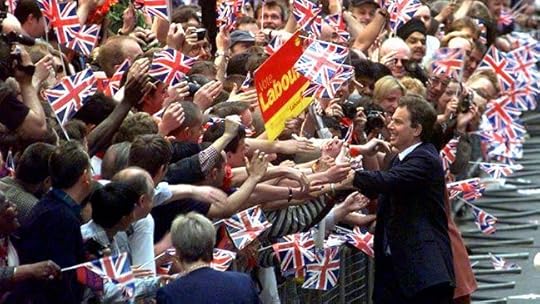
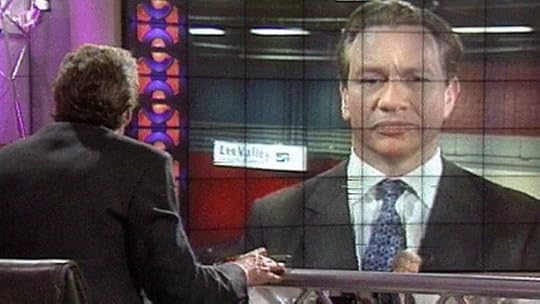
This book provides an authorative, highly readable description and analysis of the background, the campaign and the results of the British general election of 1997, and outlines the consequences of Labour's victory. The dramatic events of 1992 to 1997 and their impact on the party's preparations are analyzed. Close observation of the party headquarters is used to explore each party's strategic decisions and the implementation. The battle in the constituencies and in the media is examined. The results are dissected in detail to assess how well the contestants played the hands dealt them. Illustrations and cartoons entertainingly illustrate the campaign trail and recapture the excitement of election night. 1997 saw campaigning at an altogether new level of sophistication. Direct mail, targeting, spin-doctoring and rapid rebuttal were used far more thoroughly than ever before. They may not have decided the result--but they crossed new frontiers. Elections will never be the same again in Britain.
Sir David Edgeworth Butler, CBE, FBA was an English political scientist who made a major contribution to the study of UK elections, particularly through the series of Nuffield Election Studies which has covered every UK general election since 1945. Butler was a commentator on the BBC's election night coverage from 1950 to 1979 and was a co-inventor of the swingometer. He later appeared as an electoral analyst on various television and radio programmes, including for ITV on the night of the 1997 general election, and Sky News election night coverage in 2001. He also appeared as a guest on the BBC's coverage of both the 2010 and 2015 general elections.
Well, I could not find it, I mean, The British General Election of 2017, but I bumped into that book, regarding 1997.
Things look bleak for Theresa May as for her "win" in the General Election of 2017. If you add to that, Brexit's hard negotiations and a rising popularity of J. Corbyn , than chances are that Labour may have a chance....20 years on.
Ginning up interest in a self-described boring campaign and predetermined election is difficult, but Butler and Kavanagh do another great job with The British General Election of 1997. It will be hard to generate a star rating for the forthcoming iterations of this series—what should my baseline be?—and avoid repeating myself, as just in the first two I’ve read it’s hard to spot structural differences.
Almost immediately after the beginning of their mandate the Tories self-destructed. After the ERM crisis the party never came within 10% of an invigorated (New) Labour Party firmly situated in the ideological center. But said invigoration was only fully realized two years into the mandate, when Tony Blair took the reins. Given the large polling leads under John Smith, could a Kinnock-less version of ‘92 Labour have stopped a fifth Tory term? Butler and Kavanagh only seem to answer this implicitly; it took Blair and Peter Mandelson’s aggressive distancing from Old/Socialist Labour for a complete inoculation from Conservation fomentations about high taxes and a weaker economy. I wish there was a further exploration of the impact of the party’s center turn, but admittedly it could become speculatory.
The same bases as ‘92 are covered here chapter-wise, and I have the same gripes about the less enthralling chapters on candidates and constituency campaigning. Otherwise, the coverage is comprehensive without becoming redundant—the Tories were outmanned and outgunned, but in a variety of ways.
One of the enduring questions of this election is only partially explained by the book: if the economy was performing so well, why was the Labour landslide so large? The two authors claim that voters simply no longer believed whatever the government said, and this is borne out in the polling about how voters viewed the economy (poorly). An astute reader of the series would note the disconnect between economic conditions and government approval present in 1992. Can this solely be explained by the conduct of the Labour Party and their changes from Foot to Kinnock to Smith/Blair? Perhaps. I could be asking for too much from this book (especially vis-a-vis Letting the People Decide), yet I will be reading closely to see if the aforementioned disconnect continues into the next elections.
I will set aside these objections and give this book a 5/5, because there are minimal differences between this one and 1992, and the Nuffield series is essentially the only shop in town with few other easily available research resources on elections.