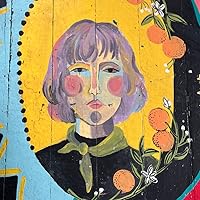
Although their Mongol overlords (beginning with the founding of the Yuan dynasty by Kublai Khan in 1280) tyrannized the Chinese in nearly every area of life, the arts enjoyed a new-found freedom. On the one hand oppressed, on the other released from the straight-jacket of Confucianism, the Chinese made the most of recent developments in poetry and drama. Yuan plays were a tonic, an amazing spectacle - colorful outbursts of singing, dancing, music, acting and mime. They poured new life into old stories - oppressors were ridiculed, servants became masters, scenes changed, day followed night in the twinkling of an eye - and audiences flocked to enjoy what must have been complete entertainment.
This volume contains six of the best Yuan plays, together with an introduction to the genre and a brief essay on each play.
I almost didn't bother to get this 1972 Penguin, since I have these plays in other translations and in much more recent books. But to be a completist in English translations I did, and I see why Penguin keeps it in print. Liu Jung-en was a poet and novelist, and writes a valuable introduction to zaju in general and each of the plays. He makes a strong argument that the Mongol century in China, in spite of its chaos or because, allowed an escape from conservative culture and a flood of creativity, 'a new intellectual freedom which found expression in popular drama.' He draws in political and cultural context to the plays so sensitively, they come alive from his interpretation. He also translates, and when the introduction itself is written gorgeously you can't go wrong.
As the title explains, this volume offers six Yuan plays from the 13th century. These were selected because of their popularity and because they represented various forms/periods within the genre. The introduction is very helpful, shining a light on the role the plays as China groaned under the yoke of their Mongol conquerors.
The plays are rather plainly translated, which is fine, and it is easy to separate the poetry/songs from the spoken text. The editor also consistently uses names in the attributions, rather than the traditional “lead male,” “extra male,” etc. So they are easy to read.
Overall, this book is a very good introduction to Yuan theater for those few who are interested in drama and drama history. Poetry enthusiasts might enjoy the language.
Here’s my reviews of the plays as I read them.
Autumn in Han Palace **** -- This bittersweet love story was a very famous play in China in its time. The play features beautiful language (even in this plain translation) and I imaging the songs would have been very moving. This play is not to be appreciated for its action or deft plot, but for the love language of the two main characters.
Chang Boils the Sea *** -- This is another lyrical love story. The language is not quite as heart rending as Autumn in Han Palace (but it has a happy ending). It’s a bit of a fairy tale combined with mythology. It doesn’t really provide a lot of insight into human life. But it is a beautiful work.
Partly for historical and political reasons, dramatic theatre didn't seriously emerge in China until the Yuan dynasty (1279-1368) -- that'd be the Mongol one. These six plays generally adapt earlier tales, set them to lyric poetry, dialogue, and music, and wrap up in a brisk four or five acts. Injustice and vengeance take center stage. The stories are all quite interesting, with "Autumn in Han Palace" probably being the strongest, but the repetition of material within each play leave much to be desired. With great candor, the editor and translator says he tried to cut out as much of that repetition as he deemed fit -- the introduction and notes, by the way, are great, and explain details like how "totally incorruptible officials had the power to judge not only the quick but the dead." I think the brutal violence and loony humor of Yuan drama seems far more influential on the history of the Chinese novel extending from the Three Kingdoms onwards than does the forlorn meditativeness of the Chinese poetic tradition already perfected centuries earlier.
Confound it, the cries of this bundle of feathers only make me more sad!
This was my first foray into ancient Chinese drama. I thoroughly enjoyed this collection for multiple reasons: 1. This was a nice selection of plays that allowed me to seamlessly transition form one to the next and actually read this like I would a novel. 2. The translation (I can't say anything about accuracy but...) felt natural and had a flow that was easy to read and imagine being performed. All of the expressions and metaphors were easily digestible. 3. The introduction. Do NOT skip the intro. It gives so much background on the society and context for when these plays were written and performed. I don't know if this book is necessary for someone who may already have other publications/translations of these plays, but I would definitely recommend for anyone interested in starting off with this area of literature.
Read The Orphan of Chao within this collection of plays and I really enjoyed it! The plot is thrilling and you get invested in the characters quite quickly. The play is also very short, so it is easy to get through if you don't have too much time. Highly recommend!
the orphan of chao 3/5 the soul of ch’ien-nü leaves her body 4/5 the injustice done to tuo ngo 5/5 chang boils the sea 3/5 autumn in han palace 5/5 a stratagem of interlocking rings 4/5
This book would be my first introduction into Asian plays, granted these are rather old plays, but it must have still some simularities. Regardless I did enjoy this book quite a bit, even if the culterutal differences were there.
One great different and detail I found that seperated most Western plays I have read from these plays, was the introduction these Yuan plays had. Now it's true some great Western playwrights have been known to set a scene with a introduction of detail, but with these plays I have just read, they take a different turn with the word introduction by letting each charracter step onto the stage in the begining and introduce themselves.
It's an interesting way to begin a play and for someone who is not used to Chinese names, this helped me associate which character went to which name. Now one could comment that because of this introduction the reader or viewer could become less enchanted or submerged into the story and characters.
When also reading I did notice how the stage was not a room or a set, like alot of western plays I have read, but simply a stage. It reminded me quite alot of how the stage was of the Greek play, "Medea". Of course being a visual man myself, I prefer a room or set to complete the illusion.
There are six plays within this collection and I dare not review each one, instead I will comment on my two favorites. "The Soul of Ch`ien-Nu leaves her Body" by Cheng Teh-hui was a pretty unique romantic fairytale like story. I found it to be quite entertaining, with even a interesting idea on what happens when a a seperated soul and body try to reunite.
"Chang Boils the Sea" by Li Hao-ku was most likely my favorite of the six, being not only a forbidden romance but also a mythology type story. The main charracter fell for the Dragon King's daughter, and will meet her again, even if that means taking down the level of the ocean with the help of an Immortal.
Overall very good book, gave me an insight into the Yuan plays and the different tales told at the time..........Timothy~
In this edition, Jung presents translations of six plays from the Yuan Dynasty by a varied selection of playwrights including the well-known The Injustice Done to Tou Ngo, The Orphan of Chao, and Autumn in the Han Palace. An interesting introduction to the background of the plays is also included.
These plays were developed during a societal and cultural shift that occurred during the Yuan Dynasty and represent the finest Classical drama in Chinese literature.
However, these are not the Yuan originals for many of them were lost to time; extant copies of Yuan plays rarely date from the Yuan period but rather from the Ming. This is because drama then became a scholarly pursuit rather than a popular entertainment. This does not impinge on the enjoyment of these plays because during the Ming dialogue and stage directions were also preserved, giving more context to the song suites that often only survived the Yuan.
I read this in search for teaching materials (that worked alright), and the stories were entertaining. Perhaps not to everybody’s taste with the repetition and the moralizing aspects. But then reading western opera librettos without the staging or the music does not give you the full experience either, so use your imagination...