Kontynuacja sprzedanej w milionie egzemplarzy powieści Miniaturzystka. Złoty dom, nowy międzynarodowy bestseller Jessie Burton, przenosi nas do pełnego tajemnic domu Nelli w XVIII-wiecznym Amsterdamie i opowiada historię o miłości i przeznaczeniu.
1705, Amsterdam. Thea Brandt kończy osiemnaście lat i jest gotowa powitać dorosłość z otwartymi ramionami. W miejskim teatrze czeka na nią miłość jej życia, ale w jej rodzinie nie dzieje się dobrze – ojciec, Otto i ciotka Nella kłócą się bez końca, a rodzina Brandtów wyprzedaje meble, żeby mieć co jeść. W dniu, kiedy Thea przyszła na świat, jej matka go opuściła, a sekrety przeszłości zaczęły przejmować kontrolę nad teraźniejszością.
Nella rozpaczliwie pragnie ocalić rodzinę, zachować pozory i znaleźć dla Thei męża, który zapewni jej bezpieczną przyszłość. Zaproszenie na najbardziej ekskluzywny bal w Amsterdamie niesie radość i nadzieję – może los w końcu uśmiechnie się do nich?
Jednak gdy Thea odkrywa nowe miniatury, Nella zaczyna mieć poważny powód do obaw. Osiemnaście lat temu miniaturzystka po raz pierwszy pojawiła się w ich życiu. Wydaje się, że teraz ma nowe plany… Złoty dom to wspaniała, wielowymiarowa opowieść o ambicji, tajemnicach i marzeniach oraz determinacji młodej kobiety, która pragnie sama decydować o swoim życiu.
Jessie Burton studied at Oxford University and the Central School of Speech and Drama, where she appeared in productions of The House of Bernarda Alba, Othello, Play and Macbeth. In April 2013 her first novel, The Miniaturist, was sold at an 11-publisher auction at the London Book Fair, and went on to sell in 29 other countries around the world. It was published by Picador in the UK and Holland in July 2014, and the USA in August 2014, with other translations to follow. Radio 4 commissioned it as their Book at Bedtime in July 2014. Her second book, The Muse, set in a dual time-frame, during the Spanish Civil War and 30 years later in 1960s London, was published in 2016. Jessie's first novel for children, The Restless Girls, will be published in September 2018.
This is the sequel to The Miniaturist, which I loved.
This book starts with Thea celebrating her eighteenth birthday and attending Amsterdam’s most exclusive ball at which potential husbands are met. There is one candidate that aunt Nella likes a lot, but not so much Thea as she has her heart set on Walter, painter at playhouse. And as it turns out, someone else knows her secret and now demands money or Nella’s life will be ruined.
As the story is mainly about family dynamics/secrets, there is very little to the plot. The family dynamics are well-presented. Young Thea represents a character that despite family’s expectations she tries to forge her own path, but she struggles with it. Her character is to learn from her experience and come stronger at the end, and I believe that is the main point of the story. It could be also family struggles against society’s expectations. Nevertheless, I don’t see a strong point of this story.
The characters are well-developed and kept me engaged for about the first third of the story. In the second third, the story is not making much progression and the characters start losing their appeal. It picks up in the third part of the story, with some events happening.
This story is character-driven, which I love, and based on family dynamics/secrets, which doesn't necessarily appeal to me. Thus, I was hoping for strong sense of place in regards to Amsterdam to give the story more vibrancy. But it’s not there.
The miniaturist appears a few times in this story, but it’s just a mention of her and some miniatures. It is a bit confusing what that is about. In the first book, it is the miniature copy of the house they live in and then followed by miniature things that fill the house. In this following book, I’m not sure what this is about. It feels forced in the story, as it had to be somehow woven since it’s the sequel book.
Source: ARC was provided by the publisher via NetGalley in exchange for an honest review
fulfilling my 2022 goal to read one book each month that was not published in my country that i wanted badly enough to have a copy shipped to me from abroad and then...never read.
day four of my "i have covid readathon!"
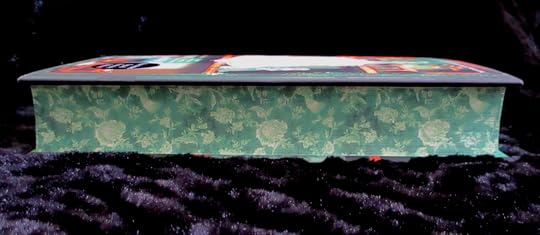
i pre-ordered a lovely special edition of this book from waterstone's, pause for ooohh
and ahhhhh
and even though i ended up reading my US-ARC copy, i'm counting it towards this monthly goal because i COULD have read my pretty one before it pubs here next month.
confession completed, review to come when covid stops coviding.
*******************************
WHAT THE HECK, GUYS???? SUCH EXCITING NEWS AND NO ONE TELLS ME?????
Nella suppresses a sigh. Since the Sarragon ball, whenever she asks her niece what is on her mind, what music plays in her head instead of the notes on the page before her, Thea claims she is thinking of nothing. But this is an obvious lie. (PG. 82)
I really liked this novel being set in Amsterdam in the year 1705. It's not a year or city that gets tackled much.
I read this before the Miniaturist but I don't feel like I missed too much. It was a great standalone, although, I could have used more backstory to some characters in the family.
This was a nice little mystery that intertwines years of family secrets. My rating is based on the story line being repetitive and getting too slow in some parts. The author is clearly a talented writer with much imagination and she captures the era really well, especially the social expectations of class and women during this time. Can't wait what else she has in store for us.
“The Miniaturist” was ok, but this (unnecessary) sequel doesn’t have the gothic atmosphere which was the best part of the first book. Some cheesy romance. Disappointing. I received a free copy of this book from the publisher.
This is the follow-up/companion novel to "The Miniaturist", which I enjoyed. If you're planning on reading the first book before this one, disregard the first paragraph of my review to avoid spoilers. The previous book ended with the surprising birth of Thea to the Brandt household. It is now eighteen years later, and time to entertain marriage prospects for this treasured daughter and niece. The setting is Amsterdam in the 1700s. The people living in the household are Nella, young widow of Johannes Brandt these last eighteen years and aunt to Thea; Otto Brandt, father to Thea and a man of color who was welcomed into the family fold by Johannes Brandt; Cordelia, long time maid and cook of the house. These are all characters from the previous book. The one character present in spirit only is Marin Brandt, sister of Johannes- she died shortly after giving birth to Thea.
While many "part 2" books have a kind of sophomore jinx where they are not quite up to par with the original book, this one succeeds. It maintained my interest throughout. The young character of Thea breathes new life into this story while she also yearns to learn more about her late mother and the past. The patchwork family that lovingly raised Thea have been forced to sell paintings and other valuables during financial strife. Brokering a marriage for Thea to a prominent and financially solvent suitor would be advantageous to all. However, Thea has a secret: she's involved with a handsome set painter at the local theater.
The elusive miniaturist reprises her role, as mysterious packages containing prophetic figurines are left on the Brandt doorstep once again.
This book would read well as a stand alone, but could be enjoyed even more so having read "The Miniaturist" first. I enjoyed the writing of these companion books so much that I purchased another one of this author's books, "The Muse" to read at a later date.
Thank you to Bloomsbury USA, Bloomsbury Publishing for providing an advance reader copy via NetGalley.
A good read… but not near as amazing as the first. The gothic, eeriness of the first book, The Miniaturist, is missing here. The last 1/3 of the book didn’t have the same tone as I loved in The Miniaturist. I can’t quite put my finger on it; but something is missing. Maybe Jessie Burton just got a bit softer in the last ten years? And so that is represented in her writing? Maybe there needed to be more death or tragic events? (I know I’m morbid…) After thinking on this for about a month I can honestly say that my biggest concern is that The House of Fortune was forgettable. Whereas The Miniaturist is will a book, even having read it 10 years ago, that comes to mind and has moments I can remember. This might be one of those times when a sequel was not needed; but the publisher wanted one? Whatever the reason it's a good read. I wouldn't not recommend it, but I would say only if you love The Miniaturist is this one worth picking up.
Please note: I received an eARC of this book from the publisher via NetGalley. This is an honest and unbiased review.
I was extremely excited for this book considering how much I love The Miniaturist, and for the most part, it was entertaining, but I’m sad to say I’m dissatisfied.
I do not feel like it is on the same level as its predecessor. I found it a little lack luster, and often very repetitive. The scandal in The Miniaturist was much more shocking and thrilling which made me want to continue reading and I found it easy to feel real emotions for the characters, but this time they irritated me. I often found Thea to be spoilt and unlikable, and the way that Otto and Cornelia treated Petronella was extremely irritating and very unfair. Nella was the only character who I felt anything for, and it was she who interested me most.
I was mainly disappointed in the lack of the actual miniaturist. We were only graced with 3 miniatures, and I feel like that thread to this story was barely even there. I continued to read in the hopes that something would happen further regarding these unusual miniatures, but nothing did, which made them feel very pointless in this book. Due to that, I do not see the point in those regular occurrences where Nella felt like she was being watched. That just felt like I was being teased with something mysterious and compelling, to be let down with no plot behind it at all.
I did not find myself desperate to finish this tale, as I felt its ending was predictable, and I feel very ‘meh’ towards it now. I believe the 2 stars are generous.
This entire review has been hidden because of spoilers.
Неустоимо разказана (почти) семейна история в Амстердам от 1705 г.
18-годишната Теа е прекарала всяка от преживените си години в достолепната, но крайно обедняла къща на Херенхрахт в най-престижното кътче на Амстердам. Израстването и определено е странно по амстердамските стандарти - единствено с баща си Ото (който се сблъсква с непрестанни проблеми заради цвета на кожата си), с леля си Нела (вдовица на екзекутиран за содомия знатен търговец), с готвачката Корнелия (която приготвя най-умопомрачаващи за небцето ястия от нищо) и с един дебел любящ котарак на име Лукас.
Редом със страшно симпатичните герои разходката из северните канали в зората на XVIII в. заковава за страниците. Цялото това странно семейство буквално влезе под читателската ми кожа. Единствено ми се ще някой ден Джеси Бъртън да напише и продължение, но романът (както и преходният - ”Миниатюристът” ) е напълно самостоятелен. И е прекрасно, че в чудесно оформената корица присъства и котаракът!
Благодарна съм на книгата, че ми напомни никога да не идеализирам някой исторически период. Спретната Нидерландия от 18 век, все пак прекрасно място на фона на останалата част от континента, с колосаните перденца и премитите подове, с добре облечените бюргери и трапезарии като от пищен натюрморт си има и тъмна страна. Задушаващите еснафски погледи, клаустрофобичната теснотия на каналите, социалния таван, фалшивото благочестие и двойния (винаги в ущърб на жените) стандарт.
Иначе самата история е приятна, като изключим „мистериозната“ нишка, чийто смисъл въобще не разбрах, и някои моменти, в които съспенсът изглеждаше твърде изкуствено предизвикан.
This was a good read but I was wishing for a little more depth to the storyline than there was. The ending of the book came together nicely but again I felt it was a bit lackluster.
Dearest reader, you thought you knew the tale of The Miniaturist. You presumed the story was over. How foolish of you, for there is another voice that must be heard. Set in the golden and austere city of Amsterdam, the year is 1705 and this is the story of fate most wicked, ambitions which are loftier than the heavens, secrets that long to be let out, dreams are nothing but delusions, and one young woman’s steadfast determination to be the ruler of her own destiny. Thea Brandt is turning the wise age of eighteen,and is ready to welcome adulthood with vigour and open arms even if she does think that celebrating a birthday is rather childish. Walter, the love of her life works at the theatre,awaits her to embrace Thea and promise her more than surely he could ever deliver, even when Thea knows this cannot be the way forever,especially when they have to hide themselves away from prying eyes. Yet at home in the house on the Herengracht, winter has firmly set in and clawing away at those within its cold walls which only elevates the arguments her father and Aunt Nella have on a near daily basis regarding the family and their future which seems to rely on selling furniture in order to survive unless Nella can secure a husband and perhaps save their legacy. Upon an invitation to Amsterdam’s most exclusive ball,Thea catches a glimpse of how things could be, however as the ball does indeed bring tidings of change for the family,Nella cannot help but feel the presence of The Miniaturist once more and she will have to face the reality that perhaps it is not right to force Thea into a fate neither of them think is right or fair. Effortlessly faultless in storytelling, the author welcomes you back to a much-loved world where you will become addicted once more to the gorgeously evocative tale of family, secrets, deceit and honour.
I really didn’t enjoy this book. It felt as though it was building to a climax that never came. The Miniaturist was mentioned a handful of times and yet remained completely irrelevant to the story and didn’t even appear in the end.
I did enjoy learning about Nella’s history, although as we had heard so little about her previous life in the first book, it all felt a little ad hoc to make something interesting enough to write a second book about. Maybe if it had been focused more on her and her old life then the book would have been more compelling, but as it centred on a frankly unlikable Thea, the whole thing felt a bit flat.
I felt as though there wasn’t even much of a plot. We followed a stereotypical self-centred, love-driven teenager who thinks she knows better than everyone into what was barely a story. It disappointed me so much.
I had to pull out my copy of The Miniaturist to refresh my memory on a few things (even though I watched the BBC miniseries not that long ago). I do think you need to read that book first in order to understand what’s happening in this book. It takes place 18 years later and is full of all the mystery, intrigue, and drama that you could want.
This read follows on from The Miniaturist but is well developed in that reading the first book isn't necessary as the author gives enough background in order to ensure this story is relatively easy to follow. It is one of intrigue, secrets, love, betrayal and forgiveness.
The Herengracht (so named to reflect the gentlemen governors of the city of Amsterdam) as described is one area of high repute for which the Brandt family struggle financially to survive but are desperate to keep up appearances. Otto had been demoted to a menial position and his income reduced but even worse he announces that he has been put off altogether reason being that he is too old, however, deep down he feels it's the colour of his skin, African. The family remains shrouded in secrecy, the dreadful events of the past could come to light at any time particularly now that Thea is about to turn eighteen and who is now more than ever determined to find out the secrets that this family hold but no one is keen to tell her the truth. For her part Thea is also hiding a secret. After much persistence to be allowed to walk alone to the Schouwburg Theatre she has fallen in love with the set painter. She is able to hide much of this having formed a liaison with one of the main stars giving her a cover story. However, there are other plans for her future life being determined by her Aunt Nella, determined to find her a wealthy suitor, particularly as now they don't have a regular income, finances are low even with selling off paintings, antiques and jewellery.
At this time in 1705, Thea is unusual in her appearance with her mixed-race colouring, a little too different for some of the upper classes of Amsterdam which means that her Aunt will have to work hard to find her a suitable high society suitor. Thea on the other hand is wilful and spoilt and dreams of her lover and of travel.
Thea's Aunt Nella had married into what she thought a well-respected family but her husband, Johannes Brandt had another side to him, disappearing all the time into his office leaving her alone to be with his mean and nasty sister Marin. He completely ignored her, never a moment of affection and unbeknown to Nella (although Marin would have known) he had another lover which in the end led to his death after being denounced by the lover at a trial. Now a widow, Nella grapples with the disgrace.
Otto for his part had been a slave until brought to Amsterdam to be a manservant for Johannes but his involvement with Marin resulted in Thea being their illegitimate daughter. Marin dies leaving Nella to raise Thea and in doing so Nella ignores her own family's plight. Not divulging these events leaves eighteen year old Thea querying Aunt Nella's reluctance to return to her own home in the countryside or even thoughts of selling the home to relieve the family's financial pressures.
For the first time in a while, the miniaturist secretly makes her presence known, firstly to Thea who receives a tiny gift of a perfect and beautifully crafted object. Unaware of the significance of what this all means she hides it, however, events turn nasty with her set painter, for which the miniaturist had foreseen. Nella on the other hand knows exactly what is happening when she becomes aware of the miniaturist's presence at the grand gala event where she is desperately networking the room to find suitable suitors for Thea and with the heat of the candles and the stress she faints alongside a young man who then becomes a suitor for Thea.
It all comes to a head with Thea running away, the Police are called, however with the clues she leaves behind Nella finds her and where truth-telling, love and forgiveness return to their lives.
This read really grew on me. I loved The Miniaturist and I enjoyed the 'what came next' that continued as baby Thea steps over the threshold of her adult life and finds the familial connections she has sought throughout her young life. Wonderful storytelling. 4 stars.
3.5 stars. Even though this is a sequel to The Miniaturist, she really didn't figure much in the story. I felt the two books were quite different. I didn't enjoy this book as much as The Miniaturist, but I did appreciate the depth of the main characters, Nella and Thea.
Estamos en el siglo XVIII y Thea Brandt ha crecido y se siente limitada por su padre y su tía Nella. Mientras Thea se rebela con un romance con un hombre mayor, cosas del pasado vuelven para atormentar a la familia y Petronella evita mirar atrás a su infancia ocupándose de las perspectivas matrimoniales de Thea como forma de salvar a todos. El Herengracht (llamado así por los señores gobernantes de la ciudad de Ámsterdam), tal y como se describe, es una zona de gran reputación en la que la familia Brandt lucha económicamente por sobrevivir, pero está desesperada por mantener las apariencias. Otto ha sido degradado a un puesto inferior y sus ingresos se han visto reducidos, pero lo que es peor, anuncia que ha sido destituido por completo, alegando que es demasiado viejo, aunque en el fondo cree que es por el color de su piel. La familia sigue envuelta en el secreto, los terribles sucesos del pasado podrían salir a la luz en cualquier momento, sobre todo ahora que Thea está a punto de cumplir dieciocho años y está más decidida que nunca a descubrir los secretos que guarda esta familia, pero nadie está dispuesto a contarle la verdad. En esta época de 1705, Thea tiene un aspecto inusual por su colorido mestizo, un poco diferente para algunas de las clases altas de Ámsterdam, lo que significa que su tía tendrá que trabajar duro para encontrarle un pretendiente adecuado de la alta sociedad. Thea, en cambio, es caprichosa y mimada, y sueña con su amante y con viajar. Aunque es bastante diferente a la primera parte, me ha encantado, sobretodo por la evolución de los personajes, esta historia es mas bien una intriga familiar de secretos, amor, traiciones, perdón… El final me ha gustado, queda todo bien cerrado y bien hilado, pero me encantaría que la autora sacara un tercer libro contándonos algo mas sobre todos los personajes.
1705 Amsterdam. Thea Brandt is celebrating her 18th birthday and is ready to experience all that adulthood has to offer. The constant bickering between her father Otto and Aunt Nella over the financial troubles that are plaguing the family give Thea the reason she needs for escape. She finds the playhouses of Amsterdam to be just what she needs. Aunt Nella has come up with a different plan for Thea when they are invited to an exclusive ball. There she hopes to find a husband for Thea and all of their financial worries will be over but Thea has other ideas about her future.
This was a satisfying sequel and I enjoyed catching up with the characters and revisiting Amsterdam. Highly recommend for historical fiction fans.
Thank you Netgalley and Bloomsbury USA for the ARC.
Maybe it’s me, but I think these Miniaturist books always promise more than what they deliver. I admit I don’t remember most of ‘The Miniaturist’, but I do remember that it didn’t blow my mind.
Perhaps this sequel is a tiny little bit better? The overall story, probably. But I definitely didn’t like how Nella was for the better part of the story. She was so bitter, it was enough to leave a bad taste in my mouth.
It’s an ok story. Still, I’m left wondering if it was a story that needed to be written. Everything considered.
Idid enjoy this, but not as much as the first one. I do agree with comments that it definitely wasn’t as gripping, it kind of skated along at its own pace.
I did find Thea slightly annoying, and found I was still rooting for Nella more as this went along. Definitely an interesting take on continuing the story, but it didn’t quite live up to the first one.
Mediocre. More prose and backstory than plot. This should have been a novella, the story would have greatly benefitted from being shorter.
Plot- Very predictable. I could see most plot beats coming, and the process wasn't even enjoyable. I can look past a lack of originality, but what else does this book have? The only truly good element of this book is the writing style. There is little plot to speak of! This is distressing news, given the fact that this is in fact a novel. The characters and narration babble on about the past and their thoughts/emotions about it. This gets so out of hand that it impedes the plot from happening at all. I have never read the first book, nor did I need to, to understand this one because the characters never shut up about what happened in the previous novel! This book made the previous one sound very interesting but at the cost of its own story. Almost nothing happens until the last 4th of the book, and then it is over!
Characters- Flat. So, so flat. None of the characters seems to have any depth. They are all just sad, angry, and one additional (and seemingly random) trait. Combined with a lacking plot, this makes the story lifeless and hollow. Also, Thea is insufferable and does not change by the end of the story. Character arcs? This book doesn't know her.
Prose- The only reason I finished the book. The style is amazing and captivating. However, there is more prose than plot. So much time is spent explaining thoughts and emotions that nothing gets to happen. Prose alone cannot make the story happen. I can tell the author is actually a good writer. This story just seems to be a bad one, but it happens. I will not be using this book alone to judge Burton as an author.
Pacing- Almost nothing happens for most of the book. Then, suddenly the story pushed forth and ends abruptly. Most of the book could have been condensed into half of what it was. The ending was so sudden. It's not a cliffhanger OR a satisfying conclusion. You don't wonder what's going to happen next, like in a cliffhanger. Neither do you get told what happens to the characters like a satisfying ending. It's just vague, but not in a way that leaves me intrigued.
Confesso que no início desta leitura senti um pouco a falta do ambiente mais gótico do “O Miniaturista”, mas logo a excelência da escrita da autora me conquistou.
Este livro é passado 18 anos após o final do primeiro volume, numa Amsterdão um pouco mais aberta e não tão fanática.
Temos duas grandes protagonistas, a Thea, é a típica adolescente que pensa que tudo sabe e que não precisa de ninguém. Fui simpatizando com ela ao longo da narrativa, à medida que ia observando o seu crescimento pessoal. E a nossa Nella, que apesar de continuar com a sua força e a sua coragem, parece que parou no tempo e que se encontra exatamente no mesmo ponto em que a deixamos no primeiro livro. Ela vai ter de enfrentar os fantasmas do passado ao mesmo tempo que enfrenta os problemas do presente. Sendo a minha favorita, torci por ela até ao final.
Foi um livro que me fez refletir sobre como, apesar das coisas mudarem constantemente, podemos sempre voltar a casa e recomeçar. Faz-nos também pensar em como as nossas memórias são seletivas, como às vezes decidimos recordar apenas o que é bom e noutras o que é mau, esquecendo que em tudo estes dois lados coexistem.
Enquanto o Miniaturista tinha um enredo com muito mistério e ainda mais segredos este, é mais centrado no desenvolvimento das personagens. São livros bastantes distintos mas ambos são deliciosos.
Aconselho a lerem por ordem, penso que se perderá muito da magia do enredo se não lerem o primeiro livro mas podem ser lidos de forma independente.
ohhhh no I’m crying with delights and sadness now. Why is only 2021??????????? I need to wait for one whole year….. I’m dying to reeeeeeeeeeeaaaaaaad it!!!!!!!!!!
A sequel to "The Miniaturist" that I enjoyed more than the first book. True, the creepy vibes are missing; instead, the focus is on familial and generational relationships. While the Miniaturist is mentioned throughout, she makes no proper appearance, has no real impact on the plot and remains even less explained than before, which is a pity. But all in all, I enjoyed this as a solid piece of historical fiction. The writing is Beautiful with a capital B.
Джеси Бъртън - "Домът на съдбата", изд. "Сиела" 2023, прев. Ана Лулчева Прочетох една дълго отлагана книга. Причината да я отлагам беше странна. "Домът на съдбата" е един вид продължение на първата издадена у нас книга на Джеси Бъртън - "Миниатюристът" - и понеже минаха много години, откакто я прочетох, сега се питах дали - и какво - ще си помня от историята. Странна причина за отлагане, наистина, защото колкото повече изчаквах, толкова по-малка ставаше вероятността да помня нещо. Затова, когато най-накрая посегнах към книгата, се зарадвах да открия, че тя може да се чете и отделно. Има достатъчно препратки към историята от предната книга, за да може читателят да се ориентира. Но и без тях книгата щеше да бъде това, което е: една семейна история, летопис на една фамилия, минала през многобройни превратности, изминала пътя от изтъкнатостта и богатството през позора до бавното надигане от пепелта, заплахата за нов крах и накрая - един завършек, който за мен беше леко неочакван, но и някак пречистващ и носещ обещание за светлина. Не обичам да правя сравнения, но по разбираеми причини тук сравнението с "Миниатюристът" е неизбежно. Тук като че ли някак повече усетих атмосферата на Амстердам от 18 в.-, влязох по-добре в историята. Макар и доста по.-малка по обем, за мен тази книга беше по-вълнуваща от "Миниатюристът", историята беше по-жива и по-трудна за оставяне. Изминали са 18 години от събитията в "Миниатюрсистт". Някои от предишните герои вече и няма, явяват се нови, някои от старите, твърде млади в предишната книга, тук вече са основни действащи лица в историята. Търговски кроежи, любовна история, излъгани надежди, намерена и изгубена любов, мрачни тайни и завръщане на призраци от миналото - срещаме всичко това на тези страници. За мен книгата беше непредвидима. На няколко пъти мислех, че съм сигурна какво ще се случи, но авторката ми поднасяше изненада. И то такава, че ми трябваше време да се съвзема. Историята ме увлече истински, потънах в историята на семейство Брант и когато тя все пак свърши, наистина имах чувството, че съм била в някакъв друг, много далечен свят. Пак ще кажа - не очаквах точно такъв край, но въпреки това се радвам на това, което стана. Обикновено не обсъждам образите в дадена книга, но тук ще го направя - поне донякъде. Някои от тях - като Корнелия и Теа - са типични, не точно клиширани, но лесно бихме разпознали в тях образи от други книги. За мен изненадата беше Нела - не очаквах такова развитие. Но пък и точно това ми хареса. Книгата е написана увлекателно, за мен историята беше убедителна. Прекарах няколко чудесни дни с нея и се радвам, че отново се "срещнах" с Джеси Бъртън. Заслужаваше си.
Casa destinului este continuarea cărții Miniaturista, o carte care mi-a plăcut mult. Suntem în Amsterdam în anul 1705, iar Thea Brant împlinește optsprezece ani. Are o viață înainte și tot ce își dorește este să iubească și să fie iubită.
Secretul pe care îl deține este iubirea pentru un tânăr pictor de decoruri, Walter, care îi răspunde cu aceeași pasiune. Casa de pe Herengracht este învăluită în mister și atmosfera este apăsătoare.
De ziua ei, Thea, începe să primească miniaturi și le descoperă și pe cele vechi din pod cu mama și tatăl său. Nu înțelege puterea acestora și nici de ce le primește. În paralel, mai primește scrisori de amenințare care îi pune iubirea și onoarea în pericol.
O carte foarte frumos scrisă. Am îndrăgit-o pe Thea cu toată inocența ei. Mi-a părut rău de Nella pentru că nu a avut ochi să vadă ce trebuia văzut. Tot răul spre bine, mi-a plăcut finalul. Mi-aș fi dorit să știu mai mult despre miniaturistă pentru că de aici am plecat.
Recomand cele două cărți!
“Clinchetul paharelor, oglinzile, isteria vocilor care vorbesc toate odată conspiră să o amețească. Își dorește să fie singură în camera ei, în fața căminului, cu o carte.”
“Cărți legate în teancuri se odihnesc pe un pat de rumeguș de lemn de cedru. Ale cui să fie? În casă nu există nici o carte, căci sunt mult prea scumpe.”
This is a sequel that revels in the vibrant historical realisation of its setting and the return of beloved characters who remain fiercely compelling with the aid of intriguing new narratives. Powerfully written throughout as it tells a story full of morals and portrayals of complex emotions, the plot shows occasional weakness but still never fails to absorb.
Told with the hint of mystery that The Miniaturist conjured so well, the concept is strong and keeps you turning the pages rapidly, although some of the more prominent themes lack originality or even a real surprise factor. What it does deliver is imaginative characterisation and poignancy, something that really permeates through the book and is felt most acutely at the end.
It is 1705, and Thea Brandt is celebrating her eighteenth birthday at the Amsterdam house that she shares with her father Otto, Aunt Nella, and maid Cornelia. She spends the day at her favourite place, the theatre, where her best friend Rebecca Bosman is the lead actress. It is also the place where she pursues a secret love affair with an older man called Walter Riebeeck, one of the set designers.
Still scarred by past events as well as their last encounter with the miniaturist, Nella and Otto have been forced to sell many of the household's paintings in a bid to stave off financial hardship. Nella reluctantly tries to mingle with Amsterdam's more elite social circles in order to boost the family's standing, and at one of these gatherings she stumbles across Jacob van Loos, a young lawyer who she sees as an ideal suitor for her niece.
However, Thea is besotted with Walter and shows very little interest in Jacob when they meet, much to Nella's frustration. While Otto works on plans for a business venture with new friend Caspar Witsen, mysterious packages start to arrive at the door addressed to Thea. One of them contains a perfectly crafted miniature figure of Walter, and another contains a threat that could ruin her.
It was completely fascinating to discover how things had changed with the passage of time, and in particular to get to know Thea as an adult following her traumatic birth at the end of the previous book. The outcome was unexpected in parts, as the vibe feels very much the same as before only with a much less layered and complex plot.
The most effective moments take place when it focuses on Thea's character growth, from the blind affection she feels for Walter to her strained relationship with Nella, and all of these strands were beautifully conveyed. It makes frequent reference to past events and it was moving to see how Thea is sheltered from the secrets and knows so little of her mother, Marin. However, the plot is at times a little predictable and the miniaturist herself is rather shoehorned into proceedings.
All of the story is told in the third person, switching the spotlight between Nella and Thea. There is a clear comparison to be made with Nella and what she was like when she was Thea's age, and here the two have opposing views on what their purpose in life should be. Both perspectives are written meaningfully and it is interesting how they come to appreciate each other's side of the argument by the end.
At first, Thea is portrayed as quite rebellious and free-spirited, but also naïve. Later though, it becomes apparent that she is equally desperate to impress her family and she undergoes quite a journey, especially after she receives the first threatening note and her life turns upside down. She is not always easy to like, but she definitely grew on me and she had some very good character development.
Albeit eighteen years older, Nella comes across as a much different character than the gutsy and captivating protagonist she was in The Miniaturist. Indeed, it even seemed like she was turning into Marin at certain points, but you still empathise with her as she takes difficult decisions to preserve the household's future prospects, and the ending made me love her again.
Otto is a forceful personality and you root for him in a society where he and his daughter continue to be marginalised, while Cornelia is perhaps my favourite character of all for her loyalty and good humour. It was immediately obvious to see that Walter is sleazy and not to be trusted, and question marks hang over Jacob for much of the story too. In contrast, Rebecca and Caspar are much more kind and likeable.
The Amsterdam setting is once again a joy to behold, and this time we see many more aspects of it than before, with places such as the theatre and Clara Sarragon's mansion. Elsewhere, the Brandt's house manages to retain that singular sense of intrigue, and it was also impressive how Nella's hometown of Assendelft ended up playing such a crucial part in the plot.
What makes the writing so good is that it is just extremely evocative, with everything combining to deliver this world's unique atmosphere and emotion. There a some lines late on in the book which truly resonate. The ending itself is one of the highlights - even though you can easily see a lot of it coming, it is actually very heartwarming to see it all play out.
Overall, the plot may not be the most extraordinary but this is still a very competent sequel that is enjoyable to read and typically rich in detail. The dynamic between Nella and Thea is what drives the story most and there are some powerful moments that are told with a superb literary flair. Not perfect, but good in so many ways.