

What do you think?
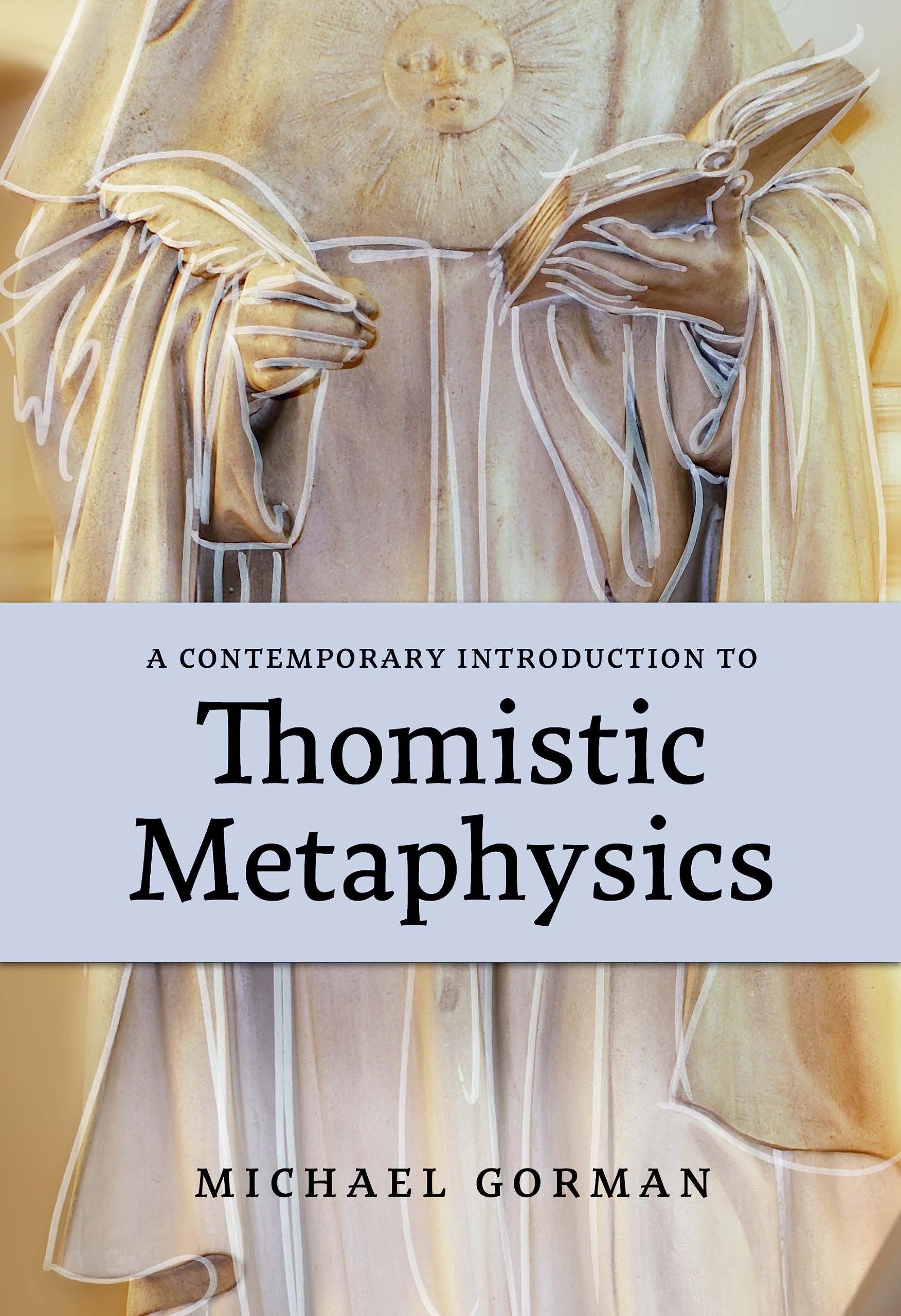
A Contemporary Introduction to Thomistic Metaphysics
A Contemporary Introduction to Metaphysics provides the reader with an introductory presentation of key themes in Thomistic metaphysics. There are many such books, but this one is, to use a phrase Michael Gorman has adopted, "analytic-facing," i.e., it presents things in dialogue with analytic philosophy. Sometimes that means disagreeing with analytic proposals (for example, possible worlds), and sometimes it means agreeing with them (for instance, making ample use of Ryle's notion of "systematically misleading expressions").
What's more, it (gently) takes a somewhat deflationary attitude towards many things metaphysicians like to talk about, such as accidents, universals, and the like. By "deflationary" Gorman means that such items are taken seriously, but their ontological status is taken down a features, universals, possible worlds, and other such things are understood in terms of what substances are and what substances are. Substances are "basic beings," and other things are what they are only in relation to substances. Of course this is Aristotle 101, but metaphysicians, Aristotelians included, often slip into treating non-substances as mini-substances, and Gorman pushes back against this throughout.
A Contemporary Introduction to Thomistic Metaphysics begins by explaining what philosophy is, what metaphysics is, and how these relate to other kinds of thinking. It then moves through a series of topics, ending with a brief look at applications of metaphysical thinking in theology.
What's more, it (gently) takes a somewhat deflationary attitude towards many things metaphysicians like to talk about, such as accidents, universals, and the like. By "deflationary" Gorman means that such items are taken seriously, but their ontological status is taken down a features, universals, possible worlds, and other such things are understood in terms of what substances are and what substances are. Substances are "basic beings," and other things are what they are only in relation to substances. Of course this is Aristotle 101, but metaphysicians, Aristotelians included, often slip into treating non-substances as mini-substances, and Gorman pushes back against this throughout.
A Contemporary Introduction to Thomistic Metaphysics begins by explaining what philosophy is, what metaphysics is, and how these relate to other kinds of thinking. It then moves through a series of topics, ending with a brief look at applications of metaphysical thinking in theology.
272 pages, Paperback
Published August 8, 2024
About the author
Michael Gorman
100 books2 followersMichael Gorman is a graduate of St. Michael's College in the University of Toronto (B.A., Christianity and Culture, 1987), The Catholic University of America (Ph.L., Philosophy, 1989), the State University of New York at Buffalo (Ph.D., Philosophy, 1993), and Boston College (Ph.D., Theology, 1997). After serving as assistant professor of Catholic Studies at Saint Francis Xavier University in Antigonish, Nova Scotia from 1997 to 1999, he joined the faculty of the School of Philosophy at The Catholic University of America, where he has taught ever since.
Ratings & Reviews
Friends & Following
Create a free account to discover what your friends think of this book!
Community Reviews
Displaying 1 - 4 of 4 reviews

August 13, 2024
This is an excellent “opinionated” introduction to Thomistic metaphysics. This book is most appropriate for students at the undergraduate level, but there is still quite a bit to be gleaned for graduate level students who are admirers of Thomas Aquinas and the thomistic tradition (such as myself). Gorman not only provides clearly insights as to the basic building blocks of Thomistic metaphysics (e.g. substance/accidents, act/potency, essence/existence, necessity/contingency, etc.) but brilliantly puts a Thomistic understanding of these building blocks into conversation with the views of contemporary analytic metaphysicians (hence, making this a “contemporary” introduction.) Chapters 1-7 can be understood as a study of the primary subject matter of metaphysics, being qua being, and all the necessary things that that entails. Chapter 8 shifts gears to looking at the cause of metaphysics, God. Finally, chapter 9 concludes with what metaphysics has to offer to theology, providing the incarnation and transubstantiation as just two case studies to elucidate the relationship between philosophy and theology. Throughout the book, Gorman shows where questions for further exploration lie for the reader interested in going further into the metaphysical weeds. Lastly, the book is filled with many humorous examples and side notes that at least made me chuckle throughout the process, making this easily one of the most entertaining books in Thomistic metaphysics you can find. (One of my favorite footnotes being on page 155, fn. 21).

March 8, 2026
A great introduction to contemporary metaphysics in general, incredibly lucid without losing complexity, a triumph in the recent and tentative marriage between analytical writing and continental thought. Despite this, I find Aquinas to be a dangerous thinker, whose defence of perfection and deviance rests on a teleology without a reasoned justification.
For Aquinas, Substance is a subsistent, agential, and unified being; it is the “most primordial level, whatever is most basic.” (Gormann 2024, p.23). A substance can contain parts, but the important point is that these parts are not agential; they exist derivative from a greater whole whose nature exercises itself over them. There are no whole-independent parts (p. 65). All things are thus individual, with the only universality being mental concepts we apply to disparate entities. The primary parts that substance contains are its form and matter, which are explanatory devices for the possibility of change. The matter is the “internal factor, possessed by a substance, that allows that substance to cease being the way it is now” (p. 90). The matter is the principle of individuation (what makes 2 things with the same properties different) (p. 132). Whereas the form is the “internal factor or principle …. In virtue of which a thing is the way it actually is” (p. 90).
Aquinas’ conception of change requires two sets of concepts: the distinction between essential and accidental features, and the modalities of actuality and potentiality. An essential property, since Aquinas subscribes to a foundational theory of essence, is one that does not rely on some prior property for its existence and is a necessary condition for the substance's definition. Essential features are latent in the substance’s form; they act as a “nucleus, consist[ing] of a number of tropes that cannot be separated from one another” (p.81). Even if they are not actualised, they are in some sense ‘there’, merely privatised. This allows Aquinas to escape tough semantic battles in which one case-study lacks some essential feature of its putative genus. Contrastingly, an accidental property is everything else. Potentiality and actuality refer to the privation or existence (respectively) of these properties. For Aquinas, the actuality contextualises the potentiality; the potential for some action (i.e. the latent capacity to stand up) is “rooted in the essence of what has the power” (p. 54). Change then is actualisation of some potentiality.
Implicitly does Aquinas’ position on the ‘possible worlds’ debate emerges. Aquinas disagrees with both; Lewis, whose ‘actual worlds’ merely refer to a local spatio-temporal area relative to us (p;.148), and Plantinga (p. 147), who affirms the existence of transcendent possibilities. Instead, Aquinas holds that ‘possible worlds’ are merely the potentialities of the total of beings in actuality.
The ‘cause’ (the “matter of something’s being responsible for something’s happening” (p.101)) of one potentiality's actualisation of another rests upon the relation of passivity and activity between substances (p.102). The exercise of the ‘active potency’ of one substance (say, a substance has the property “to set things on fire”) actualises that of another (say, a substance with the property “to combust”). The overarching reason for causes (of which there are four, efficient, material, formal and final) is the telos/final cause. The telos is the ““that for the sake of which” the process happens, the ‘end goal’, so to speak.
For Aquinas, Substance is a subsistent, agential, and unified being; it is the “most primordial level, whatever is most basic.” (Gormann 2024, p.23). A substance can contain parts, but the important point is that these parts are not agential; they exist derivative from a greater whole whose nature exercises itself over them. There are no whole-independent parts (p. 65). All things are thus individual, with the only universality being mental concepts we apply to disparate entities. The primary parts that substance contains are its form and matter, which are explanatory devices for the possibility of change. The matter is the “internal factor, possessed by a substance, that allows that substance to cease being the way it is now” (p. 90). The matter is the principle of individuation (what makes 2 things with the same properties different) (p. 132). Whereas the form is the “internal factor or principle …. In virtue of which a thing is the way it actually is” (p. 90).
Aquinas’ conception of change requires two sets of concepts: the distinction between essential and accidental features, and the modalities of actuality and potentiality. An essential property, since Aquinas subscribes to a foundational theory of essence, is one that does not rely on some prior property for its existence and is a necessary condition for the substance's definition. Essential features are latent in the substance’s form; they act as a “nucleus, consist[ing] of a number of tropes that cannot be separated from one another” (p.81). Even if they are not actualised, they are in some sense ‘there’, merely privatised. This allows Aquinas to escape tough semantic battles in which one case-study lacks some essential feature of its putative genus. Contrastingly, an accidental property is everything else. Potentiality and actuality refer to the privation or existence (respectively) of these properties. For Aquinas, the actuality contextualises the potentiality; the potential for some action (i.e. the latent capacity to stand up) is “rooted in the essence of what has the power” (p. 54). Change then is actualisation of some potentiality.
Implicitly does Aquinas’ position on the ‘possible worlds’ debate emerges. Aquinas disagrees with both; Lewis, whose ‘actual worlds’ merely refer to a local spatio-temporal area relative to us (p;.148), and Plantinga (p. 147), who affirms the existence of transcendent possibilities. Instead, Aquinas holds that ‘possible worlds’ are merely the potentialities of the total of beings in actuality.
The ‘cause’ (the “matter of something’s being responsible for something’s happening” (p.101)) of one potentiality's actualisation of another rests upon the relation of passivity and activity between substances (p.102). The exercise of the ‘active potency’ of one substance (say, a substance has the property “to set things on fire”) actualises that of another (say, a substance with the property “to combust”). The overarching reason for causes (of which there are four, efficient, material, formal and final) is the telos/final cause. The telos is the ““that for the sake of which” the process happens, the ‘end goal’, so to speak.
July 28, 2026
A Contemporary Introduction to Thomistic Metaphysics offers a clear, engaging, and intellectually rigorous introduction to the central themes of Thomistic metaphysics while placing them in productive dialogue with contemporary analytic philosophy. Michael Gorman successfully bridges classical philosophical traditions with modern philosophical debates, making this an accessible and valuable resource for both newcomers and experienced readers.
One of the book's greatest strengths is its "analytic-facing" approach to Thomistic thought. Rather than presenting Thomistic metaphysics in isolation, Gorman thoughtfully engages with contemporary analytic philosophy, highlighting areas of both agreement and disagreement. This comparative method allows readers to appreciate the continued relevance of Thomistic ideas while gaining a deeper understanding of current metaphysical discussions.
The book is particularly engaging in its treatment of substances as the foundation of metaphysical inquiry. Drawing upon the Aristotelian tradition, Gorman argues that substances are the basic realities upon which other entities, such as accidents, universals, and properties, ultimately depend. His careful yet accessible explanation of these concepts avoids unnecessary technical complexity while preserving the depth of the philosophical tradition.
Another notable strength is the book's balanced and measured approach to metaphysical questions. Gorman adopts a thoughtful, deflationary perspective toward many traditional metaphysical entities, encouraging readers to understand them in relation to substances rather than as independently existing realities. This fresh interpretation provides an insightful contribution to both Thomistic scholarship and broader contemporary metaphysical debates.
Written with clarity and pedagogical precision, the book begins by introducing the nature of philosophy and metaphysics before gradually developing more advanced topics, concluding with reflections on the relationship between metaphysics and theology. This carefully structured presentation makes the work especially suitable as an introductory text while still offering meaningful insights for more advanced students of philosophy.
A Contemporary Introduction to Thomistic Metaphysics will appeal to readers interested in Thomistic philosophy, metaphysics, analytic philosophy, Aristotle, medieval philosophy, philosophy of religion, theology, and contemporary philosophical thought.
Overall, Michael Gorman provides an outstanding introduction that demonstrates both the enduring significance of Thomistic metaphysics and its continuing relevance to contemporary philosophical inquiry.
One of the book's greatest strengths is its "analytic-facing" approach to Thomistic thought. Rather than presenting Thomistic metaphysics in isolation, Gorman thoughtfully engages with contemporary analytic philosophy, highlighting areas of both agreement and disagreement. This comparative method allows readers to appreciate the continued relevance of Thomistic ideas while gaining a deeper understanding of current metaphysical discussions.
The book is particularly engaging in its treatment of substances as the foundation of metaphysical inquiry. Drawing upon the Aristotelian tradition, Gorman argues that substances are the basic realities upon which other entities, such as accidents, universals, and properties, ultimately depend. His careful yet accessible explanation of these concepts avoids unnecessary technical complexity while preserving the depth of the philosophical tradition.
Another notable strength is the book's balanced and measured approach to metaphysical questions. Gorman adopts a thoughtful, deflationary perspective toward many traditional metaphysical entities, encouraging readers to understand them in relation to substances rather than as independently existing realities. This fresh interpretation provides an insightful contribution to both Thomistic scholarship and broader contemporary metaphysical debates.
Written with clarity and pedagogical precision, the book begins by introducing the nature of philosophy and metaphysics before gradually developing more advanced topics, concluding with reflections on the relationship between metaphysics and theology. This carefully structured presentation makes the work especially suitable as an introductory text while still offering meaningful insights for more advanced students of philosophy.
A Contemporary Introduction to Thomistic Metaphysics will appeal to readers interested in Thomistic philosophy, metaphysics, analytic philosophy, Aristotle, medieval philosophy, philosophy of religion, theology, and contemporary philosophical thought.
Overall, Michael Gorman provides an outstanding introduction that demonstrates both the enduring significance of Thomistic metaphysics and its continuing relevance to contemporary philosophical inquiry.

March 20, 2026
A fantastic guide for laymen. I'll be sure to recommend it in the future.
In a more citical examination for Thomists, Gorman does make a run at calling Aquinas a moderate nominalist. I understand why Gorman chooses this term. In his work, he is attempting not to confuse his readers with bracketing Aquinas with Platonic realism. To avoid this Gorman is prioritizing the individuality of substances. That being is always particular. But this leads to a scary association with the error of nominalism.
Now someone like Edward Feser would disagree with this. Many Thomists see Aquinas as a Scholastic Realist. Their purpose is to emphasize the objectivity of knowledge. And to avoid nominalism; that led to a plethora of post-modern philosophical problems.
Where there is overlap:
Both agree that particular beings have a nature.
Both agree that universals exist in the mind.
Gorman emphasizes that the universal does not exist in the particular. So that the reader does not get the idea that universals exist as some extra thing, like they do in Platonic Realism.
What is missing from this book; where universals truly reside outside our minds.
That place is in the Divine mind.
In a more citical examination for Thomists, Gorman does make a run at calling Aquinas a moderate nominalist. I understand why Gorman chooses this term. In his work, he is attempting not to confuse his readers with bracketing Aquinas with Platonic realism. To avoid this Gorman is prioritizing the individuality of substances. That being is always particular. But this leads to a scary association with the error of nominalism.
Now someone like Edward Feser would disagree with this. Many Thomists see Aquinas as a Scholastic Realist. Their purpose is to emphasize the objectivity of knowledge. And to avoid nominalism; that led to a plethora of post-modern philosophical problems.
Where there is overlap:
Both agree that particular beings have a nature.
Both agree that universals exist in the mind.
Gorman emphasizes that the universal does not exist in the particular. So that the reader does not get the idea that universals exist as some extra thing, like they do in Platonic Realism.
What is missing from this book; where universals truly reside outside our minds.
That place is in the Divine mind.
Displaying 1 - 4 of 4 reviews