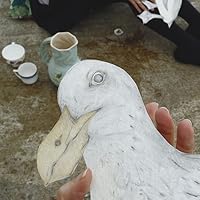
An illustrated natural history and a passionate account of extinct and endangered bird species from around the world
Internationally renowned, award-winning author, Anita Albus, recounts the sad histories of several extinct bird species, including the passenger pigeon, the Carolina parakeet, and the great auk. She also gives a detailed account of seven rare birds: the hermit ibis, the elusive corncrake, the kookaburra, the Eurasian nightjar, the barn owl, the northern hawk owl, and the kingfisher.
This visually stunning book is richly illustrated with the author's own artwork as well as that of well-known nature artists such as John James Audubon. Albus provides pictures of birds that the reader will never encounter in real life. Combining natural history and investigative reporting, the book also weaves in mythological and cultural material and, most of all, tells a compelling story.
On Rare Birds shows that the extinction of these bird species is a great loss not only to the natural world but also to culture. With each species lost, a world is lost to human understanding -- to our arts, mythology, and science. This exciting and provocative book will appeal to all those who love birds and care about their survival.
The author's drawing and paintings of the birds in question are beautiful and almost worth grabbing this book at a used book store and turning through the pages.
The pros were a bit mechanical and I dont know if that was due to the English language translation or the scientific nature of the writing.
It has also led me down a unique path of thinking around a human's involvement in modern evolution and Survival of the fittest.
Uneven mix of ornithology, bird lore, folklore, conservation, and history. At times the description of a species's life cycle is very scientific, but just as often a chapter is ruined by anthropomorphic depictions of mating behavior. Many very beautiful illustrations, historic and contemporary, liven the text, including several by the author (who is a much better artist than writer). I did learn that Edward Lear ("The Owl and the Pussycat") was a prominent bird illustrator, active around the time that John James Audubon was completing "Birds of America", and had a species named after him--"Lear's Macaw"; several of his illustrations are included in the book.
Nicely produced, drawings well printed and executed. Subject matter is harrowing. But associated histories throw incisive understandings of how we humans can kill off species resulting in extinctions. Makes me wonder, how diversity must we lose before we change our ways? For anyone with an interest in birds and how we might protect those still with us, this book offer further understanding. I enjoyed the book.
Ornithology, history, and environmentalism as an overarching theme of "birds driven to extinction" began to lose focus with commentaries on birds as symbols in culture, the unevenness of naming conventions before and during the adoption of the Linnaean system, and the accuracy of species before photography through illustrations -- including some of the author's own paintings -- this started getting too whimsical, ultimately a written-for-the-amusement-of-the-author kind of book.
The artwork is beautiful, but the writing is a little off. I didn't quite understand the selections: some chapters are concerned with definite rare species, but others seem less probable, at least on my side of the pond. And the essays themselves are not that engaging. And finally, a fine essay by the naturalist Buffon is pasted, almost inexplicably, following the afterward. Overall, this one is an odd addition to the natural history library.
Pictures are photos were lovely, the text much less so. It did not engage me as much as I thought it would. I do not know if this is a fault of translation or of the original text.
interesting facts and stories of rare birds. Beautiful old paintings of said birds. Some of the writings seem quite funny and odd, I don't know if it is the translations from German or the changes in the biological studies of birds.