Dla mnie książka Wata jest świadectwem o człowieku XX wieku dla czytelników XXI i XXII wieku, jakiego nie ma w żadnym innym języku.
Czesław Miłosz
Mój wiek to dzieło niegotowe, niedokończone, a naładowane informacjami, sprawami, problemami najważniejszymi dla XX wieku. Opowiadające o ludziach z elit artystycznych i z samego dna społecznego. Rozległy, epicki fresk, obejmujący wydarzenia z wielu burzliwych lat życia autora oraz jego refleksje dotyczące polityki, literatury, filozofii i religii. Ponawia nierozstrzygalne pytania o zło i winę, o Boga i niewiarę... Zaczyna refleksje o bólu, znanym z własnego doświadczenia cielesnym bólu… Mój wiek nadal ma swoje tajemnice, być może zamknięte dla czytelników XX stulecia, a czekające na interpretatorów wychowanych już w XXI wieku. Małgorzata Czermińska
Sposób postrzegania Mojego wieku określa tendencja kwalifikowania tego tekstu jako dzieła literackiego. Wedle nieodosobnionych opinii, którym zresztą trudno zaprzeczać, Wat był poetą. Był nim zawsze, nie tylko wówczas, gdy pisał, czego nie robił często… Mój wiek może być zatem traktowany jako narracja literacka; został powołany do życia przez poetę, a tym samym przynależy do literatury pięknej. Wobec takiego stawiania sprawy usprawiedliwiony jest sceptycyzm w imię prawa do porządkowania pola rozważań. Czy to, co mówi pisarz bądź poeta, musi być literackie z tego powodu, że jest on tym, kim jest, czy aby o charakterze dzieła nie decyduje przede wszystkim forma i charakter wypowiedzi? Rafał Habielski
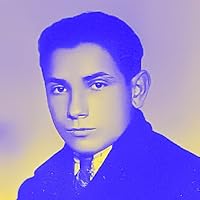
Aleksander Wat, (born Aleksander Chwat to a Jewish father and a Polish mother) was a Polish poet, writer and art theoretician, one of the precursors of Polish futurism movement in early 1920s.
In 1919 he was among the young poets to proclaim the advent of new, futuristic poetry. The following year he published the first set of his poems, which gained much popularity among the supporters of the new trends in literature of the epoch. Until 1922 he was one of the creators of the Nowa Sztuka ("New Art") monthly, and then Almanachy Nowej Sztuki and Miesięcznik literacki. Initially a Communist, until 1931 he was also one of the main journalists of the Marxist Tygodnik literacki.
There's no way I can confine myself to a capsule review, so if you just want the glib, soundbite version, I'll say this: My Century makes most autobiographies, and most novels for that matter, seem hopelessly lightweight - mere bundles of vanity and fatuousness. Okay, that's a tad unfair, maybe, but still, the book is just that profound; it puts you off lesser things for a while.
By rights, My Century shouldn't exist, since its author had no business living long enough to tell his story. In the Eastern Europe of the early 1940's, Aleksander Wat had the phenomenally bad luck to be at once a Pole, a Jew and an ex-communist: a sort of infernal trifecta, given the circumstances. Throw in the fact that he was also an avant-garde writer, and by the time the NKVD got around to picking him up, his life expectancy would have been measured in months.
Miraculously, he survived his stints in various Soviet prisons and emerged from the Stalinist meat grinder more or less intact. Decades later, he sat down to a series of informal interviews with Czeslaw Milosz, over the course of which he produced what amounts to an oral autobiograpy.
So what is it about Wat that makes him such an exemplary witness to 'his' century? First, there's the fact that he was also such an exemplary victim, in that his story is really the story, in little, of twentieth-century humanity. His second qualification is a keen literary intelligence, which underlies not only the off-hand eloquence of his deposition, but also the graceful shuttling between narrative and exposition, personal and historical, specific and general. (On the subject of Wat's literary conscience, there's an interesting exchange with Milosz early on, where Wat calls into question the very possibility of autobiography; Milosz seems impatient with this line of speculation, but a few pages later Wat is at it again, this time decrying the infiltration of historiography by autobiography. Ironically enough.)
But more important than either of these things, I'd say - and at the risk of sounding very unhip - is Wat's moral authority, his moral grandeur, even. I mean, my God, what a man! One point he keeps coming back to is that prison, for all its brutality, made him a complete human being. A system designed to undo him (physically and otherwise), to grind him down, instead granted him the very integrity he'd always lacked. He went into prison, he tells us, a cynic, a sophisticate, a dabbler in cafe nihilism; he came out a man of faith, with a renewed belief in people's capacity for heroism and nobility.
I realize I'm making him out to be a modern saint, a Lear of Lubyanka, but Wat's persona doesn't come across that way at all. You get the impression he was just too modest, too ironic, and finally too chastened by life to have any such pretensions himself.
Well, there's a lot more I could say about My Century, but I see my review has already ballooned into a low-rent NYRB type-thing. Just read the book already. You'll like it - assuming you have any interest in history, politics, philosophy or, you know, the human condition.
My Century is a memoir based on numerous lengthy warts-and-all tape-recorded conversations between Aleksander Wat and Czeslaw Milosz, the Polish Poet, in Berkeley and Paris in 1964-1965 towards the end of Wat's life.
Wat was the founder of the communist leaning "Literary Journal" in Poland at the end of the 1920s. As Milosz says in his foreword, "there are many heroes in this book" and while talking about his own experiences Wat pays tribute to them all. Wat began life in a genteel assimilated, intellectual environment in Warsaw,the descendant of an old and distinguised Jewish family. In "My Century" he describes how many of his intellectual friends from Warsaw were ground down and destroyed by Stalinism. He tells the story of how the Polish communist party was eliminated, and why, and how he himself became an anti-communist and converted to Christianity, after a night in prison in which he was convinced he had seen the devil. The book contains some memorable, terrible descriptions of wartime prisons: Zamarstynow in Lwow, the Lubyanka in Moscow, Saratov... He also recounts his many meetings; with the "Old Communists" who had helped bring Lenin to power and who had fallen victim to the great purge in 1937; and the "Urks", the common criminals who could make life hell for the intellectuals and political prisoners. Wat never goes in for anti-Russian sentiment and in fact mentions the acts of kindness he received from ordinary Russian guards and even NKVD interrogators.
Wat, unfortunately, did not have the time to finish telling the story of his life to Milosz. The final chapter in the book is written by Wat's wife, Ola. In it she describes how Wat was befriended, and most probably saved, by an "Urk" into whose cell he was thrown when he was leading Polish (mostly exiled Polish-Jewish) resistance against the NKVD "passportization" campaign, in Kazakhstan in 1943, during which the aim was to force Poles to switch to Soviet Russian citizenship.
The last paragraph of Aleksander Wat's section of the book ends, "If it hadn't been for the kindness, the warmth that those people, those Orthodox Jews (in Kazakhstan), showed to me, a "meches", a converted Jew.... They didn't know whether I had been baptized or not. I never talked about it. But I wore a cross. Later on, when we were in revolt (against accepting Soviet passports) and were under arrest together, it was so hot that I took off my shirt. And yet I was the leader of those pious Jews in prison, me, a Jew with a cross around my neck."
In the years immediately after WWII, Wat's poetry became very influential among the younger Poles. I wish this book could have been ten times longer.
I place the book right up there, with Grossman's Life and Fate.
"Apart fom his immense acuity and the intuition of a born poet, Pasternak had a certain mental ceiling; there was something almost retarded about him."
This entire review has been hidden because of spoilers.
Skończyłam dziś przygodę z Aleksandrem Watem (i trochę Czesławem Miłoszem). Wiecie co? Smutno mi, bo mam wrażenie, że takich książek już się nie czyta. Czy nie jest tak, że boimy się lektur, które wymagają zatrzymania się i przemyślenia pewnych spraw? Wiem, że nie czyta się tego łatwo, ale to niepowtarzalna szansa poczucia klimatu tamtych lat, spojrzenia na historię spoza szkolnych podręczników. Recenzować Wata nie wypada, więc napiszę tylko, że to była cudowna, choć trudna podróż.
After Primo Levi’s If this Is a Man, and Solzhenitzyn’s Gulag Archipelago, I thought I’d never come across anything as powerful about incarceration under 20th century totalitarianism. But this book is easily their match. And more. It is in any case different in style. Being the outcome taped conversations with the Polish poet Czesław Miłosz, the spontaneous upwellings, self-reproaches and lingering bewilderments of the author shine through, giving the book a convincing authenticity. It is different in content; it includes Wat's accounts of Polish and other intellectuals, remarks on the ‘sociology’ prison life, and his views of confessional, ethnic and cultural politics of Poland and Russia. It differs from the Levi, Solzhenitsyn and similar memoirs in pivoting on a family; Wat tells of his agonizing struggle to find his wife and 10 year old son, and his efforts to survive with them amidst near starvation in Soviet Kazakhstan. It’s hard to think of a more gripping account of what philosophers have called ‘bare life’. In short, it’s a stunning monument of a book. I'm astonished that I learned about it only recently, through someone's off-hand mention in a footnote. It’s now high on my list of books suffering undeserved neglect.
Masterpiece of life under Russian communism experienced by Poles who found themselves in the eastern Poland when it was partitioned by Stalin following Ribbentrof-Molotov pact signed in August 1939. In truly Kafka'esque manner shows the life ruled by NKVD arrests, forced settlement in the east of Russia, enforced take-up of Russian citizenship. All this presented in a series of discussions between Aleksander Wat and Czeslaw Milosz, Noble Prize laureate in literature, another refugee from Communist Poland. Shares light on the members of Polish Communist Party who left for Russia in 30's and following its disbandment by Stalin were sent to camps or executed. A lot of material about Hempel, Broniewski, Bruno Jasienski, Stande and Stern.
"Mi ero immischiato nella storia, e purtroppo una delle sciagurate leggi del mio destino è l'anacronismo. Perché in fondo sono stato tutto quello che si doveva essere, solo che mai al momento giusto: sono stato un politico quando bisognava essere un poeta, e sono stato poeta quando bisognava essere un politico. Sono stato comunista quando la gente perbene era anticomunista e sono diventato anticomunista quando le persone ragionevoli si avvicinavano al comunismo. […] Mai al momento giusto. Anche la libertà, la cosiddetta libertà, non l'ho scelta al momento giusto. […] Una storia enorme, una macchina possente, e io lì a farle lo sgambetto." (pp. 199, 200)
"La mia vita è stata l'incessante ricerca di un sogno immenso, nel quale stessero fra loro in un'armonia prestabilita il mio prossimo e gli animali, le piante e le chimere, le stelle e i minerali, un sogno che si è dimenticato perché lo si doveva dimenticare, e lo si ricerca disperatamente, ma capita solo sporadicamente di ritrovarne dei tragici frammenti nell'affetto di qualcuno, in una situazione particolare, in uno sguardo, certamente anche in un ricordo, in un dolore speciale, in un momento, nella pelle – e io l'ho amata, sì, l'ho amata appassionatamente quell'armonia, nelle voci, nelle voci... Ma invece dell'armonia non c'era che lacerazione, tutto a brandelli. Forse questo, e solo questo, è esser poeta?" (p. 397)
Recommended only for readers interested in the subject: the experience of a Polish Jewish intellectual dealing with the nightmare of his country overrun from the west by Hitler, then from east by Stalin. Wat headed east and, in Soviet hands, by luck and pluck escaped death and torture (except for near-starvation) but not some brutal incarcerations and separation from his wife and son, about whose circumstances he greatly feared but was generally unable to learn.
Wat gained interesting insights into Stalin's system. For example, he recognized that the significance of the millions in slave labor camps rested not so much in the unfortunate ones in the camps but rather in the masses not (yet) sent there: every citizen had a close relative or friend, probably innocent, inside a camp, and so was cowed by personal and daily reminders of Stalin's arbitrary and unlimited grip.
Wat is arrested about 1/3 of the way into the book and is in one or another prison for most of the rest. This part of the above blurb: "... artistic, sexual, and political experimentation --in which Wat was a major participant-- that followed the end of World War I: an explosion of talent and ideas which, he argues, in some ways helped to open the door to the destruction that the Nazis and Bolsheviks soon visited upon the world" smacks of sales pitch.
Wat's bravery and his intelligence, optimism and honesty in grave circumstances and in the telling of them, save his story from being oppressive.
I must admit, it was extremely pleasant for me to read about a communist who received a full load of first-hand communist experience in his promised soviet land: starvation, beatings, humiliation, and all kinds of the worst human degradation imaginable.
This book, and other memoirs like it, should be on compulsory reading list for all "communists", "neo-comunists" and "neo-marxists" out there.
My one grievance with the book is, as it was reconstructed from audio recordings, I have a feeling it would be better perceived as an audio book.
Extraordinary and gripping. The first 30-40 pages are slow going and perhaps of least interest, literary debates among writers in the early 20th century. Then his survival through WW2, the Pilsudski regime in Poland, Stalinism, the war, exile in Central Asia, just mind-boggling. Full of insights and nobility of spirit.
Five stars subtract one for a personal reason. I will explain :)
Five stars (to begin) not because I particularly liked this book - but because this is an incredibly unique title, and I don't know what you would compare it against.
Wat was a Polish poet and intellectual. He edited the popular "Literary Monthly" journal. He was also a communist in 1920s / 30s poland when communists were treated with suspicion due to the long-running animosity with Russia and the Soviet Union.
When WWII broke out he eventually fell into Soviet hands, and being a long-time communist worked against him... not for him... with the Soviets, because Polish communists were so distrusted that Stalin had already liquidated all the leaders of the Polish Communist Party (in 1938). Wat then spent most of the war years in various prisons, including the notorious Lubyanka prison in Moscow.
"My Century" was created via interviews with the great Polish poet, Czesław Miłosz. Miłosz interviewed Wat, and let this man with a phenomenal encyclopedic mind, who had lived through some of the worst horrors of the 20th century, rattle off the entire history of his own life and the Polish literary world and the Soviet penal system and religion and philosphy and all of this went down on tape, and then was turned, still in "interview" form, into the book called "My Century."
So how do you compare this to anything? How many other first-hand, autobiographical accounts do we have of being a Polish communist poet in the 1920s and 30s and the utter strife of history at that time who would then slog his way through the Soviet penal system? None? not many... if there any more.
So.. "five" because there's nothing like this book if you're doing research on Polish literary life at this time. But my current focus is on the early 1950s "socialist realism" phase in the Polish literary world. In the chronology at the beginning of the book, is the line: 1949-1956 Wat is persecuted during the Stalinist era BUT! We don't actually get to hear about that era! The book cuts off before 1949. Sheesh.
Anyway. A book that very few people, in 2026 and beyond, would pick up and read for "pleasure". I suspect anyone who has even heard of this book, needs it for historical research, and if so, this will be five stars for you because this is the voice of a man who was "there" and at work and being followed by NKVD spies and this is his story in his own voice.
Helen Andrews, writing for FIRST THINGS in January 2018: "Reluctance to get involved in Cold War politics almost prevented Miłosz from embarking on the best work of prose he was ever associated with, a book superior to The Captive Mind in every sense, political and literary. It is a genre popular in Eastern Europe but unknown elsewhere: the “spoken book,” a manuscript-length transcript of conversations between a literary eminence and a younger interviewer, usually a protégé. The eminence in this case was Aleksander Wat, a Polish poet ten years older than Miłosz who joined him on the faculty at Berkeley from 1964 to 1965. The edited interviews run to 450 pages and were published in 1977 under the title My Century. (New York Review Books Classics brought it back into print in 2003.) Miłosz almost refused to participate in the project because, “to be frank, I was . . . apprehensive that this book would turn out to be yet another confession of a disillusioned ex-Communist.” It is fortunate that he changed his mind, because his sensitive questioning helped Wat to articulate a more convincing theory of communism than the psychological ones Miłosz put forward in The Captive Mind: that Bolshevism is literally demonic."
Zgodnie z tytułem jest to spojrzenia autora swoich czasów na jego wiek, widziany z prywatnej perspektywy. Z punktu widzenia współczesnego człowieka wiele poglądów Wata trudno zaakceptować, ale spełniają one swoją rolę — są odbiciem trudnych doświadczeń Aleksandra i jego najbliższych. Książkę skupioną na przeżyciach człowieka spoza głównych kręgów władzy trudno uznać za charakterystykę polityczną tego okresu i jego historyczny opis, ale nie ma ona takich ambicji. Publikacja zawiera wiele ciekawych informacji dotyczących życia osób z sfer artystycznych, zarówno przed wojną jak i w jej trakcie, niekiedy także tuż po niej. Z tego powodu trochę trudno mi ją ocenić, bo nie znam omawianych osób i dzieł, ale ciekawe są tu także inne refleksje Wata. Z racji na formę jakby wywiadu i stan zdrowia Aleksandra Wata trudno czasem zrozumieć przesłanie, ale warto sięgnąć po rozmowę dwóch poetów (choć Miłosza zbyt wiele w niej nie ma). [audiobook], 4/5.
Poeta futurystyczny, krytyk literacki, wydawca, polski Żyd, ateista, katolik, komunista i lewicowy antykomunista. Z pewnością nie był konformistą i przemiany jego poglądów szły na przekór modom i falom politycznym. Bardzo szczegółowa analiza dylematów i przemian światopoglądowych, osobistej odwagi wobec zewnętrznych nacisków i stalinowskiego terroru. Mamy tu świetne opisy polskiego społeczeństwa, życia literackiego, portrety czołowych postaci wraz z różnymi strategiami radzenia sobie z polityką, wojną, stalinizmem. Jeśli kogoś nie interesuje życie literackie, może przeskoczyć do rozdziałów o Lwowie pod sowiecką okupacją, oraz wędrówki autora przez więzienia (m.in. Łubiankę), podróż do Kazaschstanu i pracę wśród Polaków uwolnionych po układzie Sikorski-Majski. Tu również uwagę zwracają opisy współwięźniów i życia więziennego.
Recorded and rewritten version of an autobiography. Focused on literature, human interaction in the light of changing international politics. Lots of focus on prisons, communism and self-reflection. Interesting read, as it gives an historic view from an individual's (with his broad network) perspective. Wat's memories are detailed, which makes the book very personal, especially when it comes to the people he met.
Fascinating, but also difficult to get in the flow. The notes and list of names helps, but the topic itself (life during communist - and war times) as experienced in several countries, encountering various kinds of people, gave a generic yet precise view on the different circumstances people were put in.
My one complaint about this book is that the type is tiny compared to other NYRB books. Still a fascinating read, recommended in part by Tony Judt's memories and now I understand why. Fascinating bits of history on every page.
Puncte forte: + uimitoarea memorie, care dezgroapă o galerie foarte stufoasă de personaje, bine conturate, cu ştiinţa detaliului definitoriu; + exemplaritatea traseului existenţial, pornit sub auspiciile nihilismului avangardist, continuat pe post de tovarăş de drum al comuniştilor, şi terminat, după experienţa închisorilor comuniste, cu convertirea la catolicism. Puncte piano: - ultradetalierea lumii artistice poloneze din anii avangardelor şi de după, de scăzut interes pentru un trăitor în alte spaţii.
Ik dacht dat het een moeilijk boek zou zijn om te lezen, maar uiteindelijk bleek het uitermate fascinerend te zijn om te lezen over de parallelle wereld van verbannen Polen in Rusland gedurende de tweede wereldoorlog en hoe iemands geestelijke toestand is wanneer hij jaren wordt opgesloten in de gevangenis. Het personenregister en de voetnoten hielpen erg bij het begrijpen van het boek. Echter zonder enige kennis van de Poolse geschiedenis is dit geen eenvoudig boek om te lezen
This is a wonderful memoir about Aleksander Wat's time in prison during both the soviet and the nazi occupation of Poland in the forties. It is vivid and wonderful, it reads like a story even though the author seems to have an aversion to story telling. He often will get to the point of conflict only to skip the conflict.