Jump to ratings and reviews
Rate this book

Hilary Tamar #1

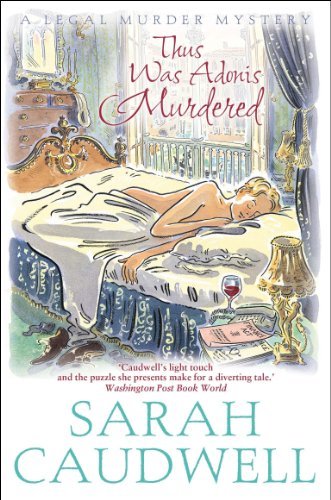
Thus Was Adonis Murdered

Rate this book
The first mystery in Caudwell's popular series featuring amateur investigator Hilary Tamar and a cast of clever and trouble-prone young London barristers.

When a young man is found dead in Julia Larwood's bed, her barrister friends are the only ones who can uncover the truth of this masterpiece of murder.

322 pages, Kindle Edition

First published March 19, 1981

524 people are currently reading
10490 people want to read

About the author

Sarah Caudwell

5 books135 followers
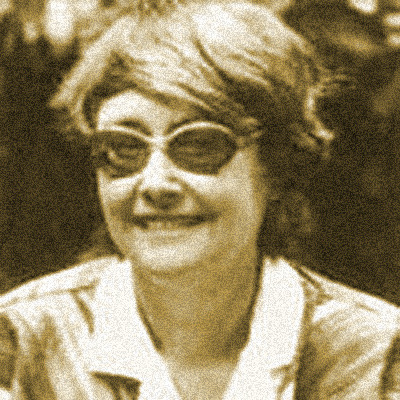
Sarah Cockburn (1939-2000) wrote under the pen-name Sarah Caudwell. She was a mystery writer. The four books of her "Hilary Tamar" series are her only novels other than The Perfect Murder which she co-wrote with several other novelists, but she also wrote several short crime stories. She was the half-sister of Alexander Cockburn.

Series:
* Hilary Tamar Mystery

Ratings & Reviews

What do you think?
Rate this book

Friends & Following

Create a free account to discover what your friends think of this book!

Community Reviews

5 stars
2,057 (33%)
4 stars
2,165 (35%)
3 stars
1,201 (19%)
2 stars
436 (7%)
1 star
288 (4%)
Displaying 1 - 30 of 575 reviews
Profile Image for K.J. Charles.
Author 65 books12.1k followers
Read
October 24, 2024
Purely delightful murder mystery set among Oxbridge barristers and academics of the most absurd kind. It's set in 1977 (the bread strike) but the feel is somewhere between Wimseycal golden age and 1950s/60s screwball comedy, with a touch of 1970s sex comedy (it's broad and there's a couple of eyebrow-raisers, be warned). Plenty of queerness taken as read, loads of hilarious snobbery, beautifully phrased, an absolute joy. Also the solution is absolutely impossible, while still being totally fair with loads of clear clues.

A total pleasure. I bought the next two immediately.
Profile Image for Meredith Holley.
Author 2 books2,468 followers
May 18, 2011
Anyone who can tell a pretty hilarious Shakespeare joke is okay in my book. And this book is full of really hilarious Shakespeare jokes. Poor Desdemona. Oh, man. L, as they say, OL. And the slapstick. Oh, the slapstick! She gets it just right in that dry, British way, where you feel like she’s describing something really elegant, but actually it’s almost grotesque. This book was wonderful. I totally love it. I would give it five stars, except my undying devotion for Gaudy Night is making it impossible for me to do that. It’s completely unfair because this book is so perfect on its own. But . . . there is still Gaudy Night, which makes me tear up from how much I love it. So, the star system is cheating Caudwell in this instance. (Edited: I had to go back and give them all five stars after finishing the last one because they are all so wonderful.)

I know I’ve said it before, but I’m not, as a rule, a fan of mysteries. I don’t have a sense of suspense, so when suspense drags on for too long, I just get bored and stop caring. Mostly, though, it bothers me when I feel like you the author actually had nothing to say, but just picked out some random things, had the sleuth notice them, and then brought those things around in the end to be randomly the solution. I don’t know why I’m reading that because they could be any facts. Like, the lipstick-stained cigarette, or the broken nail, or the powder on the lapel, or what. ever. It seems like machine-generated stories, where the author really has nothing to tell me. This book is the opposite of that. In this book, when the mystery wraps up in the end, the solution is the meaning of the story. It is why to read the book. I mean, the rest of the antics are great, but the solution is the purpose. I like that.

Oh, and the art law! Yay! The art law! It is just lovely. Art law is so fun. Most of art law has to do with inheritance and cultural artifacts, like it does in this book, and I think it is such an interesting topic. Don’t worry, this book is mostly about cute boys and the silly antics of crime-solving lawyers and funny Shakespeare jokes, but the art law is super interesting and absolutely correct, if you’re into that kind of thing.

I read this over spring break, lying by a pool in Palm Springs, and it was just perfect. There was a cute baby there, doing cute baby things, and good friends, good food, good book. So perfect. This is a wonderful beach read. It’s put-down-able, but also pick-back-up-again-able. I wanted to know what was going to happen, but I didn’t feel like if I put it down, I would be unable to hear the words of my friends trying to talk to me. Sometimes, with a beach read, I don’t like to have something too engrossing because then if I start reading outside, I get sunburned because I forget I’m outside. Or, if I’m inside, I never see the light of day. Those books have their three-in-the-morning moments, but they are a commitment. They’re like a friend who I really need a play-break from after a little while. Too much energy. This is like a perfectly lovely, reliable friend, who I hope to be more like someday. I have passed to another friend the copy that Elizabeth passed on to me, but I’m pretty positive I will read this book again someday, if only to remember all the funny Shakespeare stuff.
Profile Image for Megan.
1,165 reviews71 followers
October 22, 2018
"It's disappointing," said Ragwort, "that the young man has not turned out to be a homicidal maniac. But it can't be helped."
So a few book reviews ago I was all "I don't like amateur detectives!" and now here I am, head-over-heels for a amateur detective mystery series.

In my defense, Thus Was Adonis Murdered is no ordinary cozy mystery. It's the first of four books featuring a set of young London barristers and their friend Professor Hilary Tamar, the busybody esteemed Oxford don who, over drinks and dinner and gossip, assists in their unintentionally-begotten crime-solving. In this installment, one member of their group, Julia, is accused of murder while traveling abroad, and it's primarily through her letters home that Hilary and the gang analyze the clues in order to prove Julia's innocence and identify the culprit.

One of the book's largest delights, for me, was the very arch, very stylized prose. I'm always on the hunt for Wodehouse-like writing, and Caudwell has a similar style of charmingly funny wordsmithery. The plot was intricate and well-developed. I wouldn't have thought I'd have liked the epistolary angle to the mystery, but it turned out to be another of the book's assets: we get Hilary's first-person POV and the comments of the peanut gallery the rest of Julia's friends in addition to Julia's first-person POV in the letters, and it's a structure that works really well.

From a gender, sex, and sexuality standpoint, this book was refreshingly awesome. Published in 1981, it was awesome about women, about women being awesome in their careers, about women liking sex, about women seeking sex, and about normalizing bisexuality. The last part was particularly awesome, when it was no big deal for characters to not be assuming binary sexualities in their thought processes, their actions, and their desires. And there was no angst or anger over this bisexuality, either. It was just part and parcel of any average romantic and sexual relationship.

I loved the characters dearly, each of them sharply drawn and recognizable in only a couple brushstrokes of description. Seeing the scatterbrained and passionate Julia through the eyes of her friends, and through her own letters, was pretty much comedy gold. I was nervous to start with that she'd be depicted solely as and objectified as the adorable ditz, but that wasn't a problem at all. Her friends clearly care for her despite her cluelessness frustrating them, and it's also clear what she brings to the group of friends despite being the legendarily ridiculous one in the group. And also, I'd probably happily read chapter upon chapter of Julia describing her plots to bed the object of her affection. As she writes to Selena, the other woman in their group of lawyers:
It is your view, as I understand it, that when dealing with young men one should make no admission, in the early stages, of the true nature of one's objectives but should instead profess a deep admiration for their fine souls and splendid intellects. One is not to be discouraged, if I have understood you correctly, by the fact that they may have neither. I reminded myself, therefore, that if I could get the lovely creature into conversation, I must make no comment on the excellence of his profile and complexion but should apply myself to showing a sympathetic interest in his hopes, dreams and aspirations.
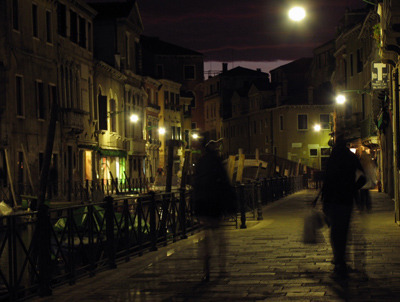
Profile Image for mark monday.
1,875 reviews6,303 followers
December 9, 2025
this 1981 murder mystery is decidedly quirky. Oh how shall I count the ways it quirks?

1. the novel is partly epistolary and partly the various conversations had over coffee, drinks, and/or supper by a crew of young barristers who are carefully avoiding the imperious and judgmental eye of their office manager. the murder itself takes place in Venice; most of the investigators and their many coffee breaks remain firmly in England.

2. bisexuality and homosexuality are ever-present but barely commented upon. the cast views sex and sexuality with a louche casualness. our daffy, clumsy, often drunken protagonist - a tax lawyer accused of murder while vacationing in Venice - is perpetually horny and sees herself as a sexual huntress on the lookout for beautiful young men whom she can seduce into "frolics". I've never read a murder mystery with these sorts of characters.

3. the tone is incredibly arch. the novel is sassy, but in that dry English way, full of witty repartee and droll asides and cheerful bubbles of ironic description. a champagne sort of book, despite a murder and two suicides, and despite the granular, pedantic analyses of the case rendered by the cast. there is an impression of sophisticated amorality, but it's a delightful sort of moral laxness, offhand and rather sweet.

4. the mystery's solution made sense but was so surprising it felt almost unfair. but I do think the clues were all there. it is all eventually spelled out by our narrator & lead investigator - an Oxford don - to a rapidly dwindling audience, nearly all of whom are too distracted by their work engagements to stick around to hear the actual solution!

5. this bit:
Profile Image for Lightreads.
641 reviews593 followers
December 2, 2010
I always feel very clever when I find something brilliant and obscure, even when all I did was take a recommendation (thanks, Kate Nepveu!). A series of British mysteries, starring a brilliant but sometimes hapless collection of young barristers and an Oxford tutor who is either remarkably clever or remarkably nosy, depending on whom you ask.

What a delight. Rollickingly funny in places, with a particularly deft touch for letter writing. That distinctively British slant of straight-faced absurdity, if you know what I mean. And it’s not until I read books so calmly nonjudgmental of bisexuality and kink as these that I’m reminded how toxic most of the mystery genre really is on the subject. Women who pursue people they want to fuck, and then fuck them to the delight of all involved, and then walk away with no shame or regret – can you imagine? And then at the end, after all the misadventure and assorted amorous shenanigans that don’t make people slutty or cheap or stupid, each of these books turns around and delivers a clever little solution. Something not just smart, but also pointed and a bit painful, so I breathed in carefully through the last couple pages of every one, as the knot of greed or madness or pain came loose.

Ah.
Profile Image for Anissa.
993 reviews324 followers
February 11, 2024
OK, so I've been in a bit of a reading slump and I'm really in a reviewing slump, so I've been looking for things to break me out of that.

I chose this purely because it's tax season in the US (so many ads for services everywhere) and this had a main character engaged in a struggle with Inland Revenue. I don't have a fractious relationship with the tax authorities (half my family are CPAs) but I do appreciate a good taxation quip and humour. This book had those and so much wry wit that I was always smiling. That's to the good. Alas, I don't think the murder mystery was up to much. The format of letters and the group opining on the situation was well done. This wins all the style points.

Recommended if you're seeking some tax season and lawyerly humour.
Profile Image for Tijana.
866 reviews288 followers
Read
March 16, 2021
1. Krimić o grupi omlađih drugara i drugarica koji su svi pravnici s Oksforda osim onog jednog džibera s Kembridža, ali i on je naš drug pa mu se oprašta. Mala zabeleška: autorka je privatno(TM) bila pravnica s Oksforda i tako je zarađivala za život, romane (tek četiri) pisala je iz hobija. Bliska upoznatost s pravom i i još grđa s pravnicima ovde izbijaju iz svakog reda.
2. Konkretan slučaj zapravo razrešava jedina omatora osoba među njima koja se pritom ne bavi pravom u praksi i manje se kreće nego Nero Vulf. Ključno sredstvo da se to postigne jeste brdo pisama i pravovremena upotreba telefona i telegrama.
3. Ovo sve zvuči kao preduslov za retko dosadan detektivski roman a zapravo je beskrajno smešno jer je Sara Kodvel bila majstor onog klasičnog britanskog humora koji ide otprilike ovako: litota+paradoks+pakost. Dobro smućkati i služiti uz Kampari sodu (omiljeno piće one junakinje koja barem u ovoj knjizi napiše najviše pisama).
4. Ja mislim da uopšte nije slučajno što se ovde sve vreme po Veneciji muva prekrasan prozirnoplavi mladić besprekornog profila, ali ja mislim i da je Don't Look Now gotovo jednako dobar film kao Smrt u Veneciji i nekako se najpre uvek njega setim, slobodno zanemarite moje mišljenje.
Profile Image for Terri.
1,354 reviews707 followers
February 18, 2016
A young woman goes to Venice and is accused of murdering a young man in her tour group. Her co-workers back home read her letter and try to puzzle it together in a very irreverent way. I don't know what I was expecting but I had trouble with this book. I can certainly see the humor that is very British and over the top. The story is told through a series of letters from the woman to them amidst much commentary and speculation from the co-worker group. The language was hard for me to get into. It seemed very pompous and annoying for a book set in the 1980s and I kept thinking I was in the wrong era. Their commentary and speculation was an interesting way to tell the story but also fell flat at the same time (mostly I think because of the language and run on sentences).

A lot of people really love this book and I will say it was different from a lot of detective fiction out there. I just felt like it was more of a chore than a pleasure to get through. As for the mystery itself -- it was interesting and certainly had a dramatic reveal.
Profile Image for Sid Nuncius.
1,127 reviews127 followers
December 16, 2021
I loved Thus Was Adonis Murdered. It's a decent mystery but the main pleasure is in the language, which is made me laugh out loud regularly.

The story is narrated by a pompous, pedantic and self-regarding Oxford Law Professor who is joined by four barristers in the investigation of a murder in Venice of which Julia, a rather hapless colleague, is accused. We spend very little time in Venice itself, but rely on Julia’s (extremely funny) letters to the group in their London chambers and other second-hand accounts.

The resulting correspondence and conversation plus the narration is genuinely funny. There is a good deal of amusing use of lawyer-speak, plus some flights of courtroom-style rhetoric applied to the everyday, which I loved. As an example of the narrative voice, one of the colleagues says that Julia is going on holiday "after a bit of the other." The narrator explains that "It is a Cambridge expression signifying, as I understand it, the pursuit of erotic satisfaction." Well, it made me laugh.

In short, this is a delight; it is funny, erudite and engaging. I can recommend it very warmly indeed.
Profile Image for Ann Herendeen.
Author 15 books19 followers
June 9, 2011
Caudwell's four mysteries are so distinctive in voice and mood, the best word I can think of to describe them is "stylized." It's the sort of thing some readers adore and others probably hate (although it's hard for me to wrap my mind around that). Some readers may be put off by what one (admiring) critic called Caudwell's "distancing" techniques. Much of the action is told through letters, cables, narrations within letters within cables, etc.

"Adonis" is the first of the four books (Caudwell died young) and in my opinion the best, with the fourth book next in quality. The stories have the same main characters and setting: an office ("chambers") of brilliant young barristers who work in England's Chancery Court. This is a highly stylized world of its own, concerned with high-level financial crimes: stock fraud, estates and trusts, and so on.

The writing and storytelling style suits the setting: arch, satiric comedy. Never could I have imagined that obscure monetary irregularities could make for such entertaining reading. The main characters are a diverse bunch, from different backgrounds, each neatly protrayed so that the reader forms a clear mental picture early on. The sense of not-quite-heterosexuality that pervades the entire series was a big factor in my enjoyment as well.

I recommend reading the books in order. If, like me, you read "Adonis" and want more, right now, it's better to know from the start that four is all there is, and pace yourself accordingly.
Profile Image for Anna.
2,117 reviews1,018 followers
November 30, 2016
This is probably the most charming murder mystery that I’ve ever read and it was great fun from start to finish. I loved the format: although the murder takes place in Venice, the point of view is always that of barristers in London. (As an aside, I googled for the appropriate collective noun but with equivocal results. It could be a bore of barristers, or a cluster, or a boast, or a wiggery. The question remains open.) This group are a snobbish and insular bunch, yet somehow endearing in their pomposity and idiosyncrasy. The actual narrator is a Professor who formerly taught them, but she remains largely enigmatic, allowing the focus to rest on the absurdities of Julia and her colleagues. Julia, whose letters pepper the text, is an utter delight. Obviously a high-flying barrister of some renown, she is characterised throughout as accident-prone, impractical, and partial to beautiful young men. Upon hearing that she’s being accused of murder, her colleagues cannot believe that her physical co-ordination could possibly be sufficient for such an act.

Indeed, I almost felt that the murder was superfluous to the narrative. A mere travelogue of Julia’s misadventures in Italy would have been very entertaining, if interpolated with commentary from her colleagues. The amusingly mannered style of dialogue and overall air of farce reminded me of P.G. Wodehouse, specifically the Blandings books. I also appreciated the fluid sexuality of apparently everyone involved and the huge importance they ascribed to coffee of a morning. The treatment of Cantrip, who elicited sympathy for having been educated at Cambridge rather than Oxford, also made me smile. The whole thing was a joyous romp, which seemed to treat the notion of murder with perhaps more levity than it deserved. I was definitely diverted. Thank you for the recommendation, Rae!
Profile Image for Miloš Petrik.
Author 32 books32 followers
May 17, 2021
This is what a proper murder mystery should read like. No pandering, no redundant explanations of each single detail, a puzzle-box filled with judiciously selected red herrings for the characters and the reader alike from first page to last.

And, of course, tax law humour, the most humorous of all the law humours.
Profile Image for Harry.
319 reviews420 followers
October 26, 2013
Book Review

Scholarship asks, thank God, no recompense but Truth. It is not for the sake of material reward that she (Scholarship) pursues her (Truth) through the undergrowth of Ignorance, shining on Obscurity the bright torch of Reason and clearing aside the tangled thorns of Error with the keen secateurs of Intellect

Thus was Adonis Murdered and thus is his murderer extracted from obscurity: from indistinctness into certainty, from the labor of chase to the methods of scholarship, from the top floor of 62 New Square at Lincoln's inn to the black water canals of Venice we enter the sinister but light-hearted and very English world of professor Hilary Tamar as she pursues a killer.

 photo adonis1_zps0f59ba67.jpg

Distancing is employed throughout the novel by the author Sarah Caudwell: an absurd British elitism takes place, woven into the first person narrative, an academic aristocracy that targets British lower orders of solicitors, accountants, tax inspectors and Cambridge graduates. Frequently removed from the action and enjoying the role of a parental figure to her group of young barristers, professor Tamar acts as the main detective and confidently gathers her intelligence via a series of beautifully written letters and succinct telexes (this is written in 1981) sent back and forth between England and Italy.

 photo adonis2_zpsc01cfcd0.jpg

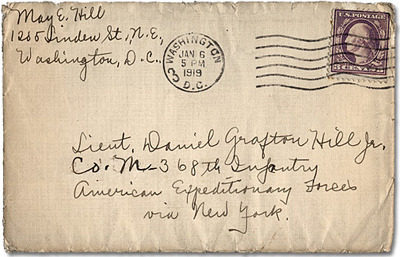
To briefly intrude on this review, I have to say that this book for those of a certain age group will bring to the forefront a certain nostalgia we experienced in our days: the sad memory of receiving a letter via post, examining the stamp, the writing front and back, the relishment at guessing at its contents, and carefully opening it to its pages written in long hand, the cursive writing as much a clue to the personage writing it as my acquaintance of them in person. The very attraction to it all being the unambiguous display of personal information on the envelope and its inspired contents. Writing in long hand presupposed thought (we did not have Ctrl X, or Del, nor Ctrl C or Ctrl V). Thought and the careful delineation onto paper of those thoughts engendered the joy of receiving the results of it in letters. That era is gone and this book markedly reminds us as to the beauty of such correspondence.

Location is very important to Caudwell, in this case Venice, Italy. Julia Larwood, a somewhat clumsy but intelligent member of Tamar's group of young barristers and herself both a victim and expert in financial tax law, and while on an Art Tour in Venice finds no work of art quite as alluring as the beauteous Ned, our Adonis and a fellow tour member and ultimately our victim.

Julia, located in Venice, has written a letter to her friends at Lincoln's Inn. In it she remarks as to Ned:

The pressure of the crowds gathered to watch the spectacle brought me into closer proximity with the lovely Ned than could otherwise have been achieved. This, with heat and the wine I had drunk at lunch, induced in me a certain dizziness: I was hard put to it to refrain from any open advance.

I did consider, indeed, whether I should try fainting, as recommended by the dramatist Shakespeare. It seemed to me, however, that unless Ned felt obliged to carry me all the way back to my room at the Cytherea nothing of substance could be achieved by this. He does not seem to me the kind of young man who would readily undertake such a task.


And upon reading this passage, the retort from those gathered around the letter:

'I don't believe Shakespeare told Julia to try fainting, ' said Cantrip. 'He's dead.'
'She's referring,' said Selena, 'to his early poem "Venus and Adonis". Julia read it at an impressionable age and has since regarded it as a sort of seduction manual. It's hardly Julia's fault. They told her at school that Shakespeare was educational'
'As I recall,' I said, 'the methods employed by the goddess in her pursuit of Adonis, though forceful, achieved only limited success. Doesn't Julia find that discouraging?'


The prose is written in a self-conscious literary style and includes many references on art history, art collections and subjects of higher learning. Before you begin to contemplate the idea that this novel is perhaps a little too removed and dry for your tastes, as the first few pages of the novel, or as perhaps I've alluded too in describing the distancing methods employed by Caudwell, or as the first paragraph of this review seems to indicate, do please read on.

What awaits you is an incredible plunge into British wit (second to none), filled with targeted barbed comments aimed at forcing the intended victim to a response of emotional barbarity and yet resisted by the ever-present British proclivity to laugh at one's self in spite of it all. Hidden beneath the narrative is a remarkable openness (for the time) to sexual identities (interestingly, the narrator's sex throughout the entire series is unknown, another distancing method employed), this skulduggery while being served up with a literary and historical feast thankfully held together by an intricate mystery plot driven by an unmistakable prominence and regard for reason and intelligence so markedly absent in literature today is perhaps reason enough to have a look at Ms. Caudwells work. I certainly think so as often throughout its reading I burst into laughter at the self deprecating manner of the British, if not admiringly and open-eyed while considering the remarkable intelligence of this author.

------------------------------------------------
Series Review

 photo adonis3_zps62aa6c07.jpg

This is a series of four slim novels, often described as "legal whodunits" written over a period of 20 years. Centered around the lives of a professor and four young barristers practicing in Lincoln's inn: Michael Cantrip, Desmond Ragwort, Selena Jardine and Julia Larwood (with infrequent visits by Timothy Shepherd), characterized thinly but for their ironic tone and light-hearted and musing dialogue, these delightful characters come together to form the solutions towards murder with Professor Hilary Tamar acting as both a seeming parent with rather strong bonds to her young barristers, as well as acting the part of lead detective.

 photo adonis4_zpse24de23d.jpg
Sarah Caudwell

Sarah Caudwell was the pseudonym of Sarah Cockburn (27 May 1939 - 28 January 2000), herself a British barrister and professor of Medieval Law. She was one of the first two female students to join the Oxfor Union and as legend has it, dressed up in men's clothes to protest against the Union's male-only membership policy. Possessing a brilliant mind, she joined the Chancery bar in 1966 and worked to excel in property and tax law. But it wasn't until her subsequent arrival at Lloyd's Bank where she became a senior executive in the trust department that Ms. Cockburn devised her pseudonym and began writing her highly popular (among British barristers, certainly!) Hilary Tamar series.

The books, as a general statement represent a feast for the mind. Though absent of a certain sense of lyricism, or poetic constitution, these books are regarded as nevertheless belonging to a literary mystery genre where language and dialogue take priority (Often throughout my readings I was taken aback by Caudwell's obvious mastery of the English syntax and word choices). To every witticism, to every wonderfully descriptive passage, to every spoken dialogue, the precision of word choice, concepts seeming to have been plucked from the ether and chosen so as to not leave the reader any doubt as to the intention of the passage can leave the reader slightly unnerved at one's own lack of understanding of English. The result is a highly satisfying experience by which the mind is replenished and inspiration awakened from its deep linguistic slumber.
Profile Image for fleurette.
1,534 reviews161 followers
February 3, 2020
I didn't expect that at all. I needed this book for one of my reading challenges, it was short and promised to be an easy and nice detective story. And here it turned out to be excellent.

First, it's about the language in which this book was written. Rich and colourful, full of rarely used words, ornamental. Very British. And absolutely fantastic. I really like the style of this author's writing. I like books written in this style in general. And here we also have a very good form. Julia's and Timothy's letters are an important part of the book, but the whole story is told in the first person from Hilary's perspective. This is a great example of how you can tell the story of which the main character, because I think about Julia as an MC, basically does not appear ‘till the very end, but she is still the centre of the story. We only know her from her letters and what her friends say about her. I love it.

I usually say that I don't like humour in my books, but it's not really true. I like very subtle humour and black humour. And that's what we have here. I honestly laughed more than once. What's most important is intelligent humour. Julia is undoubtedly a comic character. But the author managed to maintain a certain balance between her clumsiness and her intelligence. Thanks to this, Julia's character, although exaggerated to some extent, does not seem to just taken out of a slapstick comedy or a bad joke. I fully appreciate this work.

I am also very happy with suspense/mystery. Usually I am eagerly waiting for the corpse to appear and for the action to eventually begin to develop, but here I did not have such feelings at all. Maybe because from the beginning it is said that Julia is suspected of murder and it is known who the victim is. Anyway, it's a very good story, a bit like Agatha Christie’s works. A group of expressive characters, everyone has some hidden motives and everyone had a motive or opportunity to kill the victim. Ending also very in the style of Christie. In a positive way. This story really worked for me.

I also really like that we learn the whole story through Julia's friends who are far away from Venice in London. They also form a very colourful and remarkable group. And in my opinion it is very interesting that they are involved in solving the case and that Hilary finally succeeds. This is a very good idea and gives the whole novel a little freshness, distinguishes it from others in this genre.

I would definitely recommend this book to anyone who likes British style detective stories and fans of Agatha Christie's novel. It's also a great book to take with you on a trip to Venice. Next book in this series has just been added to my TBR pile. I hope it's as good as this one. One of the reasons I like reading challenges so much is that I read books that I would never have found otherwise, and this is just one of those hidden gems.
Profile Image for Susan.
3,018 reviews570 followers
November 10, 2021
Published in 1981, this threw me right back to London during those years. It revolves around the Chambers of 62 New Square, where the junior members reside in the 'nursery' and spend much time in wine bars. Julia Larwood embarks on a trip to Venice to recover from being hhounded by the Inland Revenue. As she is known to be easily lost, forgetful and unable to cope with practical matters, she has joined a tour of art lovers on a holiday and sends lots of letters back to her colleagues, Selena, Timothy, Cantrip and Ragwort. Also involved is Hilary Tamar, who is an academic spending time carrying out research at the Public Records Office and who knows Julia well.

Hilary suspects Julia will get into trouble on her holiday, but she doesn't imagine that she will be arrested for murder, which is what happens. Her friends throw themselves into investigating the crime, although most of what the reader learns is through letters which Julia sends to the inhabitants of New Square. Great fun and, if it now seems a little dated, then I found that added to the charm.
Profile Image for Nente.
510 reviews68 followers
November 29, 2019
This was wonderfully entertaining (in a very English way) even without the mystery. In fact the way the mystery was solved is perhaps the only thing I have to complain about; everything else is just what the doctor ordered. I'll have to save this series for the days when I'm particularly worn out, like an expensive painkiller.

Also, why is it that when Kingsley Amis' characters drink and smoke themselves silly, I'm all outraged, but when the same thing happens in Sarah Caudwell, I chuckle and go on?..
Profile Image for Amanda.
416 reviews32 followers
July 26, 2012
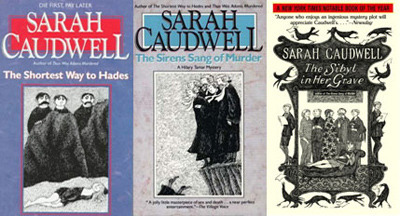
I just really could not get into this series of books, as much as I wanted to like them. There are many, many people who have read them and loved them, but I just didn't. The writing quite honestly gave me a headache and was so heavy handed, I could barely understand what the mystery was supposed to be. That doesn't mean they aren't worth reading, just not for everybody. I do love the cover art on them though, being a big Edward Gorey fan is what induced me to pick up this book in the first place.
Profile Image for Fiona.
982 reviews525 followers
August 5, 2024
4.5 stars for sheer enjoyment. Has a more frightfully English novel been written post-Evelyn Waugh? I doubt it very much!

Julia, one of a group of young barristers working together in Lincoln’s Inn, goes to Venice on an art history holiday. Julia is very intelligent but hopelessly lacking in common sense on almost every level. She promises to write to her friends frequently as otherwise they’ll worry about her. [My recollection of the Air Mail service between Europe and the UK doesn’t allow for me to believe that her letters arrived within a day or two so on that I had to suspend my belief.] In the course of her short holiday, there is an art theft, a murder, and much intrigue, all of which she relates in great detail in her letters to her friends. Meeting together to read them, and joined by our narrator, Hilary, an Oxford professor (male), the story gradually unfolds. When Julia gets caught in difficulties, the friends endeavour to solve the mystery of what has really happened.

I really enjoyed reading this. There are lots of red herrings and blind alleys, appropriately for Venice!, and I did not guess the outcome before it was revealed. It took a little while to get into it because of the terribly upper class English manner of speech but once I did, it was great fun. The author was herself a barrister and much of the narrative pokes fun at them, though not to the point that an outsider wouldn’t understand. For example, in explaining what Counsel is (an alternative word for barrister),

that’s another sort of lawyer, it seems, who uses even longer words than a solicitor….

It’s an intelligently written book, light-hearted and often very funny, and it kept me interested and entertained all the way through. I’ll definitely read more in this series.
Profile Image for Dorothy.
1,387 reviews105 followers
July 11, 2023
I've made it a practice in recent years to write reviews of all the books that I read and post them on Goodreads and here on my blog. It's a way of firmly impressing the book into my memory and I get quite a bit of enjoyment out of doing it and of reading your comments when they come.

So, I sat down to do my review of Sarah Caudwell's Thus Was Adonis Murdered and found that my memory of the book, which I finished more than a week ago, was blank. Was that a fault of the book or of my memory? Both, perhaps? I saw that I had given the book a two-star rating which I very rarely do, so obviously it had not made a great impression on me. Still...

In the end, I resorted to reading the synopsis and some of the reviews on Goodreads to jog my memory. Here, then, are my (restored) impressions of the book.

The book is set in Venice and in England and the main characters are a young barrister named Julia Larwood and Professor Hilary Tamar, an esteemed Oxford don. Julia had saved her money to take a trip to Venice as part of a tour group. The whole thing turns into a nightmare when a member of the group is murdered and Julia is accused of the murder. The book consists of Julia's letters home to Hilary and the group of barristers in her practice who take the information that she provides and analyze the clues in order to identify the real culprit.

That, in a nutshell, is the plot of the book.

This was the first in a series of four books that featured Professor Hilary Tamar. As such, it was not a bad introduction to the character. Caudwell did a good job, I thought, of developing the personality of Tamar. He comes across as one who enjoys gossip and good food and drink, preferably in a trifecta combination. He would be an entertaining dinner companion. I think I might enjoy spending more time with him.
80 reviews
September 16, 2007
This is the first of four mysteries written by Sarah Caudwell, who passed away several years ago. The protagonists are young barristers in London, and the Oxford don (gender never disclosed) who assists them when they are faced with difficulties.

The books are very funny!! I mean, Jenny didn't like them, but whatev!

Excerpt:

"The procedure for taking advantage of Italian waiters--equally applicable, so far as I am aware, in other areas of the Mediterranean--does not merit any long exposition. It consists chiefly of staying bed until they bring one's breakfast and then smiling benevolently. Waiters, generally speaking, seem not to mind being taken advantage of.

"It is to be remembered, however, that they are an overworked and exploited profession, who have to spend much of their energies running to and from carrying drinks and so on, so that the duration of the pleasure given is not always commensurate to the enthusiasm with which it is offered. If the coffee brought me by the pretty waiter had been cold by the time he left, I should have been willing, int the particular circumstances, to forgive him; but my forgiveness was not called for."
Profile Image for Leah.
1,732 reviews289 followers
March 30, 2024
Young barrister Julia Larwood, highly intelligent but with zero common sense, has gone off on a trip to Venice. Her friends and colleagues would be concerned about her ability to stay out of trouble, but she’s signed up for a guided Art Lovers tour so they feel she’ll be looked after. Imagine their dismay, then, when they discover that she’s being held by the Venice police on suspicion of murder! The victim is a fellow Art Lover, a beautiful young man called Ned whom Julia has spent her holiday attempting to seduce, not without some success. Unluckily for her, this meant she had been in his bed just a few hours before his body was discovered in it, stabbed through the heart. Hilary Tamar is an academic, friend to the young barristers of 62 New Square, and it’s he who tells the tale of how he worked out who the murderer was and had Julia freed without a stain on her character.

I call Hilary ‘he’ because that’s how he seemed to me throughout. I’d been aware from other reviews that his gender is left ambiguous so it’s basically up to the reader to decide, though for the purposes of the story it doesn’t much matter. Part of the reason it’s so unclear is that, intriguingly for a book first published in 1981, Caudwell plays a lot with gender expectations and none of her younger characters are wholly manly men or girlie women, though the couple of older characters fall more into typical gender stereotypes. There is also a lot of sex or desire in the book, not graphic and all fun, and many of the characters are either gay or bi, though those terms are never mentioned. It’s all quite stylised, and dripping with references to Shakespeare, classic mythology and so on, and while this is quite fun it can get a bit wearing after a while.

The story is told by Hilary, but a major part of the book is taken up with letters from Julia describing her holiday experiences. These are highly entertaining, especially her lustful pursuit of the standoffish Ned. Her attempts at seduction are regularly interrupted by other Art Lovers at all the wrong moments, especially middle-aged Major Bob, formally colonial soldier, now a dealer in dodgy antiques, who seems to have got the idea into his head that Julia is his ideal “pure” woman and is indulging in his own amorous pursuit of her. Then there’s Ken, Ned’s friend – or are they more than friends? - who seems to wear a forbidding frown as standard. He’s apparently a famous sculptor, as Julia learns from Eleanor Frostfield, owner of the famous Frostfield’s fine arts dealership. Last among the English-speaking contingent of the Art Lovers are a rich young American couple, the lovely Marylou and her rather jealous husband Stanford. Shepherding them all around Venice and its environs is Graziella, the tour guide. It’s up to Hilary to work out which of these might have had a reason to kill Ned, or if some outsider had snuck into the hotel to do the deed.

The basic plot beneath the froth is actually very good. Is it fair play? Hmm, strictly speaking yes, in that when Hilary explains his reasoning the clues he refers to had indeed all been given to the reader. But it would have taken a far more perceptive reader than I to spot them! I found the solution satisfying – not entirely credible, but that was in line with the whole rather tongue in cheek tone.

An entertaining read. Apparently Caudwell only wrote four in the series and I’ll happily read the couple that are still easily available, though I’ll leave a little gap first – the highly stylised prose means these will probably be better appreciated in small doses. 4½ stars for me, so rounded up.

www.fictionfanblog.wordpress.com
Profile Image for Luke.
1,627 reviews1,195 followers
June 12, 2024
2.5/5

I have to wonder what on god's green earth possessed me to add this to the TBR all those years ago. If there's one genre I have disdain for, it's mysteries, and when it comes to book reviews, nothing gets my eyes to glaze over faster than catching words such as "body" or "killed" or "detective" out of the corner of my eye. And yet, for a great deal of this work, I was actually quite enjoying myself. The dry as dust humor mixed with some wittily handled factoids regarding law and taxation in the UK was just my style, and there was a surprising amount of queerdom that was neither supremely glorified nor downright degraded and otherwise was just my speed. Unfortunately, I suppose the author ran out of funding or editor patience, and the ending was so grotesquely abrupt that it show my rating down a star and a half. In any case, I did enjoy myself enough that I'll be giving it the three star. It's not as if I'm looking to continue this series, or indulge in any other works of the genre without a great deal more incentive, so I may as well leave the whole business on a not quite acrimonious note.
Profile Image for Deborah.
1,585 reviews78 followers
December 5, 2023
This is a reissue of a murder mystery first published, if I’m remembering correctly, under a pseudonym by a practicing barrister in the early 80s. It involves a coterie of indolent young London barristers and their mentor, an Oxford professor of medieval law. (It didn’t dawn on me until I’d finished that the reader has no idea whether the professor, ambiguously named Hilary, is male or female. There are no clues provided. How odd, but no matter.) Anyway, one of the young set has been beggared by the Inland Revenue and decides to spend the last of her cash on an Art Lover’s tour of Venice, where she is suspected of murdering one of her fellow Art Lovers after spending the night with him. The London gang to the rescue! There were several more in this series, but I doubt I’ll go back to it. The tone was so arch and trying rather too hard to be so, I thought.
534 reviews
December 16, 2012
Actually this was a DNF for me. I'm not sure why, I liked the premise and the characters mostly seemed okay. I think it might have been the language. it was very formal and very stilted my my inner ear. I also was easily confused when the reading of Julia's letters were happening. Someone would read a section, people listening would interrupt and comment and then back to the letters. Maybe it was that I didn't have enough long periods of time to read more than a few pages at a time. Either way, I finally gave up because it wasn't holding my attention.

Profile Image for Carolien.
1,047 reviews139 followers
November 21, 2021
Completely over the top in language and characters, I loved this legal mystery. A young lawyer goes to Venice on holiday and finds herself the main suspect in a murder. In London, her colleagues with the help of Professor Hilary Tamar set out to solve the crime. The Venice part of the story is told through a series of letters and phone calls, we never meet Julia in person. Such absolute fun!
Profile Image for Iona Sharma.
Author 12 books175 followers
May 15, 2025
How do you even describe this book? Relentlessly clever, literary, arch, queer, arse-over-tit funny and a good mystery to boot. All my years in practice feel worth it.
Profile Image for Liz.
177 reviews
May 29, 2014
The writing style was very difficult at first. Caudwell is way too wordy with run on sentences in which I lost track, at first. Then, I either got used to her style or so absorbed in the characters and the story that I go over my irritation and really enjoyed the book. I laughed out loud at the tongue-in-cheek, very British wit with which she wrote. The solution was a bit convoluted and required a re-read to get it. All in all, an enjoyable book.
Profile Image for grosbeak.
714 reviews22 followers
March 18, 2017
One of the most thoroughly delightful murder mysteries I've ever read! Oxford Don solves mysteries on behalf of her former students, now barristers. The majority of the case is conducted from abroad, via letters and the occasional telephone call. The voices are perfect, Hilary Tamar's most of all. I almost knocked a star off for Tragic Gay Passion troping, but in the end I couldn't bring myself to do it-- just be warned that that's a thing.
Displaying 1 - 30 of 575 reviews

Can't find what you're looking for?

Get help and learn more about the design.