Jump to ratings and reviews
Rate this book

Dig Time Lords

Queers Dig Time Lords

Rate this book
In this new release, award-winning authors from across the rainbow celebrate the phenomenon that is Doctor Who, examining the characters and stories that they love.

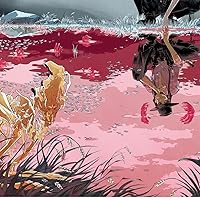
The book is edited by Sigrid Ellis (Chicks Dig Comics) and Michael Damian Thomas (Apex Magazine). The introduction is by Doctor Who and Torchwood star John Barrowman, and his sister and frequent collaborator, Carole E Barrowman (Anything Goes, Torchwood: Exodus Code). The book’s cover art is by Colleen Coover (Small Favors).

Essay contributors to this collection include Tanya Huff (Blood Ties), Melissa Scott (Trouble and Her Friends), John Richards (Outland), Paul Magrs (Hornets’ Nest), Gary Russell (Doctor Who script editor), Rachel Swirsky (Through the Drowsy Dark), Hal Duncan (Ink: The Book of All Hours), Amal El-Mohtar (The Honey Month), Brit Mandelo (Beyond Binary), Nigel Fairs (In Conversation with an Acid Bath Murderer), David Llewellyn (Night of the Humans), Susan J. Bigelow (Extrahumans), Jennifer Pelland (Machine), Mary Anne Mohanraj (Bodies in Motion), and Jed Hartman (Strange Horizons).

240 pages, Paperback

First published June 2, 2013

8 people are currently reading
489 people want to read

About the author

Sigrid Ellis

17 books12 followers
Sigrid Ellis is co-editor of the Hugo-nominated Queers Dig Time Lords and Chicks Dig Comics anthologies. She edits the best-selling Pretty Deadly from Image Comics. She is the flash-fiction editor of Queers Destroy Science Fiction, from Lightspeed Press. She edited the Hugo-nominated Apex Magazine for 2014. She lives with her partner, their two homeschooled children, her partner’s boyfriend, and a host of vertebrate and invertebrate pets in Saint Paul, MN.

Ratings & Reviews

What do you think?
Rate this book

Friends & Following

Create a free account to discover what your friends think of this book!

Community Reviews

5 stars
47 (27%)
4 stars
74 (44%)
3 stars
34 (20%)
2 stars
6 (3%)
1 star
7 (4%)
Displaying 1 - 26 of 26 reviews
Profile Image for Amal El-Mohtar.
Author 106 books4,580 followers
May 30, 2013
Marvel as I rate highly a book in which I have an essay! Humble is for pies.

I loved this. The editors, Sigrid Ellis and Michael D. Thomas, have done a fabulous job of placing the essays in conversation with each other, often following up one perfectly valid perspective with an equally valid but opposite perspective on the same thing. It was deeply heartening to me to find feelings I'd described in my own essay echoed across the anthology. It was also wonderful to find such a diversity of voices and styles all talking about Doctor Who: some more in praise, some more critical, some written in a more academic style, others more colloquial, and some (my favourite!) outrageously filthy and hilarious (hello, Hal Duncan!).

John Richardson's "The Heterosexual Agenda" made me cry, and I was very glad to read Na'amen Tilahun's "Ooh, Mickey, You're So Fine" as a unicorn chaser. I also especially enjoyed Brit Mandelo, Julia Rios, Rachel Swirsky, and Melissa Scott's.

It's just really pretty great overall.
Profile Image for Caroline  .
1,121 reviews68 followers
June 28, 2014
I wanted to read I book because I know the editors* have a history of putting together interesting, inclusive nonfiction collections that combine geeky interests with personal perspectives of a multitude of writers. I was also worried about reading this book because I am by no means an expert on 'Doctor Who' -- the fifty-year old British sci fi TV/multimedia franchise; also known as the inspiration for 'Inspector Spacetime' on Community, for my readers who might not know about SF fandom -- and was afraid I wouldn't 'get it.' It turns out I needn't have worried, because I either know more about the show than I realized or have just picked more up from hearing other fans talk about it. In any case, the voices collected in this anthology are interesting in their own right and they stand alone without requiring intimate knowledge of 'Doctor Who' or of science fiction fan culture.

I enjoyed every single one of the essays in this collection, and was absolutely blown away by several -- particularly "Same Old Me, Different Face" in which Susan Jane Bigelow discusses her experience as a transgender woman with reference to the Doctor's history of regeneration, "Jack Harkness's Lessons on Memory and Hope for Cranky, Old Queers" by Racheline Maltese, and "The Monster Queer is Camp" by Paul Magrs, one of many essays to engage with 'Doctor Who''s particular appeal to the gay male community. This particular cultural association is one that I hadn't been familiar with before. The recurring theme of the previous Mad Norwegian collection I've read, "Chicks Dig Time Lords" was "Yes! Women are into Doctor Who! Really! Not kidding!" Whereas the recurrent thread in the Queers essays so far is, "Everybody wonders why Doctor Who fandom is so gay...."

Actually, it's more complicated than that. The cisgender male writers all bring up this question; the queer women/nonbinary people in the book are dealing with a more complicated set of expectations. The actual most common thread for the queer women in this anthology so far is, "I discovered I was queer/met the person I fell in love with because of fandom;" notably, "Long Time Companions" is a lovely remembrance by author Melissa Scott about her late partner Lisa Barnett.

My one nitpick with the collection: I do think it might have been useful to have an appendix covering a time line of the seasons of the show and the different Doctors and showrunners, because a lot of these references are taken as given within the essays, particularly the ones dealing with fandom over the show's early decades. For people like me who primarily or only know the post-2005 relaunched show it would have made the history easier to follow. On the other hand, there's the Internet and it's not very hard to track that info down if you're curious or confused and find it relevant.

*Full disclosure, I'm acquainted with Michael and well-acquainted with Sigrid; I contributed to an earlier collection Sigrid edited, "Chicks Dig Comics," and she was a co-founder with me of the Fantastic Fangirls website. I don't know any of the writers who contributed to QDTL personally, and in only a few cases was I familiar with their previous work.
Profile Image for Kara Babcock.
2,115 reviews1,596 followers
August 11, 2014
Wait, Queers Dig Time Lords? But I thought Chicks Dig Time Lords ! Who else digs time lords—small furry creatures from Alpha Centauri? Soon there won’t be any time lord left for straight, white men! Think of the menz!

Seriously though, having read three of these fandom-celebration books from Mad Norwegian Press already, I was looking forward to Queers Dig Time Lords. I should note that since reading Chicks Dig Time Lords three years ago, I’ve watched a lot of the old Doctor Who. I’m much more familiar with the previous Doctors and many of their companions. Although I didn’t feel lost at sea with the previous volume, I think this familiarity helped a great deal in this book. Many of the authors discuss the developments in their sexualities in reference to the on-screen relationships among the Doctor and his companions at those times, and it helps to know who Adric or Romana are.

The majority of these essays are very personal accounts of how Doctor Who has helped, influenced, or inspired the authors. Some address queer subtext in the show; others merely use the episodes in the show’s history or the show itself to parallel their own realization about their sexuality or their coming out. (It’s interesting to note how many found themselves more comfortable with being labelled a nerd/geek for liking Doctor Who than gay, and how their fandom/nerdiness became a convenient excuse, in the heteronormative context of society, for their lack of interest in women.) Some heap praise on the show for its portrayal of a sometimes-asexual hero and the absence, largely, of romance between the main characters. Some criticize the shallowness of the queer relationships onscreen, particularly in Nu Who. This is encouraging; as with the previous fandom books, this is not merely one big fangasm about Doctor Who. Largely, Sigrid Ellis and Michael Damian Thomas have succeeded in canvassing a variety of opinions among queer writers about their relationship with the show.

Because, let’s face it: Doctor Who can be terrible sometimes, to an embarrassing extent (even if we agree from the first to ignore the 1996 movie). Paul Magrs acknowledges this in the first essay, “The Monster Queer is Camp” when he says:

I think that the great romance in Doctoroo is between the fans and The Show itself. They want to love it. They want to love all of it, unreservedly. They want it to be a good science-fiction TV show. And they know some of it is embarrassing.


This is so, so true. Doctor Who has been one of my favourite shows since I discovered it in its latest incarnation, and I love it so much. Yet I’m also embarrassed by it, to an extent I’m not embarrassed by the campiness of original Star Trek or the early seasons of Stargate SG-1. To this day I have a hard time thinking of a platonic, ideal “favourite” episode of Doctor Who. I have favourite moments, favourite lines and scenes and even maybe story elements. But every episode seems lacking in some way. (I suspect this is because, at the end of the day, I am fascinated as a writer/reader by the character of the Doctor rather than the adventures of the show.)

Magrs makes this observation in the course of a larger discussion of camp in Doctor Who and the way fans shy away from it, or try to ignore the most egregious elements of it. And his point is that these very elements that many fans want to ignore and hide away appeal to him, as a gay man who loves camp. Moreover, the campiness isn’t going to go away, ever. Because at its core, Doctor Who is queer.

Some of the authors in this book are reluctant to make this proposition, preferring instead to talk about “queering Doctor Who” or a “queer reading” of the show. And that’s a valid critical decision. When I claim the show is queer, I don’t mean that it has a hidden gay agenda. Queerness is more than that, as this book shows: it’s gay, transgender, asexual—everything that doesn’t, in other words, conform to the boring binaries of heteronormative discourse about sexuality. And how can a show about a mad man travelling through time in a police box be anything but queer? Yes, as many of these essays point out, at times Doctor Who is frustratingly hidebound in its compliance with traditional depictions of relationships, gender, and sexuality. But more often than not, the show is fraught with an obliviousness. And I come down on the side of those fans who view the show as one that promotes and encourages a type of nonchalant, unremarkable tolerance that even the optimistic Star Trek has trouble portraying at times.

As someone who tends to play on the lowest difficulty setting in life, it was fascinating to see how people who identify as queer perceive the show’s handling of queer themes and subtext. This is a valuable discussion to have, because everyone deserves to see themselves in our media and culture and entertainment, to identify with the characters we put on TV and in books and movies. It bothers me a lot when others want to shut down discussion of diversity simply because they’re uncomfortable with admitting that they are part of a system of oppression, even if as individuals they are perfectly nice people.

Martin Warren addresses this in his essay “Bothersome Otherness”:

If we accept that Doctor Who is a text to be enjoyed and “read” by everyone, then the answer is “yes.” Yes, it does matter. The views and relationships of its gay fans are as important (or not) as anyone else’s. There is room for all; another point of view isn’t going to diminish others.

And if you don’t accept that premise, then you might as well go and make a cup of tea and return this book from whence it came, because you’re not going to have a very happy time reading it.


The last sentence of that first paragraph, for me, is key. There is plenty of room in this world for everyone to be happy. Gay people marrying doesn’t somehow steal happiness from straight couples. Gay perspectives of Doctor Who neither invalidate nor diminish the perspectives and enjoyment of the show through other lenses. Rather, such critiques enrich the show. And if you love something, you should criticize it, and make it even better.

In his essay Warren addresses the Otherness of the Doctor as a character. He begins by acknowledging the Doctor’s historical presentation as asexual, or at least, as largely clueless about sexual relationships. Indeed, this is an aspect of the Doctor that has always appealed to me, for although I identify as straight, I am not all that interested in sex or a heteroromantic relationships. The Doctor’s rejection of these qualities as an essential component of “the hero” is heartening, and like Warren, I can identify with that more easily than the aggressive heterosexuality of action heroes like Kirk. With regards to the Doctor’s more recent instances of romance, Warren adds, “the fact that he’s now had a few lady kisses and been demonstrably in love with a woman doesn’t repel me, it’s not his sexuality that appeals to me—it’s his character, his intelligence, his difference [emphasis original].” He makes an important point. It’s not just a matter of having more openly queer leads (though that helps—see the outpouring of admiration for Captain Jack!). It is also necessary to deconstruct the traditional notion of the male hero as an imposing, masculine figure who pursues women for sex and romance in addition to saving the world/galaxy/universe. You’ll get no argument from me that love is an important part of storytelling and characterization—but it should be love in all forms, warts and all, rather than the narrow, hetero -normative and -romantic depictions that continue to dominate most media.

There were times when I wished Queers Dig Time Lords was a little more critical than personal. Then again, that’s personal preference on my part rather than something that objectively detracts from the book. If what you want are a series of very personal essays, then this is going to be very fulfilling. I found it slightly less satisfying than the other fandom books in this series, though. The perspectives on Doctor Who and its queerness were interesting. After a while, however, the various essays began to blur together. It’s hard to pick out any as stand-out highlights. I’d still recommend the book to Doctor Who fans—as you can tell from the review above, there were enough points that resonated with me to make reading it worthwhile—but I can’t gush about it as much as I would like to.

Creative Commons BY-NC License
Profile Image for Leigh Anne.
933 reviews33 followers
November 15, 2019
Doctor Who = totally gay.

Not a complaint, especially not for its queer fandom, which has long found solace and representation in the ever-changing Time Lord and his assorted companions. These essays are love letters from LGBTQIA+ folks to their favorite television show, and as such, will appeal mostly to queer Whovians looking for kindred spirits.

Captain Jack Harkness, as you might imagine, comes up a lot, and there are a few delightful "side quests" that discuss Torchwood in all its bisexual glory (perhaps a book on that next?). However, the main focus is the Doctor, a figure on whom so many have projected so much. For a lot of baby geek queers, he was the first character who made them realize they were gay and/or want to be a different gender. The essays are conversational and heartfelt, but the best are also clever and literary. These include Tanya Huff's "Bi, Bye," Melissa Scott's "Long Time Companions," and Susan Jane Bigelow's "Same Old Me, Different Face: Transition, Regeneration, and Change."

Although this is an older book, and somewhat niche, hang on to it, for representation's sake. Go back and pick it up if you have a healthy venn diagram of geeks and gay folks in your community (trust me, you'll know). Recommended where Doctor Who is popular, and that's most places on the planet, so, okay.
Profile Image for Alex.
809 reviews19 followers
January 29, 2016
The highest compliment that I can give this book is that it's making me re-watch Doctor Who and Torchwood for the first time in god knows how long. All of the essays were fabulous--I don't think there was a bad one in the bunch, if I'm honest (and normally there's at least one essay I remember just Not Jiving with). It also reminded me of a lot of reasons why I originally fell in love with the show back as a young teenager, and was a lot of fun to read. I don't think any of the essays felt overlong or overwrought, which was a bonus; there's a lot of gushing in here, but it's tempered gushing, not an overload of feelings (which is never really great to wade through). Well-written, well-compiled, well-thunk in general.
Profile Image for Curtis.
988 reviews17 followers
January 14, 2015
This is another one that I picked up due to its Hugo nomination. I was actually really excited to dig into it. As a (self-disclosure) queer who digs time lords myself, I expected to find myself immersed in this text and looking forward to turning every single page. I really, really wanted to love this book. But, sadly, I don't. It's largely a collection of (very short) random personal stories about Doctor Who with no real apparent grouping or theme or thread through the book. Because of the length of the pieces and the continuous shift in voice and perspective, it seemed a bit scattered. There were a few of the essays that really entertained me, but overall I just didn't 'dig' it...
Profile Image for Amanda.
245 reviews
March 17, 2017
I really enjoyed this book. I stayed up very late to finish it, so my review pretty much sounds like this: squee!! :-) The essays are always well-writren, sometimes laugh out loud funny, sometimes very moving, and often filled with opinion and experiences that resonate with my own love for Doctor Who. As a straight ally, I am grateful to the authors and editors for bringing a variety of queer fans' views on the show to the entire Doctor Who fan community. Highly recommended to all Doctor Who fans.
Profile Image for Elizabeth.
14 reviews
July 26, 2021
A pretty mixed bag, with some essays being a struggle to get through (including one surprisingly biphobic essay about bisexuality), but some truly outstanding pieces. Amal El-Mohtar, Na'amen Gobert Tilahun, and Susan Jane Bigelow's works are the standouts here, with Bigelow's bringing me to tears of joy. I'd love to eventually see a follow up, especially now that we've have some main queer companions and the Doctor's gone and changed genders.
Profile Image for Patricia Taylor.
10 reviews10 followers
June 7, 2013
Amazing book. As a straight 71 year old female who has always loved Dr Who I found these essays fascinating - I loved it. I thought maybe these writers would love different things about it but no, not really. I can't recommend this highly enough - some beautifully written essays that are a joy to read - an absolute must for all Dr Who fans.
Profile Image for Artur Nowrot.
Author 9 books56 followers
Read
October 28, 2015
The great essays were really great, but a lot of them took the form of “I was an LGBT teenager watching Doctor Who” and, while well written, lacked the critical insight into the series that I was hoping for.
376 reviews30 followers
April 10, 2022
3.5. The attention (and foreword) lavished on Barrowman/Captain Jack seem very...unfortunate in retrospect, although it seems churlish to deny LGBT people a sense of representation from a character because of the sins of his actor. The mix of essay styles isn't quite as diverse as I'd like either - leaning a bit too far into personal essays vs queer readings for my taste - but those essays in question are near universally good quality. It's still worth the purchase though. Not only as a testament to the power and prevalance of the queer whovian contingent, but also as a time capsule. Sometimes for the worse - with mentions of Mr Barrowman, Clarke and Roberts all eliciting winces - but sometimes for the better. I'd dearly love an updated or sequel version, for the age of Clara, Missy, 13, and Thasmin. And, for all it's faults, I dearly loved this too. It's also great to see the diversity of opinions from who fans - a smorgasbord of contradictory loves and hates for doctors, companions, stories and eras - at a time when homogeneous fan and anti fan discourse seems more exhausting and confined than ever before.
Profile Image for The Master.
308 reviews9 followers
December 21, 2016
Great collection of outstanding short essays. I particularly liked the ones that zeroed in on specific DW stories or characters for analysis from a queer perspective. The only flaw to this book, as mentioned in other reviews, is the repetitive nature of several pieces which read more like blog posts. 3 1/2 stars rounded up to 4.
Profile Image for Nicholas Whyte.
5,364 reviews207 followers
July 20, 2014
http://nwhyte.livejournal.com/2306727.html[return][return]I've been a cheerleader for the series of books on Who produced by Mad Norwegian Press, but I did wonder if there was really room for an entire book on LGBTQ takes on the series. I fear my concerns were well founded; sure, the narrative of coming-out as non-straight is linked with their love of Who for an awful lot of people, and it's an important and emotionally freighted story for all concerned - and a lot of these stories are moving, empowering, cheering and sometimes appalling. But this seemed to me more a source of primary material for further research than a great set of pieces in itself, even though some of the authors are pretty significant people in the Whoniverse (Paul Magrs, David Llewellyn, Nigel Fairs, Gary Russell) or more widely in the genre (Amal El-Mohtar, Rachel Swirsky). John and Carole Barrowman contribute a foreword.[return][return]There is some very interesting stuff too - obviously it's rather difficult to miss the lesbian subtext in The Stones of Blood, but Julia Rios goes into it in convincing depth. (The only point she misses is that Christopher Isherwood dedicated Goodbye to Berlin to Beatrix Lehmann and her brother.) Naamen Gobert Tilahun provides the best analysis I have read of the role of Mickey in new Who (and there are several other chapters concentrating on particular characters). None of the pieces is actually bad, and that's a decent strike rate in itself. Still, I am not sure that this will go to the top of my Best Related Work ballot.
Profile Image for Patrick Niemeyer.
56 reviews2 followers
May 23, 2014
Pretty good stuff. My only complaint with it is that it gets repetitive. Too many of the essayists are just middle-aged gay men talking about how growing up watching Doctor Who paralleled their coming out experience. Even then, it's still very sweet. My favorite essays were probably the one about podcasting (which does a very good job of explaining why queer perspectives are important even when the discussion is not about LGBT issues) and "Long Time Companions", which definitely did not come dangerously close to making me cry. No, not at all. I wasn't such a big fan of Hal Duncan's essay, mainly because he mistakes radical revisionism for dramatic reinvention, and I'm sorry, but those two just aren't the same thing. I could talk about each and every essay here, but there isn't time. If you are a fan of Doctor Who and are curious as to why the show has such a huge gay fanbase, this book will do just fine. Most importantly, it includes voices from more than just gay men and women. Voices from all over the LGBTQ spectrum are represented here, and that's as it should be.
Profile Image for Kaoru.
435 reviews4 followers
August 2, 2014
...but they don't necessarily have to dig this book. After about three quarters I finally had to put it aside.

Badly in need of rigorous editing, the book just seems to churn out one "And then I became a teenager and started to date guys/chicks!"-chapter after another to the point in which you can't tell them apart anymore. And that's not just because they're repetitive to the point that they start to become interchangeable, but also because they're all so terribly... [i]mundane[/i]. And not even interesting to read. (And then there's the bit by Nigel Fairs that [i]really[/i] weirded me out. I have no idea why he felt the urge to write this strange love letter to his allegedly best friend Louise Jameson, but it was very uncomfortable to read and comes across as rather stalkery. And what the hell it had to do with LE GAY!! is anybody's guess.)

Unfortunately one of the most redundant Who-related non-fiction books I've ever read.
Profile Image for Lizabeth Tucker.
946 reviews13 followers
April 19, 2016
This is a collection of essays on Doctor Who from the LGBTQ fans who watched the series, inspired by CHICKS DIG TIME LORDS. The content discusses why there were a larger than normal number of LGBTQ fans for this low budget series. We also learn how and when the writers first experienced the Doctor.

The theme that seemed to run through the different essays was the attraction to a man who was an outsider, who decided to leave his home to search for more. There is also an appreciation for the companions, some more than others. There's a few who also discuss TORCHWOOD, the spin-off for Captain Jack Harkness. All in all, it is a wonderful collection of people who love the series for many reasons, who recognize the bad as well as the good, and a few who wish for more. But don't we all? 4.5 out of 5.
Profile Image for Ian.
375 reviews22 followers
July 10, 2014
Most of the pieces in this collection deal with growing up with the Doctor (or Captain Jack, who features a whole lot in the first part of the book). There's nothing wrong with writing an essay as your personal life story, but when they make up the majority of your book they all tend to become very similar after a while, variations on the same riff. I would've liked more variety, both in content and in form.

I especially liked "A kiss from Romana" and "Hey Mickey, you're so fine". The latter is a very good take on the character of the same name; while he's hardly my favourite, this piece did make me reconsider Mickey a lot, also considering some of the writing/editorial choices made behind the camera.
Profile Image for Just_ann_now.
737 reviews10 followers
June 7, 2013
An engaging mix of coming-out stories and LGBTQ-focused meta. I particularly enjoyed Naamen Gobert Tilahun’s "Hey Mickey, You're So Fine", a salute to one of my very favorite characters, and Susan Jane Bigelow's "Same Old Me, Different Face: Transition, Regeneration, and Change." As a straight ally, these essays gave me a lot to think about.

Profile Image for Denicemarcell.
792 reviews1 follower
May 22, 2014
The not surprising by product of this book is I *want* to watch the earliest Doctor Who eps and re-watch the ones I've seen.
Basically I gulped this down. I own it and am glad I do as I will go back and re-read sections. Perhaps watch the episodes a writer responds to as I re-read.
Profile Image for Angela.
225 reviews
October 4, 2014
The essays that I enjoyed went above and beyond what I expected. The only thing that drags this down are the relatively few that were somewhat of a struggle to get through, be it because of style or content.
Profile Image for Andres Halden.
Author 9 books31 followers
March 23, 2014
Important, but not as variant topics as the other collections.
66 reviews
July 17, 2014
Ultimately this is series of very repetitive blog posts. With few exceptions, the chapters are interchangeable with each other.
Profile Image for Kim.
127 reviews5 followers
May 3, 2015
Some really great articles, some pretty bad ones, more than a little repetition--but very much worth reading.
Profile Image for NA.
92 reviews
November 7, 2014
I was expecting queer theory and analysis, and got a bunch of sentimental rambles. The editor could have spent a bit more time choosing the material, mayhap?
Profile Image for Kate.
412 reviews8 followers
March 26, 2017
A fascinating collection of essays about Doctor Who, by LGBTQ fans. And while, yes, the collection is a "celebration", the essays within are critical and their viewpoints varied. While I thought the essays like "The Heterosexual Agenda" and "The Monster Queer is Camp" and the essays that were largely character studies (of Jack, of Mickey, River, Donna, etc) were more interesting than the "my childhood and Doctor Who" essays, that could be because I am an American who came to Who in 2006. I still think each essay had something important for anyone who'd pick it up, even if you can't quite relate to all of them.

I'm really glad I finally read this (it's been sitting on my shelves for AWHILE) and if you're a Doctor Who fan, queer or no, you should pick it up, too!
Displaying 1 - 26 of 26 reviews

Can't find what you're looking for?

Get help and learn more about the design.