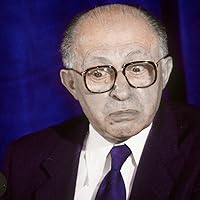
Uri Avnery (Hebrew: אורי אבנרי, also transliterated Uri Avneri, born 10 September 1923) is an Israeli writer and founder of the Gush Shalom peace movement. Often refered to as the (grand-)father of the Israeli Left.
A member of the Irgun as a teenager, Avnery sat in the Knesset from 1965–74 and 1979–81. He was also the owner of HaOlam HaZeh, an Israeli news magazine, from 1950 until it closed in 1993.
He is famous for crossing the lines during the Siege of Beirut to meet Yassir Arafat on 3 July 1982, the first time the Palestinian leader ever met with an Israeli. Avnery is the author of several books about the Israeli-Palestinian conflict, including 1948: A Soldier’s Tale, the Bloody Road to Jerusalem (2008); Israel’s Vicious Circle (2008); and My Friend, the Enemy (1986).
A vivit explanation on how the conflict between Israel and almost all it's neighbours - with evidently the Palestinian conflict as the main theme - evolved up until 1967.
Uri as a rebel, journalist, soldier and left-wing nationalistic politician has written a nuanced plea for peace in the Middle East. Surely one book does cover the conflict back to back, but it does give you a better understanding on how it was originated. The historical facts and Uri's view on how things could have gone differently (Don't get me wrong, he is not Captain Hindsight. Mostly he backs up the events occurred with previous political ideas) and his optimism on happenings yet to come puts the conflict in a more understandable humanistic perspecitve from both sides.
Recommended for everyone with an interest in life.
Didn’t expect to like this as much as I did. Very well written. His life experiences are utterly fascinating, and his opinions are fleshed out and sympathetic. The trends he identified underlaying the Israel-Palestine conflict persist to this day, albeit in highly altered contexts. He wrote this book at the height of the Cold War, and he didn’t address the Yom Kippur war which Avnery predicted but had yet to occur at the time of writing. He’s clearly a talented journalist, but his use of history is deeply compelling. He has a knack for understanding individual characters placed into charged historical moments that makes him a spectacular narrator of such a prolonged and intense conflict as the one in Israel-Palestine.
His solution seems dated, however. Semitic confederation sounds as good today as it did then. I think the epilogue hints at Avnery’s turn towards the two state solution over the federal solution. Nevertheless, Avnery is a unique voice of reason and a distinctly Israeli outgrowth; those two tend not to coincide. That’s why I can say reading him felt like a breath of fresh air.