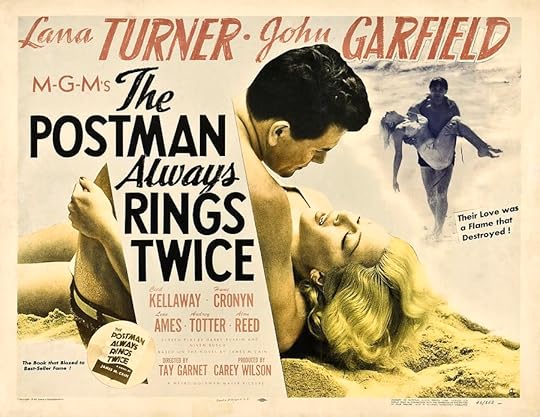
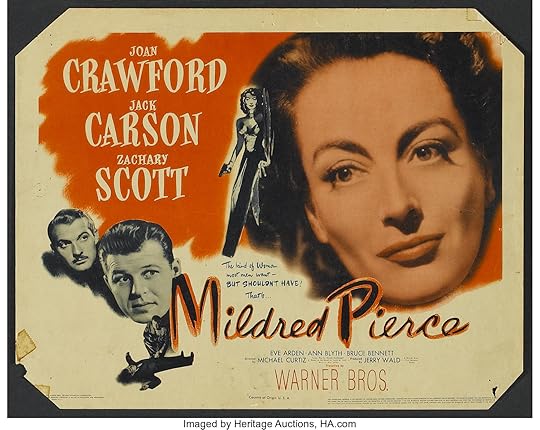
Three complete works by a best-selling author encompass themes of suspense, human lust, greed, and self-absorption, and include The Postman Always Rings Twice, Mildred Pierce, and Double Indemnity.
James Mallahan Cain (July 1, 1892–October 27, 1977) was an American journalist and novelist. Although Cain himself vehemently opposed labeling, he is usually associated with the hard-boiled school of American crime fiction and seen as one of the creators of the "roman noir."
He was born into an Irish Catholic family in Annapolis, Maryland, the son of a prominent educator and an opera singer. He inherited his love for music from his mother, but his high hopes of starting a career as a singer himself were thwarted when she told him that his voice was not good enough.
After graduating from Washington College where his father, James W. Cain served as president, in 1910, he began working as a journalist for The Baltimore Sun.
He was drafted into the United States Army and spent the final year of World War I in France writing for an Army magazine. On his return to the United States he continued working as a journalist, writing editorials for the New York World and articles for American Mercury. He also served briefly as the managing editor of The New Yorker, but later turned to screenplays and finally to fiction.
Although Cain spent many years in Hollywood working on screenplays, his name only appears on the credits of three films, Algiers, Stand Up and Fight, and Gypsy Wildcat.
His first novel (he had already published Our Government in 1930), The Postman Always Rings Twice was published in 1934. Two years later the serialized, in Liberty Magazine, Double Indemnity was published.
He made use of his love of music and of the opera in particular in at least three of his novels: Serenade (about an American opera singer who loses his voice and who, after spending part of his life south of the border, re-enters the States illegally with a Mexican prostitute in tow), Mildred Pierce (in which, as part of the subplot, the only daughter of a successful businesswoman trains as an opera singer) and Career in C Major (a short semi-comic novel about the unhappy husband of an aspiring opera singer who unexpectedly discovered that he has a better voice than she does).
He continued writing up to his death at the age of 85. His last three published works, The Baby in the Icebox (1981), Cloud Nine (1984) and The Enchanted Isle (1985) being published posthumously. However, the many novels he published from the late 1940s onward never quite rivaled his earlier successes.
This is my re-read of James M. Cain's classics, compiled here in one hardcover volume. The Postman Always Rings Twice and Double Indemnity are novella-length works each 88 pages in length, while Mildred Pierce draws 222 pages. Some contemporary authors struggle to finish one story in less than 400 pages, so I was able to read all three of these in a week. Cain is my Vitamin C for the generic and often dull assignments of book club, where the selections satisfy some of the requirements of a book and little else for me.
Cain, on the other hand, doesn't write books, he writes stories. My kind of stories. Stories loaded with lust, greed, morbid self-intentions and Los Angeles, in this case, Depression-era Los Angeles, when the American Dream was blown to dust and it was every man or woman for themselves. It was anything goes. Cain though shows great discipline in not giving over to the hard-boiled adornments some of his contemporaries did. Mildred Pierce isn't a hard-boiled novel at all, even though a fine one was lurking there in the weeds for him to exploit.
The Postman Always Rings Twice (1934)
Because there is no literal postman or ringing in the story, I always assumed that "the postman always rings twice" must've been something Cain heard and simply thought would make a terrific title. Upon reread, I think the title has a meaning that does apply to the story, one dealing with fate and how everyone takes their turn to pay.
Written from the point of view of drifter Frank Chambers, I didn't relate to how quickly things escalated between Frank and his boss's wife Cora, even from a standpoint of lust and greed. I did love how Cain painted the lovers psychologically, with Frank not only wanting but needing to ramble on down the road, while Cora knew the wanderer's life was not for her. Something had to come to a head.
Cain suggests that the only judges on earth are a jury of your peers, and your own conscience, with the former being much easier to fool than the latter.
I cracked up a little then myself, and put my head on her shoulder. "That's just where we are. We can kid ourselves all we want to, and laugh about the money, and whoop about what a swell guy the devil is to be in bed with, but that's just where we are. I was going off with that woman, Cora. We were going to Nicaragua to catch cats. And why I didn't go away, I knew I had to come back. We're chained to each other, Cora. We thought we were on top of a mountain. That wasn't it. It's on top of us, that's where it's been ever since that night."
There's a beautiful motif in this novella of a swim in the Pacific Ocean as a sort of natural lie-detector test, able to divine the truth from Frank and Cora: do they love each other enough to save the other from drowning, or is fear of each other what binds them together? The surf not only establishes that this is a Los Angeles story but is a wonderful device on the part of Cain.
Double Indemnity (1936)
I struggled more with this novella than I did with The Postman Always Rings Twice to suss out why the narrator--all-American insurance salesman Walter Huff--would descend into a vortex of sex and murder with his client's wife, the awkwardly named Phyllis Nirdlinger (changed to Phyllis Dietrichson for the classic Billy Wilder film in 1944). A hobo I can see coming in hot, but a respectable insurance salesman with everything to lose? Walter tells the reader he's seen so much mayhem in his profession that none of it is real to him anymore, but it doesn't seem plausible to me.
Cain ultimately writes a darker and more vivid character in Phyllis, but so much of it ends up being told to the reader rather than shown. In the eighty-five years since this novella was published, I've also seen the femme fatale portrayed as a devil woman enough times that I wanted more complexity to her character. Where this story succeeds for me is Walter's mastery of the insurance business, how that plays into his scheming and how his company knows immediately that Phyllis' husband didn't commit suicide or fall accidentally from a train but was murdered.
I stared into the darkness some more that night. I had killed a man, for money and a woman. I didn't have the money and I didn't have the woman. The woman was a killer, out-and-out, and she had made a fool of me. She had used me for a cat's paw so she could have another man, and she had enough on me to hang me higher than a kite. If the man was in on it, there were two of them that could hang me. I got to laughing, a hysterical cackle, there in the dark.
The plot is dependent on so much antiquated technology that it felt as if I'd traveled to another time to read how a murder might be committed in 1936, with telephones and doorbells, train schedules and porters, a dictaphone, the radio or picture show schedules and even a house servant being important considerations. I thought it added to the story's allure, though. Told in Walter's voice, the specter of death hangs over the proceedings from the first paragraph to the dynamite conclusion.
Mildred Pierce (1941)
Ask me what my favorite novel is, I'd say Mildred Pierce. Is the prose brilliant? Not in any obvious way. Is the dialogue just like how people talk? Not really. Is there something compelling happening on every page? Absolutely. And it is a rare novel I can truly say that about.
What delights me is how Cain had every opportunity to write a lurid hard-boiled tale, of a housewife whose husband leaves her in 1931 to raise two children and whose opportunity to open a restaurant simply requires he grant her a divorce. Rather than murder or inquests, Mildred Pierce is haunted by her need for the love of her ungrateful daughter Veda, one of literature's purest and most ruthless sociopaths. This need flattens Mildred as evenly as Frank or Walter's schemes, but it's a scheme of the heart.
Leaving Veda alone was something that hadn't entered her mind, but after she cooled off she thought about it. However, she was incapable of leaving Veda alone. In the first place, she had an honest concern about her. In the second place, she had become so accustomed to domineering over the many lives that depended on her, that patience, wisdom, and tolerance had almost ceased to be a part of her. And in the third place, there was this feeling she had about Veda, that by now permeated every part of her, and colored everything she did. To have Veda play the piece about rainbows, just for her, was delicious. To have her scream at her was painful, but bearable, for at least it was that she was being screamed at. To have her lying there on the bed, staring at the ceiling, and not even thinking about her, was an agony too great to be borne.
Mildred has none of the privileges that Frank or Walter do. She has two children to raise and two mortgages to pay with no education, no job experience and no one putting any money on the table, in no less than the Great Depression. When a job recruiter tells her she has no chance, I believed her. Mildred has no necessity for sex or money, but the approval of her oldest daughter, a need that builds her to tremendous heights and then threatens to destroy everything she's worked for. Cain has honed his expertise in matters like real estate or hospitality and melded it with a firm understanding of human emotion and the need for love.
I'm sure my ardor for these three stories is bolstered a bit by how many times Hollywood turned and returned to them.
It took me almost seven years to read all three of these James M. Cain classics, reading The Postman Always Rings Twice in 2010, Double Indemnity in 2014 and Mildred Pierce in 2017. All are excellent and each it distinct from the others. If you have seen any of the movie versions of these books, do not think you know the stories.
Summaries: The Postman Always Rings Twice is a steamy story of obsessive passion. Double Indemnity is classic noir, a story of greed with a dangerous fem fatale thrown in. Mildred Pierce is harder to pin down, It tells the story of a strong-willed divorcee who is determined to make it in an unfair world. Her personality makes it easy to think of the book as a noir version of the Scarlett O'Hara story. One can easily hear her vowing to "never go hungry again!"
FYI: On a 5-point scale I assign stars based on my assessment of what the book needs in the way of improvements: • 5 Stars – Nothing at all. If it ain’t broke, don’t fix it. • 4 Stars – It could stand for a few tweaks here and there but it’s pretty good as it is. • 3 Stars – A solid C grade. Some serious rewriting would be needed in order for this book to be considered great or memorable. • 2 Stars – This book needs a lot of work. A good start would be to change the plot, the character development, the writing style and the ending. • 1 Star - The only thing that would improve this book is a good bonfire.
Can't go wrong with this terrific collection of James M. Cain's most famous novels: hard-boiled mysteries and enduring classics of American crime fiction.
And rarely for an author's work, all three were made into absorbing and award winning films but I highly recommend reading the novels to fully appreciate Cain's brilliance in the crime genre and to sit back and enjoy great storytelling and fine writing.
Personally I have always preferred Cain over his mystery writer contemporaries.
This omnibus edition, published by Knopf in 1969, with an introduction by Tom Wolfe, features: - 'THE POSTMAN ALWAYS RINGS TWICE' (originally published in 1934). - 'MILDRED PIERCE' (1941). - 'DOUBLE INDEMNITY' (originally serialized in 1936 in Liberty Magazine and later published in book form with two other Cain stories in 'Three of a Kind' in 1943).*
To quote A.C. Spectorsky in his review for Book Week magazine in 1943: "Cain's style - grit, gore and gutsy lustiness - is as timely as war news. his plots are almost as exciting, and the nearest architectural analogy that comes to mind is a mile-high juke-box."
*It should be noted that 'Postman' and 'Indemnity' are not long books, each barely passing 100 pages in length (quality not quantity is the key here!) with 'Mildred Pierce,' a full novel at 260 pages.
"I never knew a writer who regarded (writing) as anything but a refined form of crucifixion." - James M. Cain
The best by James M. Cain neatly presented in a single volume.
Mystery Review:Three Complete Novels (also known as Cain x 3) contains The Postman Always Rings Twice (1934), Double Indemnity (1936), and Mildred Pierce (1941). These are Cain's best novels, his greatest hits, his essential work. These are the books that made his reputation, were made into great movies, and made an indelible impact on noir, both film and literary. The first two, written in the first-person, are stories of obsession and ruin in love or lust between a woman and a man. The third, which he called his "first serious novel," is Cain's first venture into third person narrative, about a different kind of obsession, but one that is no less destructive. All three books feature major female roles, played in Hollywood by Lana Turner, Barbara Stanwyck, and Joan Crawford. Cain never reached these heights again. Later novels were far weaker or flawed. At first Cain tried to branch out into different genres (Past All Dishonor (1946), a historical fiction, and The Moth (1948), a semi-autobiographical work). Later, for the rest of his life, he kept trying to recreate the magic of Postman and Indemnity. This is not to say that Cain's later works were without interest. Serenade (1937) in particular is so bizarre that it cannot be ignored. But for those who just want to get the core of Cain's writing, Three Complete Novels is all that's necessary. [5★]
Low achieving male meets beautiful wife sick of her husband.. he convinces her they can murder him without being caught and run away together… actually she entrapped him to murder her husband.. after the murder the police and detectives immediately figure out the plot…they die together or the lady dies and the man is executed..
This is basically the plot of the Postman and Double Indemnity. Mildred Pierce is about a working woman considered low class by the author and ends up gaining weight, so not as interesting to him as the beautiful narcissistic daughter. The stories are interesting as a view into the 40’s and 50’s, but The endings of all three novels were not as involved as the beginning and middle parts and were disappointing.
This entire review has been hidden because of spoilers.
Great book. I had never read James M. Cain but I'm a big noir fan and heard he's one of the greats. Real American noir all the way. The first two novels are more of your traditional noir tales of lies, sex, and murder. The last one "Mildred Pierce" was surprisingly different, a more ordinary story about a woman living during the Great Depression. It was more of a drama story but I really sucked me into it. I saw some guy gave this 1 star and said it sucked. I'll definitely have some of what he's smoking because he's obviously off his rocker. ha ha. Check it out though. Very enjoyable.
This collection brings together James M. Cain’s three most popular novels. All three novels were made into successful movies in the 40s and were remade successfully more recently. Those original movies are the definition of film noir and Cain was championed as one of the founders of that style of writing. Cain didn’t believe that his novels were written as hard boiled, but that is the category they are most put in. All three novels have characters that are pushed by love, ambition, and money to commit extreme actions. The writing is raw, sexual, and desperate. It was considered to be too sensational at the time, but proved to be very popular. These stories are not about conflicted detectives, weary private eyes, or amateur sleuths. They are about people that commit crimes and about how they are morally destroyed by those crimes. The first novel is called The Postman Always Rings Twice. Frank Chambers is a drifter who drops by the Twin Oaks Tavern in a town outside Los Angeles, California. The tavern is run by Nick who is Greek and his wife Cora. The chemistry between Frank and Cora is undeniable. They decide to try to kill Nick so that they could be together. The story twists and turns leading to its dramatic conclusion. Cain is brilliant with his prose with lines such as Bite me, It was like a church, and Rip me. The novel oozes passion more than eighty years after its publication.
The second novel is Mildred Pierce. It is an entirely different kind of novel, but just as powerful. Mildred Pierce is separated from her husband and has a young daughter to support. She takes a job as a waitress, creates a successful business, and longs for the support of her daughter. She suffers many setbacks through the years, but always finds a way to continue on. Mildred Pierce is a symbol of persevering despite misfortune.
The third novel is Double Indemnity. Walter Huff is an insurance agent and he has a scheme that he has spent many hours dreaming about. There is a possible clause in an insurance policy that pays out double if the insured has an accident on a train that leads to the insured death. He needs an accomplice that will take out the policy and help him murder the insured and make it look like an accident so the policy can be cashed in. He finds that accomplice in Phyllis Nirdlinger. He falls hard for her and puts this plan into action to kill her husband. Letting the events occur even though he realizes that the events are getting away from him. Barton Keyes is the insurance company claims manager who is suspicious of them. His pursuit of the truth leads to the conclusion.
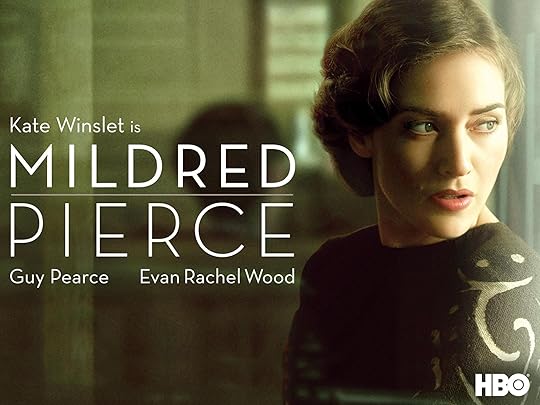
I bought this book from the Mystery Guild book club more than 30 years ago. I came across it recently and decided that I wanted to read it. Reading these novels inspired me to watch the HBO series from 2011 on Mildred Pierce. It was excellent and was similar to the novel unlike the original movie. I liked all three novels in this collection. It could be called noir or hard-boiled, but I would probably categorize it as fictionalized true crime.
If you're like me, you've known these stories from the Hollywood adaptations, which are very good, and generally faithful in the case of Postman and Double Indemnity; the screenplay for Mildred Pierce follows the story somewhat, but elides some elements and introduces one new one to generate more tension. In all three cases, it's worth reading the original novels, which, as Tom Wolfe points out in the introduction, go from 0 to 60 in a few pages and just keep accelerating.
What well done stories! All three have very obvious similarities (Glendale, CA, scheming protagonists, double crossing and violence) but each has a distinct and unexpected ending. I liked that they were similar; often, short stories are grouped together in no discernible fashion. These three- I say this without proof or anything to back up my claim- very likely led the way for crime writers of today.
"The Postman Always Rings Twice"- A plot that has since been duplicated, this is the story of an oblivious Greek, his unsatisfied young wife, and a drifter. It's a love story, a crime story, a suspense story. Well written all around.
"Mildred Pierce"- very different from the other two, and twice as long as the others as well. This is the story of Mildred Pierce, an excellent pie baker separated from her husband. She finds success for herself and her daughter, only before she succumbs to her own success. This story will make you cheer for the single mother during the Depression and want to shake her to wake up at the same time. I was pleasantly pleased to find that the HBO miniseries adaptation was extremely close to the book, going word for word in some parts. However, there are no pleasantries in this story. Beginning to end you know it will be bleak. The ending was tweaked ever so slightly, and the book leaves a slightly less sour feeling than the adaptation.
"Double Indemnity"- while at first this seems like a re-hashing of "Postman", it's not. The end will chill you through! SO GOOD! With Cain, no crime is a perfect crime. I would be so bold as to say he one-ups EA Poe.
After reading all of these pieces, I like what is omitted from the stories. Cain gives just enough details but holds back being too explicit. It's only after reading these that I wonder what he "implied" by not giving too much detail or if his lack of extrapolation was unintentional.
The Postman Always Rings Twice Cold-blooded lovers do-in her husband by faking a car accident in which they are injured as well. The D.A. suspects what happened and tries to turn one against the other. His scheme fails although suspicion between the two grows. A plea deal, among other things, gets them a proverbial slap on the wrist. Another car accident, the woman is killed, and the lover is convicted (unjustly) and dictates the story as he sits on death row. Great irony. Mildred Pierce A mother strives through divorce, establishes herself as an independent businesswoman and dotes on a spoiled, beautiful and talented daughter. Her sacrifice is unappreciated by a daughter so heartless she could hold her own with Goneril and Regan in Shakespeare’s King Lear. This novel bears no resemblance to Joan Crawford’s award-winning movie. Double Indemnity Another good example of the genre. What happens when an insurance agent falls for a suspicious dame and plots with her to murder her husband? Add an inscrutable insurance inspector and a beautiful step-daughter and you have a great page-turner.
Apparently I remember very little from the movie of Double Indemnity, other than Fred MacMurray. Because the rest only vaguely rang any bells.
But these three novels are solid film noir, with a touch of intense family drama. The main characters are never particularly innocent (although Mildred Pierce is fairly sympathetic for most of her eponymous novel), and most plot to commit desperate crimes that they think will be perfect.
Unfortunately, as any good noir writer would tell you, those plans always rely on absolute trust between the conspirators, and that eats away at relationships and plans.
So for morality tales written stylishly, I would recommend these three.
I thought I'd read "The Postman Always Rings Twice" and "Double Indemnity" before, but upon reading them now, I'm not sure I ever did read each of these novellas to completion. Cain was a master of noir, every bit as good as Raymond Chandler.
I'm currently reading "Mildred Pierce," which I know I've never read before, and I'm enjoying it.
Don't read these for plot, they are predictable (maybe not in 1930 but they are in 2011) and all involve knocking somebody off for the insurance payoff. Read these for the dialogue and setting. The Postman Always Rings Twice starts out raw and maintains that atmosphere all the way through until the end. If you are into noir-Chandler and Hammett-you must read these.
A collection of three novels by James M. Cain including the Postman Always Rings Twice. All three works made the transition to movies. Hard-boilded action.