A riveting and provocative collection of short stories, Beacons throws down the gauntlet to award-winning writers, challenging them to devise original responses to the climate crisis. From Joanne Harris’ cautionary tale of a world where ‘outside’ has become a thing of history to Nick Hayes’ graphic depiction of the primeval bond between man and nature, each story thrills the senses as it attempts to make sense of a world warping into something unfamiliar. Original, eclectic, and inventive, Beacons warns and inspires by offering stories that are as various as our possible futures.
All author royalties will go to the Stop Climate Chaos Coalition, one of the largest groups of people dedicated to action on climate change and limiting its impact on the world’s poorest people.
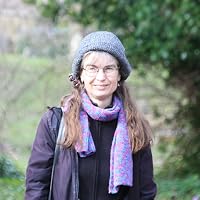
Gregory Norminton is a writer and environmentalist born in Berkshire in 1976. Educated at Wellington College, he read English at Regent's Park College, Oxford and studied acting at the London Academy of Music and Dramatic Art.He presently lives in Edinburgh.
This beautifully produced and vividly written collection of stories on the theme of climate change, published by One World, has been put together by contributing editor and creative writing tutor at Manchester Metropolitan university, Gregory Norminton. At times the stories collected here make for scary reading, especially when seen in the context of the rise of ‘extreme weather’. Unusual weather events from unseasonal snowfall to extreme high temperature, from flood to severe drought, have led to people losing their homes, their livelihoods, or even their lives. It is in the nature of news media, coupled with the geographic spread of the regions impacted, that such incidents are reported as and when they occur, rather than collectively. But given their increased frequency it has become almost impossible not to take seriously the concerns expressed by scientists, politicians, insurers and planners about global climate change. When it comes to the need to modify the habits of a lifetime, fiction has a unique role to play in helping people to imagine (and perhaps to shape) our shared future.
Liz Jensen, author of eco-thriller ‘The Rapture’ among other novels, delivers a chilling story. Her tween narrator’s energetic voice seems more than capable of coping with the horrendous climate change-induced world in which he lives. Unintentionally, perhaps, ‘Mother Moon’s Job’ almost makes you feel that no matter how bad it gets, the next generation of humans will somehow adapt when climates gets tough. But for many, it is not an adaptation that we would choose to make.
Adam Marek’s offering reads a little like the script for a certain time-travelling doctor, but is none the worse for it. His Doctor Who type character usefully brings inter planetary travel (and a sense of humour) to bear on the usual ‘do something vs. do nothing’ debate about climate change.
Toby Litt contributes an idiosyncratic take on global meltdown called ‘The Gloop’. This story – or non-story, perhaps – is justified in his ‘How To Tell A Story To Save The World’ piece, which ends: “You are not a sympathetic central character because exactly what centre are we talking about? There are either seven billion equally importantcentres, in which case if they all behave like you we’re screwed, or there are no centres, in which case we might just stand a chance.”
Janice Galloway’s atmospheric ‘Fittest’, as in ‘survival of the…’, is bang on theme with not a word wasted: “The weather had been wicked for ages but summer was little short of criminal… Stornoway reported fleets of stray jellyfish stranding boats offshore, and Perth, a shower of live eels. …those of us who paid attention to our instincts began, like salmon, drifting north.”
I could nearly quote the whole of Galloway’s story as it is so perfectly written, but why not encourage you to buy your own copy instead? Especially when all author royalties from Beacons go to the Stop Climate Chaos Coalition, a group of people united by their desire to limit climate change and its impact on the world’s poorest people. If the £8.99 price tag is a barrier, single stories in the collection can be downloaded to your e-reader for £0.75 a pop, direct from publisher One World. Among them are stories by Alisdair Gray, AL Kennedy, Adam Thorpe, Maria McCann, Rodge Glass, Joanne Harris and recent Frank O’Connor prize-winner David Constantine.
All in all a fascinating collection, and really well put together.
I decided to do a separate review of each story for this one, see below. As concerns the collection as a whole, it wasn’t a complete dud for me but it wasn’t great either. And much of my enjoyment stems from the importance of the topic. What I can say is that there’s probably something for everyone in here. At least one, maybe two of the stories will appeal to you. Is that enough to justify buying it? I’m not sure. In my opinion, Bacigalupi writes much better post-apocalyptic fiction with an environmental angle. But his stories are more removed from our daily lives so they may not bring across the required urgency. However, book is not a good replacement for that either. If every story had been like “Hospital fields” or “Trip to Iceland” then yes, maybe.
Part I. Looking in the mirror
1. A is for acid rain, B is for bee (Joanne Harris): 2 stars I happened to see a GIF on the internet that imparted the exact essence of this story in about 30 seconds. So I’m not impressed. Too many explanations were given and the ending of the story didn’t feel very poignant.
2. Mother Moon’s Job (Liz Jensen): 5 stars This one was exactly my cup of tea. Frighteningly dystopian, downright gruesome while not being gory, it packs a punch in almost every paragraph. It ends on the perfect note. What I liked the most though was the fact that it works well as a personal story but also at the systemic level. Amazing little gem!
3. Goodbye Jimmy (Alastair Gray): 3 stars Definitely a very unique approach to the topic. I didn’t expect this angle. I feel like I’m not the suitable audience for this one. The author seemed to be going for a darkly humorous take but the jokes went mostly over my head to be honest. The humor didn’t connect. Moreover, I think I would have liked this better as a standalone. The fact that’s in this collection kind of spoils the topic so you’re constantly waiting for it to move in that direction. Honestly, the framing was so good, so interesting that I felt it was somewhat wasted on the point being made. Much more could have been said and it could have gone in more interesting directions.
4. Like Canute (Clare Dudman): 2 stars I really did not like this one. It fails, imo, both as a personal story and with respect to the overall topic of the book. It feels very disjointed and it’s all over the place tonally. We get a little bit of everything but nothing really sticks: a little bit of corporate culture criticism, floods, food scarcity and refugee crisis, won’t somebody think of the bees and some pastoral survivalism. I think it lacked a concrete discernible plot trajectory. Or, if it was going to be more of a small story of a regular person living a regular life, more context would have been needed because such stories presuppose a very clear understanding of the cultural and geographical context in order to be kept so sparse.
5. We’re all gonna have the blues (Rodge Glass): 2 stars This one manages to be both overly long and much too vague. I get what the story was going for but it doesn’t quite get there. If you want to successfully showcase the difficulties and potential futility of political mobilization, more detail on the abundant compromises the behind-the-scenes dirty work etc. are needed. We need the reasons why Jaro is a drunk wreck at least partially spelled-out. There’s much too little actual reason given for the feeling of despondency we’re supposed to feel to materialize. The absurdist setting doesn’t help because it further diverts attention from the actual plot. The only thing the story convincingly transports is a hatred of experimental jazz. I did like the “will he / won’t he” though. That lent the narrative some tension and it jives well with the ending.
6. Meat (A.L. Kennedy): 3 stars Interesting take and I liked the angle but it doesn’t convey what it wants to convey convincingly enough. The alienness of the titular meat to the protagonist is not made believable enough even though there are some very good insights there and the overall situation being hinted at is also not sufficiently developed. It should permeate more of the thinking and acting of the protagonist, in my opinion. Still, the mood in this one is interesting and it comes pretty close to being very good.
7. The great consumer (Adam Marek): 3 stars Heavy on the pop-culture references, light on the meaning. This one had great potential. I like how the author brings in all these references and has them interact but this is one of the few stories I though should be longer. Specifically the resolution arrived too quickly to allow us to feel the real weight of the decision and its potential consequences. You need to know more about the individual circumstances of the characters in order to really immerse. And if you miss even one reference you won’t understand the story to the fullest extent (I, for instance, had no idea who the sleeping man was supposed to be or Ted, for that matter).
Part II. A Strand in the Web 1. What is left to see? (James Miller): 4 stars This is another pretty good one, though it is somewhat disjointed. I like that it adopts the language of teenagers - it’s important to appeal to young people. It’s critique of the American mindset is also very subtle, as is its commentary on the current immigrant situation. The fact that it actually showcases environmental destruction is one of its strong points. But it does feel somewhat disjointed and the “device” used to connect the future and present storylines is a little too gimmicky.
2. Visitation (Jem Poster): 5 stars Perfect! Absolutely perfect. A little gem of a story. While the connection to environmental issues might be tenuous, it’s definitely there and it provides threatening backdrop to the story itself. I love the fact that the scale of the story is very small, as are its stakes because it showcases that not every tragedy has to be a loud and noisy one. I most enjoyed the way menace is conveyed here. Not every writer can do this so effectively and so sparsely. And let’s not beat around the bush, this is a very male menace towards a woman, which I as a woman could not only identify with, but which I recognized. In that, it reminded me of one of Tiptree’s stories, especially in the horribly skewed male perspective.
3. The Gloop (Toby Litt): 1 star What did I just read?!? I’m sorry, I don’t even understand what the author was going for. He lost me after 1 line, much less a whole metaphor.
4. Fittest (Janice Galloway): 2 stars The point of this one went over my head. Sorry to say I have no idea what it’s supposed to hint at. I don’t even see the slightest relationship to an environmental crisis. It’s a camping trip described with an extra heaping of tension for no discernible reason. There’s a difference between keeping a threat vague and letting it hover (see Visitation for how to do that effectively) and never even letting it coalesce as is the case here. Less is not always more.
5. The Red Waste (Tom Bullough): 2 stars Interesting idea, bad execution. This is also one that would have benefitted from a better set-up. The “twist” should have been revealed from the beginning to the reader while leaving the character in the dark. Then we would have had tension. As it was, I read about a longish hike supposedly fraught with danger (but it’s unclear where from or what type of danger so it doesn’t really create tension) and then at the end I went “aha! I see, so they wanted to...” but because the ending was never set up it just felt like the a turbo had randomly decided to give us a “twist” out of nowhere, with no relationship to the previous story.
6. The Weatherman (Holly Howitt): 4 stars This story has a great set up, a great middle and a problematic ending. Everything is perfect: the context, the characters, the SF elements. The only problem is that to give it a full five I would have had to support the character actions. As it were they only seemed stupid to me. You see there was one key piece of information missing about the SF setup that would have made everything morally unambiguous and then I would have been on board with all of it. As it stands I’m not convinced of either the characters’ righteousness or the story itself. Pity. That one element could have easily been added in.
7. Take Notice (Adam Thorpe): 1 star This is a rage rating, make no mistake. So, firstly, I get what the author was going for. But, like most of the stories in this book, he went for vagueness where he should have added in lots and lots of detail. If we’re going the “end of life regrets” route we the audience are going to need to see what there is to regret. A vague “was involved in” isn’t going to cut it. And adding in the bit of unnecessary family drama was a cop-out in my view. If you’re trying to write about environmental apathy go all in on that end and don’t make it easy on yourself by adding in completely unnecessary nastiness. The story could have been great but it wasn’t and that is 100% the execution.
Part III. Go light 1. Leaving Frideswide (David Constantine): 1 star This is a story without a beginning or end and not much happens in the middle either. So I took absolutely nothing from it. The characters are also incredibly annoying. The topic of the book isn’t even central to the story.
2. Holiday in Iceland (Maria McCann): 4 stars This is the most uncomfortable story by far because it is addressed directly to the people currently alive and deals with the steps we can take to minimize climate change. And, personally, I’m doing just about jack shit in this regard. I’m definitely not one of the worst offenders but I’m very far from neutral.
3. The possession of Lachlan Lubanach (Nick Hayes): 4 stars Very novel concept, to include a graphic story in such a collection. I liked the story itself too, it was short and to the point, albeit extremely predictable. Still, one of the best in this collection.
4. Almost visible cities (Gregory Normington): 4 stars Nice change of pace here with a somewhat fantastical story. It gets the point across nicely and succinctly and I appreciated the refreshing angle.
5. Hospital fields (Sian Melangell Dafydd): 4 stars A nice self-contained little story that puts across so much more than what it’s ostensibly up about. The self-absorption of the protagonist is very well done and you buy into it immediately by virtue of the first-person narrative. Perfectly encapsulates the current relationship of man and nature and thus the root of the problem.
6. Earthship (Lawrence Norfolk): 3 stars A very American story of self sufficiency and strong individuality which serve as the basis for the future way of life. It captures the thinking patterns of the characters and the time period very well and it has a lot of merit, but I couldn’t get into it, for entirely personal reasons. The characters aren’t sympathetic and they’re the type of unlikeable that only arouses disdain in me. Plus, I’m more of a collectivist myself so the individualist mindset didn’t really resonate with me. Personally, I consider it part of the problem.
7. The spiral staircase (Jay Griffiths): 3 stars I’m docking a star because I really don’t see what this has to do with the topic of the book. Actually it’s a very good, well-written story. Keeps you in suspense a good part of the time and I sincerely enjoyed it.
A great premise for a book and the stories within really delivered. A good variety of styles and approaches - cementing my love of writers I knew as well as tickling my interest in some new names. Never overtly bleak, but regularly thought provoking. I found I responded with most emotion to those stories with recognisable details,like a character gardening or making a cup of tea. Those that showed the things we might still cling to in a world alerted by climate change - more than those with a visibly dystopian future.
I really wanted to like this book because of its promise to help us relate to climate change through narrative fiction. The book is a collection of some 20 short stories (+ one graphic novella) that all focus on climate change in some way or another.
Unfortunately, most of them feel very tired and forced, and frankly, quite depressing. Most of them don't actually bring the issues to life and make them relevant, they merely seem to coast along on the usual clichés about how terribly difficult everything will be on the other side of the expected climate-cataclysm. They don't challenge or expand my understanding of this crisis. They merely make me less interested — because the stories themselves feel so unengaging.
There are a few exceptions, notably editor Gregory Norminton's clever homage to Calvino's Invisible Cities, Maria McCann's CO2 footprint family drama and Siân Melangell Dafydd's poetic and minimalistic criticism of consumer culture.
I guess this goes to show not only how very difficult it is to write engaging fiction about climate change, but also how much we need it.
Edited by Gregory Normington this is a collection of short stories about possible futures, focussing, unsurprisingly on worlds changed and challenged by climate change. Contributors include Joanne Harris, Janice Galloway and A L Kennedy and there is a good variety in the stories, though I did find the overall mood to be depressing, despite Normington's claim in his introduction that this wouldn't be the case.
The stories cover topics including floating housing, life on other planets and the weather. Most of them are written in conventional short story format, though a few break free of this. One is The POssession of Lachlan Lubanach by Nick Hates which is in the form of a comic strip, What is Left to See? by James Miller, which is written largely in the form of online chat, full of hashtags etc. The other is my favourite piece The Great Consumer by Adam Marek which is in the form of a script featuring various well known travellers between dimensions in conversation. So we have the Doctor from Doctor Who, Ted from Bill and Ted's Excellent Adventure, Marty from Back to the Future, Neo from the Matrix and Randall who I'm guessing is from Randall and Hopkirk deceased though I'm not convinced on this. The dialogue is very entertaining, specially if you know the character (and may be much less so if you don't know the characters), I particularly liked this exchange:
TED: Most excellent time machine, dude.
DOCTOR: Thanks, I like yours too. Very .....compact. Is it bigger on the inside?
TED: Unfortunately not. It can be most impractical for transporting personages of historical significance.
Can these time travellers prevent runaway climate change?
This is a thought provoking collection of stories for contemplating our possible responses to climate change. All author royalties from the publication go to Stop Climate Chaos Coalition.
Great cause but not a great book (one outstanding short story and 2 good ones), most of the writers stay in their 'bubble' because most of the stories don't have any link with the climate or so far way that it doesn't reflect reality or 'the not so distant future'. It seems that sometimes it is pure science fiction. The style is heavy and even gibberish or a kind of intellectual masturbation! Sorry it is just my opinion.
I knew this would be heavy going given the focus, which is why it sat on my bookshelf for 11 years since the launch, unread.
What I didn't expect was the complete lack of plot. I made it through 7 of the 21 stories before giving up, but they all lacked plot. No conflict, rising action, climax, denoument, resolution. They were actually just vignettes, snapshots of lives. If that's your thing, then give it a go. For me, it's a deal breaker.
This collection of short stories was rather more dystopian than I was expecting based on the title and the premise of imagining a future (not necessarily THE future) explored in the introduction.
A couple of real gems but on the whole a mixed bag, and I must confess I didn’t quite make it to the end...
THIS IS A THINKER'S BOOK, and one of the most accessible of its kind.
I assume you accept that climate change is real right now, but do you ever muse about the widespread effects that may/will probably/must result?
If yes, you'll very much enjoy this chance to think more deeply about your current concerns, and be guided to new ripples you haven't seen yet. If no, then this is an effective and engaging introduction to the possible world yet to come.
The terms of reference for Beacons tell all. The editor and contributor, Gregory Normington, was moved by a 2007 lecture in Edinburgh, Scotland about the effects of climate change on Scottish wildlife.
He was spurred to action. Beacons is an anthology of 21 short stories, grouped equally under 'Looking In The Mirror', 'A Strand In The Web' and 'Go Light'.
Every work has been commissioned and asked for a treatment of the ecological results of climate change, with a special request to avoid cliches.
You'll get quality with this group; the authors are predominantly well-known, highly-respected, award-winning UK writers, and, in addition to the mandated creative story ideas, you'll see some wonderfully different writing styles. Aspiring writers, take note.
Short stories are slices of life, just right for Beacons' content. Note the points offered, internalize those that speak you, and fill in the the scene for the rest of the planet at your leisure.
I would like to see Beacons included somewhere in high school grades 9-12 (14-17 year-olds) with joint literature/earth science presentation.
Beacons is an excellent example of what U.S. philosopher Daniel Dennett calls an 'intuition pump'. The stories make you think; you can't help it.
NOTE TO AUTHORS: Get complete bios out there! I'm good with Google, but two of you took 2 minutes to find (way too long).
Only a three star book for me for several reasons: I disliked the dystopian slant & egoism of humans in the stories. Obviously it is a subject made for sci-fi but there was not much multi-species mention other than the usual 'all the bees died so humans are doomed'. It depressed me that none discussed overpopulation or the scourge of humans desecrating the planet by their greed & selfishness. When will we stop rewarding people for breeding. If humans were extinct the planet would probably thrive. (I'm with David Attenborough all the way on that view). If anything, this book made me more of a misanthrope! Bah humbug!
I've only given this four stars as I didn't read the whole book. To be honest I thought it might be a little depressing and/or heavy-going. But I couldn't resist downloading Mother Moon's Job by Liz Jensen (all the stories can be downloaded individually on kindle). It's brilliantly bleak and dystopian and a five star story. Mind you, if Liz Jensen wrote the blurb on the back of a box of Weetabix, I'd read it avidly!
This is a collection of literary pieces for the Climate Chaos Coalition, an artistic response to the issue. Most of the stories are set in an imagined future, where limited resources are either the preserve of the few or tightly controlled and rationed for the many. Very few of these are at all optimistic. There is an allegory in graphic format, which perhaps is. Some of them are funny, including one set in the present where a family consider their carbon footprint. All of them are good.