

What do you think?

The Fantasy Book: An Illustrated History From Dracula To Tolkien
An illustrated exploration of literary fantasy in all of its forms. It covers the clinical horrors of Edgar Allan Poe to the nightmare of Kafa, and from Frankenstein to Alice in Wonderland. The writers and the works discussed are illustrated with material drawn from books, magazines, and films. Some writers include Lewis Carroll, J. R. R. Tolkien and E. T.A. Hoffman. Illustrated in black and white and color with a bibliography and index. 160 pages. stiff paper wrappers. small 4to..
160 pages, Paperback
First published January 1, 1978
About the author
Franz Rottensteiner
70 books3 followersFranz Rottensteiner, never a comfortable critic, has enlivened sf discussion for many years. He is a long-tim editor of the respected Austrian fanzine, Quarber Merkur.
Ratings & Reviews
Friends & Following
Create a free account to discover what your friends think of this book!
Community Reviews
Displaying 1 - 8 of 8 reviews

November 10, 2010
This is a nice, wide-ranging overview of the fantastic in literature (covering fantasy, horror, the weird tale, etc.). It's basically a long-form essay broken down into different approaches, periods and countries - the extra space is filled with some vintage illustrations and paintings from all time periods.
In some sense, there wasn't much here I didn't already know (except some of the more obscure European writers, which the international section is indispensable for). The opening has a nice discussion of what constitutes "the fantastic" and differing critical definitions (and how the fantastic differs from, or includes, horror, surrealism, magical realism, etc) - a strong overview.
But what was nice was reading some well-informed criticism that was actually *critical* (if a little blunt and unsupported, due to format and length considerations). In this age of the internet, criticism ends up being juvenile, uninformed snarkiness ("Dude, this was borrrring, but then I was drunk, so I went and played HALO instead... Goatsey forever!") which is essentially useless OR well-meaning, mealy-mouthed and lazy "I only review things I like", which leads us to the dreaded, but easy, world of "if everything is good then nothing is good". Even the next level of standard criticism up from those two bases is equally as dire, but real informed criticism (yes, even informed criticism you don't agree with) is a dying art in the world of everything-is-subjective personal experts that arose after the internet made us all genius gods overnight.
So it was enjoyable to read a writer in the 70s making somewhat snooty and reductive dismissals of currently much loved and lauded writers like H.P. Lovecraft, Tolkien, Robert E. Howard et. al. Not because I agree with those criticisms, but because it helps to remind one that some well-informed people *who loved the genre* (as opposed to the ivory-tower cartoons that get easily deployed by the disgruntled) still had stringent critical problems with authors we take for granted as being inherently great. Such reminders should trigger, in an interested reader, rigorous personal introspection about what constitutes "good" and why. Unless, of course, you just read for fun - and there's nothing wrong with that, of course.
That may make this book sound dry and annoying but it's not at all - just an informative, fact-packed excursion through literature of the fantastic from a well-informed and non-American perspective. Worth your time if that sounds interesting.
In some sense, there wasn't much here I didn't already know (except some of the more obscure European writers, which the international section is indispensable for). The opening has a nice discussion of what constitutes "the fantastic" and differing critical definitions (and how the fantastic differs from, or includes, horror, surrealism, magical realism, etc) - a strong overview.
But what was nice was reading some well-informed criticism that was actually *critical* (if a little blunt and unsupported, due to format and length considerations). In this age of the internet, criticism ends up being juvenile, uninformed snarkiness ("Dude, this was borrrring, but then I was drunk, so I went and played HALO instead... Goatsey forever!") which is essentially useless OR well-meaning, mealy-mouthed and lazy "I only review things I like", which leads us to the dreaded, but easy, world of "if everything is good then nothing is good". Even the next level of standard criticism up from those two bases is equally as dire, but real informed criticism (yes, even informed criticism you don't agree with) is a dying art in the world of everything-is-subjective personal experts that arose after the internet made us all genius gods overnight.
So it was enjoyable to read a writer in the 70s making somewhat snooty and reductive dismissals of currently much loved and lauded writers like H.P. Lovecraft, Tolkien, Robert E. Howard et. al. Not because I agree with those criticisms, but because it helps to remind one that some well-informed people *who loved the genre* (as opposed to the ivory-tower cartoons that get easily deployed by the disgruntled) still had stringent critical problems with authors we take for granted as being inherently great. Such reminders should trigger, in an interested reader, rigorous personal introspection about what constitutes "good" and why. Unless, of course, you just read for fun - and there's nothing wrong with that, of course.
That may make this book sound dry and annoying but it's not at all - just an informative, fact-packed excursion through literature of the fantastic from a well-informed and non-American perspective. Worth your time if that sounds interesting.

December 26, 2021
There was enough in this book to catch my eye and pick up at a local secondhand bookstore.
Rottensteiner gives a brief overview of fantasy as he sees it, from Walpole's 'The Castle of Otranto' to what was contemporary fantasy at the time of publishing, which was the late '70's. So the title is somewhat misleading from the outset, but, hey, catchy titles, right?
Rottensteiner is content in this illustrated edition, to breeze over major movements in Fantasy with brief bios of key writers and plot descriptions of the more influential works, with little analysis, and the odd judgmental remark at a few other writers in passing (his dismissal of Harlan Ellison is interesting).
A passable, if dated overview of fantasy writings, and fans of the genre are bound to find things they agree and disagree with (his dismissal of Lord Dunsany as an 'interesting minor writer' should itself be relegated to a lapse of judgment). For me, the brief discussion at the end of the book of lesser known international writers of fantasy shines more of a light upon writers I previously knew nothing about (with the exception of some of the Latin American writers).
An updated volume would be very welcome, covering the late '70's to the present. Preferrably written by someone else, to be honest, as passionate and knowledgable as Rottensteiner comes across.
My understanding is that the same author has done a similar treatment of sci-fi, which I may just keep an eye out for.
Rottensteiner gives a brief overview of fantasy as he sees it, from Walpole's 'The Castle of Otranto' to what was contemporary fantasy at the time of publishing, which was the late '70's. So the title is somewhat misleading from the outset, but, hey, catchy titles, right?
Rottensteiner is content in this illustrated edition, to breeze over major movements in Fantasy with brief bios of key writers and plot descriptions of the more influential works, with little analysis, and the odd judgmental remark at a few other writers in passing (his dismissal of Harlan Ellison is interesting).
A passable, if dated overview of fantasy writings, and fans of the genre are bound to find things they agree and disagree with (his dismissal of Lord Dunsany as an 'interesting minor writer' should itself be relegated to a lapse of judgment). For me, the brief discussion at the end of the book of lesser known international writers of fantasy shines more of a light upon writers I previously knew nothing about (with the exception of some of the Latin American writers).
An updated volume would be very welcome, covering the late '70's to the present. Preferrably written by someone else, to be honest, as passionate and knowledgable as Rottensteiner comes across.
My understanding is that the same author has done a similar treatment of sci-fi, which I may just keep an eye out for.

December 1, 2024
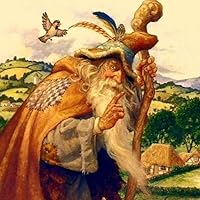
The author did a fantastic job here with all the illustrations and background information: Gothic origins, Gothic in America, early grandmasters of fantasy (Hoffmann, Poe, Gogol), themes and characters (vampires, Dracula, werewolves, Golem), ghosts and horror stories in Britain, (M.R. James, Machen, Blackwood), horror in the USA (Lovecraft), alternative worlds, sword and sorcery, Tolkien, fantasy, Kafka, what each country contributed... this is one of the best overviews I came across in quite a while. Outstanding and highly recommended!
January 9, 2026
Great book for those interested in the history and many facets of Fantastic literature. Many well known and lesser known writers and stories are addressed, and the situations in which those stories have been conceived.
The illustrations are well chosen and placed to support the text.
This book gives a good understanding of the state and thoughts on Fantastic literature, at the time of publishing (1978).
I recommend it to all those who love Fantasy, horror and other forms of weird fiction!
The illustrations are well chosen and placed to support the text.
This book gives a good understanding of the state and thoughts on Fantastic literature, at the time of publishing (1978).
I recommend it to all those who love Fantasy, horror and other forms of weird fiction!

September 30, 2018
Historical but limited mostly to antiquity, expansive but dismissive of all but the most high-minded material; not anything you haven't read before.
Suprisingly, no index of art credits, despite many modern artworks towards the last half of the book - I doubt Rottensteiner bother get permission of use, so surprised it didn't get Collier Books (his US publisher) in hot water in 1978.
Suprisingly, no index of art credits, despite many modern artworks towards the last half of the book - I doubt Rottensteiner bother get permission of use, so surprised it didn't get Collier Books (his US publisher) in hot water in 1978.

July 25, 2012
This was definitely an interesting read.. Some of the critisms and comments toward some other well-known and widely loved authors (HP Lovecraft, Tolkien and the like) really are insightful and just enjoyable to read.. Most comments toward those authors just range from "Loved it." But to read a negative comment toward them, and the reasoning.. Well, it's a change, and it's pretty neat to get a different view on them.
There's a lot of information in here which I already knew, but it does provide a nice overview of Fantasy literature.
There's a lot of information in here which I already knew, but it does provide a nice overview of Fantasy literature.

July 8, 2015
very outdated since the fantasy genre has grown more than ever in the last years. It is also very opinionated, but the writer warns the reader for that in the introduction. Still made an interesting read and could make a good historocal reverence book, if one can filter through the opinions.

May 15, 2010
A slightly clunky read but contains a lot of information about fantasy writers of the 19th and early 20th centuries who are almost forgotten.
Displaying 1 - 8 of 8 reviews