Jump to ratings and reviews
Rate this book

Nayir Sharqi & Katya Hijazi #1

Дъщерята на пустинята

Rate this book
Криминални загадки сред екзотиката на Саудитска Арабия.
Когато шестнайсетгодишната Нуф изчезва заедно с любимата си камила, богатото й семейство наема пустинния водач Найир да оглави издирването. След десет дни на търсене, когато Найир е на път да се откаже, тялото й е открито в пустинята. Когато патолозите установяват, че Нуф е починала не от обезводняване, а от удавяне, семейството й сякаш не се интересува вече от истината. И Найир решава да открие какво всъщност се е случило с момичето. Тази мисия ще доведе до неочаквани разкрития.

Динамичен и колоритен, романът „Дъщерята на пустинята“ надниква в едно затворено общество, което ревниво пази своите тайни.

368 pages, Paperback

First published January 1, 2007

318 people are currently reading
12429 people want to read

About the author

Zoë Ferraris

9 books424 followers
Zoë Ferraris moved to Jeddah, Saudi Arabia in the aftermath of the first Gulf War. She lived in a conservative Muslim community with her then-husband and his family, a group of Saudi-Palestinians.

Her debut novel, Finding Nouf (published as Night of the Mi'raj in the UK) was a national and international bestseller, winner of the LA Times Book Award for First Fiction, a B&N Discover pick, an ALE Alex Award winner, and was translated and published in 45 countries. Two follow-up novels, City of Veils and Kingdom of Strangers have been published in over 35 countries. The three books have been optioned for a television series.

She has an MFA from Columbia University and currently lives in San Francisco.

Ratings & Reviews

What do you think?
Rate this book

Friends & Following

Create a free account to discover what your friends think of this book!

Community Reviews

5 stars
2,322 (23%)
4 stars
4,268 (42%)
3 stars
2,595 (26%)
2 stars
534 (5%)
1 star
217 (2%)
Displaying 1 - 30 of 1,507 reviews
Profile Image for Jeffrey Keeten.
Author 5 books252k followers
September 2, 2018
"A family buries a woman with her back to Mecca only when she carries a baby in her belly, a baby whose face, in death, must be turned in the direction of the Holy Mosque."

When Nayir Sharqi is asked by his friend Othman Shrawi to find his missing sister, Nouf, he had no idea what he is getting into. He knows the Saudi Arabian desert as well as a Bedouin and he knows better than anyone how quickly the heat and dehydration can kill a 16 year old girl.

She lost her camel. To lose your camel in the desert is death.

He isn’t in time.

She didn’t die from dehydration. She died from drowning.

In a desert.

 photo SaudiArabianDesert_zpse4a32c5a.jpg
Saudi Arabian Desert

Most of this society doesn’t feel about Nayir the way that Othman does because he is a Palestinian.

”The Bedouin were hospitable but extremely clannish, and while they had opened their doors to him, he had always been a guest. It had stung him especially to realize that he would never be allowed to meet their daughters, sisters, or wives. And the truth was that he spent most of his time in Jeddah, so that the more he was mistaken for a Bedouin, the more he was reminded that he was not a Saudi either. The recognition was instant: You must be a Bedouin. It meant, You can’t be a Saudi.”

 photo JeddahSculpture_zps641dfda7.jpg
”The Fist is a very well known sculpture of Jeddah, Saudi Arabia. It was created by the French artist Cesar and is made of bronze. The Fist is located in the middle of a boulevard, like many sculptures in Jeddah’s large public open air art museum. Cesar was commissioned to create several works of art for the city’s immense beautification project. The Fist is a very powerful piece, symbolizing strength and defense.”

Nayir is a man without a country. It is almost impossible to leave; and yet, impossible to belong.

More than anything else he wants a wife. He dreams of the opportunity of being accepted and allowed to meet the sisters and nieces of his friends. He prays five times a day. He is devoted to Islam. He is afraid of women because he doesn’t know them. Their veils keep hidden not only their intriguing shapes, but their personalities, their thoughts, their desires. It is almost as if they don’t exist, but are just floating phantoms through the periphery of his vision.

Even women’s voices are considered dangerous.

”And even the voice!...It’s subtle contours can commit the fornication of the lips, the teeth, the very breath we use to praise Allah! Nayer wondered what Nouf’s voice had been like. Did she, like some women, put coins in her mouth to muffle the sweetness of her sound?

It makes me sad to even think of being deprived of the music of women’s voices, their laughs, the change in their tone when they are smiling, and the thrill when they say your name. Nayir is stranded in the desert surrounded by women, but he might as well be Robinson Crusoe on an island without them.

The reaction when he gets flashed in a market is of shock and shame.

”The heat bore down on his head. He looked around for the nearest beverage kiosk, and what he saw drained the blood from his face. Beyond the next stall was a woman, alone. the front of her cloak hung open to expose a naked, well-formed body. She was the softest brown, caramel pudding, glistening with sweat in the neon lights. She smiled at Nayir. A second later she melted into the crowd.”

Okay, so I would be a little shocked, ultimately it would be a wonderful anecdote that I would share with my friends when I talked about my travels in Saudi Arabia. I would probably have a little smile on my face remembering the caramel pudding of her skin, but for Nayir it is as if he was forced to sin.

”Nayir froze. He tried to counter with another image...but he could see only the woman, her glistening thighs spread slightly apart, her long, firm finger stroking her groin. He glanced around, but it had happened too quickly and no one else had noticed. His cheeks burned red. He instinctively reached to cover his groin. If he had been wearing his robe, he could have leaned forward and avoided the show, but with these dratted trousers clamping his crotch he couldn’t even tuck it up and squeeze.”

He is a good man and as the novel progresses I can’t help, but admire his devotion to his religion, and also his tenacity in puzzling through the confusing aspects of the Nouf case. He has another issue and her name is Katya Hijazi. She is a lab technician at the medical examiners office. The first time he meets her she strolls into the lab without her burqa covering her face.

He can’t look at her face so he looks at her nametag until he realizes that she might think he is looking at her breasts, so he moves his eyes to her feet only to worry that he might see her ankles.

Where are the religious police when you need them? There is a task force who walk around specifically to catch men and women doing anything inappropriate like something so horrifyingly inappropriate as looking at a woman’s face. As a Westerner, as a person who has grown up being allowed to see women’s faces, their arms, their legs, their hair, it is hard not to see this culture as anything other than oppressive to women and torturous to men. The men have too much power and the women have too little creating an imbalance that keeps too many of them from developing relationships beyond the formality of their arranged marriage.

It is unusual for a woman to be working in Saudi Arabia. In Katya’s case it is by necessity. Her mother died. Her father had a nervous breakdown of some kind and retired early. They are constantly short of money. She works, but in a lab of women. To complicate things even further she is the fiance of his friend Othman. She is determined to find out what happened to Nouf, and in the process she makes Nayir very uncomfortable with her forwardness and her at times reckless disregard for keeping her FACE COVERED.

 photo ZoeFerraris_zps9d4ff953.jpg
Zoe Ferraris moved to Saudi Arabia in the aftermath of the First Gulf War to live with her then husband his extended family of Saudi-Palestinian Bedouins.

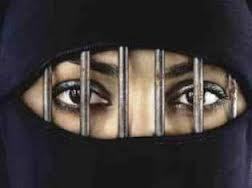
This is another book in a string of recent books I’ve read where the mystery plot, though very well done, is merely a vehicle for Zoe Ferraris to showcase the Saudi Arabian culture. I’m woefully ignorant of the day to day life of the Middle Eastern culture and the impact of a religious state on the lives of women, and men as well. I felt Ferraris was respectful of the culture, but also pointed out the issues of equality that need to be addressed. She let me see the longing in the eyes peering from behind the veils. They are beautiful caged birds...let them sing.

 photo SaudiaArabianeyes_zps457b5eba.jpg

HIGHLY RECOMMENDED!!

If you wish to see more of my most recent book and movie reviews, visit http://www.jeffreykeeten.com
I also have a Facebook blogger page at:https://www.facebook.com/JeffreyKeeten
Profile Image for Shereen.
90 reviews
August 14, 2008
I was very excited when I heard a review of this book on NPR as I grew up in Jeddah, Saudi Arabia, and there are very few novels set in my hometown. However, after reading the book I was extremely disappointed as I did not recognise any of the Jeddah that I know in the book. Jeddah comes to life at night, and that is when the women would be shopping in the malls or open air souks, and not early in the morning before dawn prayers. I laughed at the scene where Katya's sandals start melting in the heat and sticking to the pavement. The story was okay and the setting was interesting, though completely foreign to me. I would not recommend this book as an example of the culture of Saudi Arabia.
Profile Image for Michael.
1,094 reviews1,967 followers
August 22, 2013
This satisfies my fascination with mystery stories set in different cultural contexts. The book is the first in a series of three featuring Palestinian immigrant to Saudi Arabia, Nayir, as an informal investigator. His work as a desert guide leads him to become tasked to help a wealthy friend and customer search for a missing teen-aged sister, Nouf, believed to have fled to the desert with a camel. She turns up dead, strangely from drowning. The medical examiner ignores clues of foul play and labels the death an accident, but the brother, Othman, asks Nayir to discreetly look for a possible culprit, aided by his fiancé Katya, who works as an assistant in the forensics lab. Step by step the pair follow a host of clues to peel back the layers of truth behind a veil of secrecy.

Nayir is a fascinating character steeped in Bedouin ways of life, resolute in his loneliness and almost totally ignorant of the ways of women and love. He lives on a houseboat in the port city of Jeddah on the Red Sea, which matches his spirit:
He had learned to love the desert as a boy, but as an adult he had come to desire a newer version of the wild. On the sea he found a curious replication of the sandy waste. There was vastness, quietude, hidden life, and the challenging paradox of monotony and uncertainty. …Since coming to the marina, he had not actually moved, but knowing that it was an option brought him a tremendous sense of freedom and made having neighbors more bearable.

His spirituality does not conflict with being a truth seeker, as even the Koran can make doing so a righteous endeavor:
Oh Allah, my Light, my Guide
Show me the kernel of the truth
Give me the heart of a lion
And a falcon’s eye.


This tale excels in portraying the paradoxes of life among a people struggling to maintain traditional Muslim values in the face of the onslaught of the modern global culture. It is easy to understand how the influences of cell phones, satellite TV, movies, and malls are leading the youth of this society to push against arranged marriages, pervasive chaperones, and the requirement to wear a burqa in public. What Ferraris does so well is make you feel normal about such life and then through the development of the two characters lead you to experience as radical the ways of living taken for granted in modern world. For Nayir, just to meet with Katya in private is a sin, and doubly so since she is his friend’s betrothed and the sensuality he experiences in seeing her face sometimes challenges his traditional views. At prayers five times a day, the messages he gets come to seem extreme:
“Touching,” the imam growled. “It is the fornication of the hand. You are not to look upon na-mehram women—do not look upon any women who is not family to you, for that is fornication of the eye.”

The growth in teamwork and friendship between Nayir and Katya was the best part of the book for me. Almost as alien species to each other they have to move past many false presumptions which lead them to hold back evidence they uncover, such as secrets about the lives of both Nouf and Othman:
The hesitation stung him. She thought he was harsh, but he was a rational man, thoughtful and decent. If he seemed judgmental, it only stemmed from a belief in the virtues of tradition. It stung him too that when she glanced at his face, she seemed to withdraw.
“You think I am being judgmental,” he said, “but don’t tell me that you don’t have any faith in this system. I think you do. It’s designed to protect women. All the prescriptions for modesty and wearing the veil, for decent behavior and abstinence before marriage—isn’t the goal prevent this very sort of thing from happening?”
“Yes,” she said. In theory, I agree. But you have to admit that those same prescriptions can sometimes cause the degradation people fear the most.” She was nervous now. She couldn’t seem to still her hands, so she folded them awkwardly and dropped them on her lap. “That is, I think, what happened to Nouf.”


The liberating change in Nayir has the flavor of Reagan exhorting Gobachev about Berlin at the end of the Cold War: “Tear down this wall!”:
Something greater was crumbling inside him, the wall that held the strength of his beliefs, and it hurt to feel himself weakening, to feel this much sympathy for women like Nouf who felt trapped by their lives, by prescriptions of modesty and domesticity that might had suited the Prophet’s wives but that didn’t suit the women of this world, infected as it was by desires to go to school and travel and work and have ever greater options and appetites. He tried not to feel that the world was collapsing, and there was nothing he could do, just watch with a painful, bitter sense of loss.

I look forward to reading the others in the series. In addition to BooknBlues recommendation and review of the book, the excellent review by Harry Roolaart helped move me to read this great story.


Profile Image for Susan.
3,018 reviews570 followers
May 3, 2020
This is a really excellent mystery, set in the unusual setting of Saudi Arabia. Nouf ash-Shrawi, the sixteen year old daughter of a wealthy Saudi family, disappears shortly before her wedding. Desert guide Nayir is asked to bring her back, but when she is found dead he is asked by the family to investigate what happened to her. This leads to him having to work with a woman, Katya Hijazi, which makes him very uncomfortable in the heavily segregated society he lives in. His loyalties, faith and culture are all questioned, but the author is at no times disrespectful of a culture so different from our own.

Both Nayir and Katya are very sympathetic characters, that you care about deeply by the end of the book. Katya is the fiancé of one of Nouf’s brothers, Othman, who is also a friend of Nayir’s. At first, it is thought that Nouf ran away, as she was nervous about her forthcoming wedding; but as Nayir and Katya dig deeper, they discover that not all is as it seems behind the placid, conservative walls of the Shrawi family compound. With both Nayir and Katya linked to Othman in particular, they are treading a delicate line between discovering the truth and risking their own relationships.

I really enjoyed this novel andI look forward to reading, “City of Veils,” the second book that features the main characters of Nayir and Katya.
14 reviews3 followers
August 31, 2008
I loved this book, but for what I think are different reasons than the author intended. Or maybe not. It's a murder mystery as I'm sure you would gather from reading the book jacket. A girl goes missing and is found dead in the desert and some people are guessing foul play. Okay. Great. To me, however, the book is really about Muslim culture. And that's why I loved it. It's an open window, which isn't always available otherwise, to the Muslim culture, beliefs and how devout Muslims feel about these cultures. If you're a worldly person who is interested in understanding, well, the world, then I would suggest throwing this on your book-read list. Sure, the otherwise boring lecture of all that is Muslim can be found in other non-fiction literature (uh, hello, the Quran???), but here in this book it is cleverly blended with a fictitious mystery. The mystery isn't so mysterious but it's worth the read to get to the real substance of the book.
Profile Image for Roman Clodia.
2,895 reviews4,647 followers
May 4, 2020
** Includes massive spoilers! **

Something greater was crumbling inside him, the wall that held the strength of his beliefs, and it hurt to feel himself weakening, to feel this much sympathy for women like Nouf who felt so trapped by their lives, by the prescriptions of modesty and domesticity that might have suited the Prophet's wives but that didn't suit the women of this world, infected as it was by desires to go to school and travel and work and have ever greater options and appetites. He tried not to feel that the world was collapsing, but it was collapsing.

Urgh, talk about American ideology being imposed on a Saudi setting! Nayir, a stateless Palestinian who is frequently taken for a Bedouin and who is an expert on deserts and tracking, goes rapidly from being so ultra-conservative that he can't even look at a veiled woman's eyes (though he has erotic daydreams and possibly hallucinations of naked female flesh all the time) to, after one case, this eureka moment quoted above where all his cultural and religious tenets are overnight collapsing and he's turned into a feminist supporter of female independence - that independence itself couched in Americanised terms. It's crude, it's extreme, it's unnuanced and it's extremely simplistic.

Nouf, too, the missing 16 year old, expresses her 'rebellious' personality in clichéd terms: she rides a motorbike in men's clothing and she plots to leave her family and run off to America... 'Cos that's the way 'freedom' can be envisaged in this book. To be fair, Katya, despite her Russianised name, offers something of an antidote to these extremes: an intelligent woman with a PhD who works in a coroner's lab i.e. she attempts to negotiate the cultural restrictions of her culture rather than throwing them all out the window in one merry sweep. I might have had a far more positive sense of this book had it focused on Katya who has the complexity to be both a feminist and a Saudi.

I don't know anything about Saudi Arabia other than what I've read as general interest in the press; and I don't know anything about the country's reading of Islam ditto (or, indeed, any more about Islam than, say, Hinduism) but anomalies of plot struck me forcibly: that Nayir can investigate 16-year old Nouf driving off the family compound/island in a truck large enough to hold a camel, when the book was published in 2009 and driving wasn't made legal for Saudi women till around 2018 and he doesn't even comment on this till 33% through the book? That one element of the plot turns on the legal adoption of a Muslim boy into a wealthy Saudi family, taking their name, when (from what little I know) Muslim families may take in abandoned or needy children to succour them but don't change their names out of respect for their own genealogical heritage? If someone like me who would never claim any particular cultural or religious knowledge finds these jarring notes...

So there's an intriguing premise to this book and I started it eager to find out more about Saudi culture from a supposed 'insider' (the American author lived there for a year or two, I gather, while married to a Palestinian-Saudi) but actually the 'crime' element is lightweight, there's hardly any tension and lots of repetition, and the solution to the crime plot is hard to credit. That said, the writing is fluent and Katya is an interesting character. But the Americanised slant on Saudi culture, the New Orientalism imposed, and the crude portrayal of Nayir's religious/cultural disillusionment rubbed me up the wrong way. How, I wonder, would we feel about a novel written by a Saudi woman who spent a year or two in the US and then wrote about a WASPy male protagonist who, following a single investigation, questioned his whole cultural system, his religion, and overnight abandoned the prevailing values of his upbringing?

PS. It's worth reading the reviews on here from Saudi women who say they don't recognise their own culture in this book.
Profile Image for Yoonmee.
387 reviews
March 6, 2011
I'm torn between giving this book 1 or 2 stars. I feel as if there should be two reviews.

First review:
This is an interesting murder mystery set in Saudi Arabia. The reader will think they are being given a behind the scenes look into everyday life in Saudi Arabia, which adds to some of the intrigue. Setting aside, the plot encourages reader to continue reading to find out "whodunnit" without resorting to the over the top style of murder mystery that seems really popular these days (you know what I mean, books where the murderer is a mass murderer, where there's a lot of gory, detailed sex and a lot of even gorier, even more graphic murder/torture scenes). This is a murder mystery that can take its place next to literature, not next to cheap, mass market paperback murder mysteries (not that those aren't fun to read, too).

Second review:
Most readers will think they are being given an "inside" peek into everyday life in Saudi Arabia. And why not? The author married a Saudi and lived in Saudi Arabai for a bit (I believe about two years, but I could be mistaken). I won't pretend to be an expert on Saudis or even Middle Eastern life/culture, but I have a good feeling the author is really just giving Westerners what they want to read/see/hear. Ferraris fits very nicely into what I think is called New Orientalism in that she's viewed as an "insider" but in reality she's more of an outsider. Several books of this sort concerning Middle Eastern women have been written lately (and often by women... but maybe this is only noteworthy b/c men have been doing this for years); these books are written by white, Western women about Middle Eastern women. These Western women are believed to be experts b/c they have often lived in the Middle East and/or have done research there. While I'm sure some of them are indeed experts, many of these books are less reflections of what the Middle East is really like, less reflections of what Middle Eastern women are really like, and more a reflection of what we as Westerners want Middle Eastern women to be like, what we already think they are like.

Case in point, this book is about the death of a wealthy, privileged, 16 year old Saudi girl who desired to escape her life in Saudi by running away to America. America! Land of the free! Here, America is poised as a direct opposite to Saudi Arabia. America equals freedom, choice, etc. Saudi Arabia equals oppression, unhappiness, lack of agency. I should stop here and note that I am in no way arguing that, yes, many women in Saudi Arabia are probably very unhappy with their lack of rights, many women probably do indeed want to emigrate to America, etc. But what happens to this girl who desires to escape? She is murdered. For most of the book, we are led to believe her family murdered her for her sins (wanting to run away, sex outside of marriage, pregnancy). Because all Middle Eastern families murder their rebellious daughters! That's just what "those people" do! Good grief.

I could give more examples, but my point is that life in Saudi Arabia and the Middle East is, no doubt, a LOT more nuanced than we are often led to believe through this type of New Orientalist literature. And yet, all we read about are plucky, rebellious women who desire to leave their countries, who are unhappy there, etc. Sigh.

The very anti-Saudi sentiment in the book really bothered me, too. There were several instances where the author included some pretty snarky commentary on Saudis. Again, I'm not saying that the Saudis are perfect and that maybe some of the author's sentiments weren't given w/o reason, but the overall tone of the book was pretty anti-Saudi. According to the authors, the Saudis are too wealthy, they believe they are better than everyone else, they're superstitious, they're lazy, overweight, etc.

Is this book a peak "under the veil?" Heck no. Do I believe I have really learned much about the Saudis from reading this book? Heck no. If anything, I have learned more about what the author believes about the Saudis than what is really true. The saddest part about this book is that, b/c it's well written, many, many Westerners are reading it only to have their preconceived negative notions about Saudis and the Middle East confirmed.

A note on the adoption tag: I tagged this in my "adoption" shelf because Othman is an adoptee, thus his relationship with Nouf is deemed acceptable (barely). It's probably worth looking into a bit more, but I wonder how many books feature adoptees engaging in incestuous activities (having sexual relationships with their adopted siblings).
Profile Image for Alka Joshi.
Author 6 books5,126 followers
December 10, 2019
I loved this intimate look into the lives of Saudi families. Because Ferraris used her own experience--nine months living with her ex-husband's Saudi-Palestinian family in Jeddah--the narrative felt real and accessible. The author treated the culture with respect and sensitivity so that readers could understand how a pious bedouin and a female medical examiner came together to solve a murder mystery in a land where the carefree mingling of men and women is verbotten. To top it all off, the mystery is involved and interesting enough to keep the reader guessing till the very last page. Books that give me insight into a culture so different from my own are great world-builders. Ferraris is giving us a gift of understanding if we are open to it.
Profile Image for Mariam.
63 reviews2 followers
May 13, 2014
The story was very intriguing, with an interesting plot that keeps the reader coming back for more. The imagery involved and the author’s understanding of Saudi Arabian culture was very obvious, and she even used many Arabic words and phrases that are common there. However, as a Muslim, I winced at many of the situations she described, feeling that they were continuations of untrue stereotypes held by others. While the author has a wonderful grasp of Saudi culture, she obviously knows very little about what it means to be a Muslim and what ideals they believe to be true. For example, one character in the story stops to pray the early morning prayer directly in front of a mosque, but prays outside on the sidewalk alone rather than in congregation (why?). She mentions that a character in the novel attends Hajj several times a year, which is impossible as Hajj only happens once a year, and Nayir and Othman were standing at the mosque when the prayer time was called, and both of them said they had already prayed (also impossible since a person cannot pray before the time for that particular prayer has come). In addition, Othman is depicted as having an incestuous relationship with his “adopted” sister – Western style adoption is not practiced in Saudi Arabia as it goes against Islamic injunctions of keeping children’s names and family history intact; once reaching puberty it would be made known that they were not brother and sister.

While these things were simply observations of the author’s lack of knowledge about Muslim beliefs, what truly bothered me was the characterization of Nayir, who was a devout, practicing Muslim as an obsessive, rude, and backwards person who couldn’t imagine a woman wanting to work, among other things, while still viewing women in a very sexual manner. The understood view of the novel was to tell readers that Saudi men are perverse individuals who could not imagine a modern woman, and that Islam itself and Saudi society are somehow at odds with today’s life. By the end of the novel, Nayif has fallen into numerous “sins” (such as having lunch with a woman), and due to the murderous actions of other characters has basically thrown his beliefs to the wayside in order to embrace the modern world.

In addition, the pervasive tone throughout the novel about how submissive and suppressed Saudi women are is simply untrue, and fosters negative images on the part of the reader. While it may be true in certain families, the reader would likely believe that these beliefs are held by all Saudis, if not all Muslims. This view of Muslims is yet another stereotypical one that doesn’t do Muslims or Saudis any favors. Although originally excited to see a fictional novel about Saudi Arabia, I was personally very disappointed and will definitely not be recommending this book to others.
Profile Image for Margitte.
1,188 reviews667 followers
June 25, 2015
It was a good crime story with a little bit of intrigue build in, although the murderer was known from an early stage. Nevertheless, the plight of women received enough attention to make the book an interesting read.

The story was different from the other books I enjoyed about the Middle-Eastern region. As a debut novel it was very good, but needs a little oomph - more drama and suspense - to make it work. There is some stereotypical cliches worked in that could have been avoided. For instance, it is common knowledge that western women would find eastern women surpressed and their treatment unacceptable. It's old news, almost past the expiry date. The culture is respectfully addressed by the author, as it should be, so where is the excitement? What's the point? Is there something new that we should know?

Whatever bothered me was not important enough to reflect in a lower star rating. It was still an informative read, written by an outsider looking in, when an opportunity to live there as a family member, presented itself. So yes, try it.


Profile Image for Judith E.
733 reviews250 followers
April 29, 2021
A mediocre mystery of the murder of a young, betrothed, Saudi Arabian woman. A peek into that culture is what makes this story tick. The social and religious rules, the sexual inhibitions, the lack of women’s rights and the incomprehensible “religious police” are difficult for an outsider to understand.

There’s a very good reason why the First Amendment to the U.S. constitution is first.

An audible listen with a very poor male narrator. 3.75 stars.
Profile Image for Vivone Os.
738 reviews26 followers
May 30, 2021
Bookopoly 2021. - Light cover
Na naslovnici ovog romana piše da je fascinantni psihološki krimić. Ne mogu reći da mi je bio baš fascinantan, a nije imao ni onu zapadnjačku psihološku notu. Krimić, ah, recimo da bismo ga mogli okarakterizirati kao krimić. Imamo smrt mlade djevojke (je li ubojstvo ili slučajna smrt), „istražitelje“, istragu, nekoliko osumljičenih...
Ali ono što je drukčije u cijeloj priči je mjesto radnje – Saudijska Arabija - i glavni likovi tj. „istražitelji“ – Nayir, pobožan, tradicionalan, pustinjski vodič i Katya, mlada žena koja radi kao forenzička tehničarka. Kroz priču se naravno provlače i sva ona pravila, zakoni i zabrane za žene koji su tako poznati u literaturi s tematikom Bliskog Istoka (žena mora biti pokrivena, ne smije pričati s muškarcem ako joj nije obitelj, ne smije nikud ići sama, muškarac ženu ne smije ni pogledati ni pomisliti o njoj jer je to grijeh...).
Odnos Nayira i Katye mi se puno više svidio i više me zaintrigirao nego samo ubojstvo i istraga. On, nesretan što nema obitelj, drži se svih pravila, ona pomalo previše hrabra i samovoljna za okolinu u kojoj živi i radi. Dok istražuju ubojstvo njihova se zabranjena komunikacija počinje razvijati. On počinje polako propitivati odnose muškaraca i žena i sve im nametnute zabrane. Dvije trećine knjige pratimo njegovo istraživanje, njegova razmišljanja, dvojbe, a samo jednu trećinu pratimo Katyu. Voljela bih da je bilo više Katyinih razmišljanja. Al evo, knjiga ima i nastavke, nadam se nabaviti ih si u neko skorije vrijeme, možda se njen lik kroz njih više razvije.
Sve u svemu, knjiga me je iznenadila i bila mi je dosta dobra.
Profile Image for Jeanette (Ms. Feisty).
2,179 reviews2,184 followers
February 22, 2009
As you're unraveling the mystery of what happened to Nouf, the author reveals the mysteries of living in a strictly repressive Saudi Arabian society.

Zoe Ferraris has a dual perspective that is helpful in this book. She's an American, so she knows all the things Americans wouldn't understand about the details of Saudi life and culture. And she has the rarer perspective of having once been married to a man of Palestinian-Bedouin heritage. So she lived among these people and has insider knowledge.

Combine great writing skills and a fascinating story with a knowledge of current dichotomies in Saudi life, and you have Finding Nouf.
The amateur sleuthing was fun, with all the sneaking around and secretly collecting evidence. She showed how hard it is to solve a crime when the cultural norms prevent direct questioning for fear of insulting someone.
Profile Image for Connie  G.
2,143 reviews709 followers
April 19, 2022
"Finding Nouf" is an engaging literary mystery about the search for a missing sixteen-year-old woman from a wealthy Saudi family. Nayir, a desert guide who was raised by the Bedouin, is hired by the family to find Nouf and investigate her disappearance. Assistant medical examiner, Katya, is testing lab samples of the evidence and has close ties to the family.

The story shows the conflicts which exist in contemporary women in Saudi Arabia between traditional Islamic values and modern dreams. Traditionally, women were kept in a closed society, unable to leave the house without permission, an escort, and a burqa. They were expected to be wives and mothers. Nouf longed for more freedom even as she prepared for her upcoming wedding.

As they investigate Nouf's disappearance, conversations with Katya, who has a good education and a career, has Nayir questioning his traditional values concerning women. Nayir also feels that understanding the modern Saudi woman may help him unlock the mysteries surrounding Nouf.

Author Zoe Ferraris lived in Saudi Arabia for several years, and treats Saudi values with respect. The book was suspenseful, entertaining, and enlightening. I also enjoyed the story's wonderful sense of place in various locations in Jeddah, the marina, and the broiling hot desert.
Profile Image for Harry.
319 reviews420 followers
June 9, 2013
Book Review:

Would it compel you to read a book where the body of brutally disfigured woman is found in the desert? Maybe, maybe not. Would it then compel you to read the book if it was found that the young woman died not of dehydration, but by drowning? Indeed, how is this possible?

Aided by Katya, Nayir is determined to find out what has happend to Nouf. However, in order to do that he must gain acess to the inaccessible: the hidden world of women. Get ready for an intriguing voyage into Saudi royal families, Saudi justice, Nayir's desire for female companionship, Katya's bold investigation when the case is already closed, a seemingly uninterested family and the romantic desert winds just 90 miles from Mecca.

What I did while reading the book is cranked up Google Earth and followed along with Ferraris as she explores the Red Sea bordering Jeddah, the cosmopolitan city of Jeddah, and the mysterious desert surrounding all of it.

Get ready for an unprecedented window into the lives of men and women in Saudi Arabia...you will not be disappointed.


-----------------------------------------------------------------

Series Review:

Zoë Ferraris moved to Jeddah, Saudi Arabia in the aftermath of the first Gulf War. She lived in a conservative Muslim community with her then-husband and his family, a group of Saudi-Palestinians.

In 2006, she completed her MFA in Fiction at Columbia University. Her debut novel, Finding Nouf, (published as Night of the Mi'raj in the UK) and a follow-up novel, City of Veils, have been published in over thirty countries. Her third novel, Kingdom of Strangers, came out in June 2012.

She currently lives in San Francisco and is hard at work writing about subjects other than Saudi Arabia, the setting for her first 3 novels.

Just as we find with the Inspector O series, Zoë Ferraris sets before her the task of writing mysteries in which the very system in which the crime takes place is an obstacle to solving the mystery. Church, in his Inspector O series, places his hero within the North Korean political system, a system that is as much an obstacle to solving crimes as is the the crime itself. Ferraris, on the other hand, chooses the closed society of Saudi Arabia (or more the point, the city of Jeddah) for her novels' settings.

American readers of these novels will be reluctant to put these novels down. The riveting and intricate plots taking place in this part of the world are eye openers to what would surely mystify most readers in the West: an inside look at a closed system where women and men to this day remain segregated; where both genders come to terms and wrestle with their own views as laid down by the strictures and tenets of Islam; where heroism is defined by defying the often horrible restrictions imposed by such beliefs. The stories you will read are heroic; we certainly get the sense that Ferraris who has lived in this closed society condemns much of what she has experienced while simultaneously granting respect to the faith of Islam.

The books will shock you at the plight of Saudi women and simultaneously keep you glued to the pages as the various intrigues expand and ripple across the crescent shaped dunes in the Saudi desert. Part ethonography, part mystery detective, part literary the novels are all encompassing and are the mark of a new voice and an astounding talent on the mystery and literary fronts.

The heroes of this series are Nayir Sharqi, a male Palestinian desert guide, and Katya Hijazi, a Saudi female forensic lab worker. The mere pairing of these two of opposite genders by Ferraris is an act of defiance in itself, especially in a heavily segregated society. You will say, as a westerner: "what's the big deal in having a job?" The big deal is that women don't have jobs in this society. The fact that Katya even has a job is an act of defiance. Cloaked in public, the showing of her ankles, or even stopping to speak to a man in public may be reason enough for the religious police to throw Katya in jail.

And what about Nayir?

A devout muslim, this displaced Palestinian man was created by Ferraris to investigate all that is good about Islam. Frustrated with his desire for a female companion, often forced to confront the seeming contradictions between religious edicts and what he knows to be right, this desert man brings to us an endearment of Saudi Arabia, of Jeddah, a place caught between its role as the holy gateway to Mecca and the cosmoplitan city in an increasingly liberal world.

These books have my attention! They represent a new wave within the genre of mystery/detectives...and I do recommend this series to any who find that the above tickles their curiosity.
Profile Image for Melanie.
368 reviews158 followers
July 26, 2020
Pretty good mystery but it was a little dry (and not because it's set in Saudi Arabia), because the character development was lacking IMO. Maybe the next book in the series will develop them a bit more. I feel that Saudi Arabia as a character was more developed than the humans. The descriptions made me feel like I was there in the intense heat. It's hard to believe, in our current times, that women are still treated so poorly, as second class citizens. I am forever grateful of my freedom to come and go as I please, have a job, drive, and the ability to wear any type of clothing I choose! I do hope to read the next installment at some point and find out what's in store next for Katya and Nayir.
982 reviews88 followers
Read
April 26, 2018
I read this many years ago, and I remember enjoying it quite a lot
Profile Image for Skip.
3,845 reviews582 followers
January 25, 2016
3.5-3.75 stars. The death of a young Saudi aristocrat is investigated by Nayir, a friend of the family who is a desert guide, and a young woman Katya, betrothed to an adopted brother in the family. Nayir's character is somewhat inconsistent, with strong cultural beliefs about women, who manages to work with Katya in solving the mystery. Katya's character is much better, helping to show the deep gender divide in Saudi culture, and then make herself successful in contravention thereof. The cultural and setting aspects of the book were better than the murder mystery.
Profile Image for Elizabeth (Alaska).
1,569 reviews553 followers
April 29, 2020
I'd never read a book set in Saudi Arabia before. I can't be sure a mystery is the best introduction. This one does give a glimpse into a certain way of life and for that it is probably better than a travelogue.

Nouf was one daughter in a very wealthy ultra-privileged family. The book opens with Nayir - and others off scene - looking in the desert for her. She is found, of course, and that is when all of the questions begin. It is a good mystery.

The heat and the desert are ever present as is Islam and the burqa. I am somewhat surprised that I found all of it interesting. Many many years ago I lived in the desert and the heat was familiar. The references to Allah, the Quran and even quotes from the Quran were within character and I didn't feel overpowering. I was surprised that for most of the novel the need for veils and the burqa did not strike my ire. I think this was because it was simply accepted practice by the characters.

I found the prose good, given the genre. The author occasionally found more adjectives to describe the scenery than might have been necessary. Despite my being interested in the setting, scenery wasn't the reason she was writing. I was interested in the main characters who I thought well drawn.

I have already picked up the 2nd in the series on my Kindle and discovered my library has the third. At this point in time, I'll volunteer that I'm sorry there seem to be only the three installments. This was 4-stars for me, my top rating for the genre.
Profile Image for Shannon .
1,219 reviews2,581 followers
February 22, 2010
Nayir ash-Sharqi is a Palestinian desert guide living in Saudi Arabia who is often mistaken as a Bedouin. His best friend, Othman Shrawi, is the adopted son of a wealthy and influential Saudi family. When Othman's sixteen-year-old sister Nouf goes missing, along with a camel and a ute, Nayir is called upon to help search for her in the desert.

Her body is found ten days later, in a wadi - a dry rivulet that floods when the rains come. Cause of death: drowning. But there are defensive wounds on her wrists and dirt that is not from the desert, and why did she run away when she was about to be married and was happy? Her family has kept the situation quiet and doesn't want a police investigation, but Othman asks Nayir to find out what happened. Nayir is equally troubled by the mystery of Nouf's disappearance and death, especially when he sees how she was buried: with her belly facing Meccah. Only when a woman is pregnant is she buried that way, but Nouf wasn't even married.

Assistance comes from an unlikely and, at first, unwanted source: Katya Hijazi, a medical examiner at the morgue and Othman's fiancee. A determined young woman, she makes the pious and very single Nayir uncomfortable with every glimpse of her face, but as the two uncover more about Nouf's secret life and draw closer to the truth, these two amateur detectives are drawn closer together in friendship, understanding and mutual respect - and something more hopeful and long-lasting.

Finding Nouf was a joy to read. Ferraris' debut novel successfully takes you into the inner world behind the veils and etiquette of Saudi society, dances tightly but gracefully around a sensitive mystery and the intricate workings of this deeply religious culture. I am always wary of western authors tackling a society and religion like Islam and the Middle East, especially from the perspective of a non-white non-Westerner. By making the main character a deeply religious Islamic man who is both shy and terrified around women, and balancing him with a woman who "merely" wants the freedom of choice - a sentiment that women everywhere can sympathise with and understand - Ferraris manages to present both the familiar and the new, treat her characters and their culture with deep respect, and touch upon the changing dynamics, needs and wants of the people there.

I learnt a lot about the inner workings of Saudi culture, especially the family unit. Explanations and insight were offered when needed without jarring the narrative or sounding at all patronising. While written with a non-Middle Eastern, non-Islamic audience in mind, I didn't find it laced with that condescending colonial voice that can undermine similar books, where a trace of smugness permeates. Ferraris lived in Saudi Arabia with her then-husband's extended Bedouin family, which explains her knowledge and first-hand experience - what I'm grateful for in particular is the way she has managed to let us foreign heathens into a very private realm without making us feel like interlopers, or feeding our superiority complex. I'd like to say Finding Nouf would be a great book for Muslim Westerners to read as well, but I can't assume. I think my Muslim friends would enjoy it though (although none of them are Saudi).

I rarely read mysteries, especially the pulp kind, mostly because I get bored, I find the writing to be pretty poor, the characters underdeveloped and the plots either confusing or predictable - but always plodding. This is technically a "literary detective novel" and is not as plot-dependent as the pulp kind. The setting is beautifully resurrected, the heat and the marble and the finer details, the countless bored men driving round and round the roundabout while thinking up names for the huge sculptures in the middle, the subtle little etiquette details. It'd be challenging, writing a mystery set in a land and culture largely unfamiliar to us - so many of the plot points would lose their significance and relevance because we don't get the context. Never once did I have a dumb moment, a moment of feeling excluded or that the characters were placing heavy emphasis on a point without explaining why it was important - Ferraris always managed to get across context and relevance without belabouring the point.

At first the mystery seemed obvious - I thought, oh it must be an honour-killing, the family probably drowned her in the swimming pool for dishonouring them. Well I was wrong, and I'm glad of it. It's much more complex than that. Elements of it I guessed early on, but there are still layers to it that aren't revealed until the end - that aren't pieced together until the end. The structure of the mystery and the piecing together of the puzzle was very well done. Another testament to Ferraris' writing is how Nouf comes alive as they piece together her secret life. She's a vivid character and it's important that we care about her, whether we like her or not, or there's no need to stick around to find out whodunnit.

The beginning was a tad slow, and I was unsure about it - especially as Nouf turns up dead early on and I thought her family had killed her. But it does pick up and the final chapters are engrossing, especially as by then you're comfortable in this world, you feel like you get it, and you care what happens. It's also promising that the ending seemed to set up or allow the possibility for a second novel featuring Nayir and Katya (Nayir, by the way, definitely needs to get laid). I'd love to read it. It was refreshing, to say the least, to have the opportunity to read such a delicate novel set in such a different (than usual) place, and I definitely want to revisit it.
Profile Image for Vanessa Olson.
168 reviews5 followers
August 26, 2009
If I could give this 2 and a half stars, that's what it would receive. I didn't love it, but I didn't hate it either. It's a story about a 16 year old Saudi Arabian girl who goes missing and is found dead, the rest of the book deals with solving the reason behind her disappearance and also paints a picture of the underlying oppression felt by the women in that society.
I think my biggest problem with the book is that it just felt way too verbose for such a small story. I realized by the end of the book I had a great picture of all of the characters and their surroundings, but felt absolutely no emotional attachment to any of them. The mystery part of the book seemed rushed and stretched by the end as well.
What I did find refreshing is that the author seemed to neither outright condemn nor condone this society of extreme modesty and oppression, but rather just seemed to say "the original intention was good, the current system is flawed, it is what it is." I also loved the fact that the main character Nayir, was just a man who was trying to live his life in accordance with his beliefs as best as he could.
Profile Image for Elizabeth A.
2,151 reviews119 followers
August 3, 2014
You know what occurred to me the other day? It has been way too long since I read a book with camels in it.

What caught my attention about this book is the premise: In a blazing hot desert in Saudi Arabia, a search party is dispatched to find a missing young woman.

I poured myself tall glasses of passion ice tea and settled in for what I hoped would be a great read. Alas, it was not. There is a mystery at the heart of the story, but as far as mysteries go, it was rather light. More interesting were some of the behind the scenes cultural insights shared, but it also felt rather cliched and written for a Western audience who might not have read other books that take a reader behind the veil. And while I appreciate the author's writing skill, it is not enough to read the next couple of books in this trilogy.
Profile Image for Carmen.
2,777 reviews
March 22, 2021
Something greater was crumbling inside him, the wall that held the strength of his beliefs, and it hurt to feel himself weakening, to feel this much sympathy for women like Nouf who felt trapped by their lives, by prescriptions of modesty and domesticity that might have suited the Prophet's wives but that didn't suit the women of this world, infected as it was by desires to go to school and travel and work and have ever greater options and appetites. He tried not to feel that the world was collapsing, but it was collapsing, and there was nothing he could do, just watch with a painful, bitter sense of loss.
Profile Image for Debbie.
650 reviews160 followers
January 27, 2024
I loved everything about this book, which takes place in Saudi Arabia. The characters were interesting with depth and flesh. The mystery was well-done, and learning about the culture and religion was very different than anything I have read. The roles of men and women in this society is depicted in a way that is mind boggling to me, but I was interested in learning that there are different levels of piety, and many varied ways of interpreting the religious belief system-many shades of gray. I really want to read the next book in this series.
Profile Image for Dem.
1,263 reviews1,432 followers
March 31, 2020
Review to follow
Profile Image for Amanda .
926 reviews13 followers
September 13, 2018
Finding Nouf by Zoë Ferraris was a fascinating book that shed a lot of light on Saudi Arabia, particularly gender politics, religion, and propriety.

I lived in the Middle East for two years but I lived in one of the more liberal Muslim countries. I knew next to nothing about Saudi Arabia, beyond the fact that it is the most conservative Muslim country. Finding Nouf was an education of what it means to be a woman living in this country. Beyond not being allowed to drive, women aren’t allowed to leave the home and enter the public without being accompanied by a male relative. And beyond that, they must stay veiled at all times in public or risk facing public shaming by men, or worse yet, the religious police.

Another theme the book touched on was the pull between east and west and conservative versus liberal. The Middle East is increasingly being influenced by the West and this is to the obvious dismays of religious conservatives in the area. Nayir was a conservative Muslim who originally looked down on Katya Hijazi, a progressive Muslim working in a coroner’s office. Katya looked down at Nayir for his beliefs at first glance as well. This aspect of the story was reminiscent of Pride and Prejudice.

One poignant moment of the story struck a chord with me was when Nayir mentioned that the country had laws in place to protect women. I think many men in countries such as this one have this attitude, discounting the belief of many that well-informed women are a danger to society and to status quo. Denying the rights of others uplifts one segment of society and keeps another element of society at a permanent disadvantage.

Ferraris used a deft hand at this book. She shared many insights on Muslim society without preaching. This is even more of a feat considering that Ferraris was an import to Saudi Arabia for a time. This book was such an education, without being patronizing to readers unfamiliar with the Middle East. I would highly recommend this book, in conjunction with the nonfiction book Princess: A True Story of Life Behind the Veil in Saudi Arabia by Jean Sassoon.
Profile Image for Andrew H.
581 reviews22 followers
October 11, 2019
Does a title matter? Very much so. The American edition of Ferraris' book took the title Finding Nouf whereas the European version was called The Night of the Mir'aj. Undoubtedly, the American title suggests the genre best: crime fiction. The European title, however, is a better pointer towards the psychological dynamic of the novel.

Nouf is very much an absence within the plot and the main interest for the reader is the Palestinian desert guide Nayir ash-Sharqi. His journey towards truth (who killed Nouf, why, where and how?) parallels the sacred night journey of the Prophet as he rode Buraq towards the holy mosque and Allah. As with the Prophet, Nayir's quest for the truth circles around images of Paradise, Hell, and questions the place of prayer and spirituality in human life. The parallel is made explicit in Chapter 27: "maybe he [Nayir] was failing to ask certain questions, to ride fearlessly into those territories of the heart that he did not understand." Through the character of Nayir, Ferraris probes male attitudes towards women in Saudi Arabia and the place of love within human relationships.

In some ways, the main narrative elements are not surprising: the veil, limited freedom, patriarchal domination, the corruption caused by Western ideas. But Ferraris breathes new life into these and weaves a novel that is sardonic, morally forensic, and wholly engaging.

Profile Image for Kasa Cotugno.
2,755 reviews586 followers
August 3, 2017
CSI: Jeddah.

It would be hard to find two more different cities to compare than Jeddah and Las Vegas except that they both lie in deserts. The reconstruction of a young girl's final days that led to her death involve forensic studies in the restrictive atmosphere of the strict Saudi landscape, presenting an eyewitness account of what life is like in that society. Ferraris, who lived in Arabia in the 1990's, is generous with her details and imaginative in her plotting. The mystery around which the story revolves is satisfying, but even more complelling is the exposure to Western readers of life as it has been lived in this remote part of the world for centuries. As noted late in the book, the customs under which Saudi women exist were fine for wives of the Prophet, but unrealistic in today's world.

Finding Nouf introduces two wonderful characters: Jayir, a desert guide who becomes an unwitting inspector and katya, a female forensic scientist. Together they unravel Nouf's story. I am gratified that they are featured in at least one more book in what promises to be an intriguing series, City of Veils.
Profile Image for Sandra Nedopričljivica.
749 reviews75 followers
December 30, 2016
Krimić na saudijski način - drugačija kultura koja nama nije bliska i uvijek nas čudi, zatvorene i pokrivene žene... zato mi je i ovo bio samo jedan jako "pristojan" krimić, bez krvi, luđaka ubojica (iako imamo leš) i veće napetosti. Sporo, nešto od sadržaja apsolutno predvidivo a kad vidim koliko je vremena proteklo otkad sam ga započela čitati, ovo je onaj od onih romana koji se brzo stave "ad acta"... i više ne spominju.
Displaying 1 - 30 of 1,507 reviews

Join the discussion

Can't find what you're looking for?

Get help and learn more about the design.