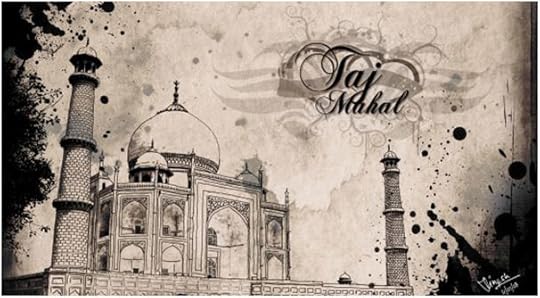
Keturioliktojo Mogolų imperatoriaus Šah Džahano vaiko gimimas kainavo motinai gyvybę. Netekęs mylimos žmonos, imperatorius pražilo per vieną naktį, o savo kančią įkūnijo įspūdingu pastatu - Tadž Mahaliu.
Apie Mogolų imperatorių dukteris ir seseris tikrai žinomas tik vienas dalykas: nuo imperatoriaus Akbaro (1542-1605) laikų joms buvo uždrausta ištekėti. Sostą galėdavo paveldėti bet kuris (o ne vyriausias kaip Europoje) princas, todėl pretendentų į karūną pakakdavo ir be žentų. Apie asmeninį princesių gyvenimą nežinoma beveik nieko: Mogolų istorikų nedomino bevaikės senmergės, o europiečiai apie griežtai saugomas haremo moteris, dėl menkiausio nieko baudžiamas mirtimi, tegalėjo surašyti turgaus paskalas.
Vyriausioji Šah Džahano duktė Džahanara po staigios motinos mirties tampa tėvo patikėtine, ir tai daugiausia, ko ji gali tikėtis. Kilmė ir tradicijos ją pasmerkia tyliam gyvenimui ir vienatvei. Tačiau princesė nusprendžia nepaisyti draudimų... Šlama šilkas ir muslinas, kibirkščiuoja briliantai, rūksta smilkalai, tvenkiniuose plaukioja auksinės žuvelės, stori persiški kilimai slopina žingsnius, vėjas atpučia žydinčių medžių aromatą, o naktį aliejinės lempos apšviečia tachtas, kalnus pagalvėlių, vėduokles ir šokėjas. Istorija susilieja su pasaka, ir brangakmeniais nusagstyto narvo durys prasiveria...
Indu Sundaresan was born in India and grew up on Air Force bases all over the country. Her father, a fighter pilot, was also a storyteller—managing to keep his audiences captive and rapt with his flair for drama and timing. He got this from his father, Indu's grandfather, whose visits were always eagerly awaited. Indu's love of stories comes from both of them, from hearing their stories based on imagination and rich Hindu mythology, and from her father's writings.
After an undergraduate degree in economics from India, Indu came to the U.S. for graduate school at the University of Delaware. But all too soon, the storytelling gene beckoned.
Hand down, it really isn't your typical Bollywood romance.
Shadow Princess is the final book of Indu Sundaresan's Taj Mahal trilogy. This time the heroine is Jahanara Begum, the first born daughter of Shah Jahan and his beloved queen consort Mumtaz Mahal.
The love story between Shah Jahan and Mumtaz Mahal, emperor and empress of the Mughal Empire, needs no introduction since this romance has been immortalized by the Taj Mahal, the white marble mausoleum Shah Jahan built for his wife. But what is a lot less famous is the stories of the royal couple's children (4 sons and 3 daughters) and how Mumtaz's death affected the royal family and the fate of the royal couple's children, especially Jahanara Begum's.
The author revealed the tale of Princess Jahanara and the unusual position she had been placed in after her mother's death, the 17 years old Jahanara inherited half of her mother's fortune and the statue of Padshah Begum, mistress of the harem and First Lady of the Empire, which instantly made her the most powerful and wealthy woman in the empire. But power and wealth was followed by endless responsibilities to support both her father and her family, court intrigues, scandals (mostly the suspicion of incest between Jahanara and her father), her younger sister Roshanara Begum's jealousy and the hostility among her four brothers. Plus her fledgling romance with Najabat Khan, a noble in her father's court, was also jeopardized because the Emperor was unwilling to allow his favorite daughter to get married.
I'm not very sure why Shah Jahan would forbid his daughters to get married, supposedly the daughters getting married would weaken the emperor's hold on his throne but I still can't see how would marry off a few daughters would create troubles for the emperor. I guess it must have something to do with the princesses' sons might grow up and then challenge the throne, but it isn't well explained in the story.
If you expected to see some Earth-shaking romance like the ones in the Bollywood movies, you will be disappointed. Sure there are affection, heartache and doubts between the heroine and Najabat Khan plus there is a 'forbidden' aspect in their love since they couldn't get married, but their romance is pretty much down to earth. As years passed Jahanara took other lovers, Najabat Khan took other women as his wives and started a family of his own, yet the two continued to love each other from afar through the decades. I understand not many people like this development but I found it to be quite refreshing.
The heroine's younger sister, Roshanara is pretty much written off as a jealous spoiled brat in this story, but historically she seems to be a skilled player in the power game and she actually helped one of her brothers (Aurangzeb) to become the next emperor. Therefore, I do hope Roshanara could have more rooms in the narration...because it does feel like Roshanara was even more shadowed by both her famous mother and her powerful, more beloved older sister. I mean, by the later half of this book, even the princes have more space and screen time than Roshanara herself, argh.
Once again, the author built her world with a lot of fine details about the cultures, food, rituals, customs of the society of that time. Also, once again the struggle for the throne plays an important part in the latter half of the story.
I also do like how the author skipped a generation to write the stories of Shah Jahan and Mumtaz Mahal's children instead of writing the romance between the emperor and empress because let's face it, too many people had already written stories about these two (though their stories are very much worth telling), yet the stories about their children seem to have a bit more rooms for imagination and development.
This was a huge letdown in comparison! Second part was really almost awesome. I don’t know why the author skipped a whole damn generation and moved to the story of Shah Jahan’s children but this wasn’t as interesting as the first two parts. It strikes like an odd one out in the trilogy. This more seemed like the summary of first two books and little addition of new plot. It is discreet that it does justify the title – “Taj Mahal” but the plot line is so weak to hold on. Concept: 3.0/5.0 Execution: 2.75/5.0 Characters Bespoken: 3.0 /5.0 World Building: 3.0 /5.0 Cover: 3.25/5.0 Writing Style: 3.0/5.0 Overall: 2.75/5.0 Three decent stars for the way architecture of “Taj Mahal” and “Itimad-ud-Daulah tombs are described.(*Itimad-ud-Daulah tomb’s inlay work is indeed magnificent! The inner ceiling is just awesome laid with every possible known colour. It is been said the plans for Taj Mahal were almost derived from Itimad-ud-Daulab tomb. About Taj Mahal I think nothing is needed to be said for being one of the seven wonders of the world.) This one was all about children of Shah Jahan - Jahanara, Roshanara, Dara, Shuja, Aurangzeb, and Murad. When Jahanara Begum overtook her mother’s Mumtaz Mahal’s title - Padshah Begum her rule over harem created ripples in certain obscure ways. She was so close to her father that her marriage kind of scared Shah Jahan! She never married but her duties were the one thing she always fulfilled. The tainted love story between Jahanara and Najabat Khan was the fixation which held Jahanara's mind and heart together. Though Roshanara is depicted as a vixen who tried to lure away Najabat Khan from her elder sister, I sympathize with her. She was so lost to gain powers that poor child did anything to shame and ruin Jahanara. There have been literally so many controversies about Jahanara until date. Her relationship with her father was been weirdly questioned. According to this book - The inside harem politics – how could a daughter overrule the zenana? It is the right of the wife of the Emperor and though she was the one who had sovereignty over it even after her brothers’ marriages. Her affiliations lied with her brother Dara and she made it crystal clear which created such sibling rivalry that Roshanara aligned herself with Aurangzeb. At times? It bored me! Are two sisters fighting over a man? I was like come on get over yourselves. I was so glad that she has described the portions in almost architectural terminologies, which kept me going. And god! That opium usage? Irritated me as hell. Altering historical events could be interesting but Jahanara story has many loose ends. Like that incident, she burnt herself? The reasons are unclear all along the historical timeline. That end? Kind of stunned me! Because Aurangzeb has always remained a rigid personality from my perceptions. P.S.: Well, Jahanara and Najabat’s love reminded me:
সবমিলিয়ে কেমন একটা মন ভারি করে তোলা উপন্যাস। অনুবাদ নিয়ে ইতিমধ্যেই অনেক বলেছি। এবার বরং লেখিকাকে নিয়ে বলি। এই ট্রিলজি টা পড়তে গিয়ে খুব স্পষ্টভাবেই বোঝা যায় যে মুঘল আমল এর সবকিছুর উপর তিনি কত বিস্তারিত গবেষণা করেছেন। ইসলাম ধর্ম নিয়েও যে কম খাটতে হয়নি তাও স্পষ্ট। আর অদ্ভুত সুন্দর লেখিকার কল্পনা শক্তি। মুঘল আমল এর রাজদরবার থেকে শুরু করে রাস্তার ধারে বসা বাজারের বর্ননাও এত নিখুঁত আর পুঙ্খানুপুঙ্খ ভাবে দিয়েছেন যেন চোখের সামনে দেখা যাচ্ছে সব।
শাহজাহান সিংহাসনে বসার ৪ বছর এর মধ্যেই চতুর্দশ সন্তান এর জন্ম দিতে গিয়ে মৃত্যু হয় মমতাজ মহলের। আর তার সাথে সাথেই জেনানা মহলের পাদশাহ বেগম হিসেবে অধিষ্ঠিত হয়ে যায় তাদের জৈষ্ঠকন্যা জাহানারা। খুব অল্প বয়সেই অনিচ্ছাসত্ত্বেও এই দায়িত্ব কাধে তুলে নিতে হয় তাকে। শাহজাহান ব্যাস্ত হয়ে পরেন মমতাজ এর স্মৃতিতে ভাস্বর সমাধি নির্মাণে। তার সাথে আপন ভাইবোন দের মধ্যেই শুরু হয় হিংসা আর ক্ষমতার লড়াই। আর জাহানারা সবাইকে সামলাতে থাকেন একা হাতে। এক পর্যায়ে ভালোবাসা আসে তার জীবনে। কিন্তু দায়িত্বভারে তাকেও স্বামী হিসেবে পাননি তিনি। কারন শাহজাহান সিদ্ধান্ত নেন তিনি জাহানারার বিয়ে দেবেননা বরং পাদশাহ বেগম হিসেবেই থাকতে হবে তাকে। প্রকৃতপক্ষে শাহজাহান এর সন্তান দের মধ্যে কেবল জাহানারাই ছিল রাজ্যভার সামলানোর যোগ্য এবং একইসাথে দুরদর্শী। কিন্তু নারী হওয়ায় সম্পুর্ন ভাবে সেই ক্ষমতা তিনি কখনোই পাননি। মুঘল ইতিহাসের দ্বিতীয় ক্ষমতাশীল নারী ছিলেন তিনি। অথচ নারী হওয়ায় সবসময় ছায়া হয়েই বিরাজ করতে হয়েছিল তাকে।
তবে এই বোনকে শেষ সম্রাট আওরঙ্গজেব খুবই ভালবাসতেন। কিন্তু কোনো এক অজ্ঞাত কারনে জাহানারা কখনোই তাকে পছন্দ করতেন না। তবুও শাহজাহান এর মৃত্যুর পর জাহানারাকেই সম্রাট আওরঙ্গজেব পাদশাহ বেগম এর পদ দেন। আওরঙ্গজেব এর চরিত্রের এই দিকটি পাঠক মনে তার জন্য বেশ কিছুটা সহানুভূতি সৃষ্টি করে।
সম্রাট শাহজাহানের ১৪ তম সন্তানের জন্ম দিতে গিয়ে যখন সম্রাজ্ঞী মমতাজ মহলের মৃত্যু ঘটলো ঠিক তখনই ইতিহাসে অমর হয়ে রইলেন মমতাজ, জন্ম নিলো স্থাপত্যশৈলীর এক আকর্ষণীয় নিদর্শন: ভাস্বর সমাধি তাজমহল। আর একই সাথে এই তাজমহলের ছায়াতলে ঢেকে গেল অন্য মুঘল সম্রাজ্ঞী আর শাহজাদীরা! তাজমহলের ছায়াতলে থেকে নিজের শক্তিশালী ব্যক্তিত্বের জানান দেয়া এক শাহজাদীর গল্প এই শ্যাডো প্রিন্সেস।
মমতাজ মহলের মৃত্যুর পরপরই শাহজাহানের সন্তান সন্ততির মধ্যকার বিভেদ দৃশ্যমান হয়ে ওঠে। নিজের ব্যক্তিত্বের প্রভাবেই হোক কিংবা পিতার স্নেহের কারণেই হোক একজন শাহাজাদী হয়েও শাহজাহানের জেনানা মহলের প্রধান পাদশাহ বেগম হয়ে ওঠেন জাহানারা বেগম। প্রিয় স্ত্রীর মৃত্যুতে গভীরভাবে শোকাহত সম্রাটের একমাত্র অবলম্বন হয়ে ওঠেন জাহানারা। কন্যা আর পিতা উভয়ের প্রতি উভয়ের স্নেহ ভালোবাসার বিপরীতে রটে কিছু কুৎসাও। জাহানারা দরবারের এক আমিরের প্রেমে পড়েন অথচ বিয়ের চিন্তা তো দূরে থাক পিতা তার মেয়েকে এক সেকেন্ডের জন্যও চোখের আড়াল হতে দিতে চান না। ওদিকে সাম্রাজ্যের প্রতি বিরূপ হয়ে ওঠা শাহজাহানের আসন নিজের করে পেতে তৎপর হয়ে ওঠে শাহজাদারা। শুরু হয় ভাইয়ে ভাইয়ে বিরোধ, তাদের পিতাই তাদের দৃষ্টান্ত হয়ে ওঠে আর তাতেই শাহজাহানের তৃতীয় পুত্র যখন সিংহাসন আরোহণ করেন তার হাতে লেগে থাকে পরিবারের রক্ত।
তাজমহল ট্রিলজির তৃতীয় বই শ্যাডো প্রিন্সেস। বইয়ের শেষে লেখিকা কৈফিয়ত দিয়েছেন কেন তিনি মেহেরুন্নিসার পর এক প্রজন্ম বাদ দিয়ে জাহানারা বেগমকে নিয়ে লিখলেন। ফিকশন আর নন ফিকশনের ব্যাপারে স্পষ্ট করেছেন সবকিছু। লেখিকার এই এক প্রজন্ম বাদ দিয়ে লেখার বিষয়টাও নিশ্চিত করে ইতিহাসের অভ্যন্তরে মমতাজের অবস্থান! মেহেরুন্নিসা ইতিহাসে অমর হতে চেয়েছিলেন; জাহানারা বেগমকে স্মরণে রাখার মতো ব্যক্তিত্ব আর অবস্থান তার ছিল। কিন্তু আমরা সাধারণ মানুষ জানি মমতাজ আর শাহজাহানের কথা! লেখিকা ইন্দু সুন্দরেসান চমৎকার ভাবে সাজিয়েছেন সবকিছু। এই বইয়ের বিশেষত্ব হচ্ছে এর বর্ণনা। আমার মনে হচ্ছিল আমার চোখের সামনে তাজমহল গড়ে উঠছে একটু একটু করে। ফলস্বরূপ তাজমহল দেখার তৃষ্ণা বেড়ে গিয়েছে কয়েক গুণ! হ্যাটস অফ টু ইন্দু সুন্দরেসান ফর দিস ট্রিলজি। শাহেদ জামানের অনুবাদকে অনবদ্য আর চমৎকার বললেও কম হয়ে যাবে মনে হচ্ছে! হ্যাটস অফ এগেইন!
সবকিছু বাদ দিয়ে শ্যাডো প্রিন্সেস তীব্র ভালোবাসার আখ্যান। সম্রাট শাহজাহান ভালোবাসলেন তার স্ত্রীকে, রেখে গেলেন ভালোবাসার অমর কীর্তি তাজমহল, যেখানে মমতাজ মহল নয় শায়িত আছেন খুররমের প্রিয় আরজুমান্দ। শ্যাডো প্রিন্সেস কন্যার প্রতি পিতার কিংবা পিতার প্রতি কন্যার ভালোবাসা আর মায়ার আখ্যান! যেখানে প্রিয় মেয়েকে হারানোর ভয়ে মেয়ের বিয়ে দেননি সম্রাট। শ্যাডো প্রিন্সেস বোনের প্রতি ভাইয়ের ভালোবাসার আখ্যান যেখানে সব সময় বিরোধিতা করা সত্ত্বেও সম্রাট আওরঙ্গজেবের জেনানা মহলের পাদশাহ বেগম ছিলেন জাহানারা বেগম। শ্যাডো প্রিন্সেস জাহানারার নিটোল প্রেমের আখ্যান।
ইন্দু সুন্দারেসানের 'তাজমহল ট্রিলজি'-র তৃতীয় বই। পূর্বের দুই কিস্তিতে দৃশ্যায়ন হয়েছিল নূর জাহানের জন্ম, বেড়ে ওঠা থেকে জাহাঙ্গীরের স্ত্রী এবং ক্রমে সমগ্র হিন্দুস্তানের সম্রাজ্ঞী হয়ে ওঠার গল্প। তৃতীয় বইটি অনেকটা সময় এগিয়ে গিয়ে শুরু হয়েছে। আরজুমান্দের মৃত্যু থেকেই সূচনা বলা চলে।
বইয়ের শুরুতে কিছুটা হোঁচট খেয়েছিলাম। ইন্দু সুন্দারেসানের আগের দুটো বই মন্ত্রমুগ্ধের মোট পড়েছি বললে ভুল হবে না। ঐতিহাসিক উপন্যাসে তিনি প্রচুর তথ্যের সন্নিবেশ ঘটিয়েছেন। যেখানে কল্পনার আঁচড় দিয়েছেন, সেটা স্পষ্টতই গল্প বলে চেনা যাবে, এমনই তার লেখনী। এই বইটি শুরু করে অস্বস্তির কারণ, এক প্রজন্ম এগিয়ে গল্পের শুরু।
কিন্তু পড়তে পড়তে ক্রমেই ভালো লাগাটা ফিরে আসে। এবং বুঝতে পারি, সিরিজের নাম 'তাজমহল ট্রিলজি' হলেও পূর্বের দুই বই লেখা হয়েছিল নূর জাহানকে নিয়ে এবং নিয়ম ভেঙে মমতাজকে নায়িকার আসন না দিয়ে তার কন্যাকে এই বইয়ের মূল চরিত্র করেছেন লেখিকা।
সেটা আসলে হওয়ারই ছিল, কেননা আরজুমান্দ বানু, অর্থাৎ মমতাজ কেবলই তাজমহলে ভাস্বর। এর বাইরে মোগল ইতিহাসে তার উপস্থিতিতে বৈচিত্র্য নেই। সেখানে জাহানারা বেগম সম্পর্কে যেটুকু জানা যায়, তা বৈচিত্র্যে ভরা। তাই তাকে কেন্দ্র করেই আবর্তিত হয়েছে 'শ্যাডো প্রিন্সেস' এর গল্প।
বরাবরের মতোই চমৎকার চরিত্র চিত্রণ। শাহ জাহান, জাহারানা, আওরঙ্গজেব এবং অন্যান্য চরিত্রে সুবিচার করেছেন লেখিকা। তবে দারাশিকো অনেকটাই ম্লান। সুজাও আসেনি, গল্পে প্রয়োজনও ছিল না। সামনে আসতে আসতে পেছনে পড়ে গেছে রোশোনারা। অবশ্য গল্পও এমনই ছিল। এর সঙ্গে এসেছে তাজমহলের বিবরণ। তার নির্মাণ থেকে শুরু করে খুঁটিনাটি, নন-ফিকশনে যতটা সম্ভব।
বইয়ের প্রকাশক 'রোদেলা প্রকাশনী', এবং অনুবাদক Shahed Zaman ভাই। সুন্দারেসানের চমৎকার বইয়ের চমৎকার অনুবাদ করেছেন ভদ্রলোক। তার অনুবাদ অতি সুস্বাদু। অনুবাদকের সর্বাঙ্গীণ সফলতা কামনা করি।
তাজমহল ট্রিলজি যখন অনুবাদ হয়, সেই শুরু থেকেই এই সিরিজটার সঙ্গী৷ প্রথম পর্বের মুগ্ধতা... তারপর অপেক্ষা কবে আসবে দ্বিতীয় পর্ব। বই প্রকাশের সাথে সাথেই হাতে পাইনি, বেশ কয়েক মাসের অপেক্ষার পর হাতে পেলাম দ্বিতীয় পর্ব৷ আবারও ডুব.. তৃতীয় পর্বের জন্য যেন অপেক্ষার প্রহর আর শেষ হয় না৷ আসছে, আসবে। কবে?
নূরজাহান প্রথম দুই পর্বের কেন্দ্রীয় চরিত্র। আর এ পর্বে রাজকন্যা জাহানারা। আহারে! জাহানারা! মুঘল সাম্রাজ্যের সব প্রতাপশালী নারী চরিত্রদের মাঝে খুব সহজেই তাকে কেউ মনে করবে না৷ একজন দুঃখী কিন্তু সাহসী রাজকন্যার গল্প। ইন্দু সুন্দারসেনের লেখার জাদু কেমন জানি না, মূল বইটি পড়িনি৷ শাহেদ জামান যে কাজ দেখিয়েছেন বইয়ে... লোকে বহুদিন তাকে মনে রাখবে। পড়তে পড়তে ভুলেই যাচ্ছিলাম, অনুবাদ পড়ছি নাকি মূল বইটাই?
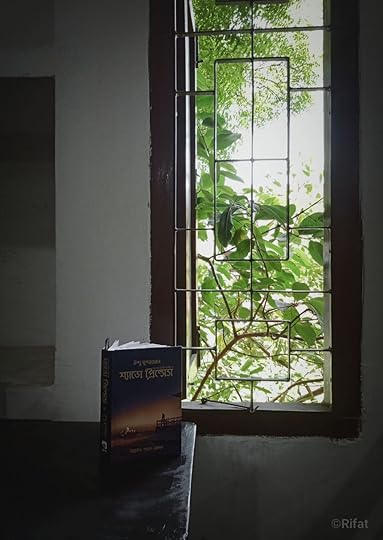
মন কেমন করা একটা প্রচ্ছদ৷ বই শেষে আপনাকে ঘিরে ধরবে একটা হাহাকার, সূক্ষ্ণ একটা দুঃখবোধ। বই পড়া হয়তো শেষ হয়ে যাবে, একটা বিনবিনে মন খারাপ করার মধ্য দিয়ে মনের এক কোণে থেকে যাবে এক দুঃখী রাজকন্যা৷ রাজকন্যা জাহানারা। ❤
I LOVED The Twentieth Wife, and I thought The Feast of Roses was good, but Shadow Princess was just slow. It skips a generation and picks up when Empress Mumtaz Mahal dies in childbirth, her husband, Emperor Shah Jahan, decides to build the Taj Mahal for her, and their eldest daughter, Jahanara becomes Shah Jahan's trusted confidant, essentially filling her mother's role.
And then not a whole lot happens. There's not really much discussion of the building of the Taj Mahal, there's a little bit of sibling squabbling, there are a few love affairs, but mostly, this book is about what the rich are eating or wearing, or how they travel throughout the empire, and, actually that's about it.
Until chapter 25, when the war of succession begins.
While I was reading this book, a lot of questions came to mind. For instance, how does the Emperor get all of these riches? What are all of his workers paid? What caused the downfall of India? And what happened to Goharara, the child born when Mumtaz Mahal dies?
I'll start with the fourth question first. Simply, we don't know. Around the age of two, her character makes a reappearance on an elephant as the imperial family is traveling around the empire, but after that, nothing. Maybe she died during her childhood. Maybe she lived a rather uneventful life. Maybe there was simply nothing else mentioned of her in Sundaresan's research.
Basically, and I'm really simplifying this here, but the downfall of India occurred for three reasons. One, and the common fall of empires, is that they simply spent all of the money that previous generations have (through time, the common denominator in the fall of any civilization is a lack of resources of some sort). Secondly, Aurangzeb, who assumed the throne after Shah Jahan, was less tolerant of other religions than both his father and grandfather, and thus he disgruntled a lot of people. Finally, and perhaps most significantly, the British came in and took over, as they were wont to do around the world.
Now I'll discuss the first two questions I asked. I don't actually have answers, but I have some ideas. In Mogul India, the Emperor owns everything, and once you die, it reverts to him. Traditionally, he'll divide the holdings among the persons heirs (meaning sons), but not always. So the emperor also owns the gold mines and such. Then there are the taxes. I can't quite figure out this system because the emperor can grant cities to people, and then they collect the taxes, which is their income somehow. And finally, there's lots of exporting of spices.
The book doesn't cover what the masses do, but the imperial family lives extravagantly. My suspicion is that most of their wealth comes from owning everything, and not from taxes, because I doubt the common people are paid very well, and therefore couldn't likely pay a lot of taxes. My two hypotheses are that the value of money was very different then than it is today (I don't mean what the money equals in today's dollars, but more what you could do with it/get for it), or that the trickle-down-effect may actually have worked (although I seriously doubt it.)
Anyway, if you're interested in the time period, Beneath a Marble Sky is a much better read.
মোঘল ইতিহাসে,পুরুষদের ভীড়ে স্বমহিমায় উজ্জ্বল নারীর দেখা কমই পাওয়া যায়। বলতে গেলে মোঘল ইতিহাসে এমন নারী মাত্র দুজন,যার একজনকে নিয়েই রচিত অদ্ভুত সুন্দর এই আখ্যান। আর এটা ঐতিহাসিক ফিকশন বটে,কিন্তু পড়তে গিয়ে মনে হচ্ছিল একইসাথে একটা সিনেমা ও দেখা হচ্ছে। দারুণ সাবলীল লেখনীর জন্য, হারিয়ে গিয়েছিলাম মোঘলদের সেই স্বর্ণযুগে।
A ver cómo lo explico. Sí me gustó... pero ni mucho menos tanto como los 2 primeros. Para empezar cambió su protagonista (que ya de por sí, me pilló un poco destemplada) y esta segunda no sólo es menos carismática como personaje y tiene una vida mucho más plana, sino que claramente la autora tiene mucha menos información de ella, ausencia que suple con minuciosas descripciones históricas de los tejemanejes que la rodeaban y detalladas descripciones de la vida en la corte y hasta la preparación de los elaboradísimos platos que comían... que está muy interesante para envolver la trama central, pero la trama central hubiera necesitado más... más. Hubo algunos momentos intensos de rivalidad entre hermanas pero enseguida se diluyeron. La propia autora reconoce no saber el por qué de ciertas preferencias y animadversiones de la protagonista. Históricamente tal vez sólo sea importante el que estas existían, pero argumentalmente no puede dejarlas sin justificar porque no se entiende entonces su comportamiento. Y todo se limita a una serie de acciones que, sin justificación, parecen arbitrarias.
I finished reading "Shadow Princess" today, which also marks the completion of Taj Mahal Trilogy. When I started reading the first book, "The Twentieth Wife" I instantly fell in love with Indu Surdaresan's art of story telling, that how beautifully she has presented the complicated and what some people may think as boring historical saga in such intriguing words. Every page engrossed me, every word fascinated me but as soon as I picked the second book, "The Feast of Roses", I felt that charm was somewhere lost in realm of too much detailing, too much in depth description of certain things and people. However when I picked the final book of trilogy, "Shadow Princess", I felt it's a lost cause and confused book. Author wanted to tell too much, too early and in too haste. Some of the chapters were dedicated for describing the great Taj Mahal where as some chapters was dedicated to Jahanara, Shah Jahan's eldest and most beloved daughter. Though in the afterword, Indu has explained why she choose Jahanara as the central character of her third book.
Overall Rating for Taj Mahal Trilogy: Writing Style: 3.5/5 Content: 4.5/5 Value for money: 3.5/5
2.5 stars In comparison to the earlier 2 books of the series, this one falls completely flat. The story is definitely there but the delivery is weak, slow and tiring. I had to push myself to be awake to finish it. I have my doubts if it's written by the same author.
The book starts with the death of Arjumand Banu (Mumtaz Mahal) and depicts the life of Shah Jahan and her children after her. The family kind of crumbles as a whole and the role of Padshah Begum falls not upon the other wives but on Jahanara, the eldest and the most beloved child of Shah Jahan. With the war of succession, Aurangzeb seized the throne and imprisoned Shah Jahan. Jahanara, who was her father's caretaker, decides to be with him till the end of his life. The book ends with Shah Jahan's death.
In between all of this, the author tries to give us a picture of the life of Jahanara and her sisters. Jahanara did become the richest & most powerful lady in the empire and was beloved of her father and her brothers but her life was dull and stifling. Not allowed to marry or do as she wished, she seemed to have little influence outside zenana. Author also added a fictional affair but even that didn't add any spiciness to her character.
The book also has chapters on the building of the Tajmahal and of the other tombs but they have a very text book feel to them and are tedious to read.
Still, if one wants to read this book, don't expect a lot. It's nothing like 'The Twentieth Wife' or 'The Feast of Roses'.
I thought it was clever of the writer to skip a generation and delve into the lives of the children of Mumtaz Mahal after her death in childbirth. Her eldest, Jahanara was a strong character, loyal and dutiful towards her father despite his faults. It was interesting to see that in every generation, the son’s of the Emperor fight for the throne, as there is no formal succession plan. Just as Shah Jahan had deposed of his brothers, so now Aurangzeb faces off his three brothers.
It was very unusual for the daughters of nobility to remain unmarried, and Shah Jahan- in his initial state of grief- clung onto Jahanara’s presence and could not fathom a live without her company, in doing so deprived her of a married life, and a family of her own. The dynamics of the two sisters was also well portrayed, a vivid description of the sinister side of the zenana.
This book focuses on the life of Jahanara, a descendant of Emperor Jahangir. This is the third book in the trilogy of that family line. I have 5 stars to the first 2 books. Why only 4 stars to this one? I wasn’t as attached to the members in this family line. The writing and the historical information is just as good in this third as it was in the first two. The author is a fantastic researcher and a skilled story teller.
Shadow Princess is set in the Mughal Empire, at the eve of Mumtaz Mahal's death. The novel quickly delves into Shah Jahan's despair, unusual in a society where a man has multiple wives, and his contemplation of abdicating the throne for which he had fought so hard. However, after a few days, Shah Jahan emerges from seclusion with the idea of building the Taj Mahal. During Shah Jahan's mourning for his wife, the power dynamics shifted. First, in the Mughal Empire, succession wass determined by might, not primogeniture. While seemingly more fair compared to the European tradition of primogeniture, in reality, male heirs competed for the throne, first through political posturing and then through murder. Second, power shifted in the royal zehana (harem) as well. Instead of shifting to one of Shah Jahan's surviving wives, power shifted to Jahanara, the Shah's eldest daughter. Thus, both the royal sons and royal daughters feuded.
The novel centers on this competition from the perspective of Jahanara and secondarily, Rohanara, Shah Jahan's second daughter. Because of Shah Jahan's increasing reliance of the wise and beautiful Jahanara, he decides that she shall never marry. For a reason unclear in the novel, Roshanara is likewise forbidden to marry. The daughters compete for supremacy by backing different contenders for the throne. Jahanara backs the eldest son Dara and Roshanara backs Aurangzeb, the sly and ambitious third son. The novel also alternates between chapters on the building of the Taj Mahal. I found the chapters on the Taj Mahal to be rather dull. It also slowed down the narrative. I also thought that the character development was rather wooden in the first half of the novel. For me, the novel really picked up in the second half, after Shah Jahan casts off his lengthy mourning and the daughters manage to weild far more power - especially Jahanara - than would be expected for a woman living in purdah in a zenana.
Overall the novel warrants 3.5 stars. The first half was rather slow, but the second half was more interesting as character development improved and the author focused a bit lest on the minutiae relating to the building of the Taj Mahal. Shah Jahan's ultimate demise was rather tragic - I don't want to spoil it for those who do not know who succeeds him and how that succession occurs - but I think the story of Shah Jahan and his sons shares much of the poignancy of Henry II of England and his sons in the 12th century.
For lovers of historical fiction, nothing is better than a book that has you immersed in the storyline and engages all of your five senses, so that when you look up from reading it takes you a couple of seconds to re-orient to your current surroundings. Shadow Princess by Indu Sundaresan was just that book for me. When Shadow Princess opens we are transported to 17th century India as the Mumtaz Muhal, the much beloved wife of the Emperor, is about to give birth to her 14th child. Also, in the room with her are her two teen-aged daughters, Jahangir(17) and Roshanara (14). As the birth process continues, it appears Mumtaz Muhal may not survive, and she reaches out for Jahangir, neglecting Roshanara, who also rushes to her mother’s side. But, despite the best of care available, Mumtaz Muhal dies, leaving behind four sons, two older daughters, a newborn girl child, and an inconsolable husband. But when the Emperor is finally convinced to resume his morning appearances before the royalty, it obvious that he is in a very fragile state; for a show of unity, Jahangir thrusts her four brothers out into the balcony to stand by their father. At this moment, all four brothers, despite their young age, feel the surge of power of being Emperor and this becomes each of their goals. Roshanara, once again feeling left out, and in her bitterness wonders how to control her destiny in this male-dominated world.
While this is the third book in the Sundaresan’s trilogy on the Mughal Empire, it is not necessary to read the prior books to enjoy this storyline. Sundaresan’s passion and research for this period of Indian history comes through in her exquisite writing and the decoding of the culture. This a tale of the lush life of the royalty and those favored by them. Even for the reader who knows the outcome of the power struggle, Sunderesan weaves an interesting path of getting to this point, focusing the story on Jahangir and Roshanara and the roles of women in shaping Indian history. What most of us know of this era is the building of the Taj Mahal as a tribute of a man’s love for wife, Sundaresan took a chance and made the Taj Mahal a character in the book and it is only fitting as the influence of women have often been overlooked in the telling of this period; however, this oversight is corrected by this trilogy.
I recommend this book to not only readers of historical fiction, but also to readers who enjoy reading about sibling rivalry, unrequited love, uncontrolled ambition and adventure.
Although the book is third in the series of three, I have no problem in the reading.
It begins with the death of Mumtaz upon the birth of her 14th child in 19 years of marriage. Even opium could not alleviate the struggle she was under. Her husband, the Emperor of all Hindustan, mourned her passing culminating in a most splendid mausoleum for his beloved.
These Mughals were prolific builders and I marvel at the time they spent planning and building their final resting places !
Not all the children survived their father, the Emperor. Not all the sons, princes Dara, Shuja, Aurangzeb and Murad became the men they could have been ....... the bane of alcohol and opium! While Dara, the eldest prince, the heir apparent, the Emperor's favourite was a bit of a slob, nerdy but too flighty in matters of politics. Aurangzeb was strong, level headed but too intolerant and fiery with impossible ambition. Suja and Murad were both fire and frost not enough of one and at times too much of the other.
Shah Jahan found solace in his eldest daughter, Jahanara who found herself supreme in her father's zenana (harem) and having to mature fast. Not even her father's two other wives could do much. Like most royal princesses of the realm, she and her sisters Roshanara and Gobarara were doomed to never marry, unless of course ordered to by the Emperor. Woe betide when Jahanara and Roshanara fell in love with the same man, Mirza Najabat Khan, himself a married man. In the case of Roshanara, I feel it was more of a show of her jealousy towards her sister. Jahanara had a man's mind in a woman's body. Had she been a man, she would have been a great Emperor material. As it was both sisters would side with different brothers
The book ends with the power struggle of the brothers and the death of Shah Jahan.
Map, family tree and glossary of local terms/words are helpful.
Yes, Sundaresan has a unique way of storytelling. Some of the pages picture scenes worthy of a Bollywood movie....genuinely heartfelt.
Though I thoroughly enjoyed Ms. Sundaresan's previous three novels I have to admit Shadow Princess fell flat and disappointed me. I saw only flashes of the passion and brilliance I felt graced the pages of The Twentieth Wife, The Feast of Roses, and The Splendor of Silence. I found the rest dry and pedantic, the brief quotes from early historical texts at the beginning of each chapter neither tantalized nor illuminated, and I confess I ended up skimming the chapters detailing the minutiae of planning and building the Taj Mahal; which included such riveting details as why one material was chosen for railings but another for the lamps. I must also add that I found numerous incidences of sloppy editing: words out of sequence and sentences that no matter how much I squinted or re-interpreted simply didn't make any kind of sense. Due to my earlier experiences with this author's work I have high expectations when I pick up a novel with her name on it. Sadly, Shadow Princess did not live up to those expectations but I will still be looking for her next book and hoping this was just a fluke.
In all fairness, I think I would have enoyed this novel a lot more if I didn't already know the story. Having read "Beneath a Marble Sky," I already know the content, the brothers fighting each other, the elephant fight, the details of the Taj Mahal. Also, having read the previous two novels in this "series" by Indu Sundaresan, I already know the history leading up to this and grew bored with the "recaps."
However, I couldn't help but think of Marble Sky throughout the reading of this and felt this one pales in comparision. In Marble Sky, Jahanara has an affair with the architect of the Taj Mahal. Preposterous? Probably. But exciting, nevertheless. In this version, Jahanara is just a princess battling her sister for rule over the harem and in love with the same courtier. Meanwhile, he brothers are silently waiting their father's death to take his throne.
This could go either way. I don't discourage the reading of it. It simply didn't wow me.
Though history is not my favorite ones but this trilogy managed to make me hooked up to finish the book,for the past few days I'm suffering from readers block issue and it's pathetic,the first two part of this books was just mind blowing I loved how nurjahan rose to fame from a very ordinary women and the ruled the mughal harem despite all the difficulties and conspiracy she faced be it from jahangir first wife or from Queen rukaiya.and then the love saga of Shahjahan and mumtaj come forth.previously I read Shree parabat books regarding Shahjahan daughter jahanara,.I found some of similarities between both books,and surprisingly so many dissimilarity which made me confused while reading this ones.however it was nice but not the best one like the previous two part.
Thanks to Jackie for introducing me to this Series. HF based on the Moghul Emporers and some powerful ladies of the Harem. Delicious intrigues and opulence. This one is the third in the series but can be read as a stand alone, its skipped a generation from the previous two and takes place at the time of the building of the Taj Mahal. Not quite up to the previous ones but still fascinating and one of those that sends you frequently to wiki to check the true life facts.
The third of Sundaresan's books of the Moghul empire. This one focuses on the eldest daughter of the woman for whom the Taj Mahal was built. It was interesting, and well written. It's always hard to comprehend a life of such opulence, but with such strict limitations.
The third and final book in the Taj Mahal Trilogy.
The Shadow Princess skips an entire generation. So instead of continuing the tale laid out at the end of The Feast of Roses, and carrying on with the love story of Emperor Shah Jahan and his beloved, Mumtaz Mahal, it focuses, instead, on their children. Out of the 14 children Mumtaz Mahal bore her emperor, only four sons and three daughters survived. Mumtaz Mahal dies while giving birth to her fourteenth child, leaving a grieving Emperor who builds the greatest monument to love the world has ever seen, the Luminous Tomb, the Taj Mahal.
In this tale, the spotlight is on Princess Jahanara, the eldest daughter, The Shadow Princess. How Jahanara becomes the Emperor's crutch and helper, to all intents and purposes the Padshah Begum of the Mughal court after her mother's passing. It chronicles how her life unfolds to become the most powerful and wealthy woman in her father's zenana. But with great power and wealth came great responsibilities, the court intrigues and scandals that she had to face, the hostility of her younger siblings and perhaps, the saddest of all, the denial of a marriage & family of her own because the Emperor was unwilling to lose his favourite child.
Again, I was amazed at how much research has gone into this book and how Indu Sundaresan has taken various passages from historical texts and expanded these into a full length book of fiction.
Jahanara's sister, Roshanara, is featured here as well, albeit in a small role. Both sisters picked a brother to support in his efforts to become Emperor. Jahanara supported Dara, the eldest son and Roshanara supported Aurangzeb, who eventually succeeds in becoming the next Emperor and imprisons his father in Agra Fort.
I recently returned from a visit to Agra and as I read this book, tried to match what I had seen at Agra Fort with the descriptions of the palace here. Diwan-i-Am. Diwan-i-Khas. Meena Bazaar. The white marble room that Shah Jahan spent his last days in. These are all mentioned in the book and I had seen them. Walked on those same floors as the people in this book. It made my reading experience all the more meaningful.
As I mentioned in my review of the other books, the scope of this trilogy was incredible and reading it was truly amazing for me.
This Taj Mahal Trilogy was, hands down, one of my best reads this year.
I could have done w/o this book—it was a boring sequel. I liked her prev book, The Twentieth Wife, though (and maybe that is so because the content was new and unfamiliar and there was accidental learning), but I had NO patience for this soap opera. It was cool to learn about the imperial court and the zenan the first time, but the detail of the architecture and the endless historical drama was too much the second time (I started skimming those sections fast). The characters had NO depth and I could not even feel for the narrator, Jahan, (The Shadow Princess is such a forced title that the author required an explanation for us to understand). The whole book gave the impression of being seriously contrived for book clubs.
Every chapter titled Luminous Tomb started and ended with “the Luminous Tomb”. What was that—just a throw in for book clubs to ‘discover’? I cringed every time I read that (and repeat it she does numerous times). Shah Jahan loved Mumtaz deeply and wanted to honor her. But it seemed the author was afraid that her simple minded suburban readers would maybe forget...?!
Repetition continued with Mehrunissa with the author stating over and over how bad the former queen was...groan—and Mehrunissa was my fave in the last book.
There was no real story. It felt like Goldilocks and the 3 Bears—Dara—too soft, Aurengzeb—too hard, Dude in the middle—forgotten about, the youngest—too little. The ‘Shadow Princess’ (Jahan) just right, but faulty as she is a woman….bizarre.
The author could have done more with this story to fully develop her female characters since it was fictionalized anyway. MM Kaye did so much better with The Far Pavilions. I wish Sundersan hadn’t chained them down to etiquette, but instead taken literary liberties to develop strong women and carry them throughout the story like she did with Mehrunissa in her previous book.
I was given this book by a friend and really enjoyed it. It's sad that I didn't realize it was a tro. The tale starts in 1631, Mumtaz Mahal dies giving birth to her fourteenth child in Burhanpur. Shah Jahan is devastated on losing his beloved wife. Unable to cope with his loss, he decides to abdicate the throne in just four years of rule. His seventeen-year old daughter Princess Jahanara makes him understand the gravity of the situation and succeeds in changing his mind. Shah Jahan’s decision to abdicate has unleashed an intense sibling rivalry between his two sons- Prince Dara Shikoh and Prince Aurangzeb. The historical characters in Shadow Princess are well-developed , and they almost feel like real living people who actually existed. One brother is cunning/swift and takes advantage of his brothers Naiveness. He succeeded in taking over the empire. Indu Sundaresan has done a good job recreating the characters’ ambitions, power struggle, their grief, loss, and their love.
The last two books of this Taj Mahal trilogy proved to be just as captivating as the first. The series, as a whole, chronicles the life and times of three Mughal emperors in India; Akbar, Jahangir and Shah Jahan. Great Historical novels that could make a non-history buff start enjoying history. The Author, Indu Sunderesan has a flair of bringing each character to life by tapping into their emotions . She gives shapes to images, linking them to feelings and thoughts, whether it be a city, a moment or an image. She allows you to get totally absorbed in her books for long stretches of time, clueless to everything else. She has the ability to size up content and connect the dots, a sign of a remarkable writer. These are the first of her books that I have read but somehow I think , it may not be the last.
A great look at the soft power of Jahanara Begum, a fascinating Mughal royal. However, the book lacked the gripping thrill and immersive quality of the series' previous installments, making it feel less engaging despite the powerful history. This was my first trilogy in a long long time and I’m happy to have read it but the first two were definitely more immersing ! The author repeats a lot of things from the first 2 books as well and that’s nice if you’re reading after a while but takes away from the pace a bit if you’re binging.
I have not read the first two books of the Taj Mahal trilogy yet this book, I thought can be read as a stand-alone. The book is a fictionalized narrative of the events that unfurled in the Mughal court after Empress Mumtaz Mahal's passing. Told mostly from the perspective of princess Jahanara, Shah Jahan's beloved daughter. The book traverses the time from when she loses her mother to her father's death about three decades later.
I loved Indu Sundersan's writing and the research the author put in to this book is commendable and I liked that the tale stays as close to what could have actually occurred back then.
I recommend this book to readers of historical fiction and I hope to read the other books in this trilogy some day soon.
A bit of a letdown after the first two books. 📉 Beautiful writing, but often too detailed and descriptive. it slows the story down. 🐢
That said, Jahanara Begum!! 😍👑 Dutiful to the T, stabilizing, intellectual, composed, and authoritative. The OG elder daughter ❤️ And probably the richest princess to ever live! 💎 I’m in awe 🤩✨
You could honestly skip this and just read the first two book. in the trilogy. 📚
Labai gera istorinė knyga. Tiesa skaityti buvo sunkoka, bet naudinga ir įdomi. Suteikė daug žinių apie to laikotarpio egzistavusią Mogolų imperiją, valdymą ir iki šių dienų žinomų statinių atsiradimą