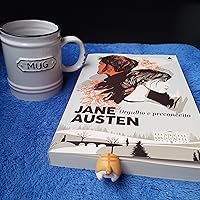
A Metamorfose descreve a desesperança e a alienação do homem moderno, imerso num mundo desolador, sem qualquer conforto ou esperança de qualquer melhora e que não con-segue compreender . Um Artista da Fome (1925) aborda os absurdos de uma sociedade opressiva, ilógica e injusta. Carta a Meu Pai trata do aniquilamento da
Franz Kafka was a German-speaking writer from Prague whose work became one of the foundations of modern literature, even though he published only a small part of his writing during his lifetime. Born into a middle-class Jewish family in Prague, then part of the Austro-Hungarian Empire, Kafka grew up amid German, Czech, and Jewish cultural influences that shaped his sense of displacement and linguistic precision. His difficult relationship with his authoritarian father left a lasting mark, fostering feelings of guilt, anxiety, and inadequacy that became central themes in his fiction and personal writings. Kafka studied law at the German University in Prague, earning a doctorate in 1906. He chose law for practical reasons rather than personal inclination, a compromise that troubled him throughout his life. After university, he worked for several insurance institutions, most notably the Workers Accident Insurance Institute for the Kingdom of Bohemia. His duties included assessing industrial accidents and drafting legal reports, work he carried out competently and responsibly. Nevertheless, Kafka regarded his professional life as an obstacle to his true vocation, and most of his writing was done at night or during periods of illness and leave. Kafka began publishing short prose pieces in his early adulthood, later collected in volumes such as Contemplation and A Country Doctor. These works attracted little attention at the time but already displayed the hallmarks of his mature style, including precise language, emotional restraint, and the application of calm logic to deeply unsettling situations. His major novels The Trial, The Castle, and Amerika were left unfinished and unpublished during his lifetime. They depict protagonists trapped within opaque systems of authority, facing accusations, rules, or hierarchies that remain unexplained and unreachable. Themes of alienation, guilt, bureaucracy, law, and punishment run throughout Kafka’s work. His characters often respond to absurd or terrifying circumstances with obedience or resignation, reflecting his own conflicted relationship with authority and obligation. Kafka’s prose avoids overt symbolism, yet his narratives function as powerful metaphors through structure, repetition, and tone. Ordinary environments gradually become nightmarish without losing their internal coherence. Kafka’s personal life was marked by emotional conflict, chronic self-doubt, and recurring illness. He formed intense but troubled romantic relationships, including engagements that he repeatedly broke off, fearing that marriage would interfere with his writing. His extensive correspondence and diaries reveal a relentless self-critic, deeply concerned with morality, spirituality, and the demands of artistic integrity. In his later years, Kafka’s health deteriorated due to tuberculosis, forcing him to withdraw from work and spend long periods in sanatoriums. Despite his illness, he continued writing when possible. He died young, leaving behind a large body of unpublished manuscripts. Before his death, he instructed his close friend Max Brod to destroy all of his remaining work. Brod ignored this request and instead edited and published Kafka’s novels, stories, and diaries, ensuring his posthumous reputation. The publication of Kafka’s work after his death established him as one of the most influential writers of the twentieth century. The term Kafkaesque entered common usage to describe situations marked by oppressive bureaucracy, absurd logic, and existential anxiety. His writing has been interpreted through existential, religious, psychological, and political perspectives, though Kafka himself resisted definitive meanings. His enduring power lies in his ability to articulate modern anxiety with clarity and restraint.
1. What are our most secret desires camouflaged in what we show to people? 2. What is our pleasure seeing the image that people form of us? 3. To what extent do we want to be recognized even by our sufferings? 4. How proud are we of our suffering? 5. What is the measure of public sadism? Does marketing act as a springboard for it? 6. To what extent does suffering become a commonplace? Is there a time measure for this? 7. The suffering that many see, in reality to the one who suffers it, can mean something else: a challenge, a goal, a discovery? 8. Does art have any limits? The limit could be the death, perhaps? 9. Is the artist and the art always misunderstood?
Among so many questions, Kafka introduces a narrative that if the sadism covered by art or the media spectacle is in the foreground, the other levels of understanding lie in its own lack: in the bias of how each individual judges the world and the rest ; of how appearance often masks the essence; and how communication is faulty.
There are two sides that go through this whole story: that of a character (an artist) who fasts inside a cage; and that of the public and the entrepreneur who live outside it.
Neither side is fully understood. Each judges and classifies the other with its own truths. And of the same form, one feeds on the other - for more sadistic and masochistic this may seem. "And the joy of living flowed from her throat with such intensity that it was not easy for spectators to bear. But they dominated, crowded around the cage and did not want to get out of there at all. " ___
The Metamorphosis
Although the central content of the action of "The Metamorphosis" is well known: that of a traveling salesman who wakes up transformed into an insect inside the room of the house where he lives with his family; this story bears itself on itself as provocative turns (to mention just some of the themes) about relationships, family, acceptance of differences, communication, prejudice, work, appearance.
What would be the first concern we would have when we were transformed into an insect? For Gregor Sansa, the protagonist, was thinking about his work !!! Yes, how could he not be late to catch the train, that he had never been absent from the firm, that he was an efficient worker who had received a promotion, what his bosses would think about his lack ... etc.
On the other hand, Gregor, who was the breadwinner, supported the house and his family (father, mother and sister) was considered a boy completely inserted in his family context, when he became an insect, he began to be misunderstood, to be put aside, to generate anger, contempt, to be only a weight to the coexistence - simply because it altered its physical form and it ceased to be functional that clan. Until he reaches the point, that his sister, who is his greatest advocate, changes his perspective and suggests that the family should get rid of him.
Gregor's transformation adds up to the impossibility of communication between him and his family; they can not communicate with the insect, nor Gregor with too much; though he understands what others are saying. The lack of dialogue practically increases the family tragedy practically irreversible.
This tragic and absurd irreversibility imposes perhaps the limit of life itself: irreparable death. During the narrative, we go some way, working our own hope: waiting for some kind of family reconciliation, a happy happy, something like that. But Kafka goes on to point out that perhaps beauty, or one of the great qualities of existence is its own discontinuous, within the continuous death-life.
To fit the family happiness, perhaps the most traditional still today, is to look good, have a good job and money. With this, one lives a horizon of happy future. Kafka provokes us by pointing out that under this smokescreen there is alienation and the tragedy of adequacy, as well as convenience.
Gregor discovers, for example, that if before his transformation, he considered his father a conformed, tedious, debt-laden household, but when reality changed, he hid in a safe deposit box that could support the family. That her mother, in spite of the regrets of her health, could also work; that his sister though had a gift for violin and music, could also get a good job; but everyone adjusted their lives on the back of Gregor who supported them financially and was even willing to pay a long music course to his sister - thinking that this would not be a debt but an investment.
This musical gift is noticed much more by Gregor than by all other members of the family and by people who are not part of the family clan.
As in much of Shakespeare's works, Kafka points out to us that life is absurd and that tragedy and comedy mingle and change rapidly. That the temporal shift to a happy future often does not have its own essence - perhaps we have ceased to exist until then. We die before, we cease to be - and as much as we know our limits, as Albert Camus reflects, beauty is precisely in this lack of meaning and in the awareness of our limitation and of ourselves.
Gregor at his end, still sees the window. Meditate on your condition: you still think like a human, despite having the form of an insect. And find serenity in an uncertain future. Redemption seems not to be in the acknowledgment of others about us - this is a complex and endless struggle; but it is in the wisdom of finding the possibilities we have, trying to understand who we are and giving a sense of quality to all of this.
____ "Um Artista da fome"
Uma historia profunda que provoca questões como
1. Quais são os nossos desejos mais secretos camuflados no que mostramos às pessoas? 2. Qual o nosso prazer vendo a imagem que as pessoas formam de nós? 3. Em que medida queremos ser reconhecidos até por nossos sofrimentos? 4. Qual o orgulho que temos do sofrimento? 5. Qual a medida do sadismo do público? O marketing atua como trampolim para isso? 6. Até que ponto o sofrimento torna-se banal? Há medida temporal para isso? 7. O sofrimento que muitos vêem, na realidade para aquele que o sofre, pode significar outra coisa: desafio, objetivo, descoberta. 8. A arte tem algum limite? Seu limite pode ser a morte talvez? 9. O artista ou a arte é incompreendida?
Entre tantos questionamentos, Kafka introduz uma narrativa que se em primeiro plano está o sadismo, encoberto pela arte ou pelo espetáculo midiático, os outros níveis de compreensão encontram-se na própria falta dela: na parcialidade de como cada indivíduo julga o mundo e os demais; de como a aparência muitas vezes encobre a essência; e de como a comunicação é falha.
Há dois lados que se passam por toda essa história: a de um personagem (um artista) que jejua no interior de uma jaula; e a do público e a do empresário que vivem fora dela.
Nenhum dos dois lados compreendem-se totalmente. Cada um julga e classifica o outro com suas próprias verdades. E da mesma forma, um se alimenta do outro, por mais sádico e masoquista que isso possa parecer. “ E a alegria de viver brotava da sua garganta com tamanha intensidade que para os espectadores não era fácil suportá-la. Mas eles se dominavam, apinhavam-se em torno da jaula e não queriam de modo algum sair dali”. _____
Metamorfose
Embora o conteúdo central da ação de "A Metamorfose" seja bastante conhecido: a de um caixeiro viajante que acorda transformado em um inseto no interior do quarto da casa onde mora com sua família; essa história carrega em si provocações que giram (para mencionar apenas sobre alguns dos temas) sobre os relacionamentos, a família, a aceitação das diferenças, comunicação, preconceito, trabalho, aparência.
Qual seria a primeira preocupação que teríamos ao nos ver transformados em um inseto? Para Gregor Sansa, o protagonista, foi pensar sobre seu trabalho!!! Sim: como faria para não se atrasar para pegar o trem, que nunca havia faltado na firma, que era um trabalhador eficiente que recebera uma promoção, o que seus chefes iriam pensar sobre sua falta...etc.
Por outro lado, Gregor que era o arrimo de família, sustentava a casa e seus familiares (pai, mãe e irmã) era considerado um rapaz completamente inserido em seu contexto familiar, ao se transformar em inseto, começa a ser mau compreendido, a ser posto de lado, a gerar raiva, desprezo, a ser apenas um peso à convivência - simplesmente porque alterou sua forma física e deixou de ser funcional aquele clã. Até chegar-se à um ponto, que sua irmã que é a maior defensora dele, muda de perspectiva e sugere que a família deveria se livrar dele.
À transformação de Gregor soma-se à impossibilidade da comunicação entre ele e seus familiares; eles não conseguem comunicar-se com o inseto, nem Gregor com demais; apesar de que ele compreende o que os outros falam. A falta de diálogo aumenta de forma praticamente irreversível a tragédia familiar.
Essa irreversibilidade trágica e absurda impõe talvez o limite da própria vida: a morte irremediável. Durante a narrativa, vamos de alguma forma, trabalhando a nossa própria esperança: aguardando algum tipo de reconciliação familiar, um feliz feliz, algo do tipo. Mas Kafka continua a apontar que talvez, a beleza, ou uma das grandes qualidades à existência é seu próprio descontínuo, dentro do contínuo morte - vida.
O adequar-se à felicidade familiar, talvez a mais tradicional ainda nos dias de hoje, seja a de se ter um boa aparência, um bom emprego e dinheiro. Com isso, vive-se um horizonte de futuro feliz. Kafka nos provoca apontando que sob essa cortina de fumaça, existe a alienação e a tragédia da adequação, como também a da comodidade.
Gregor descobre, por exemplo, que se antes de sua transformação, considerava seu pai um sujeito conformado, tedioso e que vivia em casa atolado em dívidas, mas que quando a realidade mudou, ele escondia dentro de um cofre economias que poderiam sustentar a família. Que sua mãe, apesar dos pesares de sua saúde, também poderia trabalhar; que sua irmã embora tivesse um dom para o violino e a música , também poderia conseguir um bom emprego; mas todos adequavam suas vidas nas costas de Gregor que sustentava financeiramente todos eles e inclusive estava disposto a pagar um curso longo de música para sua irmã - pensando que essa não seria um dívida e sim um investimento.
Esse dom musical é notado muito mais por Gregor do que por todos os demais membros da família e por pessoas que não fazem parte do clã familiar.
Como em grande parte das obras de Shakespeare, Kafka nos aponta que a vida é absurda e que a tragédia e a comédia misturam-se e transformam-se rapidamente. Que o deslocamento temporal para um futuro feliz muitas vezes não tem sua própria essência - talvez nós deixamos de existir até lá. Morremos antes, deixamos de ser - e por mais que saibamos de nossos limites, como Albert Camus reflete, a beleza está justamente nessa falta de sentido e na consciência de nossa limitação e a de nós mesmos.
Gregor em seu fim, ainda vê a janela. Medita em sua condição: ainda pensa como um humano, apesar de ter a forma de um inseto. E encontra serenidade em um futuro incerto. A redenção parece não estar no reconhecimento dos outros sobre nós - essa é uma luta complexa e sem fim; mas está na sabedoria de encontrar as possibilidades que temos, tentar entender o que somos e dar um sentido de qualidade a tudo isso.
Ao contrário da ordem escolhida pelos editores, pretendo começar com "Carta ao pai," porque deste derivam os outros dois textos. A carta começa com a confissão do temor da figura paterna, e o autor despeja em suas páginas muito de sua fraqueza (que, na minha opinião, é isso que o torna mais forte) e medo em várias narrativas que viveu com seu pai. Resumidamente, o pai de Kafka foi daqueles homens fortes, autoritários e controladores; rígido, preocupado, sério, crítico e orgulhoso. A ele cabiam todas as decisões da casa, e ele decidia o que era certo ou errado. À mesa, não se podia criticar a comida - mas ele não só a criticava como xingava a cozinheira. A sala de jantar deveria ser usada apenas para as refeições, mas ele cortava as unhas e limpava o ouvido. Kafka, o menino frágil e obediente, se percebeu como um "escravo, regido por leis inventadas exclusivamente para mim." Franz Kafka me parece ter sido uma criança muito obediente e sensível, e ter um pai que o expunha em público, que o humilhava, que não reconhecia sua obediência e fiel dedicação; cada uma dessas coisas o machucava demais. Ele se fechou em si quando percebeu que era impossível orgulhar seu pai. Não tinha como acertar, apenas sendo uma pessoa totalmente diferente... Daí vem a necessidade de reconhecimento do "artista da fome," que queria provar a todos o quanto ele não precisava se alimentar. Em "A metamorfose," Gregor Samsa almejava o reconhecimento de sua família: ele buscava ser o provedor da casa que escolheu pra família morar, dos sonhos da irmã e da delicadeza da mãe. Antes de se apresentar na forma de inseto, esperou ouvir de seus pais "avante, Gregor!" A falta de esperança vem aí: em uma situação onde não há claros culpados, onde a opressão é o diálogo e a gratidão e a ingratidão dançam juntas por linhas tão tênues, a morte é a única solução. E o pobre menino que só precisava ouvir "Avante, filho!," nunca encontrou na Terra tal suporte... Sinto que a Franz Kafka faltava um irmão, um amigo que o compreendesse. Na ausência disto, as páginas em branco o faziam companhia. Graças às suas desgraças, temos hoje o legado de um dos artistas mais sensíveis que já tive o prazer de ler - mas se coubesse a mim a escolha, preferiria apenas que ele tivesse tido uma vida mais leve.