

What do you think?
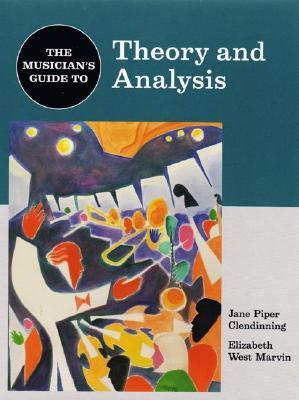
The Musician's Guide to Theory and Analysis
The Musician’s Guide to Theory and Analysis covers the essential principles of diatonic and chromatic tonal harmony, systematically developing skills in part-writing, figured-bass realization, melody harmonization, counterpoint, stylistic composition and arranging, and music analysis, including contemporary music. The much-anticipated Musician’s Guide series offers a comprehensive four-semester introduction to the skills of complete musicianship, seamlessly integrating theory and analysis, aural training, and performance in one pedagogical program.
The Musician’s Guide series is divided into two main components, each represented by a core text. While complete enough to be used alone, these dynamic texts are fully coordinated, sharing the same pedagogical approach and structure. Each book relies on a core repertoire of real music that is revisited throughout in a variety of theory- and performance-based contexts. These texts are complemented by a rich collection of learning resources.
The Musician’s Guide series is divided into two main components, each represented by a core text. While complete enough to be used alone, these dynamic texts are fully coordinated, sharing the same pedagogical approach and structure. Each book relies on a core repertoire of real music that is revisited throughout in a variety of theory- and performance-based contexts. These texts are complemented by a rich collection of learning resources.
Hardcover
First published August 1, 2004
Ratings & Reviews
Friends & Following
Create a free account to discover what your friends think of this book!
Community Reviews
Displaying 1 - 11 of 11 reviews

October 15, 2021
Using the Fourth AP® Edition

July 6, 2010
I was forced to read this book cover to cover for my degree. It was very painful.

Currently Reading
July 12, 2025NOW WE'RE TALKING

Read
May 5, 2025good riddance to this $104 textbook

August 29, 2021
Review for The Musician's Guide (Clendinning) and The Complete Musician (Laitz). I wanted to dust off my music theory a bit and thus loosely worked my way through both texts in rather quick succession. Here are some observations:
The CM takes often longer to drive its point home, so some might consider it verbose. On the other hand is the MG more superficial (just by a degree), at least that's how I feel. In general I like the presentation of the CM better, but then again I like a rather "dry", orderly format. MG leaves more space and has better design in respect to info boxes and overall quick accessability. Additionally MG has always all measure-numbers in place, at least as far as I have seen it, while that is not the case with Laitz. It gets annying to look for the right part in the piece for playback. Apropos playback, apart from the measures, Laitz does the better job in offering additional material. While both have online presences with a huge bulk of the contained material to listen to, the stuff for CM is readily availanble on a website without one having to get an account or log in. Additionally, exercises and especially solutions to exercises are always a problem with such study material. In GM you get some exercises and else have to buy the workbook, solutions are obtainable basically only for US instructors. The same goes for CM, but there are additional exercises on the website I mentioned, complete with solutions for every chapter of the book.
When you want something more "easy" going (just a bit) and snappier presentation, the maybe GM is more for you. On the whole I found Laitz' CM more satisfying, being somewhat more in depth and especially since the bonus material was easier to use.
The CM takes often longer to drive its point home, so some might consider it verbose. On the other hand is the MG more superficial (just by a degree), at least that's how I feel. In general I like the presentation of the CM better, but then again I like a rather "dry", orderly format. MG leaves more space and has better design in respect to info boxes and overall quick accessability. Additionally MG has always all measure-numbers in place, at least as far as I have seen it, while that is not the case with Laitz. It gets annying to look for the right part in the piece for playback. Apropos playback, apart from the measures, Laitz does the better job in offering additional material. While both have online presences with a huge bulk of the contained material to listen to, the stuff for CM is readily availanble on a website without one having to get an account or log in. Additionally, exercises and especially solutions to exercises are always a problem with such study material. In GM you get some exercises and else have to buy the workbook, solutions are obtainable basically only for US instructors. The same goes for CM, but there are additional exercises on the website I mentioned, complete with solutions for every chapter of the book.
When you want something more "easy" going (just a bit) and snappier presentation, the maybe GM is more for you. On the whole I found Laitz' CM more satisfying, being somewhat more in depth and especially since the bonus material was easier to use.

April 2, 2009
I give it a two because it was a textbook, and they all suck. I haven't actually read all of the chapters, because I skipped the first section, but I will probably read those skipped chapters if/when I tutor or TA eventually. It's a decent explanation of music theory and how to analyze music, but there are flaws. It's quite probable that flaws are unavoidable, but there are some pretty stupid ones. I can't really compare this text to other textbooks on the same subject, but having done AP Theory in high school mostly without a book, I found this understandable (mostly) and easy to read a chapter or two at a time. I would not, however, recommend this as a I'm-going-to-improve-myself-and-learn-music-theory-at-home book; it's definitely an in-class-with-someone-versed-in-the-ways-of-theory-and-analysis book.

July 12, 2024
3.5 stars.
Everything I know about music I learned from this book. It is very thorough. It is also quite technical and does not make for light reading. It took me a long time to finish it - like, over a year - and I read several chapters more than once.
I also own two editions of this book: a physical copy of the first edition (2005), and a digital copy of the third edition (2016). In terms of organization, the third edition is an improvement, but still not perfect, for reasons I will explain later. I also bought the CD set for the first edition and a CD player, which I do not recommend: there are 3 CDs, each with 90+ tracks, and they are not arranged in the same order as they appear in the book. So there is a lot of searching for song clips that are, in some cases, only a few seconds long.
I think the book teaches the basics (notes, scales, chords, etc), counterpoint, harmony / tonality, and chromaticism well but teaches forms and modernism less well. Even where it succeeds, I don't think it is a great standalone resource. (I ended up watching a lot of YouTube videos, for example.)
Some suggestions, for the team at W.W. Norton & Co:
1. Focus on the common practice period, merge redundant chapters, and trim the fat. When it comes to technical writing, economy and clarity are best practices.
2. Arrange the chapters into smaller units that better describe the content. The third edition divides the middle 750 pages into two units about diatonic and chromatic harmony. Really? The distinction strikes me as a minor one, because these chapters cover a lot more than that.
3. The absence of overtones and temperament is a shame, and I think it would be advantageous to include these topics before the others. Understanding consonances, dissonances, and resolutions is much easier with this foundation - but, as a practical matter, I recognize that rooting music theory curricula in acoustics and physics may be enrollment suicide.
Everything I know about music I learned from this book. It is very thorough. It is also quite technical and does not make for light reading. It took me a long time to finish it - like, over a year - and I read several chapters more than once.
I also own two editions of this book: a physical copy of the first edition (2005), and a digital copy of the third edition (2016). In terms of organization, the third edition is an improvement, but still not perfect, for reasons I will explain later. I also bought the CD set for the first edition and a CD player, which I do not recommend: there are 3 CDs, each with 90+ tracks, and they are not arranged in the same order as they appear in the book. So there is a lot of searching for song clips that are, in some cases, only a few seconds long.
I think the book teaches the basics (notes, scales, chords, etc), counterpoint, harmony / tonality, and chromaticism well but teaches forms and modernism less well. Even where it succeeds, I don't think it is a great standalone resource. (I ended up watching a lot of YouTube videos, for example.)
Some suggestions, for the team at W.W. Norton & Co:
1. Focus on the common practice period, merge redundant chapters, and trim the fat. When it comes to technical writing, economy and clarity are best practices.
2. Arrange the chapters into smaller units that better describe the content. The third edition divides the middle 750 pages into two units about diatonic and chromatic harmony. Really? The distinction strikes me as a minor one, because these chapters cover a lot more than that.
3. The absence of overtones and temperament is a shame, and I think it would be advantageous to include these topics before the others. Understanding consonances, dissonances, and resolutions is much easier with this foundation - but, as a practical matter, I recognize that rooting music theory curricula in acoustics and physics may be enrollment suicide.
December 25, 2019
This is an outstanding textbook on music theory and analysis! I was thoroughly surprised with how much I truly enjoyed looking through this text when I first received it. Music theory is my passion, and I hope to teach it in the near future. I believe that this is one of the greatest, if not the best, books on the topic of theory. I would definitely plan on incorporating this when I am teaching or tutoring students in music theory, as it is a wonderful book that covers everything you would want to know about music theory!

May 13, 2011
At last, a bunch of words that make sense to me explaining figured bass. Not that there's that much to it, basically, but I never got it before. The rest of the stuff in this book I already know enough about to satisfy me, including atonality and how you'd label chords and scales when there's no key, which I know nothing about.

December 16, 2013
One of the few texts that offers a functional approach to music theory. One of the better texts out there.
Displaying 1 - 11 of 11 reviews