What do you think?
Rate this book


464 pages, Paperback
First published January 1, 1996
A purulent night wrapped every corpuscle into being, in a dark and hopeless schizophrenia. The universe, which was once so simple and complete, obtained organs, systems, and apparatuses. Today, it’s as grotesque and fascinating as a steam engine displayed on an unused track at a museum. It demonstrates its rods and levers under a bell jar. And until the bell of our minds is incorporated into the universal desolation, it will function as an internal organ reflecting the whole, the way a pearl reflects the martyred flesh of an oyster.
The universe at that time consisted of the three rooms in our home and a few annexes, extended like spider legs, with an ambiguity all the greater for their distance. There was a first zone, semi-real, where I could move by myself, more or less safely, after which followed the city streets, which my parents created by walking between real and foreign places. Only my mother and father, between whom I walked through fortresses and basilicas, depots and castles of water scraping clouds like flames on yellow heavens, only my gigantic masters and friends, clasping my fingers in their great, warm hands, talking quietly over my head and pulling me through round piaţas with fabulous statues in the center, could pacify the endless dominions of chaos. Like a reflex arc, like the engram of memory, like the melting of marble steps under millions of feet, some streets, the ones we took more often, solidified, they gained a consistency, they were colored in familiar shades, detaching from the unreal gray that surrounded them.

Forse nel cuore più profondo di questo libro non c’è nient’altro che un urlo giallo, abbacinante, apocalittico...
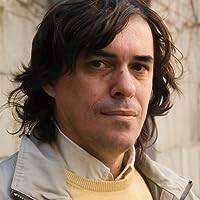
Mircea Cărtărescu sa essere talvolta brutale e nichilista, ma anche malinconico e delicato; la sua è una penna impeccabile e implacabile imbevuta di lirismo. Ciò che più mi ha impressionata è stato il suo stile di scrittura composto da un lessico baroccheggiante e descrittivo che vira con consapevolezza verso la poesia – in effetti Cărtărescu nasce come poeta e solo successivamente si dedica alla prosa - e il simbolismo immaginifico; devo ammettere che alcuni termini utilizzati non li conoscevo ed è stato insolito tornare alla mia vecchia abitudine di stilare un elenco di questi lemmi, tirare fuori il vocabolario e consultarlo… Sono ripiombata ai tempi del liceo.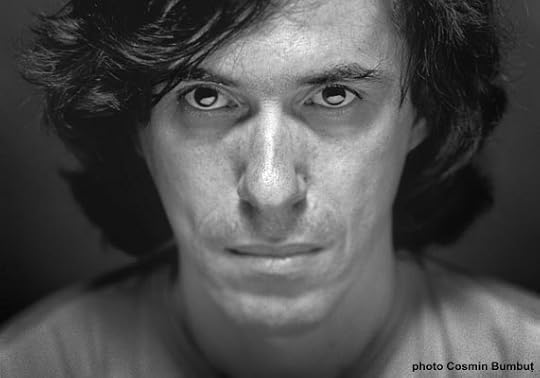
‘In the filigree of every page—a braid of blue and red veins, beating with a single pulse, irrigating the paragraphs. Arborescent nerves—every letter—The parchment was alive, like skin just flayed—it smelled of ink and blood.’
‘Poems, these illumination machines, debauched me. I used them like drugs, until it was impossible for me to live without them.’
‘In a night coagulated like blood, marble itself turns brown, its geometry emphasised by small, red stripes. These kinds of stripes and bands of evening light hem the acanthus leaves on immense capitals, stone snakes in gorgons’ hair, the nipples and pubic hair of living, rickety Atlases who hold up balconies. I pass, tiny as a flea, under immense porticos, into halls with beautiful mosaic floors, under cupolas high as the stars. I wander through sinuous labyrinths, leaving through crystal doors, to sink again into aphasia, misunderstanding, delirium, and dejection. Jungles with limpid springs, swamps with visions of eternal citadels: such was the cartography of my dreams.’
‘And until the bell of our minds is incorporated into the universal desolation, it will function as an internal organ reflecting the whole, the way a pearl reflects the martyred flesh of an oyster. And yet, the universe is not everything that happens, but much, much more.’
‘All of the world’s events, and every particle of substance, and every quantum of energy are present in transfinite light, there, in Memory. And if our thoughts (by which we perceive, in privileged moments of ecstasy, Akasia) would ever be able to turn back upon itself – perhaps by adding a seventh layer to the neocortex—Space is Paradise and time is Inferno. How strange it is that, like the emblem of bipolarity, in the center of a shadow is light, and that light creates shadows.’
‘Love, the space of the spaceless domain. The seeds of our existence, opposed yet so alike, unite across the great symmetry, and annul it through a single great feeling: nostalgia. We are animals of nostalgia, abjections organized by geometry—spat into the cup of a lily and created us there, out of phlegm and perfume. But, unlike Akasia, because our memory only knows the dimensions of the past, our nostalgia is amputated, partial, a feeling that takes metaphors as reality and contorts itself around half-truths.’
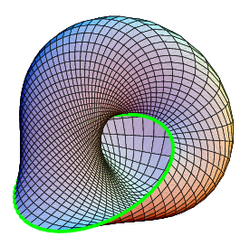
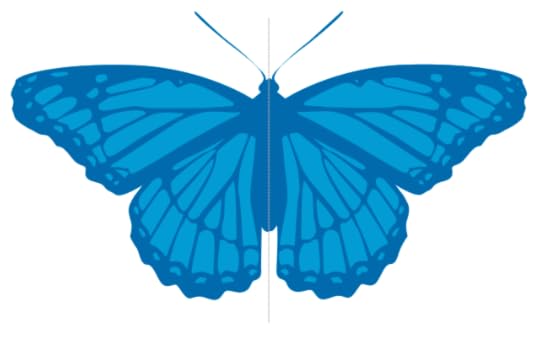
‘We all have memories of the past, but none of us can remember the future. And yet, we exist between the past and future like the vermiform body of a butterfly, in between its two wings. We use one wing to fly, because we have sent our nerve filaments out to its edges, and the other is unknown, as if we were missing an eye on that side. But how can we fly with one wing?’
‘Would we fall back on these kinds of glass-bead games, were it not for nostalgia? If passivity did not cause us pain? If we did not suffer like dogs when we weren’t searching, torturing ourselves with questions we know all too well we cannot answer, because the answer would not be a word or phrase but a deep and dramatic modification to our body’s schema and our being’s essence.’
‘We are not like someone blind from birth, but like someone who lost his sight in childhood, who sometimes dreams of things he cannot conceive: images and colors, shapes and shadows—a foreboding that someday he will see again, not with his eyes, but with all the skin of his body, and not just with his skin, but his viscera, his veins and arteries, his trachea and esophagus, his pelvic bones and endocrine glands, his blood and saliva and the musk of his sweat. And not just with his body, but with the dogs and acacia and apartment blocks and cars and stores all around him, the seasons and constellations—that he will see, someday, with the great eye, clear and pure as the whole, outside of which only non-existence exists.’
‘My memory is the metamorphosis of my life. If I do not plunge bravely into the milky abyss that surrounds and hides my memory in the pupa of my mind, I will never know if I have been, if I am a voracious praying mantis, a spider dreaming upon an endless pair of stilts, or a butterfly of supernatural beauty.’
‘I transmute the ghosts of moments into weighty, oily gold. And, somehow, it is also transparent, ever more transparent the deeper the fountain of my mind becomes—That hyaline cartilage, there on the shield where the three heraldic flowers meet—dream, memory, and emotion—my domain, my world, the World.’
‘How strange, how bright that cheap lipstick was, candy-flavored—Under the sky racing overhead like unraveling black smoke, she was the only thing with any colour or life.’
‘There are blind people who know they used to see, but, through an accident of fate, do not, and there are others who have no knowledge of any lack, for whom sight is unimaginable, the way we cannot imagine what we would feel if a sensory organ opened in our forehead like a flower, or if we grew bushy antennae like a moth. I always knew I was made to exist, full in body and mind, like the large, limpid eyes of the blind or dead, but also that I could not perceive existence. What does a millipede perceive, hanging in a slow spiral beneath a rotting leaf? What can a paramecium, writhing in a cup of tea, sense of the world’s spectacle?’
‘Take a biopsy of my spinal marrow and you will find a white disk with the pattern of a gray butterfly. Take a biopsy of my real being, the way you would cut down a tree, and you will find the concentric circles of Mircea in Mircea in Mircea in Mircea in Mircea in Mircea.’
‘Everything is strange, because everything is from long ago, and because everything is in that place where you can’t tell dreams from memory, and because these large zones of the world were not, at the time, pulled apart from each other. And to experience the strangeness, to feel an emotion, to be petrified before a fantastical image always means one and the same thing: to regress, to turn around, to descend back into the archaic quick of your mind, to look with the eyes of a human larva, to think something that is not a thought with a brain that is not yet a brain—melting into a quick of rending pleasure which we, in growing, leave behind’
‘I descended into the karst, excavated by streams of violet current—I crossed the swamp of axons on skiffs of iridium, I hacked away dendrites and tentacles with a machete—through fogs of blue, I spotted the liminal space I so long had hoped for, the cochlea of the opposite ear rising from the temporal cliff like an enormous Ferris wheel. Then, in a daze, I would open my eyelids: the hour had passed. The technician ripped off the leucoplast and removed the electrodes, leaving my temples glistening.’
‘Before going blind, he had worked with “the blue-eyed boys.” I didn’t know the expression then—“Hellenic faces. Their shoulders were decorated with glowing constellations, forming zodiac signs—the blind man also called them, could be Cancers, Scorpios, Capricorns, or Virgos, depending on their rank in the hierarchy. They moved among us but were unseen, they heard everything we said, even in the privacy of our homes—because their blood itself was azure, like that of gods and spiders.’
‘A more fantastic flower never blossomed from a more revolting root.’
‘Then, even our torturous nostalgia will be whole. Time will no longer exist, memory and love will be one, the brain and the sex will be one—We know from our cerebro-spinal trunk that we are the larvae of an astral being. With the marrow of our spines as its root and the two cerebral hemispheres in our skulls like two fleshly cotyledons, they perfectly resemble a plant in the first stages after sprouting. Their flesh is the earth into which they were sown and whose resources they will exhaust, and our brains will also be consumed and will wrinkle like a walnut kernel inside its dry fruit. Two small leaves will burst from its center, tender and filled with light – wings of the soul, wings of the spirit that will depart from the hothouse—to be planted in a new earth, under a new sky.’
‘Emotion eclipsed me like an overwhelming pain, one so vast that it became a kind of joy.’
‘I called you then, in the dream—and I knew that, years later, you would hear.’