'On the kibbutz it's hard to know. We're all supposed to be friends but very few really are.'
Amos Oz's compelling new fiction offers revelatory glimpses into the secrets and frustrations of the human heart, played out by a community of misfits united by political disagreement, intense dissatisfaction and lifetimes of words left unspoken.
Ariella, unhappy in love, confides in the woman whose husband she stole; Nahum, a devoted father, can't find the words to challenge his daughter's promiscuous lover; the old idealists deplore the apathy of the young, while the young are so used to kibbutz life that they can't work out if they're impassioned or indifferent. Arguments about war, government, travel and children are feverishly taken up and quickly abandoned - and amid this group of people unwilling and unable to say what they mean, Martin attempts to teach Esperanto.
At the heart of each drama is a desire to be better, more principled and worthy of the community's respect. With his trademark compassion and sharp-eyed wit, Amos Oz leaves us with the feeling that what matters most between friends is the invisible tie of our shared humanity.
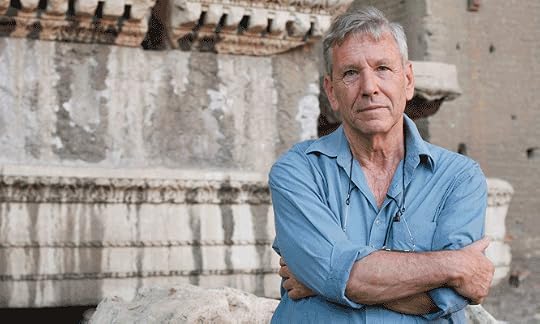
Amos Oz (Hebrew: עמוס עוז; born Amos Klausner) was an Israeli writer, novelist, journalist and intellectual. He was also a professor of literature at Ben-Gurion University in Beersheba. He was regarded as Israel's most famous living author.
Oz's work has been published in 42 languages in 43 countries, and has received many honours and awards, among them the Legion of Honour of France, the Goethe Prize, the Prince of Asturias Award in Literature, the Heinrich Heine Prize and the Israel Prize. In 2007, a selection from the Chinese translation of A Tale of Love and Darkness was the first work of modern Hebrew literature to appear in an official Chinese textbook.
Since 1967, Oz had been a prominent advocate of a two-state solution to the Israeli–Palestinian conflict.
Breve raccolta di otto racconti. Se non che, dato che l’ambientazione è comune – lo stesso kibbutz – e l’arco temporale lo stesso – la metà degli anni Cinquanta, più o meno quando Amos Oz approdò al kibbutz di Hulda - dato che personaggi ed episodi si ripetono e ritrovano, la sensazione è quella di avere per le mani un breve romanzo, pur se privo di struttura unitaria, di trama con inizio sviluppo e conclusione. Sensazione acuita dal fatto che nessuno degli otto racconti ha una conclusione definitiva, con finale chiuso e/o a effetto, tutto rimane generalmente sospeso. Come se fosse rinviato ad altra occasione o situazione.
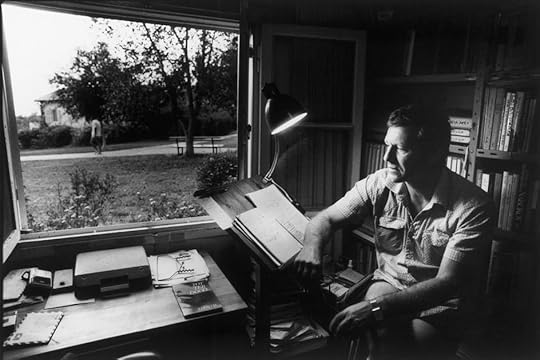
E di kibbutz Amos Oz se ne intendeva avendoci vissuto per oltre trent’anni: dai quindici - dopo il suicidio della madre, per ribellarsi al mondo intellettuale e di destra di suo padre, bibliotecario erudito, studioso poliglotta – fino a sposato e con tre figli. È solo a causa dell’asma di uno dei figli che ha deciso di cambiare residenza: dal kibbutz ad Arad, un nuovo agglomerato urbano venuto su intorno a un centro commerciale nel deserto del Negev. Non per niente, la voce del narratore spesso diventa un “noi” collettivo, chi scrive è membro del kibbutz.
Deserto del quale Oz dice: Ogni mattina alle cinque, quando è ancora buio, mi incammino tra rocce e sabbia. Da solo, nel silenzio più profondo, osservo il sorgere del sole. Il deserto rappresenta quel che è eterno contro ciò che è provvisorio. Mi è indispensabile per scrivere.
In queste pagine, insaporite di tenera ironia, è facile rintracciare il pensiero che Oz in un’intervista sintetizza così: I padri fondatori di quel modello di società avevano ambizioni monumentali, irrealistiche: pensavano di poter cambiare la natura umana di colpo, eliminare la solitudine con la vita comunitaria, cancellare crudeltà, avidità, egoismo con l’eguaglianza. Un sogno meraviglioso che – va detto a loro merito – tentarono senza gulag e polizia. Che venne meno perché il loro sguardo fissava solo le stelle.
In diversi racconti sono presenti posizioni diverse riguardo alla vita del kibbutz. Per esempio, uno dei temi che ricorre più spesso è quello se i bambini dovessero vivere in comune o con i propri genitori. La posizione dei padri fondatori era ovviamente la prima.
Il kibbutz è cambiato molto rispetto al passato. Padri e madri fondatori erano severissimi, come se organizzassero un esercito senza ufficiali. Oggi il kibbutz è meno duro, accetta entro certi limiti la proprietà privata, quindi è meno egualitario. Ma i suoi abitanti continuano a dividersi la responsabilità verso i disabili, gli anziani, chi è in difficoltà. Una mutazione, più che un fallimento.
L’esperimento comunitario che il kibbutz rappresenta sembra trovare difficoltà nel conciliare solitudine e socialità, individualità e gruppo: tutti sembrano avere bisogno di più calore e affetto. Di non limitarsi ad accarezzare le ombre.
Ci sono diverse gemme, momenti preziosi. Su tutti credo proprio il racconto che intitola la raccolta, Tra amici.
Almost all the eight short stories in this collection by a famous Israeli author, like many modern short stories, focus on ‘a moment.’ The author leaves us with many of his characters hanging in a state of doubt and indecision.
Although the author published this collection of interconnected stories set in a kibbutz in 2012, the kibbutz life they describe is not that of a contemporary kibbutz. See comments below #3 from Maria, and #5 from Bob who dates this fully communal style of living from 1963.
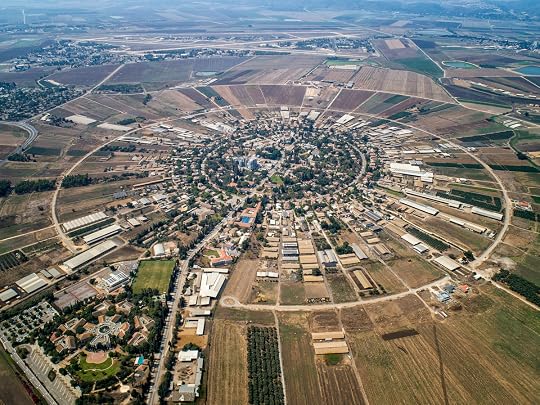
I know very little about life in a kibbutz so I’ll focus on what I learned about life back then in these communal villages from bits and pieces in the stories. I don’t know how representative this kibbutz was but apparently this was how this particular kibbutz was run at that point in time. You can see many of the issues that the short stories touch on within this collectively run social environment.
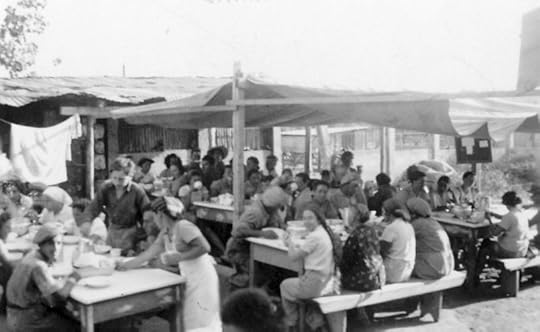
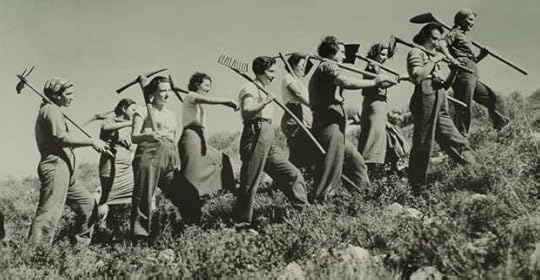
All the laundry was done by workers in a communal laundry room. People had a hot plate at home to make tea, but usually all meals were taken in a communal cafeteria.
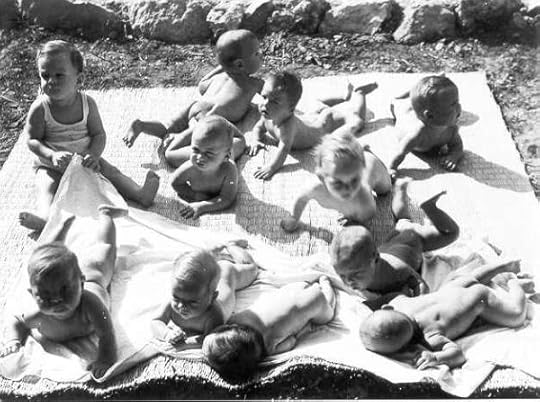
Married couples usually had their own house but many people lived in communal settings including the children. In one story we are told there was debate about having the children sleep with their parents or in the communal dorm. They chose the communal dorm and parents brought their kids in the evening to tuck them. The children slept under the eyes of a caretaker/guard.
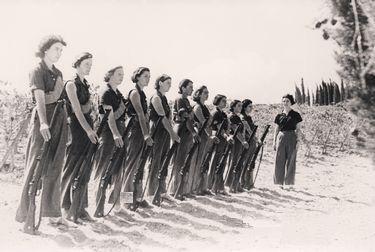
There was a village guard who walked the perimeter of the village with a rifle every night. Young unmarried men lived in a dormitory setting after they served their compulsory two years of Israeli military duty, followed by 3 years of service to the kibbutz.
No one had money to send their child to college. Young people who wanted to go to college applied to the kibbutz and the commune determined who went to college and what subjects they must study. The kibbutz paid the tuition.
In one story a wealthy uncle offered to have his nephew come live with him and his family for four years in Italy to get a degree in engineering. The kibbutz objected. First there was resentment against the uncle whose education was paid for by the kibbutz but he never came back. Second, the kibbutz wanted the nephew to study veterinary medicine. The kibbutz proposed that the uncle pay the nephew’s tuition in Israel for the nephew to become a vet on the kibbutz.
Because everyone was a worker, and someone must do their duties if they left, a person had to ask permission, for example, to take two weeks off to go visit family in Europe.
A relative sent a boy a pair of roller skates. The kibbutz decided that was fine, but the boy must share them with the other kids in the kibbutz.
There were theoretical equality of work roles among men and women. So, as one resident asks, why had all the laundry, food, cleaning and childcare roles been assigned to women?
The Education Committee met twice in the stories to discuss issues about teachers setting examples for their students. One teacher of concern was a man, one a woman. The male had had a half-dozen relationships with younger women in the kibbutz. The woman had one with a younger man. The Committee was much more concerned about the woman.
The stories are interconnected by a few people who appear in multiple stories. One is an elderly gardener who listens to the radio and waits daily outside the cafeteria to tell everyone the latest news of tragedies: plane crashes, wars, bombings, deaths of important people.
Another is the village comedian who is also the biggest gossip. He has cutting remarks about everyone’s doings. He calls the gardener “The Angel of Death.”
A third person who appears in multiple stories is the male history teacher who has the ‘right’ opinion on every issue taken up at meetings of the kibbutz. He runs around trying to influence everyone to vote the way he thinks. Thus anyone with a special request comes to him first to try to get him on their side.
A few examples of good writing:
“In his heart, Roni believed that, here, cruelty is something disguised as self-righteousness or dedication to principles, and he knew that no one was completely free of it. Not even he himself.”
“She always walks slowly, as if she's not sure where she wants to go or doesn't care.”
“It was a sweltering, oppressive day. A low, dirty gray sky hunched over us as if the desert had risen up and spread out upside down above the roofs of our small houses.”
Goodreads says the author, while living (1938-2018), was 'Israel’s most famous living author.’ His 40 novels, short story collections, and children’s books were translated into 45 languages. All his novels appear to be available in English. His best-known book in English is A Tale of Love and Darkness.
I have read and reviewed three of his novels. Of these I liked Rhyming Life and Death best and gave it a ‘5.’ I gave '4s' to Fima and Judas. All had good writing and were good stories.
Here are links to my reviews of other books by Amos Oz:
I watched Natalie Portman’s A Tale of Love and Darkness last year, which is based on the autobiographical novel of the same name by Israeli author Amos Oz. But this collection of eight short stories was my first read by the author and now I'm intrigued to find more of his works.
Amos Oz's compelling new fiction offers revelatory glimpses into the secrets and frustrations of the human heart, played out by a community of misfits united by political disagreement, intense dissatisfaction and lifetimes of words left unspoken.
Ariella, unhappy in love, confides in the woman whose husband she stole; Nahum, a devoted father, can't find the words to challenge his daughter's promiscuous lover; the old idealists deplore the apathy of the young, while the young are so used to kibbutz life that they can't work out if they're impassioned or indifferent. Arguments about war, government, travel and children are feverishly taken up and quickly abandoned - and amid this group of people unwilling and unable to say what they mean, Martin attempts to teach Esperanto.
While Between Friends was certainly a quick read, only two tales out of the eight stood out in my eyes. The first one being the introducing story, “The King of Norway,” which chronicles the life of Zvi Provizor, a middle-age bachelor who likes to carry the sorrows of the world on his shoulders. (“Closing your eyes to the cruelty of life is, in my opinion, both stupid and sinful. There's very little we can do about it. So we have to at least acknowledge it.”)
This story resonated deeply with its discussions of Provizor's emotional issues, in particular the fact that he doesn’t like being touched.
“Never in his adult life had he touched another person intentionally, and he went rigid whenever he was touched. He loved the feel of loose earth and the softness of young stems, but the touch of others, men or women, caused his entire body to stiffen and contract as if he'd been burned. He always tried to avoid handshakes, pats on the back, or the accidental rubbing of elbows at the table in the dining hall.”
And the following tale I liked was titled “Father,” which follows sixteen-year-old Moshe Yashar with his quiet and gentle manner. It delivered everything I didn't know I wanted from this collection. And the one thing that stood out the most was this next paragraph on animal cruelty and veganism.
“Someday, Moshe thought, a future generation will call us murderers, unable to comprehend how we could eat the flesh of creatures like ourselves, rob them of the feel of the earth and the smell of the grass, hatch them in automatic incubators, raise them in crowded cages, force-feed them, steal all their eggs before they hatch, and finally, slit their throats, pluck their feathers, tear them limb from limb, gorge ourselves on them and drool and lick the fat from our lips.”
Such a powerful passage to secure my ongoing interest. To paraphrase Moshe, I kept finding myself deeply touched by the enigmas contained in these pages. Discussing “big, simple truths: loneliness and longing, desire and death.”
However, one subtle thing I noticed the more I read on was how similarly the inner qualities of the narrators were described. The word 'quiet' was used an absurd amount of times to describe every single one of them. We had “quietly persistent,” “quiet” and “composed,” “quiet persistence,” etc. So either the translator or the author went a little overboard... And this then lead to each short story blending into the next one, until it became difficult to distinguish the voices.
On a brighter note, I did enjoy the fact that all the tales were connected in one way or another, so that we got closure on certain storylines that weren't quite finished before. Also, I cherished the fact that these quietly moving stories were set on around the kibbutz movement.
All in all: This was a great introduction to Amos Oz's writing style and I'm eager to continue on.
Note: I'm an Amazon Affiliate. If you're interested in buyingBetween Friends, just click on the image below to go through my link. I'll make a small commission!
Support creators you love. Buy a Coffee for nat (bookspoils) with Ko-fi.com/bookspoils
Eight short stories, situated in an Israeli kibbutz, in the 1950s, thus in the pioneering years of the Jewish state. I must admit that I wasn’t really familiar with the kibbutz model; I knew that it was a form of collective working and living, mostly inspired by marxism and focused on self-sufficiency. Amos Oz makes that image much more concrete, but in a way that is not very flattering for the big ideals. Gradually, the kibbutz community appears to be really suffocating, erasing the individuality of the members and leaving little room for human feelings. The portraits that Oz paints of the 'little people' of this community are endearing and degrading at the same time, so that he exceeds the narrow frame of the kibbutz and portrays the ‘tristesse’ of the human condition in general. This also seems to show a slight frustration of Oz himself about the illusion of the manufacturability of society: " and she said to herself that most people apparently needed more warmth and affection than the others could give, and that none of the kibbutz commissions could ever match the difference between supply and demand The kibbutz, she thought, had changed the social order a bit, but you did not change the nature of the person, and that nature was not easy to deal with. You could not abolish jealousy and small-mindedness and envy once and for all by voting on it in the kibbutz organs ". Oz’ mastery as a writer also shows stylistically: the succession of short, descriptive sentences, and the subcooled tone make the little human dramas all the more poignant.
Πριν από αυτό το βιβλίο δεν γνώριζα καν για την ύπαρξη των ισραηλινών κιμπούτς, πόσο μάλλον για το πώς είναι η ζωή εκεί. Το αναφέρω αυτό γιατί ίσως να έπαιξε κάποιο ρόλο στο γεγονός ότι παρ' όλο που διάβασα όλα τα διηγήματα ευχάριστα τα βρήκα κάπως αδιάφορα. Δεν ήταν κανένα κακό αλλά και κανένα δεν με ενθουσίασε.
Oito contos, ligados entre si, cuja acção decorre no mesmo tempo e lugar, e em que algumas personagens são comuns às oito narrativas; umas vezes como principais, outras secundárias. No todo, apresentam um quadro de como era a vida israelita num kibutz, nos anos 50.
O rei da Noruega Tsvi é um jardineiro, com cinquenta e cinco anos, a quem os outros membros do kibutz apelidam de Anjo da Morte porque o assunto preferido das suas conversa são as tragédias ocorridas no mundo.
Duas mulheres Boaz abandona a mulher, Osnat, e vai viver com Ariela. Durante um tempo, as duas mulheres escrevem bilhetes uma à outra.
Entre amigos Edna, a filha de Nahum, vai morar com David, o qual tem a idade do pai.
Pai Moshe é um adolescente cujo pai está num sanatório de doentes mentais.
Menino pequeno Yuval tem cinco anos. Como todos os meninos do kibutz, vive no infantário comunitário. É um menino solitário, infeliz e maltratado pelas outras crianças.
À noite Yoav é um dos responsáveis pela organização do kibutz. Embora casado, uma noite quase caiu em tentação por outra mulher a quem desejava há muitos anos.
Deir Ajloun Hania tenta, junto da comunidade, a permissão para o seu filho tirar um curso universitário - o que ele escolher e sem cumprir o tempo obrigatório de trabalho agrícola no kibutz.
Esperanto Martin é um judeu sobrevivente do Holocausto. Um idealista que acredita num mundo igualitário e pacífico, o qual será possível se todos os seres humanos falarem uma mesma língua. "No tempo da guerra escapei aos nazis, Osnat, mas cheguei a vê-los bastante perto algumas vezes. Não eram monstros, mas rapazes simples, um pouco infantis, turbulentos, gostavam de brincar, de tocar piano, de dar de comer aos gatinhos, mas tinham-lhes feito uma lavagem ao cérebro. E foi apenas por isso que cometeram as atrocidades que cometeram, embora naturalmente não fossem cruéis. Tinham sido corrompidos por ideias perversas."
=================================
"Quando era criança, queria crescer e ser um livro. Não um escritor, mas sim um livro: podiam-se matar pessoas como formigas. Escritores também. Mas os livros, mesmo que os destruíssem sistematicamente, restaria sempre algum exemplar perdido nalguma prateleira, no fundo de alguma estante esquecida de uma biblioteca longínqua...." — Amos Oz (Uma História de Amor e Trevas)
Amos Oz nasceu em Jerusalém, Israel, no dia 4 de Maio de 1939. Filho de emigrantes ucranianos, com catorze (dois anos após o suicídio da mãe) entrou para um kibutz onde se torna escritor (inspirado pela leitura de "Winesburg, Ohio” de Sherwood Anderson). Formado em Literatura e Filosofia, é um dos mais influentes e traduzidos escritores israelitas. Desde a década de 70 que luta pela resolução do conflito israelo-palestino, sendo o fundador do movimento Paz Agora.
This is a quick-reading collection of interrelated stories that are deeply affecting despite their superficial simplicity. The themes of loneliness and the lack of true friendship on a kibbutz, where everyone is supposedly friends, and of individuality-versus-the-collective become more complex and thought-provoking as one reads on.
The stories of certain characters, such as the five-year-old boy who is bullied mercilessly in the children's house, become almost poetic in parts, but only rarely. The prose is not ornate at all and my only issue with it is that a few stories, especially those in the beginning, hold a bit too much repetition for such spareness.
But neither the plots nor the characters, though they are rendered with much empathy, are what is front and center: instead, it is the mood Oz evokes of a time and place, of a community that could be confining in its idealism and, especially to the younger generation, must have felt at many times like prison.
The last line of the last story is perfect and is partly why I rounded up my original thought of 3.5 stars to 4.
Η ολοκαίνουργια στα ελληνικά συλλογή διηγημάτων "Μεταξύ φίλων", αποτελεί την πρώτη μου επαφή με το έργο του μεγάλου Ισραηλινού συγγραφέα, Άμος Οζ. Στις οχτώ αλληλένδετες ιστορίες της παρούσας συλλογής αποτυπώνεται η ζωή σε ένα κιμπούτς, γύρω στα τέλη της δεκαετίας του '50, με τους αναγνώστες να γίνονται μάρτυρες της καθημερινότητας διαφόρων μελών της κοινότητας, όπως άνδρες και γυναίκες κάθε ηλικίας και φυράματος, με όνειρα αλλά και με επώδυνα προσωπικά δράματα. Ο συγγραφέας καταφέρνει με λιτό και απλό στιλ να σκιαγραφήσει μια ολόκληρη κοινότητα και να μεταφέρει τον αναγνώστη πίσω στον χρόνο, σε μια άλλη περιοχή του κόσμου. Μην περιμένετε διηγήματα με φοβερή πλοκή ή πρωτοποριακές ιδέες, μιας και ουσιαστικά έχουμε να κάνουμε με στιγμές από τη ζωή απλών ανθρώπων, στα πλαίσια μιας κοινότητας όπως είναι τα κιμπούτς. Η γραφή του Οζ είναι ήρεμη και μάλλον μελαγχολική, με λιτές περιγραφές και φυσικούς διαλόγους. Το μόνο σίγουρο είναι ότι μελλοντικά θα διαβάσω και άλλα βιβλία του συγγραφέα.
Life on a kibbutz, an Israeli utopian, agricultural community, in the 1950s was an ideological powder keg. Less than a decade after Israel's independence and the atrocities committed during the war, leftist Israelis envisioned a life of socialist community, where workers were allocated jobs and living quarters and children were raised communally.
The idea of the kibbutz is incredibly compelling for me: communal dependence, a dedication to work and learning, the building of a new, better society literally from the ground up. But Amos Oz in this masterful collection describes what life was really like on the kibbutz behind the utopian image. People schemed, politics dominated every decision, individual interests were sacrificed ostensibly "for the greater good," but often because of jealousy.
In "Deir Ajloun," a young man fresh out of the army wants to leave to study in Italy at his uncle's expense, but the kibbutz members' jealousy of his uncle, who left them to run a successful business, halts the young man's dreams, leaving him to wander in a burned out Arab village in a haze, confused and conflicted. He wants to take a break, but is it worth leaving everything and everyone he knows?
Marriages break up, ideological purity is used as cover for philandering, and isolation overcomes communal living. Daily life was not glamorous, even if the ideas of self-sufficiency, duty, and communal responsibility are, at least to me.
This winter, I was lucky enough to visit a kibbutz less than half a mile from Gaza. The woman who led us around was remarkable. Yael was raising a family through missile attacks and the oppressive presence of Israeli troops, yet maintained hope for a future where she and her children could once again work in the fields with the Palestinians half a mile away, just like she and her father did in her youth. Her steadfast devotion to healing the wounds of conflict, and addressing the atrocities that Israel has committed, inspired me. I don't know if Oz shares that sentiment, but I hope he does.
Amos Oz is a brilliant writer, connecting eight stories together with one grand narrative. The work have been less compelling if it had been in novel form because the different perspectives that Oz adopts are critical to understanding the complexities of kibbutz life. Collections of interconnected short stories, like The Martian Chronicles and The Tsar of Love and Techno, always stick with me, and I hope that Oz's words and warnings will resonate within me for years to come.
This spare and elegant little book from Israeli author Amos Oz is composed of eight interlocking stories that begin with the heralding of deaths – and ends with a real one. Yet its real theme is not the deaths of individuals as much as it is the death of a utopian dream.
That dream: kibbutz life, based on social and economic parity. Or, to put it another way, the whole has to be greater than the sum of its parts. In reality, a life without self-fulfillment and self-actualization is a life of self-sacrifice, loneliness and an increasing rigidity in roles.
There’s David Dagan, for example, a kibbutz founder who has become immune to criticism, living with his good friend’s 17-7ear-old daughter. There’s Zvi the gardener, who can’t wait relay all the bad news to the community and who turns rigid whenever he’s touched. There’s Roni, the father of a bullied son, who cannot protect him because all children are the “property” of the kibbutz, not the parent. And there’s Moshe, a sensitive animal lover, who is only permitted to leave the community overnight to visit his sick father.
Gradually – and this is no accident – the lone characters that we meet begin to interact with other characters by appearing in other stories. The individuals who are in conflict with themselves eventually are also in conflict with other individuals and ultimately, with the ideal of communal living.
Mr. Oz writes, “The old-timers are actually religious people who left their old religion for a new one that’s just as full of sins and transgressions, prohibitions and strict rules. They haven’t stopped being true believers; they’re simply exchanged one belief system for another. Marx is their Talmud. The general meeting is the synagogue and David Dagan is their rabbi.”
In the end, no ideal can ever eradicate the very human traits of envy, pettiness or greed. Yet humankind can still dream and even plan for a community that’s denied it. Amos Oz’s triumph is in recognizing both the good and the bad in kibbutz life and the conflict that is inherent within it. Translated flawlessly by Sondra Silverston, these stories are deceptively simple and beautifully rendered. 4.5 stars.
Dare la libertà a una gallina Ho letto questo libro con grande piacere e scrivo il commento per stare ancora un po’ nell’atmosfera della storia. Le vite di vari abitanti di un kibbutz negli anni ’50 sono raccontate da un loro compagno non caratterizzato, sembra quasi che il kibbutz stesso racconti. All’interno di questa struttura vivono circa trecento adulti: si tratta di una comunità in cui tutti lavorano secondo le loro capacità per il benessere comune e non c’è alcuna proprietà privata, anche i bambini sono considerati patrimonio comune e infatti dormono non coi genitori ma nella casa dei bambini. Non tutti sono contenti di questo tipo di vita: c’è chi la accoglie come il coronamento di un ideale socialista e chi si sente soffocare e vorrebbe andare all’estero. Come in tutte le piccole comunità, la vita è poco privata e molti commentano e dibattono i fatti degli altri: ci vogliono nervi solidi. Alcune storie sono particolarmente belle, per esempio quella del ragazzino dato recentemente in affidamento al kibbutz e che va a trovare in ospedale il padre così malato che appena lo riconosce: il ragazzino lavora nel pollaio, è triste per il destino dei polli e sogna di rubare una gallina per darle la libertà: però sa che non lo farà, perché la gallina finirebbe subito in pasto a uno sciacallo. Mi è anche sembrata bella la storia dell’elettricista che non condivide la scelta della figlia e vorrebbe sbattere il libro sul tavolo ed esprimere la sua contrarietà, ma non lo fa; riesce solo a dire “non è giusto”, posa il libro con garbo e chiude la porta con dolcezza: e’ un uomo mite, non sa uscire dalla sua mitezza. Sono storie malinconiche, raccontate con realismo e grande finezza psicologica. E’ un’occasione preziosa per avvicinarsi alla realtà di un kibbutz dall’interno, perché Amos Oz, come il ragazzino, ci arriva da solo a 15 anni e ci sta per 30 anni, e infatti non racconta la vita nel kibbutz ai giorni nostri, ma quella negli anni ’50, quando il paese era giovanissimo e gli entusiasmi erano grandi. Sembra che Amos Oz, dopo tanti anni, abbia voluto rendere omaggio all’istituzione che gli aveva offerto una seconda possibilità di vita, raccontandone con onestà la solidarietà e la complessità del vivere comune.
Este uimitor cât de multe poate spune un autor mare în puține și, până la urmă, simple cuvinte! Povestirile lui Amos Oz din ”Între prieteni” conțin toate ingredientele care constituie ființa umană prin personajele sale, toate sentimentele umane, de suferință la iubire, de la gelozie la singurătate, de la deznădejde la speranță. În același timp, ne oferă și o introducere amănunțită în ceea ce au reprezentat kibbutz-urile de la începutul statului Israel, în care o oarecare doză de utopie s-a amestecat cu o organizare eficientă, cu constrângeri și reguli, cu doctrine de tot felul, de la marxism din partea vârstnicilor la modernitate și evoluție din partea celor mai tineri, cu un fir călăuzitor reprezentat de religie (sau de absența acesteia). Romanul (alcătuit din povestiri care se pot citi și separat) lui Amos Oz le oferă pe toate, fiind o combinație foarte reușită între povești simple (dar impresionante) de viață și o fărâmă de istorie, o parte însemnată, importantă, din evoluția statului Israel. Excelent volum!
Какъв разказо-роман! От категорията на любимите ми „малки големи“ – „Негър“, „Ако това е любов“, „Прелюбодейци“, ето сега и „Между приятели“. Като изреждах тези книги, без малко да си кажа – „Голяма работа са/сме малките народи!“ Но в случая с народа на Амоз Оз не върви…
А заради структурата си спомних за „Небесните пасбища“ на Стайнбек. В една част се запознаваш добре с даден герой, в другa той само се мярка, но вече знаеш за него не малко и го приемаш за естествена част от общото.
От такива книги имам нужда от време на време – в тях не всички са интелектуалци, не всички са големи умници. Няма някакви супер оригиналности в стила. Простичко и истинско е. За такива книги дори няма нужда да се говори, по-добре е да се попиват тихо.
„Докато вървеше, вдишваше дълбоко аромата на мокра земя и лекия дъх на гниещи портокалови кори и оборски тор от селскостопанския двор.“
Може да не е някакво велико описание това (а и оборският тор се повтаряше като мотив в книгата). Но повярвах на всяка дума. Не помислих, че е там, защото „така се прави“ в разкази/романи – вмъква се описание на природата между събитията/мислите/диалозите. Признавам си, че аз понякога бързо минавам такива описания. Сега бях убедена, че Нахум усеща именно това.
Такива са някои от другите герои:
„Да ѝ се накарам гневно или да бъда сдържан.“
„Ако някой го обидеше, Моше Яшар го поглеждаше право в очите и казваше тихо: - Обиждаш ме.“
„Ако го помолиш за по-лека работа или за по-малко работни часове, ще ти отговори строго, че и дума не може да става , правилата трябва да се спазват. Но тайно веднага ще започне да търси пролука да ги заобиколи, за да ти помогне.“
„Желанието беше толкова силно, че ръката му неволно се протегна и помилва трепкащия въздух над главата ѝ.“
Това е нежната част (нямам предвид жените, очевидно цитираните герои са мъже). Както навсякъде, и грубата част присъства в кибуца. Борбата за надмощие – сякаш родена с първия бебешки плач, щом се проявява от детската градина. Може би най-силна болка изпитах от страха на малкия Одед, но твърде болезнена беше и „невинната жестокост“ на другите деца. Вроден страх, вродена жестокост…
Добре, че след „Малкото момче“ нямах време да продължа със следващите разкази. За преход успях само да видя малко информация за „кибуц“. И пак – когато след часове се върнах към книгата, погледът ми едвам се откъсваше от последната страница на този разказ. Не от типичното съчувствие към страдащо дете/„счупено“ семейство и без излишното „ама как може?!“
На фона на личните истории Амос Оз фино преплита нишките на социалните и политическите проблеми. Макар че от предния разказ бях подготвена чрез „общите деца“ (нощем спят в детската градина; е, родителите могат да минат да ги завият…), в „Баща“ вече потръпнах от изрази като „Следващото поколение ще бъде точно като нас“. Познатата ни „уравниловка“ от комунизма. Или – да се гласува дали може да се позволи пътуване в страната и чужбина?!!
Но въпреки реда никой не разбра какво става през нощта в детското спално помещение. Много добър пример за „ялова система“ – уж всичко е под контрол, а стават страховити неща… Не мога да си представя да използвам тази грозна дума „ялова“ за жена, но сега за подобни видове организации и идеологии – да!
Диапазонът на изразяване на слабо или силно недоволство беше широк (но нямаше крайности, опитват се да кротуват хората).
„По негово мнение колкото по-високи ставаха идеалите ни, толкова по-абсурдна беше нашата слабост и вътрешна противоречивост. Понякога цитираше с усмивка Леви Ешкол, казваше, че ние сме просто хора, при това невинаги.“
„Дълбоко в сърцето си той смяташе, че тук, в кибуца, жестокостта е прикрита зад маската на увереност в собствената правота и принципност и знаеше, че всеки таи в себе си зрънце жестокост. Дори самият той.“
„С гласуване не можеш да премахнеш завистта, дребнавостта и алчността."
„Всъщност основополагащата идея на кибуца изключваше самотата.“
Погледнах на задната корица и там е отбелязан парадоксът „сам в кибуц“ (“…самотата в миниобщество, в което по дефиниция няма място за самота.“)
Оказва се, че в „колективно общество“ може да си още по-сам. Освен че има строги правила, като на длан се вижда всичко и затова може да се налага повече да се криеш в себе си. Не че и извън кибуц не съм срещала такива хора, навсякъде ги има:
„Обичаше да усеща земята между пръстите си, обичаше крехкостта на цветята, но докосването до друг, мъж или жена, стягаше цялото му тяло и го караше да се свива като опарен.“
Много естествени бяха всички герои. Примерно Рони – след историята с детето авторът можеше да го остави като образ, на който да симпатизираме до края, но е предпочел да покаже и неговите малки слабости. За други герои не беше нужно да се разказва повече в следващи разкази. Малко се каза за Една например. Но наистина нямаше нужда от друго… За всеки герой Амос Оз подава само „есенцията“ от него, но можем да си го представим целия. Една малка пръска боя в различен цвят според героя, а се вижда цялото цвете .
Да се върна към понятието „кибуц“.
Според Wiki кибуц е: „Това са единствените общности в света, които всъщност са постигнали, поне за няколко десетилетия, комунизма с чистите му принципи, неопорочени от държавните структури и началства: всичко е общо и „на всекиго според потребностите, от всекиго според възможностите“. Разликата е съществена от социализма, познат в бившия социалистически блок, тъй като кибуците са изградени на доброволен принцип.“
Според Нина от книгата: „След десет-двайсет години кибуцът ще бъде много по-спокойно място – каза Нина. – Сега всички пружини са здраво натегнати и цялата машина се тресе от напрежението. Старите кадри всъщност са религиозни хора, изоставили старата си религия и прегърнали нова, която обаче също е пълна с грехове, простъпки, забрани и строги правила. Те продължават да вярват силно, просто са заменили една религиозна система с друга. Маркс е техният Талмуд, общото събрание им е синагогата и Давид Даган е техният равин. Направо си представям някои от тях с бради и дълги коси и жените им с покрити глави. Но времето променя нещата, макар и бавно, и някой ден ще дойдат други, по-трезви хора, хора с търпение, съмнения и съчувствие като теб, Йоав.“
Не зная наистина как е в наши дни, отказах едноседмична екскурзия в Израел преди време, може би бих разбрала… Най-често чрез художествената литература ми става малко по-ясно защо възникват различните идеологии и как хора се прикачват към тях. Мартин, който с очите си е наблюдавал група нацисти („обикновени хора, не чудовища“ казва самият той, жертвата), от своя страна вярва в това:
„Мартин вярваше, че държавите трябва да се закрият и да се заменят от едно интернационално, пацифистки настроено братство, което да управлява целия свят, след като границите отпаднат.“
И аз искам, но… няма как да стане. Ясно е, без изобщо да разбирам от история, политика и икономика. Много хубаво нещо е човекът, но не е за такова „братство“.
От 150 стр. към 143-144 исках да се завтичам към компютъра да слагам петте звезди (макар че от началото ми беше ясно). Само леко колебание при „Деир Аджлун“ имах. Малко протяжен ми се стори (може би защото се наложи на три пъти да прекъсвам, вместо наведнъж да го прочета). Но беше „егоистично“ да ми е скучно точно на този разказ – именно колебанията и стремежите на младите заслужават внимание на такова място…
Защо на стр. 143? За части от секундата - една ръка върху друга ръка („нелюбовно“). Тази картина ме прониза заради съчетанието на обич и болка – пак тихичко проявени… Реших да не преписвам магията на тези няколко изречения тук…
Защо на стр. 144? Направи ми впечатление как простичко всеки си представя аргументите по обсъждания въпрос, всеки изглежда прав; наслагват се излезли от самите герои мнения и се получава една палитра, за която не можеш да кажеш „правилна/неправилна“ – правилна ли е една картина, правилна ли е друга картина…
Неопределеността в тази книга ме успокои, вместо да ме обърка. Нищо, че не се очерта безспорна истина – за чувствата на хората, за организацията на обществата…
Разказите – нито с неочакван край, нито със сензационен край, нито изобщо с някаква развръзка най-често. Дори ако се пропусне някой пасаж, пак може да се разбере „какво става накрая“. Но аз не бих пропуснала нито дума. Размерът – какъвто го харесвам: не къси, не дълги разкази, не много на брой в един сборник (над 50 ми дойдоха много в предишен). Вкусни малки хапки, малко тежички, както авокадото е плод, но тежък на вкус.
Пак ми се появи наивното чудене – защо е толкова сложно да си човек (щастлив). Но в тези разкази още по-сложно е да си евреин, особено около средата на миналия век.
След края прегледах цялата книга отново – за да запомня заглавията (много са точни), да си спомня всеки „случай“ и някои детайли на бавната-тъжна-топлина. Да кажа довиждане на приятелите.
Почти никога не казвам: „Прочетете това“. Сега може би малко по-убедено бих препоръчала книгата. На тези, които харесват вълнуващата обикновеност.
At first glance, the book is an Israeli version of Dubliners, with the same idea of a small community of people living a closed life. Moreover, the books share the themes of the constricting mundane routine and the obsession of escaping this closed circle. What I particularly like about this book is Amos Oz's intelligent, mature and ironic style and how behind the ordinary, petty lives of his characters lies life in all its tragedy, loneliness and inexorability.
On our kibbutz, Kibbutz Yekhat, there lived a man, Zvi Provizor, a short fifty-five year old bachelor who had a habit of blinking. He loved to transmit bad news: earthquakes, plane crashes, buildings collapsing on their occupants, fires and floods.
With these opening two sentences I am there. I know exactly who Zvi Provizor is, and I know who we're dealing with in the opening story of Amos Oz's latest collection of short stories. These are a series of eight vignettes set in a fictional collective settlement of late '50s or early '60s Israel. It's a place that the reader will come to know surprisingly well for so slim a volume. The tales are above all about humanity.
I lived on a kibbutz once for several years, and no one of those communities is quite like another. That said, there are though certain traits and themes and character types that do tend to crop up in every one I ever encountered or heard about. Oz has captured with an amazing economy of words, and a clarity that is so satisfying, precisely who might live there and what preoccupies them.
In "The King of Norway" our blinking bachelor Zvi and Luna Blank, a widow, fall into a new routine - talking every evening. "Two Women" exchange letters - Osnat the launderess has recently become separated, and Ariella, who works in the chicken coop and heads the culture committee, is the tall, slim divorcée to whom Boaz has run. The title story sees Nahum, a widower of about fifty, approaching the subject of his only remaining child, Edna, having moved in with David Dagan, a teacher and one of the kibbutz founders and leaders - a man his own age.
"Father" is a story which I think is the most autobiographical: Sixteen year old Moshe is a 'boarder' newly arrived at Yekhat after his mother has died, and father and now uncle have both fallen ill. With the greatest poignancy we see Moshe finish work early one day and make the difficult trip to visit his ailing father. To anyone who has read Oz's 'A Tale of Love and Darkness' - this is a glimpse of what might have happened next. I was extremely moved.
"Little Boy" is another heartbreaker: The emotional volatility of the shared children's housing hits dad Roni in a way that doesn't quite affect mum Leah the same way. "At Night" sees Yoav the kibbutz general secretary turn night guard for the week. Nina needs his help with a problem that won't wait until morning. In "Deir Ajloun", Yotam the young adult son of another widow, Henia, receives an invitation from Uncle Arthur to study in Milan. Whatever will the general assembly have to say?
The final story, "Esperanto", is about an older member of the kibbutz - Martin, a holocaust survivor who hid from the Nazis in Holland. Martin is the community shoemaker and is a former Esperanto teacher; he has trouble breathing and is dying. He is an anarchist to the very end:
And once, when two brisk nurses came in to change his pyjamas, he grinned suddenly and told them that death itself was an anarchist. 'Death is not awed by status, possessions, power or titles; we are all equal in its eyes.'
All of the characters we've met are present in this final tale, though they crop up here and there in the other stories - maybe on the path, or making a speech in a meeting - just as they do on any kibbutz. Amos Oz has written a first class and moving collection of interwoven stories. The final mosaic is a piece of art to behold. I had to pace myself to read this book as slowly as I could, I wanted to savour its quality for as long as possible. (Perhaps I should have just torn through it and reread it immediately?) Five stars and highly recommended.
Οκτώ ιστορίες, μερικές μάλιστα αλληλένδετες μεταξύ τους, διαδραματίζονται στα πλαίσια ενός κιμπούτς στο νεοσύστατο κράτος του Ισραήλ κάπου στη δεκαετία του πενήντα. Μπορεί να είναι ένα από τα βιβλία του τύπου "you gotta be there" αλλά ούτε μια στιγμή ο Oz δε με παρέσυρε να μπω στον κόσμο του. #sorrynotsorry
Το γεγονός ότι κάποιος μπορεί να βάλει δυο λέξεις στη σειρά δεν τον κάνει απαραιτήτως καλό συγγραφέα και θα ήταν προτιμότερο κανείς να γράφει όταν έχει την ανάγκη να πει κάτι κι όχι απλώς όταν έχει την ικανότητα να το κάνει. Το βρήκα, εντέλει, ένα βιβλίο χωρίς κανένα απολύτως λόγο ύπαρξης.
Amos Oz hat selbst in einem Kibbuz gelebt und in dieser Kurzgeschichtensammlung vermittelt er uns einen Eindruck davon, wie das Leben in einem Kibbuz in den 50er Jahren aussah. Es handelt sich dabei um einen fiktiven Kibbuz, also nicht um Erinnerungen des Autoren. Die einzelnen Geschichten haben jeweils eine andere Hauptperson, die jedoch in den weiteren Geschichten wieder als Nebenfigur auftauchen kann. Es geht dabei weniger um die Konflikte des noch jungen Staates Israel, obwohl natürlich am Rande durchaus auch Kriegsereignisse und beispielsweise das zerstörte Palästinenserdorf nahe des Kibbuz erwähnt werden, sondern um die ganz individuellen Menschen im Kibbuz, ihre verschiedenen Hintergründe, ihre Probleme, ihre Ansichten. Deutlich wird dabei, dass es im Kibbuz zwei Fraktionen gibt: einmal die Gründergeneration, die die Regeln des Kibbuz streng auslegt und marxistisch geprägt ist. Sie bestehen beispielsweise darauf, dass die Kinder im Kinderhaus schlafen und nicht bei ihren Eltern, und möchten durchsetzen, dass junge Leute, die studieren möchten, zuerst 3 Jahre im Kibbuz arbeiten sollen. Andererseits die meist Jüngeren, die diese Regeln auflockern möchten. Wir erfahren nicht, wie sich der Kibbuz weiter entwickelt, überhaupt können die offenen Enden der jeweiligen Geschichten gerade am Anfang ein wenig befremden, doch man gewöhnt sich daran, wenn man erkennt, dass das Buch ein Panorama des Lebens in einem Kibbuz darstellt und nicht eine abgeschlossene Geschichte.
Oz’ von Mirjam Pressler wunderbar übersetzte Sprache ist klar, ruhig, sehr angenehm zu lesen bzw. in diesem Fall zu hören. Dazu trägt auch der ebenso ruhige Sprechstil Christian Brückners bei, der das Hörbuch zu einer runden Sache macht.
Ich kann dieses Buch, ob nun in Hörform oder als Printexemplar, auch jenen empfehlen, die sich wie ich selbst bisher nicht an Amos Oz gewagt haben, ich halte es für ein gutes Werk, um den Schriftsteller kennenzulernen. Und natürlich erfährt der Leser einiges über die Siedlungsform Kibbuz.
Mal sehen, ob ich mich als Nächstes an “Judas” wage :-)
זו הקריאה השניה שלי של הספר היפה, הרגיש והנוגע ללב הזה. לא זכרתי הרבה מהקריאה הראשונה אבל זכרתי את העדינות והדמויות הקטנות שמצייר עמוס עוז. קטנות במובן של האדם שנמצא מול החברה הקיבוצית, גוף אחד מחמיר וביקורתי כלפי היחיד החריג, השונה והמעז לצאת מהמרחב המותר לו.
למעשה הסיפורים מקפלים בתוכם ביקורת חריפה כלפי החברה הקיבוצית על כל מנהגיה ורבדיה. על הצביעות הבוטה והקיעקוע של האינדווידואל עד מחיקתו המלאה.
בשמונה סיפורים, מתאר עמוס עוז את קורותיה של החברה הקיבוצית. החל מהסיפור על הזקן התימהוני והבודד בתחילת הספר שבודק את מודעות האבל, עובר דרך דמותו של משה, ילד החוץ שעוזב את ביתו בשל מותה של אימו ומחלת אביו ועובר כזה שינוי וביטול הזהות האישית שלו, עד שאביו מולידו לא מאמין למראה עיניו כשהוא מגיע לבקרו, דרך הילד יובל הכמהה לאהבת הוריו הנחלקים בין אימו הנוקשה הממלאת את כל הנורמות הקיבוציות גם כשברור שזה פוגע בבנה הצעיר ואביו שמנסה לגשר על הפער ולספק לילד משענת איתנה. סיפורים נוספים עוסקים בעזיבת בעל את אישתו לטובת המאהבת גם היא בת הקיבוץ, וסיפור על רומן בין מורה לתלמידתו.
כל הסיפורים שמים את הפרט במרכז ומדגימים את המתח שבין רצונות והשאיפות של הפרט למול הקולקטיב. במובן זה שמו של הספר הוא אנטי תזה לסיפורים מציבים את האדם בודד בתוך קבוצה עויינת ונוקשה שאינם חברים שלו במובן המילולי והישיר.
I am only sorry that I only found out this Author after his death. For he is, indeed, a great writer and a wonderful Humanist. Reading his short stories - all apptly intertwined so we meet the same characters in diferent stories and that give us an overall view of the Kibutz - one gets the notion that Humanity, however flawed, deserves lo and will become better. This is exactly the opposite of what I felt reading Clarice Lispector or Hillary Mankel... they bring about what seems to be the worst of Humanity in a hopeless way. I said reviewing them that their style felt "raw" - well, Amos Oz does not sweeten reality at all, but he looks so attentively and with tenderness on all of his characters, that one's heart is deeply nourished even by his harshest stories.
I love him and his stories and I will try to get more of his books.
Composto por oito contos, Entre Amigos é um livro que fala do dia-a-dia no kibutz* em meados dos anos 50 do séc. XX. A cada novo conto novas personagens são introduzidas e as dos contos anteriores revistas ou aprofundadas. Um livro muito bonito, mas também triste.
Contos favoritos O Rei da Noruega Duas mulheres Pai
*kibutz |quibúts| (palavra hebraica) substantivo masculino em Israel, unidade de exploração agrícola economicamente autónoma, cujos membros vivem de forma comunitária, de acordo com uma organização igualitária e democrática baseada na propriedade colectiva dos meios de produção Plural: kibutzim.
Kniha Mezi svými byla mým prvním setkáním s Amosem Ozem a musím říct, že jsem byla velmi příjemně překvapená. V knize je několik příběhů vyprávěných lidmi, žijícími ve fiktivním kibucu v 50. letech. Ne každému z nich ale kolektivistický způsob žití vyhovuje. V knize jsou velmi zdatně vykresleny emoce jednotlivých postav, zároveň příběh díky rozdělení na krátké povídky velmi rychle ubíhá. Kniha mě nalákala přečíst si od autora ještě něco dalšího, takže určitě doporučuju.
Συλλογή σύντομων διηγημάτων του Άμος Οζ για τη ζωή στα ισραηλινά κιμπούτς τη δεκαετία του '50, μία μορφή κοινοτήτων που άνθισε την εποχή εκείνη στο κράτος του Ισραήλ, δομημένη, πρακτικά και ιδεολογικά, σύμφωνα με τα σοσιαλιστικά και μαρξιστικά πρότυπα: κοινοκτημοσύνη, ισομοιρία στην παροχή της, κατά κύριο λόγο γεωργικής και κτηνοτροφικής, εργασίας, συλλογική λήψη αποφάσεων, κοινοβιακού τύπου ανατροφή των παιδιών με διαμονή τους σε κοιτώνες και απομάκρυνση από το πυρηνικό μοντέλο οικογένειας. Ο Άμος Οζ, μέλος κιμπούτς επί πολλά έτη και ο ίδιος, παρουσιάζει βινιέτες καθημερινής ζωής σε αυτό που ο ίδιος κατονόμασε ως "το καλύτερο πανεπιστήμιο στην ανθρώπινη φύση" και με λιτή αφηγηματικά, μα βαθιάς ευαισθησίας γλώσσα, παραδίδει μια σπουδή πάνω σε έννοιες όπως η μοναξιά, η ενσυναίσθηση, η συνεκτικότητα των οικογενειακών δεσμών, η επιθυμία και η τιθάσευσή της και, εν τέλει, η πολυπλοκότητα του ίδιου του ανθρώπινου ψυχισμού. Οπτική σχετικά στρατευμένη πολιτικά (υπερτονίζονται θεματικές όπως η καταπίεση της ατομικότητας και ο στραγγαλισμός της ελευθερης βούλησης), αλλά, κατά τα άλλα, μια ενδιαφέρουσα, έστω και από γνωσιακή άποψη, ματιά, πάνω σε μια, εν πολλοίς, άγνωστη πτυχή της ισραηλινής κουλτούρας και ιστορίας.
مجموعهای از هشت داستان کوتاه که هرکدوم، تکه به تکه، با نخهای ظریف، به داستانهای دیگهی مجموعه وصل میشن. داستانها در یک «کیبوتص» (شهرکهای اشتراکی در اسرائیل) میگذرن. «کیبوتص یخات». شهرکی که بر اساس صهیونیسم و «مالکیت اشتراکی» اداره میشه. جمع برای همهی ابعاد زندگی اهالی کیبوتص تصمیم میگیره، همه باید در یک غذاخوری بزرگ کنار هم غذا بخورند، همه باید به کشاورزی یا کار یدی دیگهای که جمع براشون تعیین میکنه و به درد کیبوتص میخوره مشغول شن، بچهها متعلق به خانواده نیستن و باید شبها توی خوابگاه و دور از والدین بخوابن، مالکیت خصوصی و دنبالکردن منفعت و هدف شخصی ممنوعه، الی آخر. جایی که به قول «نینا»، قراره مارکس تلمود آدمها باشه
هر داستان، روایت چند روز از زندگی یکی از اهالی «کیبوتص»ئه. بعضی زن، بعضی مرد. جوان و پیر. داستانها متنوع، عمیق و تاثیرگذارن، و ابعاد جالبی از حوزه خصوصی و عمومی زندگی، اصول و ایدهآلها و دلسردیها و شکستهای آدمها طرح میکنن. متاسفانه بهخاطر اسرائیلی بودن «آموس اُز» (نویسنده)، کتاب فعلا به فارسی ترجمه و چاپ نخواهد شد؛ ولی انگلیسی کتاب نسبتا ساده و روانه و ایبوکش هم گیر میاد؛ بنابراین خوندنش توصیه میشه
Audiolibro che in un momento di impegni casalinghi ha reso un più piacevoli le noiose incombenze. Mi sembra d’altra parte che la prosa di questo scrittore, piana e colloquiale, ma certo attenta alla precisione del particolare, si presti bene ad essere ascoltata, soprattutto dalla voce di un buon lettore. Il quadretto del kibbutz con i suoi personaggi vividi e ben ritagliati rimane impresso e suggerisce una realtà emotivamente ricca e varia.
След прочитането на тази книга си мислех, че писателите са най-добрите, истинските историци. Защото те като никой друг са способни да съхраняват и предават късчета уникална история, да обезсмъртят един обикновен човешки ден,разговор или поглед. Как щях да познавам хората от кибуца, ако не бяха книгите на Амос Оз? И не мога да определя кое е по-впечатляващо- дали съхранените образи или сърцето на писателя, в което се оглеждат. Всеки един от тези разкази ме развълнува все едно, че ставаше дума за герои, които познавам. Техните копнежи, страхове и съмнения на пръв поглед са обикновени. Нито един от тях не извършва нещо героично,достойно за възхвала или възхищение. И все пак са нарисувани с такава любов и разбиране, че те убеждават в уникалността и ценността на всеки отделен човешки живот.
Каквото и да напиша,ще е невъзможно да се предаде красотата и нежността на писането на Оз. Затова ще завърша с няколко цитата:
"В малките утринни часове първият за сезона дъжд намокри покривите на къщите, зеленчуковите поля и овощните градини. Разнесе се свеж мирис на влажна земя и чисти листа. Дъждът затропа по улуците и изми прахта от червените керемиди и ламаринените покриви на бараките. Призори нежна мъглица обви сградите и обсипаните с капчици цветя заблестяха на слънцето. Една забравена пръскачка продължаваше да напоява ненужно поляната. Мокра от дъжда червена детска тротинетка стоеше захвърлена напряко на пътя. От върховете на дърветата се разнесе остър, стряскащ крясък на птица" ("Между приятели").
"Вече му беше ясно, че не ставаше дума за поканата на чичо му Артур, а дали имаше куража да напусне кибуца, майка си и брат си, и да се гмурне в непознатия свят отвън ей така, само с ризата на гърба си. На този въпрос той нямаше отговор. По дрехите му бяха полепнали тръни и сухи листа, Йотам стана и изтупа панталоните и ризата си. После тръгна, въпреки че повече от всичко му се искаше да остане тук, сред руините на Деир Аджлун, да седи неподвижно на ръба на пресъхналия кладенец, без да размишлява, и да чака". ("Деир Аджлун")
"Рони събираше марки и двамата с Одед се занимаваха с колекцията всеки ден след работа. Сядаха и се навеждаха над масичката за кафе в затоплената от синия пламък на нафтовата печка стая. Главите им бяха толкова близо една до друга, че почти се докосваха. Одед потапяше изрязаните парчета от пощенски пликове в купа с вода, за да размекне лепилото и да отдели марките.После под ръководството на баща си ги поставяше с лицето надолу върху амбалажна хартия, за да изсъхнат." ("Малкото момче").
"Оснат остана още малко до новата могилка, заслуша се в чуруликането на птиците и пърпоренето на трактор в далечината и усети в себе си невероятно спокойствие, сякаш това не беше погребение, а хубав, смислен разговор." ("Есперанто")
Unerwartet intensiv, stark, berührend und nachhallend.
Amos Oz beschreibt auf eine wunderbare Art und Weise ganz einfache Menschen in einer komplizierten Welt. Menschen in einem Kibbuz. Menschen in Israel, in den 50er Jahren. Umgeben von Feinden, in einem jungen Staat, der seine Rolle in der Welt noch zu finden hat, genau wie seine Bewohner.
In einem Mikrokosmos, dem des Kibbuzes, beschreibt Oz in acht Erzählungen die Lebensumstände, Gefühle und Gedankenwelten der Bewohner. Die Erzählungen sind dabei aber vollkommen unpolitisch, die Politik, das Land, das junge Gebilde Israel, finden nur ganz am Rande statt. Stattdessen stellt Amos Oz die Menschen in den Vordergrund. Menschen, die ungeachtet der prekären politischen Lage ihre eigenen, ganz privaten Probleme haben und diese zu lösen versuchen, damit scheitern oder erfolgreich und gestärkt hervorgehen.
Lose zusammenhängend und doch sich in ein ganzes fügend, sind diese acht Geschichten gestaltet. Mit jeder Erzählung fügt sich ein Puzzleteil zusammen und bildet ein Gesamtbild, dass den Leser eintauchen lässt in dieses Leben, das von so unterschiedlichen Lebensentwürfen, Erwartungshaltungen und persönlichen Empfindungen geprägt ist.
„Sag mir, Joav, was würdest du tun, wenn du dein ganzes Leben lang jeden Tag mit jemanden zusammensein und jede Nacht neben jemanden schlafen müsstest, der dir zuwider ist. Der dir schon seit Jahren zuwider ist, was er redet, wie er riecht, wie er lacht, wir er sich kratzt, wie er rülpst, wie er hustet, wie er schnarcht, wie er sich in der Nase bohrt. Alles. Was würdest du tun?“
Ooooo...mene ovo nije baš oduševilo. Naslov ''među svojima'' pa ne znam...ovi likovi ''nisu bili svoj sa svojim'' :))) Život u kibucima nije onakav kakav sam mislila da jest. Nema tu radosti, opuštanja...zapravo sve suprotno. Puno ogovaranja među članovima, podjeb..., gaženja, isticanja...ne, hvala ne bih izdržala u takvoj zajednici. Meni osobno baš nije ova knjiga ''sjela'' kak ima biti :)
Eight stories touching me deeply. Each one written with so much empathy for the individual. The idealist, the sceptic, the hard working struggler. Moving stories from a really great writer.
Entre Amigos é um livro de contos que se interligam e culminam na imagem precisa dos kibutz; aqui Amos Oz descreve a organização e vida dessa forma de comunidade, bem como as principais regras coletivas que os regem, tornando, para curiosidade, uma boa forma de entender como se iniciou a criação do Estado judeu, sendo os kibutz basilares para tal. No mais, as histórias são regulares, no entanto não consegui gostar de nenhuma em especial.