Jump to ratings and reviews
Rate this book

How to Sell

Rate this book
Bobby Culver is just sixteen when he drops out of school to follow his big brother Jim into the jewelry business. He idolizes Jim and is in awe of Jim's girlfriend Lisa, the best saleswoman in the business. How to Sell is the story of a young man's education in the two oldest human passions, love and money.

304 pages, Paperback

First published January 1, 2009

14 people are currently reading
472 people want to read

About the author

Clancy Martin

34 books104 followers
Clancy Martin (PhD, University of Texas at Austin, 2003) is Professor of Philosophy at University of Missouri-Kansas City. He works on nineteenth century philosophy, existentialism, moral psychology, applied ethics, and Buddhism.

Clancy’s writing has appeared in The New Yorker, Harper's Magazine (where he is a contributing editor), The New York Times, The Wall Street Journal, The London Review of Books, GQ, Esquire, Ethics, The Times Literary Supplement, Vice (where he is a contributing editor), The London Times, Australian Financial Times, The Dublin Times, Details, New York, Elle, The Harvard Advocate, The Columbia Journalism Review, Bookforum, and many other publications. His work has been translated into more than thirty languages, including Portuguese, Korean, and Mandarin. In 2009 and 2015 Kansas City's The Pitch named Clancy their "Best Author of the Year."

Ratings & Reviews

What do you think?
Rate this book

Friends & Following

Create a free account to discover what your friends think of this book!

Community Reviews

5 stars
69 (11%)
4 stars
151 (25%)
3 stars
207 (35%)
2 stars
108 (18%)
1 star
50 (8%)
Displaying 1 - 30 of 111 reviews
Profile Image for Steven.
8 reviews
June 30, 2009
"My first and best crow at Clark's was Joe Morgan. I picked him up at a giant tent auction we held that summer under a tent circus tent we erected in the parking lot. The whole parking lot was beneath this enormous white and red tent that the rental guys inflated like an air balloon with enormous fans. We parked the twelve vintage Rolls-Royces we were auctioning at the far end on the either side of the auctioneer's stage. It was the full-page color ad featuring those Rolls-Royces that brought in Morgan, he later told me. Many crows are women, and the luxury jewelry lives on them. Wealthy women who shop for jewelry the way normal women gather shoes. But a rich male crow is even better than a woman, because women are buying for themselves, but men can at least pretend to be buying for their wives. It is easy for a husband to tell a wife that she does not need another diamond bracelet. But it is difficult, and very unusual, for a wife to tell her husband that she has enough jewelry. Even if she has more than she wants, she does not want to discourage his affection" from How to Sell.

Anybody that has spent time in any sort of retail situation will love this book. While the author may be an "associate professor of philosophy," his experience with selling jewelry shines through this novel. In fact there is a whole chapter where the protagonist spends an afternoon with a jeweller who shares not only his experience in the business but also his war stories and his "romances." While that chapter in itself had nothing to do with the main story line, it was an interesting add on. The insights of that chapter alone couldn't have been made up but based on real life experiences.
Profile Image for James.
12 reviews6 followers
August 25, 2009
I really wanted to like this book. I enjoyed the author's writing style, and the first chapter felt like it really was setting things up nicely... but as I continued to read, the book became progressively boring. I read page after page, but nothing ever really happened - and by that I mean nothing interesting happened. There were no insights or ideas(aside from the almost gimmicky jewelery business info which I quickly found tiring); the characters were flat and boring... there just wasn't a thing to invest myself in. I'm surprised I finished it, really. I mean, towards the end of the novel when we learn that something horrible has happened to one of the characters, all I could muster was a 'meh'. Actually, that one word pretty much sums up my entire feelings on the book.
Profile Image for Stop.
201 reviews78 followers
Read
July 14, 2009
Read the STOP SMILING interview with Clancy Martin:


Clancy Martin Tells the Truth Even When He Lies

By Nathan Martin

A Canadian boy drops out of high school to join his brother in Texas as a fine jewelry salesman. He becomes embroiled in the lies, cheats, vice and deceptions that permeate the industry, and certain parts of him become crushed and twisted, although he emerges a wiser man. This is the story of Bobby Clark, the fictional narrator of How to Sell (FSG), but it’s also the story of author Clancy Martin. The degree to which the narrator’s often-repugnant confessions correlate to the actual experiences of his creator is unclear, although Martin would probably tell you if you asked — he’s admitted on record to drug addiction, suicide attempts and defrauding customers (which, it seems, are the details most interviewers are interested in).

Read the complete interview...


Profile Image for Bookmarks Magazine.
2,042 reviews809 followers
July 30, 2009
"How to Sell, a teardown of the jewelry industry and a reflection on deception, is ""a lesson in double dealing -- in business and in romance,"" said O. Certainly, the novel contains amoral -- though surprisingly insightful -- characters on uncertain paths to a vaguely defined ""success."" The New York Times Book Review asked whether, for all its hype, the novel would become ""an inevitable classic."" The writing, the philosophical inquiries, and the compelling coming-of-age tale, whose scams resonate in this day, are top-notch. ""All in all, it's a winning combination,"" concluded the reviewer -- if not, perhaps, the Great American Novel. But just as The Great Gatsby reflected the corrupted ideals of the Jazz Age, How to Sell may come to represent the early 21st-century American dream -- and how we continue to sell each other and our souls for a tiny, unsatisfying glimpse of it."
Profile Image for Matt Holloway.
143 reviews7 followers
February 4, 2011
This is an extraordinary novel. Characters and plot make it compulsively readable. Martin's prose is also fantastic. There is a hint of Jim Thompson, of James M. Cain -- but also there's a tenderness to Bobby Clark towards his brother and his women that transcends the hard-boiled.

Interviews indicate that Clancy thought long and hard about the moral implications of the situations in his book. I was aware of the dense complexity of these, but also sped along by the quality of the prose, the intensity of the action, and the wonderfully thorough explication of the jewelry trade.

Martin's next book is due to be a memoir (this is a heavily autobiographical novel), and I can't wait to read it. I look forward to seeing him tackle a fully conventional fiction, as I think he's still got room to grow and mature as a story-teller.
Profile Image for The Reader's Bookshop.
41 reviews15 followers
July 27, 2009
It's another journey into hedonism in this well-written, really fun book about a 16 year old who quits school to go into the jewelry business. Apart from scamming everyone who walks into the jewelry store, he also sleeps with his older brother's girlfriend and does lots of coke. What a hero!
Read this and you'll learn a lot about jewelry. You'll also think twice about buying another Rolex.
Profile Image for Sky.
2 reviews
September 20, 2009
excellent description of the jewelry business
Profile Image for mark.
Author 3 books48 followers
October 2, 2009
HOW TO SELL is a novel by Clancy Martin. It is his first one, which is my favorite read. Generally, first novels are first person narratives about a subject the author is familiar with. Write what you know is a truism. “How to Sell” is about the fine jewelry business. Great, I thought, I’d learn something I know nothing about. That is why I like first novels—they inform me about parts of the world I haven’t experienced. The fashion world, the art world, politics, Africa, the movie business, the CIA, and on and on. Martin did, according to the jacket, “… worked for many years in the fine jewelry business.” And, he was a philosophy professor. VERY interesting, I thought. I was not disappointed. I was puzzled.

How to sell? Lie, steal, and cheat. Be very good at it, and have no conscience about it. There it is in a nut’s shell. Oh, and it helps to stay stoned on cocaine and speed and drink like a fish and f__k like a rabbit. This can’t be true, can it? This was a tale about two brothers, a father, and two very loose women who were more interested in screwing than money, jewels, or children. It wasn’t particularly well written—the dialogue was confusing and everyone seemed to speak with the same voice. In addition, it was hard to tell the order of events; I often had to reread paragraphs and couldn’t always tell what was happening, to what were the narrator’s inner thoughts. Was that on purpose, to show just how screwed up this person was? Or … is the author that crazy? I decided to check him out and googled him. Up popped a two-hour debate he had with a pastor of a Christian church titled “Does God Exist?”

This is what I think. The novel was a vehicle for the professor to profess about what amorality looks like. The jewelry business cannot be THAT sleazy! The whole novel just made me want to shower and never, ever, set foot in a jewelry store. AND …: Give up sex, stop drinking, and never, ever do any drug again, legal or not. It was also a way to mock churches and those who preach they KNOW (the father is an insane preacher/clairvoyant/psychic) what is the Truth of things. As it turns out, Martin’s father was a man of God who did have a church and his debater opponent, the pastor, says he believes ALL atheists have father issues, and subsequently, problems with authority and thus God. [My, my.:] Professor Martin declared, “I am not an atheist.” The pastor asserted, “Without God, there cannot be any reason for moral behavior.” [Yikes.:] Martin came back, “NO, the absence of belief makes possible, and more likely, true moral behavior and allows for humanity to thrive.” [I cheered.:]

The debate took place two years ago. Martin might well have written the novel as part of … process therapy. It is not easy to take on God and the justified, pretentious, conforming, traditional, know-it-all. Maybe he overreacted a little. I gave it four stars. It is different. It is entertaining. And in some paradoxical way (philosophy professors love paradox) it is a moral story about how not to live.

Profile Image for Justin Evans.
1,716 reviews1,134 followers
March 2, 2012
Martin is a professor of philosophy, and this novel has a deep philosophical subtext. Unfortunately, I'm not sure it's very interesting. Martin's prose is very clear. Unfortunately, I'm not sure etc... Martin has chosen a fascinating setting for his novel (the jewelery business), and an excellent theme (the way 'sales' infiltrates our everyday lives). Unfortunately, I'm not etc...

On the surface, this one had a lot going for it, whether you mean surface figuratively (setting, obvious theme highlighted by the title, general moral seriousness) or literally (great front cover; back cover plumping by Lipsyte ('addictive prose'), Franzen ('greatly original'), Kunkel (has 'the inevitability of a classic'), Shteyngart and Zadie Smith.) But all that surface glitter obscures whatever depth it was meant to have. Another review tells me that Martin himself worries that he put 'too much speed in the fastball,' that is, hid his philosophical concerns under too much drugs and sex, and that's probably accurate. I had a very tough time discerning much other than the drugs and sex. Martin's worry also explains the novel's occasional 'deep' sections, which have all the subtlety of G. B. Shaw at his most ornery.

That said, the theme is a great one, and so is the setting, and you can kind of imagine that he's writing about something more interesting than the idea that people will lie to make money. You can also imagine that there's some connection between the 'love' stories and the fraud stories, although that's a little harder.

But, always a but, the novel hews so close to the archetype of contemporary American fiction that it's hard to imagine what Franzen was smoking/reading when he called it greatly original. First person narrator? Check. Unwillingness or inability to grasp the importance and interest of distance between narrator and narrative? Yessir. Weird combination of improbable coincidence, static plot and un-self-consciousness? Absofreakinlutely. Sub-Hemingway prose? Indeed- Martin seems to be unaware that the English language includes the words 'which,' 'who,' 'whom,' or 'that;' that English writing is allowed to use punctuation other than the full stop; or that it is unnecessary, e.g., to stick 'I/she/he said' in the middle of every instance of direct speech.

So I imagine this ending up as a fairly dreary period piece in about 15 years, profitable movie rights or no. On the other hand, Martin could end up being our generation's Richard Yates, and go on to write two or three legitimately amazing novels, which will be rediscovered in about 40 or 50 years.
12 reviews
July 14, 2025
Really enjoyable read, I listened to the audible audiobook version.
Profile Image for Richard.
1,187 reviews1,146 followers
Want to read
October 17, 2015
(Mentioned approvingly in the New York Times essay, The Philosophical Novel , is also approved of by the review in the times, Art of the Deal — but for different reasons. The latter avers that the book is “entertaining, zippy and unchallenging”. The former acknowledges this viewpoint, but also notes that the book is authored by a professional philosopher who has buried — too deeply, perhaps — various philosophical conundrums on deception. This novel was published at about the same time as The Philosophy of Deception , which Martin edited. Quoting the first essay:
Martin, a professor of philosophy at the University of Missouri at Kansas City, had nonetheless woven into the story, which is at its heart about forms of deception, disguised versions of Kant’s argument on the supposed right to lie in order to save a life, Aristotle’s typology of four kinds of liars, and Nietzsche’s theory of deception (the topic of Martin’s Ph.D. dissertation). Not that anyone noticed. “A lot of my critics said: ‘Couldn’t put it down. You’ll read it in three hours!’” Martin told me. “And I felt like I put too much speed into the fastball. I mean, just because you can read it in three hours doesn’t mean that you ought to do so, or that there’s nothing hiding beneath the surface.”
So, the question is: can a careful reading of this tease out that subtext? Can that reading then provide a lesson on how deep such a subtext ought to be buried?)
Profile Image for Sarah.
252 reviews5 followers
April 30, 2009
Some books are so blindingly amazing that reading them makes me despair: "How could I ever hope to write something as meaningful as this?"

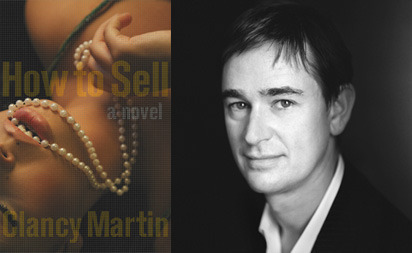
How to Sell did not do that for me. Instead, after I read it, I thought, "hey, if this can get published, getting my book onto the market should be a breeze!" How to Sell is an unfortunately titled novel that is NOT about becoming an effective salesperson. The cover of "How to Sell: A Novel" at first glance looks like a guide to selling your manuscript. The nude with the pearls indicates it's about something else, but it takes a while to reconcile the cover with the how-to suggested by the title.

Okay, enough about how poorly this book is named. Rather than sales, it is about two brothers working in the fine jewelry industry. The characters are fascinating-- the salespeople and craftsmen and customers of expensive jewelry. The author has a clear, crisp style that makes the setting compelling, too. He manages to weave in cocaine and cracked diamonds and strippers and white gold bracelets and and crank and Rolexes and hookers and gold dust as well as showing the characters juggling the ex-wife, the wife, and multiple girlfriends, too. And the narrator's voice makes it all seem plausible. But I think the author's simplicity is also his downfall, because it made the book seem very first-drafty. It could have used another layer or two of complexity, another year or two to bake in the oven.
Profile Image for Justin.
140 reviews1 follower
June 22, 2009
Martin's look into two brothers born to be jewelry salesmen sucks you in from page one. Told from younger brother Bobby's perspective, 'How to Sell' investigates the lies that great salesmen not only tell customers, but themselves.

Sadly, the book is a bit passive-aggressive in its storytelling--and while it hooks you immediately and builds the anticipation for the climax--it leaves far too many loose ends to make the book effective. No one needs a nice, tight bow wrapped around the story--and with a story as cluttered and heartbreaking as "How to Sell," it wouldn't be a pretty one--but there are far too many holes and far too many make-up-your-own-mind moments that Martin's vision gets buried. If this were an original screenplay for a movie, it'd work marvelously to play on the audience's morals and standards; as a book the last quarter feels rushed and unfinished.
124 reviews24 followers
February 22, 2022
Such sharp, clear writing. Always says just as much as it needs to, not more and not less. It has the same clear plot structures, but I thought it was weaker than Bad Sex, especially the end of the narrative with Lisa, and the end of the book itself. The former feels a bit random, like it hasn't been set up well enough, and the latter feels too obvious. Love, love, love the Polack, and the father, especially the way the end of that narrative was framed. Wondering why the dialogue is so stilted sometimes — Martin doesn't always use contractions which makes the characters sound very stiff/unnatural.
Profile Image for Peter Knox.
693 reviews83 followers
January 20, 2012
A deft crackling combination of Bret Easton Ellis meets JD Salinger, this coming of age story, set in the diamond/jewelry selling business of Texas, sucked me in and spit me out. While still full of the cliches of drugs, dirty business, and even a hooker with a heart of gold, the writing was fresh and insidery and fast paced. The protagonist is sympathetic enough to care about but distanced enough to shock you regularly. You'll want to know what happens to the many love triangles and the ponzi-style of selling that they can't possibly sustain, when combined makes for an enjoyable read.
Profile Image for Michael Lindgren.
161 reviews77 followers
May 25, 2009
A little hard to see what all the fuss is about. HOW TO SELL is droll and reasonably emblematic of our times, but hardly the dazzling tour de force and fictional indictment of contemporary consumerism that some folks are claiming it for. A while back Martin had a (presumably nonfiction) piece in the LONDON REVIEW OF BOOKS that was a good deal more harrowing and vivid than anything in this book.
Profile Image for Coki.
480 reviews10 followers
July 8, 2009
Whoa - well I certainly will be getting my diamonds checked out after reading this book. Described as a coming of age and while it is that I think it is "slice of life" too. Action picks up and stops rather abruptly. dialogue is the best part - the patter of the salesmen with their marks ,err, customers and each other.
Profile Image for Chris.
55 reviews11 followers
January 27, 2011
Really outstanding. Read this after reading a piece on Alcoholics Anonymous written by Martin for Harper's. This novel is about a lot of things, but it's overarching theme is lying and what lying is and does to others and one's self. Deeply philosophical but as readable a novel as I've read in some time. Highly recommended.
28 reviews2 followers
July 3, 2009
In spite of popular belief, this is not about selling a house, or on ebay. It's a novel about a guy who works at a jewelry store. Interesting stuff, definitely reaffirmed my dislike for "fine jewelry".
Profile Image for Lisa.
798 reviews12 followers
August 3, 2009
This novel of the jewelry business was enlightening. See review below for a link to an interview with the author. It's autobiographical and will make you think twice the next time you think about buying jewelry. I liked the book and its characters.
20 reviews
May 29, 2009
I liked the Dallas references, but liked the book for more than just that.
Profile Image for Louie Verile JR..
120 reviews
June 5, 2009
I blew right threw this at a quick pace. easy to ready, engaging and very dislikable characters (in a good way) because you don't find yourself rooting for some of them. Well done!!
1 review2 followers
July 27, 2009
I read this because it is by a Univ. of MO-Kansas City philosophy professor, and it got good reviews. It was a quick read - well-written, pretty fascinating story.
Profile Image for Liz Moreno.
5 reviews4 followers
January 10, 2020
When I saw Uncut Gems I kind of felt I was revisiting everything from this story. If you loved that film read this book.
Profile Image for William Shoemaker.
Author 1 book4 followers
July 27, 2024
Epically good. Some people just don’t get it. Those people should not bother. For me, this was fantastic.
55 reviews2 followers
July 20, 2020
Considering that Clancy Martin intended this book to be a peek into the deceptive and hazardous world of Jewellery (as a metaphor for the American Dream), this book does give a deep insight into this sector. The author is an esteemed professor of philosophy and he has hidden a lot of philosophical tidbits in this novel. The protagonist's journey is based on Clancy's own accounts. By opting for a fictional narrative over a memoir, he makes it engaging to the reader. It is easy to get swept into the world of drugs, sex, and corrupt money that the protagonist Bobby Clark paints. The Clark brothers are appealing characters and their love lives and job create a colorful but dreary picture of America. It's a book that's easy to stick to till the end, the only thing it fails in, is to evict an emotional response by the reader even towards the end. The author must be praised for giving a completely frank and unfiltered view of the deception that exists in the industry. He does that through the voice of Bobby Clark and it holds it's ground and is endearing till the end.
Profile Image for Hobart Mariner.
437 reviews14 followers
February 25, 2024
The author’s genuine expertise and know-how acquired during his years as a jewelry salesman, as well as his philosophical interest in the nature of deception, enliven this tale of moral corruption… The protagonist is an apparently simple Canadian lad who moves to Texas to live with his brother, a fast-living jewelry salesman.

“Competition. Down here they got the free market.”

Almost immediately, not gradually, he becomes an amoral salesman. The book is highly episodic and the overarching plot thread, to do with a coworker/girlfriend is kind of thin, but that really doesn’t matter — there are so many great, weird and fucked up anecdotes about the Texan jewelry biz. Also some genuinely beautiful descriptions of the jewelry itself. The protagonist’s winding up as a paranoiac coke-addled wreck toward the end recalls Henry Hill. A unique book.
Profile Image for jedbird.
761 reviews5 followers
September 12, 2019
Canadian brothers with an age gap make a lot of money selling jewelry in Texas. There is a lot of believable-seeming detail about how jewelers can rip people off that is interesting and entertaining. The brothers have complicated relationships with everyone, especially women, and it's amusing while at the same time you'd never want to meet anyone like either one of them. I really enjoyed this up until the last 10% or so when the lurid factor was amped way up. Bobby and Jim were questionable characters all the way through, but it just got so out-of-control sordid and depressing that it quashed my enjoyment of the entire story.
Displaying 1 - 30 of 111 reviews

Can't find what you're looking for?

Get help and learn more about the design.