Est-ce la fin ou le retour de l'Histoire ? Qu'y a-t-il dans la tête d'un kamikaze ? Pourquoi Hegel et Kojève croyaient-ils que le Mal n'a plus d'avenir ? Qu'a confié le commandant Massoud à l'auteur de ce livre en 1981 puis en 1998 ? Que disent les ruines de Sarajevo et de Manhattan ? Comment un Normalien, disciple d'Althusser, se retrouve-t-il, à vingt ans, dans les maquis du Pakistan oriental ? Michel Foucault était-il meilleur journaliste que Hemingway ? Pourquoi la guerre est-elle si «jolie» pour Proust, Apollinaire et Cocteau ? Quand le monde a-t-il basculé de la logique de Clausewitz à celle d'Oussama Ben Laden ? A quoi peut bien servir la philosophie dans les faubourgs de Bogota et de Bujumbura ? Suffirait-il, pour arrêter le massacre, de tendre la main aux damnés du tiers monde ? Que veulent les terroristes ?
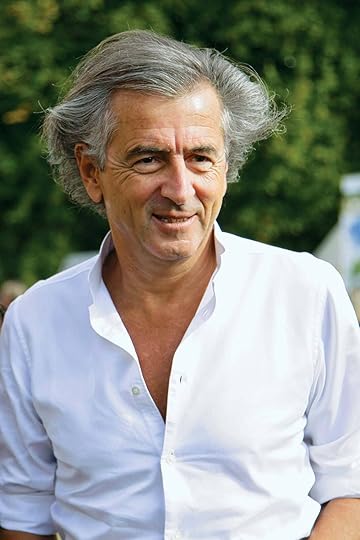
Bernard-Henri Lévy is a philosopher, activist, filmmaker, and author of more than thirty books including The Genius of Judaism, American Vertigo, Barbarism with a Human Face, and Who Killed Daniel Pearl? His writing has appeared extensively in publications throughout Europe and the United States. His documentaries include Peshmerga, The Battle of Mosul, The Oath of Tobruk, and Bosna! Lévy is cofounder of the antiracist group SOS Racisme and has served on diplomatic missions for the French government.
There are several sections to this book. The primary division is between field and reflection. Levy offers you-are-there descriptions from five of the darkest places on the planet, Angola, Sri Lanka, Burundi, Colombia, South Sudan. These are chilling descriptions of places where one may indeed wonder if history has ended. It could also call into question the existence of God for those of a religious persuasion. Not only does he show what conditions are in such places, but offers interviews with leaders who might under other circumstances have had to content themselves with the criminal existences of other sociopaths. How is it possible, in the 21st Century (for although these reports were made in the 20th, conditions described there persist) such darkness can exist?
One can go in many different directions from this base. Levy wanders about in several of his own. The second gross part of the book is Reflections, and as the name suggests, it comprises Levy’s intellectual questioning of what he has seen. There are times when his thoughts are indeed very cogent, human, accessible. There are others when he is lost in a forest of philosophical undergrowth too obscure for those of who lack Phds in philosophy. The latter section also includes items from Levy’s personal history.
Overall, I would say that this book is a compelling read for the front section. The field reports should be required reading for anyone interested in international affairs. The reflective sections are intermittent. I found that I navigated them best when I read at my usual pace until I became frustrated, then skimmed until I came to another cogent point. That way I did not throw it all down in disgust. Stick with it, skip over what does not clarify, the reward is there to be had. Most of all read his field reports.
French journalist and philosopher Bernard-Henri Levy asks some very insightful questions about some ongoing smaller wars which the world is pretty much ignoring -- such as in Burundi, Sri Lanka, Colombia. At the beginning of the book he does reportage and gives a flavor of five different small wars, and spends the rest of the book reflecting on them, and how we look at them, how we should be seeing them, how they should make us see ourselves.
Levy considers himself a man of the left, but asks the kind of questions that real intellectuals should be asking about the world we live in. Today, most people on the left consider themselves to be intellectual if they can unthinkingly parrot some leftist party line, put things in an ideological box. One could say the equivalent for those on the right. That's neither intellectualism nor intelligence, but robot behavior. Levy, grounded in philosophy and activist literature, is able to see through the cataracts of indoctrination in order to ask the kinds of questions which are seldom asked. The clarity is refreshing.
Sometimes the book isn't an easy read if you aren't as familiar with some of the philosophers and literature he refers to. However, that doesn't really detract from the book, even if you feel you might be missing some things as you read. His questions far outweigh any obscurities. It also isn't easy to read some of the stories of atrocities and meaninglessness he presents. His reflections on them make them matter.
Even though events have somewhat overtaken his reportage on a couple of these small wars (for example in Sri Lanka) these types of wars are probably on the horizon for decades to come, and a clearer vision of them is necessary for those who care, and for our ability to define ourselves as human beings and as a civilization. Levy will make you think, and I can't imagine a better recommendation for a book.
What is the meaning of todays’ wars? À deeply harrowing, moving and emotionally devastating book on the examinations of global conflict. It evaluates the ambiguity of war, its ludicrous ideology - the bloodletting of nations and its people and our amnesia to respond. Levy taking us to South Sudan, Burundi, Bosnia and to Colombia, always asking: why this martyrdom to the pedestal of Evil? Why should we live to forget that War exists?
The dispatches were super interesting, as were a handful of the reflections, however a lot of the reflections were rly take it or leave it. Kinda weird western centric nostalgia for World War I/II. Also got into gross anti-Palestinian territory in later reflections?
Already a huge bestseller in Europe, WAR, EVIL, AND THE END OF HISTORY is the work of a scintillating intellect at the height of its powers. BERNARD-HENRI LÉVY 'S previous book foresaw today's headlines about Pakistan's secret trading of nuclear technology and the nexus of terrorist groups behind the murder of Daniel Pearl. WAR, EVIL, AND THE END OF HISTORY is his brilliant foray into the next danger zones.
Professor Walters referenced this book several times during my undergraduate career and I'm waiting until I know enough to both understand and appreciate it.