

What do you think?

The Maid's Version
Alma DeGeer Dunahew, the mother of three young boys, works as the maid for a prominent citizen and his family in West Table, Missouri. Her husband is mostly absent, and, in 1929, her scandalous, beloved younger sister is one of the 42 killed in an explosion at the local dance hall. Who is to blame? Mobsters from St. Louis? The embittered local gypsies? The preacher who railed against the loose morals of the waltzing couples? Or could it have been a colossal accident? Alma thinks she knows the answer—and that its roots lie in a dangerous love affair. Her dogged pursuit of justice makes her an outcast and causes a long-standing rift with her own son. By telling her story to her grandson, she finally gains some solace—and peace for her sister. He is advised to "Tell it. Go on and tell it"—tell the story of his family's struggles, suspicions, secrets, and triumphs.
164 pages, Hardcover
First published January 1, 2013
About the author
Daniel Woodrell
25 books1,369 followersGrowing up in Missouri, seventy miles downriver from Hannibal, Mark Twain was handed to me early on, first or second grade, and captivated me for years, and forever, I reckon. Robert Louis Stevenson had his seasons with me just before my teens and I love him yet. There are too many others to mention, I suppose, but feel compelled to bring up Hemingway, James Agee, Flannery O'Connor, John McGahern, Knut Hamsun, Faulkner, George Mackay Brown, Tillie Olsen, W.S. Merwin, Brigit Pegeen Kelly, Andrew Hudgins, Seamus Heaney, Derek Wolco.
Daniel Woodrell was born and now lives in the Missouri Ozarks. He left school and enlisted in the Marines the week he turned seventeen, received his bachelor's degree at age twenty-seven, graduated from the Iowa Writer's Workshop, and spent a year on a Michener Fellowship. His five most recent novels were selected as New York Times Notable Books of the Year, and Tomato Red won the PEN West award for the novel in 1999. Winter's Bone is his eighth novel.
Daniel Woodrell was born and now lives in the Missouri Ozarks. He left school and enlisted in the Marines the week he turned seventeen, received his bachelor's degree at age twenty-seven, graduated from the Iowa Writer's Workshop, and spent a year on a Michener Fellowship. His five most recent novels were selected as New York Times Notable Books of the Year, and Tomato Red won the PEN West award for the novel in 1999. Winter's Bone is his eighth novel.
Ratings & Reviews
Friends & Following
Create a free account to discover what your friends think of this book!
Community Reviews
Displaying 1 - 30 of 1,153 reviews

June 28, 2019
LA BALLATA DI ALMA
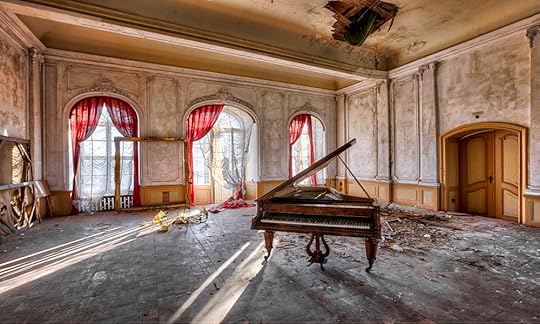
Christian Richter, la foto usata per la copertina. Sue anche le foto a seguire, che ritraggono lo spirito dei luoghi abbandonati.
West Table è una città dove non esiste luogo così distante da non poter essere raggiunto a piedi, e sta nell’altopiano d’Ozark, ma anche al plurale, Ozarks, che adesso una serie su Netflix, intitolata appunto Ozark, sta rendendo luogo noto. Gli Ozark è un altopiano con fiumi e laghi così frastagliati che sembra di stare sulla costa croata, si sviluppano tra Missouri, Arkansas, Oklahoma e Kansas, sono quindi nel sud degli Stati Uniti e quindi dove la legge è un pochino più elastica e un pochino meno dura, almeno con chi ha denaro.
Prima di diventare americana questa terra è stata spagnola e poi francese.

Nel 1929 a West Table, Missuori, c’è una terribile esplosione seguita da un incendio devastante: la sala da ballo locale viene rasa al suolo, i morti sono quarantadue, i feriti molti di più, i morti sono dilaniati e fusi dal fuoco, sbranati e mutilati dall’esplosione, i cadaveri riconoscibili sono solo ventotto, e solo loro hanno diritto alla bara singola, le altre bare sono collettive, tutte raccolte nella palestra per il funerale più grosso di sempre.
Chi è stato? E perché? Ma soprattutto, chi ha collocato l’esplosivo e acceso la miccia?
Non che sia davvero importante, non per me almeno.

Woodrell eleva il racconto con la sua scrittura che sa essere semplice e al contempo ricca, efficace, diretta, ma elaborata, intrisa di trattenuta nera ironia. La forza di questo breve romanzo è proprio nel modo in cui Woodrell racconta, e cuce le diverse storie, tante, frastagliate, tutte tenute insieme.
Altrimenti, personalmente, tra i tanti personaggi, le famiglie e le generazioni, mi sarei facilmente distratto e annoiato, non sono un cultore di saghe.
Invece, Woodrell accende il materiale con la sua scrittura, lo immerge in un umore definito country noir, che ha venature gotiche, accende colori e luci, inanella storie, di vivi e di morti, e i morti sono così vivi che manco a Spoon River.

Un accoppiamento del tutto maldestro fu considerato un successo, ma perlopiù i loro incontri si rivelavano penosi, se non avvilenti, sempre condotti furtivamente anche se entro i confini del matrimonio, e di certo superflui per la nuova signora Glencross, che preferiva sentirsi solleticata nella mente, senza togliere i vestiti. Amava Glencross ma non amava il suo corpo né il proprio, e in tutti gli anni che passarono insieme non gli si mostrò mai nuda. Alla nascita del secondo figlio fu come se avesse tagliato il traguardo di una corsa faticosa e abbandonò la gara per sempre, avendo già vinto i suoi trofei. Lui accettò la situazione senza lamentarsi troppo, ma adeguò il proprio desiderio a quell’aridità con l’aiuto di abbondanti bevute e lunghe uscite a pesca in solitaria. Lei gli chiedeva raramente dove andasse, e questo accontentava tutti e due.
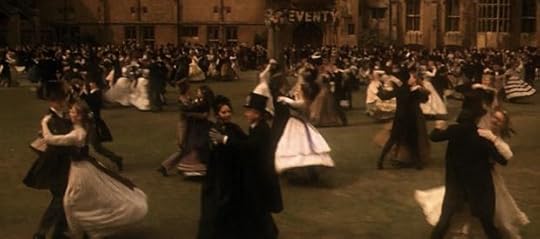
La magnifica scena di ballo nel magnifico “Heaven’s Gate – I cancelli del cielo” di Michael Cimino.
Christian Richter, la foto usata per la copertina. Sue anche le foto a seguire, che ritraggono lo spirito dei luoghi abbandonati.
West Table è una città dove non esiste luogo così distante da non poter essere raggiunto a piedi, e sta nell’altopiano d’Ozark, ma anche al plurale, Ozarks, che adesso una serie su Netflix, intitolata appunto Ozark, sta rendendo luogo noto. Gli Ozark è un altopiano con fiumi e laghi così frastagliati che sembra di stare sulla costa croata, si sviluppano tra Missouri, Arkansas, Oklahoma e Kansas, sono quindi nel sud degli Stati Uniti e quindi dove la legge è un pochino più elastica e un pochino meno dura, almeno con chi ha denaro.
Prima di diventare americana questa terra è stata spagnola e poi francese.
Nel 1929 a West Table, Missuori, c’è una terribile esplosione seguita da un incendio devastante: la sala da ballo locale viene rasa al suolo, i morti sono quarantadue, i feriti molti di più, i morti sono dilaniati e fusi dal fuoco, sbranati e mutilati dall’esplosione, i cadaveri riconoscibili sono solo ventotto, e solo loro hanno diritto alla bara singola, le altre bare sono collettive, tutte raccolte nella palestra per il funerale più grosso di sempre.
Chi è stato? E perché? Ma soprattutto, chi ha collocato l’esplosivo e acceso la miccia?
Non che sia davvero importante, non per me almeno.
Woodrell eleva il racconto con la sua scrittura che sa essere semplice e al contempo ricca, efficace, diretta, ma elaborata, intrisa di trattenuta nera ironia. La forza di questo breve romanzo è proprio nel modo in cui Woodrell racconta, e cuce le diverse storie, tante, frastagliate, tutte tenute insieme.
Altrimenti, personalmente, tra i tanti personaggi, le famiglie e le generazioni, mi sarei facilmente distratto e annoiato, non sono un cultore di saghe.
Invece, Woodrell accende il materiale con la sua scrittura, lo immerge in un umore definito country noir, che ha venature gotiche, accende colori e luci, inanella storie, di vivi e di morti, e i morti sono così vivi che manco a Spoon River.
Un accoppiamento del tutto maldestro fu considerato un successo, ma perlopiù i loro incontri si rivelavano penosi, se non avvilenti, sempre condotti furtivamente anche se entro i confini del matrimonio, e di certo superflui per la nuova signora Glencross, che preferiva sentirsi solleticata nella mente, senza togliere i vestiti. Amava Glencross ma non amava il suo corpo né il proprio, e in tutti gli anni che passarono insieme non gli si mostrò mai nuda. Alla nascita del secondo figlio fu come se avesse tagliato il traguardo di una corsa faticosa e abbandonò la gara per sempre, avendo già vinto i suoi trofei. Lui accettò la situazione senza lamentarsi troppo, ma adeguò il proprio desiderio a quell’aridità con l’aiuto di abbondanti bevute e lunghe uscite a pesca in solitaria. Lei gli chiedeva raramente dove andasse, e questo accontentava tutti e due.
La magnifica scena di ballo nel magnifico “Heaven’s Gate – I cancelli del cielo” di Michael Cimino.

June 18, 2013
"Have to read a whole goddam novel about baseball, only it's not really about baseball, see, it's about sad-assed stuff I already know all I need to know about, but there will be a test."
and that's the foundation of it, right? woodrell's characters inhabit their world, and we are all just tourists, reading it to be entertained by his stories of these resolute downtrodden folks in their sad-assed circumstances, while for them, it is just life. and they have already been tested. we require the window dressing of, say, baseball in order to understand what they have learned from life.
but he neverever writes window dressing. he is always the opposite - clear, stripped-down windows showing us stark and unsung characters, knowing shit we only think we know.
woodrell is an astonishingly good writer, and the four stars i gave this book shouldn't be any indication of its lacking anything at all. my star-ratings are inconsistent and personal, and a four here only means that there are books of his i have liked better. for many people, this would be a five-star read, no question.
phew, now that that's out of the way.
this is a novel about a mysterious explosion at a dancehall in missouri in 1929 that killed 42 people. among the dead is ruby, the beautiful and free-spirited younger sister of alma degeer dunahew, now the grandmother of ten-year-old alek, the primary narrator, who tells him what she knows of the story when he comes to live with her for a summer in 1965. thirty-six years after the events, she still has suspicions about the cause of the explosion, and her sister's role in it; suspicions which have cost her dearly throughout her long life.
decades after that summer, at an eerie memorial ceremony at the monument to those who died in the explosion, alek is encouraged, finally, to divulge what alma told him all those years ago.
more than crime fiction, more than the answer to a question, this is a celebration of lives cut off too soon. it is a mosaic-character study, where the voices of many of the soon-to-be-dead commingle to create a portrait of a small town with its various secrets and relationships and its hopes and crimes and resentments. it is not exactly a novel-in-stories, but it frequently reads like one. some characters are given a lot of space to tell their story, and some only appear for a two-page chapter. but they all contribute to the interlocking narrative not necessarily because they have particular relevance to the explosion itself, but because they existed. they died. they are part of the story, if not its resolution.
and that's what is so great about woodrell. in 165 pages, he gives us this huge chorus of story-quilt pieces that satisfies all the criteria of a mystery novel, but also provides so much additional tonal substance that a traditional mystery novelist would have omitted in order to make everything mean something, as unrealistic and blatantly constructed as that is. but this means more, overall. you aren't pleased at the end with the structure of the puzzle, the foreshadowing you didn't note at the time, the triumphant reveal by the brilliant detective. there isn't any triumph here. there isn't, in the real world. there are just a bunch of sad-assed circumstances and a lot of voices that never get heard. and these are the very voices woodrell always celebrates so well and so tastefully.
let's say four-and-a-half...
 come to my blog!
and that's the foundation of it, right? woodrell's characters inhabit their world, and we are all just tourists, reading it to be entertained by his stories of these resolute downtrodden folks in their sad-assed circumstances, while for them, it is just life. and they have already been tested. we require the window dressing of, say, baseball in order to understand what they have learned from life.
but he neverever writes window dressing. he is always the opposite - clear, stripped-down windows showing us stark and unsung characters, knowing shit we only think we know.
woodrell is an astonishingly good writer, and the four stars i gave this book shouldn't be any indication of its lacking anything at all. my star-ratings are inconsistent and personal, and a four here only means that there are books of his i have liked better. for many people, this would be a five-star read, no question.
phew, now that that's out of the way.
this is a novel about a mysterious explosion at a dancehall in missouri in 1929 that killed 42 people. among the dead is ruby, the beautiful and free-spirited younger sister of alma degeer dunahew, now the grandmother of ten-year-old alek, the primary narrator, who tells him what she knows of the story when he comes to live with her for a summer in 1965. thirty-six years after the events, she still has suspicions about the cause of the explosion, and her sister's role in it; suspicions which have cost her dearly throughout her long life.
decades after that summer, at an eerie memorial ceremony at the monument to those who died in the explosion, alek is encouraged, finally, to divulge what alma told him all those years ago.
more than crime fiction, more than the answer to a question, this is a celebration of lives cut off too soon. it is a mosaic-character study, where the voices of many of the soon-to-be-dead commingle to create a portrait of a small town with its various secrets and relationships and its hopes and crimes and resentments. it is not exactly a novel-in-stories, but it frequently reads like one. some characters are given a lot of space to tell their story, and some only appear for a two-page chapter. but they all contribute to the interlocking narrative not necessarily because they have particular relevance to the explosion itself, but because they existed. they died. they are part of the story, if not its resolution.
and that's what is so great about woodrell. in 165 pages, he gives us this huge chorus of story-quilt pieces that satisfies all the criteria of a mystery novel, but also provides so much additional tonal substance that a traditional mystery novelist would have omitted in order to make everything mean something, as unrealistic and blatantly constructed as that is. but this means more, overall. you aren't pleased at the end with the structure of the puzzle, the foreshadowing you didn't note at the time, the triumphant reveal by the brilliant detective. there isn't any triumph here. there isn't, in the real world. there are just a bunch of sad-assed circumstances and a lot of voices that never get heard. and these are the very voices woodrell always celebrates so well and so tastefully.
let's say four-and-a-half...
come to my blog!
January 11, 2014
The thing about small towns and secrets is that usually there aren’t really that many secrets; there are just unpleasant things that aren’t discussed openly.
West Table, Missouri, has one of these uncomfortable topics after an explosion destroyed a dance hall and killed dozens of people in 1929. There is no shortage of rumors about various causes of the disaster, but that’s just the buzz disguising the real story. Listen carefully enough and the underlying truth is there, but most of the locals would prefer that it never be revealed.
Alma Dunahew was a poor maid with three kids she could barely feed as she worked for a prosperous banker when the explosion occurred and killed her younger sister Ruby. Alma believes she knows what happened, but since no one is interested in hearing it, she is eventually shunned and driven half mad by the willful blindness of the town. It’s only years later that she finally reveals the true story to her grandson Alek.
A simple summary like that makes this book seem more linear and more of a mystery than it actually is. Daniel Woodrell tells this like an old person recounting a long story with frequent digressions and skipping back and forth through time. It’s not enough to understand what happened at the dance hall, he wants to make sure you understand why it happened and how it effected everyone with the slightest connection to it.
Despite the rambling nature of how it’s told, it’s still a short tale at 164 pages, but even though it’s not a long book, when the reader gets to the end, they’ll understand each and every character and what part they played.
This seemed a bit different from other Woodrell books I’ve read like Winter’s Bone in that it had more a dreamy quality to the writing. It drifts, it doesn’t walk a straight line, but it still shows that the man delivers maximum story for minimum page counts.
You can read more about Woodrell and the real story behind this fictionalized version of it here.
West Table, Missouri, has one of these uncomfortable topics after an explosion destroyed a dance hall and killed dozens of people in 1929. There is no shortage of rumors about various causes of the disaster, but that’s just the buzz disguising the real story. Listen carefully enough and the underlying truth is there, but most of the locals would prefer that it never be revealed.
Alma Dunahew was a poor maid with three kids she could barely feed as she worked for a prosperous banker when the explosion occurred and killed her younger sister Ruby. Alma believes she knows what happened, but since no one is interested in hearing it, she is eventually shunned and driven half mad by the willful blindness of the town. It’s only years later that she finally reveals the true story to her grandson Alek.
A simple summary like that makes this book seem more linear and more of a mystery than it actually is. Daniel Woodrell tells this like an old person recounting a long story with frequent digressions and skipping back and forth through time. It’s not enough to understand what happened at the dance hall, he wants to make sure you understand why it happened and how it effected everyone with the slightest connection to it.
Despite the rambling nature of how it’s told, it’s still a short tale at 164 pages, but even though it’s not a long book, when the reader gets to the end, they’ll understand each and every character and what part they played.
This seemed a bit different from other Woodrell books I’ve read like Winter’s Bone in that it had more a dreamy quality to the writing. It drifts, it doesn’t walk a straight line, but it still shows that the man delivers maximum story for minimum page counts.
You can read more about Woodrell and the real story behind this fictionalized version of it here.

October 23, 2013
The Maid's Version: Daniel Woodrell's Change of Direction

Donald Woodrell, Off Square Books, Oxford, Ms., September 11, 2013
It has been seven years since Daniel Woodrell wrote his last novel, Winter's Bone. Only the small anthology of short stories, The Outlaw Album: Stories appeared after Woodrell reaped the acclaim that came with the release of the movie, "Winter's Bone."
My wife and I traveled to Oxford, Ms., to one of my favorite destinations, Square Books, on September 11, 2013, to hear Daniel Woodrell discuss his latest novel, The Maid's Version. I eagerly bought my copy of the novel. Author readings and signings are handled at Off Square Books, just a few doors down on the Square. The store was filling up fast when Woodrell walked in.
I was surprised at his appearance. He had lost a great deal of weight. Oxford regulars surrounded Woodrell as he slowly made his way to the podium. Woodrell's discussion of his new novel was fascinating. He told us that this new novel was a change of direction from his previous works. He attributed his literary change resulted from his battle with cancer, colon cancer. The treatment had included surgery and chemotherapy. His voice was soft. One had to lean forward to catch what he had to say. It was an occasion that a public address system would have been helpful to the author and the audience. His reading was fast. It seemed to diminish his energy as he read.
In summary, Woodrell explained that his illness had prompted him to consider his stories in a more introspective view. He had turned to family history and a catastrophic event in his home West Plains, Missouri, which is represented by the town of West Table, Missouri, in his previous Ozarks works.
Woodrell had achieved cult status among readers in the know prior to the release of the movie "Winter's Bone." I've read a number of them. The Death of Sweet Mister. Tomato Red. Winter's Bone. Give Us a Kiss is cued up close to the top of my read stack. The novels have a definite theme of good and evil. The arching theme of those novels is whether Woodrell's characters have a way out of the situation in which they find themselves. All too often the answer is no. Darkness pervades the Woodrells I have read.
Woodrell is content with his new direction on the literary compass. He has said if his readers disagree with his new perspective it may not bring him affluence. However, he has found solace with "The Maid's Version. In fact, Woodrell's next work will be set outside of the Missouri Ozarks. I am eager to see where he takes us.
"The Maid's Version" is based on a community disaster that occurred in West Plains, Missouri, in 1928. A dance hall located over a garage exploded, killing 39 people. It has been a mystery without solution over the years. Was it an accident? Most residents don't think so. The suspected motives and wrongdoers have been discussed for years.
The disaster received news coverage across the United States. A sampling of the articles may be found here: http://howell.mogenweb.org/article/wp....
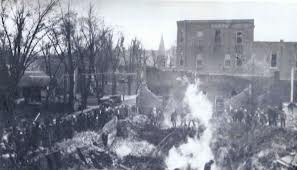
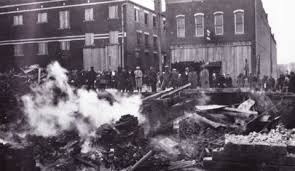
The morning following the dance hall explosion
Woodrell changes minor details in his literary work. This is not a history. The date of the explosion is changed to 1929, an acknowledgement of a changing nation on the brink of an America on the brink of the Great Depression. For pure dramatic impact, Woodrell describes the monument erected to the memory of the victims as a black angel that seems to move in a macabre dance under circumstances I leave the reader to discover.
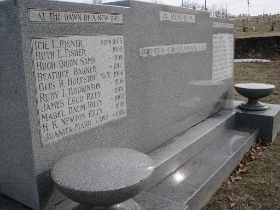
The Actual Dance Hall Victims' Monument
Where Woodrell has previously concentrated on isolated outcasts of the community, this is the story of a community facing an unexplained loss of individuals known to the community, members of it. Woodrell details the suspicions, the suspects, and lingering doubts of whether so many lives could have been lost as the result of an unexplainable accident.
The narrator is Alek Dunahew who is spending the summer with his grandmother, Alma Dunahew, in West Table, Missouri. Thirty-six years have passed since the dance hall disaster. Alma is the maid whose version this tale is. Alma carries a burning anger inside her that no responsibility has ever been placed for the explosion. She passes down the story to grandson, Alek, to keep the memory of the incident alive.
Alma lost someone precious to her in the fire, her sister, Ruby, a beautiful young woman, who drew many men to her as easily as a Siren. And Ruby took lover after lover until their gifts no longer inspired a continued relationship. Alma has exhibited her grief through her anger at the town's refusal to fully investigate the incident. For she is sure she has solved the mystery. In her angry pursuit for truth she has become an outcast of the community for whom the tragedy has only become an incident of history to be forgotten, or, perhaps hidden.
Alma reveals the town history to Alek on walks, pointing out various landmarks, ultimately coming to the town cemetery.
A sudden summer storm prompts Alma to tell Alek of the town's disaster.
West Table is a town of haves and have nots. Alma has lived her life among the poor. She has served as maid to the richest families in the town. She bristles at her services effect on her own family.
And, in Alma's mind it is the Haves who have quietly closed the investigation. Where is justice? There must be justice.
Interspersed through a narrative that grows more powerful with each page are vignettes of the couples "murdered midstep." They are people you like. They are innocent. And they are doomed. It is Woodrell's testament to life no matter how simple its quality may be.
Some critics have found the novel flawed by these vignettes. Their question is how could Alek possibly narrate these facts. I find no difficulty in following Woodrell's purpose or method. Alek learned of the slaughtered innocents through Alma's telling their stories. The presence of these dancers' stories strengthens rather than weakens this novel. There is great power in poignancy not laden with sentimentality.
By novel's end, reader, you will have the answer. You will know the who and the how and the why. Alma will guide you there, through Alek.
Woodrell continues to amaze me. It is a powerful change in literary direction. What's next? One can only wonder. But there's no question about this one. This is a FIVE STAR Read.
Additional Material:
Author Daniel Woodrell changes his literary direction with new novel 'The Maid's Version':http://www.winnipegfreepress.com/arts...
NPR Interview: 'Winter's Bone' Author Revisits A Tragedy In His Ozarks Hometown http://www.npr.org/2013/09/05/2185915...
Listen to the NPR Interview: http://www.npr.org/player/v2/mediaPla...

Donald Woodrell, Off Square Books, Oxford, Ms., September 11, 2013
It has been seven years since Daniel Woodrell wrote his last novel, Winter's Bone. Only the small anthology of short stories, The Outlaw Album: Stories appeared after Woodrell reaped the acclaim that came with the release of the movie, "Winter's Bone."
My wife and I traveled to Oxford, Ms., to one of my favorite destinations, Square Books, on September 11, 2013, to hear Daniel Woodrell discuss his latest novel, The Maid's Version. I eagerly bought my copy of the novel. Author readings and signings are handled at Off Square Books, just a few doors down on the Square. The store was filling up fast when Woodrell walked in.
I was surprised at his appearance. He had lost a great deal of weight. Oxford regulars surrounded Woodrell as he slowly made his way to the podium. Woodrell's discussion of his new novel was fascinating. He told us that this new novel was a change of direction from his previous works. He attributed his literary change resulted from his battle with cancer, colon cancer. The treatment had included surgery and chemotherapy. His voice was soft. One had to lean forward to catch what he had to say. It was an occasion that a public address system would have been helpful to the author and the audience. His reading was fast. It seemed to diminish his energy as he read.
In summary, Woodrell explained that his illness had prompted him to consider his stories in a more introspective view. He had turned to family history and a catastrophic event in his home West Plains, Missouri, which is represented by the town of West Table, Missouri, in his previous Ozarks works.
Woodrell had achieved cult status among readers in the know prior to the release of the movie "Winter's Bone." I've read a number of them. The Death of Sweet Mister. Tomato Red. Winter's Bone. Give Us a Kiss is cued up close to the top of my read stack. The novels have a definite theme of good and evil. The arching theme of those novels is whether Woodrell's characters have a way out of the situation in which they find themselves. All too often the answer is no. Darkness pervades the Woodrells I have read.
Woodrell is content with his new direction on the literary compass. He has said if his readers disagree with his new perspective it may not bring him affluence. However, he has found solace with "The Maid's Version. In fact, Woodrell's next work will be set outside of the Missouri Ozarks. I am eager to see where he takes us.
"The Maid's Version" is based on a community disaster that occurred in West Plains, Missouri, in 1928. A dance hall located over a garage exploded, killing 39 people. It has been a mystery without solution over the years. Was it an accident? Most residents don't think so. The suspected motives and wrongdoers have been discussed for years.
The disaster received news coverage across the United States. A sampling of the articles may be found here: http://howell.mogenweb.org/article/wp....

The morning following the dance hall explosion
Woodrell changes minor details in his literary work. This is not a history. The date of the explosion is changed to 1929, an acknowledgement of a changing nation on the brink of an America on the brink of the Great Depression. For pure dramatic impact, Woodrell describes the monument erected to the memory of the victims as a black angel that seems to move in a macabre dance under circumstances I leave the reader to discover.

The Actual Dance Hall Victims' Monument
Where Woodrell has previously concentrated on isolated outcasts of the community, this is the story of a community facing an unexplained loss of individuals known to the community, members of it. Woodrell details the suspicions, the suspects, and lingering doubts of whether so many lives could have been lost as the result of an unexplainable accident.
The narrator is Alek Dunahew who is spending the summer with his grandmother, Alma Dunahew, in West Table, Missouri. Thirty-six years have passed since the dance hall disaster. Alma is the maid whose version this tale is. Alma carries a burning anger inside her that no responsibility has ever been placed for the explosion. She passes down the story to grandson, Alek, to keep the memory of the incident alive.
Alma lost someone precious to her in the fire, her sister, Ruby, a beautiful young woman, who drew many men to her as easily as a Siren. And Ruby took lover after lover until their gifts no longer inspired a continued relationship. Alma has exhibited her grief through her anger at the town's refusal to fully investigate the incident. For she is sure she has solved the mystery. In her angry pursuit for truth she has become an outcast of the community for whom the tragedy has only become an incident of history to be forgotten, or, perhaps hidden.
Alma reveals the town history to Alek on walks, pointing out various landmarks, ultimately coming to the town cemetery.
"On these rambles the cemetery was nearly always our final destination. We'd make our way through the wilderness of headstones, gray, brown, puritan white, glancing at some, nodding at some, Alma turning her nose up at others, until we reached the Black Angel, the sober monument to our family loss and a town bereaved. Standing in the shadow of this angel she would on occasion tell me about a suspect person or deed, a vague or promising suspicion she'd acquired with her own sharp ears or general snooping, and when she shared the fishy details with me it would be the first time she'd said them aloud to anybody in years. She'd repeat herself so I would remember."
A sudden summer storm prompts Alma to tell Alek of the town's disaster.
"Storm clouds were scored by bright lightning, and thunder boomed. Her dress was flapping, her eyes narrowed and distant, and she cunningly chose that raging moment to begin telling me her personal account of the Arbor Dance Hall explosion of 1929, how forty-two dancers from this small corner of the Missouri Ozarks had perished in an instant, waltzing couples murdered midstep, blown toward the clouds in a pink mist chased by towering flames, and why it happened."
West Table is a town of haves and have nots. Alma has lived her life among the poor. She has served as maid to the richest families in the town. She bristles at her services effect on her own family.
"She hated that she fed another man's children before she fed her own. She cleared the supper table, the plates yet rife with food in this house of plenty, potatoes played with, bread crusts stacked on the tablecloth unwanted, meat bones set aside with enough shreds on them to set her own sons fighting one another for a chance to gnaw them clean and white. Her own sons sucked cold spuds at home, waiting."
And, in Alma's mind it is the Haves who have quietly closed the investigation. Where is justice? There must be justice.
Interspersed through a narrative that grows more powerful with each page are vignettes of the couples "murdered midstep." They are people you like. They are innocent. And they are doomed. It is Woodrell's testament to life no matter how simple its quality may be.
Some critics have found the novel flawed by these vignettes. Their question is how could Alek possibly narrate these facts. I find no difficulty in following Woodrell's purpose or method. Alek learned of the slaughtered innocents through Alma's telling their stories. The presence of these dancers' stories strengthens rather than weakens this novel. There is great power in poignancy not laden with sentimentality.
By novel's end, reader, you will have the answer. You will know the who and the how and the why. Alma will guide you there, through Alek.
Woodrell continues to amaze me. It is a powerful change in literary direction. What's next? One can only wonder. But there's no question about this one. This is a FIVE STAR Read.
Additional Material:
Author Daniel Woodrell changes his literary direction with new novel 'The Maid's Version':http://www.winnipegfreepress.com/arts...
NPR Interview: 'Winter's Bone' Author Revisits A Tragedy In His Ozarks Hometown http://www.npr.org/2013/09/05/2185915...
Listen to the NPR Interview: http://www.npr.org/player/v2/mediaPla...

December 13, 2013
Woodrell has moved beyond the confines of hillbilly noir. His prose is so economical, his ability to delineate a character or describe an action so efficient, that The Maid's Version can contain all the vivid settings, complex characters, illuminating subplots and pleasant digressions of an old fashioned five hundred page novel, all in the course of 45,000 words.
He is a master of compressed, oblique story-telling, and the tale he tells is a good one, showing what destructive forces can be unleashed when love, class and jealousy collide in a small Arkansas town.

June 23, 2013
Daniel Woodrell, as usual, proves that you don't need to write a doorstopper-sized sprawling flowery epic to paint a vivid picture of an entire community and bring it to life in all its drama, secrets, heartbreaks and pain.
In crisp economical prose, in the short 170 or so pages Woodrell brings us a story of the entire town through a tragedy the community experienced in the late 1920s, a dance hall explosion that remains unsolved decades later:
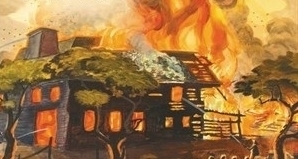
The explosion did not just take way the lives of forty-two people but through countless strings and connections altered and shaped and shattered other lives, many of which are given voices - some more, some less, but enough to create a chorus out of which the tragedy takes shape.
These stories wind their ways through time, intertwining in the unexpected places, shedding light onto the new unexpected angles, and from it emerges the portrait of community, with a spotlight on the few - the titular maid Alma DeGeer Dunahew ( "Grief has chomped on her like wolves do a calf" ), her spirited sister Ruby, Ruby's illicit lover and one of the local pillars of community Arthur Glencross, and Alma's son John Paul Dunahew, all seen through Woodrell's trademark apt phrasing that makes them step off the page and into life.
4 stars.
-------------------
My reviews of other books by Daniel Woodrell:
Winter's Bone
Tomato Red
In crisp economical prose, in the short 170 or so pages Woodrell brings us a story of the entire town through a tragedy the community experienced in the late 1920s, a dance hall explosion that remains unsolved decades later:
"...Her personal account of the Arbor Dance Hall explosion of 1929, how forty-two dancers from this small corner of the Missouri Ozarks had perished in an instant, waltzing couples murdered midstep, blown toward the clouds in a pink mist chased by towering flames, and why it happened."
The explosion did not just take way the lives of forty-two people but through countless strings and connections altered and shaped and shattered other lives, many of which are given voices - some more, some less, but enough to create a chorus out of which the tragedy takes shape.
"The town was represented from high to low, the disaster spared no class or faith, cut into every neighborhood and congregation, spread sadness with an indifferent aim. The well dressed and stunned, the sincere in bibs and broken shoes, sat side by side and sang the hymns they had in common."Through interconnected vignettes set before, during and after the tragedy we get quick glimpses into the lives that got disrupted by a force nobody could have predicted, a chain of consequences and choices that led to the tragic ending of a warm Saturday evening - the stories that have no real satisfying endings because of the abrupt cruel stop that was put to them.
"The couple were to visit his mother’s people out at Rover, but the regular Arbor pianist had been stranded out at Cape Girardeau, and Lucille reluctantly agreed to sit in with the house band so the dance could proceed and her friends could frolic. Ollie sat on a windowsill with a smile that never wilted. The explosion sent them in different directions, and three days later he identified Lucille by the brooch that had burned deeply into her chest."
These stories wind their ways through time, intertwining in the unexpected places, shedding light onto the new unexpected angles, and from it emerges the portrait of community, with a spotlight on the few - the titular maid Alma DeGeer Dunahew ( "Grief has chomped on her like wolves do a calf" ), her spirited sister Ruby, Ruby's illicit lover and one of the local pillars of community Arthur Glencross, and Alma's son John Paul Dunahew, all seen through Woodrell's trademark apt phrasing that makes them step off the page and into life.
“Alma touched all twenty-eight and kissed them each, kneeling to kiss the fresh black paint between her spread aching fingers, said the same words to accompany every kiss because there was no way to know which box of wood held Ruby, or if she rested in only one, had not been separated into parts by crushing or flames and interred in two or three, so she treated every box as though her sister was inside in parts or whole and cried to the last.”As always, Woodrell focuses on the shadier and darker bits of human existence. No, there's no meth in this story, it being 1920s after all, but there is alcohol and the degradation that comes with too much of a good thing. There is ignorance and physical brutality. There is oppressive crushing poverty that never changes, regardless of the century, and the heavy weight of inevitable resentment fueled by glaring differences between those who have the means to escape poverty and those who are the perpetual have-nots.
"She hated that she fed another man's children before she fed her own. She cleared the supper table, the plates yet rife with food in this house of plenty, potatoes played with, bread crusts stacked on the tablecloth unwanted, meat bones set aside with enough shreds on them to set her own sons fighting one another for a chance to gnaw them clean and white. Her own sons sucked cold spuds at home, waiting."Woodrell's books always leave behind a quiet uneasy feeling once the last page is turned. This one is no exception to this. It's my third Woodrell, and now I have no doubt that in the near future I will read every single book he has written and will write because they are fully worth every minute you spend reading them.
4 stars.
-------------------
My reviews of other books by Daniel Woodrell:
Winter's Bone
Tomato Red

August 5, 2018
The Maid's Version is a novella that if judged by any paragraph would seem to be a virtuoso mystery, overflowing with Ozarks detail, Jazz Age atmosphere and brooding mood. Published in 2013 as Daniel Woodrell's follow-up to the remarkable Winter's Bone, this effort feels like it was constructed of leftovers, the tragedy of Ree Dolly's great-great grandmother perhaps, and with no strong central character or organizing detail comes out to an attractive mess. Every reader reaches a point where they expect an author to stop setting the table and serve them a meal and Woodrell table dresses away, never emerging from the kitchen.
In the first loop of a crazy straw design, the story begins in the summer of 1965 in the fictional town of "West Table" located in a small corner of the Missouri Ozarks. An adult Alek Dunahew recalls the summer of his twelfth year, in which his father, making an effort toward reconciliation with his estranged mother, sends the boy away from their river town outside of St. Louis to spend time with his grandmother. Alma DeGeer Dunahew, lonely, old and proud, refuses to be referred to as Grandma or Mamaw. She lives in the back room of the house of her last employers, the Teagues, who she served as a maid.
Alek is aware that something bad surrounds the death of Alma's sister Ruby, among forty-two who perished in the Arbor Dance Hall explosion of 1929, an accident which has remained unsolved and broke the town. Alek's father, a hard drinking U.S. Navy veteran attending college on the G.I. Bill, has offered to discuss his aunt's death with his son when he's older, but that summer, Alma (actually, Woodrell) begins to brush the earth off the remains of Ruby DeGeer, a footloose bachelorette who at the time of her death was having an affair with Alma's employer, Mr. Arthur Glencross, president of Citizens' Bank and a civic hero.
Ruby DeGeer didn't mind breaking hearts, but she liked them to shatter coolly, with no ugly scenes of departure where an arm got twisted behind her back by a crying man, or her many failings and damp habits were made specific in words shouted out an open window. Accepting boredom did not come easily for her, and some men could bore her beyond courtesy before the first drink was drained or the key rattled into a hotel room door, but if she liked a fella, then he knew unleashed marvels until didn't anymore and in their fresh agony the heartbroken twisted her arm crying or yelled her business into the street. She'd known poverty from birth but been blessed with pizzazz and understood early that life was a fight and she couldn't win even one round if she kept her best hand tied behind her back. If men were smitten by her lyric eyes and fluctuating mounds and scented sashay, well, let them display their feelings in meaningful ways: clothes, hats, rent, a big weekend at the Peabody in Memphis, a morning visit on Christmas Day when they ought to be home with their wives and children but couldn't stay away, just couldn't do it, just can't.
Many other characters pass through the narrative, some related to Ruby's death, others related in an ancestral way. Alma's father Cecil DeGeer was born of wealth before he blew his inheritance on drink and gambling and disowned by the family, ended up owning (with the bank) a twenty-five acre farm near West Table. Taken out of school in the third grade to work the land, Alma's little sister Ruby never gets that far, and long after their father becomes an abusive drunk, Alma runs away at age fifteen to work in town. Ruby is thirteen when the old man dies and she goes to live with Alma, who finds her work as an apprentice laundress.
Arthur Glencross comes from assistant merchants who did well enough to send their academically excelling son to state university in Columbia, where he completed two years of college before a reversal of family fortune calls him home to West Table, where he takes a job at Citizens' Bank and to his surprise, is wooed by Corinne Jarman, a local princess. Presented with a huge house as a wedding present, within four years of working at the bank, Arthur is promoted to vice president and during the Great Depression, is credited with keeping the bank solvent. Inexperienced sexually and taking a bride who expressed little to no interest in it, Arthur's is left to his own devices.
Alma meets Maurice "Buster" Dunahew, a sign painter who marries Alma in 1916 before enlisting in the Great War, from which he returns even more despondent and becomes a drunk. Buster ultimately goes sober and accepts a job as driver for Arthur Glencross, but dies in a confusing car accident twenty-three days before the Arbor Dance Hall explosion. The hall was operated by Freddy Polz, once Walter "Plug" Reinemann, a St. Louis street tough who left that life after watching his employer gunned down. Located by hoodlums, Plug is asked to warehouse dynamite to be used in a bank robbery. The dance hall explosion changes the fortunes of Alma and her children.
At age ten, John Paul Dunahew was on his own and raided gardens for supper after midnight. He'd been without all other kin since the twelfth of November when Alma became bizarre beyond civic tolerance and was taken to live at the Work Farm (Sidney had very recently completed his haunting, brutal, audibly and visibly grotesque death inside the Dunahew shack, James had carried away only a Barlow knife with a bent blade and stolen gloves as he fled the region), and he chased anything that resulted in coins, delivered two of the three daily newspapers (Locator mornings, Scroll afternoons) and both of the weeklies (Gazette, Journal) and kept his few belongings (schoolbooks, a Big Chief tablet of paper with pencil stub, two sets of underwear made from glass-bleached flour sack, another shirt made of the same, and a big wooden spoon) in a burlap bag. The Work Farm expected him to supply four bits a week toward his mother's upkeep and he did so and delivered it on foot, though he was seldom allowed to visit privately with her as she was not currently resident within her skin and they weren't sure who or what was. He could not then and would not ever seem able to rest or sit idle--rest was dangerous for the poor, he knew that, too many thoughts of ordained and burgeoning unworthiness came to the impoverished when idle and ruined them thoroughly from the inside out. He knew that before he could say it and made himself stay on the move even when there was no place worthwhile to go. He rose in darkness (all my childhood and after he sat smoking Pall Malls on the back stoop and drinking instant coffee before the sun arrived) and hustled at any task that promised payment.
The wonderful thing about The Maid's Version is that Woodrell's prose is so jeweled, so absorbing, that block paragraphs like this are actually a pleasure to read. Like Winter's Bone, this novella transported me to the Missouri Ozarks, a region where poverty is genetic, generations live on the same crick or holler if not in the same shack and where there are no secrets, but there's also no one willing to speak them in polite company. It's a remarkably vivid atmosphere for a mystery and there's a strong one in this story, based loosely on the West Plains, Missouri dance hall explosion in 1928 which killed thirty-six. Woodrell can flat-out write.
Trains have haunted the nights in West Table since 1883 and disrupt sleep and taunt those awakened. The trains beating past toward the fabled beyond, the sound of each wheel-thump singing, You're going nowhere, you're going nowhere, and these wheels are, they are, they are going far from where you lie listening in your smallness and will still lie small at dawn after they are gone from hearing, rolling on singing along twin rails over the next hill and down and up over the next onward to those milk-and-honey environs where motion pictures happen for real and history is made and large dashing lives you won't lead or even witness are lived.
Imagine page after page of table dressing like this and you have my problem with The Maid's Version, which is a marvel of writing and a failure of story. Woodrell jumps from one genealogy to another, one anecdote to another, and while the book isn't long enough to become incoherent as it hops through family trees and timelines, it's all backstory in search of a story. It never seems as if an adult Alek is sifting through the secrets of West Table and discovering them for some greater purpose, but that Woodrell is simply dumping information, polishing it to substitute for a compelling narrative. I'd absolutely read more of his work if it was better organized than this.
In the first loop of a crazy straw design, the story begins in the summer of 1965 in the fictional town of "West Table" located in a small corner of the Missouri Ozarks. An adult Alek Dunahew recalls the summer of his twelfth year, in which his father, making an effort toward reconciliation with his estranged mother, sends the boy away from their river town outside of St. Louis to spend time with his grandmother. Alma DeGeer Dunahew, lonely, old and proud, refuses to be referred to as Grandma or Mamaw. She lives in the back room of the house of her last employers, the Teagues, who she served as a maid.
Alek is aware that something bad surrounds the death of Alma's sister Ruby, among forty-two who perished in the Arbor Dance Hall explosion of 1929, an accident which has remained unsolved and broke the town. Alek's father, a hard drinking U.S. Navy veteran attending college on the G.I. Bill, has offered to discuss his aunt's death with his son when he's older, but that summer, Alma (actually, Woodrell) begins to brush the earth off the remains of Ruby DeGeer, a footloose bachelorette who at the time of her death was having an affair with Alma's employer, Mr. Arthur Glencross, president of Citizens' Bank and a civic hero.
Ruby DeGeer didn't mind breaking hearts, but she liked them to shatter coolly, with no ugly scenes of departure where an arm got twisted behind her back by a crying man, or her many failings and damp habits were made specific in words shouted out an open window. Accepting boredom did not come easily for her, and some men could bore her beyond courtesy before the first drink was drained or the key rattled into a hotel room door, but if she liked a fella, then he knew unleashed marvels until didn't anymore and in their fresh agony the heartbroken twisted her arm crying or yelled her business into the street. She'd known poverty from birth but been blessed with pizzazz and understood early that life was a fight and she couldn't win even one round if she kept her best hand tied behind her back. If men were smitten by her lyric eyes and fluctuating mounds and scented sashay, well, let them display their feelings in meaningful ways: clothes, hats, rent, a big weekend at the Peabody in Memphis, a morning visit on Christmas Day when they ought to be home with their wives and children but couldn't stay away, just couldn't do it, just can't.
Many other characters pass through the narrative, some related to Ruby's death, others related in an ancestral way. Alma's father Cecil DeGeer was born of wealth before he blew his inheritance on drink and gambling and disowned by the family, ended up owning (with the bank) a twenty-five acre farm near West Table. Taken out of school in the third grade to work the land, Alma's little sister Ruby never gets that far, and long after their father becomes an abusive drunk, Alma runs away at age fifteen to work in town. Ruby is thirteen when the old man dies and she goes to live with Alma, who finds her work as an apprentice laundress.
Arthur Glencross comes from assistant merchants who did well enough to send their academically excelling son to state university in Columbia, where he completed two years of college before a reversal of family fortune calls him home to West Table, where he takes a job at Citizens' Bank and to his surprise, is wooed by Corinne Jarman, a local princess. Presented with a huge house as a wedding present, within four years of working at the bank, Arthur is promoted to vice president and during the Great Depression, is credited with keeping the bank solvent. Inexperienced sexually and taking a bride who expressed little to no interest in it, Arthur's is left to his own devices.
Alma meets Maurice "Buster" Dunahew, a sign painter who marries Alma in 1916 before enlisting in the Great War, from which he returns even more despondent and becomes a drunk. Buster ultimately goes sober and accepts a job as driver for Arthur Glencross, but dies in a confusing car accident twenty-three days before the Arbor Dance Hall explosion. The hall was operated by Freddy Polz, once Walter "Plug" Reinemann, a St. Louis street tough who left that life after watching his employer gunned down. Located by hoodlums, Plug is asked to warehouse dynamite to be used in a bank robbery. The dance hall explosion changes the fortunes of Alma and her children.
At age ten, John Paul Dunahew was on his own and raided gardens for supper after midnight. He'd been without all other kin since the twelfth of November when Alma became bizarre beyond civic tolerance and was taken to live at the Work Farm (Sidney had very recently completed his haunting, brutal, audibly and visibly grotesque death inside the Dunahew shack, James had carried away only a Barlow knife with a bent blade and stolen gloves as he fled the region), and he chased anything that resulted in coins, delivered two of the three daily newspapers (Locator mornings, Scroll afternoons) and both of the weeklies (Gazette, Journal) and kept his few belongings (schoolbooks, a Big Chief tablet of paper with pencil stub, two sets of underwear made from glass-bleached flour sack, another shirt made of the same, and a big wooden spoon) in a burlap bag. The Work Farm expected him to supply four bits a week toward his mother's upkeep and he did so and delivered it on foot, though he was seldom allowed to visit privately with her as she was not currently resident within her skin and they weren't sure who or what was. He could not then and would not ever seem able to rest or sit idle--rest was dangerous for the poor, he knew that, too many thoughts of ordained and burgeoning unworthiness came to the impoverished when idle and ruined them thoroughly from the inside out. He knew that before he could say it and made himself stay on the move even when there was no place worthwhile to go. He rose in darkness (all my childhood and after he sat smoking Pall Malls on the back stoop and drinking instant coffee before the sun arrived) and hustled at any task that promised payment.
The wonderful thing about The Maid's Version is that Woodrell's prose is so jeweled, so absorbing, that block paragraphs like this are actually a pleasure to read. Like Winter's Bone, this novella transported me to the Missouri Ozarks, a region where poverty is genetic, generations live on the same crick or holler if not in the same shack and where there are no secrets, but there's also no one willing to speak them in polite company. It's a remarkably vivid atmosphere for a mystery and there's a strong one in this story, based loosely on the West Plains, Missouri dance hall explosion in 1928 which killed thirty-six. Woodrell can flat-out write.
Trains have haunted the nights in West Table since 1883 and disrupt sleep and taunt those awakened. The trains beating past toward the fabled beyond, the sound of each wheel-thump singing, You're going nowhere, you're going nowhere, and these wheels are, they are, they are going far from where you lie listening in your smallness and will still lie small at dawn after they are gone from hearing, rolling on singing along twin rails over the next hill and down and up over the next onward to those milk-and-honey environs where motion pictures happen for real and history is made and large dashing lives you won't lead or even witness are lived.
Imagine page after page of table dressing like this and you have my problem with The Maid's Version, which is a marvel of writing and a failure of story. Woodrell jumps from one genealogy to another, one anecdote to another, and while the book isn't long enough to become incoherent as it hops through family trees and timelines, it's all backstory in search of a story. It never seems as if an adult Alek is sifting through the secrets of West Table and discovering them for some greater purpose, but that Woodrell is simply dumping information, polishing it to substitute for a compelling narrative. I'd absolutely read more of his work if it was better organized than this.

September 2, 2013
What an extraordinary novella this is! It's the story of an old woman telling her grandson about what she knows of a horrific event that happened decades ago. It's also the story a small town in Missouri and how it deals with a tragedy. It also has a love story.
That Woodrell has accomplished all of that in 164 pages is impressive. And with such beautiful prose! This is my first Woodrell book, but it won't be my last.
The story opens with Alma DeGeer Dunahew sharing what she knows about a 1929 explosion at a dance hall that killed dozens in the town, including Alma's sister, Ruby. Alma is spending time with her grandson, who begins the book with this description of her:
"She frightened me at every dawn the summer I stayed with her. She'd sit on the edge of her bed, long hair down, down to the floor and shaking as she brushed and brushed, shadows ebbing from the room and early light flowing in through both windows. Her hair was as long as her story and she couldn't walk when her hair was not woven into dense braids and pinned around and atop her head. Otherwise her hair dragged the floor like the train of a medieval gown and she had to gather it into a sheaf and coil it about her forearm several times to walk the floor without stepping on herself. She'd been born a farm girl, then served as a maid for half a century, so she couldn't sleep past dawn to win a bet, and all the mornings I knew with her she'd sit in the first light and brush that witchy-long hair, brush it in sections, over and over, stroking hair that had scarcely been touched by scissors for decades, hair she would not part with despite the extravagance of time it required at each dawn. The hair was mostly white smeared by gray, the hues of a newspaper that lay in the rain until headlines blended across the page ... It was years before I learned to love her."
I italicized the line about being born a farm girl because I liked it so much. Anyway, Alma was a longtime maid of Arthur Glencross, who was an important banker in town. We soon learn that Arthur had been having an affair with Ruby, and Alma wasn't happy about it. When Ruby broke up with Arthur, it caused a rift. The night of the explosion, several townsfolk saw Arthur acting suspiciously, running through streets and speeding away in his car.
But wait! Before you jump to conclusions about who or what caused the explosion at the dance hall, you need to meet the rest of the town. Each chapter brings us different voices, different narrators, and the pieces of the puzzle start to come together. We meet Alma's husband and children, Ruby's lovers, and many of the people who were at the dance hall that night. An especially moving chapter was the description of the memorial service for the victims:
"The town was represented from high to low, the disaster spared no class or faith, cut into every neighborhood and congregation, spread sadness with an indifferent aim. The well dressed and stunned, the sincere in bibs and broken shoes, sat side by side and sang the hymns they had in common."
I like writers who can masterfully share multiple perspectives of a story and create a narrative that flows between the past and the present. The structure of the book reminded me of a few others I had liked: "So Long, See You Tomorrow" by William Maxwell and "The Sweet Hereafter" by Russell Banks. The prose truly is lovely; I paused numerous times to reread a pretty sentence.
If you prefer a linear story with only one narrator, you might not enjoy this book. But if you like beautiful prose, a rich cast of characters and stories with a bit of mystery, you might love this.
That Woodrell has accomplished all of that in 164 pages is impressive. And with such beautiful prose! This is my first Woodrell book, but it won't be my last.
The story opens with Alma DeGeer Dunahew sharing what she knows about a 1929 explosion at a dance hall that killed dozens in the town, including Alma's sister, Ruby. Alma is spending time with her grandson, who begins the book with this description of her:
"She frightened me at every dawn the summer I stayed with her. She'd sit on the edge of her bed, long hair down, down to the floor and shaking as she brushed and brushed, shadows ebbing from the room and early light flowing in through both windows. Her hair was as long as her story and she couldn't walk when her hair was not woven into dense braids and pinned around and atop her head. Otherwise her hair dragged the floor like the train of a medieval gown and she had to gather it into a sheaf and coil it about her forearm several times to walk the floor without stepping on herself. She'd been born a farm girl, then served as a maid for half a century, so she couldn't sleep past dawn to win a bet, and all the mornings I knew with her she'd sit in the first light and brush that witchy-long hair, brush it in sections, over and over, stroking hair that had scarcely been touched by scissors for decades, hair she would not part with despite the extravagance of time it required at each dawn. The hair was mostly white smeared by gray, the hues of a newspaper that lay in the rain until headlines blended across the page ... It was years before I learned to love her."
I italicized the line about being born a farm girl because I liked it so much. Anyway, Alma was a longtime maid of Arthur Glencross, who was an important banker in town. We soon learn that Arthur had been having an affair with Ruby, and Alma wasn't happy about it. When Ruby broke up with Arthur, it caused a rift. The night of the explosion, several townsfolk saw Arthur acting suspiciously, running through streets and speeding away in his car.
But wait! Before you jump to conclusions about who or what caused the explosion at the dance hall, you need to meet the rest of the town. Each chapter brings us different voices, different narrators, and the pieces of the puzzle start to come together. We meet Alma's husband and children, Ruby's lovers, and many of the people who were at the dance hall that night. An especially moving chapter was the description of the memorial service for the victims:
"The town was represented from high to low, the disaster spared no class or faith, cut into every neighborhood and congregation, spread sadness with an indifferent aim. The well dressed and stunned, the sincere in bibs and broken shoes, sat side by side and sang the hymns they had in common."
I like writers who can masterfully share multiple perspectives of a story and create a narrative that flows between the past and the present. The structure of the book reminded me of a few others I had liked: "So Long, See You Tomorrow" by William Maxwell and "The Sweet Hereafter" by Russell Banks. The prose truly is lovely; I paused numerous times to reread a pretty sentence.
If you prefer a linear story with only one narrator, you might not enjoy this book. But if you like beautiful prose, a rich cast of characters and stories with a bit of mystery, you might love this.

September 25, 2016
This fulfills my growing fandom over Woodrell’s writing. With two favorable reads to lead me on (“Winter’s Bone” and “Woe to Live On”), I welcome again his crisp prose, ear for regional dialog, and affinity for a plot that puts questing personalities into challenges of morality and courage. As with the earlier two, I appreciate the rural places of the Missouri Ozarks region he portrays so vividly based on having grown up nearby in the rural Oklahoma Ozark fringes. I can’t yet speak to Woodrell’s earlier, reportedly noirish, detective fiction, but he appears to be applying this craft to the characters in this tale, a boy and his great aunt obsessed with resolving the mystery of a community tragedy from decades before in 1929.
The family and community impacts of a tragic explosion at a town dance is powerfully woven into the story 12-year old Alek draws out of his great aunt Alma, whose sister Ruby was killed along with 41 others. He is placed with her for a summer in the 60s and becomes captivated with Alma’s reconstruction of the disaster and then the events leading toward and emerging from it. She can’t help weighing of all the potential perpetrators of the unsolved crime that continues to haunt and weigh upon the community.
Alma then worked as a maid for a prominent household and had taken her sister in to save her from their brutal father with her family. She is stuck in a hardscrabble life of raising two sons with an absentee alcoholic husband and can’t help being vicariously lifting up with the love of life shown by her teenaged sister, Ruby. But Ruby’s particular love of men and her propensity to change models when it suited her worried Alma at the time and continues to prey in her imagination as tied up with the event somehow. Like the town itself, she needs a personal face for the evil behind the blasted life she has been living, not the ominous shadow of some kind of cosmic or divine retribution. And in Alma’s courageous walk on the edge of madness for so long Alek finds something that helps him begin to grow up and surmount the impact of festering secrets held by his own father surrounding these events.
She lived scared and angry, a life full of permanent grievances, sharp animosities and cold memories for all who’d ever crossed us, any of us, ever. Alma DeGreer Dunahew, with her pinched, hostile nature, her dark obsessions and primal need for revenge, was the big red heart of our family, the true heart, the one we keep secret and that sustains us.
It was years before I learned to love her.
I soon grew to respect for Alma’s resilience and empathize with her hunger for some resolution. Trapdoors in Woodrell’s narrative transport you like a time machine back to Alma and Ruby’s struggle together in poverty while those with more power fiddled in conspicuous consumption on the brink of conflagration. The kind of rocks Alma and Alek turn over in their slow review end up creating a profile of weaknesses in the heart of the whole community, including mad men seeking attention, religious leaders calling down vengeance for pervasive sinning, corrupt law enforcement in the pockets of the wealthy, criminal networks spilling out into rural areas from St. Louis, and specific men driven by jealousy.
So many families were devastated by the losses, and Alma sustained other major subsequent losses in her life. But Ruby’s death put her way off course. She represented something special to all those she touched with her life, felt even by Alma’s young children and Alek’s father for a time when he was in their household:
They loved to hug her and feel her arms around their shoulders in return, squeezing them near to smell her perfume, her lipstick, her smoky breath so exciting as it burst into their faces. Ruby’s style, her looks, her sass and vinegar gave them the urge to fight for more, more of everything they could imagine, against anybody, whenever she was near.
This story captivated me with its focus on a tragic event and its ripples and resonance in the lives of a boy near the beginning of his life, an old woman near the end of hers, and a rural community at a particular point in history. Although inspired from a similar historical incident in 1928, the Arbor Dance Hall explosion in West Plains, this gem of a story was spun largely out of Woodrell’s fertile imagination.
The family and community impacts of a tragic explosion at a town dance is powerfully woven into the story 12-year old Alek draws out of his great aunt Alma, whose sister Ruby was killed along with 41 others. He is placed with her for a summer in the 60s and becomes captivated with Alma’s reconstruction of the disaster and then the events leading toward and emerging from it. She can’t help weighing of all the potential perpetrators of the unsolved crime that continues to haunt and weigh upon the community.
Alma then worked as a maid for a prominent household and had taken her sister in to save her from their brutal father with her family. She is stuck in a hardscrabble life of raising two sons with an absentee alcoholic husband and can’t help being vicariously lifting up with the love of life shown by her teenaged sister, Ruby. But Ruby’s particular love of men and her propensity to change models when it suited her worried Alma at the time and continues to prey in her imagination as tied up with the event somehow. Like the town itself, she needs a personal face for the evil behind the blasted life she has been living, not the ominous shadow of some kind of cosmic or divine retribution. And in Alma’s courageous walk on the edge of madness for so long Alek finds something that helps him begin to grow up and surmount the impact of festering secrets held by his own father surrounding these events.
She lived scared and angry, a life full of permanent grievances, sharp animosities and cold memories for all who’d ever crossed us, any of us, ever. Alma DeGreer Dunahew, with her pinched, hostile nature, her dark obsessions and primal need for revenge, was the big red heart of our family, the true heart, the one we keep secret and that sustains us.
It was years before I learned to love her.
I soon grew to respect for Alma’s resilience and empathize with her hunger for some resolution. Trapdoors in Woodrell’s narrative transport you like a time machine back to Alma and Ruby’s struggle together in poverty while those with more power fiddled in conspicuous consumption on the brink of conflagration. The kind of rocks Alma and Alek turn over in their slow review end up creating a profile of weaknesses in the heart of the whole community, including mad men seeking attention, religious leaders calling down vengeance for pervasive sinning, corrupt law enforcement in the pockets of the wealthy, criminal networks spilling out into rural areas from St. Louis, and specific men driven by jealousy.
So many families were devastated by the losses, and Alma sustained other major subsequent losses in her life. But Ruby’s death put her way off course. She represented something special to all those she touched with her life, felt even by Alma’s young children and Alek’s father for a time when he was in their household:
They loved to hug her and feel her arms around their shoulders in return, squeezing them near to smell her perfume, her lipstick, her smoky breath so exciting as it burst into their faces. Ruby’s style, her looks, her sass and vinegar gave them the urge to fight for more, more of everything they could imagine, against anybody, whenever she was near.
This story captivated me with its focus on a tragic event and its ripples and resonance in the lives of a boy near the beginning of his life, an old woman near the end of hers, and a rural community at a particular point in history. Although inspired from a similar historical incident in 1928, the Arbor Dance Hall explosion in West Plains, this gem of a story was spun largely out of Woodrell’s fertile imagination.
October 2, 2013
It took some time for me to settle into the rhythm of this book. When I began to read I found the structure to be awkward and unsettled. This is one of those stories that requires concentration since the timeline of events jumps around rather than unfold in a linear structure -- so if you do not enjoy books that forgo the linear, then I can see a great struggle as you read this.
The Maid’s Version is the story of a woman named Alma, who has lost her sister in a tragic accident when the town's dance hall explodes. Alma knows behind-the-scenes details of what occurred before the tragedy struck, therefore she is aware of the responsible party for the loss of so many lives. The town, however, decides to regard her as crazy since they do not wish to seek justice if the responsible party is a wealthy member of society. Years later and still haunted by what she knows, she recounts the story to her grandson and advises him to tell it to us.
Did I like this book? I am not even sure. I think I would have enjoyed it more if the structure of the storytelling had been more linear. The underlying story of the dance hall fire and the people involved was less dynamic due to the way the story wandered between characters and time periods too much. This might be a book for some people, but it was not for me.
The Maid’s Version is the story of a woman named Alma, who has lost her sister in a tragic accident when the town's dance hall explodes. Alma knows behind-the-scenes details of what occurred before the tragedy struck, therefore she is aware of the responsible party for the loss of so many lives. The town, however, decides to regard her as crazy since they do not wish to seek justice if the responsible party is a wealthy member of society. Years later and still haunted by what she knows, she recounts the story to her grandson and advises him to tell it to us.
Did I like this book? I am not even sure. I think I would have enjoyed it more if the structure of the storytelling had been more linear. The underlying story of the dance hall fire and the people involved was less dynamic due to the way the story wandered between characters and time periods too much. This might be a book for some people, but it was not for me.

February 28, 2014
Trains have haunted the nights in West Table since 1883 and disrupt sleep and taunt those awakened. The trains beating past towards the fabled beyond, the sound of each wheel-thump singing, 'You're going nowhere, you're going nowhere', and these wheels are, they are, they are going far from where you lie listening in your smallness and will still lie small at dawn after they are gone from hearing, rolling on singing along twin rails over the next hill and down and up over the next onward to those milk-and-honey environs where motion pictures happen for real and history is made and large dashing lives you won't lead or even witness are lived.
Daniel Woodrell revisits in his latest novel his favorite setting a ong the isolated, impoverished, 'backward' Ozark communities. The framework of the story is not so different from Winter's Bone : a murder / mystery that allows the author to explore in detail the lifestyle, the hardships, the personal tragedies, the apparent fragility of simple people that hide inside their closely guarded hearts tremendous reserves of determination and endurance.
Tha maid from the title is the grandmother of the narrator - her teenage nephew who over a summer visit listens to her recollections of the event that destroyed her life.
Alma DeGeer Dunahew, with her pinched, hostile nature, her dark obsessions and primal need for revenge, was the big red heart of our family, the true heart, the one we keep secret and that sustains us.
The people of the Ozarks have a saying for people like her:
Grief has chomped on her like wolves do a calf.
Alma knows about pain and loss in excruciating detail. Her resentment about the people who abused her and the town who ignored or tried to deny the crime that took away her father, her sister, her child, is justified. The novel proposes to redeem her life by presenting her personal account of said events:
The Arbor Dance Hall explosion of 1929, how forty-two dancers from this small corner of the Missouri Ozarks had perished in an instant, waltzing couples murdered mid-step, blown towards the clouds in a pink mist chased by towering flames.
The narration is non-linear and multi-generational, investigating not only the night of the explosion, but the histories of the people involved, the plight of the survivors, the failed official inquests, the rumours, the bitter recriminations and the slow acceptance and rebuilding of a shattered community.
If the story can be said to have pivotal point, it is the doomed love story of Alma's sister Ruby with a banker from the city, pitting the girl's zest for life and passionate nature against the conventions of society and the selfishness of the powerful. Alma and Ruby are as different as night and day, one dour, hardworking and resigned with her station in life as a servant, the other living for pleasure and laughter. Yet they are clearly a family and support each other.
Despite the slimness of the volume, the material offered is of such richness and diversity I felt as if I read a big historical epic, touching deftly on individual destinies over generations, class struggles, world wars and druglords vendettas, tragedy and redemption walking hand in hand. Just one more example of the economy of words Woodrell employs, that yet conveys loads of ideas and nuances, in the case of one fundamentalist preacher that used to rant against people dancing in the town, one of the suspects in the explosion:
Preacher Willard accepted the Ten Commandments as a halfhearted start but kept adding amendments until the number of sins he couldn't countenance was beyond memorization. He appeared to be adding new ones shaped to your own reported shortcomings until you were tailored appropriately for a residence in hell, and nowhere else, but a complete and prostrate begging of God and an increased tithe might, just might, earn you more chance at heaven, who knows, give it a try, it's only money.
My second novel by Daniel Woodrell was in conclusion the confirmation I needed he is not a one hit wonder, and I will add him to my growing list of authors to buy on publication. As a closing remark I will return to the opening lines of the novel, a quote attributed to Rolf Jacobsen, that I feel is an apt resume of the vibe I got from the lecture.
These are the things the starry sky is set above:
Loneliness of the dead, courage of youth,
And timber that is slowly away on great rivers.
Daniel Woodrell revisits in his latest novel his favorite setting a ong the isolated, impoverished, 'backward' Ozark communities. The framework of the story is not so different from Winter's Bone : a murder / mystery that allows the author to explore in detail the lifestyle, the hardships, the personal tragedies, the apparent fragility of simple people that hide inside their closely guarded hearts tremendous reserves of determination and endurance.
Tha maid from the title is the grandmother of the narrator - her teenage nephew who over a summer visit listens to her recollections of the event that destroyed her life.
Alma DeGeer Dunahew, with her pinched, hostile nature, her dark obsessions and primal need for revenge, was the big red heart of our family, the true heart, the one we keep secret and that sustains us.
The people of the Ozarks have a saying for people like her:
Grief has chomped on her like wolves do a calf.
Alma knows about pain and loss in excruciating detail. Her resentment about the people who abused her and the town who ignored or tried to deny the crime that took away her father, her sister, her child, is justified. The novel proposes to redeem her life by presenting her personal account of said events:
The Arbor Dance Hall explosion of 1929, how forty-two dancers from this small corner of the Missouri Ozarks had perished in an instant, waltzing couples murdered mid-step, blown towards the clouds in a pink mist chased by towering flames.
The narration is non-linear and multi-generational, investigating not only the night of the explosion, but the histories of the people involved, the plight of the survivors, the failed official inquests, the rumours, the bitter recriminations and the slow acceptance and rebuilding of a shattered community.
If the story can be said to have pivotal point, it is the doomed love story of Alma's sister Ruby with a banker from the city, pitting the girl's zest for life and passionate nature against the conventions of society and the selfishness of the powerful. Alma and Ruby are as different as night and day, one dour, hardworking and resigned with her station in life as a servant, the other living for pleasure and laughter. Yet they are clearly a family and support each other.
Despite the slimness of the volume, the material offered is of such richness and diversity I felt as if I read a big historical epic, touching deftly on individual destinies over generations, class struggles, world wars and druglords vendettas, tragedy and redemption walking hand in hand. Just one more example of the economy of words Woodrell employs, that yet conveys loads of ideas and nuances, in the case of one fundamentalist preacher that used to rant against people dancing in the town, one of the suspects in the explosion:
Preacher Willard accepted the Ten Commandments as a halfhearted start but kept adding amendments until the number of sins he couldn't countenance was beyond memorization. He appeared to be adding new ones shaped to your own reported shortcomings until you were tailored appropriately for a residence in hell, and nowhere else, but a complete and prostrate begging of God and an increased tithe might, just might, earn you more chance at heaven, who knows, give it a try, it's only money.
My second novel by Daniel Woodrell was in conclusion the confirmation I needed he is not a one hit wonder, and I will add him to my growing list of authors to buy on publication. As a closing remark I will return to the opening lines of the novel, a quote attributed to Rolf Jacobsen, that I feel is an apt resume of the vibe I got from the lecture.
These are the things the starry sky is set above:
Loneliness of the dead, courage of youth,
And timber that is slowly away on great rivers.

August 31, 2019
Ozark River

Sappiamo che c’è stata un’esplosione alla Arbus Dance Hall, ma non sappiamo nulla di più, sappiamo che ci sono stati ventotto morti, era il 1929, ma non sappiamo chi sono.Sappiamo che Alma, cameriera in una casa bene del luogo, ha molto da raccontare di quei giorni a West Table, Missouri, e che una delle prime persone di cui vorrà raccontare a suo nipote Aleck, che è a West Table per trascorrere con lei nella regione montuosa di Ozark un'estate di molti anni dopo, è sua sorella Ruby.

Non assistiamo alla deflagrazione, ma è come se in un fermo immagine dopo l'altro, Woodrell ci permettesse di cogliere l’essenza, e la vitalità, di ognuna di quelle ventotto vite dilaniate, smembrate, dissolte appena prima che il boato le spazzasse via. E in una danza di cui quasi sembra di riuscire a percepire la melodia drammatica e tenebrosa, in quella che sembra essere la prova di un’orchestra che porterà a un’esibizione esplosiva, l'incedere della narrazione di Woodrell, in un'atmosfera in cui tutto sembra prepararsi, e allo stesso tempo non lasciar presagire nulla della tragedia che incombe, sostenuta da una una scrittura elegante e seducente, intreccia le vite dei morti a quelle dei vivi, le storie dei sopravvissuti a quelle delle vittime, il tempo passato a quello presente.

Bello. Aspetto con interesse gli altri capitoli della trilogia country noir di West Table.
Sappiamo che c’è stata un’esplosione alla Arbus Dance Hall, ma non sappiamo nulla di più, sappiamo che ci sono stati ventotto morti, era il 1929, ma non sappiamo chi sono.Sappiamo che Alma, cameriera in una casa bene del luogo, ha molto da raccontare di quei giorni a West Table, Missouri, e che una delle prime persone di cui vorrà raccontare a suo nipote Aleck, che è a West Table per trascorrere con lei nella regione montuosa di Ozark un'estate di molti anni dopo, è sua sorella Ruby.
Non assistiamo alla deflagrazione, ma è come se in un fermo immagine dopo l'altro, Woodrell ci permettesse di cogliere l’essenza, e la vitalità, di ognuna di quelle ventotto vite dilaniate, smembrate, dissolte appena prima che il boato le spazzasse via. E in una danza di cui quasi sembra di riuscire a percepire la melodia drammatica e tenebrosa, in quella che sembra essere la prova di un’orchestra che porterà a un’esibizione esplosiva, l'incedere della narrazione di Woodrell, in un'atmosfera in cui tutto sembra prepararsi, e allo stesso tempo non lasciar presagire nulla della tragedia che incombe, sostenuta da una una scrittura elegante e seducente, intreccia le vite dei morti a quelle dei vivi, le storie dei sopravvissuti a quelle delle vittime, il tempo passato a quello presente.
Bello. Aspetto con interesse gli altri capitoli della trilogia country noir di West Table.

February 4, 2017
I don't want to burden you with all my character flaws, but there is one that's relevant for my review of this book. I hate doing jigsaw puzzles. That's how this book came across to me. I really loved Winter's Bone, and that certainly keeps the reader guessing but I found that to be a more linear story. This one does all come together nicely but it did seem to jump around. Some of the writing is exquisite. The author constructs some truly beautiful sentences. I'd like to say this is a very long book, but that would be highlighting another of my character flaws. I read it inside a day, which is remarkable for me -- my last read took me six weeks. So I cannot tell a lie this time: this is actually a very short book. I've given it three stars but it's probably better than that. Three and a half stars. If you enjoy jigsaw puzzles and beautiful prose you'd probably rate it higher.

September 24, 2013
There were two aspects to this novella that frustrated me: the structure and the characters. The structure was very choppy and lacked a good flow. I'm all about a non-linear story, but this one, in my opinion, wasn't crafted well. Toss into that the many characters and it was a jumble. The "side chapters" with stories about those in the dance hall - were those added to make me feel worse about the disaster of the explosion at the dance hall? Ironically, I felt those little tossed in stories were more memorable than the core story. I also didn't connect to the main characters. I felt like I should have loved Alma more. I should have felt more saddened by her mental spiral after the explosion and her son's death. But, I found myself just reading along without feeling badly. I can honest say that I have felt more emotionally connected to news articles. I feel all of these feelings about the book are related to the structure and the character development. The only other part of the book I didn't like was how abruptly the true events are revealed. It seemed an abrupt ending. And I couldn't help but think - would I have enjoyed the story more if it had been crafted in a way where I was left "knowing" the truth without having to be explicitly shown the truth? I think maybe??? I don't want to sound negative-nelly about the book. I enjoyed the overall idea. Just not convinced I liked the execution.

July 12, 2021
The ripple effect of a crime as it covers a community - in 1929 42 are killed in an explosion at the local dance hall. Alma DeGeer Dunahew (who works as a maid) mourns the passing of her younger sister (Ruby) who was killed in the explosion. The list of suspects and the reaction of the citizens is central to this dark version of 'Our Town' that is both shocking and filled with pain.

May 24, 2019
Una prosa snella ed elegante, ricca senza mai essere eccessiva, condensa in 180 pagine la storia della comunità di West Table, un paesino del Missouri segnato da una terribile esplosione che uccise o mutilò orrendamente gran parte dei giovani riuniti in una sala da ballo. Un evento spartiacque intorno al quale ruota il racconto di cinquant’anni di storia americana.
La trama non è lineare. Tra salti temporali e cambiamento del punto di vista, il romanzo è strutturato in tre parti: il racconto della tragedia, la vita degli abitanti e l’epilogo, in cui i fili della vicenda si riannodano nell’unica spiegazione possibile, la versione della cameriera.
A iniziare il racconto è Aleks, nipote di Alma, la cameriera che, quando ha voglia, snocciola aneddoti e storie di quel paesino le cui notti sono tormentate dai treni,
“Treni in corsa verso un ignoto favoloso, che a ogni tonfo delle ruote ripetono sempre la stessa cantilena - sei a un punto morto, sei a un punto morto - ruote che si allontanano [...] verso quei paesaggi di latte e miele dove i film diventano realtà e si fa la Storia”.
Sono racconti che si colorano di nostalgia e di rabbia, di dolore e desiderio di vendetta. Ai ricordi di Alma, che ha “i capelli lunghi come la sua storia”, si aggiungono le vite - narrate in terza persona - degli abitanti di West Table. Amori, tradimenti, dolori, segreti e relazioni prendono vita pagina dopo pagina, mostrando un’umanità dolente, talvolta rassegnata, spesso concentrata su quell’unica ferita incurabile, dal momento che
“da certi mali non si guarisce, ma si deve comunque frugare tra i rovi per cercare la cura...".
La trama non è lineare. Tra salti temporali e cambiamento del punto di vista, il romanzo è strutturato in tre parti: il racconto della tragedia, la vita degli abitanti e l’epilogo, in cui i fili della vicenda si riannodano nell’unica spiegazione possibile, la versione della cameriera.
A iniziare il racconto è Aleks, nipote di Alma, la cameriera che, quando ha voglia, snocciola aneddoti e storie di quel paesino le cui notti sono tormentate dai treni,
“Treni in corsa verso un ignoto favoloso, che a ogni tonfo delle ruote ripetono sempre la stessa cantilena - sei a un punto morto, sei a un punto morto - ruote che si allontanano [...] verso quei paesaggi di latte e miele dove i film diventano realtà e si fa la Storia”.
Sono racconti che si colorano di nostalgia e di rabbia, di dolore e desiderio di vendetta. Ai ricordi di Alma, che ha “i capelli lunghi come la sua storia”, si aggiungono le vite - narrate in terza persona - degli abitanti di West Table. Amori, tradimenti, dolori, segreti e relazioni prendono vita pagina dopo pagina, mostrando un’umanità dolente, talvolta rassegnata, spesso concentrata su quell’unica ferita incurabile, dal momento che
“da certi mali non si guarisce, ma si deve comunque frugare tra i rovi per cercare la cura...".

September 11, 2020
She spooked me awake daily that whole summer of my twelfth year, me awaking to see her with the dawn at her back, springs squeaking faintly, while a bone-handled brush slid along a length of hair that belonged in a fairy tale of some sort, and maybe not the happy kind.
She is Alma DeGeer Dunahew and the narrator her grandson Alek, who learns from her, during that summer 1965 visit to West Table, Missouri, about the Arbor Dance Hall Fire of 1929, the pall it cast over Alma and her family, and her version of how it happened.
Her hands ached always before she was out of her teens, joints risen, knuckles become bulbs, and it was those aching and distorted hands that she spread flat and warm on each and every of the twenty-eight caskets assembled in the high school gymnasium.
Woodrell heard family stories about an actual dance hall explosion in his home town of West Plains, Missouri that happened in 1928, the cause of which was never determined, and this tale he weaves from history and imagination is reminiscent of Faulkner, to whom he's often been compared.
She often addressed us boys by the wrong names and I would answer to any of them, but the others wouldn't, and an expression of agonized confusion would slacken her features as the correct names bounded into the summer weeds and hid from her.
Some reviewers have expressed agonized confusion and frustration at the nonlinear structure of the novel, but I didn't find this too difficult to manage and the narrative threads come together pretty well at the end, certainly better than they do in life.
Folks said, "Grief has chomped on her like wolves do a calf."
She is Alma DeGeer Dunahew and the narrator her grandson Alek, who learns from her, during that summer 1965 visit to West Table, Missouri, about the Arbor Dance Hall Fire of 1929, the pall it cast over Alma and her family, and her version of how it happened.
Her hands ached always before she was out of her teens, joints risen, knuckles become bulbs, and it was those aching and distorted hands that she spread flat and warm on each and every of the twenty-eight caskets assembled in the high school gymnasium.
Woodrell heard family stories about an actual dance hall explosion in his home town of West Plains, Missouri that happened in 1928, the cause of which was never determined, and this tale he weaves from history and imagination is reminiscent of Faulkner, to whom he's often been compared.
She often addressed us boys by the wrong names and I would answer to any of them, but the others wouldn't, and an expression of agonized confusion would slacken her features as the correct names bounded into the summer weeds and hid from her.
Some reviewers have expressed agonized confusion and frustration at the nonlinear structure of the novel, but I didn't find this too difficult to manage and the narrative threads come together pretty well at the end, certainly better than they do in life.
Folks said, "Grief has chomped on her like wolves do a calf."

October 12, 2013
This is another excellent book from Daniel Woodrell, who returns with his first novel since Winter's Bone in 2006.
In 1928, the tiny town of West Table, Missouri, was shattered by the explosion of the Arbor Dance Hall. Forty-two of the town's residents were killed in the explosion and in the fire that followed; dozens of others were injured. But although many explanations for the tragedy were put forward, the guilty party or parties were never identified and prosecuted.
Some townspeople blamed local gypsies; others thought that St. Louis mobsters were responsible. Some wondered if the explosion was the work of the local minister who preached hell and damnation and who railed against the "sinners" who patronized the dance hall.
Alma Dunahew is the mother of three boys and works as a domestic in the house of the town's leading banker. Alma's sister, Ruby, is a carefree young woman who uses and disposes of men as the spirit moves her, until the night she too becomes a victim of the dance hall tragedy.
Alma has her own idea about what happened that night, and as the incident overwhelms her emotionally, she gradually loses touch with reality. She alienates members of her own family and many of the townspeople; she loses her job and has to cobble together a living as best she can.
Years later, in 1965, her grandson Alek is sent to spend the summer with her and over the course of the summer, Alma slowly tells him the story of the events that led to the explosion of the dance hall. It's a riveting tale, told mostly in flashbacks and it grabs the reader from the opening line.
"She frightened me at every dawn the summer I stayed with her," young Alek later recalls. The reader can only be enormously impressed by the skill with which Daniel Woodrell tells Alma's story.
In 1928, the tiny town of West Table, Missouri, was shattered by the explosion of the Arbor Dance Hall. Forty-two of the town's residents were killed in the explosion and in the fire that followed; dozens of others were injured. But although many explanations for the tragedy were put forward, the guilty party or parties were never identified and prosecuted.
Some townspeople blamed local gypsies; others thought that St. Louis mobsters were responsible. Some wondered if the explosion was the work of the local minister who preached hell and damnation and who railed against the "sinners" who patronized the dance hall.
Alma Dunahew is the mother of three boys and works as a domestic in the house of the town's leading banker. Alma's sister, Ruby, is a carefree young woman who uses and disposes of men as the spirit moves her, until the night she too becomes a victim of the dance hall tragedy.
Alma has her own idea about what happened that night, and as the incident overwhelms her emotionally, she gradually loses touch with reality. She alienates members of her own family and many of the townspeople; she loses her job and has to cobble together a living as best she can.
Years later, in 1965, her grandson Alek is sent to spend the summer with her and over the course of the summer, Alma slowly tells him the story of the events that led to the explosion of the dance hall. It's a riveting tale, told mostly in flashbacks and it grabs the reader from the opening line.
"She frightened me at every dawn the summer I stayed with her," young Alek later recalls. The reader can only be enormously impressed by the skill with which Daniel Woodrell tells Alma's story.

August 13, 2020
Gente del Missouri
Un romanzo piuttosto sorprendente che, per la presentazione e per il titolo (fedele all’originale, non una furbata dell’edizione italiana…), sembra preludere a un thriller, un poliziesco o un giallo giudiziario ed invece si rivela essere tutt’altro.
Vi si rievocano le storie di famiglie e personaggi accomunati da un tragico episodio avvenuto nel 1929 in una cittadina del Missouri, coinvolti in diversa misura ma marchiati senza eccezione da tale esperienza. Da questo evento centrale si dipartono vicende che risalgono ad alcune precedenti generazioni o si protraggono nel periodo successivo sfociando negli anni ’30 della Grande Depressione con l’incombere di uno stato di indigenza e disoccupazione che coinvolgerà quasi tutta la popolazione.
La struttura del romanzo è a sua volta particolare e mai come in questo caso la definizione un po’ abusata di romanzo “puzzle” sembra appropriata poiché i frammenti con cui è costruita la trama, assemblati in modo apparentemente casuale, sono tali e tanti da rischiare di far perdere la bussola fra la miriade di personaggi, alcuni del tutto marginali ma ugualmente degni di almeno un capitolo o una mezza pagina di approfondimento dei caratteri, delle passioni, dei vizi.
Il fulcro principale della narrazione è identificabile nella storia raccontata al nipote Aleck dalla nonna Alma, la cameriera del titolo, un bel personaggio ribelle e instabile, che degli avvenimenti principali è stata testimone diretta o indiretta, intorno alla quale si alternano le voci di variegate figure e tipi umani, una sorta di coro rappresentato con una scrittura costantemente evocativa, benchè semplice almeno in apparenza.
In tutto questo materiale, condensato in meno di 200 pagine (anche se non sembra, tanto sono dense e ricche…) la verità sull’evento centrale della trama perde tutto sommato di interesse, sia perché suggerita lungo l’arco del racconto, sia perché l’interesse e il valore del romanzo non risiede nello svelamento di “cosa è realmente accaduto alla sala da ballo dell’Arbor Dance Hall”, quanto nell’intreccio di esistenze in una comunità carica di disuguaglianze e contraddizioni ma anche di gesti di umanità ed amore.
Un romanzo piuttosto sorprendente che, per la presentazione e per il titolo (fedele all’originale, non una furbata dell’edizione italiana…), sembra preludere a un thriller, un poliziesco o un giallo giudiziario ed invece si rivela essere tutt’altro.
Vi si rievocano le storie di famiglie e personaggi accomunati da un tragico episodio avvenuto nel 1929 in una cittadina del Missouri, coinvolti in diversa misura ma marchiati senza eccezione da tale esperienza. Da questo evento centrale si dipartono vicende che risalgono ad alcune precedenti generazioni o si protraggono nel periodo successivo sfociando negli anni ’30 della Grande Depressione con l’incombere di uno stato di indigenza e disoccupazione che coinvolgerà quasi tutta la popolazione.
La struttura del romanzo è a sua volta particolare e mai come in questo caso la definizione un po’ abusata di romanzo “puzzle” sembra appropriata poiché i frammenti con cui è costruita la trama, assemblati in modo apparentemente casuale, sono tali e tanti da rischiare di far perdere la bussola fra la miriade di personaggi, alcuni del tutto marginali ma ugualmente degni di almeno un capitolo o una mezza pagina di approfondimento dei caratteri, delle passioni, dei vizi.
Il fulcro principale della narrazione è identificabile nella storia raccontata al nipote Aleck dalla nonna Alma, la cameriera del titolo, un bel personaggio ribelle e instabile, che degli avvenimenti principali è stata testimone diretta o indiretta, intorno alla quale si alternano le voci di variegate figure e tipi umani, una sorta di coro rappresentato con una scrittura costantemente evocativa, benchè semplice almeno in apparenza.
In tutto questo materiale, condensato in meno di 200 pagine (anche se non sembra, tanto sono dense e ricche…) la verità sull’evento centrale della trama perde tutto sommato di interesse, sia perché suggerita lungo l’arco del racconto, sia perché l’interesse e il valore del romanzo non risiede nello svelamento di “cosa è realmente accaduto alla sala da ballo dell’Arbor Dance Hall”, quanto nell’intreccio di esistenze in una comunità carica di disuguaglianze e contraddizioni ma anche di gesti di umanità ed amore.

October 5, 2013
Goddamn, Daniel Woodrell is great. I don't know if I've felt more pleasure reading the last few years thn when delving into Woodrell's work. I hesitate to say reading Woodrell is fun, although it is, but reading Woodrell is more than fun. Reading The Maid's Version was, for me, like watching that movie you ached to see for months and, when you finally sit in the theater that first night, it's as good if not better than expected. I would wish the novel lengthier than it 164 pages but I sensed the book ended right when it should. I'm selfish to want more.
The Maid's Version inhabits a small town mystery as told to a child (now grown) by his proud, ancient, insane grandmother. It's intricate, more intricate than expected, and while not quite the country noir of Woodrell's earliest books it lives in the same neighborhood, just a fancier house. The smart outsider of a narrator recognizes bad decisions as tragic and both fated and, if people weren't so filled with hot blood, avoidable. If Woodrell's a moralist, however, he's a moralist at a deep and elemental level where people were probably going to do what they did anyway because the other choice feels like acquiescence to something shallow and hateful. Woodrell's language matches and perhaps exceeds his storytelling. His words embody the droll, profound, and ruinous, often in the same paragraph:
And there were the anniversary confessions. In the first decade after the conflagration perhaps a dozen complete or merely suggestive confessions were taken, all easily refuted, and the confessed would be returned to homes where relatives dealing with the Great Depression promised to watch over their lonesome addled kin and spend more time with them on Sundays if they could manage it, though it seemed nearly to blaspheme basic heavenly intentions to feed crazy folks when sane ones went about starving. Two of the more eager confessors were next-door neighbors who became perennials and their testimonies expanded in competition over the years into picaresque recitations of unforgivable guilt and delicious subplots of scurrilous intrigue everybody heard in detail one way or another, and plenty came to look forward to hearing yearly the advances delivered as both men tried anew to talk themselves into being hanged before the other. When one neighbor in 1937 drank raw milk too late and died, the other did sadly resign himself to not ever being hanged by others and gave up all confessing.
Christ. So good. So much fun. So much more than fun.
The Maid's Version inhabits a small town mystery as told to a child (now grown) by his proud, ancient, insane grandmother. It's intricate, more intricate than expected, and while not quite the country noir of Woodrell's earliest books it lives in the same neighborhood, just a fancier house. The smart outsider of a narrator recognizes bad decisions as tragic and both fated and, if people weren't so filled with hot blood, avoidable. If Woodrell's a moralist, however, he's a moralist at a deep and elemental level where people were probably going to do what they did anyway because the other choice feels like acquiescence to something shallow and hateful. Woodrell's language matches and perhaps exceeds his storytelling. His words embody the droll, profound, and ruinous, often in the same paragraph:
And there were the anniversary confessions. In the first decade after the conflagration perhaps a dozen complete or merely suggestive confessions were taken, all easily refuted, and the confessed would be returned to homes where relatives dealing with the Great Depression promised to watch over their lonesome addled kin and spend more time with them on Sundays if they could manage it, though it seemed nearly to blaspheme basic heavenly intentions to feed crazy folks when sane ones went about starving. Two of the more eager confessors were next-door neighbors who became perennials and their testimonies expanded in competition over the years into picaresque recitations of unforgivable guilt and delicious subplots of scurrilous intrigue everybody heard in detail one way or another, and plenty came to look forward to hearing yearly the advances delivered as both men tried anew to talk themselves into being hanged before the other. When one neighbor in 1937 drank raw milk too late and died, the other did sadly resign himself to not ever being hanged by others and gave up all confessing.
Christ. So good. So much fun. So much more than fun.

April 20, 2023
Un cold case di paese.
Un'atmosfera giustamente definita “country-noir”.
Una struttura polifonica, fatta di scorci, frammenti, versioni.
Una scrittura ricca e una lingua ricercata.
Gran bella sorpresa.
Astenersi se si cerca una trama lineare.
Sì, alla fine si scopre il colpevole.
Un'atmosfera giustamente definita “country-noir”.
Una struttura polifonica, fatta di scorci, frammenti, versioni.
Una scrittura ricca e una lingua ricercata.
Gran bella sorpresa.
Astenersi se si cerca una trama lineare.
Sì, alla fine si scopre il colpevole.
È dal 1883 che i treni tormentano le notti di West Table, disturbano il sonno e scherniscono chi ormai si è svegliato. Treni in corsa verso un ignoto favoloso, che a ogni tonfo delle ruote ripetono sempre la stessa cantilena – sei a un punto morto, sei a un punto morto – ruote che si allontanano, si allontanano eccome, da dove sei disteso tu, ad ascoltarle nella tua meschinità, da dove sarai ancora disteso all'alba, meschino, dopo che il rumore sarà svanito e la cantilena ormai risuonerà lungo i binari della prossima collina, e poi giù e ancora su per la successiva, verso quei paesaggi di latte e i miele dove i film diventano realtà e si fa la Storia e si vivono vite grandiose che tu non vivrai e alle quali nemmeno assisterai.

January 15, 2014
I have mixed feelings. I loved the subject matter but the execution was very poor. This read like an unfinished creative writing exercise with vignettes of characters just muddled together with no flow or order. Very disorganized and confusing at times. It is sad because there was great promise with the plot and characters to develop into an engaging book. Disappointed.
Rating - 2 Stars ("It was okay") - nothing special at all.
Rating - 2 Stars ("It was okay") - nothing special at all.

June 17, 2013
This is a Southern Gothic Mystery set in West Table, Missouri during the Depression.
It's a haunting, poignant tale told in flashback by a grandmother to her 12 year old grandson -the narrator- concerning a mysterious explosion and fire that occurred in a crowded dance hall in 1929 killing 42 and maiming dozens.
Daniel Woodrell has never let me down. His short stories and his novels have always been memorable to me but this one is possibly his most powerful work since The Death of Sweet Mister or Woe To Live On.
This novel (it's only 164 pages in length- almost making it a novella) brings to mind Truman Capote's The Grass Harp and Carson McCuller's Ballad of the Sad Cafe and Other Stories and Collected Stories of William Faulkner.
This is another book that I enthusiastically recommend.
If you read this novel I hope that you are as dazzled by the writing and as haunted by the ghosts who drift through this novel as I am.
It's a haunting, poignant tale told in flashback by a grandmother to her 12 year old grandson -the narrator- concerning a mysterious explosion and fire that occurred in a crowded dance hall in 1929 killing 42 and maiming dozens.
Daniel Woodrell has never let me down. His short stories and his novels have always been memorable to me but this one is possibly his most powerful work since The Death of Sweet Mister or Woe To Live On.
This novel (it's only 164 pages in length- almost making it a novella) brings to mind Truman Capote's The Grass Harp and Carson McCuller's Ballad of the Sad Cafe and Other Stories and Collected Stories of William Faulkner.
This is another book that I enthusiastically recommend.
If you read this novel I hope that you are as dazzled by the writing and as haunted by the ghosts who drift through this novel as I am.

September 4, 2013
"Folks said, 'Grief has chomped on her like wolves do a calf.'" Alma Dunahew's sister and 41 other people died in the 1929 Arbor Dance Hall explosion in West Table, Missouri. When her grandson Alek visits her one summer, Alma spends a portion of each day telling him about the townspeople of the small town in the Ozarks, and about the fire that claimed so many lives. Years later, Alek remembers his grandmother's tale after attending a memorial service for the victims. Alma refused to cut her hair after her beloved sister Ruby's death, and Alek describes it, "Her hair was as long as her story and she couldn't walk when her hair was not woven into dense braids and pinned around and atop her head....The hair was mostly white smeared by gray, the hues of a newpaper that lay in the rain until headlines blended across the page."
As a maid for a prominent banker, Alma was privy to many secrets of both the victims and the suspects of the unsolved murders at the dance hall. The book is a story about a community wondering if there is a cover-up, while they also are dealing with the loss of their loved ones. It also shows the economic inequalities in the community as Alma sneaks out half-eaten meals from her employer's house to turn into soup to feed her own children.
The author writes beautiful passages in the voice of the people of the Ozarks. But the story has so many characters, many of them undeveloped, with so many subplots that the short book did not really grab me until the end.
As a maid for a prominent banker, Alma was privy to many secrets of both the victims and the suspects of the unsolved murders at the dance hall. The book is a story about a community wondering if there is a cover-up, while they also are dealing with the loss of their loved ones. It also shows the economic inequalities in the community as Alma sneaks out half-eaten meals from her employer's house to turn into soup to feed her own children.
The author writes beautiful passages in the voice of the people of the Ozarks. But the story has so many characters, many of them undeveloped, with so many subplots that the short book did not really grab me until the end.

October 20, 2013
Many of you may remember a movie called Winter's Bone, if only for the fact that it was Jennifer Lawrence's first big role. What you might not know is that first it was a book by a writer named Daniel Woodrell. His latest book, just out, is called The Maid's Version. It is a story that centers on an explosion and fire at a dance hall that killed more than forty people and still resonates in the history of the town. The person responsible was never caught - but was perhaps known. A mystery, a series of character studies, an examination of a pivotal point in a history, the book is a wonder. I love Woodrell's language and his ability to reveal character. His story takes place in deeply rural country and he gets the feel of it just right. I like all his work, but I was moved by this latest.

August 13, 2013
This was a most powerful book, top-notch storytelling. Woodrell is an author that sets the scene, gets out of the way, and let's his characters tell the story. 178 pages of absolutely incredible writing, with not one wasted word. Winter's Bone was the first book of his that I read, and I got this one through a Goodreads giveaway. I now feel a need to read all his other books because this guy has an incredible talent. Don't let the size of this book fool you, there's a lot of story packed into these pages. Daniel Woodrell is the real thing.

May 26, 2019
Sinceramente, per i miei gusti, è il primo romanzo pubblicato dalla casa editrice NN che si rivela piuttosto deludente.
La scrittura è elegante, a tratti travolgente, ma quello che non funziona è l’impianto narrativo: una carrellata di personaggi stile bombardamento d’informazioni nella mente del lettore (cosa che, personalmente, non ho mai sopportato!) con storie che dovrebbero essere legate l’una all’altra ma che lo fanno con estrema fatica, confusione di fatti e azioni, nessun mistero sull’evento principale (l’esplosione della sala da ballo di questa piccola cittadina americana, che nel 1929 ha causato la morte di una quarantina di persone). E poi, dov’è nel presente il racconto della nonna Alma, sorella di una delle vittime dell’incidente, al nipote Alek? Pare non esserci dialogo diretto, testimonianza, nemmeno un minimo grado di suspense nasce nella mente del lettore.
E’ un romanzo sfilacciato e disomogeneo, che, a dispetto dell’interesse della trama, non dà alcun piacere ad essere letto.
Evitabile.
La scrittura è elegante, a tratti travolgente, ma quello che non funziona è l’impianto narrativo: una carrellata di personaggi stile bombardamento d’informazioni nella mente del lettore (cosa che, personalmente, non ho mai sopportato!) con storie che dovrebbero essere legate l’una all’altra ma che lo fanno con estrema fatica, confusione di fatti e azioni, nessun mistero sull’evento principale (l’esplosione della sala da ballo di questa piccola cittadina americana, che nel 1929 ha causato la morte di una quarantina di persone). E poi, dov’è nel presente il racconto della nonna Alma, sorella di una delle vittime dell’incidente, al nipote Alek? Pare non esserci dialogo diretto, testimonianza, nemmeno un minimo grado di suspense nasce nella mente del lettore.
E’ un romanzo sfilacciato e disomogeneo, che, a dispetto dell’interesse della trama, non dà alcun piacere ad essere letto.
Evitabile.

November 18, 2017
Bis vor Kurzem hatte ich noch nie von den Ozarks gehört. Dann sah ich die Netflix-Serie Ozark (nicht brillant, aber okay) und recherchierte erst einmal wo diese Gegend legt.
Nun bin ich über Daniel Woodrell gestolpert, eigentlich nur weil er bei dem von mir sehr geschätzten Liebeskind Verlag veröffentlicht wird. Und Woodrell hat es sich wohl zur Aufgabe gemacht die Trostlosigkeit dieser Region, in der Korruption, Armut und Verkommenheit an der Tagesordnung sind, zu beschreiben. White Trash ist das Schlagwort. Eine Woodrell-Geschichte kannte ich schon, ohne es zu wissen, denn sie wurde unter dem Titel „Winter’s Bone“ mit Jennifer Lawrence verfilmt.
Der vorliegende kurze Roman hat dagegen nicht ganz meine Erwartungen erfüllt. Es gibt eine Familiengeschichte – Alma hat 1929 bei einer Explosion ihre Schwester verloren, der Enkel erfährt von ihr und anderen Bruchstücke dieser Geschichte, ebenso wie Teile der mehr als schwierigen Familienverhältnisse – und es gibt die Geschichte des Ortes, in dem unterschiedlichste Menschen zusammen leben. Und genau das macht die Lektüre schwierig, es gib einfach viel zu viele Personen, die man sich kaum merken kann. Ich habe es nicht einmal geschafft, Almas Familie zu rekonstruieren. Das führte dann dazu, dass ich oft den Faden verlor und die Aufklärung der Explosion in den Hintergrund trat.
Dabei ist das keineswegs schlecht erzählt. Woodrells Stil ist ganz unaufgeregt. Die Charaktere werden in all ihrer Menschlichkeit, also sowohl mit ihren Hoffnungen, aber auch ihren schlechten, feigen Seiten gezeigt. Es gibt bettelarme Menschen, Banker und Unternehmer, Alkoholiker, Kriminelle, ehemalige Kriminelle, Liebende und Unversöhnliche.
Das Potenzial ist da, ich werde auf jeden Fall noch einen Woodrell-Roman lesen.
Nun bin ich über Daniel Woodrell gestolpert, eigentlich nur weil er bei dem von mir sehr geschätzten Liebeskind Verlag veröffentlicht wird. Und Woodrell hat es sich wohl zur Aufgabe gemacht die Trostlosigkeit dieser Region, in der Korruption, Armut und Verkommenheit an der Tagesordnung sind, zu beschreiben. White Trash ist das Schlagwort. Eine Woodrell-Geschichte kannte ich schon, ohne es zu wissen, denn sie wurde unter dem Titel „Winter’s Bone“ mit Jennifer Lawrence verfilmt.
Der vorliegende kurze Roman hat dagegen nicht ganz meine Erwartungen erfüllt. Es gibt eine Familiengeschichte – Alma hat 1929 bei einer Explosion ihre Schwester verloren, der Enkel erfährt von ihr und anderen Bruchstücke dieser Geschichte, ebenso wie Teile der mehr als schwierigen Familienverhältnisse – und es gibt die Geschichte des Ortes, in dem unterschiedlichste Menschen zusammen leben. Und genau das macht die Lektüre schwierig, es gib einfach viel zu viele Personen, die man sich kaum merken kann. Ich habe es nicht einmal geschafft, Almas Familie zu rekonstruieren. Das führte dann dazu, dass ich oft den Faden verlor und die Aufklärung der Explosion in den Hintergrund trat.
Dabei ist das keineswegs schlecht erzählt. Woodrells Stil ist ganz unaufgeregt. Die Charaktere werden in all ihrer Menschlichkeit, also sowohl mit ihren Hoffnungen, aber auch ihren schlechten, feigen Seiten gezeigt. Es gibt bettelarme Menschen, Banker und Unternehmer, Alkoholiker, Kriminelle, ehemalige Kriminelle, Liebende und Unversöhnliche.
Das Potenzial ist da, ich werde auf jeden Fall noch einen Woodrell-Roman lesen.

July 25, 2015
She spooked me awake daily that whole summer of my twelfth year, me awaking to see her with the dawn at her back, springs squeaking faintly, while a bone-handled brush slid along a length of hair that belonged in a fairy tale of some sort, and maybe not the happy kind. Her name was Alma and she did not care to be called Grandma or Mamaw, and might loose a slap if addressed as Granny. She was lonely, old and proud, and I’d been sent from the river town near St. Louis by my dad as a gesture of reconciliation.
Narrator Alek tells the story of a small town disaster in 1929 as recalled by his grandmother, a former maid to the town’s wealthiest family, “how forty-two dancers from this small corner of the Missouri Ozarks had perished in an instant, waltzing couples murdered midstep, blown toward the clouds in a pink mist chased by towering flames, and why it happened.” The parties responsible for the explosion were never officially exposed, charged or punished, but people knew things that were never publicly acknowledged.
The writing is gorgeous, and I think I like this even more than I did Woodrell’s very fine novel Winter’s Bone. A couple of small things keep this from being a 5-star for me, minor quibbles really, considering the quality of the prose and the compelling nature of the story. I would have been happier with a more symmetrical structure, in place of the somewhat haphazard arrangement of points of view, timeline shifts, and random presentations of different characters. The people and relationships in Alma’s own extended family were numerous and important to the story, but also confusing, so I was reduced to the indignity of having to create a family tree to keep them all straight. And the chapters were comprised of seemingly random narrations about various family members and townspeople and how they related to one another and to the fatal event at various times over several decades. However, my irritation at this dropped away after a while, as I learned the players and got lost in the story, the language, and the vividly drawn characters. There’s a lovely cadence to the writing, and I appreciated Woodrell’s skill with syntax and choice of details that often turned what might have been ordinary description into a joy to read:
They were both so ill made for the social ramble that folks who cared felt nervous for them when they did go out to join the human parade, afraid one misfit or the other might spill a drink that stained a popular girl’s dress, or during a fast song, trip by accident someone given to sneered and eminently repeatable sarcasm, or that mean boys who’d arrived stag would come up with a rough prank and spring it on Joe in front of Molly, make him shrink to nothing in her eyes, and his own.
This was a quick two-day read and goes on my "best books under 200 pages" shelf. All in all, highly recommended.
Narrator Alek tells the story of a small town disaster in 1929 as recalled by his grandmother, a former maid to the town’s wealthiest family, “how forty-two dancers from this small corner of the Missouri Ozarks had perished in an instant, waltzing couples murdered midstep, blown toward the clouds in a pink mist chased by towering flames, and why it happened.” The parties responsible for the explosion were never officially exposed, charged or punished, but people knew things that were never publicly acknowledged.
The writing is gorgeous, and I think I like this even more than I did Woodrell’s very fine novel Winter’s Bone. A couple of small things keep this from being a 5-star for me, minor quibbles really, considering the quality of the prose and the compelling nature of the story. I would have been happier with a more symmetrical structure, in place of the somewhat haphazard arrangement of points of view, timeline shifts, and random presentations of different characters. The people and relationships in Alma’s own extended family were numerous and important to the story, but also confusing, so I was reduced to the indignity of having to create a family tree to keep them all straight. And the chapters were comprised of seemingly random narrations about various family members and townspeople and how they related to one another and to the fatal event at various times over several decades. However, my irritation at this dropped away after a while, as I learned the players and got lost in the story, the language, and the vividly drawn characters. There’s a lovely cadence to the writing, and I appreciated Woodrell’s skill with syntax and choice of details that often turned what might have been ordinary description into a joy to read:
They were both so ill made for the social ramble that folks who cared felt nervous for them when they did go out to join the human parade, afraid one misfit or the other might spill a drink that stained a popular girl’s dress, or during a fast song, trip by accident someone given to sneered and eminently repeatable sarcasm, or that mean boys who’d arrived stag would come up with a rough prank and spring it on Joe in front of Molly, make him shrink to nothing in her eyes, and his own.
This was a quick two-day read and goes on my "best books under 200 pages" shelf. All in all, highly recommended.

July 15, 2013
Daniel Woodrell's writing is something special. Spare, yet rich beyond words. I really liked the parallel between old Alma's failing, sputtering mind and the manner in which the reader is gently pulled back and forth between time frames and individuals. One reviewer compared it to the squares of a quilt being pieced together to form a complete cover. That's it in a nutshell.
Although I did not like this one as much as Winter's Bone, it is a worthy addition to this author's repertoire.
Although I did not like this one as much as Winter's Bone, it is a worthy addition to this author's repertoire.
Displaying 1 - 30 of 1,153 reviews