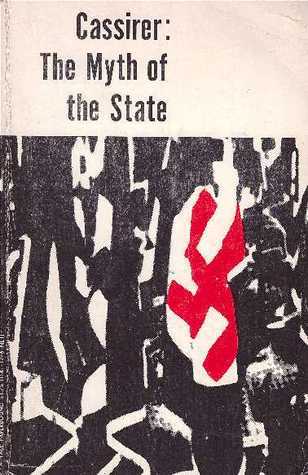
A great contemporary German philosopher attacks the explosive problem of political myth in our day. In this final work Ernst Cassirer shows how the irrational forces symbolized by myth and manipulation by the state constantly threaten to destroy the independent mind of civilized man. "A brilliant survey of some of the major texts in the history of political theory." --Kenneth Burke, Nation
Ernst Cassirer was one of the major figures in the development of philosophical idealism in the first half of the twentieth century, a German Jewish philosopher. Coming out of the Marburg tradition of neo-Kantianism, he developed a philosophy of culture as a theory of symbols founded in a phenomenology of knowledge.
Myth is a powerful and enduring irrational form of symbolism and magic that serves as a communal coping mechanism for a natural world that man cannot fully ken, in purpose or provenance—particularly as regards his physical extinction through death. Since the time of the Greeks, the Western world has increasingly built and expanded upon a societal and political foundation structured around reason and rational thought and tempered by the faith-bound limiting mores of Judaic monotheism—though, as we progressed towards the modern era, the ethical elements that formed a vital part of its origin thought tended towards a subsumption within the practical and the functional. With the Romantic reaction of the nineteenth century, we find declaredly ameliorative strains that, antipathetic to a perceived dehumanizing mechanical rationalism of the Post-Enlightenment thinkers, looked backwards in time—and to history, race, and the state as higher-tier operators upon civilized society—as a methodology of both finding truth and harnessing spiritual power against broad-based decline. As these two antinomic conceptions threaded their way into the twentieth century, the Enlightenment half was troubled by fatalistic and nihilistic infections, whilst the Romantic opposite flowered with an irrationality and mysticism long considered dormant and waning—the result being the murderous totalitarian systems which deftly combined elements of the pair, a living enactment of the dialectic that Hegel insightfully espied operating within society through historical progression. What we have learned is that myth cannot be eradicated, and tends to blossom within a culture as it is beset by chaos and instability—and so we need a countering philosophy that is confident in its embrace of reason and logic and our Enlightenment heritage such that it can answer the allure and promises of myth by providing support and direction to the societal branches—culture, art, politics, ethics—that have shown themselves acutely susceptible to myths' irrational and primordial siren song.
********************************************
TRANSCRIBED READING NOTES:
Myth as concentration and universalization of emotions, especially of fear (of death).
Myth is viewed in modern scholarship as rational philosophy versus irrational shamanism; a mere mistaken use of language and metaphor from a surfeit of synonyms. Cassirer says it is much more: fuller, richer. Myth was not about grouping the objects of potential mythological thought, but a symbolic way for man to order and make sense of what he feared and was in awe of while losing his individuality in a whole and reuniting him with gods and nature.
Greek dialectic between Sophist and Socratic thought proved a potent assault on myth—physiological and theological victories of rational thought in altering the interpretations of Nature and Religion (the gods). The Sophists delved into such on the periphery, rationalizing mythic forms; whereas Socrates sought to know the self, probe Man, and accepted (ie, dismissed) myths as irrelevant in relation to self-knowledge.
Plato on man seeing in the gods only a projection of his own life and disordered polities. The merit of Plato's political thought lies not in his answers, but rather the questions themselves. Plato's political innovation was the creation of a theoretical whole political system of ideals, the superiority of episteme, true knowledge, over doxa, common sense. Plato made efforts to define the ideal state by both hewing the enduring roots of myth, and hence tradition, which is ultimately foundationless, and Sophist realpolitik, whose hunger for power is insatiable. Justice, or the Just State embodies all the cardinal virtues of the soul; the Will to Power or power for its own sake, all of its defects. The Power State and the Mythological State cannot be Just States, which are balanced, harmonic, ideal, Good.
Augustine fully accepts Plato's Ideas and intelligible world, but objects to the terms of it. Medieval Christian thought combines Greek intellectualism with Jewish voluntarism to God's will. Everything derives from God and, if timeless and eternal, yet still in their origin from Him. Human reason is subordinated to human submission to God's will (and, hence, love). The Law comes from God. Plato sees a long road for the dialectician through geometry, stereometry, astronomy, mathematics, etc. to the Highest Good, the sensible to the intelligible—and the Good still cannot be fully known; whereas Augustine sees a short road in which the Good is revealed through the experience of God. God is not far from us, is not remote—He is immediately accessible and not solely to the likes of Plato's philosophers.
A truth that is not found by ourselves is not truth at all. Augustine made Greek ethics paramount within philosophy's epistemology, and held Socrates as divinely inspired against the latter's self-conception as a seeker without destination knowably reached. Augustine accepts the premises of Greek Philosophy while rejecting its conclusions.
Plato's Demiurge cannot be interpreted as the Christian God, nor either of these two to the Idea of Good; the Demiurge is an artificer, an efficient cause, an agent, while the Idea of Good is a formal cause, being, not becoming, as like truth to belief. We cannot worship the Idea of Good as a salvational deity, but envision it as an archetype of rational order and beauty. The intelligible world cannot produce phenomenal things. Neither can the Christian God be matched with that of Aristotle; for though the latter's was both efficient and formal cause, the First Mover and unmoved, he was inoculated against and unresponsive to human wishes; he was his only object of thought—intellectual and rarified. The Biblical God was moral law as will, He delivered Law and Truth; Greek logic demanded the latter be found by the dialectician. Reason versus Faith is thus the perduring split between the religious thought of the Greeks and the Jews.
To Platonic and Aristotelian ideals of justice, including classical society, regimented as was man's soul—ie, into rational, spiritual, appetitive parts—the Stoics added a new conception: the fundamental equality of man. The Stoic ordering of things in Nature (an ethical one, not physical as in Plato/Aristotle) and Humanitas, the equality of man, was largely influential upon, and wholly compatible with, the Christian theologians. Seneca and Cicero were more widely read in the early Middle Ages than was Aristotle.
To Christian ways of thinking, the State was good in its purpose, administration of justice, but bad in its origin, which arose from Original Sin, God setting man over men. Once again, religious dogma was diametrically opposed to Greek conceptions of the Polis. Human reason, being corrupt, cannot fully locate the City of God from revelation.
The realm of Grace is a myth untouchable; but as conceived from Plato to Augustine, the realms of Grace and Nature are separated by a gulf, and must be bridged. Society and Politics derive from man's fallen state, and so are inherently necessary evils. Thomas Aquinas changes this: God is the First Cause, but remote; Man must use reason and empirical senses to order his world and society. Second and Intermediary Causes are works of God, and thus share in his glory, no matter that they are finite, and are perfect within their own limitations: thus Aquinas fuses Grace and Nature, the intellectual world with the sensible world, the one upholding the other. Nature is good, and so is reason and sensible objects; all are part of Man's responsibility. We cannot rely on miracles or revelation, but rather make use of our freedom which is God's gift to the sensible world. The body is not an epistemological impediment, but necessary.
Machiavelli: The abomination was always mingled with a kind of admiration and fascination.
Modern histories tend to judge Machiavelli from our current relativism, making his work era-specific; but Machiavelli was interested in the statics, not in the dynamics of historical life. He looked for recurring features and universals applicable across all time. He wrote not for Italy, nor even for his own time period, but for the world—and the world listened to him. If we attempt to reduce Machiavelli to his personality and his specific era, we lose that he was the founder of a new science of politics that revolutionized the modern world.
The scholastics of the Middle Ages were guided by the Neo-Platonic conception of hierarchy, with God as First Cause devolving in motion downwards. The celestial heavens were privileged, eternal, of a higher order and perfect, timeless movement—whereas everything in the sublunar realm was perishable, degraded. This hierarchy was represented in the Church, via the chain of Pope to Cardinal and all the way down to lowly priest; and in the political sphere, going from emperor and king through to the serfs at the lowest tier. However, during the Renaissance, this hierarchical society was challenged and began to crumble.
Cassirer states that Machiavelli was the earliest expounder of the secular state: the old order of hierarchy and primogeniture and religious transcendence had been exposed and eclipsed in the Renaissance light. Machiavelli is only interested in pragmatic, secular rule that brings order and security and, really, glory. Religion, like everything else, is a tool to be used by the prince, who must rule only in a realistic manner, using logic and reason. It is the earliest foundational expression of the modern secular state, one wholly autonomous and of the earth, with practical results triumphing over morality.
Machiavelli left the state isolated from universal ties of religion and common culture, and this would prove dangerous when his theory—derived amid Italian petty states in the 15th century—was applied to the vast absolute states of the modern era. Machiavelli was a radical, detached from the humanity of his theories, which were analytical and disregarded the common good or good ends in pursuit of desired outcomes. He did not chasten evil actions committed by the prince, but only mistaken ones. There is a cold and unfeeling essence to such a political theory: Machiavelli neither defends nor attacks the good or the bad, but ever concerns himself solely with results.
Machiavelli was unconcerned with educating rulers, but merely with the acquisition and maintenance of power. While Machiavelli admired the virtú of the ancients, he held that it was gone in his age—all was corruption. A ruler who believed that Man was inherently good was doomed to being unseated. The effective prince must rule as half-man, half-beast. Machiavelli did not hold morality in contempt—just men of his own time. His political nature regretted such ruthlessness as he preached, but his philosophy demanded it. Good and just rulers are praiseworthy, but rare: and the people generally need to be forced to abide by the laws. Since virtue was extinguished in his time, so was the argument against The Prince: to bring order and stability, one must, above all, keep power.
Machiavelli created a techne, an art of politics, not just a science of the same. But although, like with Plato, his methods were universal in application, he treated the just and unjust state, the legitimate ruler and usurper as one and the same: he gave his advice cooly and dispassionately. As with a chemist, one cannot blame a crafter of political treatises for how they are applied—it is enough that he dispense his advice logically and competently. The ruler must perform like a physician: treat the illness early with corrective measures, and health can be restored.
The mythical element of fortune was something Machiavelli also strove to enable the prince to harness, while acknowledging such efforts could never be more than half-accomplished. The persistence of fortune is what rendered political science different from the Natural Science of Galileo. But Machiavelli's knowledge of human nature meant that he could, with poetic flourish, inveigle the prince to antithetical pairings to control her. The constancy of human and indeterminate inconstancy could allow the wise prince to be forearmed and forewarned.
The seventeenth century saw the lingering occult traces of the Renaissance thinkers subsumed in the full embrace of rational and logical thought: indeed, it was felt that ordered systemic causes and rules could be applied to such fields as politics and religion. The great thinkers of the era—Spinoza, Leibniz, Grotius, Hobbes, Locke, Pascal—used analysis and deduction as their tools of trade; they sought causes as well as essences, the why as much as the what, and they were not concerned with the historical essence of their subject, but rather its validity: structure, laws, constitution. In self-evident axioms they could reduce things to natural law and individual contracts in all relationships, even with God. And in this way, mystery and mysticism were drained from politics and the state and strained from a rationally-deduced set of natural and individual rights, obligations, and relationships between free wills. It is a rejuvenation of state ideals within political thought.
In the 18th century, political thought was paramount, but not original in theory; thinkers like Rousseau were more interested in political life than doctrine—the application of first principles to social life. The metaphysical systems of the 17th century gave way to actions, the forging of ideas into weapons for the political struggle.
Enlightenment vs. its romantic critics: The Enlightenment philosophers of the 17th century used the past as a guide, a means to a better end. In Natural Law and Rights they saw timeless truths of the human individual; they abhorred myth as a dark barbarism, unintelligible and an anachronism best left behind—in reason would life be made better today and ever better in the future. The Golden Age was awaiting the human race.
The Romantics felt the opposite: the Golden Age lay in the past, and in history and myth they found poetic truths that were more vibrant than the dry intellectualism of the seventeenth century Enlightenment and its revolutionary politics. Myth, language, poetry, art, history held the meaning of life—and the romantics yearned for the unity of Middle Age religion and culture in Europe. And while they were nationalistic, their nationalism was poetic in form, not political. They embraced their unique culture and universal human artistic soul through love, not hate. In their patriotism they valued each ethnicity's cultural variety, and they wished to preserve this, not conquer and impose their own upon it; so they made history and myth their ends, whereas the Enlightenment thinkers used the latter as means to improve politics and life through reason and intellectual endeavor. The Romantics deemed rights to be a fiction—each historical era bore its own ways for men to relate via political and social institutions, and allowance must be made for such particularism.
Thomas Carlyle contrasted and explored the everlasting yea versus the everlasting no: only in action and ethics, not speculative thought and metaphysics, are to be found the ways for overcoming doubt and negation—in a science of affirmation and reconstruction as against denial and destruction.
Carlyle's philosophy, particularly as expounded in On Heroes, has been blamed as the foundational thought of twentieth century totalitarianism and for society's proclivity for mass submission to a Führer. Carlyle saw History as a series of acts by Great Men, whose heroic characters inspire a form of divine worship in their followers/adorers. In such a way, Carlyle's idea of History is inseparable from his own personal life journey—a Lebensphilosophieis a living thing. To Carlyle, the truth of life is found in intuition, ethics, belief, actions, not in rational speculation that has no end because it can deliver no ends. He who loses a sense of the heroic, the world's mystic beauty becomes lost and preoccupied with the minutiae of doubt and negativity.
Carlyle embraced Goethe's Lebensphilosophie which was not a single ideology, but a unity of all—where life is doing, not thinking, for knowledge cannot tell you who you are and what is truth. Enlightenment speculation perforce led to a view of Nature as mechanistic, a system, something dead and inert to be manipulated and exploited. Only in deed, work, act—which are ethical at their roots—do we define ourselves and come to discover the truth and whole that eludes the rationalist trapped within his mind. The 18th century Enlightenment thinkers whom Carlyle decried but Goethe respected include Voltaire and Diderot and the Encyclopediasts. But because of his religious strands, Carlyle could not accept Goethe's pagan pantheism and dismissal of history as a fiction created by man from spirits of the past. Instead, he transplanted his ethic of Doing into history and found Heroism, the Hero, and the worship of the Men of Great Deeds of the past. For his metaphysic, Carlyle turned from Goethe to Fichte.
Fichte's metaphysic was a transcendental idealism where the material world was the theater of our moral will; unlike Enlightenment rationalists, who based their theories of rights on the fact of men being equals in reason, Fichte maintained that we are not all equal in practical reason, ie ethical peers—and those strongest in them were the Heroes who efforts brought about European civilization and greatness via history. But in all of this, Carlyle was neither a metaphysician nor arguing to convince; he was a psychological historian and declarative, ie, appealing to his reader' sentiments.
Cassirer says: But to charge Carlyle with all the consequences that have been drawn from his theory would be against all the rules of historical objectivity.
Carlyle was always more concerned with the individual than social forms, and stated that England must give up the Indian Empire rather than Shakespeare, if need such a choice be made. To Carlyle, might makes right, but this is a moral, not a physical force—and his concept of Heroes relegated lying, even that felt to be necessary, to the lowly state of a null act in the ethical field: propaganda would unfailingly negate whatever right it felt itself to be promoting and/or upholding. In toto, Carlyle believed that we must have Heroes, we must have belief, we must do in lieu of contemplation—but nothing in National Socialism would have served but to repel and dismay him: Hitler was no Carlylean Hero.
Cassirer is one of those philosopher/historians that nobody seems to read anymore. I first encountered him years ago and became interested in him as an explorer of how symbolic language and myth informs and underpins much of contemporary society. He manages this without veering into anything that smacks of stupid postmodernism and probably would've chuckled and shook his head at much of what philosophy has produced then. So, maybe he's more a kind of Benjaminian historian and not so much a philosopher. Anyway, as a guy who fled Nazi Germany because he goes to pray on Saturday, Cassirer's last work, this one, tries to rationalize what led to all that fascist bullshit by focusing primarily on the role that myth and mythical symbols played in politics over the centuries. This is a dense work, as you can well imagine. It runs the gamut, from Machiavelli to Kant (especially his sporting re-reading of the former) and focusing on Carlyle's "great man" thesis and Gobineau's "great race" thesis to show how we end up with shit like, well, Nazis.
Honestly this was extremely slow-going at first. An abstruse discussion of myth followed by discussions of the concept of the state in the Greek polis, not exactly breezy reading, but if you're an intellectual of Cassirer's background -- educated in prewar Germany, where everything must be traced back to classical roots -- it's how you do. Perhaps it has validity, but it's definitely too Teutonic for my tastes.
But the turning point comes midway through, with the beginning of the modern era, from Hegel and Carlyle forward, and we see how the idea of the state changes and shifts into something more recognizable, in a manner not too different from Foucault's later archaeologies of knowledge. Granted, a lot is left out -- there's a France-sized hole where Diderot, Rousseau, etc. should be -- but if you at the very least want to know how the idea of the mythic state reached its apotheosis in mid-century fascism, check Cassirer out.
در پایان کتاب میخواستم بگریم. کاسیرر به درستی سیر رشد فاشیزم و توتالیتریزم در اروپای سدهی بیستم را برمیرسد. از افلاطون تا ماکیاولی و هگل چگونه فلسفه راه را برای دیکتاتوری هموار کرد. به گمان من برای دانستن امروز همواره باید ریشه را در دیروز جست. کتابی بسیار روان و آگاهی بخش با ترجمهی بسیار خوب نجف دریابندری.
تحكمنا الأساطير السياسية وتلك الأفكار المستلهمة من بعض الأيديولوجيات والتي تغطِّيها في كثير من الأحيان المصالح الشخصية..تلك ربما تكون الفكرة العامة لكتاب الفيلسوف الألماني أرنست كاسيرر " الدولة والأسطورة" ، الكتاب لا يُقدِّم عرضًا تفصيليًا لفن الأساطير السياسية الحديثة بقدر ما يُقدم مقاربات للفلسفات التاريخية والسياسية حول الدولة، وما تم إنتاجه بعد ذلك من أشكال متباينة للدولة، فكاسيرر هنا كفيلسوف يُعرَف كأبرز شارح للفلسفة الكانطية النقدية في القرن العشرين= يُعيد هنا قراءة أفلاطون وأغسطين وماكيافيلي وكارلايل وهيجل وغيرهم ممن كانت لكتاباتهم الدور البارز في نسج أساطير سياسية حول الدولة، وذلك بفعل القراءات المتحيزة أو المجتزأة لأفكارهم، لكن يبدو على كل حال أن كاسيرر لم يأت بالقول الفصل، بل أحسب أن هكذا ينبغي أن يُنظر للتحليل الفلسفي التاريخي الذي قدمه كاسيرر هنا، إذ ربما - وعن غير قصد- يكون ناقد الأساطير في بعض الأجزاء يصنع أسطورته الخاصة.
لاشك أن كاسيرر لا يهدف من كتابه هذا القضاء على الأسطورة السياسية؛ إذ هو مؤمن أن القضاء على الأساطير السياسية أمر يفوق قدرة الفلسفة، إن نقد كاسيرر وشرحه وبيانه للفلسفات المختلفة حول الدولة ورصد الأساطير حولها نابع عن إيمانه بأن الفلسفة تستطيع تعريفنا بأعدائنا ..لكن ماذا لو كانت بعض الفلسفات هي نفسها العدو! وماذا نفعل حيال فلسفة هيجل مثلًا حول الدولة التي قامت على أكتافها أبشع النظم السياسية عنصرية وهي النازية! .
حسنًا..كاسيرر هنا سيُدافِع عن هيجل، لكن إلى أي مدى كان دفاعه موضوعيًا! إن اعتماد كاسيرر على سلوك هيجل وأخلاقه للوصول إلى أنه متعارض مع أي حلول متطرفة، لا ينفي أن كتاباته كرَّست للتطرف وحق سحق الآخر بيد من سماه هيجل " المنقذ الوحيد لروح العالم"، بالتأكيد من يقيم دولة شمولية لن ينظر إلى سلوك هيجل بقدر ما ينظر إلى كتاباته، وهو نفس الأمر الذي سيتبعه كاسيرر مع ماكيافلي عندما يفرق بين ماكيافلي والماكيافلية، فهو يقول مثلًا أن وصف كتاب الأمير بأنه أخلاقي أو لا أخلاقي يُعد خطأً؛ لأنه كتاب تقني فحسب لا يقول للحاكم افعل أو لا تفعل، والحقيقة لا يمكن أن أتفق مع هذا التصور؛ فتقريره لمستقبح الأعمال في السياسية والحكم من العبث عدم اعتباره مرجعًا مقدمًا لكل الطغاة، لاسيما أن كاسيرر انتصر للقول بأن ماكيافلي كان يُقدِّم كتابه لكل العالم وليس للبيئة السياسية في فلورنسا.
إذن نحن أمام أساطير حقيقة و تحليلات تبدو هي الأخرى أساطير لكاسيرر رغم الجانب الشيق والممتاز في تحليله الفلسفي، وأحيانًا يُغرِقك في التفاصيل لتقف بعدها برهة لتسأل نفسك أين يريد أن ينتهي كاسيرر، أوضح مثال على هذا الأمر الجزء الأول من الكتاب الذي استغرق فيه كاسيرر لبيان أساس الفكر الأسطوري وتحليل الأسطورة وفق اللغة وعلم النفس ..لتسأل بعدها إذن ما هو تصور كاسيرر للأسطورة! ورغم فائدة هذا الجزء ودسامته المعرفية إلا أنه أغرق القاريء في تفاصيل يمكن وضعها في كتاب مستقل عن الأسطورة.
وأحيانًا هناك تناقضات ربما لم يرفعها كاسيرر، مثلًا في كلامه عن تصور أفلاطون للدولة واستبعاد أفلاطون في هذا التصور للأساطير وألهة هوميروس وهزيود، نجد أفلاطون يضمّن فلسفته الطبيعية العديد من الأساطير، لكن على كل حال نجح كاسيرر في تقريب فكرة الدولة القانونية أو دولة العدل عند أفلاطون وبيان مقصوده بالعدل المرادف للتوزيع الهندسي للطبقات في أماكنها الصحيحة، ثم يسحب كاسيرر هذا التصور الأفلاطوني لينطلق صوب فكرة الدولة في العصور الوسطى= حيث حدث التحول من اللوجوس اليوناني إلى اللوجوس المسيحي، وكيف تم أسطرة أفلاطون على يد بعض المفكرين المسيحيين بقراءته قراءة مسيحية، بمعنى ما .. إن ما استنكره كاسيرر هو محاولة جعل إله أفلاطون هو إله المسيحية.
ويمكن القول تبعًا لكاسيرر أن معرفة اللاهوتيين المسيحيين بأفلاطون لم تكن معرفة جيدة، لكن في تلك الأجزاء التي عرفوا فيها أفلاطون لم يكونوا على استعداد لقبول أفكاره كما هي، إما تحدث عملية تأويلية وإما يتم رفضها، وقد خالف أغسطين التصور الأفلاطوني للدولة القانونية التي لا تحتاج لسلطة ميتافيزيقية متعالية، فقد أكد أغسطين على فكرة مدينة الله = الشارع الأسمى الذي يرفضه أفلاطون.
عندما ينتقل كاسيرر للقرن السابع عشر، يؤكد على إحياء النظرية الرواقية عن دولة العدل والمساواة، وهي المباديء التي ظهرت في إيطاليا ثم فرنسا ثم إنجلترا إلى لسان جيفرسون في مواد إعلان الاستقلال الأمريكي، لم يكن هناك حاجة إلى لاهوت أخلاقي، ومن هنا يرصد كاسيرر فكرة بروز العقد الاجتماعي للدولة على أساس عقلي لا أخلاقي مثل فلسفة هوبز السياسية، التي سلّمت الفرد للدولة وجعلته خاضعًا لها، وكان من الطبيعي أن يتم مهاجمة كل المثل العليا لفلسفة عصر التنوير..لكن لماذا؟ هل بسبب إخفاق الثورة الفرنسية في تحقيق وعودها و الحروب النابليونية؟ كاسيرر يؤكد على كل تلك الأسباب السياسية لكنه يضيف عليها الصراع بين الرومانتيكية والتنوير، ومع دفاع كاسيرر الشرس عن فلاسفة التنوير إلا أنه يرفض القول الشائع بأن الرومانتيكية هي التي مهدت للدولة الشمولية والإمبريالية حيث يعد نظرتهم الشمولية نظرة حضارية لا سياسية.
سينفي كاسيرر أيضًا كون نظرية عبادة البطولة عند كارلايل مهدت للفاشية، الوحيد الذي لم يدافع عنه كاسيرر هو جوبينو الذي كرّس لفكرة عبادة الأجناس، فقد رأى فلسفته سلبية عدمية.
لاشك أن الكتاب غني بالتحليلات الفلسفية، ممتع ذهنيًا، مرهق عقليًا، وقد حاول كاسيرر دحض ما عدّه أساطير من خلال إعادة قراءة فلسفات الدولة، ولاشك كانت قراءته نقدية مثمرة، لقد حاول دحض الأساطير الحديثة التي تُصنَع كما تُصنَع الأسلحة الحديثة، فوسائل القمع والاكراه يتم تقريرها عبر أساطير فلسفية، ووصف كاسيرر الشعارات السياسية بالابتذال مثل " الحرية السياسية"، وكما تستمد الزعامات الديكتاتورية وفكرة الزعيم المخلص وجودهما من نظرية كارلايل عن عبادة البطولة، رغم تأكيد كاسيرر أن كارلايل لم يقصد قط إلى تمجيد الزعماء المزيفين..لكن هكذا تُصنع الأساطير.
دانش و فرهیختگی و هنر کاسیرر در تفسیر عمیقاً برایم غبطهبرانگیز است. اینکه او در برخود با هر متفکر چطور اجزایی را از آثار مختلف او فرا میخواند و با کنار هم چیدن آنها تصویری از فلسفۀ آن متفکر به دست میدهد که تا پیش از آن برایمان دستنیافتنی بود، اینکه چطور در تفسیر اندیشۀ فیلسوفی ناگهان اندیشهای از فیلسوفی دیگر را احضار میکند و از تقابل آنها دریچهای نو میگشاید. کاسیرر از آنهاست که برایم شأن معلمی و استادی دارند، که از آنها هم مفاهیمی را آموختهام و هم راههایی تاریک را برایم روشن کردهاند.
For how I came to this book and some of my (all too brief) history with Cassirer, you might begin with my review of Language and Myth (here). I can now add to that history that I'm amazed by what I had missed. Cassirer's work here is an impressive history of myth and Western political thought. He begins at the beginning: considering myth and mythological thought, and he then takes the reader forward in time through to the rise of modern mythologies. I was deeply impressed by not only the scope of Cassirer's work here--from the deep past into the near present, but also by the depth of his analysis. His chapters on Plato, Machiavelli, and Hegel provide some of the most succinct but insightful commentaries on these pivotal thinkers that I've encountered. His observations about Machiavelli and Machiavellian are among the best I've encountered. Machiavelli, to me at least, is a profoundly intriguing figure, and far too many commentators seem not to have gotten beyond the stereotype of the "evil Machiavel" laid down by Shakespeare; and on the other side, there are those Machiavellians who sing his praises unreservedly, failing to see the contradictions and nuances of Machiavelli's thought. Cassirer is both a scholar and an original thinker and his work here, along with his briefer but similarly valuable considerations of Plato and Hegel, is exemplary.
Cassirer begins his book (Part I), as I noted above, with consideration of myth, its origins and functions. This section is more or less an abbreviated recapitulation of his work that I cited above, Language and Myth, but not less valuable (and perhaps more valuable) because of its brevity. After reviewing some of the most important works on language and mythology, Cassirer arrives at conclusions of his own. He writes:
Here we grasp one of the most essential elements of myth. Myth does not arise solely from intellectual processes; it sprouts forth from deep human emotions. Yet on the other hand all these theories that exclusively stress the emotional element fail to see an essential point. Myth cannot be described as mere emotion because it is the expression of emotion. The expression of a feeling is not the feeling itself--it is emotion turned into an image. This very fact implies a radical change. What heretofore to was dimly and vaguely felt assumes a definite shape; what was a passive state becomes an active process.
To understand this transformation it is necessary to make a sharp distinction between two types of expression: between physical and symbolic expressions.
The Myth of the State, 43.
Cassirer goes on to state that "generally speaking, human responses belong to quite a different type. What distinguishes them from animal reactions is their symbolic character…. Linguistic symbolism leads to an objectification of sense-impressions; mythical symbolism leads to an objectification of feelings." Id. 45. This characteristic of humans leads to "no mere exteriorization but condensation. In language, myth, art, religion our emotions are not simply turned into mere acts; they are turned into "works." These works do not fade away. They are persistent and durable." Id. 46. Cassirer notes that these works are not aimed at individual experience (at least until Plato) but at social existence. Cassirer observes that "genuine myth does not possess philosophical freedom; for the images in which it lives are not known as images. They are not regarded as symbols but as realities." But these "images" provide "uncivilized man" with "an interpretation of life the life of nature and of his own inner life." Id. 47. Cassirer disagrees with the contention that myth and religion are merely the products of fear (and ignorance); he contends that myth and religion provide a "metamorphosis" of fear into something that humans can grasp and thereby contend with.
In Part II "The Struggle of Myth in the History of Political Theory," Cassirer addresses the effort to move beyond mythical thinking as reflected in the ancient Greeks; the battle between mythos and logos as best exemplified by the struggle between Socrates and the Sophists and their different ideas about the value of myth. This debate also entailed the difference between "the many" and "the One." Of course, out of this came Plato and his transformation of the Socratic quest into his own intellectual edifice. And while I won't discuss it here, Cassirer's chapter on Plato's Republic is as concise, insightful, and valuable as any such effort of comparable length that I can think of (at least viz. politics). From Plato, Cassirer moves on the Augustine and the development of the medieval theory of the "legal state," which draws greatly on Roman law as well as Christian ideas. The next three chapters deal with Machiavelli and his legacy. And as I remarked above, this section, too, proved revelatory about a topic upon which there's been a lot of misguided commentary. If one were diving into Machiavelli for the first time, this might be the best place to start. This section concludes with chapters on "The Renaissance of Stoicism and "Natural Right" Theories of the State" (Ch. XIII) and "The Philosophy of the Enlightenment and Its Romantic Critics" (Ch. XIV). I have to admit that the role of Stoicism in the "natural right" tradition and upon a view of equality arising within society was something I'd not appreciated before.
Part III is entitled "The Myth of the Twentieth Century" and it opens with a chapter on Thomas Carlyle. I had to pause and ask myself, "Thomas Carlyle, the early Victorian historian and essayist, the author of the "The Hero in History," of whom I know very little and whom I'd never seen included in a history of political thought?" Yes, the same. And yet, here again, Cassirer impressed me with his careful scholarship and insightful overview about Carlyle, a key figure in Cassirer's consideration of the myth of the state. But Carlyle's value comes not from anything he had to say about the state, but because of his best-known work, The Hero in History. Cassirer patiently examines Carlyle's outlook and the particulars of his idea of the hero and its connection with a style of thought that looked outside of more quotidian views of culture and politics. From Carlyle, Cassirer goes directly on to Gobineau, the late nineteenth-century French writer who wrote a treatise on the superiority of the "white man." As with Carlyle (a much more respectable figure), Cassirer treats Gobineau with respect and a thorough consideration of his work, although Cassirer no doubt agrees with Gobineau's friend, Tocqueville, that he is "utterly opposed to these doctrines. I think them probably false and certainly pernicious." By the way, the title of this chapter is "From Hero Worship to Race Worship" and one section is titled "The Theory of Totalitarian Race." A chapter is also dedicated to Hegel, a notoriously difficult thinker. Suffice to say that again the treatment is thorough and considered. In short, Hegel spawned followers on the radical right and the radical left. The common bond: the significance of the state as an historical actor.
The final chapter is "The Technique of Modern Political Myths," and Cassirer opens the chapter with these observations:
If we try to resolve our contemporary political myths into their elements we find that they contain no entirely new feature. All the elements were already well known. Carlyle's theory of hero worship and Gobineau's thesis of the fundamental moral and intellectual diversity of the races had been discussed over and over again. But all these discussions remained in a sense merely academic. To change the old ideas into strong and powerful political weapons something more as needed. They had to be accommodated to the understanding of a different audience. For this purpose a fresh instrument was required --not only an instrument of thought but of action. A new technique had to be developed. This was the last and decisive factor. To put it in the scientific terminology we may say that this technique had a catalytic effect. It accelerated all reactions and gave them their full effect. While the soil for the Myth of the Twentieth Century had been prepared long before, it could not have borne its fruit without the skillful use of the new technical tool. Id. 277.
Cassirer goes on to note the extraordinary challenges of the post-WWI period throughout the world, especially in the Germany of the Weimar Republic, which suffered from both unemployment and depression. "In desperate situations man will always have recourse to desperate means--and our present-day political myths have been such desperate means." Id. 279. Indeed, as he notes, even in primitive societies where myth and magic still prevail, members of those societies have recourse to magic when empirical, quotidian ways of solving a problem fail to do so. (Cassirer cites the work of Malinowski). Thus, both more modern, "rational" societies and more primitive societies follow the same pattern of recourse to the magical and mythical when social challenges become too great. In the Europe of the inter-war years, the rational mode developed over the centuries succumbed to a reversion to more primitive ways.
[I]n politics the equipoise [between rationality and myth] is never completely established. What we find here is a labile rather than a static equilibrium. In politics we are always living on volcanic soil. We must be prepared for abrupt convulsions and eruptions. In all critical moments of man's social life, the rational forces that resist the rise of the old mythical conceptions are no longer sure of themselves. In these moments the time for myth has come again. For myth has not been really vanquished and subjugated. It is always there, lurking in the dark and waiting for its hour and opportunity. This hour comes as soon as the other binding forces of man's social life, for one reason or another, lose their strength and are no longer able to combat the demonic mythical powers. Id. 280.
Or he might have quoted Yeats, writing in 1919:
The darkness drops again; but now I know
That twenty centuries of stony sleep
Were vexed to nightmare by a rocking cradle,
And what rough beast, its hour come round at last,
Slouches towards Bethlehem to be born?
So no matter how rational humankind may think it is in contemporary societies, we are still given to extreme and often violent passions that yield to "the most irrational impulses." Id. 281. (January 6, anyone?) And while "modern man no longer believes in natural magic, he has by no means given up the belief in a sort of "social magic. If a collective wish is felt in its whole strength and intensity, people can easily be persuaded that it only needs the right man to satisfy it." Id. Cassirer notes that Carlyle's theory of "hero worship made its influence felt." Id. And in this situation we see a new type of political myth and politician emerging
[W]hat we find . . . is a blending of two activities that seem to exclude each other. The modern politician has had to combine in himself two entirely different and even incompatible functions. He has to act, at the same time, as both a homo magus [man of magic] and a homo faber [man as craftsman and artisan found in the "age of technics"]. He is a priest of a new, entirely irrational and mysterious religion. But when he has to defend and propagate this religion he proceeds very methodically. Nothing is left to chance; every step is well prepared and premeditated. It is this strange combination that is one of the most striking features of our political myths.
Myth has always been described as the result of an unconscious activity and as a free product of imagination. But here we find myth made according to plan. The new political myths do not grow up freely; they are not wild fruits of an exuberant imagination. They are artificial things fabricated by very skillful and cunning artisans. It has been reserved for the twentieth century, our own great technical age, to develop a new technique of myth. Henceforth myths can be manufactured in the same sense and according to the same methods as any other modern weapons--as machine guns and airplanes. Id. 282.
If you have difficulty conceiving an image of what Cassirer is arguing, go watch Leni Riefenstahl's film "Triumph of the Will" or a video of a Donald Trump rally.
Cassirer contends this mythical environment alters even the nature of human language. Human language has always involved "two entirely different functions. . . the semantic and the magical use of the word." Id. But in our time, we've experienced "not only a transvaluation of all our ethical values but also a transformation of human speech. The magic word takes precedence of the semantic word." Id. 283. Cassirer goes on to describe the creation of new rites to supplement the new use of magical words, rites that lull the critical mind into a form of trance or waking sleep (my description, not his).
Cassirer moves his argument into the issue of freedom and the Kantian legacy that describes freedom as an interior condition defined by autonomy. But "freedom is not a natural inheritance of man. In order to possess it we have to create it. Id. 288. And "under extremely difficult conditions man tries to cast off this burden. Here the totalitarian state and political myth step in." Id.
Cassirer also notes that divination also appears again in contemporary political myths: "The politician becomes a sort of public fortuneteller. The most improbable or even impossible promises are made; the millennium is predicted over and over again." Id. 289. Cassirer sees this function melded with "the rebirth of one of the oldest mythical motives. In almost all mythologies of the world we meet with the idea of an inevitable, inexorable, irrevocable destiny. Fatalism seems to be inseparable from mythical thought. " Id. 290.
One has to wonder if Trump and his like-minded ilk around the world didn't have a secret book club in which they share ideas about how to refine their dark arts--they sometimes seem to have taken their cues directly from Cassirer!
Cassirer also addresses the work of two German thinkers whom he contends reinforce these myths of inevitability and fatalism: Oswald Spengler and Martin Heidegger. In remarking on these two contemporaries, he cautions
I do not mean to say that these philosophical doctrines had a direct bearing of the political ideas in Germany. Most of these ideas came from quite different sources. They had a very "realistic" and not a "speculative" purport. But the new philosophy did enfeeble and slowly undermine the forces that could have resisted the modern political myths. Id. 292.
A remarkable contention that bares further contemplation.
Cassirer concludes his chapter on an ambiguous note.
It is beyond the power of philosophy to destroy the political myths. A myth is in a sense invulner
الكتاب ينتمي إلى فرع فلسفة السياسة حيث تناول تطور العلاقة بين الأساطير والأديان من ناحية وطبيعة الدولة من ناحية أخرى منذ المجتمعات البدائية وحتى بدايات القرن العشرين حيث توفى ارنست كاسيرر عام 1945. كتاب ممتع ويستحق القراءة
Este livro foi terminado em 1945, poucos dias antes da morte do seu autor. A ascensão dos regimes totalitários Comunista, Fascista e Nazista, intrigava aqueles que eram próximos ao professor alemão. Desejosos em conhecer as origens e as razões de tais acontecimentos, esta obra nasceu dos frequentes pedidos dos amigos de Cassirer.
Cassirer identifica a ascensão daquilo que ele vai chamar de "mitos políticos". De modo que, sua análise começará com a pergunta fundamental: "o que é o mito?". Entretanto, para responder a esta pergunta, foi necessário, primeiro, recorrer às descobertas disponíveis no momento, e percorrer pelos mais diversificados estudos, das mais variadas zonas do saber.
Então o autor se debruça sobre os postulados da etnografia, da sociologia, da psicoanálise, das religiões comparadas e da linguagem. Passeia pela Escola de Sociologia Francesa, e a sua contraparte alemã, a Religionswissenschaft. Menciona nomes famosos como Levy-Bruhl, Émile Durkheim, Freud, Frazer, Max Müller, etc.
Após contextualizar diversas correntes e autores, expõe as falhas e os acertos de seus sistemas. Daí, começamos a percorrer pela linha do tempo da história do pensamento, partindo da vida do homem arcaico, até os tempos recentes vividos por Cassirer. Serão analisados todos os períodos e os principais autores da história da filosofia. Como o mito se apresentava em cada momento histórico, e como os autores que viveram em tais ocasiões rechaçaram ou incluíram o mito em suas especulações filosóficas, ou projetos científicos e políticos.
Veremos diversos autores (dentre eles, Platão), empreendendo um vigoroso combate contra o mito (apesar deste utilizá-lo, diversas vezes, para fins didáticos), na tentativa de aboli-lo (a famosa expulsão dos poetas da República). Ao mesmo tempo veremos outros, como Carlyle (século XVIII) reformulando antigas estruturas de pensamento em seu "Culto ao Herói".
Ao final de suas conclusões, a realidade política recorre ao mito em momentos de crise e de desespero. São justamente nestas ocasiões que o pensamento racional e a forma crítica e analítica de ação humana, falham terrivelmente frente às adversidades e ameaças. Neste sentido, em busca de salvação, o homem moderno lança mão de formas de ação ou, melhor dizendo, "técnicas", que guardam total semelhança com o modo primitivo de vida. Enquanto que o homem arcaico utiliza da magia para resolver as situações de crise que lhe atormentavam no convício social, a modernidade recorreu ao mito político. Em ambos os casos, a estrutura psicológica e a postura existencial são idênticas.
Nas palavras de Cassirer, o homem antigo era um "homo magus", com o advento da ciência, do pensamento racional, da utilização da técnica para o domínio da natureza, este homem passou a ser um "homo faber", um artífice e artesão. Entretanto, os nossos mitos políticos modernos apresentam-se como um paradoxo, porque o que neles encontramos é a combinação das duas atividades que parecem excluir-se uma à outra.
O político moderno teve de combinar em si duas funções diferentes e mesmo incompatíveis. Tinha de ser ao mesmo tempo "homo magus" e "homo faber". Ele é sacerdote de uma nova religião misteriosa e inteiramente irracional, mas para defender e propagar essa religião utiliza processos muito metódicos. O mito sempre foi descrito como o resultado de uma atividade inconsciente e como um produto livre da imaginação. Mas aqui encontramos o mito feito de acordo com um plano. os novos mitos políticos não crescem livremente; não são frutos bravios de uma imaginação exuberante. São coisas artificiais fabricadas por artesãos hábeis e matreiros. Estava reservado ao século XX, à grande técnica, desenvolver uma nova técnica de mito.
Strangely enough, I had been curious about this book for some time, largely on the basis of its title. It’s a strange coincidence because, it is just this sort of curiosity regarding titles that forms Cassirer’s critique of the reception of Spengler’s Decline of the West. In any case, my curiosity was largely disappointed.
The first part is quite interesting, a kind of literature review of theories of myth. However, it is never quite clear where Cassirer ends up. What is the working concept of myth through the rest of the text? In the long middle section myth seems to simply apply to anything that isn’t science. Or at least those non-science things that Cassirer doesn’t approve of. Human rights for instance are not treated as a myth, not the social contract, but religion is.
The central section is a reasonable history of political philosophy. However, it’s poorly motivated. There is a mixture of insight and commonplaces, presumably dependent on the depth of Cassirer’s reading of that particular point. But throughout there is a sense that he skims over any inopportune details. This is particularly evident where his account is superficial of course. For instance his appeals to Auguste Comte as a torchbearer for his anti-mythical social science seems to overlook entirely his elaborate religion of humanity, based on an appropriation of Catholic ritual and hero mythologizing in line with Carlyle.
By the end of the book you are wondering, really what was the point. He also seems to have reversed his position on the relationship between ritual and myth. The abrupt analysis of the present state of propaganda, decrying the intervention into peoples minds, comes with a little jab at Heidegger. (based on a pretty poor reading of Being and Time). It seems some wounds never heal.
Overall, it was just meandering and largely disappointing, and relies on a pretty vague conception of myth. I wouldn’t bother.
Um livro bem interessante sobre a construção do conceito de Estado historicamente, passando por Maquiavel, Rousseau, Hobbes, Descartes, os federalistas, pra depois analisar e pensar os Estados totalitários, o culto ao herói e o culto da raça. Permite reflexões profundas e é uma leitura bem acessível, diferente do que costuma ser este tipo de assunto. Um ponto importante de reflexão pra mim é uma diferença de causalidade na exploração dos pensamentos filosóficos e políticos: o autor parece defender que o pensamento filosófico é que cria a situação política concreta, mas a causalidade não parece ser assim direta. A teoria política é criada também a partir da observação da realidade. Enfim, este é só mais um pensamento superficial pós-leitura.
Jedna od najboljih filozofskih knjiga koje sam čitao. Posle čitanja fragmenata Kasirerove filozofije u kojima mitu prilazi sa stanovišta teorije saznanja Mit o državi predstavlja zanimljivu aplikaciju onoga naučenog u oblasti teorije saznanja na sferu političke filozofije. Delo je i danas savremeno a pogotovo poslednje poglavlje koje govori o političkim mitovima, rasizmu, neonacizmu, nacionalizmu, problemu lidera itd.
Knjiga koju od srca preporučujem za istraživače političke filozofije of antike do savremenosti, za svakog će biti ponešto.
Este libro póstumo de Cassirer desarrolla lo que se ha pensado en occidente del Estado hasta llegar a los regímenes totalitarios. Entiendo que Cassirer falleció de manera inesperada y que no pudo editar este texto. Es cierto que hay partes en las que el texto se entretiene de más en aspectos no muy relevantes para el caso; aún así, me parece un ejercicio valioso el rastrear de dónde vienen ciertas ideas que sustentan.
A masterpiece of analysis tracing the development of the philosophical study of the state alongside the underlying reality of the state which grew in the dialectic forces of the philosophical conception of the state against the unconscious mythical forces of mankind's conception of statehood.
This is Cassirer's last work and he left it unedited. Very little pertains to what's promised in the title, which sounds more polemical than such an introductory text.
فصلهاي نخست كتاب كه درباره افسانه است به صورت فشرده نوشته شده و به تفصيل بيشتري نياز دارد گرچه مي توان مابقي كتاب را بدون اين فصول خواند. شرح خواندني و عميقي از فلسفه سياسي بعضي متفكران ارائه شده ولي درخصوص نتيجه گيري ريشه دولتهاي توتاليتر چندان مقنع و منسجم نيست
What else can one say if Mr. Cassirer even succumbed to reluctant pessimism in this monumental work? What else can one say if Mr. Cassirer got crippled and gross self-contradictions by his philosophical retrieval of political myths in all those figures that were more or less indebted to Kant, his great instructor, the philosophical HERO in his own heart? What else can one say if Mr. Cassirer felt an awkward degree of sympathy for Fichte and Carlyle, and tried subtly to differentiate these figures from fascist ideology, by taking for granted the Kantian moral imperatives and natural rights of man as unquestionable principles, granted that a reluctance about sheer quest for encyclopaedic knowledge even looms large in Goethe?
So frustrating a reading experience that one cannot help but waver around the evaluation of this book several times, and still feel disappointed at the conclusive part of it only to realize that human culture is so fragile a realm against that monstrous force of political myth.
But, if mythology as such never dies out and even still had its historic place and function in human civilizations, on which factor shall one lay that fragile blame?
Politics? Myth? Political myth? Philosophy? Or as Goethe once indicated, the encyclopaedic drive in the whole Enlightenment movement?
To believe or not to believe? A knowledgeable mind tormented as Cassirer finds no more echo in his Neo-Kantianism...