

What do you think?
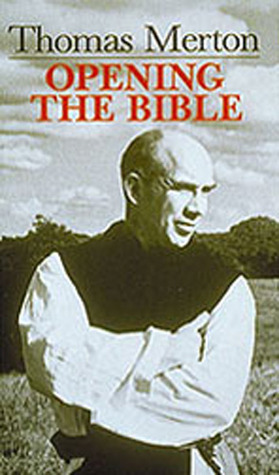
Thomas Merton: Opening the Bible
A short but profound presentation of the demands and purposes of God's Word, it is written with such effective technique that the reader will be impelled to further study of the Bible.
96 pages, Paperback
First published January 1, 1986
Ratings & Reviews
Friends & Following
Create a free account to discover what your friends think of this book!
Community Reviews
Displaying 1 - 28 of 28 reviews

September 28, 2016
In my life, there are three figures who have kept me from deviating too far from Christianity: They are the French filmmaker Robert Bresson and the writers G. K. Chesterton and Thomas Merton. This little book by Merton is, literally, about how to confront the Bible: Opening the Bible is about just that.
A Trappist monk who spent much of his adult life at the Abbey of Gethsemani in Kentucky, Merton takes a non-hierarchical Catholic view of the Bible. The book has no Imprimatur or Nihil Obstat indicating that there is nothing contained within that is against Roman Catholic orthodoxy.
In addition to quoting the Bible itself, Merton turns to three non-religious sources: The Communist Pier Paolo Pasolini's film The Gospel According to Matthew (1964), psychoanalyst Erich Fromm, and William Faulkner's The Sound and the Fury (1828). When theologians are quoted, they are Protestants, specifically Karl Barth and Dietrich Bonhoeffer.
The key observation that Merton makes appears early in the book:
A Trappist monk who spent much of his adult life at the Abbey of Gethsemani in Kentucky, Merton takes a non-hierarchical Catholic view of the Bible. The book has no Imprimatur or Nihil Obstat indicating that there is nothing contained within that is against Roman Catholic orthodoxy.
In addition to quoting the Bible itself, Merton turns to three non-religious sources: The Communist Pier Paolo Pasolini's film The Gospel According to Matthew (1964), psychoanalyst Erich Fromm, and William Faulkner's The Sound and the Fury (1828). When theologians are quoted, they are Protestants, specifically Karl Barth and Dietrich Bonhoeffer.
The key observation that Merton makes appears early in the book:
In any case the Bible raises the question of identity in a way no other book does. As Barth pointed out: when you begin to question the Bible you find that the Bible is also questioning you. When you ask: “What is this book?” you find that you are also implicitly being asked: “Who is it that reads it?”The measure of Merton’s success in writing this book is that I plan to read several books of the Bible in the next two or three months.
July 1, 2010
Deceptively simple title for a little book that cuts to the heart of "religious" (rigid, close-minded, answer-imposing) reading.

December 13, 2015
Some qualifiers on this one: this book is written more as a philosophical look at the Bible as a whole. What does the Bible say to us? What kind of book is the Bible? What does the Bible demand from its readers? Merton challenges his readers to think beyond constructs and confessions and to let the Bible resonate on its own. Judge the confessions on the Bible account and not the other way around.
As for the gospel, well, it is scarce. Merton's final point is essentially that Jesus came to deliver a new way of living and that putting that into play will essentially bring about the Second Coming as Christ embodies the life of his people. Certainly a beautiful thought, but we desperately need a literal Savior, even so.
Highly recommended, but with a critical mind and discerning spirit.
As for the gospel, well, it is scarce. Merton's final point is essentially that Jesus came to deliver a new way of living and that putting that into play will essentially bring about the Second Coming as Christ embodies the life of his people. Certainly a beautiful thought, but we desperately need a literal Savior, even so.
Highly recommended, but with a critical mind and discerning spirit.

January 1, 2026
"It was not from the Bible that we learned to escape 'into eternity,' nor did the Bible teach us to seek peace in inwardness and defensive recollection. These are elements of another cultural and spiritual heritage. As Bonhoeffer says:
"We should find God in what we know, not in what we don't; not in outstanding problems but in those we have already solved . . . We must not wait until we are at the end of our tether: he must be found at the center of life and not only in death; in health and vigor, and not only in suffering; in activity and not only in sin" (Prison Letters, p. 191).The Bible is a 'worldly' book in this sense that it sees God at the very center of man's life, his work, his relations with his fellow man, his love of his wife and children, his play and his joy. On the contrary, it is characteristic of the idols that they are objectified and set up on the periphery of life. It is the idols who dominate specific areas of life from outside it, because they are in fact projections of man's fragmented desires and aspirations. It is the idols that man goes out to meet when he reaches his own limit, and they are called in to supplement his strength and his ingenuity when these run out. God is never shown by the Bible merely as a supplement of man's power and intelligence, but as its very ground and reality."

August 24, 2024
Excellent.
Simply excellent.
Simply excellent.

December 11, 2012
This book about "Opening the Bible" was unexpectedly given to me at a bar in Jerusalem.
Noting its title, one might easily run into easy conclusions about "why" anyone would give me a book with "that" title, but it really wasn't an evangelical scheme that positioned this small book next to my frozen margarita.
Here's how it happened: A group of friends from the Netherlands and I were sitting at the Palestinian bar and passing the hookah water-pipes to one another while talking about reading. I was sharing some gruesome examples of how I had been made uncomfortable on a few occasions for having been caught with a book, and how it seems to be more socially acceptable to talk about nail polish than it is to mention the taboo of reading. My friends found this to be more appalling than funny, and one of the members of this group (who is humorous on the surface but who happens to be one of the wisest persons I have met), went quiet for a moment and then said this: "It is a gift, you know. Reading. The joy of reading. It is a gift." And then he handed me this small book with the big title "Opening the Bible", and said I could keep it.
I just finished reading it and I have to admit: this one exceeded my expectations. On the cover is the priestly-looking picture of Merton, and the title is "Opening the Bible." With all due respect to my wise friend, I was thinking that if this would be leaning towards the religious then I made sure I was not going to fall for it. This alertness in approaching the book turned out to be ironic because Merton, despite being a priest, seems to be as wary of the righteous religious folk as I am.
"The Bible is without question one of the most unsatisfying books ever written -" says the priest, to my astonishment, "-at least until the reader has come to terms with it in a very special way. But it is a difficult book to come to terms with." My shock increases when Merton goes on to say that so much of the Bible is even "archaic, seemingly exotic but utterly alien to life as we know it now." Again, seeing that a priest admits this made me realize that this is not a typical priest, and this would not be a typical book. Merton is not only very honest, but he seems to be fearless in his honesty. ["The Truth Shall Make You Free" (John 8:32).]
This book criticizes exactly the same things that one would criticize about the "fragmentation, division, and partiality" of the fundamental readers who base their understanding of religion blindly; accepting it for the sake of accepting it rather than truly venturing to understand themselves. Merton admits that "we approach the Bible cautiously, taking into account the claims that are made for it by others." He brings to our attention that to understand God, one needs to understand oneself, and similarly, to understand the Bible, one needs to understand oneself. "We are to understand life not by analyzing it but by living it in such a way that we come to a full realization of our own identity."
Merton brings out a different light to Matthews, John and even the sayings of Jesus when making points about freedom and identity, but what is also untypical about this priest is that he brings examples from the writings of Camus, Faulkner, and Bonhoeffer, whose views he shares on how "the problem is not in religious language and concepts themselves but rather in the toneless and empty routine discourse used by religious people". Merton rejects the reading of the blind apologists of the bible who have "exploited its challenge as an accusation in order to make man feel guilty and afraid, to increase his dissatisfaction with himself, to unsettle him, to make him wonder if he needs to go to church."
In this sense, Merton remains genuine: he speaks of the loyalty to our own inner truth, our inmost truth, which is in a sense utterly beyond us. "It is disastrous to prefer our more shallow self to the transcendent will that is in us yet beyond us," he says, and highlights on the need to break the fundamental division. More than once, Merton warns that those who are too persistent on proving the Bible "right" may be further from understanding it than those who are willing to be open in their reading.
A beautiful thinker and writer, Merton affirms that "the capacity for openness (the ability to listen to the word of God and hear it) becomes a precious and paradoxical gift. The word will make itself heard in the most unexpected places, he affirms, and notes that those who have the ability to understand this may be people who would least qualify as "religious."
In this sense, it becomes clear to me that reading indeed is a gift, and that a book as divine and genuine as this one could unexpectedly be handed in a bar but would nevertheless get to be treasured, reflected upon, and very much appreciated for its honesty and openness.
Noting its title, one might easily run into easy conclusions about "why" anyone would give me a book with "that" title, but it really wasn't an evangelical scheme that positioned this small book next to my frozen margarita.
Here's how it happened: A group of friends from the Netherlands and I were sitting at the Palestinian bar and passing the hookah water-pipes to one another while talking about reading. I was sharing some gruesome examples of how I had been made uncomfortable on a few occasions for having been caught with a book, and how it seems to be more socially acceptable to talk about nail polish than it is to mention the taboo of reading. My friends found this to be more appalling than funny, and one of the members of this group (who is humorous on the surface but who happens to be one of the wisest persons I have met), went quiet for a moment and then said this: "It is a gift, you know. Reading. The joy of reading. It is a gift." And then he handed me this small book with the big title "Opening the Bible", and said I could keep it.
I just finished reading it and I have to admit: this one exceeded my expectations. On the cover is the priestly-looking picture of Merton, and the title is "Opening the Bible." With all due respect to my wise friend, I was thinking that if this would be leaning towards the religious then I made sure I was not going to fall for it. This alertness in approaching the book turned out to be ironic because Merton, despite being a priest, seems to be as wary of the righteous religious folk as I am.
"The Bible is without question one of the most unsatisfying books ever written -" says the priest, to my astonishment, "-at least until the reader has come to terms with it in a very special way. But it is a difficult book to come to terms with." My shock increases when Merton goes on to say that so much of the Bible is even "archaic, seemingly exotic but utterly alien to life as we know it now." Again, seeing that a priest admits this made me realize that this is not a typical priest, and this would not be a typical book. Merton is not only very honest, but he seems to be fearless in his honesty. ["The Truth Shall Make You Free" (John 8:32).]
This book criticizes exactly the same things that one would criticize about the "fragmentation, division, and partiality" of the fundamental readers who base their understanding of religion blindly; accepting it for the sake of accepting it rather than truly venturing to understand themselves. Merton admits that "we approach the Bible cautiously, taking into account the claims that are made for it by others." He brings to our attention that to understand God, one needs to understand oneself, and similarly, to understand the Bible, one needs to understand oneself. "We are to understand life not by analyzing it but by living it in such a way that we come to a full realization of our own identity."
Merton brings out a different light to Matthews, John and even the sayings of Jesus when making points about freedom and identity, but what is also untypical about this priest is that he brings examples from the writings of Camus, Faulkner, and Bonhoeffer, whose views he shares on how "the problem is not in religious language and concepts themselves but rather in the toneless and empty routine discourse used by religious people". Merton rejects the reading of the blind apologists of the bible who have "exploited its challenge as an accusation in order to make man feel guilty and afraid, to increase his dissatisfaction with himself, to unsettle him, to make him wonder if he needs to go to church."
In this sense, Merton remains genuine: he speaks of the loyalty to our own inner truth, our inmost truth, which is in a sense utterly beyond us. "It is disastrous to prefer our more shallow self to the transcendent will that is in us yet beyond us," he says, and highlights on the need to break the fundamental division. More than once, Merton warns that those who are too persistent on proving the Bible "right" may be further from understanding it than those who are willing to be open in their reading.
A beautiful thinker and writer, Merton affirms that "the capacity for openness (the ability to listen to the word of God and hear it) becomes a precious and paradoxical gift. The word will make itself heard in the most unexpected places, he affirms, and notes that those who have the ability to understand this may be people who would least qualify as "religious."
In this sense, it becomes clear to me that reading indeed is a gift, and that a book as divine and genuine as this one could unexpectedly be handed in a bar but would nevertheless get to be treasured, reflected upon, and very much appreciated for its honesty and openness.

July 16, 2025
I tried very hard to not take a screenshot of every page. Here are my favorites:
"Throughout the whole Old Testament in particular we find people (like Abraham) arguing with God and being implicitly praised for it. Becoming involved in the Bible does not mean simply taking everything it says without the slightest murmur of difficulty. It means at once being willing to argue and fight back, provided that if we are clearly wrong we will finally admit to it. The Bible prefers honest disagreement to a dishonest submission."
"One of the basic truths put forward in the Bible as a whole is not merely that God is always right and man is always wrong, but that God and man can face each other in authentic dialogue: one which implies a true reciprocity between persons, each of whom fully respects the other's rights and freedom. The covenant idea brings this out clearly... The whole idea of covenant, dialog, reciprocity, mutual respect—and above all the idea that God respects man's liberty, dignity, and rights—is brought out by giving the exchange a frankly human character. 'Then God said... Then Moses replied.'"
"...The prohibition of idolatry is in fact one of the deepest roots of this Biblical doctrine of liberty, idolatry being inseparable from servitude to human systems that exploit man's natural needs and appetites for their own ends, or seek to dominate him by brute force. Idolatry is a basic form of spiritual violence. This was clearly understood in the non-violent resistance of Christian martyrs against the idolatrous claims of the Roman State."
"All through the Bible we find what we might call the groundwork of a theology of liberation and resistance. 'The People of God' to whom the message of liberty is directed is, in fact, a small nation or a minority in exile, constantly called upon to resist the massive powers of invaders and oppressors, but to do so in a special way: trusting not in alliances with the big political powers but in the hidden, seemingly hazardous, but really firm promises of God. It is precisely in the soil of oppression and in the call for spiritual resistance that God sows the seed of that [radical] Biblical humanism. The prophetic vision of a 'united, peaceful mankind, of justice for the poor and helpless' blazed out in what is essentially a dark and tragic situation."
"Throughout the whole Old Testament in particular we find people (like Abraham) arguing with God and being implicitly praised for it. Becoming involved in the Bible does not mean simply taking everything it says without the slightest murmur of difficulty. It means at once being willing to argue and fight back, provided that if we are clearly wrong we will finally admit to it. The Bible prefers honest disagreement to a dishonest submission."
"One of the basic truths put forward in the Bible as a whole is not merely that God is always right and man is always wrong, but that God and man can face each other in authentic dialogue: one which implies a true reciprocity between persons, each of whom fully respects the other's rights and freedom. The covenant idea brings this out clearly... The whole idea of covenant, dialog, reciprocity, mutual respect—and above all the idea that God respects man's liberty, dignity, and rights—is brought out by giving the exchange a frankly human character. 'Then God said... Then Moses replied.'"
"...The prohibition of idolatry is in fact one of the deepest roots of this Biblical doctrine of liberty, idolatry being inseparable from servitude to human systems that exploit man's natural needs and appetites for their own ends, or seek to dominate him by brute force. Idolatry is a basic form of spiritual violence. This was clearly understood in the non-violent resistance of Christian martyrs against the idolatrous claims of the Roman State."
"All through the Bible we find what we might call the groundwork of a theology of liberation and resistance. 'The People of God' to whom the message of liberty is directed is, in fact, a small nation or a minority in exile, constantly called upon to resist the massive powers of invaders and oppressors, but to do so in a special way: trusting not in alliances with the big political powers but in the hidden, seemingly hazardous, but really firm promises of God. It is precisely in the soil of oppression and in the call for spiritual resistance that God sows the seed of that [radical] Biblical humanism. The prophetic vision of a 'united, peaceful mankind, of justice for the poor and helpless' blazed out in what is essentially a dark and tragic situation."

June 1, 2014
Merton presents some great insights and probing perspectives here.

July 9, 2021
Thomas Merton’s little book on the Bible definitely isn’t for everyone. Though Merton was a Trappist monk, this book struck me as having a “missionary” spirit of presenting the Bible to secular people of the 1960s. It isn’t an apologetic, a summary, or instruction manual for reading the Bible. Rather, Merton describes the Bible’s impact on a person’s worldview and frames of reference.
He begins by saying, “The reader who opens the Bible must be prepared for disorientation, confusion, incomprehension, perhaps outrage. The Bible is without question one of the most unsatisfying books ever written – at least until the reader has come to terms with it in a very special way.”
“There is, in a word, nothing comfortable about the Bible—until we manage to get so used to it that we make it comfortable for ourselves. But then we are perhaps too used to it and too at home in it. Let us not be too sure we know the Bible just because we have learned not to be astonished at it, just because we have learned not to have problems with it.”
The Bible records events. It is the record of God breaking into the world of humanity “invading our private and complex world” as “the ground and source of man’s being, the center of his history and the guide of his destinies.” To read the Bible correctly, we need to ask, “What is it that I’m seeking?” By this Merton doesn’t mean, “What information am I seeking?” but rather, “What am I longing for?” This is the question we bring to the Bible, but this is also what makes it difficult to read. The Bible may pose a threat to our faith, a threat to those things that we had been trusting, those things we believed to be true about ourselves and the world. The Bible destroys our religion. Through the Bible we discover that we ourselves are our own problem.
Merton writes, “When you begin to question the Bible you find that the Bible is also questioning you. When you ask: ‘What is this book?’ you find that you are also implicitly being asked: ‘Who is it that reads it?’”
Ultimately, the Bible’s focus shifts from the events or stories to a person: Christ. “The great question of the New Testament, the question which includes all others, is who is Christ and what does it mean to encounter him? The rest follows: how is one to share in this event and enter into the Christ-life, how does one participate in the existence of the Son of Man?”
The Bible is different from other religious books in that its primary purpose is to reveal who we are, not how to behave. Our identity determines our behavior. “The People of God to whom the message of liberty is directed is, in fact, a small nation or a minority in exile, constantly called upon to resist the massive power of invaders and oppressors, but to do so in a special way: trusting not in alliances with the big political powers but in the hidden, seemingly hazardous, but really firm promises of God.”
Though the book made me think, I only recommend it for those familiar with Merton. For most of us, reading “Opening the Bible” is a cross-cultural experience.
He begins by saying, “The reader who opens the Bible must be prepared for disorientation, confusion, incomprehension, perhaps outrage. The Bible is without question one of the most unsatisfying books ever written – at least until the reader has come to terms with it in a very special way.”
“There is, in a word, nothing comfortable about the Bible—until we manage to get so used to it that we make it comfortable for ourselves. But then we are perhaps too used to it and too at home in it. Let us not be too sure we know the Bible just because we have learned not to be astonished at it, just because we have learned not to have problems with it.”
The Bible records events. It is the record of God breaking into the world of humanity “invading our private and complex world” as “the ground and source of man’s being, the center of his history and the guide of his destinies.” To read the Bible correctly, we need to ask, “What is it that I’m seeking?” By this Merton doesn’t mean, “What information am I seeking?” but rather, “What am I longing for?” This is the question we bring to the Bible, but this is also what makes it difficult to read. The Bible may pose a threat to our faith, a threat to those things that we had been trusting, those things we believed to be true about ourselves and the world. The Bible destroys our religion. Through the Bible we discover that we ourselves are our own problem.
Merton writes, “When you begin to question the Bible you find that the Bible is also questioning you. When you ask: ‘What is this book?’ you find that you are also implicitly being asked: ‘Who is it that reads it?’”
Ultimately, the Bible’s focus shifts from the events or stories to a person: Christ. “The great question of the New Testament, the question which includes all others, is who is Christ and what does it mean to encounter him? The rest follows: how is one to share in this event and enter into the Christ-life, how does one participate in the existence of the Son of Man?”
The Bible is different from other religious books in that its primary purpose is to reveal who we are, not how to behave. Our identity determines our behavior. “The People of God to whom the message of liberty is directed is, in fact, a small nation or a minority in exile, constantly called upon to resist the massive power of invaders and oppressors, but to do so in a special way: trusting not in alliances with the big political powers but in the hidden, seemingly hazardous, but really firm promises of God.”
Though the book made me think, I only recommend it for those familiar with Merton. For most of us, reading “Opening the Bible” is a cross-cultural experience.
October 23, 2025
Whenever I have spent time away from reading Merton, I sometimes tend to forget just how intelligent he is, both cognitively and spiritually. I recently pulled this book off the shelf on a quiet Sunday afternoon and essentially read it in one sitting. What I thought was going to be a commentary on scripture ended up being one of the most compelling cases for reading the Bible I have come across. I love that within the first few pages Merton gives us permission to sometimes find the Bible perplexing, outrageous or even boring. anyone who has ever sat with scripture for any length of time has found this to be the case. Merton offers insight on how to approach scripture, with all of its challenges, and makes a strong case for why it remains relevant, even in our ever-changing modern world. My copy is a first edition and so I dare not mark in it, but I have sticky notes, sometimes multiple sticky notes, on nearly every single page. Merton was a lifelong teacher, and this slim volume is Merton in his finest form.

December 24, 2024
There are many, many good points in this extremely short book. Every other page has a post-it because I do want to go over a few passages. So, reading the Bible is not about learning facts or being able to quote random verses, it is about our transformation. Reading the Bible day in and day out tends to make it trivial. So there's a fine line, just as with daily prayer.
There's another thought that resonated with me: "Jesus was young, dark, serious, unyielding and almost merciless, a contrast with the vulgar and lavish artificiality of Hollywood." This quote is within the context of Pasolini's 'The Gospel According to Mathew' which Merton analises, albeit briefly, in this book.
I disagreed with a few (very few) of the concepts and ideas but for the most part I enjoyed and learned enough to now go into my reading the Bible adventure.
There's another thought that resonated with me: "Jesus was young, dark, serious, unyielding and almost merciless, a contrast with the vulgar and lavish artificiality of Hollywood." This quote is within the context of Pasolini's 'The Gospel According to Mathew' which Merton analises, albeit briefly, in this book.
I disagreed with a few (very few) of the concepts and ideas but for the most part I enjoyed and learned enough to now go into my reading the Bible adventure.

July 30, 2019
really solid and quick read. I would definitely recommend.
“There is, in a word, nothing comfortable about the Bible—until we manage to get so used to it that we make it comfortable for ourselves. But then we are perhaps too used to it and too at home in it. Let us not be too sure we know the Bible just because we have learned not to be astonished at it, just because we have learned not to have problems with it. Have we perhaps learned at the same time not to really pay attention to it? Have we ceased to question the book and be questioned by it? Have we ceased to fight it?”
“There is, in a word, nothing comfortable about the Bible—until we manage to get so used to it that we make it comfortable for ourselves. But then we are perhaps too used to it and too at home in it. Let us not be too sure we know the Bible just because we have learned not to be astonished at it, just because we have learned not to have problems with it. Have we perhaps learned at the same time not to really pay attention to it? Have we ceased to question the book and be questioned by it? Have we ceased to fight it?”

May 11, 2026
This is an interesting and thought-provoking short book in which Merton encourages the reader of the Bible to approach it and engage it on its own terms so that the reader, religious or not, may truly learn from it. As a religious reader of the Bible, I find it particularly helpful in the way Merton points out the need to put aside my own preconceptions and let the Bible speak to me with its true message. The same it needed for the non-religious reader as well.

January 2, 2026
I refuse to give this book 5 stars, "just because" of who Merton is. This book could have easily been written in far fewer pages.. like half a dozen, at best. what came to mind 3/4's through the book was... "sometimes people just want to talk, so let them". If I weren't already... would I be prone to picking up the Bible after reading this book? Quite honestly, No. That's the sad fact.

January 7, 2020
A beautiful look at what it means to take seriously reading the Bible as part of the religious life. Merton takes time to meditate on what kind of book the Bible is, what kind of book it is not and the various ways in which a religious person could approach it.

December 7, 2024
If you like Father Thomas Merton, you will enjoy this. My favorite line was, "If we ask it for information about the meaning of life, it answers by asking us when we intend to start living?" I think that book summarizes the book.

December 26, 2017
Very helpful... I will read this one many more times!

December 27, 2018
Every followe of Christ should read this short book. Too often, believers read the Bible instead of letting the Bible read them.

November 28, 2020
I've read Merton in collections and liked it, but this wasn't really setting me on fire. UNTIL page 78 or so, when Tommy suddenly slam dunks and breaks the backboard.
August 26, 2014
OPENING THE BIBLE is one of the best books I've read on reading Scripture. Merton's approach allows for questions and leads to an interaction with the living Christ through the Bible.
A major point Merton makes is that the Scriptures often unsettle us, challenge us, and make us dream of something that may come, but isn't yet. Far more than warm, devotional niceties, the Bible intends to be an interaction with God, an interaction that does not leave us the same.
Merton also adds that some readers of Scripture go about trying to collect all the right answers and doctrines, setting all of this in a neat, orderly display. Collecting "truths" is different than entering and practicing Truth, though they're related. Merton makes this point against biblicism to guide us away from the Bible as an academic affair and to see it as an interaction with the Living Christ. The Christ's agenda isn't to dole out a collection of well-displayed "truths," but to radically re-shape who we think we are, who we think God is, and the way of life inspired by this repentant renovation.
A major point Merton makes is that the Scriptures often unsettle us, challenge us, and make us dream of something that may come, but isn't yet. Far more than warm, devotional niceties, the Bible intends to be an interaction with God, an interaction that does not leave us the same.
Merton also adds that some readers of Scripture go about trying to collect all the right answers and doctrines, setting all of this in a neat, orderly display. Collecting "truths" is different than entering and practicing Truth, though they're related. Merton makes this point against biblicism to guide us away from the Bible as an academic affair and to see it as an interaction with the Living Christ. The Christ's agenda isn't to dole out a collection of well-displayed "truths," but to radically re-shape who we think we are, who we think God is, and the way of life inspired by this repentant renovation.

April 4, 2016
This book is the most comforting reflection on one of the taboo, kindly look the other way subjects regarding the Faith: the boredom that confronts modern man who tries to get meaning from the Bible. The Progressivism is here in spades, so get yr pitchforks ready, SSPX-folks! More than anyone else, Merton is able to get to the heart of modern life and admit when faith starts pulling in awkward ways: and he starts there to just get more radical. Cool, inspired.
Merton's reversals are strong, praising the honest atheist readings of the Gospels while challenging (if not condemning) some of those who preach platitudes and fail to meet the contradictions and pain and weirdness and ugliness of the Word they call Holy.
It does what the title suggests, so full marks there, but it is a mere pamphlet. Luckily, the monk left us hundreds of other journals and books to continue the learning.
This book rejuvenated me, and helps to provide fuel for daily stoking of spirit flames. It does not, however, interpret many of the challenging passages or give too much purely biblical insight.
Merton's reversals are strong, praising the honest atheist readings of the Gospels while challenging (if not condemning) some of those who preach platitudes and fail to meet the contradictions and pain and weirdness and ugliness of the Word they call Holy.
It does what the title suggests, so full marks there, but it is a mere pamphlet. Luckily, the monk left us hundreds of other journals and books to continue the learning.
This book rejuvenated me, and helps to provide fuel for daily stoking of spirit flames. It does not, however, interpret many of the challenging passages or give too much purely biblical insight.

January 15, 2015
Merton's provocative introduction to the Bible is complex enough to reward multiple readings. He presents the Bible as a challenging, confusing, and sometimes boring book (if we're honest with ourselves) that resists our attempts to summarize it neatly. For him, the primary message and purpose of the Bible is liberation. When we encounter the "word of God," it calls us to freedom; but we often ignore the call because it requires the death of the false self we have created for ourselves in our search for security.
Merton's theological language is infused with the existential philosophy of his day, but I think he understands biblical soteriology deeply and expresses it powerfully for his generation. As such, there's much this generation can learn from him as we try to translate the message of the Bible for our own time.
Merton's theological language is infused with the existential philosophy of his day, but I think he understands biblical soteriology deeply and expresses it powerfully for his generation. As such, there's much this generation can learn from him as we try to translate the message of the Bible for our own time.

April 27, 2009
This was originally written for the front of a bible which was never actually produced and so was later released as a small book. You have to like Merton or at least his open style of discussing things to appreciate this book. He is very frank in this little book as to the problems with the bible and even more with the people who make the bible what it isn't. It challenges people to be honest with their feelings about the bible and understand it can be very "boring" and hard to understand. It is short read and refreshing for those who struggle with the bible.
August 21, 2014
This little book is a very helpful resource for anyone who would like to read the Bible with more insight and understanding. Written mostly at a level appropriate for educated laypeople (although Merton does, in a few places, veer off into more esoteric, theological "shop-talk" kinds of discussion)it does a good job of describing and disarming some of the mistaken assumptions, attitudes, and objectives which drive much of our Bible reading. Thoughtful, reasonable, and for the most part clearly presented, "Opening the Bible" is well worth a look.

February 11, 2008
Merton brings up good points when picking up the bible. He points out that we should bring questions to the book, and also the bible asks the reader, who are you that reads this book?
I've been thinking about how I can engage the Bible and have the words engage me back. Then there's the part in living the words and embodying them in your actions.
I've been thinking about how I can engage the Bible and have the words engage me back. Then there's the part in living the words and embodying them in your actions.

December 19, 2012
This was about what I expected him to write. The surprising thing about this book was that it was written to a reader that is not a theological scholar. I would encourage someone to read this who is about to start reading the Bible for direction in their life.

January 20, 2017
This is some QUALITY STUFF. I highly recommend that people who want to read the Bible for the first time read this before. It'll help approach the text with an open mind and clear up any expectations.
June 17, 2013
Bought this small, precious, little book at the Drew Seminary Book Store in May 22, 2006 and finished it the next day ... one more rung on my Merton ladder of beautiful insight.
Displaying 1 - 28 of 28 reviews