Darwin's Century: Evolution and the Men Who Discovered It
In one of its most important aspects, the development of the concept of evolution, the nineteenth century may truly be called "Darwin's Century." This is a definitive account, by one of America's most distinguished anthropologists, of how that concept came about, what its components were, and why it so deeply affected man's view of himself. At the heart of the account is the figure of Charles Darwin, his career, his creative achievements, and his impact on the Victorian world; but the story neither begins nor ends with him. Dr. Eiseley traces the achievements and discoveries of men in many fields of science who paved the way for Darwin, as well as an extensive discussion of the ways in which Darwin's work has been challenged, improved upon, and occasionally refuted during the past hundred years.
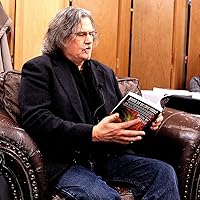
Loren Corey Eiseley (September 3, 1907 – July 9, 1977) was a highly respected anthropologist, science writer, ecologist, and poet. He published books of essays, biography, and general science in the 1950s through the 1970s.
Eiseley is best known for the poetic essay style, called the "concealed essay". He used this to explain complex scientific ideas, such as human evolution, to the general public. He is also known for his writings about humanity's relationship with the natural world; these writings helped inspire the modern environmental movement.
Since Charles Darwin was born in 1809 and The Origin of Species was published in 1859, books about him tend to come in waves every fifty years; last year (2009) was a "Darwin year", and before that was 1959. This book, published in 1958, was part of that earlier wave, and shows clearly the difference in approach that fifty years makes in historiography. It is this book, or books like it, that authors like Peter Bowler are reacting against -- it certainly has a "Whiggish", almost teleological tendency, with its succession of "heroes" of science and putative "forerunners" of Darwin, and its virtual apotheosis of Hutton and Lyell. Nevertheless, for all its Whiggishness I would far prefer it to Bowler's postmodernist approach.
While it was less comprehensive than other things I have read -- Mayr's Growth of Biological Thought in particular -- and there wasn't a lot that was new to me, it did make some points clearer. Two examples of discussions which were especially clear in this book:
1. It explained the importance of Fleeming Jenkin's objections, that (in terms of blending inheritance) individual favorable variations would be swamped by backcrossing with the "normal" population, thus making natural selection impossible. This was a major influence in causing Darwin to retreat towards a more "Lamarkian" position in the later editions of the Origin; it also made much clearer to me the importance of Mendelian genetics in the modern synthesis -- I had the impression previously that "particulate" inheritance only supported natural selection by eliminating the Lamarkian alternative, but actually it was necessary for natural selection to work at all.
2. He shows the connection between the short timescale argued by Kelvin and the macro-mutational theory of DeVries and the early Mendelians, which I had thought was just a matter of "my discovery is the most important" effects. Actually, some such view was necessary as long as the timescale remained foreshortened.
This was probably one of the better books available when it was written; some parts seem rather strange today, and it has been superceded, but I think it is still worth reading for these explanations.
My boyfriend found this book in the bargain section of Barnes and Noble with a giant 4.98 sticker on its cover. Having recently read several histories of Victorian evolutionary biology in the last year (including David Quammen's "The Reluctant Mr. Darwin," Ian MacCalman's "Darwin's Aramada," and William Irvine's superb classic "Apes, Angels and Victorians), I wasn't expecting to find anything new. Even still, I'm a sucker for all things Darwin, so I took a look at the table of contents, and I realized immediately that "Darwin's Century" was indeed something new entirely.
Loren Eiseley is a true historian of ideas. He presents us with not a biographical portrait of Charles Darwin's life (as the title, entirely unhelpful, implies) nor a mere chronology of evolutionary thought in the 19th Century, as often is the case for such books. Rather, we are introduced, slowly and methodically, to the various metaphysical themes of the Enlightenment. Everyone knows the famous rivalry between the scientific materialism of Darwinian thought and the man-centered vision of Christian theology. Most narrative accounts dwell upon this conflict chiefly, as representing the fundamental shift in metaphysical outlook that Darwin (albeit reluctantly) achieved as a necessary consequence of evolutionary theory.
Eiseley take us deeper, to expose the hidden intellectual undercurrents of several competing concepts for the new cosmology. Darwinism emerged as a blending of two such competing cosmologies: the uniformitarianism of Charles Lyell, and the progressionism of Jean-Baptiste Lamarck. Slowly, methodically, irresistably, Eisenley weaves a complex tapestry of 19th Century thought, weighed as it was with 18th Century baggage, one leading inexorably toward the principle of natural selection as a guiding force in organic development. Ever a scholar, Eisenley revisits the original sources, challenging Darwin's own account of his intellectual development (as written in his autobiography). Contrary to the traditional folklore, it was not from Malthus that Darwin had gotten the "struggle for existence"--a crucial step in Darwin's evolutionary idea--but from Lyell, his longtime mentor, and in many ways, successor. In fact, Eisenley reveals that Lyell himself came tantalizingly close to assembling natural selection; he has all the pieces (which he himself found from the swiss botanist de Candolle), yet cannot seem to grasp their collective significance. Tradition has it that Lyell was a sentimentalist, too cherishing of spiritual tradition to go the distance. Actually, it owed more to his commitment to geological uniformitarianism. Eisenley fills his book with such gritty details of competing streams of thought, all converging eventually upon the idea of the century.
This entire review has been hidden because of spoilers.
This was a pretty interesting account of the events, thoughts and theories leading up to and beyond Darwin's On the Origin of Species. It did not surprise me one little bit that Darwin "stood on the shoulders of giants" so to speak to come up with his theory. It seems however that Dr. Eiseley is a little disturbed by this idea and I'm not sure why. In hind sight a hundred years later it was pretty easy to see that Lyell and others of Darwin's contemporaries had the idea within their grasp but it wasn't put altogether until Darwin but obviously it was not put together until Darwin (and Wallace). The other interesting thing I noticed in the Wallace chapter that Eiseley does not mention, Wallace was most likely influenced by his contemporaries as well even though he does mention Wallace's awareness of these writings and does go on to admit Wallace's influence of Lyell, Malthus and others in the conclusion. It does seem to me at least, Darwin is treated a little unfairly by Eiseley and also leaves out a lot of Darwin's other theories, sexual selection the primary, inexplicably. I did learn why some (creationists) like to perpetuate the idea that Darwin recanted his theory because of the physicists of the time suggesting there was not enough geological time for the changes necessary for natural selection to be true. If only Darwin had survived to see his theory totally vindicated. I also wish Eiseley didn't spend as much time on the things/hypotheses that were wrong. The conclusion is also way too long.
Firstly, I want to say that I find this topic fascinating. Secondly, I didn't mind Eiseley's writing. In fact, I'd say he is a good writer to an extent. Still, I found my mind drifting through much of this text. It didn't keep my focus. I think that this is primarily due to a common problem with academic passion projects such as this one: the problem of simultaneously too much and too little information. Eiseley is so emerged in this topic that he makes the mistake of assuming that the author knows who these people and what these theories are. This is not a text for the novice reader.
I'd love to know what historians of science and evolution think of this book. At the very least, I encountered a lot of names and ideas that I had never heard of before, and my curiosity is piqued.
This is one of the books that spurred my interest in the history of science. In this instance the history of the concept of evolution. It is the nineteenth century that is rightly called "Darwin's Century". Darwin's discovery was as much a synthesis of ideas that had been developing ever since Francis Bacon. Loren Eiseley describes these ideas and with them narrates the story of the change in the views of time. The story shows how the view of Catastrophism gave way to progressionism and the emergence of the uniformitarianism of James Hutton and eventually the expansion of this view with the discoveries of Sir Charles Lyell. Eiseley comments "that evolution, to a very considerable extent, arose out of an amalgamation or compromise which partook largely of progressionism, but drew the important principle of continuity and adaptive response largely from uniformitarianism."(p 115) With this background and the teachings of his grandfather Erasmus along with other minor contributors Charles Darwin arrived at the right time for his discoveries when he set sail on the HMS Beagle. The rest of the story is here as well with a discussion of the initial reception of Darwin's ideas and the challenge from Henry Wallace who could rightfully claim some of the credit for his own independent development of evolutionary thought. Perhaps the best aspect of this book is the beautiful prose of the author. For Eiseley is a poet and a brilliant essayist and these talents make this an outstanding book in the history of science.
This classic puts the development of evolutionary thought into proper perspective. The author helps the reader see the role of different people throughout the course of the 18th century in bringing various aspects of evolutionary thought. While Darwin truly put it all together, many others are given their due credit like Lamarck, Wallace, Mendel, Lyell, and many more.
It reads a bit slow, but the insights provided by the author are tremendous and it is well-researched. Definitely worth reading for anyone intereted in evolution, or history & philosophy of science.
This is a long out of print reissued classic by a magnificent author. Charles Darwin didn't discover evolution. He assembled the concept of natural selection from his own work and the work of others. His work was the product of a confluence of influences in science, philosophy, literature and the many other engines of hi profoundly productive century.
I'm afraid I found this book a bit pedantic and felt like Eiseley had an agenda. I'm sure he wanted to bring of the early names back into the history of evolution that have been eclipsed by Darwin, but I felt that he did Darwin some injustices in the process. I much preferred his other books.
I was very interested when I began reading this but quickly lost momentum. While relevant and informative, I found this book, at times, tedious and garrulous.
After slogging my way through this, I remembered an unread two-volume Library of America set of Loren Eiseley's essays, pulled it from the shelf and opened the first volume with genuine trepidation expecting to find the same turgid, mind-numbing prose. Much to my delight it was light, intelligent, and quite engaging. So instead of donating that two-volume hardback set (and kissing my $35 goodbye), I happily put it back and sat down to write this review.
I have no idea why the difference in prose. Darwin's Century is not written for a specialist audience (biologists of various types) since those people wouldn't need to read it, but it may well have been. This is intellectual history, and although Eiseley carefully traces the development of the idea of evolution from the late 18th through the end of the 19th centuries, and shows how Lamarck, Lyell, Cuvier, Huxley, Wallace, and numerous other scientists were influenced by and responded to one another's ideas (as well as how developments in technology, scientific discoveries, and the general socio-cultural climate all factored into the "evolution" of this idea, one either needs an immense interest in the minutiae of theories and evidence, and an ability to retain all the names, assumptions, and evidence in memory (i.e., be a biologist or biology graduate student), or else one must love compound-complex sentence structure chock full of polysyllabic words that almost require re-reading to understand. That wasn't me, though I thought it was when I picked up a copy. My doctorate is in applied linguistics, so I'm familiar with academic prose, and I have had an abiding love for the natural world for over six decades, so I bought this expecting an interesting description-for-laymen of how Darwin came to his beliefs (and I did get that in the end, I think, but don't quiz me on that). However, page after page I felt the intense heat of the Saharan desert burning into my brain as Sgt. Markoff shouted at me, "Read or die!" Yes, that's a tad purplish, but I assure you that is how it felt to read this 380-page book. Though clearly the product of a mind quite familiar with this complex subject, this tome is best kept on your bedside table as a sedative. One to two pages per night should be enough to put you soundly to sleep. Trust me, I'm a doctor.
While as a historian of science I'm an amateur, I don't endeavor to rate Loren Eisley -- whom I rank our finest popular writer on science -- on Darwin a classic, it's just a notch below, if I'm any judge. I was trained as a modernist. Modernists don't exist anymore. They were forgotten (they remember each other & meet in Louisville every February), or they re-trained themselves within English Literary Study in some field to which modernism was parceled out -- so, African American Studies, Women's and later Gender Studies, Post-Colonialism, etc.
As I gained a credential in this field planning its obsolescence, it was stipulated that modernism could be defined by its four founding thinkers: Marx, with his injunction to always historicize and from hard, limit cases; thus would Engels, as Eiseley writes, look on, "amusedly at the disintegration" of the wounded egotism given off by the authors of Bridgewater Treatises (forerunners of Intelligent Design), wounded at having to acknowledge human material achievement in the face of "man" no longer occupying the universe's central role. "Man is," Eiseley writes, "in danger of acquiring a feeling of inferiority about his past." It was early in the 19thC, as Eiseley homes in, "that the unique and unreturning nature of the past began to evince itself," in Marx's reading, as well as Darwin & Wallace, in Malthus who gave us "man adjusting himself, not just to time in unlimited quantities, but rather to complete historicity, to the emergence of the endlessly new" [italics in L.E.) But Darwin's blind spots were not just in the organism itself, as Eiseley argues; they were in the inorganic nature that physicists including Einstein linked to dynamical probabilities working in spite of their resisting our efforts to objectivate them. Now our knowing could no longer be "what I know I saw" -- the consensus of observers -- nor "what I thought I saw" -- that real limited by Heisenberg -- but finally "what I dreamt I saw" -- a counter-culture, as Freud began to take more seriously that listening to his female analysands whose dreams among prior clinicians had gone ignored.
Darwin's Century, sure. But as Eiseley argues, Darwin's merely a transitional figure, today as obsolescent as Marx, Freud, and Einstein. This 67-year old book looks at scores of Darwin's contemporaries -- evolutionists, all -- who parted ways with the English Naturalist on the latter's rather tattered idea, natural selection, trying to discover in Darwin's forerunners the threads out of which modernism would create a Darwinistic science in biology, taxonomy, psychology, anthropology, paleontology, geology, archaeology, physics, medicine . . . the modern sciences. The reading and scholarship is enormous. Has it become antiquated? I doubt it -- but again: you're dealing with an amateur.
This is a "rediscovered classic" published by Barnes & Noble--the original book was published in 1959. It is still relevant, although there has been much written about evolution since that time. It is not just a look at evolution, but a look at how ideas are proposed and accepted or rejected. Darwin himself took much time to come up with this "theory of evolution," and revised it several times (sometimes incorrectly) due to criticism from colleagues. For anyone interested in evolution, this is a must. But it is also a look at how ideas are developed, criticized, changed in an atmosphere of scientific inquiry.
I didn't get through all of the book, but I got about half way. This book is EXTREMELY dense, but makes a good point of blending chronological influence, and inspiration into Darwin's work. Although the title includes Darwin's name, the point really is to emphasis the different scholars and people working in the time of Darwin. I really liked this book because I got a clear view of what was going on at the time, and the way different scientists/theorists were going about to discover and learn about theories of evolution.
Good book on the history of the development of the theory of evolution. It was first published in 1958 and it was an added interest to see how much farther we have come since then. I liked it but it felt like a bit of a slog at times so 3 stars instead of 4.
Eiseley takes the reader through the story of Evolution theory. I've always been intrigued by the delineation of one thought to another, and this book encourages that interest perfectly. Well written and well laid out, I enjoyed this take on the development of the theories.
I have read every book Loren Eiseley has written and I believe this book was his best. Eiseley is a great mind and teacher who taught at Un of Penn. I have read all 10 or 11 of his books.
More later. Eiseley has long been one of my favorites. This book is several things: A history of science leading up to the acceptance of Darwin-Wallace, with special attention to precoursers.