Known for his deeply mystical writings about Christianity, Nicholas of Cusa wrote this, his most popular work, against a backdrop of widespread Church corruption. God, he believed, is found in all things, and thus cannot be perceived by man's senses and intellect alone. The path to ultimate knowledge, then, begins in recognizing our own ignorance. Deeply influenced by Saint Augustine, Nicholas mixes the metaphysical with the personal to create a deeply felt work, first published in 1453, designed to restore faith in even the most jaded.
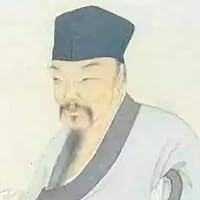
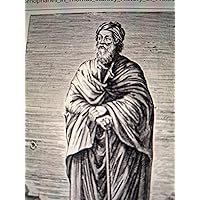
Nicholas of Cusa (1401 – August 11, 1464), also referred to as Nicholas of Kues and Nicolaus Cusanus, was a cardinal of the Catholic Church from Germany (Holy Roman Empire), a philosopher, theologian, jurist, mathematician, and an astronomer. He is widely considered one of the great geniuses and polymaths of the 15th century. He is today recognized for significant spiritual, scientific and political contributions in European history, notable examples of which include his mystical or spiritual writings on 'learned ignorance' (and mathematical ideas expressed in related essays), as well as his participation in power struggles between Rome and the German states of the Holy Roman Empire.
There were some very potent images and metaphors in here that I will remember for a long time (the icon of the omnivoyant was the best by far). What was most intriguing about this 15th century mystical writer, however, was how his work transcends our categories of philosophy, theology and spirituality. In The Vision of God, they're all interweaved together seamlessly. The whole work is basically written as a prayer, with rich reflections on the nature of God, philosophy and a very distinctive Augustinian spirituality throughout.
A great synthesizer of Plato, Aristotle, Pseudo-Dionysius, Anselm, Aquinas, Meister Ekhart, and Maimonides, Nicholas Cusanius was a first-rate schizophrenic. I mean mystic! I enjoyed his work as an example of a medieval and practical formulation of Theosis for a monastic community interested in mystical theology. He himself knew that his Latin was not good enough, and it made for much repetition.
I enjoy his use of Negative Theology to discuss the potential for God’s unknowable infinity as the Absolute Form (“Maximum” as he describes in “Learned Ignorance”) and his awe-filled (not “awful,” pardon the pun!) diction as he was clearly in the midst of an ecstatic experience while realizing the truths he was describing in his book. Thus, along with the icon he included to the Benedictine community for which he wrote this book, it can be read like a manual for inducing a mystical experience. It’s quite an interesting document and worth the read.
Nicholas of Cusa's method may be best described as "negating the negation of the negation": we idolise A because A is, to some extent, better than some imperfect B. This idolatry happens because we somehow assume that "either B or not-B is desirable". However, we need to see through the wall of the law of noncontradiction and seek the Not-Other behind A and B that makes both ever possible. The wall is to be conquered so that what is behind the wall can be seen, but modern people assume that behind the wall there is nothing.
Nicholas' may have the reverse problems to those of lots of analytic philosophers. The analytic philosophers (not all, but the majority of them) reject anything that cannot be clearly articulated and block the necessary vagueness that is indispensable to understand higher things. Nicholas, however, did not clarify even when clarification is beneficial. This tendency troubled him even in his own lifetime and he was accused by John Wenck as destroying logic by denying the law of noncontradiction. Nicholas apologised for himself that Wenck failed to distinguish between the discursive reason and the intellect. The law of noncontradiction works for the discursive reason, which deals with the sensible, but does not work for the intellect, which deals with the intelligible. And God is intelligible. (There are issues to be further clarified. Nicholas might be influenced by the theory of categories of Dietrich of Freiberg. And I may say that Nicholas' critique should be work for the law of excluded middle instead of the law of noncontradiction.) It should be note that Nicholas trusts the intellect far more than modern people.
Is that the so-called "reducing transcendence to immanence"? No. Nicholas remained a hierarchical view of the human soul. The intellect is the perfection of the discursive reasoning, but our finite intellect cannot be separable from the sensible and is always somehow confused (using Nicholas' own example, it is intelligible that the maximal triangle is the same as a maximal line, but we cannot realise what is intelligible (the Triangle itself) within our sense). The human intellect gives somehow a direction to move on, that is, an empty form. The content is given by Jesus, teaching in the intellect through the faith.
Nowadays we largely do not put faith in anything and by trusting only the discursive reason we become "sober", "reasonable" and "respectably" "moderate". The need of intellection is however not extinguished but vulgarised: the learned ignorance becomes the barbarian ignorance. The energy for contemplation is now used for culture wars (and wars are always stipulated by the law of excluded middle), and popular fanaticism is holding the place of metaphysics.
One may make the experience while reading and re-reading a text of philosophy that it is infinite in the sense that what appeared to obscurities, imperfections or plain incompleteness turns out to be merely the limits of one's own knowledge brought into one's reading of such a text.
Nicolaus de Cusa's de visione Dei is a text that is both very demanding of its readers and also rich in what it provides. It also appears to have been retroactively enriched by recent debates in phenomenology or perhaps phenomenology was never all that far from the mind of the theologian
Nicolaus de Cusa does not or not merely aim to articulate a merely theoretical position in de visione Dei. Rather, he wishes to communicate the accessibility of a certain strand of mystical theology to the Benedictines of Tegernsee. In order to explicate the experience of such a mystical theology, he must, however, ensure the intelligibility and rationality of it and its accessibility. Mere affect would not suffice. In this way Nicolaus de Cusa follows Denys the Areopagite. Since Denys rises above the law of non-contradiction, (most) philosophers would have a hard time following such a path as they would need to such a principle in reasoning as Aristotle did. Nicolaus de Cusa must therefore explicate how irrationalism is avoided.
The mystical theology will then have to contradict the principle of non-contradiction out of sheer rational necessity: Where God is concerned opposites coincide and what is impossible is necessary.
De visione Dei aims to elucidate how such an experience may pass beyond reason as (most of) the philosophers understand it and how we, the readers, may be opened up to such an experience. He proceeds to so just so through a praxis that is supposed to produce some further thing but to modify those who partake in such a praxis: We are supposed to contemplate the image of someone who sees all. An image whose gaze is universal in such a way that whomsoever may gaze upon it will have the impression that its gaze has been on her all along regardless of her position.
Cusanus sent a painting to Tegernsee that accompanied his treatise. It, together with the treatise, was meant to unlock just such an experience of the universal gaze of God. This opens up an interesting distinction between the image-as-put-in-the-painting and the icon with its universal gaze. The icon is a face not made by human hands but the face of Christ who sees all universally and simultaneously each person and everything individually. The point would be to experience Christ himself as all-seeing and all-knowing and not merely to experience just any all-seeing figure. In this way De visione Dei refers to the very vision of God as experienced through the practice of the encounter with the iconic gaze.
"Non potest oculus mentis satiari videndo te Ihesum, quia es complementum omnis mentalis pulchritudinis; et in hac eicona conicio mirabilem valde ac stupidum visum tuum, Ihesu superbenedicte." (De visione Dei, XXII)
Building upon the Augustine-template, a christian-philosophical treatise on the most valuable of all the senses, namely sight. It opens with the famous ocular experiment in which the direct gaze from someone in a portrait, in casu the icon Veronica, always seems to be directed towards the onlooker regardless of the angle. There is more mysticism in here than actual christianity, which is noteworthy because his production took place in the waning of the Middle Ages and the rewritings of the works of the ancient Greek philosophers into Christian-friendly philosophies was completed by that time, for example by said Augustine. Though Cusanus was among other things a mathematician, this barely shows however, beyond the esoterical points made regarding infinity (infinitely small, infinitely large), singularity, coincidences and so on.
Caution: Not for the grammatically challenged or for the faint of heart.
Cardinal Nicholas writes with extensive vocabulary and philosophical jargon, but he does define his phrasings with layers and layers of proofs, building his arguments and metaphors on top of the chapters before.
This is a volume that will need to be read many times to fully grasp and appreciate the realities set forth therein.
But such glorious realities! We don't get this kind of teaching anymore, this kind of passionate adoration of the Most High. Seeing his path of meditation on scripture and the nature of God makes me feel keenly that I lack understanding and practice in how to think in the same manner. How simplistic an existence I lead, compared to this. It stirs both regret and inspiration.
A Profound and deeply authentic work on his struggle and journey towards god. You dont have toi be Christian to be moved by this work and I could imagine William Blake taking inspiration from Nicholas as we all should.
"This is the w all of paradise, and it is there in paradise that you reside. The wall’s gate is guarded by the highest spirit of reason, and unless it is overpowered, the way in will not lie open.”
An excellent book that is worth wrestling with. Cusa works through a lot of the logical conclusions of what it means for God to be Simple. His writing is full of paradoxes, but if you can understand his Coincidence of Opposites, his ideas become fruitful.
This book, while being very philosophical, is also quite devotional. I love how Cusa seamlessly transitions from rigorous thinking to prayer on a number of occasions.
I will no doubt be reading more Cusa in the future.
“Hence I observe how needful it is for me to enter into the darkness.”
How have I not read Cusa before? This is a treatise that is at once poetic and scholastic, and beautifully enriching (though I don't pretend to have followed it all). It is one of the more compelling examples of apophatic theology, showing how the soul yearns after God and seeks to describe Him and then ultimately falls short: “I reject as a delusion any idea occurring to me which seeketh to show Thee as comprehensible.”
A great book. It is written in very old english which added to the beauty of the prose and ideas that are discussed in the book. Spanning from theological arguments to moments of pure worship, I found this book of the mystic tradition both moving and compelling.
There some interesting thoughts here, such as Nicholas of Cusa's idea of 'learned ignorance', which emphasises the ultimate futility of the intellect alone to see God. His leitmotif of seeking to 'see' God (seeing being something of a metaphor for fully experiencing God in the most mystical sense) is useful. His work clearly illustrates the glories of being able to penetrate beyond 'the wall' separating humans from the observable glories of God, but provides rather little guidance as to how one may do so.
The via negativa and Cusanus' text is so important for all who have found God in the midst of their suffering and not during times of joy or after their suffering had passed. This book speaks to my own experience and to many of my favorite Christian poets' viewpoints. I love it, but I am biased.