An introduction to the properties, concepts, and meanings of Western art through a series of concise, specific explorations of 32 works of art or groups of related works—paintings, sculptures, and buildings from widely varying cultures and times. Mr. Cole explains how art is made, how it functions in society, and how it embodies the ideas and ideals of the cultures in which it was produced. With 128 illustrations, 58 in full color. A judicious, beautifully wrought overview....Cole's brief, incisive, richly informed, jargon-free essays are exemplary. —Paul Barolsky, Commonwealth Professor of Art History, University of Virginia.
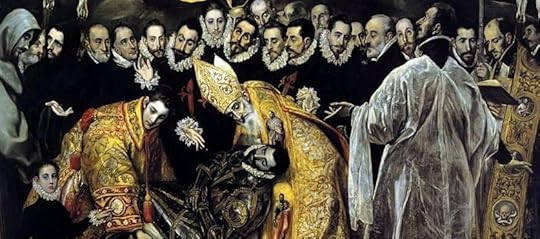
Without jargon or pretension, art historian Bruce Cole talks about thirty-two works of art. These include mostly paintings, but also sculpture, architecture, and photography. Each little essay (about four to six pages long) is a pleasure to read. They describe the works in terms of form and function, context, design, shape, color, line, texture, symbol, and meaning. I saw the magnificent Euphronius crater (a piece of Greek red-figure pottery used to mix wine and water dating from 515-525 BC) at the Met before it was repatriated to Italy, but didn't see it as clearly or as closely there as here in this book. Other revelations: Giotto's Lamentation of Christ, El Greco's The Burial of the Count of Orgaz, and Jean-Baptiste-Simeon Chardin's still lifes (Cole calls Chardin "a master of painted silence").
Being rather ignorant on this subject, I don't know how this book compares to what else is out there. At first it was not terribly engaging, but I felt I was learning so read further. As it continued through the ages it got better and better, and I appreciated and saw much more in familiar pieces of art. I found the piece on Giotto's 'The Lamentation' very illuminating, but one of my favourites was Donatello's 'Judith and Holofernes' with a rear view of the piece that I have never seen anywhere else. Reading Cole's analysis and seeing nothing more of Judith and the sword than would distinguish her from any other figure of death, the only part of her victim visible being his legs emerging from under her cloak and hanging limply off the pedestal, was incredibly powerful.
In contrast to many art books that are 500 pages of heavy stock, this is a small book of only 225 pages. Perhaps more importantly it is written in a style that is approachable. Cole defers often complicated art theory language for a straightforward English that explains clearly the art, its meaning and its place in art history.
Cole illustrates the changes in Western art through a series of short chapters focusing on an individual work or a few select works placing each in its context and not its importance. Many of the works will be familiar to the reader, but many will not. Cole's ability to demonstrate the importance of often lesser know works has me ready to head off to Italy wit the book to see many of what are for me new works.
A refreshing look at Western art. Highly recommended.