Jump to ratings and reviews
Rate this book

The Tilted World

Rate this book
Set against the backdrop of the historic flooding of the Mississippi River, The Tilted World is an extraordinary tale of murder and moonshine, sandbagging and saboteurs, and a man and a woman who find unexpected love, from Tom Franklin, the acclaimed author of the New York Times bestseller Crooked Letter, Crooked Letter, and award-winning poet Beth Ann Fennelly
The year is 1927. As rains swell the Mississippi, the mighty river threatens to burst its banks and engulf everything in its path, including federal revenue agent Ted Ingersoll and his partner, Ham Johnson. Arriving in the tiny hamlet of Hobnob, Mississippi, to investigate the disappearance of two fellow agents who’d been on the trail of a local bootlegger, they are astonished to find a baby boy abandoned in the middle of a crime scene.
Ingersoll, an orphan raised by nuns, is determined to find the infant a home, and his search leads him to Dixie Clay Holliver. A strong woman married too young to a philandering charmer, Dixie Clay has lost a child to illness and is powerless to resist this second chance at motherhood. From the moment they meet, Ingersoll and Dixie Clay are drawn to each other. He has no idea that she's the best bootlegger in the county and may be connected to the agents’ disappearance. And while he seems kind and gentle, Dixie Clay knows full well that he is an enemy who can never be trusted.
When Ingersoll learns that a saboteur might be among them, planning a catastrophe along the river that would wreak havoc in Hobnob, he knows that he and Dixie Clay will face challenges and choices that they will be fortunate to survive. Written with extraordinary insight and tenderness, The Tilted World is that rarest of creations, a story of seemingly ordinary people who find hope and deliverance where they least expect it—in each other.

303 pages, Hardcover

First published October 1, 2013

604 people are currently reading
7641 people want to read

About the author

Tom Franklin

34 books1,076 followers
Tom Franklin was born and raised in Dickinson, Alabama. He held various jobs as a struggling writer living in South Alabama, including working as a heavy-equipment operator in a grit factory, a construction inspector in a chemical plant and a clerk in a hospital morgue. In 1997 he received his MFA from the University of Arkansas. His first book, Poachers was named as a Best First Book of Fiction by Esquire and Franklin received a 1999 Edgar Award for the title story. Franklin has published two novels: Hell at the Breech, published in 2003 and Smonk published in 2006. The recipient of the 2001 Guggenheim Fellowship, Franklin now teaches in the University of Mississippi's MFA program and lives in Oxford, Mississippi with his wife, the poet Beth Ann Fennelly, and their children.

Ratings & Reviews

What do you think?
Rate this book

Friends & Following

Create a free account to discover what your friends think of this book!

Community Reviews

5 stars
1,551 (25%)
4 stars
2,671 (44%)
3 stars
1,428 (23%)
2 stars
311 (5%)
1 star
98 (1%)
Displaying 1 - 30 of 900 reviews
Profile Image for karen.
4,012 reviews172k followers
September 16, 2018
this was just beautiful. i knew i was going to love it, having read two books by franklin and one by fennelly (and for me to give four stars to a poetry book is unusual), but it really exceeded my expectations. and for those of you who are wary, as i usually am, of books written by two authors, know that in this case, when both of the authors are excellent at their craft, it can be a really magical experience.

it takes place in 1927, when the mississippi river is about to burst through its levees and flood 27,000 square miles of land, destroying everything in its path. this year is also at the height of prohibition, when revenue agents were roaming the land, searching for illegal stills and grabbing up bootleggers. moonshine, moonshine everywhere….

this is kind of a romeo and juliet story with bootleggers. we have dixie clay, married to a slimy, cheating bootlegger named jesse, who has swept her away to a lonely existence and given her a son to whom she devoted all of herself until he died of smallpox. desperate for distraction, she begins making the 'shine herself, while jesse becomes the businessman, taking long trips to "make sales" while she is left behind, desolate and lonely on the edge of a town that looks down on her for her illegal activities, while still buying her wares. her life is routine, mourning, and regret.

ingersoll is a man who grew up in an orphanage, went directly from there into military service, and from there into a job as a revenue agent, with no pauses for family or companionship. his closest friend is fellow-agent and former officer ham, with whom he comes to hobnob, a town in which two revenue agents have mysteriously disappeared, and where they expect to find the bootlegger responsible.

hobnob is a town aflutter with problems before the agents even arrive. with the river rising and fear of a flood rising with it, a group of bankers out of new orleans had offered money to hobnob to allow them to buy the town, clear it out, and deliberately flood it to relieve the water pressure and hopefully prevent their own land from flooding. but hobnob was torn with indecision, with a bunch of down-on-their-luck farmers who felt they should struggle and die on the same land where their parents had stubbled and died, and no one was able to agree on how the money was to be distributed. so the offer was rejected, but the threat of the flood is still very real to everyone living along the river. rumors of saboteurs and stolen dynamite are flowing and those who can are evacuating, taking their children and valuables away from the danger.

when ham and ingersoll arrive in town, they walk into the aftermath of a store looting, which has left behind several dead bodies, and one very alive baby. they can't risk blowing their cover, but ingersoll has a soft spot for orphans, and when he learns that the orphanage has been evacuated, he asks around town and learns about dixie clay, a woman who has lost her son, and who might be very glad to have one to care for again. ingersoll brings her the baby, and is struck by her beauty and demeanor, not realizing that it is her husband they are in town to track down, nor that she is the one making the 'shine.

and the waters rise.

and i gotta say, i am really shocked by the mediocre response to this one so far, because i loved every page of it.

they created characters that i cared about, they resurrected a largely forgotten tragedy and gave it immediacy and poignancy, they layered the story with human frailty and strength, with betrayal and hope, with stark realities and fairy-tale possibilities. it is lyrical and poetic but also harsh. it just…sings.

like this:

She wasn't the same proud girl she'd been, prettiest in all the piney woods, or so folks said, engaged to the prettiest fellow. She saw now that she'd married Jesse while knowing only the pretty part of him. She'd read so many books she'd simply filled in the rest.

that says so much to me, in so few words. not just about the state of her marriage, but also the kind of person she is - accustomed to a certain treatment because of her smalltown beauty, dreamy and romantic and ambitious because of her bookishness… but it is so economical. and affecting.

and every scene with dixie clay and willy, her foundling son, is just beautiful. i am attributing all of these scenes to fennelly's pen, on the strength of what i read in her poetry book tender hooks, which was all about motherhood, and equally lovely.

That's right, God: give me a son and then set a match to him.

it's hard not to fall in love with ham, with his bluff attitudes and his appetites and humor. and it's hard not to root for dixie clay and ingersoll. and the constant rising of the river forming the backdrop to their story, while the panic and resignation and plots of others weaves through and through…

for me, it is an easy five stars. and i would love to see more collaborations from these two lovebird-writers, please.

i said please, so it has to happen now. those are the rules.

also a huge thank you to joel for stealing his mom's copy and sending it to me. i am mailing it back, although it wounds me to do so...

come to my blog!
Profile Image for Will Byrnes.
1,372 reviews121k followers
July 20, 2017
Dixie Clay woke past noon, and even waking she noted that the world sounded different from when she’d retired at dawn. As she swung her feet off the bed and into rubber boots, she looked out her window. The rain lashing Hobnob had slowed, now just fat drops plopping from greasy-looking leaves. By the time she was drinking instant coffee in her kitchen, the sun was coming out. This had happened a few times since the big rains had started in November, but Dixie Clay no longer ran to the door. She didn’t look for a rainbow. No, she no longer hoped, merely waited for the rain, and when it came falling harder than ever, as if it’d stored up its strength in the interval, she took a bitter comfort in being right.
When we think of great natural disasters in US history some chestnuts of misery pop readily to mind. The worst in terms of official body count (8,000) is the savaging of Galveston in 1900 by a hurricane (Isaac’s Storm). Many might offer Katrina, with almost 2,000 dead and damage over $100 Billion. How about the Dust Bowl of the 1930s (The Worst Hard Time). The San Francisco Earthquake of 1906, which killed 3,000. Maybe the Johnstown Flood of 1889. But were you aware of the great flood of 1927? Me neither. On not-so-Good Friday, in 1927, a hundred-foot wall of water burst through a levee (there were several breaches along the river) and laid waste to 27,000 square miles of land, applying the force of a couple of Niagaras to land near, and not so near the river, in effect, an inland tsunami.
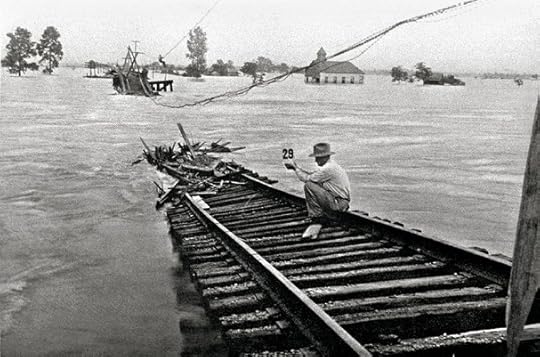
description
Image taken from The Cotton Bowl Conspiracy blog

Entire towns were erased. A million homes were destroyed. Hundreds of thousands needed rescuing. What might it have been like in the time before, during and after this cataclysm?

The impending transformation of The Big Muddy to the Big Messy forms the backdrop in The Tilted World, the first joint book by husband-and-wife Tom Franklin (Crooked Letter, Crooked Letter) and Beth Ann Fennelly (Great With Child). Ted Ingersoll and Ham Johnson are undercover federal agents sent to Hobnob, Mississippi to find out what happened to two revenue agents who had preceded them, but had never returned. They happen across the results of a failed robbery, several dead participants, but find an infant survivor as well. Ted, raised in an orphanage himself, takes on the task of finding a place for the baby. In doing so, he meets Dixie Clay Holliver, a young woman married to the charming but slithery Jess, an ambitious sort who cares for money in inverse proportion to his regard for his marital vows. He is not above using violence to get his way. Dixie Clay, 22, had lost her own baby to illness. Neither she nor her marriage had ever fully recovered from the loss. Dixie leaps at the opportunity to satisfy her maternal drive. Problem is, Dixie and her Jess are bootleggers the feds are looking to shut down.

Genesis-level relentless rain keeps the river rising and the people nervous. Some rich folks in New Orleans would like nothing better than to blow a levee upstream in order to reduce the risk to their property, and they may have found someone willing to help.

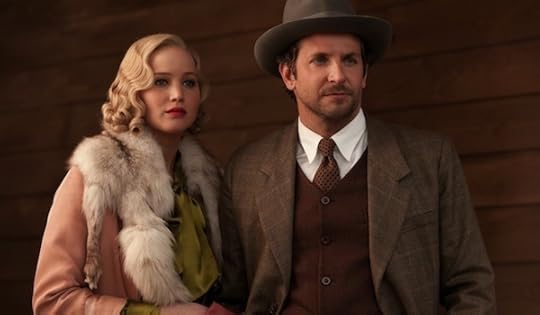
There is plenty to like in The Tilted World. Our co-stars Dixie Clay and Ted Ingersoll (which calls for yet another pairing of the 21st century version of Tracy and Hepburn, J-Law, and Bradley Cooper)

J-Law and Bradley
Image, from the film Serena, taken from the blog College Candy

are both very engaging. Evil does battle with good, or, well, some version of good. Babies need saving, huge danger mounts and a vast area is threatened. In telling us the story of Dixie, Ted and the town of Hobnob, Franklin and Fennelly also give us a taste for what the locals experienced in that dreadful time, the daily reports on the water levels, weather reports from up and down the river, news of threats to the security to the levee and the offer by some to actually buy the town in order to destroy it by blowing up the levee. There are also some elements of political historical interest, most particularly concerning the role and intentions of Herbert Hoover in the disaster recovery. (Heck of a job, Herbie.)

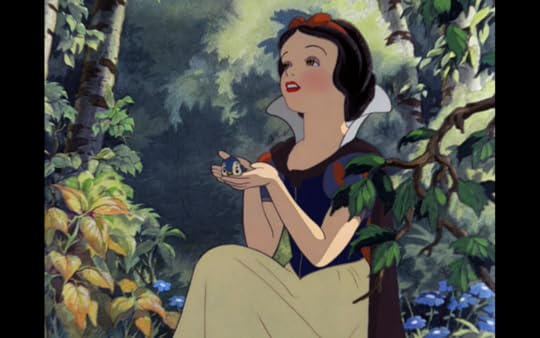
It is an interesting, engaging and fast-flowing read. You will care about the two main characters and learn something about the time and place. However, there are significant problems with the book. One is a cartoonishness. Dixie Clay is presented at times with a Disney-like aspect. The authors had already established that Dixie is a good egg, but give in to a princessy urge when they gild that lily by having her free a trapped hummingbird. I guess the dwarves were not available, although a relation of her husband fills some dwarfish roles later.
Snow
Image taken from BplusMovieBlog.com

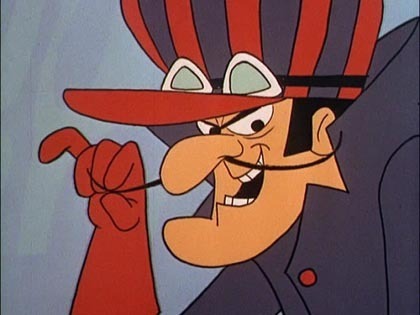
Her husband, Jess, is such a black hat he should have been named Snidely Whiplash.

Snidely

There is a corrupt local sheriff who refuses to listen to reason, (where have we seen that before?) and, returning to Disney, there is a particular affinity for orphans here. Toss in an addled flapper who reeks of madness. This is too bad, as the informational payload of the tale is considerable.

Another significant gripe I had with this novel was that a core conflict is resolved off screen, and is related to us by a participant. This should have been in center stage. The ease with which Ted and Dixie locate some missing folks strained credulity as well.

But I do not want to end with a negative slant. There are very compelling scenes of the flood, burning of Atlanta, cinematic opportunities of the highest order. Dixie and Ted are very engaging. Despite her hummingbird moment, Dixie is more Mulan than Snow White, (the cartoon Snow, not the more kick-ass version in the current TV show, Once Upon a Time) a tough and determined survivor with very positive inclinations. If you can retain behind a mental levee concern about some of the questionable choices made by the authors you will definitely enjoy The Tilted World, come hell or high water.

==============================EXTRA STUFF

Here is a Wikipedia entry on the the Great Mississippi Flood of 1927

Archival footage of the event, a signal corps film

Riveting photos of the flood

Posted July 23, 2013
Profile Image for Candi.
707 reviews5,511 followers
April 26, 2017
The year is 1927, the year of the Great Mississippi Flood. "The levee at Mounds Landing, near Greenville, Mississippi, collapsed, and a wall of water one hundred feet high and with twice the force of Niagara Falls scooped out the Delta. It flattened almost a million homes, drowning twenty-seven thousand square miles, sometimes in up to thirty feet of water, and the water remained for four months. Over 330,000 people were rescued from trees, roofs, and levees. At a time when the federal budget was around three billion dollars, the flood caused an estimated one billion dollars’ worth of property damage."

Authors Tom Franklin and Beth Ann Fennelly, husband and wife, teamed up to write this absorbing fictional account based on one of the largest national disasters of all time. It is also Prohibition, and bootleggers are rampant, with the fictional town of Hobnob boasting one of the most prosperous stills in the region. Wed to Jesse Holliver at the young age of sixteen, Dixie Clay realized she may have gotten in over her head. Before long, Dixie stumbles upon a still on her own property and is determined not to sit by and feign ignorance. Soon her own moonshine "became the best in Washington County. So clear you could read a newspaper through it."

Where there are bootleggers, there are bound to be federal revenuers. When two revenuers sent to Hobnob to investigate rumors of a large still turn up missing, Commerce Secretary Herbert Hoover sends in a pair of his most principled undercover revenue agents to find out what went wrong. Agents Ham Johnson and Ted Ingersoll travel to Hobnob passing themselves off as engineers tasked with inspecting the threatened levees of the Mississippi. I loved these guys! We learn a bit about their backgrounds – especially that of Ingersoll. He really made the book memorable for me. Both are the type of men you would want at your side during an emergency. They���re tough, dependable, and honorable. Ingersoll grew up as an orphan and is definitely the more tenderhearted of the pair. When he and his partner come across an abandoned baby, he takes matters into his own hands and it becomes his personal mission to find a home for his new charge. His interactions with the baby will melt your heart! Ham is harder to read, but we trust him just as much. He’s not one for sentimentality and just wants to get the job done. As a team, the two couldn’t be more perfectly matched. "Ham could tease out a man’s secret through cunning, buffoonery, or charm. Ingersoll could learn it by disappearing, an oak of a man blending into the forest until you forgot the oak had ears. Together, separately but together, they could always find the rotten apple, the rotten worm in the rotten apple."

Dixie Clay, too, is a character that grew on me. One can feel for her, stuck in a marriage with a man whose personality turns out to be just as contrary as his two different-colored eyes. She is trapped, far from her home, and with no friends in town. Tragedy has struck at the core of her being and left her a changed woman as well. "Dixie Clay knew now that the world was full of secret sorrowing women, each with her own doors closed to rooms she wouldn’t be coming back to, walking and talking and cutting lard into flour and slicing fish from their spines and acting as if it were an acceptable thing, this living.” With the waters rising and danger imminent, Dixie will have to make some choices and will need to ask herself who she can trust.

With the risk of an impending flood, the whisper of a betrayal to the town’s safety, the menace of saboteurs, and the violence provoked in those with the most to lose – or perhaps gain – the plot moves at a fast and exciting pace. The only thing missing for me personally was learning about the aftermath of this historical event. I felt that the last section of the book could have focused on this a bit more, rather than simply tying up loose ends with the fictional characters. It also seemed a tad bit ‘easy’ for those involved, considering the enormity of the event. Regardless, it was a very compelling read and one that I would certainly recommend. I am even more enthusiastic than ever about reading another of Tom Franklin’s books – Crooked Letter, Crooked Letter – that has been gathering dust on my bookshelf!
Profile Image for Brina.
1,238 reviews4 followers
October 23, 2018
The Tilted World by the husband and wife team of Tom Franklin and Beth Fennelly is the southern literary trail read for September 2018. Set against the background of the 1927 Great Mississippi Flood in Hobnob, Mississippi, readers go back to a time where moonshining and jazz music were prevalent. Although the country had been modernized, not so in the Deep South where people rode horses as much as automobiles and Jim Crow laws were still the way of the land.

Hearing about Tom Franklin as a gritty southern writer, I had my hopes up that The Tilted World was a southern gothic tale. Collaborating with his wife gives this novel a female touch and it is evident from the get go. Dixie Clay Holliver is the best moonshiner for miles around yet is trapped in a marriage to Jesse, a man who talks the talk yet cheats on her and has grandiose plans that do not include Dixie Clay. Dixie Clay had been enterprising before getting married at age sixteen and then ended up running the moon shining business when Jesse was away on his jaunts. One could not help but feel sorry for this woman who wanted to be anywhere but Hobnob.

Federal agents Ingersoll and Johnson have come to Hobnob to investigate a murder of two revenuers at the hands of moonshiners. At the crime scene, they find an orphaned baby, and Ingersoll, an orphan himself, takes it upon himself to find the baby a good home. One thing leads to another and Ingersoll is lead to Dixie Clay. There is instant chemistry even though Ingersoll has earned a reputation by putting people like Dixie Clay behind bars. Yet, this baby has seemed to win both Ingersoll and Dixie Clay over, leading them to pine for another life.

The plot is straight forward with no twists to it. While this tale lets readers in on a forgotten part of American history, the story itself did not wow me, leaving me pine for more of the author's work. The Tilted World is a feel good story where justice prevails at a time in history where bad guys like mobsters and bootleggers usually came out on top. Dixie Clay is an unforgettable character, but I felt that the plot could have been more drawn out. I do want to explore by each author separately as I am intrigued to the style of each of these southern authors. I look forward to where the trail will lead me next.

3.5 stars
Profile Image for Margitte.
1,188 reviews667 followers
October 8, 2015
1927. Hobnob Landing, Mississippi, population 3244. The town was nestled where the Mississippi doubled back like a black racer fixing to bite its tail.

Who could have predicted, when the engineers corseted the river, straightened it out, that a flood of this magnitude would reclaim the original flow, destroying the government levees which was suppose to defy God's ideas about this mighty river?
"It is time to tell you a story, a story that will surprise you. The year was 1927, and Lord, the rains did rain. Your mama was a bootlegger, and your daddy was a revenuer, so they were meant to be enemies, natural enemies, like the owl and the dormouse. But instead they fell in love.

This story is a story with murder and moonshine, sandbagging and saboteurs, dynamite and deluge. A ruthless husband, a troubled uncle, a dangerous flapper, a loyal partner. A woman, married to the wrong husband, who died a little every day. A man who felt invisible. But most of all, this is a love story. This is the story of how we became a family."


More from the Epilogue

"So later, when she is ready, she will be able to say, Son, it was the greatest natural disaster our country had ever known. How big, Willy, was the area that was drowned? About the size of Connecticut, New Hampshire, Massachusetts, and Vermont. Of course, if it had been those states, we’d have had help right quick. Supplies. Money. Later, chapters in the history books. Monuments everywhere. But it was Delta dirt, the richest dirt in the nation, though under the boot soles of the poorest folk. The official death toll would be reported as 313, though we all knew the real number was much higher, Willy, much higher. Coolidge never came to the suffering people. In the months that followed, four governors and eight senators would beg him to come, to turn the eyes of the nation on the South. But Coolidge did not come. And was not reelected. Hoover, darling of the newsreels, star of the Sunday supplements, did surf the flood to the presidency, as he’d predicted. This flood, now forgotten by much of our nation, changed what our nation became."
All Dixie Clay Holliver had to guide her into married life at the age of 16, was the two books her dad gave her to take along: Husband and Wife, The Physical Life of Woman and Getting Ready To Be A Mother. She also did not ask questions when she landed up a few miles outside Hobnob on a small farm holding with a hidden still. Isolated and secure. No federal revenuers and agents could possibly become interested in it.

Her husband, Jess, was a beautiful man. She was happy and contented to become an inhabitant of Hobnob, where quarter boats, showboats, and the huffing, puffing, hooting and grinding steamboats with rattling paddle wheels, filled with black thumbs, gamblers, hustlers, and medicine men, could do as much hobnobbing as they wanted.

Jess Holliver was a busy man. Very busy. He knew how to change the cause of the town's history by the click of a finger or the wink of his green eye. The blue eye was for something else. His face was Dixie Clay's most important wedding present.She did not follow the road, no, she sat and watched her twenty-year old ambitious husband. He was used to be admired by different people for different purposes. She would learn more about him through trial and error, but traveling with him to her new home, was pure joy and happiness.

Two revenuers disappeared. Two undercover federal Prohibition Agents was sent to Hobnob to investigate their case. Ted Ingersoll and Ham Johnson arrived in the rain, when the water was still on the rise, the people nervous, the future uncertain.

Anything could happen...not everything that happened could be called natural disasters though. As with all other luck in life, some people immediately saw an opportunity to score big ...

This book was pure joy to read. Good and bad; honorable and more adventurous; politicians and hooligans - all appear on the stage, and somewhere a little baby is found abandoned at a murder scene.

Captivating, riveting, entertaining: a sleep-snatcher that had me awake for two nights in a row, with the kindle stashed into some documents during the day for good measure! This book is grit-lit with a particular feminine-lite approach. There's no romanticism or false nostalgia though. Neither is there a overly picturesque rendition of Magnolias and moonlight. It's all about the battered glory of southern Moonshine and Marlboros, combined with a touch of romantic, fairytale-elements as a spice-noir surprise for adults. Yes, the drama hides a hint of a little princess, a big bad wolf, a scrooge, added as a secondary threat, to lurk somewhere in the darkness of the night, waiting.

But who cares. This is southern prose at its finest. This historical fictional tale confirms the true storytelling tradition of the region so diverse and complex in its make-up. The last 150 pages lost me a little. I did not feel the rhythmic cadence of the language like in other southern literature either, but it was nevertheless the expected delight I was anticipating in this genre.

Recommended for sure. A wonderful read!


Profile Image for Diane S ☔.
4,901 reviews14.6k followers
February 26, 2015
The Tilted World The 1920's was a time for a great many changes, it also ushered in a tremendous opportunity for crime. Prohibition, bootleggers, saboteurs, and revenue men all have a prominent role in this book. There was also one of the greatest natural disasters to ever strike the United States which happened in 1927 and affected those along the Mississippi River, from Cairo, Illinois all the way to Mississippi.
Loved the history behind this book, but also loved the characters. The Civil War had Scarlet and Rhett, the carpetbagger and the southern belle. This book has Dixie Clay, the bootlegger and Ingersoll, the orphan and revenue man. Not quite as contentious and intense a relationship but then again Gone with the Wind was much longer. Anyway it all comes together and yes it is fairly predictable in a way but Ingersoll is a character worth reading this book for, even if the history and the big flood is not of interest. Good book, really love how Franklin writes.
 
ARC from publisher.
Profile Image for Faith.
2,229 reviews677 followers
January 28, 2022
This novel is set in 1927 during the Mississippi Flood, about which I knew nothing. It is a wonderful story of two federal revenue agents, Ted Ingersoll and Ham Johnson, who find an orphaned infant boy at a crime scene. The agents are on a mission to track down two other agents who have gone missing while trying to locate some bootleggers in Hobnob Mississippi. Ted, an orphan raised by nuns himself, takes the baby to place it with an orphanage before continuing with their mission. Instead he gives the boy to Dixie Clay Holliver a married mother who has lost her baby and, unbeknownst to Ingersoll, a bootlegger along with her husband Jesse.

Each of the three characters is strong, intelligent and interesting and could easily be the chief protagonist in a book of his or her own. Jesse is less fully written, but he is a compelling villain. The Flood is a character of its own, with near-constant rain and mud and the threat of the impending breach of the levee. It was very interesting reading how people coped during the Flood.

The book is full of spare, elegant, beautifully crafted sentences that demand to be reread or read out loud.
I had already read and loved "Crooked Letter, Crooked Letter" by Tom Franklin before I read "The Tilted World" and was hoping for another good book. I was not at all disappointed. The plot was compelling, the dialog felt natural and the romance was not over blown and seemed realistic. This was a complete pleasure to read.

I received a free copy of the advance reader's edition of this book from the publisher.
Profile Image for Lawyer.
384 reviews968 followers
November 15, 2013
The Tilted World: Tom Franklin & Beth Ann Fennelly's Tag Team Novel

I've followed the career of Tom Franklin from his initial anthology Poachers. He is a dizzying wonder of the genre that has become known as "Grit Lit." These are the stories of the Rough South hearkening back to Harry Crews, Tim McLaurin and others. He's provided the introduction to Grit Lit: A Rough South Reader that gives about the best explanation of this growing subgenre of Southern Literature I've read.

Read through his collected works following Poachers--Hell at the Breech based on The Mitcham County War in Clarke County, Alabama; Smonk, in which a vile dwarf vows to kill every man in another small Alabama town, and you wonder where this pleasant man with a winning smile comes up with his ideas. Franklin mellowed somewhat with Crooked Letter, Crooked Letter. In fact, I told a close goodread friend I thought this was Franklin's effort at a breakthrough novel, winning a wider audience.

In short, I admire Franklin's skill as a writer greatly. However, as an avid reader, I've noted women don't fare too well in his previous stories and novels. His tales generally comprise the world of men. It's not that they are absent. In Smonk, ladies abound, but only as widows as Smonk sets out to weed out the male population. Now, there's an exceptionally tough young woman named Evangeline on Smonk's trail. However, let's just say, as a woman she has some serious issues, capable of the same degree of violence as Smonk.

You'll find a fairly substantial female role in Crooked Letter, Crooked Letter. Unfortunately she was a murder victim.

Now, Tom Franklin seems to have gotten in touch with his feminine side. Don't be fooled, although goodreads shows Franklin as the sole author. His co-author is his wife Beth Ann Fennelly, noted poet, head of the MFA program at the University of Mississippi (Tom's boss?) and the author of Great with Child: Letters to a Young Mother

I've had the pleasure of meeting Tom Franklin upon the debut of his last three novels. Chatting with him is always a pleasure. Recently I saw him at Square Books in Oxford, Mississippi, excitedly asking Daniel Woodrell to sign HIS latest, The Maid's Version. I asked Franklin how was it co-writing The Tilted World: A Novel with his wife. He gave one of his trademark grins and said, "We survived." Indeed they did. And before we get to the meat of the coconut, I hope this won't be their last collaboration.

Here's the writing team:

 photo Beth-Ann-Fennelly-and-Tom-Franklin_zps7c283fa6.jpg
Franklin & Fennelly

Set in the small river town of Hobnob, Mississippi, during the Great Flood of 1927, Franklin provides the grit we've come to expect. However, the star of this novel is Dixie Clay Holliver. She was originally a Birmingham, Alabama, girl. But charming Jesse Holliver began to call on her in her family's home when Dixie was just twelve. Holliver dressed well. He claimed to be a wealthy trapper earning great profits trapping furs.

Dixie's family consented to Holliver's proposal when she turned sixteen. On reaching Hobnob, Dixie Clay learned she was married to one of the biggest bootleggers who business extended from Mississippi, up through Tennesse, and over to Alabama. Although Dixie would be a jewel for most men, Jesse was a sporting man, not about to abandon his visits to the ladies of all the gentlemen's night visits in the area.

Dixie's a practical woman. She learns fast. It would be best if she took to tending the still while Jesse took over just the distribution. Dixie Clay's a crack shot and finds she manufactures the best whiskey ever produced in the area. She adds class to the product, bottling the whiskey in labelled bottles. Business is just fine.

However, Jacob, the son Jesse makes on her dies young. She is humiliated to track Jesse down at one of the local sporting houses, asking the Madame for her husband to come down. Jesse's answer is simple. There'll be other babies.

But more is coming to Hobnob than the Great Flood. Two Prohibition Agents have paid a call on Jesse. He claims business as usual telling Dixie he bribed them. Dixie suspects Jesse just may be a murderer because those two Agents have gone missing according to folks in town.

Neither Jesse or Dixie Clay know that Herbert Hoover, the Secretary of Commerce, who has been sent by Calvin Coolidge to head up flood control and rescue operations, has sent out two unbribable Prohibition Agents, Ted Engersoll and Ham Johnson to find the missing agents. The two have been partners since watching each others backs during World War One. The men are posing as levee engineers to cover their real reason for coming to Hobnob.

 photo Herbert_Hoover_zps26ef198e.jpg
The Great Humanitarian? Hoover will be swept into the White House as a result of his presence during the Great Flood.

Along the way, Ted, who was raised an orphan finds a dead family. Only a small boy, an infant survives. Ted checks out the local orphanage, finds it unacceptable, and fosters the child until by chance he crosses the path of Dixie Clay. Hearing Dixie has recently lost her own child, what better solution could Ted have found than a bereaved mother. Ted leaves the child having no idea this new mother is the best bootlegger around.

Ted and Ham fuss over Ted's delaying their mission by rescuing the child. Ham will fuss even more when Ted begins to slip away, drawn to Dixie Clay whom he finds beautiful.

As the river rages, the levees are tested. Will they hold? The danger of saboteurs is real. Should somebody from the Arkansas side blow Hobnobs levee it's the Mississippi side that will flood. Jesse's in the thick of it as you would expect. Business is business.

The river and its tributaries are at their most treacherous. The Indians called it "The Place Where the World Tilts. Hobnob, filled with refugees from upriver, is a tragedy waiting to happen.

 photo GreatFlood_zpsc53f7c3e.jpg
Just one image of the aftermath of The Great Flood

Franklin and Fennelly keep the pace fast and furious. These two writers have created a fine and satisfying read you will hate to see come to an end. This is a team of literary soul mates.

This is a solid 4.5 Star read. The only thing preventing that remaining .5 is that by focusing on the story of this small band of main characters, the full impact of the Great Flood is lost, Franklin and Fennelly's fine historical prologue nevertheless present.

My opinion is further influenced by having read Rising Tide: The Great Mississippi Flood of 1927 and How It Changed America by John M. Barry immediately following my read of this fine novel. John M. Barry has written one of the most enthralling histories I've read in years.

For what it's worth, read The Tilted World: A Novel first. Take a break. Then delve into Rising Tide: The Great Mississippi Flood of 1927 and How It Changed America.
Profile Image for Snotchocheez.
595 reviews441 followers
July 26, 2015
I've consistently sung the praises of Tom Franklin's lofty brand of deep Southern (US) fiction. From his Grand Guignol splatter-fest historical fiction (Hell at the Breach and Smonk), to his short stories (Poachers), to his contemporary look at race relations, cloaked in a murder mystery (Crooked Letter, Crooked Letter) I've enjoyed everything he's written. I was really leery, though, about The Tilted World, and put off reading it for nearly a year, mostly because I just could not envision a collaborative effort with his wife, poet Beth Ann Fennelly. (The above cover didn't do much to assuage my fears this was gonna be some emasculated watered-down chick lit-ty version of Franklin).

My fears were (mostly) unfounded. This is (for the first 3/4ths of the book, anyway) a superb page-turner and an informative (if fictional) account of one of the worst disasters ever to befall the South in the Twentieth Century: The Great Mississippi Flood of 1927. The novel also features the first time Tom Franklin has penned a strong female leading character (the memorable moonshiner Dixie Clay) and a romance (between she and revenuer Ted Ingersoll, sent to tiny Hobnob, MS to enforce the Volstead Act and investigate the disappearance of two fellow federal agents).

The writing between tag-teamers Franklin and Fennelly is seamless (which shocked me a little, given Franklin's singularly unique, typically male-centric voice). The romantic elements, though a weensy bit contrived, are, for the most part, believable, and make even me (the Romance-phobe) cheer on the unlikely match of cop and criminal. Plus, even if romance doesn't float your boat, there are enough juicy plot elements concerning the flood and the government's response to it (evoking memories of Katrina) to make you overlook the cheesier stuff.
Profile Image for LA.
487 reviews587 followers
August 30, 2018
Tom Franklin's books have always pleased me, and this one did not disappoint. Living in New Orleans, the idea of massive levee failures and widespread flooding is something that I can relate to, and the background tension that Franklin built in to the novel was palpable. The basic facts are all correct here, describing the massive flooding of the Mississippi River in 1927, a time when TV news wasn't around to communicate the risks. These were the days of Prohibition, where bootlegging moonshine was common and travel by horse and wagon was the norm. The scene where Ing's horse, Horace, feels reverberations from the levee underfoot, while brief, spoke to me. He painted that frightening suspense throughout the novel quite well.

If you've never read any of Franklin's works, I would recommend Crooked Letter, Crooked Letter before this one. The characters here were not as complex. The protagonist, Ingersoll, was absolutely loveable, but he had no bad traits whatsoever, nor did Dixie Clay. Her rotten husband, on the other hand, had no positive attributes to speak of. Had he uttered a mustachioed MUAH-HA-HA as he tied Dixie to a train track, I would not have been surprised.

Tom Franklin co-authored this book with his poet wife, and I cannot help but think she softened things up a bit much for the average fan of Tom Franklin. Or at least for me.

Franklin's Hell at the Breech, also based on real history, was a bit too harsh with bloody violence thrown in, seemingly, for no good reason. The Tilted World came across like its moonshine - a bit too full of sugar. Crooked Letter, Crooked Letter was for me the perfect Goldilocks work from this author - just right. The author's portrayal of Civil Rights Era issues and lingering small town suspicion was absolutely outstanding in Crooked Letter.

Like the densely sugar-laden moonshine that Dixie Clay concocted in this particular story, I found this it too sweet for my liking.
Profile Image for ☮Karen.
1,800 reviews8 followers
August 15, 2015
The history of the 1927 flooding of the Mississippi River was fascinating, and evidence that Mother Nature knew how to wreak havoc back then same as today. The writing and word choices were delightful. I loved the Revenuers' stories, the bootlegger/antagonist, and his wife Dixie Clay, "a woman married to the wrong husband, who died a little every day." The flood is a major part of the story, what these people were doing leading up to it and after, "sandbagging and sabateurs, dynamite and deluge." But it also turned out to be a nice love story -- how a family can be created from nothing but love and lots of gumption.
Profile Image for Matt Brady.
199 reviews129 followers
May 3, 2014
Moonshine and murder in backwoods Mississippi on the eve of the Great Flood of 1927, one of the worst natural disasters America has ever suffered, an event that has been largely forgotten today. It's a great setting for a novel, which is part of the reason I was annoyed that so much of the page count was taken up describing a goddamn baby. You know what's cool and interesting? Redneck moonshiners matching wits against undercover revenue agents on the banks of a rapidly swelling river threatening to blow at any moment. I was down for that. Buckled in and ready to go. The Roaring Twenties with a Southern drawl? Sign me up. And then they go and throw a baby in there, and suddenly i'm reading page after page about changing nappies and the best croup home remedies and, oh, look how cute he is! I held out hope that the baby was going to grab a tommy gun at some point, or maybe turn out to be a flask of moonshine disguised as a baby, but no, it was just a regular dumb baby.

It's not a bad book, but I never felt engaged, and then the aforementioned baby came along and suddenly it's like Look Who's Talking except without a Bruce Willis voice-over. The two main characters have tragic backstories that just felt manipulative, like the authors were trying too hard to make them sympathetic and the story itself just kind of meanders along. I've only read one other Tom Franklin novel, Crooked Letter and it was also a slow burn, but where that felt like it was building the tension nicely, this just dragged a bit and then sputtered out.

I give this book 4 out of 5 babies which is actually a bad rating because I don't like babies and I sure as hell don't like reading about them.
Profile Image for Magdalena aka A Bookaholic Swede.
2,058 reviews886 followers
April 22, 2019
Such a beautiful story, a love story between a revenue agent and a bootlegger. I borrowed the book from the library, but I also had the audio version with the plan of listening at work and read at home. But, I ended up listening to the book since the narrator (Brian D'Arcy James) and the story worked so well together. I just love listening to a great book that becomes even greater with the right narrator.

As for the story. I love reading stories set in the 20s, and in this case, the story takes place in 1927 and the Mississippi is about to flood. Two revenue agents have disappeared in the little town of Hobnob and now federal revenue agent Ted Ingersoll and his partner, Ham Johnson has been sent to find out what happened to them. Meanwhile, Dixie Clay is worried that her husband is involved with the revenue agents disappearance.

The Tilted World is my very first Tom Franklin (and Beth Ann Fennelly) book, but I have Crooked Letter, Crooked Letter by Tom Franklin at home and I plan to read it. I quite liked The Tilted World, the writing, the story, and the characters were great. And the addition of the baby that Ted Ingersoll found and tried to find a good home to was a wonderful addition to the story.
Profile Image for Sara.
Author 1 book935 followers
September 9, 2018
The Tilted World is a collaborative effort between Tom Franklin, the masterful author of Crooked Letter, Crooked Letter, and his wife Beth Ann Fennelly. The plot plays out against the backdrop of the 1927 Great Flood of the Mississippi River, in which 27,000 miles were inundated and hundreds of lives were lost.

Dixie Clay (okay, I admit that I loved that name) is a bootlegger. She distills the best hooch in the state while her charming husband, Jesse, conducts PR and sells. Ingersoll is a veteran of the Great War who has drifted into being a top-notch revenuer. Dixie Clay’s still is the one he is especially tasked to find and she is the key to finding out what happened to the last two revenuers sent to Hobnob to investigate. Ingersoll and Dixie Clay ought to be automatic enemies, but there is the matter of the husband who is the definition of bad and a baby whose welfare becomes a priority for them both.

The characters are well-drawn, and there are moments of brilliant writing with a plot that makes you smile and grimace in equal shares. But, the bad guy is just a little too senselessly bad. I know greed and ambition can make monsters, but this was a little over-the-top. The end was just a little too neatly tied for my tastes and totally lacked surprises. And, try to imagine finding one individual, of whom you had no idea of their whereabouts, at the height of the Katrina floods. The proverbial needle in the haystack. Sorry, but it would not be easy or quick.

So, a book that felt like a 4.5 star read three-quarters of the way in, turned out to be just a 3.0 by the end. It bears saying that Tom Franklin can write amazing books. Both Crooked Letter, Crooked Letter and Hell at the Breech were raw and realistic and moving. Both had much deeper issues being explored and both left me wanting more. I failed to find any deeper issues to contemplate here, which might account for why I felt disappointed when I closed the cover on this one.
Profile Image for Carol.
410 reviews456 followers
January 27, 2014
Even though I read and loved Crooked Letter by Tom Franklin, I wasn’t sure that this one would be as interesting because it’s about a 1927 flood in Mississippi. I shouldn’t have been concerned. Tom Franklin is a wonderful storyteller. Apparently his wife is too. They collaborated on this novel. This was a well-researched historical novel about a natural disaster that forever altered the lives of countless flood victims along the banks of the Mississippi. Surprisingly, it is also an unlikely but very engaging tale of a love story between a revenuer, a bootlegger and an abandoned baby. I found the novel to be a beautiful blend of resilience and gentleness. In the end, I was also enlightened about a largely forgotten tragedy in American history.

I received a free copy of this book for review through the Goodreads giveaway.


Profile Image for Josh.
134 reviews24 followers
November 30, 2015
Great job Tom.....or great job Beth Ann.....who knows? Regardless of the author, or combination, I liked it. My guess is that the Mrs. had much to do with this work. Tom has proven to me he can rip my guts out and make me smile (Poachers is a personal favorite) and he has a soft side as well (Crooked Letter, Crooked Letter has emotions out the wazoo), but something about this one gave me a different take? Did the barrel age on a different rack or was it a different mash bill? I suspect a little of both.

The story is a somewhat predictable tale of polar opposite ends of the citizenry colliding, clashing, and finding their common places together. Set against the historic backdrop of the too often unknown flood of 1927 (see https://en.wikipedia.org/wiki/Great_M...). Complete with moonshiners, river people, town gossip, and revenuers on a mission to wreak havoc where need be.

This is semi-grit lit that you can feel comfortable recommending to your friends without fear of them thinking you're a sicko (which is sometimes half the fun). A warm up if you will. Great story, good pacing, and just enough rough and tumble to keep me moving along downstream (or through what used to be a stream and is now spread out to Kingdom come). Read along- just don't expect the Franklin from Smonk.
Profile Image for Sonja Arlow.
1,233 reviews7 followers
December 7, 2015
Set against the backdrop of the Mississippi flood of 1927 for some reason I expected a much heavier read but there was a lot of feel-good to be had here. The story is set in Hobnob, 3,000-odd people "nestled where the Mississippi doubled back on itself like a black racer fixing to bite its tail"

This is a place full of murder and moonshine, sandbagging and saboteurs, dynamite and deluge and all the characters leapt off the pages. The telling is split between Dixie Clay, a bootlegger who lost her son two years ago and Ted Ingersoll, an IRS agent searching for two murdered revenue agents with his partner Ham Johnson.

I loved Dixy Clay (especially her name) and could feel her isolation and loneliness while working on distilling the moonshine for her good for nothing husband Jessie. The dialogue between Ham and Ingersoll had a constant undercurrent of humor and I also found their friendship and history together so satisfying to read.

This is a collaborative novel between the author and his wife but at no point did the story feel disjointed by the slightly different writing styles.

This does come with a small warning, the story has a bit of romance which is normally not my cup of tea but it was not forced in into the story so should not put anyone off from reading this interesting slice of American history.
Profile Image for Jeanette.
4,088 reviews836 followers
February 21, 2014
The historic locale and dire flood in hard, hard times tone was perfect. But that's about the only thing that was, for me. The writing was conducted in this novel by the current fad mode of using continual or alternating time and place hops. And with different focus of "eyes" description and dialog styles in varying chapters on top of it. Well, it ruined the entire connection of interest and plot tension as a reader, in my case. Beyond that, the story was so contrived and unrealistic in the time frames noted. I cared about Dixie and the baby-but other than that? Really, really liked Crooked Letter. They should absolutely write separately, this combo was awkward, particularly to character context and nuance. 2.5 and closer to a 2. I gave the 3 only because of that 1927 flood, down and out rural tone that WAS caught.
Profile Image for Laura.
882 reviews320 followers
September 6, 2018
If you need a calm, southern book this might be for you. For some reason I thought this was going to be more about the big flood of 1927 but it’s just part of the story. I might even call this a southern love story. Quick read!
Profile Image for Camie.
958 reviews243 followers
August 24, 2018
This story featuring Dixie Clay and her philandering, ruthless husband Jesse Holliver, both bootleggers who are being hunted by two "larger than life"
revenuers Ham and Ingersoll, takes place during the pretty much forgotten Mississippi Delta flood of 1927.
Here's a quote straight from the book that pretty much covers it all : (possible spoiler alert)
"This is a story with murder and moonshine, sandbagging and saboteurs, dynamite and deluge. A ruthless husband, a troubled uncle, a dangerous flapper, a loyal partner. A woman married to the wrong husband, who died a little everyday. A man who felt invisible. But most of all, this is a love story. This is the story of how we became a family."

Liked it much more than expected which is always a good surprise. Ham and Ingersoll are characters you'd like to meet and definitely ones you'd want on your side in troubled times.
Read for On The Southern Literary Trail Sept choice 4.5 stars
Profile Image for Mississippi Library Commission.
389 reviews114 followers
May 15, 2014
Sometimes books by two authors seem choppy or poorly written. This is far from the case with The Tilted World. It's no longer business as usual for a husband and wife pair of bootleggers when revenuers come to town. They're following rumors of a big still and looking for their fellow agents who have mysteriously disappeared. Set against the backdrop of the Great Flood of 1927, the story is intriguing, the language is downright lyrical, and the characters captured our attention from the first page. Thoroughly enjoyed this one from beginning to end.
Profile Image for Kathleen.
1,375 reviews28 followers
March 17, 2014
(3.5 stars for story, 4.5 for narration, 4 for history.) I listened to narrator Brian D'Arcy James. This is fictionalized history with a strong romance thread.

A Tilted World is set in April of 1927, when moonshine was prohibited and the Mississippi River flooded seven states -- to date the worst river flood in US history. The town in this photo (Greenville, Mississippi) features prominently in the book. It's located 30 miles from the book's fictional setting of Hobnob Landing.


Contents include a few fade-out sex scenes, violence and murder, swearing and profanity, several baby scenes.

The plot is historically interesting and engrossing, involving an orphaned baby boy, bootlegging, prohibition, rain, rain, and more rain, the bulging levees, the hellish flood, and politicking for the presidency (Herbert Hoover).

The three main protagonists are likable (with some minor reservations about Dixie). I kept wondering what Ham's full name was. Hamish? Hamilton? Hampton? The villain was plenty scary enough, if somewhat inconsistent. The scenes with the baby felt realistic and sweet. I enjoyed watching our mighty warrior pin diapers on "Junior" and sing to him, tending him. Dixie Clay's instant attachment to the baby felt credible, since she'd lost her own infant son.

The romance aspect was sweet, with some loving and a satisfying ending. Throughout the story, Agent Ingersoll occasionally played the guitar (mandolin, etc.) and sang old folk songs about the war, prison life, prohibition, etc. I wanted the narrator to sing those songs -- just clips, a few lines -- but he didn't. I liked the integration / infusion of music into the plot.

Vividly memorable scenes of the levee explosion, the flood, and the disaster's aftermath (see my quotes in reading status updates).

Descriptive prose: "She clung, panting, wrapping arms and legs around the branch. The tree swayed under her like a ship, and she the masthead, facing into the storm."

However, I felt frustrated because the pace was interrupted as the authors kept detouring into the past: Dixie Clay's memories of childhood in Alabama, and of meeting and eventually marrying the nefarious bootlegger Jessie Holliver. Ingersol's memories of the orphanage where he grew up, the music scene he knew in Chicago, his escapades in WWI. Memories of how Ham Johnson and Ted Ingersol became war buddies and then partnered up as Federal Revenue agents, catching bootleggers during the prohibition era.

Digressing into the past slowed the pace too much. It wasn't until about 70% into the book that I felt the pace flowing along rapidly, like the river itself. If the book had more forward momentum, I would have liked the audio much more.

The historical element was interesting. I learned something new. Lots of vivid and descriptive scenes of the exploding levee and the catastrophic flood itself. Not much about race relations, inequity, and the Black migration to Chicago and all points north, despite what the synopsis says.

Bottom line, The Tilted World is good, but not great. It's a bit overrated, both as a story and as a slice of history, but better than most books on the market.
Profile Image for Diane Barnes.
1,613 reviews446 followers
March 12, 2016
I gave this book 3 stars, but would like to add another 1/2 star. The reason I didn't rate it higher was because I loved Franklin's previous book, "Crooked Letter, Crooked Letter" so much that I very unfairly compared the two novels, and this one suffered for it. Larry Ott of Crooked Letter is one of my favorite fictional characters ever.
I'm not sure how Franklin and Fennelly (a married couple) divvied up the writing chores, but I never really saw a great difference in style. I agree with another reviewer that the time frame was a little confusing in places, depending on the character involved. I thought I could see a woman's touch coming through when Dixie Clay was with her baby. The descriptions of the levee break and the flood waters were outstanding.
All in all, a really good book, with the last 100 pages needing to be read in one sitting. My favorite character was Ham, not a main character, but the one I would most like to have spent time with.
I would not be surprised to see this novel adapted for Hollywood. My choice for Ingersoll and Dixie Clay would be Bradley Cooper and Reese Witherspoon.
Profile Image for Jane Stewart.
2,462 reviews964 followers
December 16, 2014
Good story. Engaging. Interesting characters and conflicts. But too many flashbacks.

FLASHBACKS:
This could have been 4 or 5 stars, but the frequent use of flashbacks was annoying and kept making me angry. Who is telling authors to use flashbacks?????? It’s criminal. “Stein on Writing” is my authoritative source which says: “Flashbacks break the reading experience. They pull the reader out of the story to tell what happened earlier.”

Here’s how the flashbacks went. When I say current day, I mean April 1927. We have current day, then flashback to Dixie when she was a teenager, then current day, then flashback to Ingersoll fighting in WWI, then current day, then Dixie when she learned to make whiskey, then current day, then Ingersoll when he was a little boy in the orphanage, then current day. This was happening through most of the book. It was unsettling and unpleasant. I might have given this 5 stars if I wasn’t annoyed so much. I can accept a couple of flashbacks, but this was littered with them.

AS TO THE STORY:
This is fiction, but when I first saw it I thought nonfiction – about a flood in 1927. The flood is fact, but it’s merely the setting. This is a good story about fictional characters in a fictional town. Subjects include government agents searching for bootleggers and finding an orphaned baby.

I loved one idea. Ingersoll is not the best looking. He thinks that if he had met Dixie when she was 16, she would not have been attracted to him. Instead she was attracted to good-looking-smooth-talking Jessie, who turned out to be abusive and bad. So Ingersoll thinks Dixie had to go through the Jessie relationship before she could realize what was important and be able to fall in love with someone like Ingersoll. (Awwwwww....... my heart)

AUDIOBOOK NARRATOR Brian D’Arcy James was very good. Kathleen on Goodreads said “Agent Ingersoll occasionally played the guitar and sang old folk songs. I wanted the narrator to sing those songs – just a few lines – but he didn’t.” I agree with Kathleen. I would have liked that. There were words written that could have been sung. The narrator spoke them.

DATA:
Narrative mode: 3rd person. Unabridged audiobook length: 11 hrs and 31 mins. Swearing language: Religious swear words but not often used. Sexual language: none. Number of sex scenes: 3 briefly referred to, no details. Setting: mostly 1927 Mississippi plus flashbacks. Book copyright: 2013. Genre: historical fiction with romance.
Profile Image for Janice.
1,602 reviews62 followers
November 9, 2018
This historical fiction is set in 1927, in late winter/early spring. It has been raining all winter, since November, and the rivers and streams are lapping at the very top of their banks. All along the Mississippi River, levees are being guarded around the clock, as the river develops waves like the ocean, bombarding the levees, and all the streams that feed into the big river are close to flood stage as well. This part of the story is all true, and the events have been well researched by the authors. The Great Mississippi Flood of 1927 occurred on Good Friday and wiped out towns, from Missouri and Illinois on south, to the mouth of the river, destroying almost a million homes and thousands of acres of land. In the author’s notes in this novel, it is stated that over 330,000 people were rescued from trees and roofs. Relief camps were set up for those who were rescued or lost their homes, and many displaced African-Americans migrated to the north, becoming part of the Great Migration.

I searched out this novel for the history, but the characters drew me in, and kept me engrossed in the story. Dixie Clay is the young wife of the smooth talking Jesse, a bootlegger and philanderer. When Jesse appears to be too busy, and gone too often, to keep up with his brew, Dixie Clay begins experimenting with the moonshine herself, and her shine sells even better than Jesse’s has. In the area where they live, near Hobnob, Mississippi, on a bend in the river, the demand for Dixie’s moonshine keeps growing. Dixie spends most of her days in isolation on their rural land; after a tragedy strikes, Dixie’s daily existence takes on an even lonelier quality. She keeps herself constantly busy with the shine, taking care of everything around their house and land, having little contact with anyone in town, and no friends.

Ted Ingersoll and Ham Johnson are revenuers; their boss, Herbert Hoover, sends them to Hobnob to look for two other revenuers who have disappeared. All the talk around town is about the river levels; everyone is watching what is happening all along the river, and praying for the rain to stop. When Ingersoll and Johnson arrive, they pretend to be engineers, sent to help appraise the levee. Walking into a robbery gone bad, they discover several dead bodies, but also a live infant. Ingersoll, having grown up in an orphanage himself, feels he must take responsibility for this baby.
This story has a great deal packed in; there is the history about the flood and it’s aftermath, which helps create great suspense. As the river levels continue to rise, and the levees along the river begin to burst, the tension mounts. And the drama of what is happening in Dixie Clay’s life, and of the two revenuers and their adventures, create deeper levels of suspense, entertainment, and engagement for the reader.
Profile Image for Rob Slaven.
480 reviews43 followers
June 27, 2013
As usual, I received this book free in exchange for a review. Despite that kind consideration, my candid thoughts appear below.

Our story begins with a bootlegger's wife in the 1930s. Her world is a city on the brink of disaster as the flooding Mississippi threatens to surge over its banks and turn her home into a lake.

In general I tend to be rather hard on historical fiction. A lot of what is on offer from that genre is rather forced and authors seem to just be decorating a modern story with a few timely tidbits. In contrast, The Tilted World is a wonderfully rich and well-integrated story. The authors have married together magnificently both narrative and time and language to create a truly memorable tale of life, love and loss.

Also, as I understand it the co-author of this novel is a poet and it's abundantly evident in some of the turns of phrase used in this novel. It reads, in many cases like a much more literary work.

To sum up, a wonderfully evocative and well-crafted tale. Well worth the time.
Profile Image for Nancy.
1,120 reviews424 followers
August 2, 2013
Set against the backdrop of the historic 1927 Mississippi Flood, a story of murder and moonshine, sandbagging and saboteurs, dynamite and deluge-and a man and a woman who find unexpected love-from Tom Franklin, author of the bestselling Crooked Letter, Crooked Letter, and his wife, Pushcart Prize-winning poet Beth Ann Fennelly

The year is 1927. As rains swell the Mississippi, the mighty river threatens to burst its banks and engulf all in its path, including federal revenue agent Ted Ingersoll and his partner, Ham Johnson. Arriving in the tiny hamlet of Hobnob, Mississippi, to investigate the disappearance of two fellow agents on the trail of a local bootlegger, they unexpectedly find an abandoned baby boy at a crime scene.

An orphan raised by nuns, Ingersoll is determined to find the infant a home, a search that leads him to Dixie Clay Holliver. A lonely woman married too young to a charming and sometimes violent philanderer, Dixie Clay has lost her only child to illness and is powerless to resist this second chance at motherhood. From the moment they meet, Ingersoll and Dixie Clay are drawn to each other. He has no idea that she's the best bootlegger in the county and may be connected to the missing agents. And while he seems kind and gentle, Dixie Clay knows he is the enemy and must not be trusted.

Then a deadly new peril arises, endangering them all. A saboteur, hired by rich New Orleans bankers eager to protect their city, is planning to dynamite the levee and flood Hobnob, where the river bends precariously. Now, with time running out, Ingersoll, Ham, and Dixie Clay must make desperate choices, choices that will radically transform their lives-if they survive.

My thoughts: The details of the story includes incredible imagery so the reader is transported to this small town and, more specifically, to 1927. The talk is accurately written in 1927 style which makes it authentic but a little more challenging to understand.

The book is an excellent summary of the way of life in small town Mississippi where the floods are threatening all the people have ever known, the respectable men have served in the Great War and still dream of it, Hoover is coming into his own power, Prohibition is a reality but often ignored if the right bribe is offered, and orphanages littered the country.

I liked the book but I found myself struggling to get through it until about the halfway point where it picked up a bit on the action and relationships. It is authentically written and gives a realistic snapshot of life in a small town along the Mississippi where folks are divided over Prohibition and whether or not to take the payout to straighten out the river and flood the town or not.
Profile Image for Sam.
355 reviews9 followers
October 23, 2013
Set against the backdrop of the Great Mississippi Flood of 1927, The Tilted World tells the story of how the lives of a bootlegger, her shady husband, an orphaned baby, and two federal revenue agents will become entwined with one another.

Though I had high hopes for this novel, I ended up pretty disappointed. The main story feels rather flimsy as the authors insist on featuring too much of the lead characters' backstories, which by the way, aren’t even effective in imbuing them with much depth. And while I appreciate that the Mississippi River is an important force that the townspeople have to reckon with, the frequently repetitive descriptions of the river don't help the story’s pacing either. It all just felt like a chore to get through.

When we do finally turn back to the current developments at hand like what happened to a missing pair of agents investigating the moonshining operation; whether the levees and sandbags would hold off the flooding and whether saboteurs would cause the flooding themselves; and how the love story between one of the revenuers and the bootlegger develops, there’s not much story here, just broad outlines of one. And then it just ends, all wrapped up too tidily and swiftly, almost as an afterthought.
Displaying 1 - 30 of 900 reviews

Can't find what you're looking for?

Get help and learn more about the design.