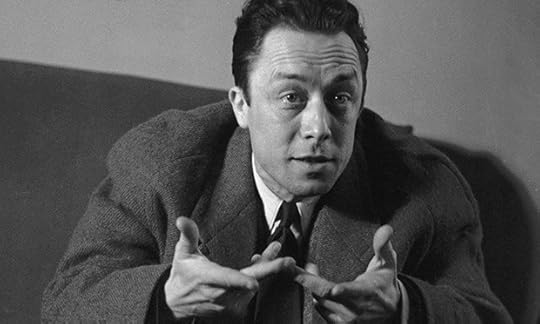
في الرابع من كانون الثاني عام 1960 توفي البير كامو عن ستة وأربعين عاماً، ولم يكن قد مر على منحه جائزة نوبل للأدب إلا سنتان، فقد اصطدمت السيارة التي كان ذاهباً فيها إلى باريس، والتي كان يقودها بسرعة كبيرة صديقه ميشيل غاليمار، بشجرة ضخمة، فقتل كاتبنا في الحال. وبانتشار النبأ في فرنسا، ثم خارج فرنسا، بين قراء كامو في العالم كله، عم الحزن والاضطراب. وجعلت تتواتر المراثي والمقالات في الصحف والإذاعات بأعداد كبيرة. وفي أثناء ذلك كان هو مسجى في نعش في قاعة البلدية في قرية فيلبليفان، وقد كسي النعش بغطاء رقيق وضع عليه إكليل واحد. ثم نقل النعش تصحبه فئة قليلة من أسرته وأصدقائه إلى قرية لورماران في جنوب فرنسا، حيث كان كامو قد قضى الكثير من وقته منذ أن حاز على جائزة نوبل. والذي وقع في روع معظم الناس كان هذا "العبث" الوحشي في موت كامو، هذه الخديعة السخيفة من الحظ: فقد وجدت في جيبه تذكرة قطار، مما دل على أنه إنما غير قراره في آخر لحظة، فسافر بالسيارة. إلا أن الكثيرين من أصدقائه رأوا ما يذكرهم بحقيقة صفاته لا في مقتله في حادث بشع، بل في دفنه في مقبرة لورماران بوقار ودونما جعجعة. حول سيرة كامو وعلاقتها بأدبه دارت الفصول الأولى من هذا الكتاب وأما ما تبقى من الكتاب فيبحث في أعمال كامو الأول بالترتيب: رواياته، مسرحياته، وأخيراً مجموعات مقالاته، وكل فصل يستهل بعبارة من كتابات كامو الشهيرة. لقد بدأ اسم ألبي كامو يذيع في الأوساط الأدبية بعيد الحرب العالمية الثانية كما كان ذائعاً إبان حركة المقاومة السرية بوصفه شاباً نشيطاً مقاتلاً ومديراً لجريدة كومبا، فضلاً عن كونه كاتب الرواية القصيرة المشهورة "الغريب" التي نشرت عام 1942. ولم يمض وقت يذكر حتى أصبح كل كتاب يكتبه كامو حدثاً أدبياً يتوقعونه ويستقبلونه بحرارة في باريس ليناقشوه أو يهاجموه أو ينافحوا عنه، ثم لا يلبث أن يترجم إلى لغات كثيرة ليصبح من جديد موضوع هجوم أو مدح أو تفنيد. إن مدى كتابات كامو أعظم مما قد يدركه البعض، فثمة كتب أربعة على الأقل مما كتب وهي: "الغريب"، و"الطاعون" و"المتمرد" و"السقوط" وصف كل منها عند صدوره بأنه أهم كتابات جيل بكامله، وليس بين ما كتب كامو ما يمكن أن يقال عنه بأنه ليس بذي شأن من ناحية أو أخرى.
This work edited by Germaine Bree is a collection of twenty essays on Albert Camus by different writers and critics. A 1962 edition, it was published two years after Camus’ untimely death. When I chanced upon this collection in the University Library, I felt ecstatic for I hadn’t even heard of this before. I may also mention that it was an entirely new section I had discovered, with a wealth of literary essays and criticisms so my joy was double fold. Also the collection was last issued in September, 1989 (sadly just once before I got it issued) and whoever it was who had read it last, had marked the same lines that I did too find worthy of marking and noting down. So despite of 25 years of reading distance, I kind of felt an affinity with the unknown reader. Hence inevitably, I had a very memorable experience reading this work.
As expected, the essays focus upon the Nobel Laureate’s works including his essays and stories, opinionating upon the style as well as the relevance of his works. While some essays were written posthumously, a few were also penned during his life time. And given that 52 years have elapsed since the first publication of these essays, which focused upon his writing in association with the times he belonged to and on that which influenced his writing, it can be said that at present, when Camus’ writing has been explored in greater depth and for the changed, if not better times, we may look upon these essays in wider light than their original intent. Camus’ works were considered as relevant to his times for they expressed a great mind’s response to a World which appeared alien and indifferent to a conscious man. In my view, his ideas are relevant even today since the world is undeniably as chaotic as it was then.These essays, most of them, which seem to empathize with Camus’ ideas, are their authors’ perspective on his ideas and writing style, which are equally important in understanding the Nobel Laureate’s oeuvre comprehensively. There are also a few essays which criticize his style and intentions, but I consider them important too because they give a voice to the disagreements with a mind often misunderstood and hence thereby widening the scope of a reader’s own understanding of his works.
The introduction by Bree in itself is an essay commenting upon author’s works, his inspirations, symbols frequently used in his writing and also upon the relevance of his stand as a writer and thinker. At one place, comparing Camus with Sartre, on their respective stands on Communism, he says:
“He was never hampered by the grinding and obsessive sense of limitation and guilt that Sartre seems to feel as a ‘petit-bourgeois’ in the era of ‘the Masses’. That is perhaps why Sartre, who speaks so often of ‘commitment’, has never been able to make the practical choices involved in action - forever postponing that crucial moment where action limits thoughts and challenge its conclusion.”
“In Memoriam” by Nicola Chiaoromonte starts so beautifully that it seizes your attention and leaves you mesmerized. He speaks of the inability to completely understand a man who was also a writer or the writer through the man that he was. Praising Camus for his earlier works i.e. The Stranger and The Myth of Sisyphus, he says:
“He had succeeded in saying, in his fevered way and in an argument as taut as a bow, why, despite the fury and horror of history, man is an absolute; and he had indicated precisely where, according to him, this absolute lay: in the conscience, even if mute and stilled; in remaining true to one’s self even when condemned by the gods to repeat over and over the same vain task.”
Also included in the same essay is Camus’ 1946 speech to students of Columbia University. He was speaking about the World which was left to humans after the world wars and Hitler. At one place he said:
“Another thing we have learned is that we cannot accept any optimistic conception of existence, any happy ending whatsoever. But if we believe that optimism is silly, we also know that pessimism about the action of man among his fellows is cowardly.”
In my view it very clearly expresses the thought behind his “absurd” when he says that optimism is silly but in the same line when he deems pessimism in action as cowardly, he is speaking of the solidarity necessary on the part of humans to carry on. Here it is necessary to add that though Camus was not optimistic about human existence but he was very optimistic about humans and humanity.
Nicola’s other essay in the collection – “Sartre versus Camus” is quite spirited too. Here he presents his views on Camus’ skepticism towards the modern ideologies and says:
“But progressive optimism is precisely the notion that Camus vigorously questions. His arguments cannot be easily dismissed by a philosophy like existentialism, which stresses so resolutely the discontinuity between human consciousness and any “process” whatsoever, and which in any case makes it very difficult to go back to the notion that man’s ethical task is to “change the world” through historical action. This not only because the idea of “changing the world” is a radically optimistic one in that it presupposes precisely that fundamental harmony between man and the world which existentialism denies, but because only if man is “historical” through and through (as Hegel and Marx assumed) is the definition of a “historical task” possible at all.”
The collection includes other brilliant essays which are worthy of attention. Since I cannot do justice to each of them in this review, I’ll urge Camus fans to go through them and cherish the experience of reading them as I did with absolute delight.
The complete list:
Nicola Chiaromonte, Albert Camus: In Memorium Serge Doubrovsky, Camus in America Justin O'Brien, Albert Camus:Militant Wilfreed Sheed, A Sober Conscience Nicola Chiaromonte, Sartre versus Camus: A Political Quarrel Roger Quillot, Albert Camus' Algeria Thomas L. Hanna, Albert Camus and the Christian Faith Bernard C. Murchland, Albert Camus: The Dark night Before the Coming of Grace Henri Peyre, Camus the Pagan Serge Doubrovsky, The Ethics of Albert Camus S Benynon John, Albert Camus: A British View Rachel Bespaloff, The World of the Man Condemned to Death Jean-Paul Sartre, An Explication of The Stranger Robert Champigny, Ethics and Aesthetics in The Stranger S Benynon John, Image and Symbol in the Work of Albert Camus Gaetan Picon, Notes on The Plague Gaetan Picon, Exile and the Kingdom Roger Quillot, An Ambiguous World Henry Popkin, Camus as Dramatist Jean-Paul Sartre, Tribute to Albert Camus
لقد نشأت في البحر .. وبدا لي الفقر شيئاً رائعاً، وفيما بعد ، عندما أضعت البحر ، بدت لي ضروب الترف كلها شهباء كالحة ، وبؤساً لا يٌطاق ..
ألبير كامو
ها أنت بمعطفك الشهير ، وسيجارتك المشتعلة بين شفاهك الساخرة ، ونظرتك التي لا تخلو من الفلسفة العبثية التي اشتهرت بها ..
أنت الفيلسوف الفرنسي ، الذي ولد وعاش بالجزائر حتي عمر 27 سنة ، ولعب كرة القدم في المنتخب الجزائري ، ثم حصل علي جائزة نوبل في الأدب .. واحترف الفكر العبثي حتي اضناه التعب ..
كامو .. سيزيف الفلاسفة .. الذي أعلن في شجاعة أن كلنا سيزيف ..
سيزيف البطل الأسطوري في الاساطير اليونانية القديمة التي حكمت عليه الألهة بعقاب أبدي ، بأن يكون تحت جبل شاهق في أعلاه صخرة ضخمة تسقط بسرعة هائلة فوق رأسه ، ثم تتوقف قبل أن تصطدم برأسه بخطوات بسيطة .. ثم عليه أن يرفع الصخرة فوق ظهره ، ويضعها فوق الجبل ، لتعود وتسقط .. وهكذا إلي الأبد !
والالهة اليونانية تنظر إلي سيزيف وتضحك .. وهي قادرة علي أن تُنهي عذابه ، ولكنها لا تفعل ! فيظل سيزيف في عذابه إلي الأبد .. في عبثية لا يُعرف لا سبب ولا نتيجة !
وأعلن كامو أن كلنا سيزيف ! فلقد ولدنا في تعب وسنموت في تعب .. وكل شئ عبث × عبث .. ! فلقد جئنا إلي هذا العالم بلا مبرر .. وكُتب علينا أن نحيا فيه في شقاء .. ولا سبيل للهرب .. فلقد حكمت علينا الحياة بالتعب المستمر .. وتعب كلها الحياة .. !!
وكامو كان مثالا للتعب المستمر .. فلقد ولد في فقر شديد بمرض قاتل .. ومات وهو في الـ 46 من عمره ، ولكن ليس بالمرض ، بل في حادثة مأساوية لا تقل غرابة عن حياته .. فلقد اراد أن يسافر بالقطار .. وقطع التذكرة .. ولكن صديقه ألح عليه أن يسافر معه بالسيارة .. وانتهي الأمر بحادثة مأساوية أهتز لها العالم ، مات فيها أشهر أديب وفيلسوف فرنسي في الفكر المعاصر
كامو .. لقد كانت العبثية داءً لم تُشفي منه .. كانت تعبك المستمر حتي آخر يوم في حياتك .. ولكن الله تعالي لم يخلقنا عبثاً ولعباً .. فالحياة أقدار .. ومصائر .. وحكمة بليغة .. وحادثة موتك لم تكن صدفة حمقاء .. بل كانت قدراً مكتوبا في حكمة وخطوات محسوبة .. ولكنك لم تعلم ذلك .. والأسوأ أن هناك الكثيرين الذين لا يعلمون ذلك ايضاً .. هؤلاء الذين احترفوا فكرك بمنتهي الاقتناع .. فأضناهم التعب .. ومازال يضينهم .. !!
This leads to a special conception of the work of art. Too often the work of a creator is looked upon as a series of isolated testimonies. Thus, artist and man of letters are confused. A profound thought is in a constant state of becoming; it adopts the experience of a life and assumes its shape. Likewise, a man's sole creation is strengthened in its successive and multiple aspects: his works. One after another they complement one another, correct or overtake one another, contradict one another, too. If something brings creation to an end, it is not the victorious and illusory cry of the blinded artist: "I have said everything," but the death of the creator which closes his experiences and the book of his genius.
یک کتاب خیلی خوب که زیر نظر استاد دیهیمی که میشه ازشون به عنوان برجسته ترین "کامو شناس" ایران اسم برد ترجمه شده و مفصلاً به تشریح زندگی و مخصوصاً کتاب های کامو پرداخته. ازونجایی که آقای دیهیمی خودشون بهترین مترجم آثار کامو به زبان فارسی هستن، تفسیری که به کارهای کامو نوشتن خیلی مفیده و یه سری گره هایی رو که برای خودم راجع به آثار کامو همیشه وجود داشت رو باز کرد این کتاب از سری کتابهای "نشر قلم" انتشارات "ماهی" ـه که زندگی نویسندگان قرن بیستم و نوزدهم رو در کتاب های جداگانه بررسی و تفسیر کرده. پیشنهاد می کنم اگه دوست دارید راجع به نویسنده ای بیشتر مطالعه کنید و تفسیری کوتاه از کتاب هاش بخونید و زیاد هم وقتتون رو از دست ندید، به این سری کتاب های نشر ماهی مراجعه کنید
لم تفارقني أبدا صورة (كاموس) الشاب الوسيم على خلفية روايته (الطاعون) بنسختها الفرنسية القديمة التي عثرت عليها بخزانة أبي - وأنا في سني الإعدادية لا أزال -.. تلك السيجارة المتدلية من شفتيه والنظرة (المتمردة) المنبثقة من عينيه..
عرفت فيما بعد أنه فيلسوف، ثم عرفت أن له "أصولا" جزائرية، ثم عرفت أنه رائد مذهب (العبث).. هذه الفلسفة التي تغازل الإنسان المكلوم وتربت على كتفيه قائلة: (لا بأس، الحياة عبث أصلا). والحق أن هذه الفلسفة هي (العبث) بعينه، أما خلق الله عز وجل فإنه أكبر وأنزه وأجلّ من (عبث) إنسان يبول ويتغوّط وينسى ويفقد توازنه ويُغلب ويبكي ويشيخ ويحزن ثم يموت.. كائن هذا حاله، لا يُعقل أن يُفسر لنا خلق الخالق، أو (يُصحّحه) كما يدّعي هؤلاء المخبولون..
ثم عرفت بعدها الإلحاد، ففهمت أنه ملحد.. عياذا بالله. فانقبض قلبي، وتشوهت تلك الصورة القديمة التي التقطتها عيناي للكاتب، والتي كانت مزيجا من (التفوّق) و(الدقّة) و(الذكاء) مع شيء من(الوسامة)..
بعدها صادفتني بين الفينة والأخرى مقولة أو اقتباس عميق له.. فكنت أشعر بثقله الأدبي، وأفهم في نفس الآن بُعده (الإلحادي).. فينقبض قلبي من جديد انقباضة أكاد أسمع رجع صداها. وأشعر بما يشبه الأسى لهذا الأديب "الذكي" - الذي ولد لعائلة فرنسية مستوطنة بالجزائر - فلو أنه كان على الحقّ والجادّة لربما زلزل الأوساط الأدبية والفلسفية بأوروبا بدقّته وتفكيره.. ولكنّك لا تهدي من أحببت.
ربما ما كان عليّ أن أقرأ هذا السّفر - أصلا - ولكني أحسب أنني أطفأت فضولا قديما حول شخص الكاتب لا فكره وفلسفته، مع ميولي الشخصية للتأمّل والتحليل - وهو ما يطلقون عليه فلسفة أيضا - إلا أني أكفر بفلسفاتهم جميعها..
كان سِفرا شاملا لمراحل حياة الكاتب وفكره، بطابع أدبي نقدي وعناوين (مسرحية) للفصول.. وفي الكتاب ما فيه من الحشو، ومن العبارات الإلحادية التي تفنن - للأسف - (جبرا إبراهيم) في ترجمتها.. كما لا يخلو من فصول مملة تشقّ قراءتها على النفوس.
وعلى كل حال.. أظنني عرفت سر تينك (العينين) أخيرا، إلا أنّ انقباضي لم يخفّ، بل زاد.. إذ من المخيف أن ترى كيف يهلك (الذكاء) أقواما ويقذف بهم في محيطات الضلال والكفر المتلاطمة ثم لا يخرجون منها !.. أستغ��ر الله العظيم من شرّ ما قرأت، وأسأله الهداية والثبات على الحق حتى ألقاه.
I am not sure if this should be read before one is tackled by Camus (note that I did not say "before one tackles Camus", for that is simply not possible on this plane of existence) or after; before one reads his fiction or after; before one reads his essays or after. I am fully aware of my intellectual limitations. With respect to his fiction I have only read the short stories and I know I am missing "something" despite my enjoyment of them; with respect to his essays I have read The Rebel and The Myth of Sisyphus and I know I only understand what is directly applicable to myself. I have not read any of his plays.
These essays collected by Bree will, I believe, help me once I get to The Fall, The Plague, and The Stranger. I have no macho problem in saying that these writers "dumbed it down a little" so I could get a better grasp on the intent in Camus' works. I now know that when I read his novels I may be able to follow plot and dialog but I will be missing his deeper intentions; when I do read his novels and plays, when I am left baffled, when I am left wanting, I have this from these essays (Hanna, page 58):
"Camus calls men to revolt. And the call to revolt is nothing more or less than a call to create; to transform the inhumanity of the world into the image of man, to humanize what is inhuman - in short, to civilize."
The essays relating to religion and ethics/morality were specifically engaging. Obvously, my memory of reading The Rebel (in the 1990s) has conveniently forgotten all the religious references (Hanna's essay, page 54):
"The religious pretension of Marxism is obvious in its refusal of men as they are in the name of men as they shall be. Marxism shares Christianity's impatience wth the "is" of this world in the light of a "should" which is beyond history."
Which explains why shits (or, like the phrase I was taught in US Navy boot camp: "wasted pieces of ass-fuck!") like Lenin, Stalin, Mao, Ceausescu, Honecker, et. al, were NOT Marxists. It also explains why the Christianity of Blair, Bush, Rumsfeld, and Cheney should be questioned -- publicly, loudly, and often.
Again, from the essays (Hanna, page 57):
"It is the moral philosophy which underlies these novels and plays that gives them their force and desperation.....For Camus is first of all a philosopher with serious moral and religious concerns, and all his literary productions serve as functions of these concerns."
And this (Doubrovsky, page 75):
"Far from rendering life absurd, death is the element which gives it its full meaning. Life retrieves and reabsorbs death, and in its very defeat triumphs, since death which denies life succeeds only in reaffirming life."
I say, "In Heaven, before God and His Cherubim, Seraphim, and Thrones: O, Saint Albert, pray for me."
ليس دوري (كفنان) ... أن اغيِّر العالم أو البشرية ، اذ ليس لدي من الفضيلة والحكمة ما يكفي لذلك .ولكن لعل دوري هو ان اخدم، حيثما اكون ،تلك القيم القليلة التي بدونها يكون العالم مكانا لا يستحق العيش فيه مهما تجدّد ، غير جدير بالاحترام
من عناوين كتب ألبير كامو يتبين نوع توجهاته كالتمرد الطاعون الغريب السقطة ...الخ
"هدفه هو استعادة قيم انسانية معينة الى مكانها، لا استجلاب موضوعات فكرية جديدة"
الكلمات العشر المحببة لديه بتصريح منه (العالم، المعاناة، الارض، الأم، البشر، الصحراء، الشرف، البؤس، الصيف، البحر) الكتاب تقريبًا توضيح وتحليل لروايته ومقالاته والمسرحيات التي اخرجها ثاني تجربة لي مع ترجمة جبرا ابراهيم جبرا ولم تناسبني كثيراً
"ثمة في الفقر وحشة، ولكنها وحشة تعطي كل شيء ثمنه الحقيقي. فعند درجة معينة من الثراء، تبدو السماء نفسها والليل الزاخر بالنجوم ثروة طبيعية. ولكن في اسفل السلم، تستعيد السماء معناها باجمعه: نعمة لا تثمن. "
Germaine Bree, one of Camus' close friends, gives a sort of biography, a background to help understand Camus better. One might be amazed how "The realization that life is absurd cannot be an end, but only a beginning", because many people can relate to the idea of Camus' absurd, but they see it more like a conclusion, rather than a means to a happy life. A better understanding can only be gained once one understands Camus' personal life. Bree does an excellent job of doing a sort of biography on Camus, and even reviews some of the works of his dear friend, providing important insights. All in all, this is a pretty underrated book, and I would recommend this as a book which is as important as Camus' own works, provided one is determined to understand Camus deeply.
به شوخی: انگار اگر کسی کتاب بیگانه کامو و تهوع سارتر را نخوانده باشد، بویی از روشنفکری نبرده و دیپلم، انتلکتوال بودنش صادر نمی شود. شاید برای این بود که کتاب بیگانه را دست گرفتم و تهوع را هم همین روزها می خوانم! جدّی: بیگانه داستانی سرراست و خطی درباره زندگی، افکار و احساسات آدمی است که با خودش تعارف ندارد و اسیر کنش های تعریف شده اجتماع نیست. او در مقابل، عشق و نفرت واکنشهای خاص خودش را دارد که با چشمداشتهای اجتماع فاصله نجومی دارد و از این رو همیشه «بیگانه» و «مطرود» است. داستان کشش بی نظیری دارد و تا مدتها ذهن را به خود مشغول می کند و اگر کسی بارها و بارها آن را بخواند نباید بر او خرده گرفت.
الصراع الميتافيزيقي عند كامو هو البحث عن تفسير العالم في ظل غياب الله؛ فهو غير معترف بالألوهية وغير منكرٍ لها. ففي ظل ذلك الغياب للإله يصف كامو العالم بأنه لا معقول، العالم هنا هو الأفق الميتافيزيقي لمحيا البشري ولموتِه، فالعالم في ظل غياب الله يكون بلا معنى ميتافيزيقي محدَد وبلا قيم متعالية، وهذا الغياب للمعنى والقيم يجعل الإنسان يصف العالم باللامعقول؛ فالعالم هنا يظهر بطريقة شبحية. فالصراع الميتافيزيقي هنا هو سعي الإنسان لتفسير الوجود، بينما الوجود صامت يأبى أن يبوح بسرِه؛ وذلك هو تخوم اللامعقول. لكن كامو ظل يدعو لتجاوز اللامعقول الذي يُخيِّم على العالم. وفي الفترة المتأخرة من حياته تجاوز ذلك اللامعقول حتى وإن كان بشكلٍ طفيف؛ وذلك التجاوز كان عن طريق أنه أصبح يعيش حياته كأن هناك إله؛ فهو يقول "أن أعيش حياتي وكأن هناك إله ثم أموت ولا أجده، خيرٌ من أن أعيش حياتي وكأنه لا يوجد إله ثم أموت وأجده"، وهو هنا لا يلعب رهان باسكال، ولكنه يتحدث عن وجود الإله وما يُضفيه على العالم من المعنى الميتافيزيقي والقيم المتعالية. وشبح الإله ذلك المبني على احتمالية وجوده، يسمح بتفسير العالم ولكن بشكٍل جزئيّ، إن شبح الإله ينفي شبحية العالم بشكٍل ما. لكن ذلك التفسير للعالم المبني على احتمالية وجود الإله، غير مُرضٍ للإنسان، فهو يظل محرومًا من الخلاص، ويظل في صراع ميتافيزيقي حول الإله، والصراع الميتافيزيقي يكون هنا كأنه هو الإله؛ فهو أثر الله وذِكر الله، فالإنسان هنا يتمركز حول الإله بذلك الصراع، وهنا نستدعي مقولة بيسوا "غياب الله هو الله بحد ذاته". لكن الإنسان اللاأدري ليس عاجزًا عن الإيمان كما يُصوِر لنفسه، لكن في ظل ذلك الصراع الميتافيزيقي الشديد، يتطلب الإيمان حَفر في العالم لإحداث شرخ في العالم، والعبور نحو الماوراء لشهودِ الله.
Alternately interesting and tiresome, particularly tiresome reading the 'critical' voice, like: "Here again the contrast between the immobility of a stark landscape and the living movement of the sea emphasizes Camus's preoccupation with the complex time patterns within which human beings move and must maintain a precarious equilibrium." Oh really? True or false, I don't care. Far more preferable were the words of Camus quoted by Bree, like: "This world I can touch and I conclude that it exists. That is the limit of my science and the rest is construction...Forever I shall be a stranger to myself...A stranger to myself and to the world...I rediscovered that one must keep intact within oneself a freshness, a source of joy, love and light that escapes injustice, and that one must return to the struggle having conquered that light. Here once again I found that old beauty, the young sky, and I measured my good fortune, understanding at last that in the worst years of our madness the memory of this sky had never left me. And that memory had, in the end, protected me against despair...Those who love each other and are separated can live in pain, but it is not despair: they know that love exists. That is why I suffer with dry eyes, in exile. I still wait...A sudden love, a decisive act, a thought which transfigures, at certain moments give the same intolerable anxiety accompanied by an irresistible attraction..."
ترجمه ی خشایار دیهیمی، 1372 سری کتاب های جیبی و جمع و جور "نسل قلم" که شرح احوال، زندگی و آثار، و گهگاه نظر منتقدان متعدد در مورد یک نویسنده است، با مترجمین زبردست در زبان فارسی، کاری ست ستودنی و قابل تحسین، کمبودی که در ادبیات فارسی مشهود بود، و متاسفانه، و به احتمال قوی به دلیل شرایط، متوقف ماند. به نظر می رسد این سری آثار، به همت خشایار دیهیمی و یکی دو تن دیگر از اهل قلم در ایران شکل گرفته باشد. با تشکر و سپاس از این تلاش ادبی سترگ
Found for free. This reminds me of a PHD or Master thesis but written for a general audience. The author gives a summary of every Camus work, and is clearly intelligent, and supposedly had known or met Camus. Unfortunately, she fails to make any serious points, and I didnt feel like I learned much at all from Camus. There's really no reason to spend the time reading it.