

What do you think?
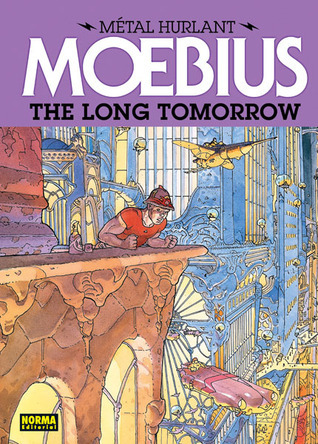
The Collected Fantasies of Jean Giraud #4
The Long Tomorrow
En las décadas de 1970 y 1980, Moebius revolucionó el mundo del cómic. Sus historias de ciencia ficción surrealista y sus carismáticos personajes han influido a generaciones enteras de nuevos creadores.
Métal Hurlant , la mítica revista francesa de la que fue también fundador, fue la plataforma de difusión de esta nueva forma de entender el noveno arte. Su influencia llegó hasta Estados Unidos, donde el trabajo de Moebius se publicó en color.
Esta nueva colección recopila esas ediciones coloreadas, inéditas hasta la fecha en nuestro país.
La colección Métal Hurlant tendrá periodicidad mensual y comprenderá los siguientes títulos:
1. The long tomorrow
2. El hombre del Ciguri
3. La ciudadela ciega
4. Escala en Pharagonescia
5. Las vacaciones del Mayor
6. El garaje hermético
7. Arzach
8. El empalmado loco
9. Caos / Crónicas metálicas
Métal Hurlant , la mítica revista francesa de la que fue también fundador, fue la plataforma de difusión de esta nueva forma de entender el noveno arte. Su influencia llegó hasta Estados Unidos, donde el trabajo de Moebius se publicó en color.
Esta nueva colección recopila esas ediciones coloreadas, inéditas hasta la fecha en nuestro país.
La colección Métal Hurlant tendrá periodicidad mensual y comprenderá los siguientes títulos:
1. The long tomorrow
2. El hombre del Ciguri
3. La ciudadela ciega
4. Escala en Pharagonescia
5. Las vacaciones del Mayor
6. El garaje hermético
7. Arzach
8. El empalmado loco
9. Caos / Crónicas metálicas
56 pages, Hardcover
First published January 1, 1988
About the author
Mœbius
585 books979 followersJean Henri Gaston Giraud (pen-name: Mœbius) was a French artist, cartoonist, and writer, who worked in the Franco-Belgian bandes dessinées tradition.
Also published as Jean Giraud.
Also published as Jean Giraud.
Ratings & Reviews
Friends & Following
Create a free account to discover what your friends think of this book!
Community Reviews
Displaying 1 - 30 of 65 reviews

March 9, 2020
"The Long Tomorrow" - comic by Dan O'Bannon . Art by Moebius.
Short story about 16 pags.
Harboiled crime in the future.
Amazing Art that inspired many scifi films - Blade Runner; Fifth Element.
Cuenta la leyenda que Dan O'Bannon , guionista, escribió esto como una parodia porque estaba aburrido esperando las negociaciones para la filmación de la pelicula "Duna" (en el grupo estaba Jodorowsky). Moebius , que también estaba aburrido, empezó a dibujar el relato poniendo una figura con traje más ridicula que se le ocurrió al protagonista (cofAmidalacof). Bueno, asi nació lo que tal vez sea el primer cyberpunk.
La historia es sencilla: a un detective una hermosa mujer le paga para recoger un paquete y ... ya se imaginarán el resto.

Calles elevadas verticalmente, autos voladores, estratos de sociedad, y un poco de horror mezclados. Hay un momento reconozco que me arrancó una risa (sí, 'ese' momento, jaja).
Un clásico.
Short story about 16 pags.
Harboiled crime in the future.
Amazing Art that inspired many scifi films - Blade Runner; Fifth Element.
Cuenta la leyenda que Dan O'Bannon , guionista, escribió esto como una parodia porque estaba aburrido esperando las negociaciones para la filmación de la pelicula "Duna" (en el grupo estaba Jodorowsky). Moebius , que también estaba aburrido, empezó a dibujar el relato poniendo una figura con traje más ridicula que se le ocurrió al protagonista (cofAmidalacof). Bueno, asi nació lo que tal vez sea el primer cyberpunk.
La historia es sencilla: a un detective una hermosa mujer le paga para recoger un paquete y ... ya se imaginarán el resto.
Calles elevadas verticalmente, autos voladores, estratos de sociedad, y un poco de horror mezclados. Hay un momento reconozco que me arrancó una risa (sí, 'ese' momento, jaja).
Un clásico.

May 7, 2020
The stories in this volume are some of the most accessible of the entire series. There are no mystic experiences, no blurring of the line between reality and fiction. It's just straight up traditional science fiction. In his comments on the stories, Moebius talks about consciously aiming for the feel of the short stories appearing in Galaxy magazine, particularly those of Robert Sheckley.
“The Long Tomorrow” itself is based on a comics story done by Dan O’Bannon. He and Moebius were working with Alexandro Jodorowsky on the ill-fated Dune project. Since the movie was still in the concept and design phase, there wasn't much for special effects artist O’Bannon to do yet. He kept busy by drawing a comics story, intended to be a parody of the hardboiled genre, but with SF elements. Moebius’ imagination was fired up by the story, and he was given permission to do his own version. The resulting creation is a delightful fusion of science fiction and noir detective elements that appears to have been the inspiration for the look of Ridley Scott’s Bladerunner.
Honestly, this volume is probably a good introduction to Moebius’ work for the uninitiated. The stories give you an opportunity to see his style in the service of some more conventional plots. I’m not sure I completely understand Marvel/Epic’s reasoning in ignoring the original publication order when presenting this series. Sure, Moebius has done some weird and trippy stuff, but it didn't just appear out of nowhere. His style and storytelling developed and evolved. This may be Volume 4 of the series, but many of these stories predate the ones in earlier volumes.
“The Long Tomorrow” itself is based on a comics story done by Dan O’Bannon. He and Moebius were working with Alexandro Jodorowsky on the ill-fated Dune project. Since the movie was still in the concept and design phase, there wasn't much for special effects artist O’Bannon to do yet. He kept busy by drawing a comics story, intended to be a parody of the hardboiled genre, but with SF elements. Moebius’ imagination was fired up by the story, and he was given permission to do his own version. The resulting creation is a delightful fusion of science fiction and noir detective elements that appears to have been the inspiration for the look of Ridley Scott’s Bladerunner.
Honestly, this volume is probably a good introduction to Moebius’ work for the uninitiated. The stories give you an opportunity to see his style in the service of some more conventional plots. I’m not sure I completely understand Marvel/Epic’s reasoning in ignoring the original publication order when presenting this series. Sure, Moebius has done some weird and trippy stuff, but it didn't just appear out of nowhere. His style and storytelling developed and evolved. This may be Volume 4 of the series, but many of these stories predate the ones in earlier volumes.
August 22, 2012
Moebius' "The Long Tomorrow" (NOT an adaptation of Leigh Brackett's novel of the same title) and "The Incal" together constitute my personal gold standard for cyberpunk future noir artwork. These two comics are more or less how I imagine everything to look like in my head whenever I read Philip K. Dick, William Gibson and the like.
"The Long Tomorrow" is by far the most accessible of the two, with the story being contributed by "Alien" screenwriter Dan O'Bannon instead of mystical Renaissance man Alejandro Jodorowsky: A short story following a far future private detective named Peter Club tasked with retrieving a mysterious package for an upper class woman. Before long all this gets twisty and convoluted just like in a typical novel by Dashiell Hammett or Raymond Chandler. Of course, since "the Long Tomorrow" takes place in a space opera setting the plot twists come courtesy of four-armed alien assassins, shapeshifting Arcturian spies, characters getting their brains re-transferred into robot bodies and the like. You can tell that the production designers for "Blade Runner" used this comic as a reference for what they wanted to accomplish! Likewise, the "Harry Canyon" segment in the 1981 animated science-fiction+fantasy anthology "Heavy Metal" takes quite a bit of inspiration both in visual style and plot structure from "The Long Tomorrow" just as the silent pterodactyl-riding heroine of the "Taarna" segment is basically a gender-swapped version of Arzach.
To this day, several things make "The Long Tomorrow" a fresh reading experience despite how much it's been imitated. The first is that instead of drawing everything in either drab grey colours, or different nuances of blue and purple, Moebius uses bright vivid colours chosen and combined on the basis of interesting compositions and sharp colour contrasts over realism. Another distinct Moebius touch is all the effort put into creating architectural styles, fashions and designs that fit into coherent aesthetic styles but do not quite match any existing human culture - and also reflect the social structures of his future society. For example the proletarian private detective protagonist Pete Club lives in an apartment whose interior decoration follows an exaggerated version of mid-1970's kitsch, whereas the upper class follow styles that can vaguely be traced back to 1920's/1930's Art Deco styles as nostalgically revived by a society many centuries in the future. Yet the reader still ends up feeling that this is a convincing future society, despite Moebius' signature surrealistic sensibility. More unique touches include one of the bad guys driving a hovercar that is clearly modelled on the Citroën DS, or the overall sense of absurdist humour.
Speaking of the world building, Moebius and O'Bannon convey many of the basic details about the fictional universe just by showing instead of telling, or with an off-hand detail in the dialogue that ends up setting up a plot twist later down the road. I like how the setting is not our Earth or even anywhere in our solar system, but instead a subterranean city on a moon in a distant solar system. This allows Moebius to go wild with thinking up weird future architecture styles and design sensibilities as well as O'Bannon to throw in off kilter details about the society. (e. g. how private detective jobs are still taken by humans but regular law enforcement by robots or how the rich have android reserve bodies to place their brains in) Moebius would later take this ethos even further when he teamed up with Alejandro Jodorowsky on "The Incal" to continue the future noir theme.
"The Long Tomorrow" is by far the most accessible of the two, with the story being contributed by "Alien" screenwriter Dan O'Bannon instead of mystical Renaissance man Alejandro Jodorowsky: A short story following a far future private detective named Peter Club tasked with retrieving a mysterious package for an upper class woman. Before long all this gets twisty and convoluted just like in a typical novel by Dashiell Hammett or Raymond Chandler. Of course, since "the Long Tomorrow" takes place in a space opera setting the plot twists come courtesy of four-armed alien assassins, shapeshifting Arcturian spies, characters getting their brains re-transferred into robot bodies and the like. You can tell that the production designers for "Blade Runner" used this comic as a reference for what they wanted to accomplish! Likewise, the "Harry Canyon" segment in the 1981 animated science-fiction+fantasy anthology "Heavy Metal" takes quite a bit of inspiration both in visual style and plot structure from "The Long Tomorrow" just as the silent pterodactyl-riding heroine of the "Taarna" segment is basically a gender-swapped version of Arzach.
To this day, several things make "The Long Tomorrow" a fresh reading experience despite how much it's been imitated. The first is that instead of drawing everything in either drab grey colours, or different nuances of blue and purple, Moebius uses bright vivid colours chosen and combined on the basis of interesting compositions and sharp colour contrasts over realism. Another distinct Moebius touch is all the effort put into creating architectural styles, fashions and designs that fit into coherent aesthetic styles but do not quite match any existing human culture - and also reflect the social structures of his future society. For example the proletarian private detective protagonist Pete Club lives in an apartment whose interior decoration follows an exaggerated version of mid-1970's kitsch, whereas the upper class follow styles that can vaguely be traced back to 1920's/1930's Art Deco styles as nostalgically revived by a society many centuries in the future. Yet the reader still ends up feeling that this is a convincing future society, despite Moebius' signature surrealistic sensibility. More unique touches include one of the bad guys driving a hovercar that is clearly modelled on the Citroën DS, or the overall sense of absurdist humour.
Speaking of the world building, Moebius and O'Bannon convey many of the basic details about the fictional universe just by showing instead of telling, or with an off-hand detail in the dialogue that ends up setting up a plot twist later down the road. I like how the setting is not our Earth or even anywhere in our solar system, but instead a subterranean city on a moon in a distant solar system. This allows Moebius to go wild with thinking up weird future architecture styles and design sensibilities as well as O'Bannon to throw in off kilter details about the society. (e. g. how private detective jobs are still taken by humans but regular law enforcement by robots or how the rich have android reserve bodies to place their brains in) Moebius would later take this ethos even further when he teamed up with Alejandro Jodorowsky on "The Incal" to continue the future noir theme.

May 2, 2014
Woah, the art is amazing. It's on archive.org in Heavy Metal vol 1 #4 and #5. Some nudity. Inspired the city look in Bladerunner. That's the same O'Bannon that wrote Alien. You can read it in 15 minutes. I used Comic Book Lover on Mac.
https://archive.org/search.php?query=...


August 4, 2020
5.5/10
Can a cartoonist count among the most influential in the history of comics, while being at the same time - and without contradiction! - a little bit of a charlatan? My answer is yes, as proved by this book.
The volume collects short sci-fi stories drawn and mostly written by Jean 'Moebius' Giraud in the early 70's.
The importance of Moebius's artistic vision and style in comics, movies and all other kinds of visual arts has been well-documented in the past fifty years. So, it is not up to me to reiterate that aspect of the career of this French master.
Much less discussed - I dare to say, much less acknowledged by the collective consciousness of people interested in the language of comics - is how Moebius wasn't exactly great at writing compelling stories.
Of course, 'writing' is a big word here. All over his sci-fi career Giraud admittedly never put much effort in the conception and storytelling development of his solo stories. He rather followed a - sometimes drugs driven, sometimes meditation/new age driven - free narrative take. An approach which I am sure was pleasant and liberating for the author (and a few of his admirers back in the early 70's), but turns out to be a bit painful for a modern reader. As I am the first to criticise a certain unbalance in many mainstream comics in favour of the writers (of scripts in prose), I will also be the first to admit that too much of the alternative scene from the 70's and 80's - especially the French school à la Métal Hurlant, the Italian school à la Frigidaire, and so on - is too unbalanced towards the artistic side.
Notice that I am not even complaining here about Moebius's more 'hermetic' tales, such as Arzach. In fact, this volume is a collection of quite clear short stories. It is just that these stories are based on pretty simplistic ideas. Now, I am more than happy to condone a certain lack of deepness of the plot if the execution - the narrative tricks used to tell the story - captures my interest. In the end, comics are about the how much more than the what. But Moebius storytelling was just...bah, how can I describe it? Linear. Here and there even vaguely pedantic.
So, let's see what we have in this collection.
The Long Tomorrow is the one good story in the book. It was written and originally completely drawn by Dan O' Bannon. A movie guy who, among other things, wrote Alien. Yes, that good of a writer you need to obtain sixteen pages out of Moebius's sci-fi career that are interesting from a storytelling perspective. The Long Tomorrow is a brief noir story with a visionary atmosphere and a decent final cliffhanger. It is a preview of the urban landscapes that Moebius will envision a few years later on The Incal, minus all the esoteric mumbo jumbo that Alejandro Jodorowsky will inject in the latter.
It's a Small Universe, Variations No. 4027 on 'the' Theme and Christmas in Lipponia are not particularly deep reflection on the violence of human nature.
The artifact and There is a Prince Charming on Phenixon are a bit predictable.
The 2-pager Split the little space pioneer is, in the words of the author himself, 'an attempt to do something funny [...], although I do not think of myself as a humorist'. Well, these 2-page gag proves that he was probably right.
Moebius seemed to think that all it takes to write a short story is a cliffhanger in the final page. I mean, the man literally states that in one of his intros in this book. Fair enough, but here it only worked for me in the story Blackbeard and the Pirate Brain.
Approaching Centauri is just an excuse to make Druillet draw a few of his visionary pages. Ah, yes: unlike what stated in the credits of the volume, the art in this story is by Moebius only at the beginning and at the end, while the centre is clearly by his friend and master Druillet. (For those unfamiliar with this name, Philippe Druillet was some kind of 'slightly less incensed Moebius', even if with a different visual approach to sci-fi.)
The final Is Man Good? provides us at least with a definitive answer to the title longstanding ethical dilemma.
Of course, the art is very good, sometimes breathtaking. Focus on the art and do not think too much about the stories you are reading. In the end, it is what Moebius actually wanted from us all.
Can a cartoonist count among the most influential in the history of comics, while being at the same time - and without contradiction! - a little bit of a charlatan? My answer is yes, as proved by this book.
The volume collects short sci-fi stories drawn and mostly written by Jean 'Moebius' Giraud in the early 70's.
The importance of Moebius's artistic vision and style in comics, movies and all other kinds of visual arts has been well-documented in the past fifty years. So, it is not up to me to reiterate that aspect of the career of this French master.
Much less discussed - I dare to say, much less acknowledged by the collective consciousness of people interested in the language of comics - is how Moebius wasn't exactly great at writing compelling stories.
Of course, 'writing' is a big word here. All over his sci-fi career Giraud admittedly never put much effort in the conception and storytelling development of his solo stories. He rather followed a - sometimes drugs driven, sometimes meditation/new age driven - free narrative take. An approach which I am sure was pleasant and liberating for the author (and a few of his admirers back in the early 70's), but turns out to be a bit painful for a modern reader. As I am the first to criticise a certain unbalance in many mainstream comics in favour of the writers (of scripts in prose), I will also be the first to admit that too much of the alternative scene from the 70's and 80's - especially the French school à la Métal Hurlant, the Italian school à la Frigidaire, and so on - is too unbalanced towards the artistic side.
Notice that I am not even complaining here about Moebius's more 'hermetic' tales, such as Arzach. In fact, this volume is a collection of quite clear short stories. It is just that these stories are based on pretty simplistic ideas. Now, I am more than happy to condone a certain lack of deepness of the plot if the execution - the narrative tricks used to tell the story - captures my interest. In the end, comics are about the how much more than the what. But Moebius storytelling was just...bah, how can I describe it? Linear. Here and there even vaguely pedantic.
So, let's see what we have in this collection.
The Long Tomorrow is the one good story in the book. It was written and originally completely drawn by Dan O' Bannon. A movie guy who, among other things, wrote Alien. Yes, that good of a writer you need to obtain sixteen pages out of Moebius's sci-fi career that are interesting from a storytelling perspective. The Long Tomorrow is a brief noir story with a visionary atmosphere and a decent final cliffhanger. It is a preview of the urban landscapes that Moebius will envision a few years later on The Incal, minus all the esoteric mumbo jumbo that Alejandro Jodorowsky will inject in the latter.
It's a Small Universe, Variations No. 4027 on 'the' Theme and Christmas in Lipponia are not particularly deep reflection on the violence of human nature.
The artifact and There is a Prince Charming on Phenixon are a bit predictable.
The 2-pager Split the little space pioneer is, in the words of the author himself, 'an attempt to do something funny [...], although I do not think of myself as a humorist'. Well, these 2-page gag proves that he was probably right.
Moebius seemed to think that all it takes to write a short story is a cliffhanger in the final page. I mean, the man literally states that in one of his intros in this book. Fair enough, but here it only worked for me in the story Blackbeard and the Pirate Brain.
Approaching Centauri is just an excuse to make Druillet draw a few of his visionary pages. Ah, yes: unlike what stated in the credits of the volume, the art in this story is by Moebius only at the beginning and at the end, while the centre is clearly by his friend and master Druillet. (For those unfamiliar with this name, Philippe Druillet was some kind of 'slightly less incensed Moebius', even if with a different visual approach to sci-fi.)
The final Is Man Good? provides us at least with a definitive answer to the title longstanding ethical dilemma.
Of course, the art is very good, sometimes breathtaking. Focus on the art and do not think too much about the stories you are reading. In the end, it is what Moebius actually wanted from us all.

January 24, 2018
A powerful sci-fi small story of sixteen pages by O'Bannon (after the unsuccessful try with the cinematic adaptation of Dune he worked on Alien with Riddley Scott) and the master of science fiction, monsieur Moebius. Even in that small a size Jean Giraud manages to hide a complete world full of details and untold stories, based on the clever sci-fi noir plot by O'Bannon.
"The Long Tomorrow" is a fine speciment of how the 9th art influenced (and continues to this day) a lot of movies (Blade Runner and Empire strikes back in this case) that later became landmarks of the genre.
"The Long Tomorrow" is a fine speciment of how the 9th art influenced (and continues to this day) a lot of movies (Blade Runner and Empire strikes back in this case) that later became landmarks of the genre.

February 13, 2023
Desternillantes historias de CF y fantasía... Algunas divertidas, soeces y macarras. Otras alucinantes e inquietantes... Cómo esa dónde al hacer un salto hiperespacial se vislumbra el infierno...
El arte de Moebius brutal.
El arte de Moebius brutal.

October 7, 2019
Like I said on the review of the first volume: Moebius is rather the alpha and omega of modern SF&F visualizations.
Right from the beginning of this particular volume the visual similarities to Besson's Fifth Element are glaringly obvious. And then there are what seem like lone designs 'borrowed' to Star Wars: Imperial probe, elements to Queen Amidala's fashion, even a creature quite alike 'Sy Snootles' the cantina singer.
The quotation marked "Art" in " "Art" par Moebius" credits definitely makes you smile with sympathy to that recognizable artistic self-scrutiny.
Right from the beginning of this particular volume the visual similarities to Besson's Fifth Element are glaringly obvious. And then there are what seem like lone designs 'borrowed' to Star Wars: Imperial probe, elements to Queen Amidala's fashion, even a creature quite alike 'Sy Snootles' the cantina singer.
The quotation marked "Art" in " "Art" par Moebius" credits definitely makes you smile with sympathy to that recognizable artistic self-scrutiny.

June 3, 2014
This is a collection of short sci-fi stories by Moebius (some are written by others). The art is really fantastic. Some of the stories are really awesome, others are just alright (predictable, but fun).

December 4, 2016
Not at ALL what I was expecting. I thought this would be small (52 pages) story, I didn't expect it to be 8 super tiny ones. The art looks really cool. There's a spaceship at one time that I could not stop staring at.

April 23, 2018
Alright, Giraud, that was your last chance. We're done, you and I.

September 13, 2020
While nothing in this collection is essential to the canon of Jean Giraud, it's an interesting look at his minor (mostly early) works, created before he really found his groove with the Aedena cycle and The Airtight Garage. His wonderful artwork is very much present throughout these pages, making up for the largely formulaic sci-fi plots.
This volume includes commentary from the author on each piece, and he notes especially the violent endings of many of these stories, something that evolved into spiritual awakenings in his later work. That point highlights the raw energy that courses through this collection, a much rougher and direct approach to narrative than many readers associate with Moebius. So for the completist, this book is entirely worthwhile as part of the foundation that would lead to later and greater things from the same artist.
This volume includes commentary from the author on each piece, and he notes especially the violent endings of many of these stories, something that evolved into spiritual awakenings in his later work. That point highlights the raw energy that courses through this collection, a much rougher and direct approach to narrative than many readers associate with Moebius. So for the completist, this book is entirely worthwhile as part of the foundation that would lead to later and greater things from the same artist.
January 25, 2018
A sci-fi short stories collection of the highest quality by Moebius. The spiritual meanings hidden beneath each story are vast and the complementary notes by the creator offer a unusual reading experience. It's better to read the notes after the story and then read it again, you'll see it in a different (and most of the times far more interesting) perspective.
It's a pity these paperbacks by epic are so expensive and I had to resign to scanned cbrs. I'll surely continue to the other albums of the series.
It's a pity these paperbacks by epic are so expensive and I had to resign to scanned cbrs. I'll surely continue to the other albums of the series.

October 4, 2019
[Comics Canon Review]
A collection of minor Moebius stories, some of which he drew for other writers. The eponymous story, “The Long Tomorrow,” is the best of the bunch, but it’s a story more notable for its influence on films like Blade Runner and The Fifth Element rather than for anything noteworthy in and of itself.
A collection of minor Moebius stories, some of which he drew for other writers. The eponymous story, “The Long Tomorrow,” is the best of the bunch, but it’s a story more notable for its influence on films like Blade Runner and The Fifth Element rather than for anything noteworthy in and of itself.

November 10, 2019
L'art entre l'onirisme et le fantastique de Moebius en nouvelles de SF.
On m'a dit que la ville de The Long Tomorrow existe. Elle s'appelle Tokyo. J'ai hâte!
On m'a dit que la ville de The Long Tomorrow existe. Elle s'appelle Tokyo. J'ai hâte!

December 8, 2021
I...I just can't comprehend... I...

May 27, 2016
Oggi, l'immaginario fantascientifico è dominato da elementi che vengono presi dal mondo di Star Wars: la moda del futuro, il modo di viaggiare, le città, la tecnologia, gli alieni. Quando pensiamo a un mondo futuro, a causa del bombardamento mediatico subito in tutti questi anni, siamo portati a immaginarlo in quel modo. Star Wars, con tutta la sua estetica, è uscito in sala nel 1977.
Queste tavole sono state realizzate nel 1975, epoca in cui tutte le immagini straordinarie alle quali siamo abituate non esistevano: i disegni realizzati da Moebius, quindi, sono un'ispirazione originaria di altissimo livello e di grande creatività.
E' un volume molto piccolo, che può essere apprezzato solo dagli amanti dei racconti. I pochi mezzi di questa fase iniziale dello sperimentalismo fumettistisco non permettevano un gran numero di tavole, eppure questo autore riusciva, grazie a una grande incisività, a scrivere e rappresentare storie avvincenti. Tutto è carico di senso: parole e immagini sono tesi verso il racconto di una storia, ogni elemento è messo lì per fornirci delle informazioni che ci aiutano a capire la narrazione.
E' un disegno che, seppur legato ancora alla struttura a 'griglia' del fumetto, già inizia a ragionare secondo più direzioni spaziali: l'uomo del futuro si muove in tutte le direzioni e la vignetta ci trascina in avanti solo cronologicamente, mentre il disegno ci fa 'ruotare' nello spazio. La pagina è piena di dettagli, Moebius rende concreto il mondo futuro fino a farcelo apparire realistico.
Per gli appassionati del fumetto, che hanno voglia di approfondire le origini 'artigianali' di questa arte.
Queste tavole sono state realizzate nel 1975, epoca in cui tutte le immagini straordinarie alle quali siamo abituate non esistevano: i disegni realizzati da Moebius, quindi, sono un'ispirazione originaria di altissimo livello e di grande creatività.
E' un volume molto piccolo, che può essere apprezzato solo dagli amanti dei racconti. I pochi mezzi di questa fase iniziale dello sperimentalismo fumettistisco non permettevano un gran numero di tavole, eppure questo autore riusciva, grazie a una grande incisività, a scrivere e rappresentare storie avvincenti. Tutto è carico di senso: parole e immagini sono tesi verso il racconto di una storia, ogni elemento è messo lì per fornirci delle informazioni che ci aiutano a capire la narrazione.
E' un disegno che, seppur legato ancora alla struttura a 'griglia' del fumetto, già inizia a ragionare secondo più direzioni spaziali: l'uomo del futuro si muove in tutte le direzioni e la vignetta ci trascina in avanti solo cronologicamente, mentre il disegno ci fa 'ruotare' nello spazio. La pagina è piena di dettagli, Moebius rende concreto il mondo futuro fino a farcelo apparire realistico.
Per gli appassionati del fumetto, che hanno voglia di approfondire le origini 'artigianali' di questa arte.

October 9, 2016
Long Day Tomorrow was top notch, heavy influence on Blade Runner so that is really neat. Otherwise I found the quality of many of the other stories to be choppy. Probably more of a 3-3.5 stars but bumping up a bit just cuz it's Moebius and you always gotta love his art. I do enjoy that this collection includes Jean Giraud's (Moebius') commentary on each piece, which stories and art turned out best and why he thought so along with his critique of where he felt certain pieces fell short. It's always fun to see an artist of Moebius' stature analyze his own work while also offering insights to his creative process.
Overall I was more impressed with The Airtight Garage which I also just recently read.
Overall I was more impressed with The Airtight Garage which I also just recently read.

November 24, 2020
The best story is the first written by Dan O'Bannon, The Long Tomorrow. It's a future-noir story that O'Bannon wrote & Moebius produced while they were twiddling their thumbs in the mid 70's waiting for Jodorowsky's never produced Dune movie to get going. Anyway, it's the best written story & the best artistically rendered and is well worth the price of this book alone (whatever you pay for it) - it's truly a historic work in not only comix but movies and sci-fic culture. It's cyber punk basically w/crazy & lurid travails of the human condition. The other pieces 'written' solely by Moebius are okay, they are practice for when he really gets going with his future masterpieces, they are early work for the transition from Jean Giraud to Moebius persona.

November 18, 2023
Recueil de nouvelles (en BD) qui font chacune entre trois pages et dix pages. Le style de Mœbius varie énormément d'une histoire à l'autre. On passe de la couleur au noir et blanc, du très détaillé au trait grossier.
La plupart des histoires finissent en queue de poisson.
Dans l'une d'elles, muette, un homme tombe. Et tombe encore et encore. Lorsqu'il s'écrase, il explose en bombe atomique.
Dans une autre, un chevalier s'endort au pied d'un château dans porte. Un conteur lui explique l'histoire du château. Lorsqu'il se réveille, il est sourd, aveugle et muet.
Bref, vous voyez un peu le genre.
Évidemment, les illustrations sont pour la plupart magnifiques, avec les effets de perspective typique de Mœbius.
La plupart des histoires finissent en queue de poisson.
Dans l'une d'elles, muette, un homme tombe. Et tombe encore et encore. Lorsqu'il s'écrase, il explose en bombe atomique.
Dans une autre, un chevalier s'endort au pied d'un château dans porte. Un conteur lui explique l'histoire du château. Lorsqu'il se réveille, il est sourd, aveugle et muet.
Bref, vous voyez un peu le genre.
Évidemment, les illustrations sont pour la plupart magnifiques, avec les effets de perspective typique de Mœbius.

July 13, 2022
This collection, currently available on Kindle Unlimited, contains several stories that are tributes or homages to classical themes of science-fiction. The artwork in most of them is grotesquely exuberant but so fitting to the crazy, dark, paranoid themes that have underpinned so much sci-fi in the second half of the 20th Century. This is glorious stuff that has influenced all visual media, cartoons, movies, etc. It definitely shows why Hollywood went calling to Moebius as a concept artist. Some things are hackneyed in retrospect but nevertheless this is impressive stuff.
May 9, 2017
No cabe duda que es un maestro Moebius, las historias son cortas y te quedas con ganas de mucho más, pero algunas es interesante la simpleza por lo cortas que son pero al mismo tiempo cada historia dice mucho más por sí solas, cómo dirían... Un imagen vale más que mil palabras. Es el primero que leo de él, pero si veo la oportunidad de hacerme con alguno de sus cómics, sin duda alguna los compraría.
November 2, 2021
A very Moebius collection. I liked the title story best. It is a bit like Fifth Element meets Blade Runner: a detective is hired to go pick up a macguffin for a wealthy lady, but when he returns, she's dead. The other stories varied in interest, but are all in the silly/obscene/surreal corner of Moebius' style. They're short stories, usually spending all of their energy building up to a punchline at the end. It's fine, but not my favourite.

January 2, 2025
Briciole di Moebius
Raccolta breve di racconti grafici brevi - l'interesse è ovviamente nel tratto grafico di Moebius, dato che la scrittura è abbastanza convenzionale e rientra negli stilemi della fantascienza degli anni '70-'80. Alcune idee interessanti, comunque, sempre condite da una certa amarezza e spietatezza che rimane la cifra dell'autore francese, pur stemperata dalla forza visionaria ed espressive delle tavole grafiche.
Raccolta breve di racconti grafici brevi - l'interesse è ovviamente nel tratto grafico di Moebius, dato che la scrittura è abbastanza convenzionale e rientra negli stilemi della fantascienza degli anni '70-'80. Alcune idee interessanti, comunque, sempre condite da una certa amarezza e spietatezza che rimane la cifra dell'autore francese, pur stemperata dalla forza visionaria ed espressive delle tavole grafiche.

January 5, 2023
I really liked it. A collection of Moebius doing science-fiction genre pieces, I guess? My favorite was "The Long Tomorrow", I liked the hard-boiled main character and the world reminds me of that of Moebius and Jodorowsky's "The Incal". Also "There is a Prince Charming on Phenixon" made me crack up. Very funny. As always, incredible artwork.

March 10, 2024
The art style and art direction are phenomenal, I see why people adore Moebius. The story for the Long Tomorrow was kind of disappointing. The dialog was really cheesy, I assume on purpose, but it really breaks the immersion. The other stories which are usually max. 4 pages are fine enough for their length but nothing extraordinary. I would basically see them as just art pages.

August 30, 2018
Really nice collection of short stories by Moebius which really highlight his genius. Featuring The Long Tomorrow which was one of the main visual inspiration for my favourite movie of all time, Blade Runner.

December 4, 2019
Très intéressant mais trop rapide. J'aurais aimé une histoire longue qui développe les personnages, ceux-ci ayant un fort potentiel.
Lecture d'un recueilqui regroupe The long tomorrow avec d'autres histoires appréciables. Ce sont mes premiers Moebius, ça me donne le goût d'en lire d'autres.
Lecture d'un recueilqui regroupe The long tomorrow avec d'autres histoires appréciables. Ce sont mes premiers Moebius, ça me donne le goût d'en lire d'autres.

June 29, 2020
Buena recopilación de historias breves ilustradas por Moebius donde se pueden ver diferentes registros suyos. Destaca "The long tomorrow", que pese a su brevedad ha sido muy influyente en el género cyberpunk (remarcable el caso de Blade Runner).

December 19, 2021
From ~50 years ago, feels a bit of-its-time. Many stories, mostly really short, except for the first which is just somewhat short, and the best. Maybe I expected more from this, but it was alright, and had its moments.
Displaying 1 - 30 of 65 reviews