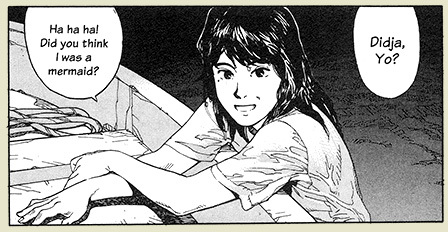
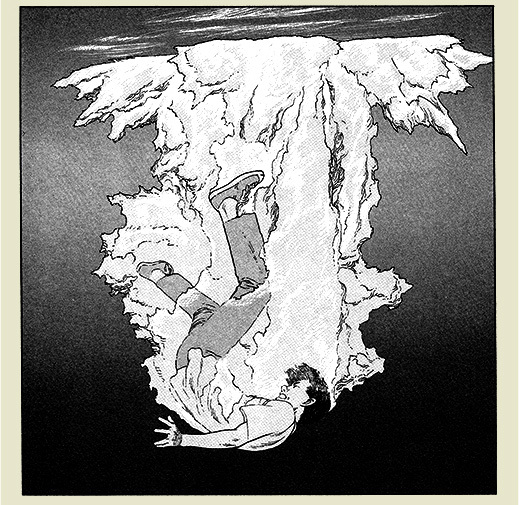
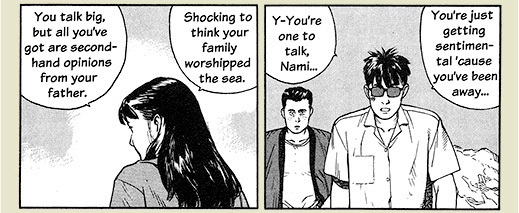
Si narra che da tempo immemore sia stato suggellato un patto tra una sirena e il sacerdote scintoista di un paesino di mare. Custodendo in segreto un uovo di sirena, viene infatti assicurata la prosperità del villaggio, grazie a una pesca sempre abbondante. Ma le tradizioni si troveranno presto a dover fare i conti col progresso, e con chi vuol sfruttare economicamente la situazione, in accordo col nuovo sacerdote. Yosuke, il protagonista della vicenda, nutre invece dei dubbi circa l'esistenza della sirena che, si dice, torni periodicamente al villaggio per la sostituzione dell’uovo; ma presto si imbatterà in misteriosi avvenimenti, e le sue flebili certezze verranno gradualmente scalfite...
Satoshi Kon was a Japanese film director, screenwriter, animator and cartoonist. Kon started his career as a manga artist in the middle of the 80's, when still in university. He served as an assistant to famous manga author Katsuhiro Otomo, who will also play a role in steering Kon's career towards animation. Besides a few short stories, Kon's only finished graphic novel is Tropic of the Sea (1990). His unfinished manga series include Seraphim 266613336Wings (1994), in collaboration with anime filmmaker Mamoru Oshii, and Opus (1996). In 1991 Kon started a prominent career in the Japanese animation industry, eventually becoming one of the most influential filmmakers of his generation. Kon's movies often explore the boundaries between dreams, reality and cinematic fiction. His directorial debut came with the critically acclaimed thriller Perfect Blue (1997), followed by Millennium Actress (2001), Tokyo Godfathers (2003) and Paprika (2006). Satoshi Kon died of pancreatic cancer at age 46.
Satoshi Kon was an anime filmmaker responsible for such works as Perfect Blue, Tokyo Godfathers, the tv show Paranoia Agent, and, my favorite, Millennium Actress. I grew up with his movies easily as much as I did Disney and Studio Ghibli fare, yet I only learned in adulthood that he began his career as a manga artist.
Kon died in 2010 of pancreatic cancer, aged only 46. While I still miss his brilliant mind – his eye for beauty and storytelling – discovering his manga brings me incredible joy.
These are new stories for me, and when I read them, it’s as if he’s back again.
This is my 3rd read of Tropic of the Sea. An urge overcomes me to reread it when the weather starts warming up. It is the most cinematic manga I’ve ever read. Even on flat pages, you can see Kon’s eye for framing and movement, giving the art a dynamism that transcends medium. First published in 1990, seven years before he’d make his film debut, each panel speaks to the great director he’d soon become. He could’ve easily put this story to screen in his life.
This is a manga you experience as much as read. In Kon’s crisp, clean art style, you hear waves as they swell and crash over rocks, and sand as it shifts and settles on the shore. You follow characters, side characters included, all through complete growth arcs, hearing their voices, their tones, in the details of their expressions. As you see sprawling images of a small seaside town, you feel the sea breeze as you smell summer sweat and the scent of a fresh catch, and you worry over their future as a resort development threatens their way of life.
Recently when writing about Okazaki Kyoko’s Pink, I noted how it was clearly an early work, but it had glimmers of brilliance that came to fruition in her later works. With Kon Satoshi’s Tropic of the Sea, I expected to have the same reaction. Unfortunately, that wasn’t the case—there was nothing in this work that reminded me of the genius I’d come to love in Kon’s films over the years.
There are so many places that this early effort went wrong. First and foremost is the extremely tired “nature lashes back against developers” storyline. It’s not that I don’t agree with environmentalism, but often times such tales are heavy handed, and Kon’s entry is no different. The developers are always greedy with no respect for anything but shiny buildings. The man who sells is always a spineless guy who bends over backwards for the developers while losing the respect and friendship of the local famers/fishermen/shopkeepers. And of course, there’s a young man/woman who turns it all around and restores balance with nature.
In Tropic of the Sea, the youngster who restores balance is Yosuke, who is a fickle character indeed. One moment he laments the sale, the next he acts as his father’s lackey. While indecisiveness certainly occurs, in such an extreme situation it seems rather unrealistic that he wouldn’t clearly support one side or the other. He also changes personalities from chapter to chapter, sometimes gentle and brooding, other times he’s pushy and almost trying for “macho.” It makes it hard to identify with him, let alone care what happens to him. Of all the characters, Nami stood out the most as interesting. However, we’re only given enough information to make her seem “mysterious” in a generic way. What happened with her boyfriend? Why does she need healing? Certainly there are easy enough guesses to make, but it would have been nice to have a bit more character development (for any of the characters).
The one thing I did like was the specific nature mythology pulled into the story. The idea of the family taking care of a mermaid’s egg for 60 years in order to maintain the sea’s bounty and calm is lovely. It’s not a story that Western readers will see all that often, so it does add a breath of fresh air to an otherwise overplayed plot.
The art is fine, but nothing to write home about. In particular the characters’ hands always seem to be a bit too large for their bodies—everyone has fat and stubby fingers. Otherwise the style has a bit more realism to it than a lot of manga, but I didn’t find it especially appealing. It reminded me somewhat of the art in Monster (particularly the noses and hairstyles) but lacked the finesse to make that style really work for it.
Overall, I was really disappointed with Tropic of the Sea. As a fan of Kon’s films I expected this to be groundbreaking either in story, narrative, art, or characters. Instead, I got a fairly cut and dry environmentalism tale with little to set it apart from every other environmentalism tale out there. I can’t think of anyone that I would recommend this to. It’s not even a must-have for Kon fans.
8'5/10⭐⭐⭐⭐⭐ Nos encontramos en "Amite", un pueblo costero en el que cuenta la leyenda que el fundador del pueblo encontró un huevo en la playa. Se le apareció un ser medio humano y medio pez que al parecer lo estaba buscando. Acordaron que se rezaría al mar y se cambiaría el agua al huevo cada siete días para devolverlo al cabo de 60 años. Generaciones de esta familia cuidaron del huevo de sirena y desde entonces tuvieron un mar tranquilo y generosa pesca. Yosuke es el encargado de realizar este ritual, en un acto de fe, sin saber si realmente la leyenda es cierta. Mientras su padre está empeñado en hacer progresar al pueblo mediante la construcción de un complejo turístico que transformará el pueblo de "Amite" por completo. Poniendo así en peligro el santuario de la sirena y por tanto la protección que aporta al pueblo.
"Regreso al mar" es un manga con una ambientación increíble. El pueblo de "Amite" se siente auténtico. Real. La leyenda de la sirena está presente en todo el manga con una intensidad muy bien medida por parte de Satoshi Kon. Dibujo de apariencia sencilla pero inmejorable, que ayuda a sumergirte en la historia. Mencionar también que es un solo tomo autoconclusivo.
A nice little seaside Ghibli-esque manga from the Japanese film master Satoshi Kon. While this isn't nearly as good as some of his movies or his series Paranoia Agent, it still has that certain atmosphere of quiet magic that he's known for.
Tropic of the Sea is an environmentalist fable about a peaceful seaside town being taken over by commercial businesses. Yosuke's ancestors once made a pact with mermaids to care for their eggs in exchange for peaceful weather and plentiful catches of fish. They're tasked with caring for an egg once every sixty years before a new mermaid is born and the cycle repeats. After Yosuke's father invites the wrath of industrialization and shady businessman to their island in exchange for wealth, the cycle begins to break and a potential disaster looms for everyone.
A nice story about the importance of environmentalism and the dangers excessive industrial greed has on nature. Like a seaside Princess Mononoke, but not quite as rich in themes, atmosphere or characterization.
This is one of those very Japanese manga, and I loved every minute of it.
It tackles environmentalism, Shintoism, disappearing country life... All kinds of topics that were big back when it was published and that are still of concern today.
If you appreciate a deeper manga, I highly recommend this one.
Somewhere in the region of the turn of the millennium, I encountered Satoshi Kon for the first time. I want to say it was 1999, but I may be off a year or so. It was during a period of time when I was reckless with money and would buy dvds by the fistful when lonely. Amidst all the Criterion editions of movies I sometimes didn’t even like, I also spent a bit of time browsing through Suncoast’s and Tower Records’ anime sections. I wasn’t yet an anime fan, but I was intrigued. And so, Perfect Blue caught my eye and with its cover blurb referencing amalgamation of Walt Disney and Alfred Hitchcock, I was sold. I wasn’t overly enamoured with either director, but I nursed at the time deep pretensions of film-crit aspirations, so I thought this was something I ought to take an interest in. Due diligence and all that. I was in my twenties and pretty lame.
As it turned out, it would take me later viewings to come to appreciate Perfect Blue. I initially approached it merely as psychological thriller, entertaining so far as it went, but ultimately hollow. Again, I was young. Apparently though, the film crawled deep enough into my mind that when his next film, Millennium Actress, reached the U.S., I was there to snap up a copy right away. And then the same with Tokyo Godfathers and Paranoia Agent. As well, I counted myself lucky enough to catch Paprika a couple times in theaters. A small part of me was ruined when word arrived of his passing. He was young, not yet forty-seven. That’s me in six years. One of the most talented and prodigious and interesting animated filmmakers, removed from the game before ever arriving to the zenith of his potential. I doubt there will be many deaths of creators that will stay with me so strongly.
Kon had something going on in his films that was delicious. His art was top-notch of course, but I found the greatest pleasure in letting his stories wash over me. He had a kind of thematic interest that resonated with my own, even if he wasn’t anything like my mirror. Throughout his decade-long burst of animated works, we see Satoshi Kon intimately concerned with the nature of reality and the question of identity. And in Tropic of the Sea, first published in 1990, we find prototypical presence of both concerns.
Reality notably bends and twists and absconds with itself in Perfect Blue, Millennium Actress, Paprika, Paranoia Agent, and the “Magnetic Rose” segment of Memories. It becomes intentionally impossible for both characters and audience to sensibly walk the borderlands between dream and memory and the life as lived. It would not be hard to see Kon advocating for an existence that sits beyond or alongside the empirical—that perhaps to see the world wholly in terms that can be seen, measured, and tested is less an embrace of reality than the normative paradigm would dictate. Perhaps Kon’s works are meant to clammer somewhat for revolution. Not for something so base as political change but for something more sweeping: a means of understanding our world in terms of swirling mystery and worlds between and imagined experiences that inform reality behind our backs. To we of the rational expectation, we of the scientific rigour, we who demand evidence for belief, it all sounds a bit loosey-goosey—but Kon, for whatever he wanted to convey, was aware of how wacky his worlds would seem. He largely lets them unfold without comment but will occasionally drop clues that he has met our skepticism and that our skepticism doesn’t matter. Because in his worlds, skepticism is the bastion of the foolish.
And yet in my world, I am built of skepticism and cynicism. Raised in a world of dogmatic beliefs (American nationalism, non-denominational Protestantism, capitalism, a Left Behind-style eschatology, and a decided cultural segregation between sacred and secular), I found myself in my brief history since adulthood at several points of contention between what I perceived as rational and what was possibly—at best—wishful thinking. I am, for as much as I believe in some things, deeply cynical and critical of most everything (even things I still believe). I’ve been wrong too many times for dogmatism. And for good or ill, I’ve been wrong too many times not to approach every last thing in life without a measure of skepticism. My identity—my personal understanding of who I am and what I’m for—is in constant flux.
And again, as a reminder, Satoshi Kon’s works are all, every one, concerned with the question of identity. Perfect Blue says so outright on its marketing, grabbing hold of Mima’s question, asked and answered in the film, “Excuse me. Who are you?” Kon presents a woman whose career decisions may or may not be at odds with who she really is—or perhaps she will become who her career decisions demand. Millennium Actress explores the Vonnegutian maxim that we should be careful who we pretend to be because we are who we pretend to be, only without the ominous overtones. Tokyo Godfathers wonders at the reality of three of the homeless, questioning whether they are vagabonds or kings, and challenges both character and viewer to better grapple with the meaning of each. Paranoia Agent concerns a community whose identity is an ethical-social torpor forged of a post-war sluffing off of responsibility. In each of these Kon attempts to let his characters divine the truth of their own existences. He pushes people to self-evaluate in a world where dream and mystery collide and perhaps allows the self-inspecting person to finally stop from seeing through a glass darkly. It seems that Kon felt that dream-blurred reality was essential to the acquisition of true self-sight.
And these themes are nascently present in Tropic of the Sea. In this older work Kon only lightly treats the infringement on reality by the mysterious, but it’s still present and essential to the foremost question of the protagonist’s identity. Yosuke is the hesitatingly apostate son of a family of mermaid priests. Yosuke’s grandfather is a true believer, though he has passed his priestly duties on to his son. Yosuke’s father has never believed but, as may happen, an additional trauma turned his faithlessness into a light kind of antagonism. Yosuke struggles to make sense of strange dreams or visions or memories that may validate his grandfather’s faithfulness. He feels himself agnostic, but the intrusion of the unexpected may prove his unbelief inadequate.
Tropic of the Sea is more forthright in its use of the uncanny, making the supernatural impossible to deny—by tale’s end, none of the characters remain skeptical. That’s a little bit too bad and Kon will happily play cards closer to vest in the future, but the story’s still engaging and stands well as a solid mermaid story. In fact, though originally published in 1990 (amusing counterpoint to Disney’s neutered, feckless Little Mermaid), Tropic of the Sea's US publication in 2013 marks a bit of serendipity. Kon’s mermaid, though substantially different in realization, rides similar cultural waves as last year’s beautifully wicked Sailor Twain. Mermaids in Tropic have priests that honour them daily because they are dangerous. They don’t sing about life above the waves. They don’t play and frolic. They are demigods and their involvement in the world can be a joy or terror. Sailor Twain's South was a beauty capable of great horror, but Tropic's mermaid is a horror capable of great beauty. It’s rather nice to see these powerful, non-pacified visions of the mythic see light once more.
Kon’s art here is interesting, a cross somewhat between his later animation style and the over-detailed charm of Katsuhiro Otomo’s Akira. I’m not sure how deeply indebted Kon is to Otomo for his technique in these early efforts, but I wouldn’t be surprised if the influence was heavy. Tropic's character art (shadowing, line dynamic, etc.) could have been drawn by Otomo himself but for one distinction: Kon’s figures aren’t so stumpy as Otomo’s. In Akira, Domu, and Mother Sarah, everyone looks a little squashed. It’s a part of Otomo’s signature and that’s fine. But when we see the proportions of Kon’s characters (in terms of limb and torso length), it becomes apparent how much more natural Otomo’s characters could have appeared. I’d be interested to see how Kon would have drawn a manga circa 2005 to see if his style truly changed or if the simplicity of his anime works was merely due the limitations and requirements of the medium.
Tropic of the Sea, while especially delectable for fans of Satoshi Kon, is still entirely worthwhile as a standalone fable of science vs supernature, of technology vs the unknown. It’s fascinating to see Kon’s favourite themes in evidence even in this early work and I’m grateful that Vertical took the initiative to bring this to English publication at last. Kon is one of our era’s creative treasures and any chance to see his hand at play is a fantastic opportunity. I was glad not to miss it. _______
Me ha gustado bastante este manga del genial director Satoshi Kon. La historia recuerda a las de Studio Ghibli y el dibujo se parece, salvando las distancias, al de Akira y Jiro Taniguchi. Un misterioso huevo de sirena es custodiado por una familia en un pueblo costero que se ve amenazado por las políticas urbanísticas desmesuradas. Es una historia extraña pero que atrapa. Las viñetas más hermosas se encuentran al final del libro. Pese a estar en blanco y negro, se puede sentir el azul del mar durante toda la obra. La reflexión del autor que cierra la edición es perfecta como conclusión de un manga realmente atractivo.
The art is undoubtedly beautiful, I loved the themes of Kaikisen - development of countryside areas and capitalism. Addition of mermaids was great, I’m always up for a mermaid story.
This manga was published before Satoshi Kon work in animation. I didn’t expect the manga to be so linear and straightforward plot wise. But it was good anyways.
This volume also consists of a short about a summer and a guy riding a bicycle and him saving a woman. Perfectly bland and pointless story.
Great anime/manga artist Satoshi Kon in a sort of earlier work set in a seaside town, with mermaids tied to capitalists hoping to cash in… good stuff. Afterword by the author who admits he was embarrassed to work on this again, saw its flaws and limitations… But I liked it, thought it was good and entertaining and thoughtful and a bit cliched.
La primera obra que leo de Satoshi Kon, y entiendo por qué dice la gente que es un genio. A medio camino entre el realismo mágico y la fantasía costumbrista, esta es una de las primeras obras del autor, y en ella el dibujo es ya pasmoso de bonito que es.
Se trata de una crítica muy dura al urbanismo voraz del Japón de finales del siglo pasado, en el que constructores sin escrúpulos invadían pueblos con hoteles y centros comerciales. Todo esto contado desde la perspectiva de la familia encargada de proteger un mítico huevo de sirena, al que rodea una intrigante leyenda que veremos desarrollarse a lo lago del tomo.
Desde luego lo más impresionante para mí ha sido el arte, con fondos imposiblemente detallados y esos paneles a hoja completa con un solo detalle sobre un fondo uniforme que tanto transmiten.
Lectura recomendada 100% para todo el mundo, y además es un buen punto de entrada al manga.
Très beau roman graphique du regretté satoshi kon partit trop tôt. Je le connaissais pour ces longs métrages tels que perfect blue, paprika ou sa série animé paranoïa agent. Je découvre son premier grand oeuvre en tant que mangaka et qu'elle parfaite balade au sein de son univers à mi chemin entre Miyazaki pour la poésie et otomo pour le graphisme. J'ai adoré...
Satoshi Kon was one of the boldest and most skilled directors film has ever seen, and so finding out that he'd left a manga behind as well, I had to read it. But Tropic of the Sea is unusual for Kon because it's so usual a manga. This is not the wild storytelling of Paprika, or the over-the-top characterizations of Tokyo Godfathers. Instead, this short book follows a fishing village that's always believed in the superstitions that a mermaid grants them bountiful catches so long as they respect her wishes. She never appears, of course, and it's easy to dynamite her cave when a developer comes in offering jobs and strip malls. But if they go through with the deal, will they lose what's special about them?
It's a funny sort of story because even in 1990, when this was written, Japan was clearly headed towards post-industrial modernism and sacrificing ecology. Yet so many manga writers wrote sentimental stories like this, asking the questions that consumers answered by increasingly residing in cities.
To Kon's credit, after a slow start the manga really takes off, with the industrialists getting hold of what may be the mermaid's only egg, and the town's only chance at appeasing her. It's a race against something that only the oldest and borderline senile among them can publicly say they believe in, and by the time the tide goes out and refuses to come back in, I was finishing the book in a single sitting.
Still, it hardly holds up to the masterpieces Kon left in cinema. It's a curiosity, something simpler from a time before he shook the world with Perfect Blue. In a lot of ways it reads like an artist honing the basics of genres so he can subvert them later. As part of a monumental career, it's worth considering for anyone who enjoyed Kon's brief and incredible career in film.
In the afterword, Satoshi Kon says he thinks of himself as both a manga artist and an animator/director while noting he is much more famous for the later. Even without this his films in mind, Tropic of the Sea reads very much more sucessfully as a storyboard than a manga. Even at an early part of his career, Kon shows a lot of acuity with his "shots" and a certain panache which papers over some narrative clumsiness.
The weak point of Tropic of the Sea suffers from most is its locals vs. evil fancy land developer storyline that never manages to overcome its generic beats. (For one, the older female love interest is more interesting a character than the ostensible lead, the reluctant teenage male hero. Kon has always done good female characters.) I could've used more of the giant killer mermaids, is all I'm saying.
If you're looking for a mystical take on the genre, Daisuke Igarashi's Children of the Sea is still the way to go. But if you're interested in the earlier work of the late great Satoshi Kon, Tropic of the Sea is worth a look. Rating: 2.5 stars
A majority of my time through this was confused as to why the pacing was so weird, and didn't realize that it was originally serialized, while Kon was working on a majority of other things along with dealing with heavy-drinking and immense stress.
Here, I think you get to see Kon's interest in world-building. Though scenic and rich in detail, it isn't until his later work do you get to see less of the restraints he puts on himself and sort of 𝘭'𝘦𝘯𝘧𝘢𝘯𝘵 𝘵𝘦𝘳𝘳𝘪𝘣𝘭𝘦 act he had while working on this with his bosses.
If anything, I hope Kon looks back on this little baby of his and adapts it for the screen. It would be his most serene and adolescent narrative with so much focus on the heat in the countryside, the sound of the waves, and the shrieks of the cicadas. It screams summer in such a lazy afternoon kind of way that would be incredibly beautiful, hand drawn and all.
This is the first book I read from Satoshi Kon and I enjoyed it well enough. It's not a masterpirce but it's very enjoyable.
It's not a long graphic novel manga (around 200 pages), with a quick pace, some humorous and quirky moments, some hints of romance and, above all, a fight around traditions and myths.
The plot has some nice mysteries and twists, and the end is full of cinematic action, quite contrasting with the first half of the book. Some characters are charming, others polarizing. Some secondary characters appear without much explanation and quickly disappear from view (but I guess it's supposed to be that way with secondary characters).
It's a nice manga about traditions and beliefs, and how one sometimes must step up to face tough challenges, in the hope of bringing some change (or balance) to the world.
The part about this book I enjoyed the most was the Afterward. Satoshi Kon gave a very brief synopsis of his journey as a manga artist and how strange it was that in his later years he was just carded as an anime director. Did I switch hats? He mused. The Afterward was written ten years after the original publication of the manga serial, and he mentioned blushing in embarrassment at seeing the little errors he made in his illustration. The Afterward, so go.
I liked that there was a floating mystery that emerged for a moment and near to the end. It was kind of incredible when I think about it.
2019 EDIT: Was taking it off the shelf to lend to a friend, ended up reading it over >< It's still great.
La historia en si no tiene una mala base. Un pequeño pueblo pesquero hace un trato con una sirena para que guarden un huevo durante 60 años.
El desarollo en interesante. Lo dibujos son preciosos y muy bien elaborados. Lo que cojea en esta historia es como esta narrada. Me han faltado más escenas explicando un poco más. Más escenas con dialogos y no tantos saltas de escenario y personajes. En una pagina teniamos hablando escluetamente a unos grandes magnates y en la siguiente a nuestro protangonista. Vamos, en una pagina no puedes desaroyyarnos toda una escena. Faltaba un poco más.
Exquisitely drawn story by Kon that deserves a higher rating imo. It's not flawless, but it's a beautiful story and it flows really well.
In the surprisingly personal and self-deprecating afterword, Kon explains how the serialisation and the weekly deadlines kept him locked inside for almost a year living from one deadline to the next. He fixed some of the art for the tankobon edition, but soon after its release he was hospitalised. A unique insight into the extreme pressures manga artists are facing.
A nice blend of the problems of gentrification and the mystical. Throwing the balance of nature out of sync can have untold knock on effects and Tropic of the Sea weaves these together nicely without ever becoming anything more. The artwork is clean and easy reading but following on from Opus, this feels very safe.
A story featuring the modern concept of a traditional natural world vs. a modern urban metropolis, but with more nuance and balance than tales like these tend to have. My Satoshi Kon manga education continues.
Mr. Kon's first long form manga seemed to show the potential he was harnessing. Was kinda expecting more with the conflict but I guess a giant wave is substantial...
Satoshi Kon is my favourite creator so I had to pick up his manga and give it a read. I definitely could tell that this is his earlier works because Katsuhiro Otomo's art style is still mixed in with his, but the art was still fun to look at. I will say that the closeups on the characters were so nice, but there weren't too many panels that had interesting compositions.
I think some parts were choppy but it's probably due to the fact that this 2013 version was put together and re-edited from the eleven issues from the magazine, so bits and pieces were left out.
Story wise, I liked what this manga had to say. Even though some of us may not have the responsibility of caring for a mermaid's egg every sixty years, we're still connected to nature. We take what resources it has to offer and when we're in pain and need healing there's a forest that's far from all the noise on the outside, and it calms us down.
I guess I don't enjoy Yosuke's character too much. It felt like he didn't have much of a personality, just the boy in his family who hates taking care of the mermaid egg, and that he did things because people told him he had to. Though nothing develops in his relationships with other characters, at least his own character does (like a tiny bit, he gets over his fear but whatever). I think I wanted some sort of resolution for Yosuke and his father by the end of it. The whole reason why Yosuke's father acted the way he did was to protect his family and keep them together, and I wanted Yosuke to recognize that.
Whenever Nami was on the page, it was more fun. Satoshi Kon's specialty is writing female characters so that's to be expected though.
Overall, it was nice. I definitely had a good time with it (maybe because i'm biased and I'll always think Satoshi Kon's work is a treasure to this world but anyways). I wouldn't change anything but I would definitely add more details to characters and give them actual endings. For one of his first works I think it's good and it's different than the works of Kon that I'm used to seeing but I definitely will be reading more of his manga releases.
This entire review has been hidden because of spoilers.
Satoshi Kon è un autore nuovo per me, e devo dire che è stata una bella scoperta. Un villaggio giapponese, da cui i giovani se ne vanno per studiare e poi magari non tornano più, vede il ritorno di una ragazza dopo 5 anni a Tokyo. Trova molti cambiamenti, i negozi chiudono, deve sorgere un grande resort vacanze, il tutto spinto dal sacerdote del tempio shintoista. Qui abbiamo tre generazioni: il nonno, precedente sacerdote, che non vuole questo enorme danno ambientale che però, permettendo il turismo, salverebbe il paese dallo spopolamento. Il figlio, l'attuale sacerdote, non crede alla leggenda dell'uovo di sirena che però lui stesso, insieme al figlio, custodisce nella parte più sacra del tempio cambiandogli l'acqua ogni settimana. Il figlio è un ragazzo alle soglie dell'università, e quindi uno di quelli che abbandoneranno il paese. Man mano che i capitoli della storia avanzano venimo a conoscere i segreti della località ed in particolare la tragedia che tolse la vita a Yosuke, il giovane futuro prete. Ma non tutto è come sembra.
L'opera parla del rapporto delle comunità col cambiamento, cercato od imposto, e si inserisce nello scontro tra modernità ed arcaicità. In realtà tutti hanno ragione, e tutti hanno torto. Il finale agrodolce, con l'uovo rstituito alla sirena, il maremoto che sconvolge il villaggio, e il ridimensionamento del progetto turistico è un poco la via di mezzo che si dovrebbe sempre avere nelle cose della vita. 4 stelle