Jump to ratings and reviews
Rate this book

Bill Ayers #2

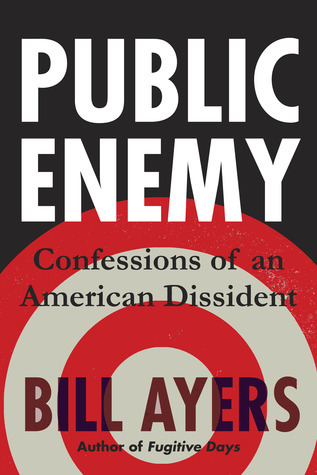
Public Enemy: Confessions of an American Dissident

Rate this book
Labeled a "domestic terrorist" by the McCain campaign in 2008, and used by the radical right in an attempt to castigate Obama for "pallin' around with terrorists," Bill Ayers is in fact a dedicated teacher, father, and social justice advocate with a sharp memory and even sharper wit. Public Enemy tells his story from the moment he and his wife, Bernardine Dohrn, emerged from years on the run and rebuilt their lives as public figures, often celebrated for their community work and much hated by the radical right. In the face of defamation by conservative media, including a multi-million dollar campaign aimed solely at demonizing Bill, and in spite of frequent death threats, Bill and Bernardine stay true to their core beliefs in the power of protest, demonstration, and deep commitment. Ayers reveals how he has navigated the challenges and triumphs of this public life with steadfastness and a dash of good humor - from the red carpet at the Oscars, to lock-up, to airports (where he is often detained, and where he finally "confesses" that he did write Dreams from my Father), and ultimately on the ground at Grant park, in 2008 and again in 2012.

240 pages, Hardcover

First published January 1, 2013

4 people are currently reading
623 people want to read

About the author

Bill Ayers

30 books68 followers
William Charles "Bill" Ayers is an American elementary education theorist and a former leader in the movement that opposed U.S. involvement in the Vietnam War. He is known for his 1960's activism as well as his current work in education reform, curriculum, and instruction. In 1969 he co-founded the Weather Underground, a self-described communist revolutionary group that conducted a campaign of bombing public buildings during the 1960s and 1970s, motivated by US involvement in the Vietnam War. He is now a professor in the College of Education at the University of Illinois at Chicago, holding the titles of Distinguished Professor of Education and Senior University Scholar. During the 2008 Presidential campaign, a controversy arose over his contacts with candidate Barack Obama. He is married to Bernadine Dohrn, who was a leader in the Weather organization.

Ratings & Reviews

What do you think?
Rate this book

Friends & Following

Create a free account to discover what your friends think of this book!

Community Reviews

5 stars
36 (29%)
4 stars
46 (37%)
3 stars
28 (22%)
2 stars
7 (5%)
1 star
6 (4%)
Displaying 1 - 22 of 22 reviews
Profile Image for Marcy.
Author 5 books121 followers
January 11, 2014
I really loved this sequel to Ayers' first memoir, Fugitive Days. Although some of his history overlaps a bit with the previous book, this one is bookended by the Obama election campaign and Ayers' unwitting involvement in it. The best part of the book is when he talks about teaching and parenting and the interconnection of the two. I especially enjoyed the first chunk of the book when he narrates his experiences, some of which while he was still underground, working for a day care center in New York City and how this sent him down the path of pursuing a career in education. The reflective quality about the teachable moments in life are moving and often quite funny, too. I think that many readers, especially those who demonize Ayers, will find themselves tickled when they pick up a book with such a cover and title and find out that being an American dissident involves leading a relatively quotidian life. And that's one of the refreshing things about the book, too.
280 reviews14 followers
October 23, 2013
Although likely becoming prosaic, the phrases "walk the walk" and "talk the talk" remain effective shorthand. Their meaning is seen in the story of Bill Ayers. A founder of the radical Weathermen, Ayers and his wife Bernardine Dohrn spent 10 years underground as a result of their actions against the Viet Nam War. After their emergence Ayers maintained his political beliefs, earned masters and doctorate degrees in education, and became a Distinguished Professor of Education and Senior Scholar at the University of Illinois at Chicago -- and a lightning rod in the 2008 presidential campaign.

The title of his new book, Public Enemy: Confessions of an American Dissident , is based on his portrayal in the media and blogosphere in 2008. During a debate with Hillary Clinton, Barack Obama was asked about his association with Ayers, who was described as someone who "never apologized" for bombings at New York City Police Department headquarters, the United States Capitol building and the Pentagon in the early 1970s. Ayers' connection with Obama consisted of hosting a fundraiser for him when he ran for the Illinois Senate in 1995, serving on some nonprofit boards together and living in the same neighborhood in Chicago. For the most part, though, he was portrayed as an "unrepentant domestic terrorist."

Ayers examined his time with Students for a Democratic Society, the Weathermen and life underground in Fugitive Days: Memoirs of an Anti-War Activist -- released on September 11, 2001. Public Enemy traces his life after that, with particular focus on becoming "a punching bag" in the 2008 presidential campaign. Becoming the captive of a political whirlwind led to cancellation of speeches and appearances, people chanting "Kill him!" when Sarah Palin mentioned him at a campaign rally, inaccuracies about him and his past, and significant hate email and mail and threats. For example, Ayers received a letter from "Sniper," saying, "Watch your back! Your time is coming!" The letter, postmarked in California, included a recent picture of his front door.

The charges leveled against him during the campaign included killing people in Weatherman bombings and shooting and killing a police officer. Yet, Ayers points out, "[n]ot only did I never kill or injure anyone, but in the six years of its existence the Weather Underground never killed or injured anyone either." He contends the Weather Underground's "notoriety, then and now, outstripped our activity on every count." Ayers, in fact, was never prosecuted on any charges for his role in or actions with the Weathermen. (Dohrn did plead guilty to and was placed on probation for aggravated battery and jumping bail.)

This statement is one example of what some may see as spin in Public Enemy's version of various events and history. For example, while not intended, three members of the Weathermen died when a bomb being constructed in a New York City townhouse exploded in 1970. And the six-year timeframe allows Ayers to exclude the 1981 Brinks robbery involving several Weather Underground members in which two police officers and a Brinks guard were killed. In fairness, though, that occurred the year after Ayers and Dohrn turned themselves in and several years after the Weather Underground splintered and essentially ceased to exist.

There is one thing on which Ayers is crystal clear. He is, in fact, unrepentant and remains committed to the ideals that motivated his activism in the first place. Despite repeated demands made by the media and others during the presidential campaign, Ayers refuses to apologize for things he never did and stands behind his beliefs.
I was happy to discuss anything and I was able to openly regret lots of things in a range of settings, but somehow stubbornly unwilling to say a single line: I'm sorry I engaged in extreme tactics to oppose the [Viet Nam] war; I'm sorry I destroyed war materials and government property.

I'm not sorry about that, and I can't say with any conviction that I am. Opposing the US invasion of Viet Nam with every fiber of my being was simply not one of my regrets.


Likewise, he makes clear that he and Dohrn remain "open and outspoken radicals" with "a strong reserve of romance and idealism" aimed at "a freer and more peaceful future." Public Enemy does, though, recognize that dogmatism, orthodoxy and inflexibility perhaps doomed the New Left of the Sixties and Seventies. "My own strict system of received wisdom and right beliefs was as controlling and totalizing as any other fundamentalism -- religious, political, or cultural," he writes. "It left me along with several close comrades isolated in a well-lit prison of our own construction with a blinding light bulb hanging from the ceiling by a single strand of wire."

That light came back on in the 2008 presidential election, making Ayers a poster boy for so-called domestic terrorism and a not-so-subtle contention that Obama was a radical. Even if his methods changed with age, Ayers' insistence on both talking the talk and walking the walk of his political beliefs helped elevate him to the status of a public enemy. Public Enemy is his way of detailing the cost of the divisive factions in American politics and telling people that he remains unbowed and unrepentant.

(Originally posted at A Progressive on the Prairie.)
Profile Image for Barbara Rhine.
Author 1 book8 followers
September 3, 2014
Ayers' writing is like quicksilver. Nimble and intelligent, which gives great meaning to his ideas for a more just interaction between people, more joy in the process, social justice along the way that includes all of us, and that's just a sweet sample of what he is determined to say. Along the way, if you read this, you will learn a lot of personal information about Bill, Bernardine, and the rest of his family. It is a memoir in the best sense of the word. Based on his personal memories. And memorable. For those of us who haven't given up on the ideas we had in the sixties (and others had in the thirties, and going on back, and coming up to the present with Occupy, Ferguson and the like)--this is an inspiring read. And for those younger, Ayers definitely keeps pace. Try it out!
Profile Image for Sue Jackson.
480 reviews4 followers
November 29, 2013
This book was interesting at times and did clarify some of the misconceptions of the Weather Underground and his days as a fugitive. Still, I could help but feel this was only written to capitalize on that. He was able to tell his story about being a radical yet still raising his children. He also was able to talk about how he because familiar again because of his potential connection to Obama. It is an easy book to read and is clearly written by a knowledgable man. Still, especially towards the end of the book, I couldn't help but feel he was name dropping and perhaps "tooting his own horn".
Profile Image for Judy Gacek.
309 reviews3 followers
Read
November 14, 2013
I am having a hard time reconciling his later years with what I remember of his early years in the Weatherman organization when I was following the organization through the news. Since memories are not set in stone but are reconstructed each time we relate them we each probably have different memories of how we perceive the sixties. I would be interested in reading the first book about his fugitive years. I find his mind very interesting.
645 reviews10 followers
October 29, 2017
First I want to say that Chapter 3: Learning to Walk was masterful. Fascinating and personal, it tells the story of Chesa Boudin joining the Ayres-Dohrn family, Bernadine Dorhn's imprisonment due to her principled refusal to speak before a grand jury, and as much of the book is how to struggle in non-revolutionary times.

The is a story Ayres' tells that I totally related to: being at the anti-Nato march in Chicago (as I was) and running with the Black Bloc and feeling its energy (asI did).
Actually, Ayes tells lots of good stories.

However (and this is a big however), the book is constructed around the Obama run for office in 2008, and the media attacks on Obama for even knowing Ayres. Ayres takes pains to declare he is still a revolutionary, but it should not have taken too much analysis and experience to know that Obama was brought in as a defender of US imperialism. Ayres comes off very much as a liberal.
Profile Image for Stephen Brandt.
82 reviews1 follower
April 26, 2025
Very good book. Will make you think, and you will feel better for yourself
Profile Image for Thom Boone.
6 reviews
October 10, 2014
This is the second "confessional" look back penned by Bill Ayers and it seems to me more mature, more considered, and more brilliantly written than the earlier book (which seemed more sensational to me). The simple truth is that both Bill Ayers and Bernadine Dohrn came from families with strong values and achieved a great deal in life prior to taking the lead in the antiwar movement; and both have done remarkable things and made very positive, highly respectable things with their lives since then. Futhermore, all felony charges against each were dropped (for those who do not recall). Nevertheless in the minds of many Americans the two will forever remain the "PUBLIC ENEMY". And perhaps that is the best argument for Bill Ayers, who happens to be an exceptional writer, to retell this story once again.

Do not expect an out and out apology. Neither believes that the Vietnam War was legal, justified, or even arguably in the best interests of the U.S. or humanity and both steadfastly believe that they were well within their rights to do everything possible to express their protest and oppostion. Which afterall - as long as we respect the rule of law - is what democracy is all about. What I did feel here - and have always felt from both of them - is a tacit acknowledgement that the Weather Underground went too far especially in declaring war on the U.S. (something that even then was arguably completely unwinnable and very questionably "sane" (or "insane") given the relative power and potential arsenal of the respective parties). And certainly with the bombings. Their are many regrets here between the lines.

What also comes across is a fundamental core characterological thinking that is, was, and always will be rooted deeply in personal integrity and humanitarian principle. As a nation, we can continue to have this debate as to whether the "war" in Vietnam was ever justified, or not, from here to Kingdom Come. Most of us who came of age around that time have an opinion - a rather resoundingly strong opinion, one way or the other. The fact of the matter is that the debate is pointless, the entire world has changed and changed and changed again since then - and for us to be stuck with this "one way train that has been derailed" image of the Weather Underground, the late 60s and early 70s, all the pain and growth that a couple of generations in succession (the late 60s - then the early 70s) lived in much horror (from the moment when CBS broadcast Thich Naht Hahn's brother monk dousing himself with gasoline and self-immolating on the six o'clock news until ... has it ever really ended?)

Bill Ayers writes extremely well. His voice looking back at these "confessions" remains compelling. Bill's ability to detail the dramatic events as they unfolded from memory exceeds clarity and definition to the point that I dare say most readers simply will not "get" the big picture. There indeed is a very much bigger picture that is the backdrop here.

And most outrageous is the insinuation that there is any comparision between the acts of the Weather Underground in the late 60s and early 70s and the meaning the term "terrorist" has taken on in light of the post 9-11 world. There simply is no equating apples to oranges; and one thing has no connection whatsoever with the other. Anyone who cannot grasp this thinks in a very limited, myopic manner.

Now I am not about to take on the task of defending the Weather Underground for every action they took (or even Bill Ayers and Bernadine Dohrn). But I do think enough is enough. I also highly recommend this book for anyone who is seriously interested in really getting some sense of what the real Bill Ayers is like (and not putting lipstick on that pig Sarah Palin and calling her mindless and idiotic babble "truth", which it most certainly is not). In fact when it comes to being a person with intelligence, Bill Ayers ranks right up there at the very top of the list whereas it is doubtful that Sarah Palin even ranks with the "hockey moms." I believe the vast majority of the American public has figured that fact out for themselves aleady.

All the same, I would recommend reading Bill Ayers on Bill Ayers and seeing what he has to say himself. No doubt it will make some people see red, but besides from being a very articulate self-biographer, my hunch is that it will leave most of us wondering why and how it is so many folks of questionable sanity want to demonize Bill Ayers (and Bernadine Dohrn). You may not love the guy but you will definitely see him in a completely different light and be much more brilliant yourself because you took the time to read what he has to say for yourself.

C. Thomas Boone
October 10, 2014
52 reviews
June 6, 2020
Self-indulgent, self-aware, thought-provoking, sometimes repetitious, insightful, funny. A wonderful and intelligent writer, and a delight to read. Solidarity
31 reviews
October 27, 2013
You guys probably remember Bill Ayers as the "terrorist" Sara Palin accused Obama of "palling around with". This book is the result of his sudden rise to infamy (again) and discusses the issues resulting from the right deciding he was the "boogie man".

Ayers was a Weatherman in the 1960s and 70s and admits to bombing the pentagon (actually he put a few sticks of dynamite in a bathroom drain and made one hell of a mess ;-) The claims that he was a murderer are entirely false according to Ayers.
The book talks more about his family and professional life after turning himself in (after a decade underground). He is highly regarded as an expert in designing new ways for kids to learn, he is after all at heart a teacher (and I highly regarded one at that).

He talks about how he still goes to demonstrations, pickets and fights for what he believes is right. We should all still have the spirit this man has at 70.

He talks about how his speaking engagements were cancelled at Universities after the Palin smear and how some (but not many) had the balls to let him speak. He considered the whole thing an assault on his academic freedom and most University Presidents and Boards wanted nothing to do with him saying they got death threats if he showed up. He even was turned down for Emeritus Status because of the political backlash. The funniest thing is he hardly knew Obama and just happened to live in the same neighborhood and worked with some of the community issues as Obama.

This was not the book I wanted to read but didn't know it. I wanted to know about his activities as a weatherman, the people he hung with, and what it was like to be underground for a decade, so I read "Fugitive Days, Memories of an anti-war activist" More to come. I'm glad I read this but the next (earlier) is much more interesting.
Profile Image for CJ.
184 reviews2 followers
June 1, 2015
This book was not quite what I expected, but then, it shouldn't have been all that much a surprise. My previous exposure to his writing was "To Teach: A Journey in Comics" which had been a gift. I enjoyed his teaching philosophy and wished I had had his courage and freedom to teach that way myself. He was involved with and for his young charges in innovative ways. I met a totally different Bill Ayers are a convention in Portland - a little smug and challenging to the would-be admirer that I was. Now that I've read this book, that opinion hasn't changed. HIs life on the run and in hiding was not easy, I'm sure, but his anger and self-righteousness almost jumped off the pages and strangled me. There were times I felt like, "Boo-hoo, so your mighty efforts to rail against the government got you into trouble; what did you expect?" while the rest of the time I was applauding those efforts. There is information that was new to me, but I didn't do an exhaustive job of researching him during the 2008 Presidential campaign; I don't judge candidates by who lived in their neighborhoods.
All that said, any revolutionary mind of the 60s will enjoy this diatribe and love letter to his companion in life and her part in his story. I think back to that tumultuous time and regret that I didn't do more to protest the war, but my life was very different and my protest mostly in letters sent to various members of Congress and the administration. Bill Ayers road made him the man he is today, still defiant.
Profile Image for Cameron.
29 reviews
June 29, 2014
*I received this book as a firstreads giveaway*

When I first started this book, I wasnt sure how I was going to feel about it. I remembered the name "Bill Ayers" from the 2008 election, and I thought it would probably be a radical diatribe. However, I was pleasantly surprised to find the book quite interesting and level-headed, providing the real story of Ayers' life and perspective on the election.

Ayers has a very engaging voice and fascinating story; I wish I could have him as a professor! The only reason I didnt give this book 5 stars is because in the last third or so became very very repetitive. A large amount of space is spent describing every speaking event Ayers was invited and then banned from. While it would be interesting to hear a couple of examples, he goes way overboard in providing details. On the whole, however, this is a great book and should be required reading for every sensationalist blogger and reporter to remind them that there are more layers in every story than can be captured in a soundbite or headline.
Profile Image for Adam.
316 reviews22 followers
January 20, 2014
Bill Ayers, Public Enemy Number One. Or, at least that's what the media reported as Barrack Obama ramped up his inaugural presidential campaign.

Bill Ayers, a long time activist, organizer, and radical educator, describes the period in his life when he came under fire for having stood on his values, and, at one point, stood too closely to the future president. Bill's years as a student organizer, and then a fugitive, were quickly grabbed by media outlets to try and paint him as a violent agitator, not too be trusted and deeply supportive of Obama. Ayers debunks this perception, describing his life's work against war, capitalism, racism, and the like, in turning earning him a reputation as Public Enemy, as a champion of justice is ought to do.

The book is not so much a memoir of Ayer's life (that can be found in Fugitive Days), but rather an honest portrayal of the deeply troubling campaign to ruin a man's name and his history all in the name of politicking.
Profile Image for Nancy Backas.
39 reviews1 follower
July 20, 2016
I met Bill Ayers at my neighborhood hippie restaurant and really enjoyed his talk (and he signed my book!). Like so many others of my generation, I had flawed ideas about the Weather Underground. This book cleared up those misconceptions and I found myself agreeing with just about all of his politics and ideas about how the world should be. While I have never, nor could I ever see myself, acting as a radical, I appreciate his convictions and that he has stuck to his ideas over the decades. It was a good read and very revealing.
Profile Image for Angela.
437 reviews
November 19, 2013
If you wonder about all the rumors the right spread about this man during the 2008 election, this is the perfect book to read. This book is insightful, witty, and humble. It humanizes someone who was turned into a monster by the media without the facts behind Ayers real life and hope for building a peaceful world. The information in this book is important but it is also a fun read as Ayers is a skilled writer.
Profile Image for MaryEllen.
60 reviews5 followers
March 10, 2014
I have very little interest in politics, but I love memoirs. I read the description, entered the giveaway, and gratefully won.

I found the book very enjoyable. I love the writing style and sense of humor. From what I gleaned, Bill is a very warm and intelligent man with very strong convictions who does everything he can to make the world a better place.
Profile Image for Halli Casser-Jayne.
79 reviews15 followers
November 6, 2013
You might not agree with everything Bill Ayers has to say in his book, but you will be overjoyed by the opportunity to have two hundred and twenty-five pages to pal around with the mind of dissident Bill Ayers. Meet Bill Ayers on The Halli Casser-Jayne Show, Talk Radio for Fine Minds, Wed. November 6, 3 pm ET live online @ http://bit.ly/U4EEMd.
Profile Image for AnnaRose.
279 reviews19 followers
February 1, 2014
Bill Ayers gives an account of his life and defends his choices in this memoir. At times, it is engaging and funny. However it drags on a bit and has some rather random information that is boring and unneeded.
Profile Image for StevenF.
61 reviews
February 16, 2014
A dedicate Activist, still working to make this a better world. Superb.
Profile Image for Steve Kemp.
207 reviews30 followers
May 6, 2014
Outstanding .......must read for any readers of Mr Ayers' books,and those who misunderstand him and the "Weather Underground " .
435 reviews1 follower
December 22, 2013
skimmed it...didnt really feel like hearing about him
Displaying 1 - 22 of 22 reviews

Can't find what you're looking for?

Get help and learn more about the design.