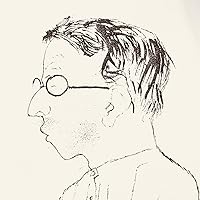
Empedokles werd in 492 op Sicilië geboren uit een gegoede familie. Hij was arts, maar ook politicus en werd door zijn tijdgenoten als een soort magiër gezien. Hij stierf in 432 door een val in de Etna. Voor veel schrijvers (o.a. Hölderlin) was dit gegeven een bron van literaire inspiratie. Empedokles schreef in het Grieks een filosofisch gedicht dat later de titels Over de natuur en Zuiveringen kreeg. Van de vijfduizend regels die het bevatte zijn ons ruim vijfhonderd door diverse klassieke auteurs overgeleverd. In de jaren negentig van de vorige eeuw is de Straatsburger papyrus gepubliceerd waarop de resten van ruim zeventig nieuwe regels staan. Aarde, lucht, water en vuur waren volgens Empedokles de vier wortels of elementen van alles. Ze werden door Liefde en Haat in een eeuwig durende cyclus respectievelijk bijeengebracht en gescheiden. Het bijeenbrengen van de elementen door Liefde leidde tot het ontstaan van de levende wezens. Het sterven was de door Haat veroorzaakte scheiding. Empedokles verhaalt ook van de omzwervingen van een daimon, een 'ziel', die bloed heeft vergoten en als straf een lange reeks van levens doormaakt. Daarin is hij afwisselend een plant, een dier een mens en een god.
Inhoud
VOORBERICHT 9
INLEIDING 11 Leven 11 Werk Één of twee boeken - De vondst van de papyrus - 16 De volgorde van de fragmenten - De basis van de vertaling Leer Achtergrond 23 Empedokles' taalgebruik 27 De structuur van het gedicht: antwoord op Parmenides 32 Kort overzicht van Empedokles' leer 35 Liefde en Haat en de elementen 36 De Bol 38 De cyclus en de 'zielsverhuizing' 43 De menging en scheiding van de elementen; de 51 hemellichamen 51 Denken en waarnemen 52 Goden en daimonen 53 Het voortleven van Empedokles Plato 56 Aristoteles 58 De neoplatonici 59 Friedrich Hölderlin 62 Matthew Arnold 64 Friedrich Nietzsche 68 Gerard van Klinkenberg 69 Hans Andreus 70 Samenvatting 73 Noten bij de Inleiding 75
Empedokles - Fragmenten Tekst, vertaling en commentaar Voorwoord 83 De verbannen daimon 90 Slot voorwoord, gericht tot Pausanias 100 De vier wortels of elementen 112 De Bol 135 De Kosmogonie 138 De Hemelverschijnselen 145 Het ontstaan van levende wezens 149 Voorfase 153 Eerste fase 155 Tweede fase 163 Derde fase 165 Vierde fase: de huidige toestand 167 Ademen, waarnemen en denken 176 God 188 Het paradijs 190
De Straatsburger Papyrus 195 Toelichting 196 Tekst, vertaling en commentaar 198 Empedokles - Testimonia Diogenes Laërtios, Leven en leer van beroemde filosofen VIII 51-77 215 Theophrastos, Over de zintuigen 1, 2 en 7-24 227 Aristoteles, Over ontstaan en vergaan 333b22-334a7 235 Aristoteles, Metafysica 1000a25-b20 237 Alexander van Aphrodisias, Quaestiones II 23 239
Tekstafwijkingen 241 Omnummertabellen 243 Beknopte bibliografie 245 Index van namen 248
"Empedocles (c. 490 – c. 430 BC) was a Greek pre-Socratic philosopher and a citizen of Agrigentum, a Greek city in Sicily. Empedocles' philosophy is best known for being the originator of the cosmogenic theory of the four Classical elements. He also proposed powers called Love and Strife which would act as forces to bring about the mixture and separation of the elements. These physical speculations were part of a history of the universe which also dealt with the origin and development of life. Influenced by the Pythagoreans, he supported the doctrine of reincarnation. Empedocles is generally considered the last Greek philosopher to record his ideas in verse. Some of his work survives, more than in the case of any other Presocratic philosopher. Empedocles' death was mythologized by ancient writers, and has been the subject of a number of literary treatments.
Empedocles is considered the last Greek philosopher to write in verse and the surviving fragments of his teaching are from two poems, Purifications and On Nature."
I can't help but admire excellent work. This translation of Empedocles is precisely that. Brad Inwood has gathered together the extant text of this presocratic philosopher in a volume that is bound to remain the authoritative version for quite some time. What makes it so authoritative? Good organization, thorough treatment, and excessive care. On the first point, Inwood has organized the text to include Empedocles' fragments assembled together, in the contexts they inhabit in the text of early commentators (such as Aristotle and Simplicius), as well as a section of testimonia. Inwood has also taken care to examine nearly all the leading translations and commentaries available, no matter in what language they appear, and has taken care to consider them in his own treatment. He avoids taking speculative leaps in his translation (and interpretation), and thus we are given an excellent basis upon which to make our own speculations. His introduction is also thematically varied, balanced, and just thoughtful enough to provide a reasoned entry into this ancient philosophy. Altogether, this is a fabulous piece of work, and while Inwood leaves quite a bit of latitude for people to disagree with him, I think this in itself is a mark of just how good his efforts have turned out to be.
The poem and philosophy itself? Fascinating. I can't help but feel like I've been waiting most of my life to discover Empedocles. At least I can be happy that I can now live the rest of my life familiar with his ideas.
Best quote: "Wretches, utter wretches, keep your hands off beans!" That's ancient philosophy gold, right there.
The Suda records Empedocles was a student of Pythagoras’ son Telauges and that this great poet was born in Akragas and flourished in the 77th Olympiad (778 BC minus 77 4yr olympiad periods [308yrs later] would bring his date then to well into the 500’s BC for his birth).
“Blessed is he who obtained wealth in his divine thinking organs, and wretched is he to whom belongs a darkling opinion about the gods.
There is no dissension nor unseemly battle in his limbs.
There was among them a man of exceptional knowledge, who indeed obtained the greatest wealth in his thinking organs, master of all kinds of particularly wise deeds; for whenever he reached out with all his thinking organs he easily saw each of all the things which are in ten or twenty human lifetimes.” — “whenever one, in his sins, stains his dear limbs with blood … by misdeed swears falsely, of the daimons that is who have won long-lasting life he wanders for thrice ten thousand seasons away from the blessed ones growing to be all sorts of forms of mortal things through time, interchanging the hard paths of life. For the strength of aither pursues him into the sea, and the sea spits him onto the surface of the earth and earth into the beams of the blazing sun, and it throws him into the eddies of the air; and one after another receives him, but all hate him. I too am now one of these, an exile from the gods and a wanderer trusting in mad strife.” — “For if, thrusting them deep down in your crowded thinking organs, you gaze on them in kindly fashion, with pure meditations, absolutely all these things will be with you throughout your life, and from these you will acquire many others; for these things themselves, will expand to form each character, according to the growth of each. But if you reach out for different things, such as the ten thousand wretched things which are among men and blunt their meditations, truly they will abandon you quickly, as time circles round, desiring to arrive at their own dear king For know that all have thought and a share of understanding.” — “There is no growth of any of all mortal things nor any end in destructive death, but only mixture and interchange of what is mixed exist, and growth is the name given to them by men” — “Fools – for their meditations are not long-lasting – are those who expect that what previously was not comes to be or that anything dies and is utterly destroyed.” — “nothing comes into being nor ceases to be; for if they constantly perished, they would no longer be. And what could increase this totality, and whence would it come? And how would it also be destroyed, since nothing is bereft of them? But these very things are, and running through each other they become different at different times and are always perpetually alike.” — “and there flow from the earth things dense and solid. And in wrath all are distinct in form and separate, and they come together in love and are desired by each other. From these all things that were, that are, and will be in the future have sprung: trees and men and women and beasts and birds and water-nourished fish, and long-lived gods first in their prerogatives. For these very things are, and running through each other they become different in appearance. For the blending changes them.” — “the heart nourished in seas of blood which leaps back and forth, and there especially it is called understanding by men; for men’s understanding is blood around the heart.” — “For he is not fitted out in his limbs with a human head, nor do two branches dart from his back nor feet, nor swift knees nor shaggy genitals; but he is only a sacred and ineffable thought organ darting through the entire cosmos with swift thoughts” — “I wept and wailed when I saw the unfamiliar place. ……………… an unpleasant place where there are blood and wrath and tribes of other banes ……………… they wander in the darkness of the meadow of Ate. Oh woe! Oh wretched and unhappy race of mortals! You have come to be from such quarrels and lamentations. we came down into this roofed-in cave where there were Earth and Sun far-seeing and bloody Battle and Harmony of solemn aspect and Beauty and Ugliness and Speed and Delay and Lovely Truth and dark-haired Obscurity and Birth and Waning and Repose and Waking and Movement and Stability and much-crowned Greatness and Barrenness and Silence and Prophecy.”
Overzichtelijk, duidelijk en prettig lezend. Weinig was ik bekend met Empedokles en zijn elementenleer, en ook al zijn de bewaarde fragmenten incompleet, toch weet Ferwerda de Oud-Griekse teksten goed te verhelderen. De teksten zelf zijn wat je zou verwachten van de Presocraten: mythologische en dichterlijke verhandelingen die het onderscheid tussen wetenschap en religie, tussen proza en poezie of tussen geschiedenis en mythologie niet maakten. Deze protowetenschappers ontwikkelden veelal een overkoepelend centraal idee, waaruit hun gehele begrip van de wereld uit voortvloeit, op alle vlakken.
Voor Empedokles was dat de vier elementen leer: Aarde, Lucht, Water en Vuur geregeerd door de samenballende kracht Liefde en de scheidende macht Haat. Hij extrapoleert de zelf-gestelde regels en effecten tot het ontstaan van de wereld, de eigenschappen van de ziel, het werken van de zintuigen etc. Hieruit concludeert hij onder meer dat de ziel een verbannen goddelijke daimon is die boete doet door een serie aan reincarnaties te ondergaan. De ziel is dus onsterfelijk en elke levend wezen is gelijk en gelijkwaardig in essentie: Empedokles pleit dan ook voor vegetarisme. Ook beredeneert hij enigzins juist de theorie dat om objecten waar te kunnen nemen er 'afschilferingen' vrij komen en de porien van ons lichaam binnentreden (geurmoleculen; lichtstralen).
Mooi is de toevoegingen van het effect van Empedokles' leer op andere schrijvers en filosofen. Vooral zijn (vrij gedramatiseerde) vermeende einde waarbij hij in de Etna springt om zo een einde aan zijn leven te maken, is een bron van inspiratie geweest bij verschillende dichters en schrijvers.
Al met al positief verrast.
Klassieken Originele tekst vorm 4/5 Originele tekst inhoud 3/5 Vertaling en commentaar 5/5
Empedocles has much to say that later thinkers ought to have read more closely - he recognised that there is no creation merely a constant reorganisation of elements into new forms over a millennium before Aquinas built a Cosmological Argument on the causal principles of creation; Potentially his model of the daemon in all things hints towards the property dualist panpsychism of Chalmers. His model of metempsychosis is perhaps unlikely to convince though it bares comparison with various religious doctrines.
The translation in Inwood is helpful as is the Waterfield in the Oxford World Classics (which is cheaper, but lacks the parallel Greek, if that is wanted).