Jump to ratings and reviews
Rate this book

The Railwayman's Wife

Rate this book
In a small town on the land's edge, in the strange space at a war's end, a widow, a poet and a doctor each try to find their own peace, and their own new story.

In Thirroul, in 1948, people chase their dreams through the books in the railway's library. Anikka Lachlan searches for solace after her life is destroyed by a single random act. Roy McKinnon, who found poetry in the mess of war, has lost his words and his hope. Frank McKinnon is trapped by the guilt of those his treatment and care failed on their first day of freedom. All three struggle with the same question: how now to be alive.

Written in clear, shining prose and with an eloquent understanding of the human heart, The Railwayman's Wife explores the power of beginnings and endings, and how hard it can be sometimes to tell them apart. It's a story of life, loss and what comes after; of connection and separation, longing and acceptance. Most of all, it celebrates love in all its forms, and the beauty of discovering that loving someone can be as extraordinary as being loved yourself.

A story that will break your heart with hope.

307 pages, Paperback

First published January 1, 2013

104 people are currently reading
4120 people want to read

About the author

Ashley Hay

42 books222 followers
Ashley Hay’s new novel, A Hundred Small Lessons, was published in Australia, the US and the UK and was shortlisted for categories in the 2017 Queensland Literary Awards.

Set in her new home city of Brisbane, it traces the intertwined lives of two women from different generations through a story of love, and of life. It takes account of what it means to be mother or daughter; father or son and tells a rich and intimate story of how we feel what it is to be human, and how place can transform who we are.

Her previous novel, The Railwayman’s Wife, was published in Australia, the UK, the US, and is heading for translation into Italian, French and Dutch. It won the Colin Roderick Prize (awarded by the Foundation for Australian Literary Studies), as well as the People's Choice award in the 2014 NSW Premier's Prize, and was also longlisted for both the Miles Franklin and Nita B. Kibble awards.

Her first novel, The Body in the Clouds (2010), was shortlisted for categories in the Commonwealth Writers’ Prize and the NSW and WA premier’s prizes, and longlisted for the International IMPAC Dublin Literary Award.

Her previous books span fiction and non-fiction and include Gum: The Story of Eucalypts and Their Champions (2002), Museum (2007; with visual artist Robyn Stacey), and Best Australian Science Writing 2014 (as editor)s

A writer for more than 20 years, her essays and short stories have appeared in volumes including the Griffith Review, Best Australian Essays (2003), Best Australian Short Stories (2012), and Best Australian Science Writing (2012), and have been awarded various accolades in Australia and overseas. In 2016, she received the Bragg UNSW Press Prize for Science Writing.

Ratings & Reviews

What do you think?
Rate this book

Friends & Following

Create a free account to discover what your friends think of this book!

Community Reviews

5 stars
325 (13%)
4 stars
774 (32%)
3 stars
872 (36%)
2 stars
306 (12%)
1 star
82 (3%)
Displaying 1 - 30 of 504 reviews
Profile Image for Phrynne.
4,030 reviews2,726 followers
April 18, 2015
When I started this book I thought to myself "what beautiful, descriptive writing." And it was. Lovely lyrical descriptions of scenery and wonderful observations of life. However after a while it became like too much icing on the cake and there was really very little cake. Although some pretty major events occurred along the way very little was actually made of them. The characters also slipped by me, all of them people who appeared to be more sensitive and more feeling than the rest of the human race but none of them really doing anything constructive. I really disliked the ending although I guessed quite early on what had to happen and was prepared for it. All in all it was a rather sad book. I am giving it three stars for the lovely writing and the fact that I was interested enough to read it all.
Profile Image for Bill.
299 reviews110 followers
August 28, 2016
3.5 STARS

Sweet, so delightfully sweet! This was just what I needed to neutralize the vile, wretched depravity I experienced reading Karin Slaughter’s Pretty Girls. The Railwayman’s Wife is the polar opposite. Think the sensation of premium Swiss milk chocolate gently melting on your tongue. Or maybe a glorious sunset over the ocean, the shimmering waves alive with a myriad of colors as dusk ushers in the night … ahhhh!

The story takes place in Thirroul, New South Wales, Australia three years after the end of WWII. Annikka and Mackenzie Lachlan have been married for well over a decade and their daughter Isabel is celebrating her tenth birthday. Living in a house that overlooks the beauty of Thirroul Beach, they often spend time walking the beach, collecting stones and shells, watching the birds and savoring the love for each other. Mac loves his work on the rail line that runs along the coast to Sydney, so intimate with the whistles and rumbles of the railcars that he can identify each engine from afar simply by its characteristic sounds. Anni has learned the sounds and smells of the trains too. Their family is full of love for each other.

While the Lachlan’s are not directly touched by the horrors of the war, longtime friends Frank Draper and Roy Mckinnon return to Thirroul from the war suffering deep psychological wounds, wounds concealed by paper thin scars that never truly close up and heal. Dr. Draper was one of the first liberators into the worst of the German camps. He feels responsible for the five hundred fifty-five prisoners who died when he first entered the camp and carries on his shoulders unrealistic mountains of guilt atop volcanic anger and bitterness. Roy was a teacher before entering the service and became famous during the war for writing magnificent poetry. Since returning to his sister’s home in Thirroul after the war, he’s been unable to pen a single word. Witnessing and enduring the horrors of tanks and bombs and fire and dead bodies, he could write beautiful poetry. Overlooking the endless beauty of Thirroul Beach, his mind is numb and blank as the sheets of paper he stares at day after day.

Over the next year the lives of Anni and Isabel, Roy and Frank are slowly but irrepressibly woven together by Mac’s sudden death in a railroad accident. Annikka has lost the love of her husband. Roy has lost his love for poetry. Frank has lost his love for life. Reconciliation with grief and finding new love along the way is the core of this tale.

Anni works through the grief of her husband’s death while serving as the new librarian at the Railway Institute’s central library at Sydney’s Central Station. Through his frequent visits to the library, Roy develops some very special feelings for Anni and finally breaks through his creative lethargy with his poem “Lost World”. Frank finally returns to practicing medicine in Thirroul and eventually reconnects with Roy’s sister Iris McKinnon. But is there such a thing as a happy ending?

What is it with Australian writers? They’re awesome! The prose is exquisite and so very different than any other style I’ve encountered in all my years of reading books. Hay artfully and skillfully guides the reader through Annikka’s mixed emotions of grief over the loss of her husband, pride that she has been able to carry one after Mac’s death, love for her wonderful daughter and awakening feelings for the WWII poet who she frequently encounters at the library and along Thirroul Beach.

Not lost on me was the central role the library, books, literacy and poems played in this charming story about grief and love and the exploration and new discoveries of life after a loved one has left us. Sorry kids, no sex or violence in this one; just the soft, intimate emotions of self-discovery and new found self- awareness. This is a light, easy read that will warm your heart and leaving you considering life as you know it.

Lost World
Let this be her.
A folding of the light
And she stepped through, candescent messenger
Announcing to my sight

Another sense,
In this lost world whose color
And form flared round her, even more intense,
And as she passed grew duller ...

You can pick up the rest of the poem when you read the book!

A special shout out to the good folks at the Westfield Athenaeum http://www.westath.org/ for providing me a free ARC edition of The Railwayman’s Wife.

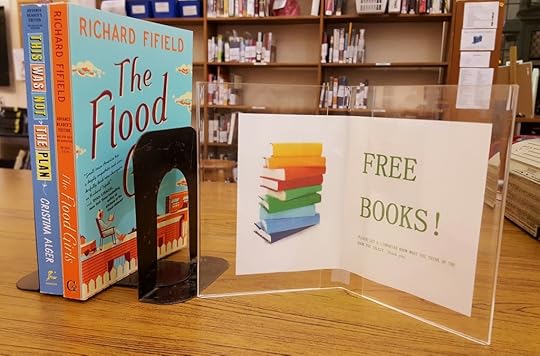
 photo Free Books_zpsef52xr7t.jpg
How cool is this?
Profile Image for ♥ Sandi ❣	.
1,637 reviews70 followers
September 29, 2022
3.5 stars

This book has some of the most beautiful prose in it that I have ever read. Few books are set with the beauty that this one is. Not actually enough to become a character in the book, but so startling that it cannot be avoided or go unmentioned.

Both love and death play big parts in this story. I can see different people claiming which played the strongest part. For me death won out. This is not a boohoo cry all the time or even an exclusively sad book, it just deals with death a lot. But in a realistic and understandable way.

This book is hard to review. More than the story it tells, is the feeling that you get from the overall concept. To me the story felt secondary - an after thought maybe. The descriptive poetic writing seemed to stand out first.
Profile Image for Marianne.
4,403 reviews341 followers
October 4, 2022
The Railwayman’s Wife is the second novel by Australian author, Ashley Hay. The audio version is narrated by Edwina Wren. It is set in Thirroul, on the south coast of New South Wales, in 1948. Living in post-war New South Wales with her husband, Mackenzie and her ten-year-old daughter, Isabel, Anikka Lachlan counts herself fortunate to have survived the war without the losses suffered by so many.

But then Mac, a railwayman, is killed in a train accident, and Ani’s life suddenly becomes unrecognisable. She is offered a job in the Railway Institute Library, where she encounters many of the village’s residents including the frequently abrasive war veteran, Dr Frank Draper, the often dismissive Iris McKinnon and her rather shy brother, Roy, a published war poet.

Hay’s narrative switches between events that immediately precede Mac’s death and the year that follows, and flashbacks to significant fragments of Ani and Mac’s history. Ani discovers a Mac she barely recognises from chance bits of conversation and second-hand anecdotes, (“There’s an anxious space between not knowing if you’ve forgotten something, or if you never knew.”) but also finds that life goes on.

Hay’s second novel, like her first, is filled with beautiful prose, so that locals of the area will be doubly delighted with the depiction of the paradise they call their own. “And then there’s the air, the nor’-easters that play along the shoreline; the westerlies that dump fractious moods over the edge of the escarpment; the smoky draughts in late spring and summer that telegraph bushfires and then spur them on. There are soft sea breezes that tease and tickle with lightest scent of salty water. There are southerly busters, powerful fronts that push up the coast to break open the heat of the day—they smell clean and crisp, and Ani pushes her nose hungrily into hot afternoons in search of their coming” and “Her blond hair so bright, it looked lit from within” and “..the afternoon’s light hits that point before sunset where it softens and swells sometimes into a few minutes of rounder, warmer illumination. Through the window, the greens of the trees thicken slightly; the shadows lengthen, and the sky takes on a fuller shade of blue. The mountain, diminished at midday, surges again to its full height; the clouds flare a brighter white” are but a few examples.

Hay expertly renders the feel of the late forties in a small Australian coastal village; her characters have depth and appeal; her dialogue is credible and the plot contains hope and heartache in equal measure. An absolute pleasure to read.
Profile Image for Kremena Koleva.
390 reviews94 followers
September 30, 2022
" Такива очарователни места са библиотеките : тя затваря очи. Можеше да влезе вътре и да попадне в убийство, в любовна история, в пълен разказ за живота на някой друг или в бунт в открито море. Такъв потенциал; такова приключение - има проблясък на злоупотреба в опитването на други начини на съществуване. "
/ The Railwayman's wife
Ashley Hay

Открих страхотна книга! The Railwayman's wife носи значителна емоционална сила. Сблъсква ме с душевно опустошени от войната герои, които се стремят да намерят път през мъката. Но ме хвана толкова неподготвена! За поетичния стил на Ashley Hay. За тъгата, която като лятна мъгла се носи над книгата. За сърдечната честност при разкриваните преживяванията, с които всеки в някакъв момент се е сблъсквал... Напевния ритмичен разказ не притъпява щетите от войната, следите от смъртта и опита да се живее след загубата на близък.
Сред тишината на свечерената стая размислите на героите отекват силно и познато. Може би беше точното време за тази книга. Може би ще имам емоционалната сила да премина през всичко в нея заедно с Аника, Мак, Рой , Изабел и д - р Франк.
Книга за онова, което оставя войната след себе си - самотни хора, смърт, опустошение и психически травми. Но тук виждаме 1945 - та година. Месеци след обявения й край. Няма битки, няма бойни полета. И се срещаме с емоционалното опустошение, което смъртта на близките ни нанася винаги, всеки ден. Дори в мирно време. Как понасяме да останем в един момент сами? Как гледаме изгрева и залеза на всеки ден с празното място в дома ни? Как понякога не можем изобщо да проумеем защо светът продължава да съществува, защо живота си върви, когато любимия човек или родителя вече го няма? Книгата е описание на мъката . И на съществуването ни в нея. Това я прави актуална извън темата за Втората Световна война.
А аз останах с желанието си да можех да познавам Аника и Мак Лаклан в реалния живот. Щях да се радвам на срещите със шотландеца и австралийката и на разговорите под небето при южния кръст!


* " Като да бъдеш погребан жив, докато чакаш да те бомбардират“
* " Такива хора са, Ани Лаклан и нейният съпруг Мак. Те са хора, които вдигат шум от рождени дни. Хора, за които никое усилие не е твърде голямо в търсене на перфектния подарък, перфектната почит, идеалното преживяване."
* " Тя седи със сгънати крака под себе си. Пръстите на едната ръка проследяват шарката на тапицерията, докато другата ръка държи страниците на книгата. Може да е всеки ден, всяка година: наречете го 1935, 1938, 1945 или някъде десетилетия в нейното бъдеще. Може би това е денят след сватбата й, денят след раждането на дъщеря й, последният ден от войната, последният ден от живота й. Когато и да е, Аника Лаклан чете, погълната от формите и пространствата, направени от редици тъмни букви върху бледа хартия. Тя намокря един пръст, не бавно, а разсеяно, и го движи, за да обърне следващата страница. Отвън, през покривите на този малък град, идва остра линия от шум - спирачки на влак и писък на колело върху релса, метал върху метал. Ани вдига поглед от страницата, но към нищото и към никъде, сякаш стаята, в която седи, и останалата част от целия този какофоничен свят не съществуват в този момент. Звукът заглъхва. Тишината се задържа. Тя поглежда надолу и намира следващата дума."

Had I the heavens’ embroidered cloths,
Enwrought with the golden and silver light,
The blue and the dim and the dark
cloths
Of night and light and half-light, I would spread the cloths under your feet
But I, being poor, have only my dreams;
I have spread my dreams beneath your feet;
Tread softly because you tread on my dreams . . .
/ Yeats
Profile Image for Brenda.
5,073 reviews3,012 followers
February 14, 2014
Anikka, Isabel and Mac Lachlan were happy; their lives were peaceful, full of love and dreams to be fulfilled. The war was finally over, it had been for three years – but people were still grieving for those lost, and the survivors were slowly coming home. Roy McKinnon, a teacher before the war, arrived at his sister Iris’ home to try to continue his life. His teaching was over, he had no patience anymore, but the poetry he wrote before the war just wouldn’t come to him. Frank Draper was a doctor and decided to continue in Thirroul as he had “before”. They were bitter young men, but friends – they could lift each others spirits when needed.

Ani and Mac‘s love was all encompassing – they delighted in their daughter Isabel and the three of them enjoyed their outings to the beach, their picnics and excursions. When Isabel turned ten, her gift was a kaleidoscope; its magic was spellbounding to Isabel and the wonder and delight at this small gift was heartwarming. With Mac leaving before dawn to do his job on the train, Ani would listen to it groan and puff away from Thirroul, knowing it would bring him back later in the day – the distinctive sounds of the engine would alert her to his arrival once again.

But when tragedy struck, Ani thought her life would never be the same again. Trying to find solace in the books she read, her job in the railway’s library and Isabel she found herself drifting. Much the same as Roy and Frank. But slowly, over the weeks and months, Roy started to find his words; Frank began to feel a little less angry; and Anikka, well she and Isabel began to enjoy life once again. Slowly, slowly – a struggle for them all, but the light began to look brighter…

What an amazing book! Soft, quiet and melancholy; beautiful, lyrical and poetic. I don’t think I have ever read a book with such magical, deeply tender and illuminating words. So many sentences, phrases and paragraphs took my eye, but this one I particularly loved:

“A jacaranda tree transmogrified into something from the northern fairytales of her childhood” – P248

This book is one which just meanders through the lives of the people involved, but the nature of it is that it will keep you turning the pages until the end. I have no hesitation in highly recommending this wonderful novel which I thoroughly enjoyed.
Profile Image for Shelleyrae at Book'd Out.
2,613 reviews558 followers
April 8, 2013

For over a week I have been trying to write a review of the Railwayman’s Wife but can’t seem to get past a few random notes and half formed sentences. Not even to re-articulate the plot except for a few basics. There is no reason for this to be so difficult, I liked The Railwayman’s Wife well enough, it’s a character driven novel, set post WW2 in a small coastal village in southern New South Wales, exploring the pain of grief and loss. A wife, Annika, loses a much loved husband to a tragic accident and a returned soldier, Roy, struggles to overcome his wartime experiences, both are hoping for light, love and peace to return to their lives and both fear that it will never eventuate.

Not being able to articulate my thoughts about The Railwayman’s Wife has played havoc with my schedule, I can’t seem to move on to writing the next review, so here are those notes and half formed sentences for you to make of what you will.

The prose is lovely and the imagery beautifully expressed, definitely the strength of the novel
The story unfolds at a measured pace, there is little in the way of overt action with the drama internalised by the characters.
Annika’s grief is realistic as it evolves through time
Isabelle’s [Ani and Mack's daughter] precociousness is sweet rather than irritating. She has character in her own right.
Annika’s perspective of her relationship with Roy is ambiguous
I thought Frank’s character to be distracting, I am unsure of his role in the story.
I found the ending rather bleak, without the sense of hope I expected
Overall, it’s a melancholy novel, mired in tragedy and emotional distress, but redeemed by occasional glimpses of beauty and love.
Profile Image for Dale Harcombe.
Author 14 books426 followers
November 9, 2013
Any book that starts with a kaleidoscope, which is the present Ani and Mac buy for their daughter Isabel’s tenth birthday, was always going to have me reading further. I love kaleidoscopes, remember them from my own childhood and find it interesting to see them coming back into the shops.
Anikka or Ani is very easy to relate to. Her daughter Isabel is older than her years but it works, because that is often the way an only child will be especially when tragedy intervenes in her life, as it does for Ani and Isabel when Mac Ani’s husband dies in a train accident. Set after World War 2, but with flashbacks to earlier times via Anikka’s memory, the story takes place in the NSW South Coast town of Thirroul, so the area was familiar to me which I enjoyed. The writing is poetic and I loved the way the characters are revealed by their actions as well as their thoughts, and the interaction with others in the town.
The other characters are fully developed. Iris is one of these neighbours who has people’s best interests at heart and yet still manages to often say the wrong thing. Roy, her brother is a poet who since the war has been unable to write and is now living with Iris. Frank Draper, a doctor who before the war was romantically involved with Iris, carries his share of guilt from the war and those he failed to save.
It’s not a page turner, but it is a gentle lyrical novel that meanders along as it looks at love and marriage, grief and loss. I adored this novel, till the end. I’m not sure what I expected, but certainly not the ending that the author came up with. On the other hand I’m not really sure how else it could have ended without heading towards a soppy ending that wouldn’t have worked with the rest of the novel and in particular with character of Anikka. If you like a novel that is beautifully written and explores change and relationships you should enjoy this, mostly.
Profile Image for Melissa.
183 reviews7 followers
February 16, 2016
Booooooorrrrrrrriiiiing! Descriptions. Endless Descriptions. Descriptions describing descriptions. Descriptions that may have been beautifully written if only I hadn't zoned out halfway through every paragraph. A sad story at its core but way too much poetic fluff, demeaning the intentionally abrupt ending.

I received a free copy through Goodreads giveaways.
Profile Image for Megan.
239 reviews323 followers
April 18, 2016
Despite hearing many great things about this book, I for some reason kept putting off getting to it. Upon picking it up, I was immediately drawn into the story, it's beautiful writing, and the deep emotion that it contains. But the more I continued to read, the more those things started to big things down.

The Railwayman's Wife is the story of Ani and Mac, Isabelle, Roy, Frank, and the small railway town that shapes their lives. Some families have been greatly affected by the war, others in different but equally tragic ways. But everyone must learn that love AND loss shape who we are.

Unfortunately, I could just never get into it. I was either tired of the lavish descriptions or simply bored with the story. I hate when I catch myself checking the percentage I am through the book rather than experiencing it. About the time I thought the pace was picking up, it was over.

What did I think?: Personally, this one wasn't for me. That doesn't mean it's bad or that it couldn't be someone else's favorite book in the world, but for me it didn't live up to what I had hoped.

Who should read it?: If historical fiction that is filled with descriptions and a slower paced painting of the picture, you'll probably enjoy this one.
Profile Image for Bookread2day.
2,574 reviews63 followers
January 31, 2018
I savoured every word every page. First class well written with words that flowed throughout the story. The Railwayman's Wife is set in Australia 1948. This story starts of as a very happy married couple, Ani and Mac with their daughter. Then tragically Ani's husband Mac dies in a freak accident. Ani is adamant that there has been a mistake and still expects her husband to come home for dinner. Ani is offered a job at the library of the Railway Institute. Will Anikka Lachlan accept this offer now she is widow? I highly recommend this beautiful novel.
Profile Image for MaryG2E.
395 reviews1 follower
August 8, 2016
There is not a lot of action in this touching novel. It is very much a book about ideas and feelings. The mood of the book is dominated by the physical beauty and tranquil lifestyle of the seaside town of Thirroul, NSW, a few years after the end of World War Two. Three of the main characters share a common element - they have been impacted by senseless death, and struggle to come to terms with it, some more successfully than others.

For me the outstanding feature of this poignant tale is the exquisitely crafted prose. The pace of the narrative is languid and contemplative. There are many references to Literature, in particular the novel by D.H. Lawrence written while he lived in Thirroul, Kangaroo. Poetry figures in many of the plot lines and indeed almost every sentence is graceful and poetic. One of the main characters is an aspiring poet, and his elegantly worded poem about Ani is an important thread in the story. It starts with:

Let this be her.
A folding of the light
And she stepped through, candescent messenger
Announcing to my sight

Another sense,
In this lost world whose colour
And form flared round her, ever more intense,
And as she passed grew duller.


I greatly appreciated the author’s insightful approach to the marriage of main characters Ani and Mac Lachlan. Working class people with limited means, the strengths of their deeply loving relationship are explored in a respectful way, always tinged with a poignancy handled with great skill by the author.
4.5★s
Profile Image for Lauren Keegan.
Author 2 books73 followers
March 28, 2013
The Railwayman’s Wife is the latest novel by Australian author Ashley Hay. It’s set in the aftermath of World War II in Thirroul, a coastal town in the south of Sydney, Australia. The protagonist Anikka “Ani” Lachlan, lives a life of simplicity with a young family- husband Mack and 10 year old daughter Isabella- who has remained physically unscathed by the war.

Ani’s comfortable life is turned upside down when her husband, a railwayman is killed in a train accident. Shocked and overwhelmed by grief, Ani tries to rebuild a life for her daughter in these difficult circumstances. Ani’s widowhood though not unique in wartime, is somewhat excluded from the unofficial war widow community and she tries to make sense of losing her husband not from war but from one of life’s daily tragedies. Her husband’s employer makes arrangements for Ani to work at the railway’s library in Sydney and for the first time in her life she is the sole provider for her family. She takes pride in this job and experiences the social awkwardness of reconnecting with the community following the loss of a loved one.

Secondary characters add another dimension to the story such as Dr Frank Draper whose bitter and candid attitude to life doesn’t offend Ani and there’s the poet, Roy McKinnon whom she develops an easy friendship with. The grief that Ani experiences was well portrayed from awkward conversations with neighbours to discovering unknown details of her late husband’s life and the mixed feelings she has about learning aspects of his life from other people. Then there’s the brightness that Isabella adds to the scene with her positive and inquisitive approach to death and beyond.

This book is actually quite difficult for me to review because I have such mixed feelings about it. On the one hand it is written in a beautiful, lyrical manner like a book-length poem. But on the other hand I felt like I was standing on the shore watching the story unfold like the sea (see it even inspires me to write expressively). I felt excluded from the story, it just didn’t draw me in. The exploration of grief and loss was paramount to the essence of this story, but I wanted it to move past this… I wanted the story to go somewhere. At about three quarters of the way in I felt hopeful that Ani’s life was moving forward (and not just because I always hope for a romantic happily-ever-after) because the story seemed to be pushing forward but I closed the book feeling dissatisfied. It was as if Ani’s life came full circle and there was little emotional growth. I could connect with and understand the grief she experienced when her husband passed and I thought her role in the library was empowering for her position, but I wanted her to overcome or learn from this experience. In some ways Ani felt a little flat for me, because there weren’t many glimpses of her outside of her grief.

This is the kind of book that will likely get literary praise and I can see why because the narrative prose is certainly clever, but at the same time it’s these kind of books that leaves me feeling a little perplexed, perhaps even a little dense. I feel like I’m missing something. There’s literature that I really get and then there’s literature that just misses the mark for me… but I suppose reading will always be a subjective experience.

The Railwayman’s Wife is beautifully written and explores grief, loss and the complexities of love. I felt the story was anticlimactic and so its potential wasn’t quite reached. It will likely appeal to literary fans and readers who are comfortable with vague- and not necessarily happy- endings.
Profile Image for Aoife.
1,483 reviews652 followers
February 17, 2018
3.5 stars

Narrator: Edwin Wren

This book was very beautiful, and the best word I can use to describe it is soulful. It's written in an almost melodic way, and it was a wonderful one to listen to on audio particularly with Edwina Wren's narration as it was beautiful. It was a quiet book about three people in a seaside Australian town who were all broken in some way and learning how to mend, with the main character being a widow called Annika Lachlan. I probably would have given this four stars if it wasn't for the very end, as I wasn't expecting it at all and it did leave me a little bit disappointed. The narration though was a 5/5 stars!
Profile Image for Elizabeth of Silver's Reviews.
1,295 reviews1,615 followers
April 5, 2016

Living without Mac was like not living for Ani, but she had to make the best of it. When she moved to Thirroul, Ani thought it would be wonderful for the rest of her life, but the railroad accident changed it all.

Everything reminded Ani of Mac. The slightest sound or sight would trigger memories

THE RAILWAYMAN'S WIFE moves back and forth between the times before the railroad accident and after the accident and the war.

THE RAILWAYMAN'S WIFE is beautifully written with wonderful description and has odd as well as endearing characters.

You will love Ani, Mac, and Isabel. You can feel the love between Mac and Ani oozing from the pages as well as Ani's grief and her quest for healing.

You will definitely dislike Dr. Frank and pity Roy. Iris was a pessimistic one. The town of Thirroul seems like a city that would be a great place to live with most of the residents being ones you would want to meet.

Ms. Hay definitely gives us a glimpse into the beauty of South Wales and the hearts and desires of the characters.

THE RAILWAYMAN'S WIFE is filled with love, loss, and thoughts to ponder.

THE RAILWAYMAN'S WIFE is a book women's fiction fans won't want to miss. Even though the ending was sad, it was a very positive read about healing, hope, and everyday issues. 4/5

This book was given to me free of charge and without compensation by the publisher in return for an honest review.
Profile Image for Jennifer (JC-S).
3,531 reviews285 followers
April 24, 2013
‘She had never appreciated before the lovely anonymity of the unremarkable life.’

It’s 1948, and in Thirroul, south of Sydney in coastal New South Wales, Annika (Ani) Lachlan lives with her husband Mackenzie (Mac) and their daughter Isabel. When Mac, a railway man, is killed in a tragic work-related accident, Ani needs to forge a new life for herself and Isabel. She is offered a job at the Railway Institute Library, and this enables her to reconnect with other members of the community. Suffering takes many forms. Ani has lost her husband, while Dr Frank Draper feels terribly guilty about the fact that his medical assistance could not save concentration camp survivors who died on their first day of freedom and Roy McKinnon, a poet, has lost hope and his ability to write. Each of them, suffering their own form of loss, is struggling with life.

‘It’s hard enough accommodating death as the thing that interrupts a story you care about, let alone the shudder of realising that there must have been more stories beyond all the ones you’d ever actually heard.’

Thirroul is where DH Lawrence wrote ‘Kangaroo’ in 1922, and the book continues to be popular at the Railway Library. As Ani becomes more comfortable in her role as librarian, she tries to help others (including Roy McKinnon and Frank Draper) to find books that may interest, inspire and help them.

‘You can find anything in a story if you look hard enough.’

This is a bittersweet story. There may be happy endings for some of the characters, but not for all. Ani learns that all lives have different dimensions: she knew Mac well, but not completely. Her daughter, her neighbours and Mac’s workmates add to her knowledge. Ani learns, too, that life progresses. Mac’s death, and the death of so many during World War II, changes (but not concludes) the lives of those still living. There are choices to be made.

‘But it comes, this memory, and just as quickly goes: she’s making a new story here, not reliving an old one.’

I became swept up in this story, and while the ending was not the happy ending I initially hoped for, it fits the story. Life is rarely neat, without some loose ends. I’m wondering, now, how life continued on for Ani.

Note: I accepted an advance reading copy of this novel for review purposes.

Jennifer Cameron-Smith
Profile Image for Grace {Rebel Mommy Book Blog}.
475 reviews173 followers
April 6, 2016
Review
Set a couple of years after WWII, Annika and her husband Mac along with their daughter are carrying on with their lives. That is until a tragic accident takes the life of Mac leaving Annika and their daughter alone. Annika accepts a job at the Railway Institute’s library. While Annika tries to find her way now so do Frank and Roy, now home after the war. They are still so deeply affected and trying to figure out how to live life again. Can all three find their way?

This book just sounded like a beautiful historical story and it was. However, it may have been a bit too beautiful with not enough story for me. While everything was described in great detail, sometimes I wished for more meat to the story. I wanted more of character interaction and dialogue. Also, there were some flashback type scenes of Annika and Mac and while they provided a nice background I wanted more of the present. More of Annika, Frank and Roy.More Annika and her daughter. Just more. I felt like very little actually happened.

I will say I loved the setting. It takes place in Thirroul, New South Wales, Australia.This is where all that beautifully descriptive writing was a big plus. I loved reading about the beach they lived near and the ocean. Made me want to go there and see it for myself.

While the ending was probably very realistic and not the HEA I would have expected, it left me quite sad. Sad for everyone really. If you life historical fiction, aren't in need of a HEA and like beautiful writing I would give this one a try.This review was originally posted on Rebel Mommy Book Blog
Profile Image for Bree T.
2,425 reviews100 followers
April 10, 2013
It is 1948 and the Second World War is not long over. Those that survived are still making their way home and the scars are still obvious. Anikka Lachlan has been married to Mac for over 10 years and they live in Thirroul, a town on the northern outskirts of Wollongong in New South Wales with their daughter Isabel. Mac drives the trains and their life revolves around the hiss and steam of the engines as they make their way to and from the city.

Then Mac is taken from her in a random event that makes her question everything. He escaped the war, his job deemed necessary for him to stay at home so they could keep the transport lines open. For him to survive such a threat and then be killed in the way he did makes Anikka uncertain about everything. She is given a job in the Railway Library where the townsfolk of Thirroul come to check out their means of escapism - Kangaroo by D.H Lawrence, which was written when he was staying in Thirroul, Jane Eyre, and the works of various poets. It is the place where Anikka comes to life again, not only given a purpose but the way in which she can be useful to people, sourcing what they want and engaging them in conversation. Her life has changed from stay at home wife and mother to a woman that works, often leaving her daughter in the care of a close neighbour.

Anikka meets Roy McKinnon, a soldier who survived the war and published poetry. Now back in the beautiful Thirroul, Roy finds that the words he searches for just aren’t coming – until he meets Anikka. His shy offerings for the young widow offer up the hope of a new future but will Anikka feel the same?

There are some books that I just find very difficult to review. I sit and stare at my keyboard and the screen, look at Twitter, check my email for the three thousandth time, read a blog or two and come back to the review to find that still, I’ve only written 20 or 30 words. Sometimes the words just don’t come easily and The Railwayman’s Wife is one of these books. It’s not that I didn’t like it it’s just that I don’t know how to say how it made me feel without spoiling it.

This is a beautifully written book – it’s not a long one, coming in at just over 250p and author Ashley Hay has obviously valued every word. I don’t think I’ve ever been to Thirroul itself but my cousins and family live in close-by Woonona so I am at least familiar with the area, albeit in a more modern setting. The descriptions of what it’s like to take the train from the city, entering a dark tunnel and then bursting out to be confronted with the sea in all its glittering glory are wonderful and really put you in the novel. Likewise enough is given of Mac and Anikka’s easy relationship to paint a picture of their life – happiness by the seaside, blended with the smell and sound of trains. When Mac is lost in an accident, Anikka’s grief is not the sort that strips her of her ability to function – she still takes care of their daughter and begins a new job in order to support them – but it’s quite clear that she is deeply devastated by his loss and it colours most of her life.

She begins to interact with some locals as an individual now, rather than as one of a married pair and finds herself forming an easy friendship with Roy McKinnon, a local poet and a slightly less easy one with Dr. Frank Draper, a friend of Roy’s who stayed abroad after the war and has only just returned to Australia. Frank is haunted by what he saw after peace supposedly came as he was one of those sent into the concentration camps to begin attempting to heal the sufferers. He’s haunted by those who survived the whole war, only to die after he arrived and this makes him often blunt, confronting and unpleasant. Anikka seems to have a tolerance for him even though what he says does often bother her but she doesn’t avoid him or seek to end their interactions.

Roy soon develops feelings for Anikka although to the reader it never seems as though Anikka feels the same way (and here is where I struggle with what to say!). It’s hard sometimes, when you’re settled into a book expecting one ending and you’re delivered another, somewhat abruptly and I feel that’s what happened here with this book. It was a gentle, rolling read but yet when I finished it I felt quite flat and disappointed. Almost upset. The ending seems a little out of pace with the rest of the book too.

I think if this time period is of particular interest, or the setting or if you like trains (if you really like trains!) then this book will be very enjoyable and it might be easier to feel differently about the ending. But for me, quite often the ending is the part that makes everything come together, it’s the part that really underlines how I’ll feel about a particular book. And this one, I find it really hard to articulate that without getting into a very spoilerish discussion of the why. It’s also hard to rate this book – I wanted to only give it a 5 or a 6 but the writing is pretty fabulous so that pulls it up a bit
Profile Image for Marianne.
4,403 reviews341 followers
March 8, 2014
The Railwayman’s Wife is the second novel by Australian author, Ashley Hay. It is set in Thirroul, on the south coast of New South Wales, in 1948. Living in post-war New South Wales with her husband, Mackenzie and her ten-year-old daughter, Isabel, Anikka Lachlan counts herself fortunate to have survived the war without the losses suffered by so many. But then Mac, a railwayman, is killed in a train accident, and Ani’s life suddenly becomes unrecognisable. She is offered a job in the Railway Institute Library, where she encounters many of the village’s residents including the frequently abrasive war veteran, Dr Frank Draper, the often dismissive Iris McKinnon and her rather shy brother, Roy, a published war poet. Hay’s narrative switches between events that immediately precede Mac’s death and the year that follows, and flashbacks to significant fragments of Ani and Mac’s history. Ani discovers a Mac she barely recognises from chance bits of conversation and second-hand anecdotes, (“There’s an anxious space between not knowing if you’ve forgotten something, or if you never knew.”) but also finds that life goes on. Hay’s second novel, like her first, is filled with beautiful prose, so that locals of the area will be doubly delighted with the depiction of the paradise they call their own. “And then there’s the air, the nor’-easters that play along the shoreline; the westerlies that dump fractious moods over the edge of the escarpment; the smoky draughts in late spring and summer that telegraph bushfires and then spur them on. There are soft sea breezes that tease and tickle with lightest scent of salty water. There are southerly busters, powerful fronts that push up the coast to break open the heat of the day—they smell clean and crisp, and Ani pushes her nose hungrily into hot afternoons in search of their coming” and “Her blond hair so bright, it looked lit from within” and “..the afternoon’s light hits that point before sunset where it softens and swells sometimes into a few minutes of rounder, warmer illumination. Through the window, the greens of the trees thicken slightly; the shadows lengthen, and the sky takes on a fuller shade of blue. The mountain, diminished at midday, surges again to its full height; the clouds flare a brighter white” are but a few examples. Hay expertly renders the feel of the late forties in a small Australian coastal village; her characters have depth and appeal; her dialogue is credible and the plot contains hope and heartache in equal measure. An absolute pleasure to read.
Profile Image for Jessica McCann.
Author 4 books209 followers
March 10, 2016
This book knocked me on my behind, in so many ways. The lush, lyrical writing pulled me through the pages, tapping into all my senses with descriptions of the Australian coast, rocky cliffs, steamy railways, smoky bushfires, brilliant sun and sky. The description of a mountain hike in the rain left me exhilarated and breathless. A birthday gift for the main character’s daughter, a kaleidoscope, becomes a literary tool and theme running through the book – the way if filters light, changes and shifts to create new multi-colored patterns from everyday scenes – a metaphor for how dramatically our lives can change and shift with even the tiniest turn.

I especially loved the way the author took us into the minds of the main characters – all good, decent people, all heartbroken in different ways, all carrying secrets big and small, all trying to cope with grief and find happiness during and after a war too horrific to comprehend. The thing that struck me most profoundly is how real the characters were, how accurately Hay portrayed the human condition.

This beautiful, quiet, heartbreaking story will stay with me for quite a while. It was a treat to win this book from the publisher through Goodreads, and I look forward to reading more from this talented author.
Profile Image for Carolyn.
1,276 reviews12 followers
October 21, 2014
This is another novel about the aftermath of loss. Hay weaves the stories of two main characters: Annika, whose husband is killed in a train accident and Roy, who has returned from the Second World War, unable to find the poetic impulse that led him to write powerful poems about the war. The novel is set in the author’s home town of Thirroul, south of Sydney, and best known as the place where D H Lawrence wrote Kangaroo.

Books and writing (especially poetry) are important in the novel. Ani loves reading and becomes the Railway Institute branch librarian after her husband’s death; she meets Roy there and they develop a friendship which provides an impetus for the narrative. Minor characters are also well drawn. This is not a complex story but it is a sensitive one, exploring different types of love. It has a strong sense of time, place and character. The ocean, in all its moods, is a constant presence. Not quite a four star book but I would give it 3½ if I could!
Profile Image for Sharon Huether.
1,737 reviews50 followers
April 14, 2022
The story just jumped around too much. It is hard to write a review when nothing is cohesive.

I never could tell if the story was in the present or was it just thoughts of the characters.
Profile Image for Rachael McDiarmid.
479 reviews46 followers
March 18, 2013
What a beautifully written book. I found this a delight even though it is essentially a book about life, death, love, grief and remembrance. Set post WWII it tells the story of Ani, her husband Mac, her daughter, and their south coast community. It is intertwined with a few others including the war poet Roy McKinnon who has lost his ability to write after coming home from the war and Dr Draper, a difficult man who makes Ani feel awkward at times. The grief that Ani goes through and how life can be seen so differently through the eyes of others. Do we really know the person we love? While the blurb says it is a book about hope, I think it's more a book about purpose and living through loss. I'm writing this review without the book but I'd love to be able to quote phrases, sentences, paragraphs to highlight the beauty, elegance and reflection the author brings to the story. The story is lovely, although I must admit I found the ending not to my liking. But when I think back to the reading experience, I found it wonderful, inspirational, interesting and entirely beautiful.
211 reviews2 followers
June 2, 2013
It was a lovely read but I didn't love it and have finished it feeling like perhaps I have missed an important point of it.

Perhaps it isn't mean to have a point but I just couldn't see that it needed to end the way it did.

The scenery and imagery was lovely, and it was a lovely read but not a page turner for me.

It has left me a little bit flat.
Profile Image for Andria Potter.
Author 2 books94 followers
February 29, 2024
I managed twenty percent before I dnf'd. It was nice writing with lovely prose but I was thoroughly bored and didn't care for the characters at all. 2.5 ⭐ rounded up to 3.
Profile Image for Kelsi H.
374 reviews18 followers
April 7, 2016
The Railwayman’s Wife is a quiet, thoughtful novel set in the aftermath of World War II. In the small coastal town of Thirroul, in New South Wales, Australia, Anikka Lachlan lives with her husband Mac and ten-year-old daughter Isabel. It is 1948, and their lives are filled with the comfort and joy they find with each other. When Mac is killed suddenly in a railway accident, Ani and Isabel are devastated, uncertain how to carry on without him.

While the novel focuses on Anikka, there are also many well-developed supporting characters. Roy McKinnon is a poet who has returned to Thirroul after his time in the war, unsure whether he will be able to write poetry again in peacetime. He moves in with his sister Iris, who is struggling in her own way – during the war, she had a job and independence, which has now been taken away from her. Roy’s best friend, Frank Draper, has also returned from overseas. As a doctor, he stayed behind in Europe after the end of the war, witnessing the atrocities of the concentration camps and doing what he could to help – consumed with guilt that whatever he did, it was never enough.

All of these characters are struggling in the strange new world that has come after the war, trying to find a way to create a new story for themselves. Anikka, although distraught when receiving news of the war, was for the most part untouched by tragedy until her husband’s death. The novel questions our fatality – Mac chose not to fight in the war, yet he was killed at home shortly after. Roy and Frank are emotionally damaged by their experiences, but alive. The author reflects on the senselessness of death, regardless of war or peace.

Mac’s death brings Ani the opportunity to work at the Railway Institute’s library, giving her a sense of purpose and independence. She is uncertain of whether she can be capable outside of the home, but feels at peace in her sanctuary of books. Her job gives her the chance to interact with the people of her community in ways that don’t only revolve around her grief and loss. However, in her conversations with the townspeople, she learns information about her husband that she was not aware of – nothing too shocking, but enough to make her wonder whether she truly knew the man she married, or whether her knowledge of her husband was a trick of memory.

In the opening scene of the novel, Mac and Ani are searching through a junk shop for the perfect gift for Isabel’s birthday, when they come across a kaleidoscope. The optical instrument changes the way we see the world, and it acts as a metaphor throughout the novel. Memories, too, are always changing, depending on perspective, and Anikka must learn to appreciate the new facets of Mac’s personality that she is discovering, instead of allowing them to tarnish her own memories. She also begins to open up her view of the world to include new friends and unexpected feelings.

Roy is the poet in this novel, but whole sections of the book read like poetry – the language is lush and lyrical, almost painterly in its descriptions of the coastal landscape. Though there are several major incidents in the story arc, much of the drama is internalized by the characters, and the novel unfolds at a slow, measured pace. The ending is melancholy, and not as hopeful as I had expected, but tragedy is true to life. It is an exploration of love and loss, filled with vague, complicated feelings, as life often is. A beautiful book that I highly recommend be read slowly and savoured.


I received this novel from Simon & Schuster/Atria Books in exchange for an honest review.
Profile Image for Heidi.
1,238 reviews232 followers
March 23, 2013
In Thirroul in 1948 the sound of the railway is a steady presence in Annika Lachlan’s life. Then one day the trains don’t run – there has been an accident further up the line, Annika is told, and her husband Mac’s life has been lost. Suddenly widowed and alone with her eleven year old daughter Bella, Ani is forced to take a job as librarian in the small town’s library.

Enveloped in her grief but forced out of solitude by her new job, Ani comes into contact with other hurt souls. Roy McKinnon, a poet, whose wartime experiences have left him unable to write about the beauty he sees all around him. Doctor Frank Draper, recently returned from Germany where he has witnessed unspeakable horrors after the liberation of the concentration camps, and who blames himself for being unable to prevent the deaths of many patients in his care. And Iris McKinnon, who has waited years for her sweetheart to return from the war, only to find him scarred and battered, a changed man.

As these troubled people meet, they find solace in each other’s company as they try to rebuild their lives and come to term with their individual grief.

Hay’s beautiful prose takes the reader on a heartbreaking journey of discovery of loss and grief and the way different people deal with tragedy. As Annika progresses through the different stages of sudden widowhood – the shock, the anger, the fear and the bottomless sorrow – her job in the town’s library brings her into contact with other people scarred by tragedy. Slowly she manages to bring joy back into her life, but her husband’s death remains an omnipresent void in her life.

“The year I’ve had, Dr Draper, here, with my daughter, making sense of this strange new world. I’ve lost my husband. I have this job. I wake up in my room, in my house. And yet everything, everything is different.”


It took me quite a long time to connect with the characters in this book, but once I did I was quickly drawn into the story and its emotional landscape. The blurb talks about hope, and yet hope was a fleeting thing for me, like sunshine only briefly breaking through the clouds. It left me wondering if the people in the story could ever be whole again, especially after closing the last page. At what stage is the damage too great to ever being able to move on, to start anew?

Anyone who has ever lost a loved one will be able to relate to some of the emotions described in this story. The Railwayman’s Wife is not a cheerful book but one which invites introspection and reflection. It also skilfully draws the reader’s attention to the emotional legacy of war, and its repercussions long after it is over, and many continents away from the battlefields. With her poetic prose, Hay brings to life the atmosphere of a small coastal town in post-war Australia and its people.
Profile Image for Kathy.
441 reviews63 followers
March 15, 2016
The Railwayman’s Wife by Ashley Hay is one of those stories that needed to marinate a bit before attempting to write or talk about it. Not because I found fault with the book; it’s quite the contrary. I needed to time to reflect on this story that connected with me on a deep level in its themes of life goes on and the positive effect we can have on another’s healing.

Anikka and Mac are happily married with a young daughter, Isabelle, having escaped the pains of a lengthy world war when that happiness is suddenly shattered in the normal motions of everyday life on the railroad. Roy McKinnon, a poet and now a shell of the man he once was, and Dr. Draper, a cynical and mercurial character, have experienced first hand the agony and toll of war. The character development and the relationships forged between these characters through poetry evoke a feeling of hope in the midst of a tale of love, loss, silent grief, and the guilt that sometimes accompany moving forward and trying to let go of the past. The author completely surprised me with the direction she chose for one of the characters and while I’m not happy with that direction, I understand it in the overall themes and tone of the book. What resonated within me most was Ani’s inability to recall and Mac’s ability to remember what happened on that last day of Mac’s life. Did they let go of a hug a second sooner than usual or did they say, “I love you?” Did they have regrets? I’ve lived within those same remembrances that might seem like regrets to others but aren’t really. This book is very thought-provoking in that regard – the shoulda/coulda/wouldas of life when tomorrow isn’t promised to be, so to speak.

The Railwayman’s Wife springs with hope and healing while maintaining a melancholy mood in a work of realistic fiction. The plot is solid, the characters are three-dimensional, and the prose flows as though it is effortless. The imagery of the setting put me into directly into the story and touched all of my senses.

My final thoughts:

With the weight of grief, post-wartime debilities, and the misnomer that time heals all wounds, The Railwayman’s Wife is certainly a book worth picking up for the beauty of the story and the skill of the writer to tell it.
Displaying 1 - 30 of 504 reviews

Can't find what you're looking for?

Get help and learn more about the design.