

What do you think?

Pivotal Moments in American History
James Madison and the Struggle for the Bill of Rights
Today we hold the Constitution in such high regard that we can hardly imagine how hotly contested was its adoption. In fact, many of the thirteen states saw fierce debate over the document, and ratification was by no means certain. Virginia, the largest and most influential state, approved the Constitution by the barest of margins, and only after an epic political battle between James Madison and Patrick Henry. Now Richard Labunski offers a dramatic account of a time when the entire American experiment hung in the balance, only to be saved by the most unlikely of heroes--the diminutive and exceedingly shy Madison.
Here is a vividly written account of not one but several major political struggles which changed the course of American history. Labunski takes us inside the sweltering converted theater in Richmond, where for three grueling weeks, the soft-spoken Madison and the charismatic Patrick Henry fought over whether Virginia should ratify the Constitution. The stakes were enormous. If Virginia voted no, George Washington could not become president, New York might follow suit and reject the Constitution, and the young nation would be thrust into political chaos. But Madison won the day by a handful of votes, mollifying Anti-Federalist fears by promising to add a bill of rights to the Constitution. To do this, Madison would have to win a seat in the First Congress. Labunski shows how the vengeful Henry prevented Madison's appointment to the Senate and then used his political power to ensure that Madison would run against his good friend, Revolutionary War hero James Monroe, in a House district teeming with political enemies. Overcoming great odds, Madison won by a few hundred votes, allowing him to attend the First Congress and sponsor the Bill of Rights.
Packed with colorful details about life in early America, this compelling and important narrative is the first serious book about Madison written in many years. It will return this under-appreciated patriot to his rightful place among the Founding Fathers and shed new light on a key turning point in our nation's history.
Here is a vividly written account of not one but several major political struggles which changed the course of American history. Labunski takes us inside the sweltering converted theater in Richmond, where for three grueling weeks, the soft-spoken Madison and the charismatic Patrick Henry fought over whether Virginia should ratify the Constitution. The stakes were enormous. If Virginia voted no, George Washington could not become president, New York might follow suit and reject the Constitution, and the young nation would be thrust into political chaos. But Madison won the day by a handful of votes, mollifying Anti-Federalist fears by promising to add a bill of rights to the Constitution. To do this, Madison would have to win a seat in the First Congress. Labunski shows how the vengeful Henry prevented Madison's appointment to the Senate and then used his political power to ensure that Madison would run against his good friend, Revolutionary War hero James Monroe, in a House district teeming with political enemies. Overcoming great odds, Madison won by a few hundred votes, allowing him to attend the First Congress and sponsor the Bill of Rights.
Packed with colorful details about life in early America, this compelling and important narrative is the first serious book about Madison written in many years. It will return this under-appreciated patriot to his rightful place among the Founding Fathers and shed new light on a key turning point in our nation's history.
336 pages, Hardcover
First published January 1, 2006
Ratings & Reviews
Friends & Following
Create a free account to discover what your friends think of this book!
Community Reviews
Displaying 1 - 30 of 72 reviews

July 19, 2011
A nice history from the Big Labunski.
Many textbooks describe the signing of the Constitutional Convention and then within a paragraph detail the ratification by the states and the new Congress. This book guides the reader through what a contentious and arduous process that was, and led by the diminutive, quiet hero James Madison.
We get to know Madison and many of the "founding fathers" but far from deifying that group, Labunski humanizes these tough, resolute men and reveals the many primitive and fundamental obstacles they had to overcome.
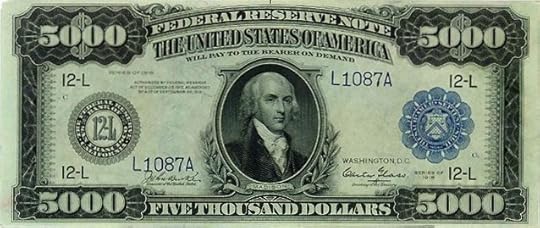
Many textbooks describe the signing of the Constitutional Convention and then within a paragraph detail the ratification by the states and the new Congress. This book guides the reader through what a contentious and arduous process that was, and led by the diminutive, quiet hero James Madison.
We get to know Madison and many of the "founding fathers" but far from deifying that group, Labunski humanizes these tough, resolute men and reveals the many primitive and fundamental obstacles they had to overcome.

April 13, 2014
By the lax rules of my 2014 presidential reading mission, I'm more than happy to read a book that hones in on a specific affair in the life of a POTUS. However, Richard Labunski's play-by-play of the controversies around, drafting and adoption of the Bill of Rights (BoR- yes, I'm that lazy) wasn't particularly Madison-y (other than multiple TMI mentions of Madison's "bilious troubles" and hemorrhoidal afflictions...seriously he almost didn't attend the ratification delegation due to- heck I'll just say it- diarrhea). Labunski's color commentary is lacking throughout the book. It reads more like a transcript of events than it does a narrative and the inclusion of minute details without any emotional punch made much of it immemorable. Simply put, I found this to be a pretty boring read.
Mara's Amateur-Hour Arbitrary Highlight Reel:
I came across a paper with a subtitle that perfectly captures James Madison's relationship to the BoR, James Madison and the Bill of Rights: A Reluctant Paternity. That's right, Madison may have been the baby daddy, but this was not a case of planned parenthood. They just finished birthing this whole "Constitution" thing, and, frankly he was tired.
Although Madison had buddied up with Alexander Hamilton to write the Federalist Papers, giving Madison all the Federalist street cred for which one could ever hope, Federalists and Anti-Federalists alike had reasons (although not the same ones) for not wanting to deal with business of a bill of rights. Heck, Madison thought it unnecessary.
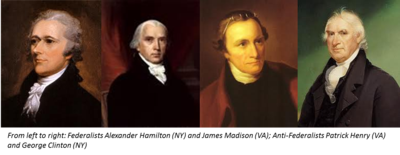
As per usual, there was fracas about regarding states rights and federal power. There was also the fear that if the rights were enumerated they could be turned on their head to imply that those liberties not expressly stated didn't exist (tricky stuff).
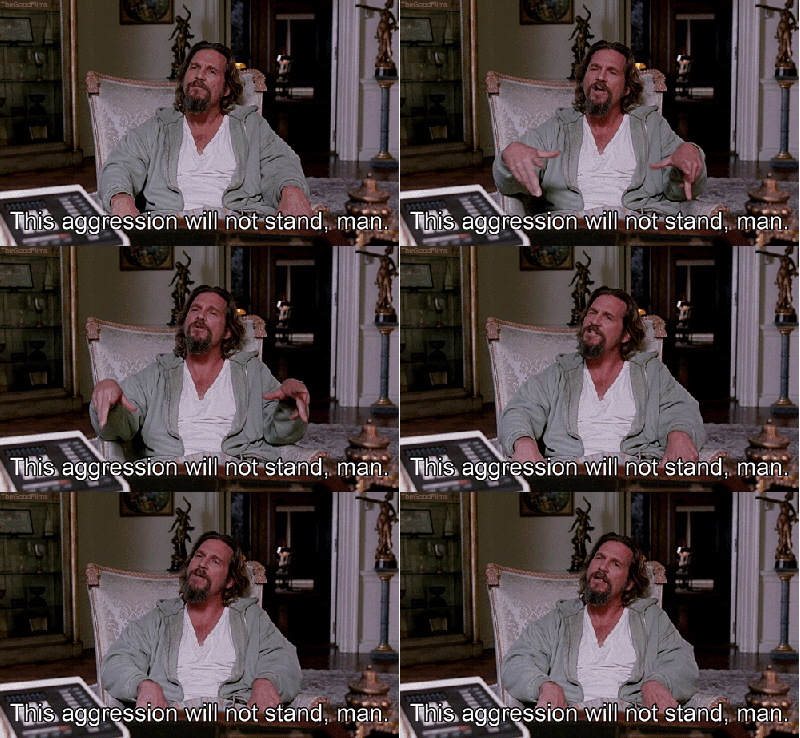
However, Madison was ever-concerned with protecting the vulnerable against Majority Misrule , wanting to prevent"the aggressions of interested majorities on the rights of minorities and of individuals." If The Big Lebowski had been around circa 1787, I'm pretty sure Madison would have abided the wisdom ofthe Dude.
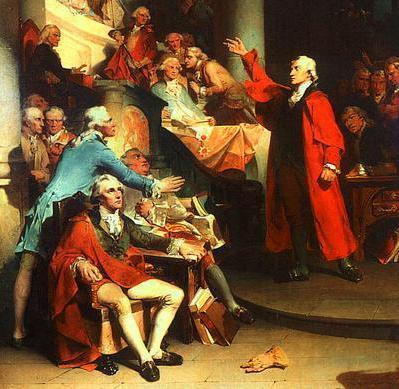
Meanwhile, the ever-dramatic Patrick Henry (of "give me liberty or give me death" fame) was doing everything in his power to undermine Madison (sort of). Henry could be a bit of a diva; after his infamous "Treason" speech in 1777 (below- and, seriously, talk about melodrama; gloves are being thrown, statesmen are cowering in the corners- Henry sure knew how to put on a show), and partaking of his gubernatorial activities in Virginia for a while, he refused the invite to attend the Constitutional Convention in 1787, and insisted on some serious rider clauses before he would ratify in 1788. He might as well have just locked himself in his dressing room!
In the event that your sarcast-o-meter is in the shop, obviously I think that Henry had some pretty beneficial ideas. However, he deserves at least one demerit for the advent of gerrymandering (though the term wouldn't be coined until 1812). Rumor has it that some of this is debatable, but since I'm reviewing Labunski's book, we'll go with his take which is that Henry pulled a lot of strings to get Virginia's voting districts finagled to undermine Madison's chances of being elected to the House of Representatives.
Spoiler alert, Madison ended up in Congress, became Secretary of State (at the time an almost requisite precursor to the presidency) and eventually ended up as fourth president, so take that Mr. Henry! Oh and also, we ended up with a bunch of Constitutional amendments (though not all of Madison's got through, notably national sovereignty over states; and we've tacked a few of them on as recently as 1992). In 1791 the ten ratified amendments became our Bill of Rights, and we've been fighting about it ever since.
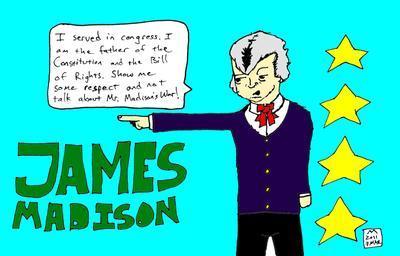
If you've gotten this far, you deserve a Mini Dove James Madison for your persistence.
Mara's Amateur-Hour Arbitrary Highlight Reel:
I came across a paper with a subtitle that perfectly captures James Madison's relationship to the BoR, James Madison and the Bill of Rights: A Reluctant Paternity. That's right, Madison may have been the baby daddy, but this was not a case of planned parenthood. They just finished birthing this whole "Constitution" thing, and, frankly he was tired.
Although Madison had buddied up with Alexander Hamilton to write the Federalist Papers, giving Madison all the Federalist street cred for which one could ever hope, Federalists and Anti-Federalists alike had reasons (although not the same ones) for not wanting to deal with business of a bill of rights. Heck, Madison thought it unnecessary.
As per usual, there was fracas about regarding states rights and federal power. There was also the fear that if the rights were enumerated they could be turned on their head to imply that those liberties not expressly stated didn't exist (tricky stuff).
However, Madison was ever-concerned with protecting the vulnerable against Majority Misrule , wanting to prevent"the aggressions of interested majorities on the rights of minorities and of individuals." If The Big Lebowski had been around circa 1787, I'm pretty sure Madison would have abided the wisdom ofthe Dude.
Meanwhile, the ever-dramatic Patrick Henry (of "give me liberty or give me death" fame) was doing everything in his power to undermine Madison (sort of). Henry could be a bit of a diva; after his infamous "Treason" speech in 1777 (below- and, seriously, talk about melodrama; gloves are being thrown, statesmen are cowering in the corners- Henry sure knew how to put on a show), and partaking of his gubernatorial activities in Virginia for a while, he refused the invite to attend the Constitutional Convention in 1787, and insisted on some serious rider clauses before he would ratify in 1788. He might as well have just locked himself in his dressing room!
In the event that your sarcast-o-meter is in the shop, obviously I think that Henry had some pretty beneficial ideas. However, he deserves at least one demerit for the advent of gerrymandering (though the term wouldn't be coined until 1812). Rumor has it that some of this is debatable, but since I'm reviewing Labunski's book, we'll go with his take which is that Henry pulled a lot of strings to get Virginia's voting districts finagled to undermine Madison's chances of being elected to the House of Representatives.
Spoiler alert, Madison ended up in Congress, became Secretary of State (at the time an almost requisite precursor to the presidency) and eventually ended up as fourth president, so take that Mr. Henry! Oh and also, we ended up with a bunch of Constitutional amendments (though not all of Madison's got through, notably national sovereignty over states; and we've tacked a few of them on as recently as 1992). In 1791 the ten ratified amendments became our Bill of Rights, and we've been fighting about it ever since.
If you've gotten this far, you deserve a Mini Dove James Madison for your persistence.

December 25, 2010
It is something of a paradox that James Madison, who is so closely associated with the Bill of Rights as to be labeled its father, was originally opposed to even the idea of enumerating the rights of citizens against their government. But whether for a change of heart or out of political expediency--evidently even his contemporaries argued which--Madison did preside over the gestation of the first ten amendments. (Did you know that Congress originally passed twelve?)
Labunski's book is typical of its type: no detail too small to quote or belabor, but he's documenting history not writing pop fiction. Though this drama has all the elements of a who-done it. A flawed hero, a insurmountable task (which he initially doesn't believe in), towering opponents worthy and otherwise. In his own state Madison was opposed by such notables as Patrick Henry, Richard Henry Lee and George Mason, while his expected allies were absent (Jefferson in revolutionary Paris, Washington is Olympian silence on Mount Vernon). Diminutive stature, spurned love interests and a delicate constitution plague Madison's efforts (though he wins a fine lady's heart in the end).
Side note: Patrick Henry was partly right: adoption of the new Constitution was the death knell of the states as autonomous units, and the Bill of Rights did nothing to check the explosion of federal power. In fact, though it took over a century, the federal courts used the Bill to greatly expand the federal role.
Good story, not well told.
Labunski's book is typical of its type: no detail too small to quote or belabor, but he's documenting history not writing pop fiction. Though this drama has all the elements of a who-done it. A flawed hero, a insurmountable task (which he initially doesn't believe in), towering opponents worthy and otherwise. In his own state Madison was opposed by such notables as Patrick Henry, Richard Henry Lee and George Mason, while his expected allies were absent (Jefferson in revolutionary Paris, Washington is Olympian silence on Mount Vernon). Diminutive stature, spurned love interests and a delicate constitution plague Madison's efforts (though he wins a fine lady's heart in the end).
Side note: Patrick Henry was partly right: adoption of the new Constitution was the death knell of the states as autonomous units, and the Bill of Rights did nothing to check the explosion of federal power. In fact, though it took over a century, the federal courts used the Bill to greatly expand the federal role.
Good story, not well told.

October 2, 2019
it was aight lol
November 3, 2009
I enjoy reading biographies of the founding fathers. After reading about George Washington, John Adams, Benjamin Franklin, Thomas Jefferson, and Alexander Hamilton, I was eager to learn more about James Madison, and so I bought this book. I've been looking forward to reading it.
Unfortunately, this book is somewhat of a disappointment. It is well researched, containing references and letters in great detail. However, the organization I would expect from a book like this is lacking.
The book redundantly repeats the same information. For example, in the first two chapters the difficulty of travel in the winter is mentioned multiple times, and other facts are repeated again and again. The author will often restate himself, such as the following simile of what recurs often in the book:
John Doe was opposed to the constitution. In his words: "I am adamantly opposed to the constitution as written."
The author has a PhD, but the writing seems to be more undergraduate level writing. It's as if the first draft was submitted to the publisher who printed it without having the editor look at it. If only the quality of writing was better, I think this could have been a good book.
Addendum 12/7/2009
After finishing the book I felt a little better about it. Either the redundancy lessened as the book proceeded, or I became immune to it. Overall, it did give a good history of James Madison and of the bill of rights. The conclusions of the author tended to have a pro-lawyer/pro-liberal leaning, but overall it was a decent book.
If anyone reads this review and knows of a good biography on James Madison please let me know
Unfortunately, this book is somewhat of a disappointment. It is well researched, containing references and letters in great detail. However, the organization I would expect from a book like this is lacking.
The book redundantly repeats the same information. For example, in the first two chapters the difficulty of travel in the winter is mentioned multiple times, and other facts are repeated again and again. The author will often restate himself, such as the following simile of what recurs often in the book:
John Doe was opposed to the constitution. In his words: "I am adamantly opposed to the constitution as written."
The author has a PhD, but the writing seems to be more undergraduate level writing. It's as if the first draft was submitted to the publisher who printed it without having the editor look at it. If only the quality of writing was better, I think this could have been a good book.
Addendum 12/7/2009
After finishing the book I felt a little better about it. Either the redundancy lessened as the book proceeded, or I became immune to it. Overall, it did give a good history of James Madison and of the bill of rights. The conclusions of the author tended to have a pro-lawyer/pro-liberal leaning, but overall it was a decent book.
If anyone reads this review and knows of a good biography on James Madison please let me know

July 1, 2009
Interesting but poorly-written bit of U.S. history. I learned a lot about the process and conflicts surrounding the writing of the Bill of Rights. But it could have been a lot...a lot...shorter. An example: I'm not convinced that readers need to know the vote tally for each congressional district in Virginia. Kind of like the narratives of the sewer system in Paris written by Victor Hugo. Doesn't add much, and makes for the abridged version industry.
December 15, 2009
If you are looking for a biography of James Madison, this isn't your book. It focuses on the ratification of the Bill of Rights with emphasis on the political maneuvering in Virginia over these amendments, with further emphasis on the political sparring between Madison and Patrick Henry. It is very well written, but unless you are specifically interested in Virginia's ratification process, this book will probably drag on a bit.
Currently Reading
November 11, 2008Very interesting so far. Goes into much detail during the time between the drafting of the constitution through the adoption of the bill of rights, including the very contentious ratifying convention of Virginia and the day-to-day details of the people at the time.
I read a few pages everyday on the bus. Hopefully, I will finish with this before 2009.
I read a few pages everyday on the bus. Hopefully, I will finish with this before 2009.

December 9, 2015
Dry as a turkey that has been left in the oven too long, but full of valuable information. Great book if you are doing a research project, horrible if you are reading for enjoyment.

March 21, 2020
As I continue to study the beginning of American history, I have been reading books in chronological order to better understand how things happened, why they happened, who was involved, etc.
I chose this book to read about the Bill of Rights. This would be the second book that I have read about James Madison as well. The other being James Madison and I did not find that book good in the least as it over-explained everything.
Unfortunately this book was no better. The biggest issue I had was all the quotations. There was at least one in every paragraph and while they should be useful in helping to understand what someone's mindset was during a particular moment, it was a distraction. The reason being that the book read like it was in two different languages...today's English and yesterday's English. There was no need to have so many quotations.
With that being stated, the history of the Bill of Rights was what I was expecting as in why this right was argued for and who was behind it. Instead, it was a history of how the rights were argued about in whole rather than in part.
Basically I learned nothing about how the TEN rights were decided upon specifically and everything about why TWELVE rights were selected in general. I use the word "selected" because not much was written about how they were decided upon either.
However, in the end, I learned two things: One - it seems no one can write a book about the Bill of Rights that addresses each right and the order they were put in the the bill; Two - some of the founders wanted the Bill of Rights in the middle of the Constitution and others wanted them placed at the end of the Constitution which I agree was the best decision.
I chose this book to read about the Bill of Rights. This would be the second book that I have read about James Madison as well. The other being James Madison and I did not find that book good in the least as it over-explained everything.
Unfortunately this book was no better. The biggest issue I had was all the quotations. There was at least one in every paragraph and while they should be useful in helping to understand what someone's mindset was during a particular moment, it was a distraction. The reason being that the book read like it was in two different languages...today's English and yesterday's English. There was no need to have so many quotations.
With that being stated, the history of the Bill of Rights was what I was expecting as in why this right was argued for and who was behind it. Instead, it was a history of how the rights were argued about in whole rather than in part.
Basically I learned nothing about how the TEN rights were decided upon specifically and everything about why TWELVE rights were selected in general. I use the word "selected" because not much was written about how they were decided upon either.
However, in the end, I learned two things: One - it seems no one can write a book about the Bill of Rights that addresses each right and the order they were put in the the bill; Two - some of the founders wanted the Bill of Rights in the middle of the Constitution and others wanted them placed at the end of the Constitution which I agree was the best decision.

April 7, 2023
The Academic Professor Richard Labunski’s book entitled James Madison and the Struggle for the Bill of Rights was published in 2006. The book is part of the Pivotal Moments in American History series. The book contains black-and-white illustrations and a map of James Madison’s congressional campaign in 1789. Madison ran against his friend James Monroe in the congressional champaign of 1789. The book focuses on the role of James Madison in ramification of the American Constitution by the state of Viriginia. This was followed by the addition of the Bill of Rights to the American Constitution. Historian David Hackett Fischer writes in “Editor’s Note” that “in the history of the American Republic, we find repeated evidence that one individual, working with others, can make a major difference in the outcome of great events (Labunski xi). Fischer and Labunski agree that James Madison was an important figure in the passage of the Bill of Rights (Labunski xi). Richard Labunski is a professor of Journalism and Telecommunications at the University of Kentucky. Labunski believes that the Electoral College needs to be reforms (Benedotto 2000). The book contains a section of notes along with a section of appendixes. Richard Labunski’s book, James Madison and the Struggle for the the Bill of Rights was a well-done and surprisingly readable book.
Works Cited:
Benedotto, Richard. 2000. “Popular vote, Electoral College vote at odds.” United States of America (USA) Today. October 29. Popular vote, Electoral College vote at odds? (usatoday.com)

November 19, 2021
“Madison and the Struggle For the Bill of Rights” by Richard Labunski and narrated by Richard Poe was published by Recorded Books 2006. This audio book is available on Hoopla. The book is subtitled “Pivotal Moments in American History.” The audio book helped me better understand the passionate perspectives of Federalist and Anti-federalist on the adoption of the U.S..Constitution. During the arduous Constitution ratification process, these conflicts are surprising; and many of these conflictual views persist throughout America’s history into our present day. For example, Amendment 1 underpins the Constitution’s principles of freedom of the press, speech, and religion. These principles were challenged during the passage of the Alien and Sedition Acts, American Civil War, World War 1 & 2, and into the present day on Facebook and Twitter, to mention only a few. Chapter 11 is a wonderful summary of James Madison, Patrick Henry, Thomas Jefferson, and James Monroe’s lives. The chapter also summarizes how the Bill of Rights anchors American principles of life and liberty in the pursuit of individual happiness. Labunski believes that the ongoing tensions between Federal and State are beneficial and will continue to define American values across future generations. (P/L)
April 8, 2025
The first paragraph of this book gives the premise what this book is about. “In The History Of The Early American Republic, we find repeated evidence that on individual, working with others, can make a major difference in the outcome of great events. It happened again and again in the new nation. A leading example was the roll of James Madison in the birth of the Bill of Rights.” Not only was he the Father of the Constitution, but was instrumental in the forging the Bill of Rights. Imagine if this happened today. There is no way it would have passed. It was hard enough without social media, imagine trying to do this with social media. “James Madison had to overcome one obstacle after another to help give the nation a Constitution and sponsor the amendments that became the Bill of Rights.” Highly encourage you to read this book!

November 29, 2022
Illuminating and entertaining
Lubanski writes clearly, providing an heroic story of James Madison that is illuminating and entertaining. It should be assigned reading for every high school student and every college undergraduate.
Lubanski writes clearly, providing an heroic story of James Madison that is illuminating and entertaining. It should be assigned reading for every high school student and every college undergraduate.

August 18, 2026
This book reads more like a textbook with detailed step by step actions taken toward not only ratification of the Constitution but also the Bill of Rights. A bit dry but very informative. Madison was very different from some of the other members at that time and his persistence paid off.

March 2, 2017
Nice piece on the long fight for the Bill of Rights and the man who drove it.

February 4, 2019
Something about the style of the writing that wasn't as compelling as many history books I have read.

March 8, 2022
Excellent history of Madison's struggle to see the Constitution ratified in Virginia and the subsequent addition of the Bill of Rights.
September 29, 2024
An easy read but I liked the focus just on the Bill of Rights, which we rarely hear anything about in books and certainly even less is known of Madison.

December 28, 2024
A well written history of what it took, primarily from Madison, to create and ratify the Constitution and Bill of Rights. A nice addition a library of the colonial period in American history.

January 25, 2011
This review is based on the audio version of this book.
To be totally honest, I only made it through the first 3 disks of this book. I'm not sure what I was expecting, but this book was not well written. The point was abundantly clear that there was much confusion after the initial constitutional convention about whether the Constitution should be ratified. The book goes on to talk about this for at least 3 hours. And brings up the same points over and over again. I had to check to see if I had messed up and was listening to the same disk again. Yes Madison was instrumental in creating the Constitution, he was even very important in getting it past Virginia, but it did get by, let's move on.
There were some interesting points in the first 3 disks. I hadn't realized how large and powerful Virginia was in the early United States, geographically it extended into present day Ohio, not to mention the number of prominent politicians that called Virginia home. Another was that the main point of contention with the Constitution was that it lacked the Bill of Rights. The Anti-Federalists where afraid that without those rights the federal government would impinge personal liberties. Madison and others made the somewhat logical argument that since all personal liberties could not possibly be enumerated, some would be left off the list, and thereby possibly be considered unprotected.
Basically, after hearing the same arguments over and over in the first 3 disks, I jumped ahead to a random spot in the 7th disk. The arguments that I heard there were almost identical to that in the 3rd. No thank you. I stopped listening. I have other things I'd rather do that waste my time on a bad book.
To be totally honest, I only made it through the first 3 disks of this book. I'm not sure what I was expecting, but this book was not well written. The point was abundantly clear that there was much confusion after the initial constitutional convention about whether the Constitution should be ratified. The book goes on to talk about this for at least 3 hours. And brings up the same points over and over again. I had to check to see if I had messed up and was listening to the same disk again. Yes Madison was instrumental in creating the Constitution, he was even very important in getting it past Virginia, but it did get by, let's move on.
There were some interesting points in the first 3 disks. I hadn't realized how large and powerful Virginia was in the early United States, geographically it extended into present day Ohio, not to mention the number of prominent politicians that called Virginia home. Another was that the main point of contention with the Constitution was that it lacked the Bill of Rights. The Anti-Federalists where afraid that without those rights the federal government would impinge personal liberties. Madison and others made the somewhat logical argument that since all personal liberties could not possibly be enumerated, some would be left off the list, and thereby possibly be considered unprotected.
Basically, after hearing the same arguments over and over in the first 3 disks, I jumped ahead to a random spot in the 7th disk. The arguments that I heard there were almost identical to that in the 3rd. No thank you. I stopped listening. I have other things I'd rather do that waste my time on a bad book.

June 11, 2016
Very interesting book on the creation and passing the Bill of Rights. When James Madison was tasked by the Confederation Congress of the pre-US government as we have today, he overstepped his bounds by just a wee bit, some say treasonously so. The pre-1789 government was very loose and there were many issues that were causing a breakdown in commerce, travel and more (each state was, in essence, quasi-independent, so they were imposing tarriffs on good. A merchant in Virginia selling goods in New York had to pay tariffs to Maryland, Pennsylvania and so forth.
Madison, with insights of others, wrote the Constitution and felt it was perfect, with no need to have amendments added. Two sides in favor of no change: first, keep it and have a strong government. Second, many others felt that time was needed to see how the new government would work to see if changes were needed. On the other side, many felt that there was no need for any change. The Confederation was just fine and there was no need for a strong central government, one that would infringe on personal rights. Virginia and New York were very against the Constitution. In Virginia, Patrick Henry, George Mason and others were very against.
2 years in the making, over 40 amendments were offered designed to both protect the rights of citizens and to limit the scope of the government. After committee work, the House, the Senate and the States, 12 amendments were discussed. The first two were removed, leaving the ten as we know them.
Well written, well researched.
Madison, with insights of others, wrote the Constitution and felt it was perfect, with no need to have amendments added. Two sides in favor of no change: first, keep it and have a strong government. Second, many others felt that time was needed to see how the new government would work to see if changes were needed. On the other side, many felt that there was no need for any change. The Confederation was just fine and there was no need for a strong central government, one that would infringe on personal rights. Virginia and New York were very against the Constitution. In Virginia, Patrick Henry, George Mason and others were very against.
2 years in the making, over 40 amendments were offered designed to both protect the rights of citizens and to limit the scope of the government. After committee work, the House, the Senate and the States, 12 amendments were discussed. The first two were removed, leaving the ten as we know them.
Well written, well researched.
December 20, 2009
I would actually give this 3 1/2 stars. it is very informative and insightful about a great man and one of the most important events in history.
I agree with others that there are parts that are very slow, such as the vote tallies in individual counties.
But it deals with big issues and how a great man like madison grew and matured politically.
as a framer of the constitution he had been opposed and fought against a bill of rights in the constitutional convention, but in his extended battles with opponents of the constitution, especially Patrick Henry, he became convinced of the need for one.
There is too much in this book to describe, and it is an excellent reference for the ideas behind the constitution and the struggles we are going through now.
of personal interest it shows how the bill of rights was immediately put to the test with Adams signing of the Alien and Sedition act. Madison and Jefferson vociferously opposed it , and sent bills to the states to undo the limitation of the first amendment, but there was no effective effort to stop this. It was repealed when Jefferson became president. it reminds me of the torture habeus corpus, warrantless search, and other clear constitutional infringments of the Bush administration that were only marginally dealt with by the courts and pretty much ignored by even the opposition legislators
I agree with others that there are parts that are very slow, such as the vote tallies in individual counties.
But it deals with big issues and how a great man like madison grew and matured politically.
as a framer of the constitution he had been opposed and fought against a bill of rights in the constitutional convention, but in his extended battles with opponents of the constitution, especially Patrick Henry, he became convinced of the need for one.
There is too much in this book to describe, and it is an excellent reference for the ideas behind the constitution and the struggles we are going through now.
of personal interest it shows how the bill of rights was immediately put to the test with Adams signing of the Alien and Sedition act. Madison and Jefferson vociferously opposed it , and sent bills to the states to undo the limitation of the first amendment, but there was no effective effort to stop this. It was repealed when Jefferson became president. it reminds me of the torture habeus corpus, warrantless search, and other clear constitutional infringments of the Bush administration that were only marginally dealt with by the courts and pretty much ignored by even the opposition legislators

December 28, 2009
The best take-aways from the book are that [1:] the Constitution didn't just happen and that [2:] the Bill of Rights certainly didn't just happen. The worst involve Labunski's fixation on 18th Century travel, James Madison's weak speaking voice, and Madison's problems with his bowels. Labunski begins with the dissolution of the Articles of Confederation as the representatives sent to amend that ailing document end up concocting an entirely new Constitution. Calls for amendments to the Constitution arose immediately and continued through the ratification process.
Labunski traces the major arguments surrounding the Constitution and potential amendments. He highlights the philosophical positions of major characters such as Madison, Patrick Henry, James Monroe, and Edmund Randolph. Labunski views Virginia as the hotspot for ratification controversy, so most of the book is dedicated to Virginia and Virginians.
James Madison and the Struggle... plods along slowly, gets repetitive, and begins to feel like a dull civics lecture. It does capture the ideas and political machinations of the era, however, and present plenty of good information. Ultimately it demonstrates that the acceptance of the Constitution and Bill of Rights were not foregone conclusions or inevitable events.
Labunski traces the major arguments surrounding the Constitution and potential amendments. He highlights the philosophical positions of major characters such as Madison, Patrick Henry, James Monroe, and Edmund Randolph. Labunski views Virginia as the hotspot for ratification controversy, so most of the book is dedicated to Virginia and Virginians.
James Madison and the Struggle... plods along slowly, gets repetitive, and begins to feel like a dull civics lecture. It does capture the ideas and political machinations of the era, however, and present plenty of good information. Ultimately it demonstrates that the acceptance of the Constitution and Bill of Rights were not foregone conclusions or inevitable events.

February 4, 2012
James Madison and the Bill of Rights is another great addition to the Pivotal moments in American history series. The author does an excellent job of laying out what would happen had the bill of rights not been enacted and the path taken in Madison's evolution to the bill of rights. The author does an excellent job of taking the reader through the stages of the constitutional convention, the ratification process (focusing mostly on Virginia which was the pivotal lynchpin in getting New York's acquiescence) and then the formation of the new government followed by the development of the bill of rights. For those interested in political history this is a must read for the analysis on how the Bill of Rights and our early government was formed. This is a great starting point and an excellent primer for some of the more detailed works that follow. I strongly encourage everyone to read not only this entry into the series but the entire pivotal moments series for a true understanding of the major paradigm shifts in American history and how they impacted the development of the American psyche and were essential in our development of an American identity. In this case it is the codification of American liberties and the struggle to define those liberties that shed light on the values of the founders and the cautios nature of a limited government.

December 31, 2012
I enjoyed this book which reveals the tremendous debt of gratitude we owe to Madison for taking on the often thankless task of persuading the critical Commonwealth of Virginia to ratify the Constitution and pushing the Bill of Rights through Congress. So many of the arguments from those times are echoed in the debates we have over government today. I found it entertaining that Patrick Henry was so adamantly opposed to the Constitution without the Bill of Rights that he was willing to risk bringing the whole country down by blocking Virginia's ratification and taking this crucial state out of the union - a move which, btw, would have prevented Washington from becoming our first president! And even after the Bill of Rights was sent to the states for ratification Henry opposed them because he thought their language was too weak to be effective. It reminds me of today's Tea Party Republicans who would rather shut down the gov't than compromise on any of their positions. It is instructive to learn that had the no-compromise anti-federalists had their way the country would have been greatly weakened if not destroyed and no Bill of Rights would ever have been passed because they would never have found that any of them sufficiently lived up to their principles.

August 15, 2013
Though parts were a bit dull, long and seemed kind of repetitive, nevertheless it was educational (thus I give it 4 stars). I now have a richer understanding of the process and what role the Federalist James Madison had to do with getting the bill of rights added to the constitution.
I have always sided with the anti-federalist in all of the American histories I've encountered, but in this one I saw some actions from the anti-federalist that I couldn't respect (the attitude that if they couldn't get everything, they would have nothing). Yet it was the anti's pressure that eventually got the reluctant Madison to finally fight for the amendments, primary to prevent another push by the anti's for a new constitutional convention which he thought would be disastrous.
This book is much more about the the struggle for the bill of rights than it is about James Madison, yet you will learn and hear again and again about Madison's Bowel problems, horribly discomforting journey's in a carriage, his short stature and weak voice, and how shy he was. What was crazy, is how long it took before he supported the bill of rights. For most of the book he just towed the Federalist line, implying the people should just trust the angelic government who would never abuse their power.
I have always sided with the anti-federalist in all of the American histories I've encountered, but in this one I saw some actions from the anti-federalist that I couldn't respect (the attitude that if they couldn't get everything, they would have nothing). Yet it was the anti's pressure that eventually got the reluctant Madison to finally fight for the amendments, primary to prevent another push by the anti's for a new constitutional convention which he thought would be disastrous.
This book is much more about the the struggle for the bill of rights than it is about James Madison, yet you will learn and hear again and again about Madison's Bowel problems, horribly discomforting journey's in a carriage, his short stature and weak voice, and how shy he was. What was crazy, is how long it took before he supported the bill of rights. For most of the book he just towed the Federalist line, implying the people should just trust the angelic government who would never abuse their power.

February 24, 2016
Labunski goes to pains to point out that Madison wasn’t the earliest proponent of the Bill of Rights, but he became its greatest advocate. He came to his advocacy when he realized that those opposed to a strong national government were going to use the lack of an enumeration of these rights to defeat the formal union of the states under the Constitution.
Madison’s approach in selecting the dozen or so “rights” from a list of over one hundred is detailed. There is plenty of biographical material that charts Madison’s career both before and after his shepherding of the Bill of Rights through the House. We get some details on the toll this took on his health. He notes how much of Madison’s focus was on his home state of Virginia rather than on national concerns.
In general, I found that the approach by Carol Berkin in her book, The Bill of Rights – The Fight to Secure America’s Liberties, to be more engaging (see my review) and less pedagogical.
Having said that, Labunski takes time to point out the reasons “…why the Bill of Rights lay mostly dormant for so many years of the Nation’s history.” This is solid analysis and the book stands as a good reference - just not my favorite.
Madison’s approach in selecting the dozen or so “rights” from a list of over one hundred is detailed. There is plenty of biographical material that charts Madison’s career both before and after his shepherding of the Bill of Rights through the House. We get some details on the toll this took on his health. He notes how much of Madison’s focus was on his home state of Virginia rather than on national concerns.
In general, I found that the approach by Carol Berkin in her book, The Bill of Rights – The Fight to Secure America’s Liberties, to be more engaging (see my review) and less pedagogical.
Having said that, Labunski takes time to point out the reasons “…why the Bill of Rights lay mostly dormant for so many years of the Nation’s history.” This is solid analysis and the book stands as a good reference - just not my favorite.

April 11, 2012
This seems like a must-read for anyone interesting in the seminal moments of American history, and in many respects it is. The period between the signing of the Constitution and the signing of the Bill of Rights is perhaps the most pivotal in this country's infancy, and the process by and through which the Bill of Rights was finally ratified is revealing and fascinating, especially given the difficulties of travel and communication in those days. The political personalities are almost as intriguing, and this serves as a reminder in several respects of the role Virginia played in the formation and development of the United States, besides being the home state of Presidents Washington, Jefferson, Madison and Monroe.
That said, I wish Richard Lubinski had gone into a little more detail about the personal life of Madison and how he came to be the dynamic and driving force behind the writing of the Bill of Rights. These were neither ordinary times nor ordinary persons, and to learn more about his upbringing and home life may have helped better explain why Madison was so extraordinary.
That said, I wish Richard Lubinski had gone into a little more detail about the personal life of Madison and how he came to be the dynamic and driving force behind the writing of the Bill of Rights. These were neither ordinary times nor ordinary persons, and to learn more about his upbringing and home life may have helped better explain why Madison was so extraordinary.

April 7, 2016
I am in the middle of this book at the moment and surprised at how many did not want to approve the Constitution without a Bill of Rights and how it was made such a big deal that the constitution was approved and than amended later to include the Bill of Rights.
Learning more about history and thinking of our day today and although some things are different I find myself reflecting on the words of Paul Harvey
"In times like these, it is helpful to remember that there have always been times like these."
James Madison and many others did us a such a great service by working tirelessly to establish the best America they could and do it in a way to give it the best chance of success. It took many years and struggles after the Bill of Rights was passed for them to be fully enforced, but I am extremely grateful that they were established and we enjoy those freedoms today.
Learning more about history and thinking of our day today and although some things are different I find myself reflecting on the words of Paul Harvey
"In times like these, it is helpful to remember that there have always been times like these."
James Madison and many others did us a such a great service by working tirelessly to establish the best America they could and do it in a way to give it the best chance of success. It took many years and struggles after the Bill of Rights was passed for them to be fully enforced, but I am extremely grateful that they were established and we enjoy those freedoms today.
Displaying 1 - 30 of 72 reviews