Jump to ratings and reviews
Rate this book

Beneath the Lion's Gaze

Rate this book
The powerful debut from 2020 Booker Prize shortlisted author of The Shadow KingAddis Ababa, Ethiopia, 1974 - the eve of a revolution. Yonas kneels in his mother's prayer room, pleading to his god for an end to the violence that has wracked his family and country. His father, Hailu, a prominent doctor, has been ordered to report to jail after helping a victim of state-sanctioned torture to die. And Dawit, Hailu's youngest son, has joined an underground resistance movement-a choice that will lead to more upheaval and bloodshed across a ravaged Ethiopia.Emotionally gripping, poetic and indelibly tragic, Beneath the Lion's Gaze is a transcendent story that tells a gripping story of family and of the bonds of love and friendship. It is a story about the lengths to which human beings will go in pursuit of freedom and the human price of a national revolution.

320 pages, Kindle Edition

First published January 11, 2010

252 people are currently reading
9888 people want to read

About the author

Maaza Mengiste

16 books612 followers
Maaza Mengiste is a novelist and essayist. Her debut novel, Beneath the Lion’s Gaze, was selected by the Guardian as one of the 10 best contemporary African books and named one of the best books of 2010 by Christian Science Monitor, Boston Globe and other publications. Her fiction and nonfiction can be found in The New Yorker, Granta, the Guardian, the New York Times, BBC Radio,and Lettre International, among other places. She was the 2013 Puterbaugh Fellow and a Runner-up for the 2011 Dayton Literary Peace Prize. Both her fiction and nonfiction examine the individual lives at stake during migration, war, and exile, and consider the intersections of photography and violence. She was a writer on the social-activist documentary film, Girl Rising, which features the voices of actors such as Meryl Streep, Liam Neeson, and Cate Blanchett. She currently serves on the boards of Words Without Borders and Warscapes. Her second novel, The Shadow King, is forthcoming.

Ratings & Reviews

What do you think?
Rate this book

Friends & Following

Create a free account to discover what your friends think of this book!

Community Reviews

5 stars
1,129 (29%)
4 stars
1,670 (43%)
3 stars
858 (22%)
2 stars
160 (4%)
1 star
39 (1%)
Displaying 1 - 30 of 558 reviews
Profile Image for Jim Fonseca.
1,163 reviews8,493 followers
June 11, 2022
This novel is set in Ethiopia’s capital city, Addis Ababa, in the late 1970’s. It’s the last days of Christian Emperor Haile Selassie who successfully led the fight against Mussolini’s soldiers - spears vs. tanks. Ethiopia today is still two-thirds Christian (Coptic) and one-third Moslem. But now a military takeover has occurred and the communists are in power, a group known as the Derg. Cuba, East Germany, USSR and North Korea become their allies, sending financial and military aid.

description

At first the military leaders put the emperor under house arrest and force him to sigh their decrees; later they kill him (1974). People watch TV to see if their name is mentioned as one of those required to “come in for questioning.” Usually that means you will never be seen again. This period became known as the Ethiopian Red Terror. Perhaps as many as 750,000 people were killed just in the years 1975-77. .

As backdrop to all the political goings on, there is famine, (with vultures used for symbolism in the book), profiteering from food aid, corruption.

Before I get into the story, I must say this: the portrayal of violence, graphic torture and sheer terror means you need a strong stomach to read this book. I can only think of one other book I have read that is so graphic: Yalo by Elias Khoury set in the civil war turmoil of Beirut. In this environment, no one is spared: children, old men, and women and girls are tortured and killed. The government charges a “bullet fee” for families to collect bodies of dead prisoners.

description

The story follows a fairly well-off family. They have cars and maids. The father is a doctor and his wife is dying in a hospital as the book begins. They have an older son and his wife who live with them as well as younger son.

SPOILERS FOLLOW:

The brothers are at opposite ends of the political spectrum. The older one spends much of him time praying; the younger practices his warrior dance in front of a mirror. The college-age younger son is causing panic in the family with his involvement in anti-government activity. At first this is surreptitiously handing out leaflets and newspapers. By the end of the book he is a full-fledged armed guerrilla.

As a doctor, the father is well-placed. Many of the government ministers are his friends and he hears names announced on TV of people he knows. He doesn’t have to wait to hear his own name. One day a young woman is brought in to the hospital under military guard. She has been so brutally tortured that she is in a coma and near death. While she makes some recovery at first, he realizes that they want her back to torture her again. He poisons her and he is in turn arrested and tortured to find out why he did this.

In another tragic scene a beautiful, well-dressed young woman arrives at the prison, overnight case in hand, knocking on doors to try to get in because she has been called in for “questioning.” The crowd milling about screams at her “get out, run, don’t go in” but a door opens, arms reach out to pull her in, and she is never seen again.

The younger son eventually recruits his sister-in-law in the anti-military effort. They go out at night to collect mutilated bodies that the military have dumped in public places as a warning to others.

There is not a lot of plot; the story follows the lives of this family and a few other people such as a street vendor and a childhood friend of the young son who joins the other side and becomes an army officer. The military force the family to take in an informer who lives in their compound. The daughter-in-law pays beggars to spread broken glass on the path around the church so that she can crawl on her knees to help her daughter get better from an illness. One of the beggars joins her.

The book is translated from the Ethiopian. One of the sections leads off with an old Ethiopian war song that says it all:

Mother of the strong boy, tighten the belt around your waist.
Your son is for the vultures only,
Not for burial by your relatives.

description

Image of Emperor Haile Selassie from animalia-life.club
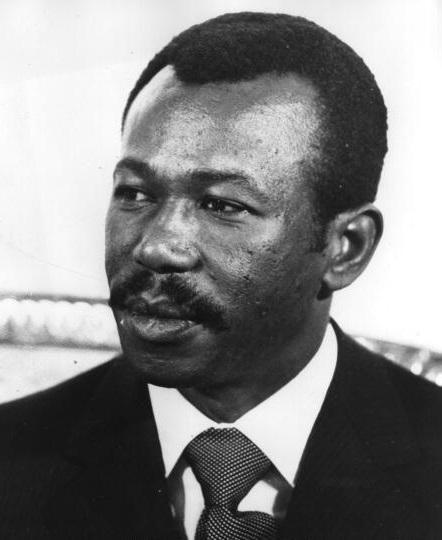
Photos of Derg leaders and the author from Wikipedia
Profile Image for Terryn.
20 reviews35 followers
December 5, 2013
Let’s be real here – a lot of what we (Westerners) know of Ethiopia is based on those late night aid commercials soliciting support for starving children with distended bellies and flies swarming their faces. This is incredibly problematic. Maaza Mengiste’s “Beneath The Lion’s Gaze” flies in the face of that monolithic stock image of the country and gives a richly drawn description of Ethiopian life before the 1974 revolution that many people know little or nothing about.

This is the story of a family set against the overthrow of Emperor Haile Selassie, and is easily one of most gripping books I’ve read in a very long time. It looks baldly at the beauty of Ethiopian culture (a strongly family, community, and faith centered way of life), Ethiopian history (Ethiopia proudly off Italian forces and was the only African nation not colonized by Europeans), and the political machinations that tore at the fabric of that society. Main characters include Hailu, a medical doctor and the father and head of the household; Selam, his ailing wife, Yonas, their eldest son, Dawit the younger, more rebellious son, and Sara, Yonas’s wife. There are a number of ancillary characters that weave in and out of the narrative to tell a story that is about family, love, war, and convictions.

For me this novel renewed my interest in Ethiopian history. As a black American I already had some idea of Ethiopia’s rich contribution to black history, and knew of Haile Selassie’s importance to Rastafarianism, but this book made me think about the ramifications of deifying political leaders, black or otherwise. The torture/death scenes in the book were hard to bear because you realize how both fragile and resilient human life can be. This book is definitely worth the read.
Profile Image for Mohammed.
540 reviews777 followers
July 23, 2025
تحت نظرة الأسد المحدقة
مازا منجست

عودة إلى الأدب الأفريقي، هذه المرة من أثيوبيا. بلد البُن والخيرات، بلد الحروب والمجاعة والثورات.

تسجل الرواية منعطفاً حاداً في تاريخ أثيوبيا الحديث مابين سقوط الامبراطورية ووصول الشيوعيين إلى سدة الحكم.

يرتفع الستار في مستهل الرواية على القلاقل التي واكبت نهاية حكم الامبراطور هيلا سيلاسي، الذي حكم البلاد انطلاقاً من حق إلهي لا تمتلك أغلبية الشعب المتدين الاعتراض عليه. الامبراطور سليل سليمان الحكيم، قاهر الطليان، وريث امبراطورية الألف عام. اتسمت تلك الفترة بالفساد وسوء توزيع الثروة، بالإضافة إلى مجاعة إقليم وولو التي كانت بمثابة المسمار الأخير في نعش امبراطورية عتيقة.

description

تلى ذلك ما نظن أنه انفراجه على شكل ثورة شعبية ينفذها انقلاب عسكري أبيض. لكن ذلك البياض ينقلب إلى سواد فاحم ما إن يتمكن الجنرالات من الاستفراد بالحكم وتحويل البلاد إلى دولة ماركسية يحكمها حزب واحد بقيادة الرهيب منجستو هيلا ميريام، الذي ورد ذكره في الرواية باسم الجنرال جودو. وهكذا انتقلت الحبشة من حكم امبراطوري إلى حكم دموي ازدهرت فيه المذابح وشُيدت فيه السجون وتفشى فيها الرعب. سمعت من أحد الأصدقاء، وظننتها مبالغة، أن الحكومة كانت عندما تعدم أحد المواطنين لا تسلم جثمانه لذويه إلا بعد دفع مبلغٍ لقاء الرصاصة التي "خسرتها" الحكومة على فقيدهم. وثقت هذه الرواية –وغيرها من المصادر- هذه الوقائع الوحشية.

description

وفي خضم تلك التقلبات والاضطرابات، تعيش شخصيات الرواية ما بين مستلم يائس، ومقاوم ثائر، ومهادن مرتزق وآخرون حائرون. لا شك أن القرّاء من العالم العربي سيشعرون بشيء من الارتباط مع الأحداث وردود أفعال الشخصيات بنسب متفاوتة. كما لا شك بأن الرواية صورت فظائع محطمة للأعصاب. غير أنها –في رأيي- قدمتها في قالب درامي مؤثر متسق مع الحبكة. اللغة سلسة والأحداث تسير بوتيرة جيدة، بعيدة عن التمهل الممل أو التعجل المخل.

وددت لو أن النَص اجتهد قليلًا في تصوير الثقافة المحلية من لغة وعادات...إلخ. وعلى الرغم من ذلك فإنني أزعم بأن الرواية كانت أفضل مما توقعت. حد علمي أنها لم تترجم إلى العربية بعد، وكم من جواهر الأدب العالمي حُرمنا منها لعدم توفر الترجمة.
Profile Image for Gumble's Yard - Golden Reviewer.
2,189 reviews1,796 followers
December 17, 2020
He recognises those eyes, that face. Dr Hailu: the famed physician from Black Lion Hospital …

I operated on a boy, Hailu repeats. He is controlling himself with difficulty. Just a child. One of those protestors who wants to pretend he’s a soldier …… from The Shadow King


This book was the debut novel by the Ethiopian-American author Maaza Mengiste: published 10 years before her second novel (The Shadow King) was shortlisted for the Booker Prize.

And to a large extent this book functions as something of an earlier written sequel to The Shadow King. The quote with which I open my review is taken from the last pages of the latter book (which ends, as it begins, in 1974) – with Dr Hailu acting as a go between for the Italian Ettore and Ethiopian Hirut, nealy 40 years after their paths cross in the 1935 invasion of Ethiopia by Mussolini (the story told in that second book).

Dr Hailu is one of the main characters in this earlier written book – which starts in 1974 (and with the very operation referenced in the quote) – very shortly before the Emperor Haile Selassie (who in both books has brief point of view chapters) is, after sixty years, deposed by the military.

This novel then explores the subsequent events – the rule of the Marxist Derg, their mass arrests and executions of the imperial government, their various wars and most of all their vicious Red Terror and use of arbitrary detention, torture and summary executions.

The story is told via Dr Hailu and his family. At the book’s opening Hailu’s wife Selim is dying – and their two sons: the older University lecturer Yonas and the younger, radical revolutionary Dawit (named I think after Hailu’s brother that dies in The Shadow King) react differently: on one level Yonas with fear and Dawit with fervour and determination (although one thing the book questions is what true courage actually is in testing times). Dawit quickly realises the Marxist revolution is no better than the regime his protests helped depose and finds himself over time turning into something of a legendary rebel due to his high risk removal of army-dumped bodies (returning them to their families). Hailu is dragged into danger when he allows a torture victim to die. Other characters include Sara (Yonas’s wife, mother of their daughter, racked with religious guilt but one of the only one able to counsel Dawit), Lily (Yonas’s girlfriend who unlike him buys into the Derg’s revolution), Mickey (Dawit’s poor childhood friend who finds himself rapidly promoted and morally compromised in the Derg army) and some older veterans of the earlier war.

If there is an issue with the book it is perhaps a little too concentrated on this small group – around whom too many issues and events seem to resolve.

Overall this is a more conventional novel than The Shadow King – no chorus, no photo descriptions. I found it equally hard going earlier on (I just don’t think the author’s narrative technique is one that draws a reader in) but a smoother read once the story started. It is however a much more difficult novel for another reason - as the story progresses the description of the Derg atrocities and tortures become very explicit.

Overall definitely worth reading as a companion volume to The Shadow King and a record of another part of Ethiopian history little known to Western readers.
Profile Image for Lisa (NY).
2,139 reviews823 followers
October 23, 2020
I was able to keep reading the harrowing descriptions of brutality during the early days of Ethiopia's Civil War because it was anchored it in one family's experience. I came to care for this family and needed to know how Hailu and Dawit and Yonas and Sara and Tizita were affected. To call it beautiful doesn't make sense - because this is a heartbreaking, horrifying novel. But it is beautiful in the way it draws the reader in, shows us the humanity of a family and allows us to hope even in the midst of terror.
Profile Image for Zanna.
676 reviews1,088 followers
November 13, 2015
This book has a tone and the best word I have for it is sombre. I felt Mengiste's Ethiopia to be grand, dignified, ancient, steeped in its rich mythopoesis. The graceful prose seems to move glacially from idea to idea, image to image, never becoming fevered or fragmenting as its subjects do. The segments from the viewpoint of Haile Selassie seem entirely appropriate in this mood. What I'm saying might sound like distance, the vertical perspective of a strategy game, but the texture here is also intimate, full of physicality and feeling. If this book hadn't been so agonisingly difficult to read because of the graphic scenes of torture, I would be giving it 5 stars.

Even before things start to go really horribly wrong as the revolution progresses, life is pretty grim for expert surgeon Hailu, whose wife is severely ill in hospital, and whose younger son's involvement with student activism worries him more or less constantly. As if things needed to get worse, the older son Yonas' young daughter suddenly becomes critically ill too. The girl's mother, Sara, distraught, shuts out those around her and bargains with an apparently cruel and blood-hungry god to save her daughter, crawling around the church on broken glass, creating a red ring that Mengiste uses as a (cheesy?!) filmic scene transition to the image of a cigarette, perhaps to suggest the furnace of violence that will enclose the city.

This reminded me why I've never got on with Christianity – I refuse to be forced into an abusive relationship with this sadistic jerk. My favourite character in the book, Emama Seble, a witch/wise-woman of sorts, is indignant when she sees Sara's self-inflicted injuries: 'what god would want this?!' I have no prior knowledge of either Ethiopian Orthodox or Coptic beliefs or practices, but apart from the obsession with hair-shirt style weird self-sacrifice, the role of religion in people's lives here is written attractively, with thoughtful devotion, both mutual and personal, providing social glue and contemplative sanctuary, in a way that reminded me of novels set in Muslim communities. Emama Seble's place in the community shows that religion is not used against others.

I have described Emama Seble as a witch, but Mengiste does not do so. She wears black long after the prescribed period of mourning for her husband, lives alone, and is known or rumoured to have many sexual partners. Her healing techniques, as far as we see, are extremely simple and practical; she uses relaxing aromatherapy and steam, massage and a bit of psychology. The community fears her and believes so strongly in her power they bring her the corpse of a child to resurrect, but they do not attempt to persecute her.

Hailu's politically active younger son, Dawit is perhaps the main narrative centre, compellingly written and complex despite his taciturn temperament. The young man's uncompromising idealism is written in the toughness of his face; both Hailu and Yonas remember being fired with political fervour in their youths, but they have become pragmatic and mellow. Whether Dawit's native temperament is different or whether his hard fighting spirit is conditioned by the harsher times, his mother Selam has always known he is the 'strongest'. His character develops significantly through the novel and he gains self-knowledge as he witnesses and judges the behaviour of others, but he retains some naivity to the end. One of the most disturbing moments of the story is when Solomon, a resistance fighter whom Dawit is following orders from, hints that the group they belong to also uses torture. Just as Dawit's personality is still maturing, the book ends before the story it is telling.

There are interludes in Selam's consciousness as well as Selassie's. Selam's interjections have a mystical quality, mapping a poetic imaginary that counterpoints the increasingly unbearable hallucinatory horror of reality, holding out the hope of escape or an end to the nightmare. I would have loved more background, more imaginary rooted in this land; I will have to read more books from the region.

The central family here belong to a relatively privileged class, but most of the peripheral characters do not. I was slightly confused that one of the housekeepers, Sofia, is so poor she sent her children out to work in the street instead of to school. I thought this reflected pretty poorly on Hailu & family, but I guess it would be considered normal and 'safe' if it weren't for the eruption of violence. Nonetheless, this handling of child solider recruitment seemed uncharacteristically clumsy to me.

One intriguing and enjoyable character is the kiosk owner Melaku, who is a friend and former lover of Emama Seble. Occasionally his worldly wisdom is conferred upon Dawit. He asks 'didn't Marx enjoy himself?' which reminded me of the crucial question in The Name of the Rose of whether Christ laughed – perhaps it is equally important. I am currently reading Almanac of the Dead in which Native American resistance fighter Angelita La Escapia gives a life-changingly brilliant lecture on Marx that I may have to copy out and blog by itself. This new reading is causing me to get more and more food for thought out of Melaku's seemingly throwaway comment.
Profile Image for Abbie | ab_reads.
603 reviews428 followers
January 21, 2020
Ethiopia, 1974. The country is on the cusp of a revolution that will overthrow the monarchy and see the Derg take power, a communist military group. The successive years saw hundreds of thousands of Ethiopians killed under the regime, either from brutal torture and execution or famine, from leaders who promised a better Ethiopia for everybody.
.
I love it when authors of historical fiction create a fictional family to contextualise historic events. Living the events through the eyes of a fictional family is the way to captivate me, and then it usually inspires me to go away and read up on the time period - which Mengiste achieved here.
.
Beneath the Lion’s Gaze is focused around Hailu’s family, a prominent doctor whose morals see him fall on the wrong side of the Derg, while one his sons is fighting in the resistance and the rest of his family are just trying to survive under the new rules.
.
There are graphic scenes of torture and killing within these pages, but it was never gratuitous. How could it be when this was real life for Ethiopians during the revolution? Mutilated bodies left in the streets as warnings and children used as pawns in political games were the new norm, and turning away wouldn’t make it go away.
.
I can’t praise Mengiste’s writing enough, the pacing was perfect, with shorter chapters to break up the horror and a cacophony of narrative voices ensures a well-rounded look at how the Derg’s rule affected all kinds of people. It is bleak, but there are also heartwarming instances of familial love and friendship that will remind you, as Bezi @beingabookwyrm says in her review (please go check that out too), that a country is not defined by the violence it has suffered.
.
I’m so grateful to Bezi for her #ReadEthiopian challenge for introducing me to this book, and I can’t wait to read The Shadow King!
Profile Image for Dagio_maya .
1,107 reviews350 followers
September 17, 2020
★★★½


Etiopia 1974-
Un colpo di stato militare, spalleggiato e armato dall'Unione Sovietica, mette fine al governo di Hailé Selassié e instaura una dittatura spietata.
Un romanzo che comincia in una sala operatoria e determina la linea di una storia intrisa di sangue.
Una lettura in cui si prova vergogna per i riferimenti ad un’Italia colonialista con tutti connotati negativi del termine.

Il fulcro del racconto è la famiglia del chirurgo Hailu ma le pagine accatastano una serie di personaggi che compongono il quadro di un periodo storico in cui si dovevano compiere ineluttabili scelte di campo.
Nel marasma di un Paese in rovina i conflitti sono sia famigliari che generazionali.
Un romanzo molto bello nel suo contenuto che pecca, secondo me, di armonia in quanto ci sono cambi repentini di scene e voci addirittura da un capoverso all’altro mettendo in seria difficoltà la lettura.
Non so...è come se non ci fosse stato un lavoro di revisione.
Peccato però perché il romanzo si sviluppa in un contesto che merita di essere maggiormente conosciuto e che in ogni caso consiglio.


” A dispetto dei condizionamenti esterni, l’Etiopia pareva destinata a rimanere un miscuglio di antico e moderno dove il progresso e i riti erano costretti a convivere, come gli ideali del comunismo e le credenze copte.”
Profile Image for Mwalimu Oduol.
78 reviews4 followers
September 10, 2020
I had this book for a really long time but never got round to reading it. Now that I'm done I'm kinda wondering why it took me so long.

The book is about the Ethiopian revolution as seen through the eyes of a fictional family in the time period. The author goes to great lengths to get the reader to understand what each of the characters is going through before, during, and after the revolution. I really felt like I was going through the struggle with the characters in the book and the decisions they made all seemed to make sense to me.

You know how you read some books or watch some movies and think....ahh if that was me I definitely wouldn't have done that..well this doesn't happen in this book. Decisions just seem to make sense..irrespective of whether they are good or evil..which, in my opinion, is a good thing.


All in all, a pretty good book that you shouldn't read if your're feeling depressed(its got some sad moments in there...I'm pretty sure some peeps cried while reading this book)

My rating: a proper awesometacular!!!!!!
Profile Image for KenyanBibliophile.
70 reviews94 followers
February 12, 2020
Ethiopian Emperor Selassie's rule, with all its flaws, injustices and decadence, was smashed into pieces by a fanatical new regime in the 1970s, providing the setting for Maaza Mengiste's debut. At the center of the story is a surgeon, Hailu, and his two sons - Yonas, a reflective realist, and Dawit, an impulsive idealist. In ‘Beneath The Lion’s Gaze’ Mengiste gave us a story about a family, and a nation, at war with itself.

There’s lots to admire in Mengiste’s writing. She manages to dance between both both plot and character driven narratives. She captured the essence of the Ethiopian people, their mannerism and their poetic language - “When you are convinced that everything that happens is the will of God, what is there to do but wait until God has mercy?” -and the sensory descriptions of Addis were mesmerizing in all of its horror- “Addis Ababa was buried in dark clouds of gun smoke. Waves of arrests swept swiftly through the city. Bullets fell like rain. Blood flowed in currents. Winds blew the rotten stench of the dead through deserted streets.”

And then there are the little gems that I find delightful as a reader. The naming of most of the characters for instance was deliberate and significant. They either had a biblical symbolism (Dawit, after King David who gained fame after killing the enemy Goliath) or their Amharic translation captured some personality trait (Hailu, Amharic for ‘the power’ signifying his position as the patriarch of the family). Its hard to miss the author’s choice of naming Emperor Selassie but giving a fictional name to the leader of the communist regime who was later accused of genocide by the Ethiopian court. A little deep digging reveals that the name Guddu is a variation of Queen Gudit who went on monastery burning rampages in AD960, and like fictional Guddu, ushered in Ethiopia’s dark ages.

This is a dark and often violent book, but it is on so many levels a love story. The love of husband who can’t let go of his dying wife, the love of a father yearning for his estranged son, the love of a brother worlds apart in temperament. And also, the love for a people, for a country, for the fight of what is good and just.
Profile Image for Nnedi.
Author 153 books17.8k followers
February 13, 2012
I loved the characters and the setting was highly compelling. But I needed more plot. I really really needed more of a plot. You've got to have something happen, and that has to be shown as it's happening. Too many time whenever there was movement in the plot it was shown as FLASHBACK. 8-|. No.
Profile Image for Emma Deplores Goodreads Censorship.
1,419 reviews2,012 followers
December 13, 2012
First, the cover is not doing this book any favors. I assumed it was a memoir, probably of a child soldier or something.

Even once I realized this was a novel, I didn’t have high expectations for it: I was expecting another earnest but poorly-written book published on the strength of covering awful events in a time and place most Americans know little about. As it turns out, I did like the book more than expected.

Beneath the Lion’s Gaze is set in 1970’s Ethiopia, a time of enormous upheaval: following a devastating famine and governmental inaction, student protests led to a revolution, overthrowing the hereditary monarch. The revolution was quickly co-opted by the military, which, claiming to set up a communist government, ushered in a period of terror and repression. This book covers about four years and mostly follows one extended family--a father, two adult sons, daughter-in-law and granddaughter--along with some of their friends and neighbors. The married son just wants peace, while the single one becomes a high-profile dissident; meanwhile, their father, a doctor, faces a terrible dilemma when the military demands that he treat a torture victim.

The story is interesting and the short chapters move it along relatively quickly. If you’ve read other books about life under oppressive regimes, you know what to expect here: there are some ugly scenes, including violence against children. But Mengiste balances the bloody parts with scenes dealing with family relations and everyday life; the book never feels like a simple news report. It is, however, far from a light read; the characters' attempts to do good consistently make things worse, and there's little hope in the inconclusive finish.

Neither the characterization nor the writing style is anything to write home about, but even so, I rather liked the book. The author’s observations and imagery ring true, and the plot kept my interest. If the characters often seem more like representatives of various opinions and experiences than actual people, it’s still nice to have a range of them represented, from dissidents to soldiers to collaborators. Even the less sympathetic characters are believable and treated fairly.

As for the historical aspect, the book certainly piqued my interest in Ethiopia; I might have liked a more in-depth look at events, but can’t complain with the book’s focusing primarily on the family. There’s a decent sense of place, with some good descriptions of the country.

Overall, this isn’t among the best civilians-in-wartime books I’ve read, but nor is it among the worst. A decent choice if you’re interested in Ethiopia, African fiction generally, or civilian life during revolutions and military dictatorships.
Profile Image for Nils.
79 reviews26 followers
May 4, 2023
En god og interessant roman som følger en øvre middelklassefamilie i Addis Ababa over flere år gjennom den den etiopiske revolusjonen på 1970-tallet. Karakterene og handlingen er fiktiv, men rammene rundt er høyst reelle, og de satte dype inntrykk hos meg. Boken gir både læring og underholdning om en historisk hendelse som er lite belyst på vår kant av jorda.

You do what you need to do to feel good about yourselves, then you go home and turn your back on all the ugly details
Profile Image for Muthoni Muiruri.
99 reviews29 followers
February 27, 2020
In the scramble to colonise Africa, Italy invaded Ethiopia and managed to occupy the country for 5 years before they were defeated (Oh Hail Ethiopia!). The Solomonic Dynasty managed to wade them off propelling Haile Selassie to Emperor, King of Kings, the Lion of Judah and the Messiah of the Rastafarians, God incarnate.

Haile Selassie ruled for 60yrs before he was overthrown in 1974 by the Derg - a Marxist-Leninist socialist militaristic government - and this is where the novel opens. In his last days as Emperor, he is a man besieged – alone and abandoned. Ethiopians are angry. Drought has ravaged the country, killing close to a million people with little intervention from the emperor. This quiet discontent quickly morphs into civil unrest, resistance and disobedience that will see him overthrown in a revolution and then smothered to death.

On the sidelines of the ensuing chaos, is a family unraveling. There is Haile, the medical doctor who benefited from the emperor’s education program and is conflicted on his stance in the resistance, his wife Selam, ailing and willing his family to let her die, and their two sons, Yonas – the realist and Dawit - the idealist. As this family unraveling reaches its peak with the death of Selam, they are thrown into disarray just as Haile Selassie is overthrown, sending the country into complete chaos with the Derg turning into a fascist, ruthless and dictatorial socialist regime that resulted in the deaths of close to a million Ethiopians and a further descent into anarchy and repressed freedoms.

Mengiste does a stellar job with this book, using Hailu’s family as a microcosm of Ethiopia. She beautifully captures the lives, hearts, decisions, conflictions, suffering and violence that besieged the nation during the Red Terror era and how a revolution can turn on its people. The prose is melancholic but solid, endearing the reader to the characters in all their shortcomings and flaws. In one instance, we get to hear Haile Selassie in first person as he seems to reckon with the revolution and its implications for him. Mengiste firmly places us in his mind and thoughts during his last days, and though fictional, it felt so real and profound.

Mengiste makes you appreciate Ethiopia with its rich intricate history and modern day complexities. It’s a tired narrative that Africa and Africans are and have been ungovernable with simplistic thought processes and models of governance because Ethiopia - one of the most ancient civilizations in the world with such sophisticated dynasties dating back to King Solomon – shows the fallacy of these notions.
Profile Image for Marsha.
468 reviews42 followers
September 29, 2011
"Beneath the Lion's Gaze" begins in 1974 during the last days of Emperor Haile Selassie's despotic rule of Ethiopia. Told through the fates of members of a well educated family it conveys the chaos, contradictions and violence that beset the country.

As the story starts, the people of Ethiopia are literally dying of starvation as an aged and aloof Emperor goes about business as usual. Then seemingly overnight Emperor and officials are seized, murdered or detained and a new struggle begins. The new "socialist" military regime releases undisciplined, uneducated, and mostly untrained troops upon the civilian population resulting in looting, stealing, reassigning real estate, false imprisonment, violence against women, and murder. Merciless and paranoid, the new government, backed by the Soviet Union, adds its death grip to the misery of this starving people.

Moving and enraging, we follow Hailu, a respected doctor in Addis Ababa try to save his family and his patients. He has a surgeon's eye view of the injury leveled on civilians as he attempts to save them in the local hospital while also trying to reign in members of his family who are singled out or court trouble by their actions.

A fascinating aspect of this slice of Ethiopian history is its description of the blending of Christianity and long held local beliefs. Maaza Mengiste, the author, born in Addis Ababa, has an insider's knowledge of the cultural underpinnings beneath this all too familiar story of ruthless abuse of political power, disregard for the rule of law, and contempt for the lives and aspiration of others; unfortunately the universal hallmarks of violent government takeover.

I recommend this book to anyone who is interested in in learning about life in other parts of the world.

Profile Image for Ian.
982 reviews60 followers
September 21, 2021
A novel set in 1970s Ethiopia, that focuses on one family to tell the story of political turmoil and tyranny in that country in that decade. The main characters are a middle aged doctor, his two adult sons, and his daughter in law. The book opens in the last days of the rule of Haile Selassie, and some of the early chapters are also told from the Emperor's perspective. These chapters reminded me a lot of Ryszard Kapuscinki's "The Emperor", although at the end of this novel the author actually refers to books that inspired her and that wasn't listed among them.

As the novel opens the younger son, Dawit, is an idealistic student actively involved in the protests against the Emperor. Like many other idealists, in many other countries, the protesters find that overthrowing an unjust regime does not necessarily lead to its replacement by a better one, and in Ethiopia the Emperor's rule was replaced by the brutal Marxism of the Derg. I always knew of the Derg as a tyranny, and they gained great notoriety for their behaviour during the 1984 famine, but the novel does a good job in humanising their victims. I found my anger and disgust at them growing as the novel progressed. Dawit's father and older brother want to lie low and stay out of politics, but eventually the actions of the Derg force all the characters to make moral choices.

For me the main downside of the book was that I felt a bit detached from the main characters, and that limited my emotional involvement. Overall, a decent enough read without being spectacular. 7/10.
Profile Image for Julia.
160 reviews51 followers
April 15, 2011
Beneath the Lion's Gaze threw me right into a country and an historic era I knew little or almost nothing about, but Maaza Mengiste introduces gives a history lesson in an unotrusive way, using the family and neighborhood she portrays for showing the influence of politics on simple people who get involved in different ways, giving voice to various ideologies from the fiery Dawit who firmly believes in change and an egalitarian system, his quiet brother who tries to stay out of the way of history without success just as their father Hailu, a doctor, who stands up against suffering even though his own life is full of it, Sara with the deeply disturbing need to punish herself, the brave elders sho help to identify victims of the terror regime of the Derg. Mengiste's great talent is her empathy, her absolute ability to get into the soul of her characters, to express their feelings in a believable way,and to weave a web of interaction the reader feels drawn into. She mentions Uwem Akban as one of her influences, and - as in the collection of short stories by this Nigerian author Say you're one of them - I couldn't stop reading, firstly because we're way too seldom forced to look that directly at cruely and violence in Africa, secondly because these are master storytellers who made me cry and care for the people they describe. A stunning debut, I'll be on the watch for more of this.
Profile Image for KOMET.
1,256 reviews143 followers
August 27, 2019
"BENEATH THE LION'S GAZE" tells a story of a family caught up in the full fury of a political revolution that took place in Ethiopia in 1974.

In reading this novel, there were parallels between the overthrow of the Emperor Haile Selassie of Ethiopia and the outbreak of the French Revolution in 1789. Both countries on the eve of revolution suffered from failed harvests and simmering internal dissent. In Ethiopia's case, a group of military officers formed a collective known as the Derg and forced Haile Selassie to abdicate.

"BENEATH THE LION'S GAZE" conveys the full force of the reign of terror the Derg imposed on Ethiopia, the courage many Ethiopians showed in organizing a resistance movement (which ended up being brutally suppressed and stamped out by the late 1970s), and reinforced in my mind the corrosive effect bloody revolutions have on every aspect of society within a nation.
Profile Image for Come Musica.
2,060 reviews628 followers
August 17, 2025
“Era stata sua madre a insegnargli l’eskesta, aveva passato ore e giorni con Dawit davanti a uno specchio facendolo esercitare nei fremiti controllati delle spalle e del torso che compongono la danza tradizionale etiope. Il corpo deve muoversi quando il cuore pensa di non farcela, gli diceva. Gli sollevava il braccio, stringeva le sue dita intorno a un’arma immaginaria, gli raddrizzava la schiena. Mio padre danzava prima di andare in battaglia, il cuore segue il corpo. Danza con tutta la tua forza, danza!”

Maaza Mengiste torna a parlare della sua Etiopia con il romanzo “Sotto lo sguardo del leone”. Il libro era stato pubblicato per la prima volta in Italia nel 2010, da Neri Pozza. Einaudi lo ripubblica a distanza di quindici anni, nella nuova traduzione di Anna Nidotti.

Il romanzo è ambientato negli anni ’70, durante il periodo della rivoluzione che portò alla caduta dell’imperatore Hailé Selassié.
La Storia di una Nazione è narrata attraverso la storia di
Hailu, un medico di Addis Abeba, di sua moglie Selam e dei suoi due figli Yonas (il figlio maggiore, che si rifugia nella preghiera) e Dawit (il minore, che diventa un irriducibile oppositore).

A Dawit la madre insegnerà a farsi acqua, a far sì che il suo corpo diventi un tutt’uno con la musica

“Non pensare, muoviti come il cuore vuole che ti muova. Dimentica il corpo. Lascia andare i muscoli. Non c’è spazio per la collera nelle nostre danze, fa’ come se fossi acqua e scorri sopra le tue ossa. Dawit aveva smesso di piangere, concentrandosi sui movimenti.”

Maaza Mengiste non si limita a raccontare la storia politica, ma scava nelle dinamiche familiari, nei silenzi e nei segreti che emergono quando la società è sull’orlo del collasso. La figura del leone, simbolo di forza ma anche di minaccia, aleggia come metafora della storia etiope e del potere che osserva e opprime.
Un libro intenso, come il precedente “Il re ombra”.
Profile Image for Emily St. James.
209 reviews510 followers
September 12, 2010
Beneath the Lion's Gaze is such a fantastic and moving novel for 95 percent of its length that the little niggling things it doesn't do as well as it might end up feeling like bigger problems than they actually are. Author Maaza Mengiste is trying something hugely ambitious here, as she aims to sketch in an entire neighborhood that will stand in for a country little-represented in world literature. Few debut novels have this much ambition, which ultimately makes Mengiste's few missteps easier to forgive.

The center of Lion's Gaze is a fractured family coping with private traumas while the bloody drama of the Ethiopian civil war plays out in the background of their lives. Father Hailu is hoping for a miracle to save his ailing wife, Selam, wishing he were a better doctor, that she might heal. Older son Yonas is trying to hold the family together in the face of multiple crises. And younger son Dawit is itching to join the revolution, to bring justice to the people.

Mengiste sketches in this family quickly and ably, and she expands from there to incorporate other family members like Yonas' deeply depressive wife, Sara, or the people in the family's neighborhood, like local shop owner Melaku. Mengiste hops across multiple points-of-view, occasionally on the same page, but she utilizes this technique well, observing how personal traumas are gradually supplanted by political ones. These perspectives flutter in and out of view, capturing perfectly the way some wish to right a nation's political course while others would rather keep their heads low and survive.

Mengiste's characters are also believably flawed, yet somehow good at heart. Even her villains struggle to take stock of the terrible things they've done, as if evil were a dark wave that washed over them. Mengiste seems to have a little trouble getting into the mindset of her more overtly evil characters at times, which leaves the menace of the Derg party that sweeps into power in Ethiopia, leaving a trail of corpses in its wake, suggested more than it is acutely observed.

In addition, Mengiste has some passages where the characters seem to be spouting vague platitudes at each other more than they attempt to engage with each other or comfort each other. A few of her relationships aren't as well built as some of the others - the chasm that opens between Dawit and his former best friend Mickey, who joins the Derg - never feels as tragic as it's clearly intended to feel. And one of the families in the neighborhood - a single mother and her two sons - feels less like an authentically sketched unit and more like an object lesson in the brutality of oppressive regimes.

But there's such a raw power to some portions of the novel - particularly its final third when Hailu is forced to confront the true horrors of the Derg - that any quibbles are washed away in a flood of powerful scenes and beautiful writing. Mengiste understands the ways that people fight against being controlled by others, even if that fight is a miniscule one, and she finds the intrinsic hope in the little ways that people cling to their essential selves even when doing so seems like the least logical thing in the world. The Derg did not leave power until 1991, and Mengiste's novel ends in 1977. Yet, even at the worst of times, Mengiste is always cognizant that these people will be fine so long as they keep one eye firmly on each other.
Profile Image for Lalagè.
1,143 reviews79 followers
March 26, 2023
Maaza Mengiste sleept me meteen het verhaal in. Ze verstaat de kunst om gruwelijkheden in prachtige zinnen te beschrijven. De familieleden reageren anders op de heftige gebeurtenissen in hun land. Ze hebben allemaal goede redenen om te doen wat ze doen, maar ze zijn het niet met elkaar eens. Dat levert conflicten op en toch blijven ze elkaar steunen.
Ik vind het vooral bijzonder om op deze manier een beeld te krijgen van en land en periode waar ik helemaal niks van wist.

https://lalageleest.nl/2023/03/26/lee...
Profile Image for Loops Wuadaloops.
232 reviews13 followers
February 17, 2017
Generalmente me pregunto si quieren quitar a Peña Nieto, a quién podrían? Las Revoluciones sirven cuando se sabe quién es el siguiente, cuando hay un líder que busca el bien común, la historia nos ha enseñado que eso no pasa y que desgraciadamente el Poder hace olvidar las "buenas intenciones" y corrompe al sistema y a las personas en él. Este libro ilustra perfecto cuantas vidas puede costar una mala decisión, recomendado más en estos tiempos de incertidumbre y próximas elecciones electorales.
Profile Image for Mimi.
1,863 reviews
October 15, 2019
I heard about this on a recent podcast and it came in the same day I submitted the request at the library. While it is extremely difficult read (due to the brutality and topics) it was important and I learned a lot about recent Ethiopian history. Much to ponder about acts of corporal mercy, faith, revolutions, society, and family.
28 reviews7 followers
February 22, 2018
Mengiste writes skillfully, her words gliding over allusions to god, war, magic, dreams, and hopelessness, all on one page. While I would say the book is a bit slow to pick up, I feel-- in slight agreement with the Guardian's review on the back cover of the paperback edition published by Vintage-- that that's because she works hard to describe the Ethiopia of the 1970s while also fleshing out her wide range of characters, giving us insights into their fears, prayers and emotions. I also think that her many characters, all set against the backdrop of (fictionalised, she tells us) military socialism, forced disappearances, state control and torture, do disorient the reader slightly, in having to keep track of each character's motivations as well as their current situation in relation to the regime; I think this is especially true for the second half.

However, this book drew me in and earns a good review from me because the world Mengiste creates for us in three hundred pages is enough to make us think hard about the tough choices people must make about choosing to submit to or resist oppression, protecting their families or being part of something far larger than themselves, and the place of morality and humanity in an old friendship-- all in un-hackneyed, determined and beautiful words, unlike how I have expressed myself here. Her book is enough to make one gasp and sigh at the helplessness of the people tethered to these contradictions, mad with fear and love, during a bloody, tumultuous time in a dazed nation. Or perhaps I am just the kind of reader who gasps and sighs while reading.

An interesting, honest book, which is worth the effort it takes to read it. 3.5-star rating bumped up to 4-- read it.
Profile Image for Laura.
583 reviews32 followers
November 1, 2014
I struggled to read this book immensely. I tried to imagine Addis in those Red Terror days, Entotto, Meskel Square, Churchill Avenue, bodies scattered by the regime. The Red Terror museum now stands in the middle of Addis free of charge for all to see what Mengistu - still alive and unscathed in Zim - did to his own people. And in this museum hundreds of ID photos stare back at you from the walls, portraying the young and beautiful faces of the Ethiopians who died at the hands of one of their own. Ethiopians still talk about those days with echoes of fear and utter dread, families of student relatives still aching about their loved ones, at the stolen lives of many Daniels, Berhanus and so many more. I think this novel has a Habesha heart. The characters may be fictitious but the heart and the intent are real, a people fighting against brutality against all odds, standing dignified, united by their beliefs, their traditions, their love of family and community. It's a piece of recent history that has been swept under the carpet for too long. I particularly commend the author for what must have been an immense and excruciating effort in portraying the murderous torture of those days, digging deeper where it hurts into her own psyche, and in the process involving the collective Ethiopian psyche. I really recommend it to anyone who is interested in African history and fiction.
Profile Image for Marcy.
699 reviews41 followers
August 16, 2017
I have not read a better book in a very long time! This novel is about the Ethiopian revolution. It takes place in Addis Ababa in 1974. Hailu is a prominent doctor. His wife is dying in his hospital, his son, Dawit, is an angry student revolutionary who attends rallies and hands out pamphlets in an effort to make Ethiopia a better place. Millions of people have died from famine while the emperor lives in a palace and his soldiers eat like kings. It has been promised by a military coup that once the Emperor is deposed, life will change for the better for the people. Unfortunately, the military took over, the old regime was shot and killed to the horror of those who wanted the emperor deposed, and the new regime is more brutal than anyone could imagine. The horror Hailu, his family, and friends witnessed and experienced was unbearable to read, yet I could not put the book down. Maaza Mengiste is a talented writer, forcing the reader to deeply feel each of the main characters' pain, innermost thoughts, and raw emotion during a violent and turbulent time.
Profile Image for SusyG.
349 reviews76 followers
June 15, 2025
Quest'anno sto approfondendo qualche altro paese nel mondo, in questo caso l'Etiopia 🇪🇹 Prima ho letto dell'occupazione italiana e adesso della Rivoluzione del 1974. Questo libro è un romanzo storico che si svolge attorno a una famiglia, quella di Hailu, un medico. Mentre il suo paese subisce dei profondi cambiamenti che finiranno in una dittatura sanguinaria che non risparmia neanche i bambini, Hailu cerca di proteggere la sua famiglia, i suoi due figli (uno l'opposto dell'altro, Yonas, un uomo che prega, e Dawit, un ragazzo che combatte). C'è un ritmo serrato, la lettura è veloce anche grazie ai capitoli brevi ed è stato interessante leggere anche l'occupazione italiana dal punto di vista della popolazione etiope. Ogni tanto la narrazione può straniare perché passa dalla terza alla prima persona (ed Einaudi dovrebbe rivedere l'editing 🫤) ma a me è piaciuto moltissimo ❤️
Profile Image for Smitha Murthy.
Author 2 books417 followers
December 4, 2019
A beautiful retelling of a turbulent period in Ethiopia’s past, I don’t know why I hadn’t read this book earlier. What made this book even more special was that I was able to listen or rather a friend’s experiences who happened to be in Ethiopia at the same time! ‘Beneath the Lion’s Gaze’ is not just a historical novel, though, but a powerful retelling of the story of the family as we all struggle with - love, betrayal, forgiveness, darkness, and hope. Some hope at the end of it all.
Profile Image for Zaynäb Book  Minimalist.
178 reviews53 followers
May 4, 2015
This book was not as amazing as i thought it would be while i love her writing and her diction. The plot was MEH! She was meandering without really giving us something concrete about the Ethiopian revolution that we did not already know.

All in all i love her characters, they were so real and so brave amidst all odds.

Displaying 1 - 30 of 558 reviews

Can't find what you're looking for?

Get help and learn more about the design.