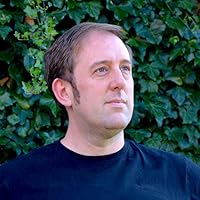
Marvin Bell was born in New York City on August 3, 1937, and grew up in Center Moriches, on the south shore of eastern Long Island. He holds a Bachelor of Arts from Alfred University, a Master of Arts from the University of Chicago, and a Master of Fine Arts from the University of Iowa.
Bell’s debut collection of poems, Things We Dreamt We Died For, was published in 1966 by the Stone Wall Press, following two years of service in the U.S. Army. His following two collections were A Probable Volume of Dreams (Atheneum, 1969), a Lamont Poetry Selection of the Academy of American Poets, and Stars Which See, Stars Which Do Not See (1977), which was a finalist for the National Book Award.
Since then, Bell has published numerous books of prose and poetry, most recently 7 Poets, 4 Days, 1 Book (Trinity University Press, 2009), a collaboration with six other poets, including Tomaz Salamun, Dean Young, and Christopher Merrill, and Mars Being Red (Copper Canyon Press, 2007) , which was a finalist for the Los Angeles Times Book Award.
Bell’s other collections include Rampant (2004); Nightworks: Poems, 1962-2000 (2000); Ardor: The Book of the Dead Man, Volume 2 (1997); A Marvin Bell Reader: Selected Poetry and Prose (Middlebury College Press, 1994); The Book of the Dead Man (Copper Canyon Press, 1994); Iris of Creation (1990); New and Selected Poems ( Atheneum, 1987);
He has also published Old Snow Just Melting: Essays and Interviews ( University of Michigan Press, 1983) , as well as Segues: A Correspondence in Poetry with William Stafford (Godine, 1983).
About his early work, the poet Anthony Hecht said, “Marvin Bell is wonderfully versatile, with a strange, dislocating inventiveness. Capable of an unflinching regard of the painful, the poignant and the tragic; but also given to hilarity, high-spirits and comic delight; and often enough wedding and blending these spiritual antipodes into a new world. It must be the sort of bifocal vision Socrates recommended to his drunken friends if they were to become true poets.”
Later in his career, Bell created the poetic form known as the “Dead Man poem," about which the critic Judith Kitchen has written: “Bell has redefined poetry as it is being practiced today.”
Beginning in 2000, he served two terms as Iowa’s first Poet Laureate. His other honors include awards from the American Academy of Arts and Letters, The American Poetry Review , fellowships from the Guggenheim and National Endowment for the Arts, and Senior Fulbright appointments to Yugoslavia and Australia.
Bell taught for forty years for the Iowa Writers’ Workshop, retiring in 2005 as Flannery O’Connor Professor of Letters. For five years, he designed and led an annual Urban Teachers Workshop for America SCORES. Currently he serves on the faculty of Pacific University’s low-residency MFA program. He has also taught at Goddard College, the University of Hawaii, the University of Washington and Portland State University.
Bell has influenced generations of poets, many of which were his students, including Michael Burkard, Marilyn Chin, Rita Dove, Norman Dubie, Albert Goldbarth. Robert Grenier, Joy Harjo, Juan Felipe Herrera, Mark Jarman, Denis Johnson, Larry Levis, David St. John, and James Tate.
Marvin Bell also frequently performs with the bassist, Glen Moore, of the jazz group, Oregon. He and his wife, Dorothy, live in Iowa City and Port Townsend, Washington.
The opening poem of "Acts of Contrition" by Gwendolyn Cash begins, "Today I'm going to lie about everything." The poem, like the whole collection, is actually stark and startling for its honesty, taking up Emily Dickinson's advice to "tell all the truth but tell it slant." It is always the story beneath the story, the glittering terrible pieces of a seemingly ordinary life, that Cash studies and renders. In perhaps my favorite poem of the series, "Bully," the speaker guides us deftly in second person from recalling the physical pain of bullying through moments of recognizing the bully on the post office wall, in the news at an arrest, arriving finally to teach a writing class in a prison to find him there. In a symbolic act--is it empathy? fascination? revenge? or some mix?--"you'll hand him a sheet of paper / and a sharpened pencil, your throat / so dry it hurts, saying, / Tell me your story, / Tell it like it is." In twenty-two pages of tight-gripping poetry, Gwendolyn Cash does just that--she tells it like it is.
Boyd Benson begins the poem "It Was Too Late" from "The Owl's Ears" with the simultaneously nutty and philosophical line, "I never saw myself coming." From here, this poem takes on some of the beautiful sorrow of a poet like Larry Levis, as "local dogs / lay down with the sound of my name." Benson guides us through a dreamlike world in this collection. He introduces us to strange characters like "The Silent Comedians" and "The Opener of Doors." In his realm, Magritte-like surrealism, full of portals and hats, can be married to more deeply philosophical concerns (one poem is entitled "Socrates"). Dense with imagery, though fleet of foot, these poems render a delicious turn of mind, at once whimsical and longing--pathos laced with a dash of prank. For those willing to take the journey, Boyd W. Benson's poetry may well be the best thing since lucid dreaming.
Lisa Galloway believes that "poetry should be a shock to the senses, it should evoke something and it should leave you with something." In "Liminal: A Life of Cleavage," poems about love, sex, drugs, and family dynamics look you straight in the eye. The collection involves frank depictions of lesbian culture and sexuality. It is also laced with double entendres, including the title itself. In one of my favorite poems, "How Am I?," the speaker reacts to her mother's cancer, telling us, "like the socket incessantly tongued / from the tooth extracted, / this was one of those things / that you couldn't stop tasting or staring at." Many of the poems in this collection affected me in just this way--drawing me in to another's fully-formed world, surprised, provoked, and unable to put the book down.