For the first time ever, friends and wizardly partners Nita and Kit seem to be having trouble communicating. They argue over a spell to clean up the pollution in New York's Jones Inlet, and from that point on, they can't connect on anything. Is it adolescence that's tearing them apart or something more profound?
Nita breaks away from Kit to work on her own for a while -- and then is jolted by a terrible and unexpected blow as her mother falls ill and is rushed into the hospital.
What's even more horrifying for Nita than the mere fact of her mother's illness is the possibility that nothing -- not surgery, not even wizardry -- will be able to keep her mom alive.
But Nita refuses to let her mother go down without a fight. Soon she's on a mission to seek her mom's cure: a journey that takes her across universes, and out of them, to the only place where she can learn the skills that may help her save her mother's life.
What she doesn't foresee is the terrible way in which this journey will once again bring her face-to-face with the Lone Power, the source of all death in the universe. That Power has been Nita's worst enemy since she first started her practice of wizardry. Now, though, the Lone One and the bargain It offers her may be her mother's only hope....
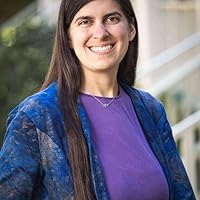
Diane Duane has been a writer of science fiction, fantasy, TV and film for nearly fifty years.
Besides the 1980's creation of the Young Wizards fantasy series for which she's best known, the "Middle Kingdoms" epic fantasy series, and numerous stand-alone fantasy or science fiction novels, her career has included extensive work in the Star Trek TM universe, and many scripts for live-action and animated TV series on both sides of the Atlantic, as well as work in comics and computer games. She has spent a fair amount of time on the New York Times Bestseller List, and has picked up various awards and award nominations here and there.
She lives in Ireland's County Wicklow, in the house she long shared with her much-missed husband of forty years, the screenwriter and novelist Peter Morwood.
Her favorite color is blue, her favorite food is a weird kind of Swiss scrambled-potato dish called maluns, she was born in a Year of the Dragon, and her sign is "Runway 24 Left, Hold For Clearance."
I cried a LOT in this book. When Nita's mom first gets sick. When they first visit the hospital. When Dairine breaks down. When Nita breaks down. And more. Just the thought of losing my own mom...like that... I'm warning you, there is a lot of realistic emotional distress here, for realistic reasons, and if your family or friends have experienced anything similar, it might hit even harder.
If you managed to make it through book 4, this one is definitely worth the struggle. It's longer, and you might have to take a couple breaks to dry your eyes (luckily, I had the audiobook going through the tears), but you're compelled through it, even from the first page where Nita and her mom are engaged in a completely relatable conversation. If you care about the characters, which by this point it's practically impossible not to be, you'll read this book with a fervor.
More like dilemmas, because my word, were there a lot of them!
I loved this. This is more what I was hoping the last book would be like. Yes, we're still dealing with the Lone Power and Its deceptive ways, but the conflict here is more personal to Nita and her family as it directly effects them all. At the core of it, without giving too much away, the Dilemma(s) is that wizardry can be used for so many things: moving planets, creating new alien lifebots, stopping the Lone Power in Its tracks. But it can't be used for things like dealing with gossip at school or dealing with teenage boys (who are, frankly, worse than the Lone Power). Wizardry is in essence the preservation of life, and that includes life forms everyone would rather do without.
So what do you do when you have all this power and can't use it when it matters to you most?
This is a tough read, and I'm once again glad I'm reading this series as an adult instead of a preteen or teen, because these are complex issues that I doubt would've really sunk in way back then. Certainly, many of them would've stood out and kept me glued to the pages. But there are layers here that can really only be appreciated after you've lived more than a decade and a half, and that can really only resonate after you've experienced loss.
It's not all doom and gloom though. There's a brilliant whole other plot line involving Kit and his dog Ponch. We FINALLY get Kit's POV and we FINALLY meet Kit's parents and one of his sisters!!! I was thrilled with this development, and the Gutierrez family is just as wonderful as the Callahans. Starting off this book with Kit and Nita and their families as everyone is going about the new normal of being families with wizards in them was just so much fun! You know, right before Diane Duane ripped that all to shreds and made me curl into the fetal position in the corner. But Ponch was there in a pinch to provide some levity when things got too heavy. He's the most delightful pooch ever, and with him Kit gets to experience a phenomenon no other wizard has. Because wizard dogs tend to get a little, er, special after awhile. I don't want to give away too much of that either though.
There is one thing that kind of annoyed me but I do have admit was also kind of necessary for the directions and paths that Nita and Kit end up taking in this book, and that is The Big Misunderstanding. It was way too believable the way it happened, and because Nita and Kit have never had any kind of close friendship before they became partners and best friends, they have no clue how to deal with their first argument. And when they are both finally ready to talk, circumstances keep them apart. It's frustrating, but then it's supposed to be. Big Misunderstandings don't generally annoy me as much as it does other readers, but if you are sensitive to this trope, then be warned going into this that it's going to get worse before it gets better.
Finally, finally, I am moving past #4 in the Young Wizards series, and this was a hell of a way to re-enter the fray. It was like being slammed in the face with a block of solid AMAZING. It devoured 4 hours of my afternoon. Or possibly I devoured it. Something was devoured, in any case.
It was a little slow to start, but Duane is stunningly good at laying subtle breadcrumbs early in the piece that turn out to be important later on, and playing around with internal symmetry and echo, and this book accomplished that even more than the other YW books I've read so far. I haven't seen symbolism wielded this deftly and this mercilessly (APPLES. SPARKS. augh.) since Pat Barker's The Ghost Road, and it's playing with exactly the same themes: the grace and the necessity of life and death.
And as someone for whom aspects of the narrative hit very, very close to home, this was like being guided through a field of knives and then delivered out the other end feeling mildly shredded and yet full of hope. For years & years now I've wanted to get a tattoo on my forearm of the line from Dylan Thomas's poem: and death shall have no dominion. This story has redoubled that desire.
Я поставила The Wizards Dilemma 4☆, но на самом деле я разочарована. И серию, скорей всего, дочитывать не буду.
Возможно, все дело в моем "синдроме утенка" на первые три книги.
Возможно, все дело в том, что с четвертой автор хочет просто поговорить за жизнь, а не делать сюжет.
Перед А Wizards Abroad автор переехала в Ирландию, и в итоге 80% книги сделаны из экскурсии по местам Святого Патрика в стиле "что вижу, то и пою".
В The Wizards Dilemma автор так хочет поговорить про свой опыт переживания смерти близкого человека от рака (несомненно, очень травматичный и жизненный), что ломает лор, оосит персонажей и вспоминает про сюжет в последний момент. Да, финал здесь получше, чем в Wizards Abroad, но.
Я любила эту серию за магию, дружбу и приключения, и уже вторую книгу подряд тигру не докладывают мяса. Так что я пас.
Когда-нибудь я пойду перечитывать первую трилогию и бояться, что мое детское очарование развеется.
I will forever be glad I was warned of the subject matter of this particular book in the series in advance, in as spoiler-less a way as possible. It didn't ruin the book for me, and I don't think it made it hit less hard either.
The title of this book is truly fitting. When you struggle to find any way but destroying life to save other life, there's not always a clean and happy way out. It may take you places you'd never imagined going.
I went through a very similar situation - minus the wizardry, and I honestly don't know what my choice would have been either - when I was just two years older than Nita is here, and reading this, I cried buckets. Perhaps that was a given. But have tissues ready, just in case...
In this one, Nita's mother has cancer and Nita has a dilemma -- try to cure her mother and ultimately fail, or make a deal with the Lone Power, cure her mother and lose her wizardry forever.
Except it's not that simple. It never is. For one, everyone knows that if you make a deal with the devil, look out for the fine print. Or better yet, don't make any deals to begin with. Nita doesn't see any other way out.
There's more boy girl trouble in this one as Nita's mother rephrases one of Robert Heinlein's timeless adages -- in an argument, should you discover that you are right, apologize at once. Nita doesn't get it; it is counterintuitive after all, but it's the only thing that works. There's also a bit about fiddling with a universe's core reality and making universes.
A decent read, but I'm not sure whether this book should be for adults, as its ultimate message is, "We all die in the end".
Honestly, this one is going to end up a very long review in time, so please feel free to grab some snacks, pull up a chair, brew some tea, get a blankie, call your family and tell them that you love them... that last part actually not being said in jest. Well. Anyway... So here we have The Wizard's Dilemma, easily one of my favorite books in the YW series. I absolutely could not stop thinking about it, to the exclusion of most topics of conversation for the unfortunate few who were forced to be anywhere near me at the time. I hope then that you fully understand what all of that means when I tell you that I had a lot of anxiety and trepidation about how this book would turn out and how I would feel about the subject matter. I really feel that DD hit it out of the park on both fronts, but I would be incomplete in my feelings about it without saying that it has a very personal place with me. Enter my interest in this book series, and, of course, my eventual discovery of an installment that directly deals with cancer in plot. By this point, I have become deeply emotionally invested in Kit and Nita and, like precious few characters that have come before them in my reading history, they have become real to me. Nita's battle with the Lone Power is more than just a grand adventure in all of her stories, to be true, but instead a literal battle between life itself and destruction, but never more so than now. With Nita's mother's sudden collapse in her father's flower shop, the Callahan family are suddenly faced with the far more personal horror of terminal illness. A tumor is found in Mrs Callahan's brain, and it is spreading fast, causing her severe seizures and flashes of memory as she is hospitalized. For all of Nita's bravery as a young wizard, she's still a young woman and she still faces the pain and fear of the very real possibility of losing her mother forever. DD's choice of dividing chapters into the day-by-day experience of Nita's struggle is very appropriate in that it not only marks time as something more vast, fluctuating, and transcendent than a mere number or name can convey, but also does the opposite in reminding you of the approaching threat and limitations of fighting a disease like cancer. Every day that you are left worrying about your sick loved one feels unending, and yet every day you get to see them and be with them still seems in danger of disappearing at any time. It is important to remember that although the kids are fighting against universal decay, they are in no way ignoring or being unrealistic about the inevitability of death. Nita's own plan to take on her mother's cancer directly with her wizardry is one founded on her emotional needs and desires, but also much more dangerous because of it. Kit has been alienated by Nita, at first purposefully due to an argument over perspective (which is beautifully brought full-circle in the conclusion of the book and, charmingly, one of their first real arguments that allows us to see how disharmony between them gets under their skins) and then through the simple fact that the discovery of cancer and family pain like that is engrossing and has a tendency to make other parts of your reality have to take a back seat. Nita herself bemoans upon hearing him arrive at her house to see her that even seeing him, something that made her happy before, has been tainted by the pain of dealing with the cancer in her family as well, as she then will have to discuss what is happening with him and run over all of the complex emotions she is having aloud all over again, and I am deeply grateful to DD for her comments on that aspect of being part of a family touched by terminal illness. I am even more grateful that Kit and Nita are given the kind of relationship that allows her her own needs in grief through their shared talents; Kit knows better than to needle her for all of the painful details for his benefit, and instead allows her to just send the information mind-to-mind so she doesn't have to struggle to speak or suffer the perceived indignities of crying in front of someone who would be hurt to see it happen. Kit plays an often-unexplored/frequently under-addressed role of the friend in support. Most stories regarding this subject lean toward a saga of pain that seems almost perversely indulgent (and, some family survivors feel to be ultimately quite disrespectful) that focuses on the relationship of a person with their mortality, something not unreasonable to pursue, but that often paints cancer like a story that begins and ends with the patient or their family, but often doesn't take much time to discuss the ripples felt by the support network of that family and the conflicting feelings they may have in their attempts to support. I think it is important to comment on these things because it helps those in that position to understand, relate to, and work with the complex feelings they have in that position, and to better understand how to be supportive to their suffering friends as well as addressing their own emotional needs. I absolutely love that Kit goes through so many emotions in the situation, all of which are treated with respect as perfectly normal, though he may berate himself for his perceived failings in having them at all. His desire to support Nita and her family, but feeling inadequate in it comes as a welcome reminder to supporters that there are times when your feelings about what is happening to the people you love are a lot more immense and unforgiving of your inability to change things than is fair. Kit does his best to reach out to Nita and help her, but knows that even in his thoughts about it happening to his own mother, he can never imagine the feelings she is having and understands that although he needs to be respectful of her needs, it is perfectly okay to feel anger or frustration over her and the situation itself and still be helpful.
Many works of fiction for young people that feature the death of a family member from terminal illnesses focus so much on the pain of the young person in plot that they often don't give the actual patient any chance to speak on their own behalf or, what is often worse, make them speak in Ghandi-like cliches about life and loss that ultimately rob them of their individuality and humanity for the sake of an after-school special, feel-good, "live like you were dying" message that is as condescending as it is reductive. This doesn't happen here.
Betty Callahan is a real human being with a family, sense of humor, individual tastes, interests, will, desires, memories...she isn't mannequin for suffering or a life-lesson in a human shape. She's a person who wants what she wants for herself for her own reasons and, blessedly, gets the opportunity to not only speak her mind, but assert her desires and own her own battle, of which she fares remarkably and with great courage and humanity. I am not ashamed of my need to pull over my car for a good cry, both from relief and the situation they were facing. Betty also speaks to women's power and rights over their own bodies, a lesson she passes to her daughter with lightning flash and "goddess-like" fury, telling her to remember that she as a woman has the right to choose who enters her body and who resides in it, from her children to her doctors to her husband in a speech that I feel finally gives both women and cancer patients the respect they deserve for their strength and courage, and I am deeply grateful.
DD is quickly sprinting up the ranks of favorite authors, in my book.
TBC REVIEW
This entire review has been hidden because of spoilers.
Changed rules in the middle of a series, shallow everywhere, horrible Kindle transcription, all combine to spoil what could have been a touching and meaningful installment in the Young Wizards books.
Apparently Duane decided that the rules she had created for this world were not satisfactory to her, because she's changed the way the wizardry works. It was annoying enough before that she was insisting on pretending that wizardry was 'definitely not magic' but also not science, being more complicated than magic and beyond science because science couldn't possibly understand and all the et ceteras. I've seen others complain about this, so I know I'm not the only one, it's really just a way of turning her back on two literary genres at the same time, which comes across as very conceited. Sorry, Duane, you're not better than either fantasy or sci-fi, and since this was written before specfic was in common vogue (though of course not before the term was coined), you don't get to swim around in that. Regardless of what you want to call it, you really can't do 4 books that cover about a year and a half of the characters' lives with them using their wizardry in specifically defined ways and then start book 5 with them in the habit of using it differently. Suddenly the spells that were always simply verbal before can be held in the hand, tucked into a pocket, and handed (or thrown) to each other? Funny, the exact same spells in previous books were phrases that Kit would think through almost to completion, so that he just had to speak a last word to complete them. They weren't physical things. Kit wasn't carrying around little snippets of spell that he'd cut off of other spells. If a spell was drawn or written down it was done so by using concrete objects such as paper or dirt, not mysticism. Now, though, because it was necessary for the denouement, rules for wizardry have changed. (This might be mildly acceptable, though still a cheat, if Kit and Nita had acknowledged the change. If they'd had a quick conversation at the beginning about how hard it was to get into the habit of doing wizardry in different ways as they advanced or something.)
The main problem here is that the book is so surface and so shallow. Part of the issue is that I come to the series years later, so I know the books continue, and therefore there was no moment that it was plausible that Nita might give up her wizardry or that she might die. Even if the series didn't continue, however, I would never have believed in that possibility for a moment. It just doesn't fit Nita's personality or Duane's writing. That we are at book 5 and Duane decided to acknowledge that all previous books were resolved through somebody else essentially throwing themselves under the bus on Nita's behalf, but didn't choose to change anything? That just reinforces the shallow feeling of the book. I had the additional issue that I had accidentally seen the plot synopsis for book 6, which stated that , so I went through this book knowing what the final result would be one way or another.
The plot synopsis for this book specifically discusses Nita's mom's illness, and the book's copyright page includes it, but we don't get there until halfway through the book. The first 200 pages are taken up with other things, which are clearly meant to lay groundwork for why Nita makes the choices she makes, but just take too long. There's a lot of treading water, which again simply strengthens the surface skimming. Worse, everything was pointless. Kit's entire subplot was not just lazy writing (it really is a cheat to have Kit stumble across something that in all the millennia of life on this planet no wizard has ever been able to do, be aware of, know anything about, just so that he's out of Nita's hair both to reinforce the problems they're having and to give her a chance to make more bad decisions), it was apparently built to give him access to this thing that...did not much in the end. Nita's decisions and choices and mistakes all led up...not much in the end.
In the first book it was nice to have a female protagonist who had powers specific to her and strengths that others didn't have and a leadership role. But Nita has never been a good heroine. It is always about her, yes, she is the center of each book in ways that Kit is not. But they triumph only because someone else is willing to sacrifice their life or throw in their power or see what needs doing and do it or lend wizardry to her or whatever else. Nita has never, in 5 books, solved a problem or been strong enough to triumph over adversity or made the right choice on her own, or anything. Creatures from other universes die so that she may live. Sharks die so that she may live. Relatives throw their being into newly created AI so that it can use power to fight. Individuals holding the spirit of heroes of the past find it within themselves to take the step necessary and emerge victorious. And Nita watches. It's actually the worst kind of damsel in distress because it disguises itself as girl power.
Just like every other book in the series, the transcription into a Kindle book is horrible. There are multiple errors on every page. The lower-case letter r next to a comma is usually an n, commas are missing entirely, quotation marks appear or disappear in no relation to whether someone's speaking, italics for thoughts stop and start in the wrong places, on and on. Examples: Page 10 "not bad..not bad at ally, the tree said modestly...need anything from met?...this was the core of wizardry, for hen hearing it all going..." Page 172 "where the hard comers on things aren't so hard...Someone higher Hp foresaw the need..." It's highly frustrating to read.
I continue to read the series because I'm getting them through the library and so they're free and I need reading material. I enjoyed book one, suffered through later books in hopes the series would go back to the level of the first book, but at this point I'm just putting up with them while I wait for books I have on hold to come through. I cannot recommend the series like I did with book one.
As a side note, I'm sure plenty of people were really choked up by the end of the book. Duane did some lazy writing there which was designed to tug at the reader and give them a lump in the throat. Was not successful for me, but I'm sure plenty of people gave high rating because of it and eagerly anticipated the sixth book as a result.
This isn't the first time I read it, but apparently I didn't review before. This one, it's a bit dark. The good triumphs in the end, more or less, but before the end Nita almost makes a mistake and makes a "deal with the devil" so to speak. As Tom or Carl asked her, "Are you doing this for her [mother] or for you?" Nita's mother was amazing. I think that while I did understand the moral dilemma the first time I've read it, this time I got more out of it and focused on the adult figures more...
Yet another book in this series that broke my heart! Such beautiful writing!
Nita gets the terrible news that her mother is dying of cancer. In between hospital visits, Nita searches for a dangerous and elusive wizardry that will cure her mother, but the price may be more than she can pay. She and her wizarding work partner, Kit, have suffered a misunderstanding that keeps them apart. Determined to find a cure on her own, Nita falls prey to the evil Lone One, not realizing that Kit might have stumbled on the answer to all their problems, if only they can reconcile in time!
As in all the other books, I adore the camaraderie and complete trust between Kit and Nita. Their friendship is so special, and seeing it fall apart in this book was heartbreaking. But even through their argument, I loved seeing these characters grow and change, and their friendship ultimately grows and changes along with them. All friendships have some rocky spots, a few bumps in the road, and I was so happy to see how both these characters overcome the obstacles in their way, and it makes them better people, and makes their friendship stronger!
The magic system, as always, is beautifully complex, and yet simple to understand. I appreciate how the magic spells and wizardly doings fit in perfectly with the world, and with the spiritual powers of the books as well. The weird magical extras change in every book, and all the strange alien side characters that come in are so imaginative and different. The whole world-building is seamless and delightful!
This book deals with Death, and so the spiritual undertones, which are present in all the books of the series, are really brought to the forefront in this book, even going so far as to quote several Scripture verses. The age-old battle between light and dark, between good and evil, is a major theme in all the books, but in this one it becomes much more personal to the characters, as they face the darkness inside themselves. All the books have very definite Christian and spiritual themes, and I loved seeing that even more clearly in this book!
Nita has to make a decision about what she is willing to do to save her mother's life, and of course, there is the temptation to do evil in order to accomplish a "good." Do the ends really justify the means? Are you really doing it with purely unselfish motives, to benefit someone else? Or are you doing it for yourself, because YOU are afraid to lose someone?
All these questions are dealt with in a graceful and accessible way that was a pleasure to read. Not at all preachy! And of course, seeing Nita going through this terrible difficulty, brought my own thoughts into alignment with these questions and made me contemplate some things as well. I love a book that makes you think, but also tells an engaging story!
There are many deep and emotional themes in these books, but it's also balanced with many light-hearted and even silly moments of fun! The different plots lines all converge perfectly at exactly the right times and in the right ways. Brilliant writing!
Welp, this one took me a long time to finish. I'm still not quite sure how that happened. Part of it was that I started the book while I had far too many things on my plate and thus got distracted. But part of it was that at a certain point in The Wizard's Dilemma, I felt like I could see where all of the pieces were, where they needed to go, and had a pretty good idea of how they were going to get there... and I really wanted them to just be there already, instead of making me wait. I suspect that this is the price I pay for reading so much. Or perhaps for being impatient.
It turns out that I was right about most of those various story beats, but seeing what Diane Duane did with them was far more satisfying than what I'd imagined. I probably should have seen that coming, given that I've read the earlier books in the series and know how good Duane is at her work. Once I finally got over my block and moved into the last parts of the book, I didn't want to put it down. And then, of course, the climax made me cry. Whatever the real reasons for my reading delays, I feel quite certain in saying that this was an excellent book, one worth reading, worth recommending, and one that leaves me wanting to read the next one in the series. Just like the previous books in the series. I probably could have seen that coming too.
So, why the heck did this book make me cry? Warning: there are some spoilers after this. They're pretty well flagged.
I suspect that anyone who does not entirely hate their parents, or even anyone who feels close to those who are edging towards or having a brush with death, will find this book powerful. Certainly the ending of it, at the very least. I'm not sure how much of the emotional content of this book comes from my own experience with coming to terms with death and dying, how much of it is simply me empathizing with the characters, and how much of it is inherent to the material. One way or another, I continue to be impressed by the regularity with which Duane is able to write accessibly emotional and intense material.
Ok, there're going to be some *SPOILERS* here, because I want to talk about the end of the book.
I'm pleased as punch about the line of argument / line of reasoning that Nita's mom takes when facing the Lone Power. Her statements of self-ownership, and calling the Lone Power out on its sense of entitlement with regards to her body, are like a breath of fresh air. This is exactly the kind of thing that I want kids to be reading and internalizing.
This is mostly unrelated, but it's especially refreshing to see these statements shown in such a positive light after having just watched John Wick the night before; that movie is a brilliant display of stunt and fight choreography and performance, something I love due to my own experience with same, but it is a terrible (i.e. it instills terror) view of the patriarchy in action. I doubt you'll have the same experience of watching John Wick and then finishing The Wizard's Dilemma, but their juxtaposition makes their differences all the more visible and highlighted the novel's excellence for me.
*END OF SPOILERS*
In conclusion? This is a damn fine book, and my troubling delays in reading it probably had more to do with me than with the novel. You'd be silly to pass it up without checking it out, though I basically feel that way about the whole Young Wizards series at this point. And, let's be honest, you might be thrown for a loop trying to start here without reading the rest of them, so don't even try. Start with So You Want To Be A Wizard. You can find my thoughts on it right here.
This book may take a little longer to get into than the previous installments, but once it does, it is the same roller-coaster ride as always.
For the first time since their Ordeal, Nita and Kit have had a major fight. Unsure of how to reconcile, they drift their seperate ways for a while. And everything is just made ten times worse when Nita's family gets the news: her mother has brain cancer.
Nita's only hope seems to lie in a very difficult and technical type of wizardry that involves manipulating the "kernel" of a universe, its energy center. Only by rewiring her mother's inner "kernel" can Nita possibly save her.
While Kit tries to deal with a rapidly changing Ponch, who is developing weird powers, Nita attends a "training ground" for wizards working with "kernels." But when the Lone Power comes to her to make a deal to save her mother's life, Nita finds herself questioning everything she is as a human and a wizard. And only Kit may be able to intervene before it's too late.
Gripping, powerful, and heart-wrenching, this book tackles the big questions that haunt us all: What would you be willing to do to save the ones you love? What is it like to be losing a mother? How powerful is the love of a parent? And when everything around you is falling apart, who's going to hold you together?
I should know better by now, but I'm always surprised when the books in this children's fantasy series take a more serious and philosophical turn. I'll be wandering along with Nita and Kit, doing magic and trying to make friends, but then suddenly Nita is discussing life and death with the Prince of Darkness himself--and the conversation is deep and thought-provoking.
This book was published almost twenty years after the first book, and it shows. It's a bit jarring to read this series all at once and see some massive leaps in technology between books while the characters themselves only age a few months. And book 5 was also written after the children's fantasy revolution started by J.K. Rowling and Harry Potter--this has had an impact on the style and use of magic in the Young Wizards universe.
But in most ways this instalment stays true to the spirit of the first three books (I'm trying to forget about book 4 entirely): the characters are the same and the goals of wizardry are the same. Nita and Kit both face different moral dilemmas this time around, dilemmas which seem simple enough on the surface but which are complicated and tangled when the kids look deeper.
If you struggled as I did to get through book 4 and you're wondering if there's anything left in this series, give this one a try.
I'm not even going to TRY to read this again. It was horrible. I've got to learn to listen to my qualms, and to stick to my principles of not overcoming my initial reluctance to read awful books straight through.
This time I didn't stick to the principle, and it soured me on the series from then on. I haven't read any of the later books, and don't mean to--though I have reread the earlier ones, which weren't as horrifying.
I should point out that I've always had a serious problem with the idea of 'fighting' diseases. Especially in terms of cancer, where the obvious solution is to heal the cancer cells THEMSELVES. What makes them destructive is that they're harmfully mutated--so rewrite the erroneous coding. What happened to the person who was advised not to be afraid to make corrections, that she lost sight of this so terribly?
A very clever entry in the series, this deals with the issue of parental loss in a genuinely unexpected way. And it also finally confronts head-on the "elephant in the room" of all modern world fantasy: that if you have superpowers/magic, why can't you solve everything?
And the ending is wonderful. I didn't find it as affecting as that of #8, but probably that's because I haven't personally experienced that sort of loss (as compared to the situation in #8.) But I would certainly put this book on the reading list of a teen who had - it's mature and unflinching and yet very positive at the same time.
Nita Callahan and Kit Rodriguez start to experience some of the painful parts of growing up. Their friendship is changing, Nita's having scale problems in her approach to magical tasks, Kit's dog Ponch is doing strange things, and Nita's mother is ill. Nita is not the most secure and confident personality to start with, and she's definitely not having any fun. Not quite an idiot plot; I had just about reached the point of screaming at Kit and Nita that they needed to actually tell each other what was going on, when they finally did. Mrs. Callahan turns out to have few surprises of her own, too.
If you like the series, you'll enjoy this one, but it's definitely not the place to start.
I really like this series, but this one totally grabbed me. Part of it was the plot and the coincidence of Mother's day upcoming. Really a perfect novel for Mother's day. Still I think it would have grabbed me regardless of this coincidence. Again the subject of sacrifice and death was part of the plot, but dealt with in a surprising way - especially for a "young adult" novel.
Exceptional entry into this series. I won't say much, as pretty much everything would be a spoiler- but this contains some of Duane's best writing that I've encountered so far, and it handles extraordinarily difficult and painful topics with a lot of grace. I appreciate this book tremendously.
This is after the point that I distinctly remember the series going down-hill and the things that I expected/wanted/desired not happening or being addressed at all.
I read the first three books in this series YEARS ago. I reread the first two several times over. After Harry Potter created wider demand for similar themes (we all know the Young Wizards series is very different from HP, but there you go), I loyally acquired every book, and when the New Millennium editions came out I got the eBooks too. However, I put off reading until this year, when I made a general resolution that I was finally, FINALLY going to start my mammoth Young Wizards reread/catch-up, starting with those first three and going on from there.
(Incidentally, I'm reading the "originals," not the New Millennium editions. That's a project for another time.)
Although I enjoyed "A Wizard Abroad," it was a more detached surface liking: the incorporation of Irish mythology and the "time capsule" aspect of the early 90s setting, plane travel, Irish culture. "The Wizard's Dilemma" packs more of an emotional wallop. Edge of your seat reading and some really good scenes: Nita and the Lone Power, Nita and Nita's mom and the Lone Power, etc. Parts of it felt a little "chewy," if that makes sense, and I think
...Incidentally, that's a continuing aspect I find weird about the series: after the first book, no one ever mentions Fred except as "a white hole" that evidently figured into the plot in some way. No one ever mentions Ed except as "a shark" or "a great white shark." Did Aunt Annie ever come out to her brother and sister-in-law? The book at hand makes you love these characters, but when they're gone the larger series gives them little shrift. In Pralaya's case, I feel like there is some particularly unfinished business.
This book also contains more idiosyncratic time handling - I know that originally every book was supposed to take place circa when it was first published, that this created a discordant timeline of sorts and that the New Millennium editions were created in part for this reason. But it's weirder than that - for example, "A Wizard Abroad" establishes that "two and a half" years have passed since Nita found the manual, yet a character says that Nita was involved "just now" in the Song of the Twelve, which "Deep Wizardry" establishes as taking place about two months after she found the manual: "...open-ended Möbius spell implementation. Incurred: 5/25/85. Paid: 7/15/85, by willing substitution." Supposedly "The Wizard's Dilemma" takes place not all that long after "A Wizard Abroad," with Nita into the school year following her Irish vacation: again, that should be about two and half years (plus a few weeks/months) after Nita found the manual and also met Kit, who was twelve years old at the time. That means Kit should be at least fourteen and a half or fifteen by now, but according to "The Wizard's Dilemma," he is thirteen.
I know, sign me up for the Please Please Please Get A Life Foundation. ;)
Hopefully later books also do more with Kit and Ponch's world making.
I thought Pont - the alien(s) in the form of a separating/reemerging collection of five "blue ball bearings" - was a nifty creation. And I loved the disturbing doubling of well-intended, unfortunate Pralaya. Chao the Transcendent Pig is not my Absolute Favorite Young Wizards Character ever (that's probably still Ed), but I do like his Tom Bombadil niche in Duane's cosmology, the fun with syntax, and how the Manual mandates that Wizards always ask him the same question whenever they see him. Very "Hitchhiker"-esque.
I expected this to be a complicated book for me. I remember the last time I read this book I had nightmares. I didn’t get those this time, but if a parent getting cancer and potentially dying is as sensitive a topic for you as it is for me, prepare yourself accordingly before reading this book.
Surprisingly, that aspect of the book bothered me less this time around than the other major source of conflict. Like Deep Wizardry, the conflict of this book hinges on an incredibly frustrating miscommunication. And it isn’t simply a matter of lack of information, but of authority figures actively discouraging Nita and Kit from communicating with each other when Nita needs it the most. Sure, it’s heavily implied in the end that , but I spent way too long being mad about it to be satisfied by that answer. I take issue with stories where the protagonist spends most of the book learning and acting on the wrong lesson, even when the right lesson is (finally, at the last second) learned. They just don’t work well for me. In the case of The Wizard’s Dilemma, this is compounded by how Christian this book is and how much that theology doesn’t work well for me either. It leaves a bad taste in my mouth. And while I love Ponch and the early explorations of Ponch’s developing powers here, I really don’t like how Kit and Ponch get the “everything is possible, change the universe without consequences” adventure at the same moment as Nita gets the “not everything is possible and there are a lot of consequences to trying to change the universe” adventure. It feels unjust. Perhaps it’s supposed to. This is the “life’s not fair” book, after all.
While I don’t think the resolution of the conflict is enough to make up for how much I didn’t like the conflict, I want to emphasize that I really do love the resolution of the conflict. It is again very similar to the ending of Deep Wizardry – , and I’m very glad that that’s what happens. “My body, my rules” is taken to the most wonderful extreme. It’s beautiful, it’s quotable, and it could very well be one of my favorite scenes in the series. I just wish the rest of the book didn’t make me so mad!
I own the first four books of this series and don't have anything beyond them marked on goodreads, despite knowing that I've probably read through the seventh book before. Strangely, I didn't know how long ago she began this series (1983) or how recently she updated it (2016), and I find myself wondering how many dedicated fans will seek out the most recent book, and whether I will eventually be one of them. Re-reading, I observed how some of the manual's functions resemble a cell phone, and I doubt those powers will age well as (if) modern technology creeps into the books.
I took great pleasure in sinking my teeth into this volume, neither a short nor an easy read but encapsulating the sense of one adventure in Nita and Kit's many travels together. The whole thing takes place over about a week, which gives some sense of the depth of it as both characters discover plenty of unusual, new aspects of the universe to ponder. The two have begun high school, leading to a healthy dose of angst and trying-to-figure-things-out and misunderstanding, but they struggle toward a degree of maturity necessary for their age and their profession. Dairine showed up in a strong role--I really like her--building on Nita's appreciation of the (sometimes disagreeing, sometimes loving) relationships in her life. Thematically, her growth and understanding of herself revolved around those relationships, and she certainly matured a lot. Yet Kit's amusing, slightly whimsical side story with Ponch balanced out the book and gave the darker moments a palatable feel. Tom and Carl, too, added a wonderfully positive presence to this book.
I love how thorough Duane's world always feels, how coherent and usable, and how well it stands up to something like Harry Potter, which has defined my generation's perception of magic. Nita and Kit mix adventure and fun and math and science as they try to help the world, operating off of their strict wizardly ethical code, standing up for and standing up to the Powers That Be. The characters are not wholly likable in this book, but they're 9th graders, and shouldn't be. Certainly Nita's dedication and courage stands up as an admirable lesson in love, friendship, and determination, and I'm excited to discover what the newer books will bring.
This is the book that stands out the sharpest when I think of the Young Wizard series. Here, Diane Duane's worldbuilding comes together into something wholly her own, constituting a distinct break from classic tropes of magic (e.g., spell ingredients, animism), a move I imagined as a response to the Harry Potter craze of the late 1990s. While some may see this evolution as a sign of discontinuity, I found the changes largely positive. The Wizard's Dilemma reads freer in tone as compared to the first 4 books of the series, and its theoretical, scientific perspective on magic allows for the story's morals to be embedded within the nature of magic itself.
The Wizard's Dilemma is rooted in an ethical quandary: Nita's mother, Betty, has fallen dangerously ill. Nita has the opportunity to intervene with wizardry, but such interventions are incredibly difficult to pull off. One can learn the most powerful spells, but as Nita observes, "what's the point of learning this if it doesn't work when it matters the most?" The feeling of helplessness when a tool you believed would always work fails leaves Nita adrift. Thus the titular dilemma presents itself: what should one do to save a loved one's life, and at what cost?
While The Wizard's Dilemma is a heavy book, there is humour scattered throughout the book to prevent it from becoming exhausting. This is the first book where we get Kit's viewpoint as a main character, and this narrative space allows us brief reprieves from the pressure Nita feels. It is also enjoyable to meet Nita's and Kit's families, all of whom have enjoyable, fleshed out personalities. This is to the story's benefit, as this book is chiefly about Nita's mother and her life. Betty Callahan is well-characterised in this book, and without going too into the details, her perspective on her sickness and mortality is a moving one. Duane takes care to avoid casting Betty as a victim, but instead allows her agency to voice her views on what is happening to her body.
Returning to this book older (and hopefully wiser), I found myself reading The Wizard's Dilemma with refreshed eyes. It has a lot of wisdom, and I can see myself coming back and reading this book again.
I feel like I've said this before, but I'll say it again. Nita has some of my favorite parents in any Sci-Fi or Fantasy YA series I've read. I'm not sure whether I liked this book more or the last one. The last book had such imagination with Ireland and the magic involved there, but this one has all the returning characters written at their absolute best as the story pushes them to their limits. It also does away (at least for now) with the cliche almost-love triangle from the last book (another plus).
Nita and Kit get in a fight early on in this book which is a bit predictable. Thankfully I don't find it too overplayed. It gives them an excuse to split up and each go on their own adventures. Apart from the fight, I genuinely had no idea where this story was headed.
I think the title "The Wizard's Dilemma" is extremely fitting as Dairine, Nita and Kit are each have to face their own struggles that all somehow connect back to what it means for them to be a wizard. I won't get into Nita's right now as it's a spoiler. But things begin to change quickly for Kit after the fight and he worries that he may end up growing apart from Nita.
Dairine's plotline is my favorite though as she finds her powers aren't as great as they once were. This is something that was foreshadowed really well in past books and when it happens here, it occurs at the worst possible time for her. I think it becomes a really humbling experience for her. And while she's only given a handful of scenes, you really feel her pain.
The climax of this book is also really good as everyone's stories come together.
Of all the books in the series I've read so far, this one felt closest to the original for me. I think this was probably largely because it takes place in NYC, while the 2nd-4th books in the series take Nita and Kit to a wide variety of other places. I also felt much more emotionally invested in this one than in the 2nd-4th books, probably because the plot was much more personal for Nita and Kit. In books 2, 3, and 4, our heroes are helping out in situations that are really other peoples' problems to some extent or another, but in the first book and in this one, the problems are largely theirs.
My only real complaint about this book is one that I have about the series overall (except for Book One), and that is that the rules and magic feel slightly inconsistent throughout the series. For example, over time, spells have become tangible things that can be carried around, manipulated, and put away for reuse. In the original book, spells felt more natural, like writing in the dirt with sticks rather than creating magical runes that appear in thin air. Also, I was under the impression that using an incorrect form of your name in a spell automatically changes you to be whatever that form of your name describes, but in this book, a similar event occurs and the spell simply doesn't work properly. I think things like this could be done better and made clearer, but in general, I really enjoyed this book a lot, and I would like to track down and finish the rest of the series, now.
Doing a read-through of this series, I'm not sure I read this one before. Parts of it felt familiar.
I enjoy the ebooks sold directly from the authors and hope more folks can do that successfully in the future.
I think this was the best composition, story-wise, of the series so far. There was a little dragginess for me during the actual dilemma's internal dialogue, but other than that I found it a very balanced, nuanced story. I enjoyed the interplay of Christian mythology with the Wizard's world mythos, because I myself am a pagan/Christian hybrid and that sort of thing sits right in the middle of my own spiritual jam.
With or without the trappings, this one was paced well. As usual the characters are quite true to themselves and their character arcs. This time instead of science or Irish mythology the real background was a coming of age type of story with sort of a widening of the magical system of the books. Hope to find out more about the Kit's discoveries and more about Kit. I feel like the series is hinting Kit is gay and hinting Kit and Nita are in love and destined to be lovers both at the same time. I enjoy the ambiguity.
I didn't expect this one to be as entertaining as it was. The typical dilemma / test can be so hard to write. I also feel we skirted on the problematical with the male wizard savior side, but came out on the other side without a loss of woman power.