

What do you think?

There Is a God: How the World's Most Notorious Atheist Changed His Mind
In one of the biggest religion news stories of the new millennium, the Associated Press announced that Professor Antony Flew, the world's leading atheist, now believes in God. Flew is a pioneer for modern atheism. His famous paper, Theology and Falsification, was first presented at a meeting of the Oxford Socratic Club chaired by C. S. Lewis and went on to become the most widely reprinted philosophical publication of the last five decades. Flew earned his fame by arguing that one should presuppose atheism until evidence of a God surfaces. He now believes that such evidence exists, and There Is a God chronicles his journey from staunch atheism to believer. For the first time, this book will present a detailed and fascinating account of Flew's riveting decision to revoke his previous beliefs and argue for the existence of God. Ever since Flew's announcement, there has been great debate among atheists and believers alike about what exactly this "conversion" means. There Is a God will finally put this debate to rest. This is a story of a brilliant mind and reasoned thinker, and where his lifelong intellectual pursuit eventually led belief in God as designer.
222 pages, Hardcover
First published January 1, 2007
About the author
Antony Flew
96 books126 followersAntony Garrard Newton Flew (11 February 1923 – 8 April 2010) was a British philosopher. Belonging to the analytic and evidentialist schools of thought, he was notable for his works on the philosophy of religion.
Flew was a strong advocate of atheism, arguing that one should presuppose atheism until empirical evidence of a God surfaces. He also criticised the idea of life after death, the free will defence to the problem of evil, and the meaningfulness of the concept of God. In 2003 he was one of the signers of the Humanist Manifesto. However, in 2004 he stated an allegiance to deism, more specifically a belief in the Aristotelian God, stating that in keeping his lifelong commitment to go where the evidence leads, he now believes in the existence of God.
He later wrote the book There is a God: How the World's Most Notorious Atheist Changed His Mind, with contributions from Roy Abraham Varghese. This book (and Flew's conversion itself) has been the subject of controversy, following an article in the New York Times magazine alleging that Flew had mentally declined, and that Varghese was the primary author. The matter remains contentious, with some commentators including PZ Myers and Richard Carrier supporting the allegations, and others, including Flew himself, opposing them.
Flew was a strong advocate of atheism, arguing that one should presuppose atheism until empirical evidence of a God surfaces. He also criticised the idea of life after death, the free will defence to the problem of evil, and the meaningfulness of the concept of God. In 2003 he was one of the signers of the Humanist Manifesto. However, in 2004 he stated an allegiance to deism, more specifically a belief in the Aristotelian God, stating that in keeping his lifelong commitment to go where the evidence leads, he now believes in the existence of God.
He later wrote the book There is a God: How the World's Most Notorious Atheist Changed His Mind, with contributions from Roy Abraham Varghese. This book (and Flew's conversion itself) has been the subject of controversy, following an article in the New York Times magazine alleging that Flew had mentally declined, and that Varghese was the primary author. The matter remains contentious, with some commentators including PZ Myers and Richard Carrier supporting the allegations, and others, including Flew himself, opposing them.
Ratings & Reviews
Friends & Following
Create a free account to discover what your friends think of this book!
Community Reviews
Displaying 1 - 30 of 466 reviews

October 31, 2013


Excellent. Awesome. Brilliant. Magnificent!!
This book is much better than I expected, and it's very important - not because it supports the existence of God, but because it encourages rational thinking.
Antony Flew inspired me. His story can be summarized:
Born Christian -- Skeptic Christian -- Atheist -- Skeptic Atheist -- Believer.
In his journey, Flew followed the Socratic principle: “We must follow the argument wherever it leads.” And the argument led him through so many deep and dark caves of skepticism until he saw the light of God. He deserves to be called a "True Believer".
"I must say again that the journey to my discovery of the Divine has thus far been a pilgrimage of reason. I have followed the argument where it has led me. And it has led me to accept the existence of a self-existent, immutable, immaterial, omnipotent, and omniscient Being."

Flew inspired me because he's a "True Believer", and true believers are so few in this world. A born Muslim, or a born Christian, who didn't experience skepticism isn't a believer! Sheikh Ahmed Deedat once said: "you're a Muslim? You're parents are Muslims? Then, no congratulations to you! You're a Christian? You're parents are Christians? No congratulations to you too!" Deedat means that it's not a privilege to inherit your religion. The real privilege is to find your religion - to find God.
Flew has found God - but he didn't find religion. In his book - before he died - He said he couldn't contact God through religion yet, but he hoped for that to happen someday.
"The discovery of phenomena like the laws of nature—the communications network of the parable—has led scientists, philosophers, and others to accept the existence of an infinitely intelligent Mind. Some claim to have made contact with this Mind. I have not—yet. But who knows what could happen next?
Someday I might hear a Voice that says, “Can you hear me now?”
This is one of my favorites. I highly recommend it.

March 5, 2009
On the face of it, this is a provocative and interesting book. Flew is a British philosopher, noted for numerous books proclaiming an atheist worldview, who in 2004 startled the intellectual world by announcing that he has changed his mind and is now a religious believer.
Some of Flew's points are well taken, for example his analysis of the ongoing debate over the "multiverse" and big bang cosmology. For those of you who are not familiar with this, many scientists are currently perplexed by numerous features of our universe and its laws that are extremely finely tuned to permit the existence of life. And we're not just talking DNA-carbon-earth-based life, but life even in a very general sense based on a reasonably long-lived universe and stable atoms. In an attempt to explain these features, some scientists have hypothesized a "multiverse" consisting of a huge number (10^500 or even infinite) number of actually co-existing universes. They assert that the reason ours is so finely tuned for intelligent life is that if it weren't, we wouldn't be here to talk about it (i.e., the "anthropic principle"). Flew notes, as even some scientists have acknowledged, that the notion of a universal Creator is at least as plausible as this.
Flew also did a very nice job in summarizing writings of a number of leading scientists, some of whom are outwardly "atheistic", but who are closer reading acknowledge a sublime beauty in the elegant laws governing the universe, at least, and perhaps a creator as well. Among those he quotes are Albert Einstein, Werner Heisenberg, Erwin Schrodinger, Max Planck, Paul Dirac, and (more recently) Stephen Hawking, Paul Davies and John Barrows. Even Charles Darwin, who by his own statement lost faith in any sort of personal deity, commented on numerous occasions about the wonder of the natural world and felt "compelled to look to ... an intelligent mind".
Unfortunately, Flew's book is marred by his flawed analysis of biological evolution. He starts out by dismissing writings of biologists on this subject, saying that "they rarely attend to the philosophical dimension of their findings". He mentions the question of how a universe of mindless matter can produce beings with "intrinsic ends, self-replication capabilities and 'coded chemistry.'" He then asserts "Here we are not dealing with biology, but an entirely different category of problem." Are we?
Along the way, he mentions the "monkeys at a typewriter" argument (the claim that monkeys at a typewriter could construct the works of Shakespeare). He noted (correctly) that Schroeder and others have refuted this argument, because constructing even a few lines of text would take enormously more than the age of the universe. But Flew then appears to (incorrectly) conclude that this utterly and totally refutes the notion that an evolutionary process can construct information-rich structures such DNA.
Unfortunately, reams of scientific evidence argues the other way -- evolution CAN and DOES increase information content. There are numerous examples of beneficial mutations, for example, the strain of bacteria that, due to a "frame shift" mutation, was able to metabolize nylon, and (tragically) the development of multi-antibiotic-resistant strains of tuberculosis and STDs. Numerous recent experiments are starting to shed light on the problem of abiogensis -- how the first reproducing molecules formed. More importantly, the record of mutations in the DNA of every human (and every other species for that matter) is replete with literally millions of relics of our evolutionary past. Finally, I should mention the field of "genetic" or "evolutionary" computing, which employs evolution-like schemes to devise new engineering designs that in many cases are superior to anything designed by humans.
In spite of this, though, overall Flew's material is not bad. But the coup-de-grace is Appendix A, written by Roy Abraham Varghese, who is listed as a co-author and who Flew acknowledges was a major factor in his "conversion".
Varghese's article is awful. He starts by giving the example of a marble table. Since it is impossible that it could become conscious, and since it is made of atoms, how could we ever expect any other collection of atoms to acquire properties such as consciousness. He continues this general line of reasoning for 20 pages.
I'm sorry, but this argument won't work. It is identical in many respects to John Searle's "Chinese room" argument -- if a roomful of clerks performing mechanical operations were able to "translate" Chinese, one could not say that this "computer program" was conscious. Searle's flawed reasoning has been refuted over and over again -- what one can say about individual atoms and low-level structures is NOT what one can say about a high-level system involving billions or trillions or of such structures acting out high-level imperatives imposed by evolution.
Besides, all of these arguments will soon be laid to rest. Little known to the public, the field of artificial intelligence is currently making great strides. The main turning point here was about 10 years ago with the adoption of Bayseian (probabilistic) analysis schemes, instead of the deterministic rules previously preferred. This has greatly improved the effectiveness of intelligent software ranging from translation to medical diagnosis and industrial process monitoring. Anyone who questions this can just try to translate a paragraph of foreign-language text using Google's online translation facility. Most likely you will find that while it is by no means perfect, it is often good enough that someone reading the resulting English can polish it up. Recently Google won an international competition sponsored by a government agency for translation. This was in spite of the fact that there was no one on Google's staff who was knowledgeable in either of the target languages -- it was achieved entirely by analyzing (using Bayseian methods) a huge corpus of UN documents in English and the relevant foreign languages.
In short, it's too bad that such an interesting book as Flew's is so deeply flawed. This makes it an easy target for the very "atheists" that Flew is trying to convince. Sadly, I'm inclined to agree here with Richard Dawkins (with whom I strongly disagree for his acerbic in-your-face rhetoric in the science-vs-religion debate): critical portions of Flew's book are nothing more than the old "god of the gaps" logic -- the thought that God is to be found in the "gaps" of current scientific knowledge. I was hoping that a world-renowned philosopher would do better.
Some of Flew's points are well taken, for example his analysis of the ongoing debate over the "multiverse" and big bang cosmology. For those of you who are not familiar with this, many scientists are currently perplexed by numerous features of our universe and its laws that are extremely finely tuned to permit the existence of life. And we're not just talking DNA-carbon-earth-based life, but life even in a very general sense based on a reasonably long-lived universe and stable atoms. In an attempt to explain these features, some scientists have hypothesized a "multiverse" consisting of a huge number (10^500 or even infinite) number of actually co-existing universes. They assert that the reason ours is so finely tuned for intelligent life is that if it weren't, we wouldn't be here to talk about it (i.e., the "anthropic principle"). Flew notes, as even some scientists have acknowledged, that the notion of a universal Creator is at least as plausible as this.
Flew also did a very nice job in summarizing writings of a number of leading scientists, some of whom are outwardly "atheistic", but who are closer reading acknowledge a sublime beauty in the elegant laws governing the universe, at least, and perhaps a creator as well. Among those he quotes are Albert Einstein, Werner Heisenberg, Erwin Schrodinger, Max Planck, Paul Dirac, and (more recently) Stephen Hawking, Paul Davies and John Barrows. Even Charles Darwin, who by his own statement lost faith in any sort of personal deity, commented on numerous occasions about the wonder of the natural world and felt "compelled to look to ... an intelligent mind".
Unfortunately, Flew's book is marred by his flawed analysis of biological evolution. He starts out by dismissing writings of biologists on this subject, saying that "they rarely attend to the philosophical dimension of their findings". He mentions the question of how a universe of mindless matter can produce beings with "intrinsic ends, self-replication capabilities and 'coded chemistry.'" He then asserts "Here we are not dealing with biology, but an entirely different category of problem." Are we?
Along the way, he mentions the "monkeys at a typewriter" argument (the claim that monkeys at a typewriter could construct the works of Shakespeare). He noted (correctly) that Schroeder and others have refuted this argument, because constructing even a few lines of text would take enormously more than the age of the universe. But Flew then appears to (incorrectly) conclude that this utterly and totally refutes the notion that an evolutionary process can construct information-rich structures such DNA.
Unfortunately, reams of scientific evidence argues the other way -- evolution CAN and DOES increase information content. There are numerous examples of beneficial mutations, for example, the strain of bacteria that, due to a "frame shift" mutation, was able to metabolize nylon, and (tragically) the development of multi-antibiotic-resistant strains of tuberculosis and STDs. Numerous recent experiments are starting to shed light on the problem of abiogensis -- how the first reproducing molecules formed. More importantly, the record of mutations in the DNA of every human (and every other species for that matter) is replete with literally millions of relics of our evolutionary past. Finally, I should mention the field of "genetic" or "evolutionary" computing, which employs evolution-like schemes to devise new engineering designs that in many cases are superior to anything designed by humans.
In spite of this, though, overall Flew's material is not bad. But the coup-de-grace is Appendix A, written by Roy Abraham Varghese, who is listed as a co-author and who Flew acknowledges was a major factor in his "conversion".
Varghese's article is awful. He starts by giving the example of a marble table. Since it is impossible that it could become conscious, and since it is made of atoms, how could we ever expect any other collection of atoms to acquire properties such as consciousness. He continues this general line of reasoning for 20 pages.
I'm sorry, but this argument won't work. It is identical in many respects to John Searle's "Chinese room" argument -- if a roomful of clerks performing mechanical operations were able to "translate" Chinese, one could not say that this "computer program" was conscious. Searle's flawed reasoning has been refuted over and over again -- what one can say about individual atoms and low-level structures is NOT what one can say about a high-level system involving billions or trillions or of such structures acting out high-level imperatives imposed by evolution.
Besides, all of these arguments will soon be laid to rest. Little known to the public, the field of artificial intelligence is currently making great strides. The main turning point here was about 10 years ago with the adoption of Bayseian (probabilistic) analysis schemes, instead of the deterministic rules previously preferred. This has greatly improved the effectiveness of intelligent software ranging from translation to medical diagnosis and industrial process monitoring. Anyone who questions this can just try to translate a paragraph of foreign-language text using Google's online translation facility. Most likely you will find that while it is by no means perfect, it is often good enough that someone reading the resulting English can polish it up. Recently Google won an international competition sponsored by a government agency for translation. This was in spite of the fact that there was no one on Google's staff who was knowledgeable in either of the target languages -- it was achieved entirely by analyzing (using Bayseian methods) a huge corpus of UN documents in English and the relevant foreign languages.
In short, it's too bad that such an interesting book as Flew's is so deeply flawed. This makes it an easy target for the very "atheists" that Flew is trying to convince. Sadly, I'm inclined to agree here with Richard Dawkins (with whom I strongly disagree for his acerbic in-your-face rhetoric in the science-vs-religion debate): critical portions of Flew's book are nothing more than the old "god of the gaps" logic -- the thought that God is to be found in the "gaps" of current scientific knowledge. I was hoping that a world-renowned philosopher would do better.

Read
September 9, 2020Flew is at times quite self-indulgent, but there is a certain humility in how casually he seems to change his mind based on new arguments. I expected more of a narrative following his conversion to deism, but instead was met with a broad overview of arguments for God's existence that largely emerged or have been buttressed by new scientific information from the late twentieth century.
Flew was obviously quite impressed with big bang cosmology and the complexity of genetics (as we all should be), and can't be blamed for thinking they contradicted his previous worldview. Though there are of course various responses to the arguments he raises, none comprehensively refute them such that it is irrational to use them to support a belief in God.
One exception to this is that Flew appeared, as an atheist, to have been quite moved by the problem of evil, for which the most popular religious response tends to be the free will defence. Flew was as I am now an incompatiblist about free will, though he used to be a determinist incompatiblist, and died as a libertarian incompatiblist.
It appears that Flew's reversal on the subject of free will was crucial in his adoption of deism, since he saw the problem of evil as a serious challenge, and the free will defence as inadequate due to the nonexistence of free will. It is implied that once he became convinced that we are free agents, this allowed him to escape the problem of evil objection.
But Flew's account of how certain causes can 'incline' rather than 'necessitate' misses the mark entirely, not considering how whatever bridges the gap between inclination and action is itself a process out of one's own control.
I wonder if Flew might have held onto his atheism due to the problem of evil had he not made this error (as I perceive it to be). His case is an affirmative one relying on scientific discoveries and philosophical analysis, so perhaps he still may have converted as a determinist, but it is unclear.
This made me realise that should I ever become a believer in a (moral) God, perhaps an unexpected condition would be to become first convinced that libertarian free will exists, something I currently consider to be logically impossible.
Flew was obviously quite impressed with big bang cosmology and the complexity of genetics (as we all should be), and can't be blamed for thinking they contradicted his previous worldview. Though there are of course various responses to the arguments he raises, none comprehensively refute them such that it is irrational to use them to support a belief in God.
One exception to this is that Flew appeared, as an atheist, to have been quite moved by the problem of evil, for which the most popular religious response tends to be the free will defence. Flew was as I am now an incompatiblist about free will, though he used to be a determinist incompatiblist, and died as a libertarian incompatiblist.
It appears that Flew's reversal on the subject of free will was crucial in his adoption of deism, since he saw the problem of evil as a serious challenge, and the free will defence as inadequate due to the nonexistence of free will. It is implied that once he became convinced that we are free agents, this allowed him to escape the problem of evil objection.
But Flew's account of how certain causes can 'incline' rather than 'necessitate' misses the mark entirely, not considering how whatever bridges the gap between inclination and action is itself a process out of one's own control.
I wonder if Flew might have held onto his atheism due to the problem of evil had he not made this error (as I perceive it to be). His case is an affirmative one relying on scientific discoveries and philosophical analysis, so perhaps he still may have converted as a determinist, but it is unclear.
This made me realise that should I ever become a believer in a (moral) God, perhaps an unexpected condition would be to become first convinced that libertarian free will exists, something I currently consider to be logically impossible.

June 23, 2013
I was raised a Christian, and was a very ardent church member and proponent of my faith up until the age of 21. In the 9 years since my "apostasy", I have continued to read books on both sides of the God debate. I have endeavored to follow the evidence where it leads, as the author of this book, Antony Flew, has asserted for himself. It was then of interest to me that a well-known atheist such as Flew should claim to now believe in God. This announcement was a hot topic a few years back (prior to Flew's death in 2010), and this book in particular was the subject of much controversy. More on that later.
First, an aside. This book came to me in an unusual fashion, from a man I've never met. Donny is a Christian who gives talks at churches around the world about his former 9-year career as a porn producer. He used to frequent a mutual friend's Facebook page to debate with her on why she left the Christian faith. His style was notable for its abusive qualities: honing in on insecurities, exposing information that was once confidential, and arguing by guilt and intimidation, without much in the way of actual support for his points. I would chime in as a third party and analyze his posts in order to deconstruct logical fallacies and challenge him to produce real support for his beliefs. As we were debating one day, he told us that if we read this book by former-atheist Antony Flew, it would answer a lot of our questions. I asked him to summarize or present a few cogent points, but instead he (much to my surprise!) generously offered to buy three copies of the book for the participants in the conversation. He gifted it to me digitally, and a year and four months later I have finally gotten around to reading it.
I must confess that Antony Flew was not well known to me before the controversy about his deism. He is lauded in the introduction and attending reviews as being the most influential and well-known atheist (perhaps something of an overstatement), but I'd never read any of his books and couldn't tell if this book was a departure from his usual style of writing. I've read many Apologetics works ("defending the faith"), and some of philosophy, and I found this book wavering strangely between the two, with a strong emphasis on the former that seemed odd coming from an 85-year-old British philosopher. He spends a fair amount of the book recounting his personal history and philosophical journey, from the days he participated in C.S. Lewis's Socratic Club, to writing Theology and Falsification, God and Philosophy, and The Presumption of Atheism. After his summary, I finally recognized a couple of his intellectual contributions to atheism: that statements of metaphysics and religion are literally meaningless (because they are empirically unverifiable), and that the burden of proof is on the believer, rather than the on the disbeliever: the null hypothesis being the lack of belief in a positive claim.
The primary target of this book is biologist and atheist Richard Dawkins, whose name is mentioned no less than 44 times. In the preface, co-author Roy Abraham Varghese already begins to argue a theological position (odd, as Flew only ever claims to be a deist). He says Dawkins's atheism relies upon faith, citing an Edge feature which asked contributors what they believed but could not prove. I remember reading Dawkins's response, which was that he believed all other life in the universe would also have developed via evolution by natural selection. No one who had read and understood this would see this as an appeal to faith, which caused me to worry early on about the level of discourse in this book, as well as its consistency. At the same time he projects faith on Dawkins, Varghese is implying that there's something wrong with relying on faith (as theists must). Elsewhere Varghese and Flew criticize Dawkins on style rather than substance, or write off legitimate critiques flippantly. For example, one huge argument against invoking God as an explanation for the existence of the universe is that you're explaining something complex (the universe) with something even more complex - a God complex enough to design and create the universe. You're still stuck with the question of where God came from. This is how Flew waves the problem away:
Seriously. That's all the treatment afforded that important question in the entire book. I trust I do not need to point out how the question has been avoided and replaced with a straw man. The quote also demonstrates a proclivity to borrow others' arguments (the book is largely a compilation of quotes and borrowed stances), and a repeated assumption that "spirits" are established things that can be used a priori as explanations.
Flew also expresses his ignorance of biology in his dismissal of evolution. By assuming Dawkins was saying that evolution inspires only selfish interest and arguing from that standpoint, Flew demonstrates that he has never read The Selfish Gene and has no idea how selection works. He also bizarrely ties this in with human exceptionalism... I can only wonder where he thinks humans came from. It was at this point I really started to suspect that someone else was writing for him, as these were all the tired arguments of theists, not philosophers-turned-deists. He also used the monkeys-at-keyboards argument to contest evolution, signaling again that he hasn't read much on the topic and doesn't understand the concept of gradual, successive changes. There's too much material to fully quote and respond to, so I'll simply point you to pages 53-56 on that matter.
The discussion of free will is equally superficial, and Flew seems unaware (pun intended) of the sheer amount of work our brains do outside of our conscious control, as well as a large and growing body of evidence that all our actions and thoughts arise unconsciously, and only report after-the-fact to our conscious mind. He dismisses determinism without realizing that determinism can operate on such minute levels, assuming free will and side-stepping the actual debate on that issue.
Flew's arguments for God are structured around three primary questions: 1) How did the laws governing the Universe come about? 2) How did life arise from non-life? 3) Where did the Universe come from? He also spends a fair amount of space contemplating the problem of consciousness. All of these questions are addressed with a God of the Gaps philosophy. If science hasn't explained it yet, then God is the only viable remaining solution. Voila! Each of these issues is expounded upon using the buzzwords and key issues of the Discovery Institute and similar outfits: the fine-tuning of laws, the implausibility of multiple universe theory, the origins of genetic "information" rather than mere chemical synthesis, the lack of a model for how neurons produce consciousness, and so on. These are the latest issues that theists have embraced after having abandoned others that science has explained. It's classic God of the Gaps and nothing else. (Bonus points for referring to the multiverse theory as a "Blunderbuss theory", one that "explains everything and yet nothing", and "cannot be refuted". Right... and how is that different from invoking God?)
My notes include other issues I had with the book, but I've covered the main problems. Suffice it to say, this book was not written in the voice of someone who had been an atheist for 50 years, nor someone well-versed in science, let alone philosophy. And sure enough, Flew later confirmed that Varghese did the actual writing. This explains why a deist would be commenting on how God is loving, or why he allows suffering - two things a deist should have no need to address. It also explains the focus on Christianity that is pervasive throughout the book, even though Flew states here and elsewhere that he does not believe in Christianity (he just considers it the religion with the best chance of being true). A sizable chunk of the book is devoted to two appendices, apologetic works by Roy Abraham Varghese and N.T. Wright, deepening the odd co-opting of a converted deist's position with Christian apologist talking points.
It's a confused effort; superficial and poorly considered.
First, an aside. This book came to me in an unusual fashion, from a man I've never met. Donny is a Christian who gives talks at churches around the world about his former 9-year career as a porn producer. He used to frequent a mutual friend's Facebook page to debate with her on why she left the Christian faith. His style was notable for its abusive qualities: honing in on insecurities, exposing information that was once confidential, and arguing by guilt and intimidation, without much in the way of actual support for his points. I would chime in as a third party and analyze his posts in order to deconstruct logical fallacies and challenge him to produce real support for his beliefs. As we were debating one day, he told us that if we read this book by former-atheist Antony Flew, it would answer a lot of our questions. I asked him to summarize or present a few cogent points, but instead he (much to my surprise!) generously offered to buy three copies of the book for the participants in the conversation. He gifted it to me digitally, and a year and four months later I have finally gotten around to reading it.
I must confess that Antony Flew was not well known to me before the controversy about his deism. He is lauded in the introduction and attending reviews as being the most influential and well-known atheist (perhaps something of an overstatement), but I'd never read any of his books and couldn't tell if this book was a departure from his usual style of writing. I've read many Apologetics works ("defending the faith"), and some of philosophy, and I found this book wavering strangely between the two, with a strong emphasis on the former that seemed odd coming from an 85-year-old British philosopher. He spends a fair amount of the book recounting his personal history and philosophical journey, from the days he participated in C.S. Lewis's Socratic Club, to writing Theology and Falsification, God and Philosophy, and The Presumption of Atheism. After his summary, I finally recognized a couple of his intellectual contributions to atheism: that statements of metaphysics and religion are literally meaningless (because they are empirically unverifiable), and that the burden of proof is on the believer, rather than the on the disbeliever: the null hypothesis being the lack of belief in a positive claim.
The primary target of this book is biologist and atheist Richard Dawkins, whose name is mentioned no less than 44 times. In the preface, co-author Roy Abraham Varghese already begins to argue a theological position (odd, as Flew only ever claims to be a deist). He says Dawkins's atheism relies upon faith, citing an Edge feature which asked contributors what they believed but could not prove. I remember reading Dawkins's response, which was that he believed all other life in the universe would also have developed via evolution by natural selection. No one who had read and understood this would see this as an appeal to faith, which caused me to worry early on about the level of discourse in this book, as well as its consistency. At the same time he projects faith on Dawkins, Varghese is implying that there's something wrong with relying on faith (as theists must). Elsewhere Varghese and Flew criticize Dawkins on style rather than substance, or write off legitimate critiques flippantly. For example, one huge argument against invoking God as an explanation for the existence of the universe is that you're explaining something complex (the universe) with something even more complex - a God complex enough to design and create the universe. You're still stuck with the question of where God came from. This is how Flew waves the problem away:
Richard Dawkins has rejected this argument on the grounds that God is too complex a solution for explaining the universe and its laws. This strikes me as a bizarre thing to say about the concept of an omnipotent spiritual Being. What is complex about the idea of an omnipotent and omniscient Spirit, and idea so simple that it is understood by all the adherents of the three great monotheistic religions - Judaism, Christianity and Islam? Commenting on Dawkins, Alvin Plantinga recently pointed out that, by Dawkins's own definition, God is simple - not complex - because God is a spirit, not a material object, and hence does not have parts. [p.69]
Seriously. That's all the treatment afforded that important question in the entire book. I trust I do not need to point out how the question has been avoided and replaced with a straw man. The quote also demonstrates a proclivity to borrow others' arguments (the book is largely a compilation of quotes and borrowed stances), and a repeated assumption that "spirits" are established things that can be used a priori as explanations.
Flew also expresses his ignorance of biology in his dismissal of evolution. By assuming Dawkins was saying that evolution inspires only selfish interest and arguing from that standpoint, Flew demonstrates that he has never read The Selfish Gene and has no idea how selection works. He also bizarrely ties this in with human exceptionalism... I can only wonder where he thinks humans came from. It was at this point I really started to suspect that someone else was writing for him, as these were all the tired arguments of theists, not philosophers-turned-deists. He also used the monkeys-at-keyboards argument to contest evolution, signaling again that he hasn't read much on the topic and doesn't understand the concept of gradual, successive changes. There's too much material to fully quote and respond to, so I'll simply point you to pages 53-56 on that matter.
The discussion of free will is equally superficial, and Flew seems unaware (pun intended) of the sheer amount of work our brains do outside of our conscious control, as well as a large and growing body of evidence that all our actions and thoughts arise unconsciously, and only report after-the-fact to our conscious mind. He dismisses determinism without realizing that determinism can operate on such minute levels, assuming free will and side-stepping the actual debate on that issue.
Flew's arguments for God are structured around three primary questions: 1) How did the laws governing the Universe come about? 2) How did life arise from non-life? 3) Where did the Universe come from? He also spends a fair amount of space contemplating the problem of consciousness. All of these questions are addressed with a God of the Gaps philosophy. If science hasn't explained it yet, then God is the only viable remaining solution. Voila! Each of these issues is expounded upon using the buzzwords and key issues of the Discovery Institute and similar outfits: the fine-tuning of laws, the implausibility of multiple universe theory, the origins of genetic "information" rather than mere chemical synthesis, the lack of a model for how neurons produce consciousness, and so on. These are the latest issues that theists have embraced after having abandoned others that science has explained. It's classic God of the Gaps and nothing else. (Bonus points for referring to the multiverse theory as a "Blunderbuss theory", one that "explains everything and yet nothing", and "cannot be refuted". Right... and how is that different from invoking God?)
My notes include other issues I had with the book, but I've covered the main problems. Suffice it to say, this book was not written in the voice of someone who had been an atheist for 50 years, nor someone well-versed in science, let alone philosophy. And sure enough, Flew later confirmed that Varghese did the actual writing. This explains why a deist would be commenting on how God is loving, or why he allows suffering - two things a deist should have no need to address. It also explains the focus on Christianity that is pervasive throughout the book, even though Flew states here and elsewhere that he does not believe in Christianity (he just considers it the religion with the best chance of being true). A sizable chunk of the book is devoted to two appendices, apologetic works by Roy Abraham Varghese and N.T. Wright, deepening the odd co-opting of a converted deist's position with Christian apologist talking points.
It's a confused effort; superficial and poorly considered.

July 23, 2012
In "There's a God", Flew takes us in an intellectual journey searching for God. Starting with Plato's logic ( We must follow the argument wherever it leads), he managed to compare new Science discoveries & late scientists' opinions like "Einstein, Hawking ..etc" to old philosophers (mainly Russell & Spinoza), and also to attack famous atheists like "Dawkins". He managed to review his own beliefs and came to a new radical conclusion on his question of: God, "superior mind," "Illimitable superior spirit," " superior reasoning force," ..
What I liked most about this book that it used mere science& logic to prove God's existence, not revelation, not holy scriptures .. Nothing! I grew more fond of Einstein & Hawking writings about this rational Mind.
What I didn't like was the book appendixes with its two parts , the first one was attacking what being called the "New Atheism". That part was not that really convincing, and also the second appendix about Jesus and Christianity. You can pass through the first part of the book quickly as it was mainly bragging about his old atheism era .. But that was necessary after decades of being atheist, writing several books about it and hosting debates & so.. It really needed lots of courage to review one's own opinion specially in such great topics.
That was a wonderful read :-)
Note: I knew about this book from one of "Moezz Massoud" episodes, I read it maybe 2 years after the program was aired. During my reading I was only wondering: Quran verses always push us to understand the Universe laws, to read, to learn, to think about God's creatures to understand God's greatness & to believe in Him. But we are not doing any of that, we are the worst nation in all scientific discoveries, the highest rate of illitrates & so .. Are we really the Best Nation came to world?! I really doubt!
What I liked most about this book that it used mere science& logic to prove God's existence, not revelation, not holy scriptures .. Nothing! I grew more fond of Einstein & Hawking writings about this rational Mind.
What I didn't like was the book appendixes with its two parts , the first one was attacking what being called the "New Atheism". That part was not that really convincing, and also the second appendix about Jesus and Christianity. You can pass through the first part of the book quickly as it was mainly bragging about his old atheism era .. But that was necessary after decades of being atheist, writing several books about it and hosting debates & so.. It really needed lots of courage to review one's own opinion specially in such great topics.
That was a wonderful read :-)
Note: I knew about this book from one of "Moezz Massoud" episodes, I read it maybe 2 years after the program was aired. During my reading I was only wondering: Quran verses always push us to understand the Universe laws, to read, to learn, to think about God's creatures to understand God's greatness & to believe in Him. But we are not doing any of that, we are the worst nation in all scientific discoveries, the highest rate of illitrates & so .. Are we really the Best Nation came to world?! I really doubt!

December 25, 2012
Anthony Flew was one of the philosophical fountainheads of much of the atheist thinking of the 20th century. When he announced he had decided the best evidence and argument no longer supported that position, that he in fact had become a deist, atheist believers were shocked. They assumed that this was a late-age deathbed conversion.
Flew begins his book by disposing of that notion. What led him to accept that the existence of God (an omniscient, omnipotent, creator being) was the same thing that had led him to initially deny His existence: The Socratic Principle, which states, “We must follow the argument wherever it leads.”
As an atheist, Flew wrote several influential papers. These not only influenced atheists, but theist philosophy as well in that over time rebuttals were formulated. Modern theist philosophers, such as Alvin Plantinga, and Roy Varghese (co-author of this book), and David Conway, stand on more solid philosophical ground for having developed responses to Flew’s arguments.
Why did Flew change his mind? “The short answer is this: this is the world picture, as I see it, that has emerged from modern science.” His departure from atheism developed over the last two decades as a consequence of his “continuing assessment from the evidence of nature.” He says that “[t]hose scientists who point to the Mind of God do not merely advance a series of arguments or a process of syllogistic reasoning, rather, they propound a vision of reality that emerges from the conceptual heart of modern science and imposes itself n the rational mind. It is a vision that I personally find compelling and irrefutable.”
He says “the three items of evidence we have considered in this volume—the laws of nature [the anthropic principle], life with its teleological organization, and the existence of the universe—can only be explained in the light of an Intelligence that explains both its own existence and that of our world.” “I have followed the argument where it has led me. And it has led me to accept the existence of a self-existent, immutable, immaterial, omnipotent, and omniscient Being.”
Flew begins his book by disposing of that notion. What led him to accept that the existence of God (an omniscient, omnipotent, creator being) was the same thing that had led him to initially deny His existence: The Socratic Principle, which states, “We must follow the argument wherever it leads.”
As an atheist, Flew wrote several influential papers. These not only influenced atheists, but theist philosophy as well in that over time rebuttals were formulated. Modern theist philosophers, such as Alvin Plantinga, and Roy Varghese (co-author of this book), and David Conway, stand on more solid philosophical ground for having developed responses to Flew’s arguments.
Why did Flew change his mind? “The short answer is this: this is the world picture, as I see it, that has emerged from modern science.” His departure from atheism developed over the last two decades as a consequence of his “continuing assessment from the evidence of nature.” He says that “[t]hose scientists who point to the Mind of God do not merely advance a series of arguments or a process of syllogistic reasoning, rather, they propound a vision of reality that emerges from the conceptual heart of modern science and imposes itself n the rational mind. It is a vision that I personally find compelling and irrefutable.”
He says “the three items of evidence we have considered in this volume—the laws of nature [the anthropic principle], life with its teleological organization, and the existence of the universe—can only be explained in the light of an Intelligence that explains both its own existence and that of our world.” “I have followed the argument where it has led me. And it has led me to accept the existence of a self-existent, immutable, immaterial, omnipotent, and omniscient Being.”

January 15, 2022
" حيثما قادك الدليل فأتبعه"
إشتهر الكاتب البريطاني أنتوني فلو ، بكتاباته في فلسفة الأديان ، حيث قضى خمسين عاماً من عمره يتسائل عن وجود الإله.
بفلسفته الدينية كان يسأل عن الإيمان هل هو أدلة وبراهين أم روحانية في القلب و وعيّ في العقل ينير البصيرة .
ولأنه إتُهمَ بالخرف وتقدم السن كتب هذا الكتاب رداً على الملحدين الذين أتهموه بذلك.
استند في رحلته إلى أدلة عقلانية وكونيّة وحياتيّة ، وأستنتج أن الكون لايستطيع أن يهب وعياً فالإله وحده هو القادر على ذلك.
إشتهر الكاتب البريطاني أنتوني فلو ، بكتاباته في فلسفة الأديان ، حيث قضى خمسين عاماً من عمره يتسائل عن وجود الإله.
بفلسفته الدينية كان يسأل عن الإيمان هل هو أدلة وبراهين أم روحانية في القلب و وعيّ في العقل ينير البصيرة .
ولأنه إتُهمَ بالخرف وتقدم السن كتب هذا الكتاب رداً على الملحدين الذين أتهموه بذلك.
استند في رحلته إلى أدلة عقلانية وكونيّة وحياتيّة ، وأستنتج أن الكون لايستطيع أن يهب وعياً فالإله وحده هو القادر على ذلك.

November 5, 2018
كتاب مهم جدا

August 21, 2011
The book is in three sections. Each section is like a time-lapse view at a portion of this incredible man's life. I found it amazing that this great British philosopher managed in his book to both profoundly analyze, and easily portray his thoughts and beliefs in each section of the book.
He has an amazing ability to analyze inputs and thoughts and how they originate, develop and culminate into a final 'belief'. Temporary as they may have been; all his beliefs, as the book states, resulted out of following the principle of "following evidence wherever it may lead".
The book helped me find a 'mental' approach to God, as well as find a methodology through which I can analyze, and refute, where applicable, the various neo-atheistic forms of propaganda that has spread recently in various media forms; something which I struggled with for a long time before I read this book.
A must read for _everyone_, believer or not.
At the very least you will get a glimpse of what being a true philosopher and analytic thinker means. And if you're as lucky as I was, it will further help you find something that is truly priceless.
He has an amazing ability to analyze inputs and thoughts and how they originate, develop and culminate into a final 'belief'. Temporary as they may have been; all his beliefs, as the book states, resulted out of following the principle of "following evidence wherever it may lead".
The book helped me find a 'mental' approach to God, as well as find a methodology through which I can analyze, and refute, where applicable, the various neo-atheistic forms of propaganda that has spread recently in various media forms; something which I struggled with for a long time before I read this book.
A must read for _everyone_, believer or not.
At the very least you will get a glimpse of what being a true philosopher and analytic thinker means. And if you're as lucky as I was, it will further help you find something that is truly priceless.

February 27, 2014
هنالك إله – أنتوني فلو
أنتوني فلو 1923 – 2010 هو فيلسوف إنجليزي يتبع المدرسة التحليلة في الفكر.. واشتهر بدراساته في الفلسفة الدينية.. ومن المعروف عنه أنه أحد أكثر المناهضين لفكرة وجود الله.. وهو صاحب فرضية أن الأساس هو الإيمان بعدم وجود إله إلى أن يثبت دليل "تجريبي" مادي يثبت وجود الله.
بعد ستين عاماً من التنظير لفلسفة الإلحاد.. وتحديداً في عام 2004 أعلن فلو أنه قد غيّر رأيه وأصبح يؤمن بوجود إله خلق الكون ثم انصرف لشؤونه تاركاً الكون مكتفٍ بنفسه. وهو نفس ما توصل إليه أرسطو من قبل. وقد نشر فلو هذا الكتاب في عام 2007 ليوضح لنا الأسباب التي جعلت منه الفيلسوف المنظر للإلحاد سابقاً.. والذي يعلن لنا أنه غيّر آراءه لأنه وجد ما كان يبحث عنه.
يتدرج الكتاب ابتداءً من نشأة فلو لعائلة كاثوليكية متدينة.. حيث كان أبوه قسيساً.. إلا أنه لم يجد في نفسه يوماً ذلك الإندفاع أو الحماس الديني الموجود لدى ذويه.. ثم أعلن صراحة وهو في سن الـ 23 عن كونه ملحداً بشكل قاطع تماماً لدرجة أنه قد أغلق السبيل أمام عائلته لمناقشته أو محاولة إقناعه للعدول عن ذلك.
ينتقل الكتاب فيما بعد في رحلة فلو الفكرية الإلحادية وكتبه الثلاث التي كان ينظر فيها عن الفلسفة الإلحادية وهي: مقالات في فلسفة الدين، الفلسفة والله، فرضية الإلحاد. وكان في كتابه الأخير فرضية الإلحاد قد أعلن عن تلك الحجة الشهيرة وهي أن الأصل هو الإلحاد وعلى المؤمنين أن يثبتوا وجود إلههم الذين يدّعون به. ومن الملفت أن نرى أن أحد أهم القواعد الفلسفية التي كان فلو يؤمن بها وقد أخذها عن سقراط: علينا أن نتبع البرهان إلى ما يقودنا إليه.
انتقل فلو بعد ذلك في كتابه إلى الأسباب والشكوك التي ساورته كبداية التفكير في إمكانية وجود إله.. ثم الدلائل والحجج العقلية والمنطقية التي أدت به في نهاية المطاف للعدول عن رأيه والإيمان بوجود هذا الإله. ومن المدهش هنا، أن نلاحظ أن السبب الرئيسي له للعدول عن رأيه هو "التصميم الذكي" وهي نظرية علمية تُأول النظريات العلمية في صالح وجود خالق للكون. وهي تقابل الكون المكتفي بذاته.. التي يقول بها الملحدون. والتي كان في صفها سابقاً. وسبب الإندهاش هنا هو أن هذه النظرية ليست بالجديدة. لقد كانت أمامه طوال الوقت. لكنه لربما لم يلتفت بشكل جدي لأدلتها إلى أن شارف الـ 80 من عمره.
ما الذي حدث مع فلو بالضبط ؟ هل حقاً، كان الدليل ما يقوده ؟ أم أنه مجرد رجل عجوز يشارف على الموت ولذلك أعلن عن إيمانه بالله خوفاً من موته الوشيك كما اتهمه دوكنز ؟
لنرجع كثيراً إلى الوراء إلى الزمن الأول للفلسفة، حيث لم يكن هناك علم.. حيث لم يكن هناك شيء سوى الفلسفة. في ذلك الزمان، كانت كل الظواهر الطبيعية تنسب للإله؛ مطر، زلازل، براكين.. حتى أمراض الإنسان.. كان الإله يقف وراءها دوماً كمسبب أوحد لا يوجد سواه. ومع تطور النهج الأرسطي في دراسة الطبيعة، ولد المنهج العلمي أخيراً.. والذي قاد البشرية إلى الكشف إلى المسببات المادية للظواهر الطبيعية.. التي كانت تنسب للإله. وبدأت في عصور التنوير حركة للتمرد صراحة ضد الدين متمثلاً بالكنيسة بسبب مناهضتها الصريحة للعلوم.. وكان هذا التمرد بديهياً لأن الدين كان موظفاً لتشريع السلطة الطاغية وكان سبباً في نشر الخرافات ونبذ العلم. ومن هنا بدأت بذور الإلحاد الحديث وهو يختلف عن مفهوم "الكفر" قديماً.. وقد تجلت ذروة هذا التمرد حين أعلن داروين عن نظريته في التطور.. حين وجد الناس سبباً لوجودهم ونشأتهم يختلف صراحةً عما هو موجود في سفر التكوين. وبدأت الأصوات تتعالى بأن مات الله، وأننا قتلناه. كما قال نيتشة.
إن أي فرد إطلع على منجزات العلم من المرجح جداً أن يفتتن به.. وأن يصيبه الغرور بأنه من الممكن أن يجيبنا العلم عن كل شيء.. كما فعل لابلاس من قبل. العلم، بطبيعته المادية هو قادر عن الإجابة عن كل شيء مادي. وقد استنتج الناس بكل بساطة، أنه، بالتالي، كل شيء غير مادي هو غير موجود. بل ولذات السبب يعلن هوكينغ أن الفلسفة كذلك قد ماتت ولم يعد لها أي أهمية بوجود العلم. وليس ثمة حدود للعلم. هل ذلك حقاً، صحيح ؟
في المقابل، يعترف لنا العلم، أنه يبدأ في تلك اللحظة التي بدأ فيها الإنفجار الكبير. وفي تلك اللحظة التي وجدت فيها أول المكونات العامة للحياة على الأرض. أما ما قبل ذلك، فهو ليس من نطاق العلم. ألا يمكننا من ذلك أن نستنتج بأن للعلم حدود ؟ ماذا عن مبدأ الريبة ؟ إننا لا نستطيع أن نتيقن من سرعة جسيم ما.. ومكان جسيم ما.. في لحظة واحدة. فإما سرعته.. أو مكانه. ماذا عن ذلك ؟
أقر بأنني في فترة ماضية ليست بعيدة من حياتي كنتُ أقول بقول هوكينغ بموت الفلسفة، ثم تبين لي فيما بعد أن الحاجة الداعية للتفكير فيما لا يمكن إثباته تجريبياً من الإستحالة أن تنتهي. فلا نهاية للفكر إلا بنهاية البشرية. لقد كنتُ أستخدم الفلسفة بطبيعة الحال يومياً، تماماً كما أستخدم سيارتي. لكنني كنتُ أشعر بتفوقي عليها.. وأنني أستخدمها لغاية ما.. وأنها الوسيلة لا أكثر. ثم فكرتُ بأن الأمر ينطبق تماماً على العلم. فلمَ يعيش العلم.. وتموت الفلسفة ؟ لمَ لا يتعايشا معاً كلٌ في نطاقه ؟ من الجيد في العلم، أنه مادي. يسهل التعامل مع نتائجه. لكن، حتى النتائج العلمية لها تأويلاتها الفكرية.. وهنا فلا بد من الفلسفة.
كنتُ ولا زلتُ أؤمن بأن لكل علمٍ من العلوم أصوله.. ومن العبث تطبيق أصول علم ما على الآخر.. وهنا تكمن المشكلة حقاً. الأمر ليس في احتقار الفلسفة.. إنما في احتقار الاستخدام السيء لها. فالفلسفة تهدف للوصول إلى الحقيقة وهي وسيلة بالضرورة واتخاذها كغاية لذاتها لتضل عن الحقيقة هو ما يتوجب احتقاره لا الفلسفة ذاتها. إنها تماماً كالعلم، يمكنك أن تستخدمه لتخترع الأدوية، ويمكنك أن تستخدمه لصنع قنبلة نووية.
أنا مؤمن تماماً بأن الطريق الأمثل للوصول إلى الحقيقة يكمن بالسعي الصادق لمعرفة من نحن حقاً ؟ وهذا يتضمن تعاون كل العلوم دون استثناء. ولا يمكن الاستغناء فيه عن علم دون آخر.
يمكنني هنا، أن أسجل بكل أمانة، أنني قد استفدتُ حقاً من فلو في كتابه هذا بأنه لا يمكن حقاً الإستغناء عن الفلسفة. ولربما أتشارك هنا مع فلو بأن الأدلة على هذه النتيجة كانت أمامي طوال الوقت، لكنني لم أكن أنظر إليها بجدية. ومن أكثر ما أعجبني في حجج فلو هي نقاشه لأدلة الفيلسوف هيوم.. التي تتحدث عن عدم وجود حرية الخيار لدى الإنسان.
مأخذي الرئيسي على الكتاب، هو أن فلو قد سمح للقس فارجاس أن يكتب المقدمة والخاتمة والقسم الثاني من الملحقات والذي كان يتحدث فيه عن اثبات قيامة المسيح. مما يوحي بأنه قد أصبح مسيحياً رغم أنه ليس كذلك. بل إنني أرى أن سماحه بذلك قد أضعف الكتاب ككل. فالفحوى العامة للكتاب هي الاستدلال على عدم وجود أدلة للإلحاد. وليس من أجل اثبات الإيمان بالمسيحية. ومن المفترض التركيز على هذه النقطة دون إثارة نقاط أخرى من الممكن ان تستخدم ضد الكتاب. على الأقل هذه أحد مباديء أي حوار فكري. حيث أنه يبدو لي أن هذا الكتاب هو حوار فكري بين الإلحاد والإيمان بشكل مجرد دون اللجوء إلى أحد الأديان. ولو أنه بقي هكذا لكان أقوى وأفضل. أما بقية الحجج التي ناقشها فلو.. فأقل ما يمكنني قوله هو أنها مثيرة للإهتمام. لا أقول أنها قادرة على قلب إلحاد أي شخص إلى إيمان فوراً.. لكنها قادرة على دفع المنصفين منهم إلى التفكير في الأمر على أقل تقدير.
أنتوني فلو 1923 – 2010 هو فيلسوف إنجليزي يتبع المدرسة التحليلة في الفكر.. واشتهر بدراساته في الفلسفة الدينية.. ومن المعروف عنه أنه أحد أكثر المناهضين لفكرة وجود الله.. وهو صاحب فرضية أن الأساس هو الإيمان بعدم وجود إله إلى أن يثبت دليل "تجريبي" مادي يثبت وجود الله.
بعد ستين عاماً من التنظير لفلسفة الإلحاد.. وتحديداً في عام 2004 أعلن فلو أنه قد غيّر رأيه وأصبح يؤمن بوجود إله خلق الكون ثم انصرف لشؤونه تاركاً الكون مكتفٍ بنفسه. وهو نفس ما توصل إليه أرسطو من قبل. وقد نشر فلو هذا الكتاب في عام 2007 ليوضح لنا الأسباب التي جعلت منه الفيلسوف المنظر للإلحاد سابقاً.. والذي يعلن لنا أنه غيّر آراءه لأنه وجد ما كان يبحث عنه.
يتدرج الكتاب ابتداءً من نشأة فلو لعائلة كاثوليكية متدينة.. حيث كان أبوه قسيساً.. إلا أنه لم يجد في نفسه يوماً ذلك الإندفاع أو الحماس الديني الموجود لدى ذويه.. ثم أعلن صراحة وهو في سن الـ 23 عن كونه ملحداً بشكل قاطع تماماً لدرجة أنه قد أغلق السبيل أمام عائلته لمناقشته أو محاولة إقناعه للعدول عن ذلك.
ينتقل الكتاب فيما بعد في رحلة فلو الفكرية الإلحادية وكتبه الثلاث التي كان ينظر فيها عن الفلسفة الإلحادية وهي: مقالات في فلسفة الدين، الفلسفة والله، فرضية الإلحاد. وكان في كتابه الأخير فرضية الإلحاد قد أعلن عن تلك الحجة الشهيرة وهي أن الأصل هو الإلحاد وعلى المؤمنين أن يثبتوا وجود إلههم الذين يدّعون به. ومن الملفت أن نرى أن أحد أهم القواعد الفلسفية التي كان فلو يؤمن بها وقد أخذها عن سقراط: علينا أن نتبع البرهان إلى ما يقودنا إليه.
انتقل فلو بعد ذلك في كتابه إلى الأسباب والشكوك التي ساورته كبداية التفكير في إمكانية وجود إله.. ثم الدلائل والحجج العقلية والمنطقية التي أدت به في نهاية المطاف للعدول عن رأيه والإيمان بوجود هذا الإله. ومن المدهش هنا، أن نلاحظ أن السبب الرئيسي له للعدول عن رأيه هو "التصميم الذكي" وهي نظرية علمية تُأول النظريات العلمية في صالح وجود خالق للكون. وهي تقابل الكون المكتفي بذاته.. التي يقول بها الملحدون. والتي كان في صفها سابقاً. وسبب الإندهاش هنا هو أن هذه النظرية ليست بالجديدة. لقد كانت أمامه طوال الوقت. لكنه لربما لم يلتفت بشكل جدي لأدلتها إلى أن شارف الـ 80 من عمره.
ما الذي حدث مع فلو بالضبط ؟ هل حقاً، كان الدليل ما يقوده ؟ أم أنه مجرد رجل عجوز يشارف على الموت ولذلك أعلن عن إيمانه بالله خوفاً من موته الوشيك كما اتهمه دوكنز ؟
لنرجع كثيراً إلى الوراء إلى الزمن الأول للفلسفة، حيث لم يكن هناك علم.. حيث لم يكن هناك شيء سوى الفلسفة. في ذلك الزمان، كانت كل الظواهر الطبيعية تنسب للإله؛ مطر، زلازل، براكين.. حتى أمراض الإنسان.. كان الإله يقف وراءها دوماً كمسبب أوحد لا يوجد سواه. ومع تطور النهج الأرسطي في دراسة الطبيعة، ولد المنهج العلمي أخيراً.. والذي قاد البشرية إلى الكشف إلى المسببات المادية للظواهر الطبيعية.. التي كانت تنسب للإله. وبدأت في عصور التنوير حركة للتمرد صراحة ضد الدين متمثلاً بالكنيسة بسبب مناهضتها الصريحة للعلوم.. وكان هذا التمرد بديهياً لأن الدين كان موظفاً لتشريع السلطة الطاغية وكان سبباً في نشر الخرافات ونبذ العلم. ومن هنا بدأت بذور الإلحاد الحديث وهو يختلف عن مفهوم "الكفر" قديماً.. وقد تجلت ذروة هذا التمرد حين أعلن داروين عن نظريته في التطور.. حين وجد الناس سبباً لوجودهم ونشأتهم يختلف صراحةً عما هو موجود في سفر التكوين. وبدأت الأصوات تتعالى بأن مات الله، وأننا قتلناه. كما قال نيتشة.
إن أي فرد إطلع على منجزات العلم من المرجح جداً أن يفتتن به.. وأن يصيبه الغرور بأنه من الممكن أن يجيبنا العلم عن كل شيء.. كما فعل لابلاس من قبل. العلم، بطبيعته المادية هو قادر عن الإجابة عن كل شيء مادي. وقد استنتج الناس بكل بساطة، أنه، بالتالي، كل شيء غير مادي هو غير موجود. بل ولذات السبب يعلن هوكينغ أن الفلسفة كذلك قد ماتت ولم يعد لها أي أهمية بوجود العلم. وليس ثمة حدود للعلم. هل ذلك حقاً، صحيح ؟
في المقابل، يعترف لنا العلم، أنه يبدأ في تلك اللحظة التي بدأ فيها الإنفجار الكبير. وفي تلك اللحظة التي وجدت فيها أول المكونات العامة للحياة على الأرض. أما ما قبل ذلك، فهو ليس من نطاق العلم. ألا يمكننا من ذلك أن نستنتج بأن للعلم حدود ؟ ماذا عن مبدأ الريبة ؟ إننا لا نستطيع أن نتيقن من سرعة جسيم ما.. ومكان جسيم ما.. في لحظة واحدة. فإما سرعته.. أو مكانه. ماذا عن ذلك ؟
أقر بأنني في فترة ماضية ليست بعيدة من حياتي كنتُ أقول بقول هوكينغ بموت الفلسفة، ثم تبين لي فيما بعد أن الحاجة الداعية للتفكير فيما لا يمكن إثباته تجريبياً من الإستحالة أن تنتهي. فلا نهاية للفكر إلا بنهاية البشرية. لقد كنتُ أستخدم الفلسفة بطبيعة الحال يومياً، تماماً كما أستخدم سيارتي. لكنني كنتُ أشعر بتفوقي عليها.. وأنني أستخدمها لغاية ما.. وأنها الوسيلة لا أكثر. ثم فكرتُ بأن الأمر ينطبق تماماً على العلم. فلمَ يعيش العلم.. وتموت الفلسفة ؟ لمَ لا يتعايشا معاً كلٌ في نطاقه ؟ من الجيد في العلم، أنه مادي. يسهل التعامل مع نتائجه. لكن، حتى النتائج العلمية لها تأويلاتها الفكرية.. وهنا فلا بد من الفلسفة.
كنتُ ولا زلتُ أؤمن بأن لكل علمٍ من العلوم أصوله.. ومن العبث تطبيق أصول علم ما على الآخر.. وهنا تكمن المشكلة حقاً. الأمر ليس في احتقار الفلسفة.. إنما في احتقار الاستخدام السيء لها. فالفلسفة تهدف للوصول إلى الحقيقة وهي وسيلة بالضرورة واتخاذها كغاية لذاتها لتضل عن الحقيقة هو ما يتوجب احتقاره لا الفلسفة ذاتها. إنها تماماً كالعلم، يمكنك أن تستخدمه لتخترع الأدوية، ويمكنك أن تستخدمه لصنع قنبلة نووية.
أنا مؤمن تماماً بأن الطريق الأمثل للوصول إلى الحقيقة يكمن بالسعي الصادق لمعرفة من نحن حقاً ؟ وهذا يتضمن تعاون كل العلوم دون استثناء. ولا يمكن الاستغناء فيه عن علم دون آخر.
يمكنني هنا، أن أسجل بكل أمانة، أنني قد استفدتُ حقاً من فلو في كتابه هذا بأنه لا يمكن حقاً الإستغناء عن الفلسفة. ولربما أتشارك هنا مع فلو بأن الأدلة على هذه النتيجة كانت أمامي طوال الوقت، لكنني لم أكن أنظر إليها بجدية. ومن أكثر ما أعجبني في حجج فلو هي نقاشه لأدلة الفيلسوف هيوم.. التي تتحدث عن عدم وجود حرية الخيار لدى الإنسان.
مأخذي الرئيسي على الكتاب، هو أن فلو قد سمح للقس فارجاس أن يكتب المقدمة والخاتمة والقسم الثاني من الملحقات والذي كان يتحدث فيه عن اثبات قيامة المسيح. مما يوحي بأنه قد أصبح مسيحياً رغم أنه ليس كذلك. بل إنني أرى أن سماحه بذلك قد أضعف الكتاب ككل. فالفحوى العامة للكتاب هي الاستدلال على عدم وجود أدلة للإلحاد. وليس من أجل اثبات الإيمان بالمسيحية. ومن المفترض التركيز على هذه النقطة دون إثارة نقاط أخرى من الممكن ان تستخدم ضد الكتاب. على الأقل هذه أحد مباديء أي حوار فكري. حيث أنه يبدو لي أن هذا الكتاب هو حوار فكري بين الإلحاد والإيمان بشكل مجرد دون اللجوء إلى أحد الأديان. ولو أنه بقي هكذا لكان أقوى وأفضل. أما بقية الحجج التي ناقشها فلو.. فأقل ما يمكنني قوله هو أنها مثيرة للإهتمام. لا أقول أنها قادرة على قلب إلحاد أي شخص إلى إيمان فوراً.. لكنها قادرة على دفع المنصفين منهم إلى التفكير في الأمر على أقل تقدير.

May 6, 2020
Anthony Flew was a renowned atheist that had written more than 30 books about the subject of atheism. It appears that his books influenced atheists greatly. In the meantime, in the last several years, we have had a new breed of atheists. Some call them new atheists, others, militant atheists. When Flew announced that he now believed in God, he was attacked. The new atheists thought that he had flipped his wig in his old age. Like some Christians, the new atheists were like pit bulls. The need to save others often brings out the worse in mankind, as do many strong beliefs that men hold to be the trutj.
What I liked about Flew’s book was his listing the book or books that led him to the conclusion that there was a Creator. But I will add this: He did not believe in a personal God or in life after death. He also listed names of scientists that believed in God and added quotes by them, proving that they also believed in a Creator, if not in a person God. Flew also and gave his own reasons for his change of mind.
What I objected to, and I think it is because Fleew had a ghost writer, was Appendix B in the book, which was an argument for Christianity. Flew did not believe in Christianity. Was his book hijacked? This appendix was written by a Christian in hopes to get new converts.
One of the arguments in this appendix was the belief that Christianity is unique in claiming that there was an incarnation of God on earth, Christ. No other religion has believed this. What? The Hindus believed in incarnations way before Christianity came on the scene. God had come down to earth to save mankind many times. Krishna, whose name mean Christ, was one of those incarnations, as were other gurus. They all took, and continue to take, on their disciple’s sins, their karma. They just do not have to die on a cross to do so. But, of course, taking on the karma of their disciples does makes them ill, and in time, they get sick and die.
What I liked about Flew’s book was his listing the book or books that led him to the conclusion that there was a Creator. But I will add this: He did not believe in a personal God or in life after death. He also listed names of scientists that believed in God and added quotes by them, proving that they also believed in a Creator, if not in a person God. Flew also and gave his own reasons for his change of mind.
What I objected to, and I think it is because Fleew had a ghost writer, was Appendix B in the book, which was an argument for Christianity. Flew did not believe in Christianity. Was his book hijacked? This appendix was written by a Christian in hopes to get new converts.
One of the arguments in this appendix was the belief that Christianity is unique in claiming that there was an incarnation of God on earth, Christ. No other religion has believed this. What? The Hindus believed in incarnations way before Christianity came on the scene. God had come down to earth to save mankind many times. Krishna, whose name mean Christ, was one of those incarnations, as were other gurus. They all took, and continue to take, on their disciple’s sins, their karma. They just do not have to die on a cross to do so. But, of course, taking on the karma of their disciples does makes them ill, and in time, they get sick and die.
April 17, 2009
For more than 50 years atheists turned to the writings of Antony Flew, a British philosopher. Flew first came to fame with the essay, Theology and Falsification, which he presented at the C.S. Lewis chaired Socratic Society at Oxford.
He spent the next 50 years as an atheist, but he always added the caveat: I'll follow where the evidence leads. In 2004, at a conference on atheism in New York City, Flew dropped a bombshell: He had finally rejected atheism, and was now a believer in God.
(He's not quite what many would call a traditional believer--he doesn't believe in an after life [so those accusing him of hedging his best in his old age are left without a counter argument there:]--and thinks God pretty much made man, and then left him to his own devices.)
After studying many scientific papers, particularly the ones on the human genome project and the mapping of DNA, Flew came to the conclusion that the function of DNA, and RNA, is so specific and so subtle that there is no way random development and evolution could explain it all away. That, coupled with a re-evaluation of the writings of Hume--a long time hero of his--led Flew to embrace beliefe in God.
This is definitely an interesting book. Flew chronicles his development as a young atheist, and then finally what led him to believe in God.
Don't skip the appendices, here. Particularly the one dealing with the ressurection of Christ. Very insightful.
He spent the next 50 years as an atheist, but he always added the caveat: I'll follow where the evidence leads. In 2004, at a conference on atheism in New York City, Flew dropped a bombshell: He had finally rejected atheism, and was now a believer in God.
(He's not quite what many would call a traditional believer--he doesn't believe in an after life [so those accusing him of hedging his best in his old age are left without a counter argument there:]--and thinks God pretty much made man, and then left him to his own devices.)
After studying many scientific papers, particularly the ones on the human genome project and the mapping of DNA, Flew came to the conclusion that the function of DNA, and RNA, is so specific and so subtle that there is no way random development and evolution could explain it all away. That, coupled with a re-evaluation of the writings of Hume--a long time hero of his--led Flew to embrace beliefe in God.
This is definitely an interesting book. Flew chronicles his development as a young atheist, and then finally what led him to believe in God.
Don't skip the appendices, here. Particularly the one dealing with the ressurection of Christ. Very insightful.

May 22, 2021
كتاب هناك إله هو قصة فيلسوف تتبع الادلة الى حيث تقوده، فالكاتب كان ملحد طوال حياته وكان يبرهن على عدم وجود إله لهذا الكون ويبرهن بنظريات كثيرة وأدله عديدة على ذلك الى أن قادته تلك الأدلة لحقيقة لم يستطع أن يتجنبها هو أن حتما هناك إله لهذا الكون، هناك خالق مبدع له الكمال كله وله القدرة كلها في خلق وتدبير كل هذا الكون.
يبهرنا الكاتب في رحلة بحثه عن الحقيقة والدفاع عنها بأنه غير قناعاته ومعتقداته لان الدليل هو من يقوده ولا يقوده تعصبه لأفكاره
في كل مرة أقرأ كتاب عن الفلسفة والادلة سواء على الإلحاد او الايمان ينطق قلبي"الحمدلله على نعمة الاسلام" لأن الاسلام اجابات مقعنة جدا لكل ما يحير هؤلاء الناس فتجد المسلم البسيط عنده اجابات في عقله وفي قلبه على أغلب ما يحير علماء الفلسفة
يبهرنا الكاتب في رحلة بحثه عن الحقيقة والدفاع عنها بأنه غير قناعاته ومعتقداته لان الدليل هو من يقوده ولا يقوده تعصبه لأفكاره
في كل مرة أقرأ كتاب عن الفلسفة والادلة سواء على الإلحاد او الايمان ينطق قلبي"الحمدلله على نعمة الاسلام" لأن الاسلام اجابات مقعنة جدا لكل ما يحير هؤلاء الناس فتجد المسلم البسيط عنده اجابات في عقله وفي قلبه على أغلب ما يحير علماء الفلسفة

June 3, 2018
.
.
.
.

أعتقد بأن أهمية الكتاب جاءت من
أهمية الشخص المعني به وهو البروفسور
أنتوني فَلَو ، الفيلسوف البريطاني الذي نشأ في أسرة
متدينة إلا أنه إعتنق مذهب الإلحاد
في عمر الرابعة عشر بعد أن وجد نفساً وجهاً
لوجه مع مشكلة الشر في العالم وهذه واحدة
من أهم القواعد التي يرتكز عليها الملحدين في العالم
إذ كيف يمكن لعالم يحكمه رب وخالق عظيم ومع ذلك
يسمح بوجود هذا الكم الهائل من الشر والحروب والدمار
على أرضه ؟! .
فَلَو كان واحد من الذين تبنوا هذا الطرح وألف مايقارب
الثلاثين كتاب إعتبرها الملحدون الجدد حجر الأساس
في بناء أرائهم حول قضية وجود الخالق . لذلك
كانت اللحظة التي أعلن بها إيمانه بوجود خالق لهذا
الكون صدمة حقيقة لهم . وهذا مادفع الكثيرين منهم
إلى إطلاق الشائعات حول سلامة فَلَو العقلية وتراجع
قدرته الفكرية .لذلك قدم البرفسور هذا الكتاب كتوضيح
لما كان وما سيكون منه .
أما عن الكتاب الموجود أمامنا فقط قسمه المؤلف
إلى فصلين الأول تحدث به فَلَو عن نشأته وعن دخوله
للجامعة هناك حيث التقى بالعديد من الفلاسفة
الذين أثروا بشكل أو بآخر في قناعاته وربما كانت
النقاشات التي تعقد في نادي سقراط مع زملاءه في ذلك
الوقت الدافع الحقيقي الذي انطلق منه فَلَو للبحث
وطرح الأسئلة . إذ أنه أتبع العبارة التي يمكن الإيمان
بها كمنهج سقراطي " يجب أن نتبع الدليل حيث
ذهب بنا " .
أما الفصل الأخير يكشف به فَلَو عن العوامل التي
أدت إلى إيمانه بوجود الله عزوجل ومن أهمها
إكتشاف ألية عمل ال DNA وهذا الكم من الإتقان
والدقة الموجودة في الأحياء البشرية .
ويقول فَلَو في نقده للمحلدين الجدد أمثال دوكنز :
" على الرغم من أن الملحدين الجدد فشلوا في إستيعاب
طبيعة مصدر الحياة والوعي والفكر والنفس فإن السؤال
عن أصل غير فيزيائي يبدو واضحاً لابد أن الأصل غير
الفيزيائي نشأ من مصدر غير فيزيائي ، لابد أن الحياة
والوعي والنفس نشاؤا من مصدر حي وواعي ويفكر ،
إذا كنت في مركز الوعي والفكر الذي يمكنه أن يحب
ويعتزم وينفذ فإنني لا أفهم كيف أن مراكز هذه النشاطات
أتت من شيء ما غير قادر على مثل هذه النشاطات .
.
ولعل أفضل خاتمة لهذه المراجعة هو السؤال الفلسفي
ذاته الذي لم يتم الإجابة عليه حتى الأن في دراسات
أصل الحياة هو : كيف يمكن لكون ذو مادة لا عقل لها
أن تنتج كائنات لها نهايات جوهرية ولها قدرات على
التكاثر ومشفرة كيميائياً هنا نحن لا نتعاطى مع علم
الأحياء وإنما نتحدث عن مشكلة مختلفة تماماً ".
.
ورغم أن أنتوني فَلَو أعلن عن إيمانه بوجود خالق
للكون إلا أن هذا لا يعني بالضروره إيمانه بالله تعالى
وفضلاً عن ذلك فهو لم يعتنق أياً من الأديان السماوية
ولكن يبقى لدي سؤال واحد ، لماذا استعان فَلَو بالقس
فارجاس لكتابة بعض أجزاء الكتاب " المقدمة والخاتمة
وجزء من الملحقات التي ناقش بها قضية الإيمان بالمسيح
هذا ما يفتح باب للسؤال إن كان فعلاً قد اعتنق المسيحية
قبل وفاته أم لا ؟
.
.
#تمت
#أبجدية_فرح
#تقيمي 5/5
.
.
.
أعتقد بأن أهمية الكتاب جاءت من
أهمية الشخص المعني به وهو البروفسور
أنتوني فَلَو ، الفيلسوف البريطاني الذي نشأ في أسرة
متدينة إلا أنه إعتنق مذهب الإلحاد
في عمر الرابعة عشر بعد أن وجد نفساً وجهاً
لوجه مع مشكلة الشر في العالم وهذه واحدة
من أهم القواعد التي يرتكز عليها الملحدين في العالم
إذ كيف يمكن لعالم يحكمه رب وخالق عظيم ومع ذلك
يسمح بوجود هذا الكم الهائل من الشر والحروب والدمار
على أرضه ؟! .
فَلَو كان واحد من الذين تبنوا هذا الطرح وألف مايقارب
الثلاثين كتاب إعتبرها الملحدون الجدد حجر الأساس
في بناء أرائهم حول قضية وجود الخالق . لذلك
كانت اللحظة التي أعلن بها إيمانه بوجود خالق لهذا
الكون صدمة حقيقة لهم . وهذا مادفع الكثيرين منهم
إلى إطلاق الشائعات حول سلامة فَلَو العقلية وتراجع
قدرته الفكرية .لذلك قدم البرفسور هذا الكتاب كتوضيح
لما كان وما سيكون منه .
أما عن الكتاب الموجود أمامنا فقط قسمه المؤلف
إلى فصلين الأول تحدث به فَلَو عن نشأته وعن دخوله
للجامعة هناك حيث التقى بالعديد من الفلاسفة
الذين أثروا بشكل أو بآخر في قناعاته وربما كانت
النقاشات التي تعقد في نادي سقراط مع زملاءه في ذلك
الوقت الدافع الحقيقي الذي انطلق منه فَلَو للبحث
وطرح الأسئلة . إذ أنه أتبع العبارة التي يمكن الإيمان
بها كمنهج سقراطي " يجب أن نتبع الدليل حيث
ذهب بنا " .
أما الفصل الأخير يكشف به فَلَو عن العوامل التي
أدت إلى إيمانه بوجود الله عزوجل ومن أهمها
إكتشاف ألية عمل ال DNA وهذا الكم من الإتقان
والدقة الموجودة في الأحياء البشرية .
ويقول فَلَو في نقده للمحلدين الجدد أمثال دوكنز :
" على الرغم من أن الملحدين الجدد فشلوا في إستيعاب
طبيعة مصدر الحياة والوعي والفكر والنفس فإن السؤال
عن أصل غير فيزيائي يبدو واضحاً لابد أن الأصل غير
الفيزيائي نشأ من مصدر غير فيزيائي ، لابد أن الحياة
والوعي والنفس نشاؤا من مصدر حي وواعي ويفكر ،
إذا كنت في مركز الوعي والفكر الذي يمكنه أن يحب
ويعتزم وينفذ فإنني لا أفهم كيف أن مراكز هذه النشاطات
أتت من شيء ما غير قادر على مثل هذه النشاطات .
.
ولعل أفضل خاتمة لهذه المراجعة هو السؤال الفلسفي
ذاته الذي لم يتم الإجابة عليه حتى الأن في دراسات
أصل الحياة هو : كيف يمكن لكون ذو مادة لا عقل لها
أن تنتج كائنات لها نهايات جوهرية ولها قدرات على
التكاثر ومشفرة كيميائياً هنا نحن لا نتعاطى مع علم
الأحياء وإنما نتحدث عن مشكلة مختلفة تماماً ".
.
ورغم أن أنتوني فَلَو أعلن عن إيمانه بوجود خالق
للكون إلا أن هذا لا يعني بالضروره إيمانه بالله تعالى
وفضلاً عن ذلك فهو لم يعتنق أياً من الأديان السماوية
ولكن يبقى لدي سؤال واحد ، لماذا استعان فَلَو بالقس
فارجاس لكتابة بعض أجزاء الكتاب " المقدمة والخاتمة
وجزء من الملحقات التي ناقش بها قضية الإيمان بالمسيح
هذا ما يفتح باب للسؤال إن كان فعلاً قد اعتنق المسيحية
قبل وفاته أم لا ؟
.
.
#تمت
#أبجدية_فرح
#تقيمي 5/5

January 21, 2019
بداية ً أنا هنا أرفع القبعة تحيةً لهذه الترجمة المُذهلة فكل الشكر للدكتور (صلاح الفضلي) الذي قام بالترجمة وأيضا ً لتعليق (مرتضى فرج) ولدار النشر ( روافد ) على هذا العمل المتقن .
كنصيحة لا تشرع بقراءة هذا الكتاب إلا بعد أن تمتلك خلفية فلسفية جيدة ..
كان من أصعب الكتب التي قرأتها ، كنتُ أحياناً أعيد قراءة الصفحة ثلاث أو أربع مرات كان يتطلب مني صفاء ذهني وتركيز ، أنا لم أقرأهُ فحسب بل درستهُ فكل مفهوم فلسفي أو فيزيائي علمي أو نظرية أو فريضة قابلتهم أثناء قراءتي لم أكتفي بما كُتب بالهوامش بل أعود للمصادر سواء بحوث أو محاضرات ، وتعمقت بالتفاصيل أكثر بعد أن استهواني هذا الموضوع .
أعترف أن قراءته كانت متعبة قليلاً ، لكن لهذا التعب متعة ولذة وهي "البحث" وهو ما أنا شغوفة به !
- أصبحتُ أقرب أكثر لفهم عقلية وتفكير الملحد .
- أصبحتُ أدرك الثقوب ونقاط ضعف التفكير اللاديني .
أنا أعتقد أنه من الضروري لكل اللاهوتين سواء مسلمين أو غيرهم أن يتعمقوا أكثر في هذه المواضيع وأن يفهموا أكثر أفكار هؤلاء الملحدين ، من الضروري أن يكون لدى المسلم على وجه الخصوص معلومات كافية ووافية لمناقشة ومحاورة الملحد بالدليل العقلي والعلمي والمنطقي لا الديني فقط .
يجب أن تكون هناك ثورة فكرية ، علمية وحضارية حول هذا الموضوع الخطير والتوقف عن الاستخفاف به وتصغيره ، وأرى أننا نحن المسلمون يجب أن نتسابق إلى إحتضان هؤلاء الملحدين قبل غيرنا من الديانات الأخرى كوننا خير أمة أخرجت للناس وكوننا نملك أكبر دليل وحجة على الإيمان بخالق واحد أحد ليس كمثله شيء .
أحترم عقل الكاتب الفيلسوف ( أنتوني فلو ) فهو بعد أن كان أكبر الملاحدة وأكثرهم خوضاً للحوارات والمناظرات دفاعاً عن إعتقاده بعدم وجود إله على مدى خمسين عاماً إلا إنه غير إعتقاده وقناعاته وأعلن للعالم كله إيمانه بالإله وتخليه عن الإلحاد وهذه شجاعة كبيرة منه وتدل على رصانة علمية شريفة .
وأنقل لكم من بين أسئلة الكتاب هذا السؤال الفلسفي الذي لم تتم الإجابة عنه الى الآن في دراسات أصل الحياة ( كيف يمكن لكون ذي مادة لا عقل لها أن تنتج كائنات لها غايات حقيقة ، ولها قابليات على التكاثر الذاتي ، ومشفرة كيميائياً ؟ )
وختاماً تذكرت هنا كلمات بديع الزمان سعيد النورسي رحمه الله .. " إن الكفر والإلحاد نغم ناشز في موسيقى الكون ، وشق مخيف في الصرح العقلي للوجود ، وانحراف رهيب في زاوية بناء العالم ، وشرخ دائم الصديد في جمجمة البشرية ، وجرح نازف في القلب الإنساني اللهيف " .
وأنا أقول أن ظاهرة الإلحاد المتزايدة في عصرنا هذا هو دليل صريح على تقصيرنا وجهلنا نحن قبل أن يكون دليلا ً على جهلهم !
كنصيحة لا تشرع بقراءة هذا الكتاب إلا بعد أن تمتلك خلفية فلسفية جيدة ..
كان من أصعب الكتب التي قرأتها ، كنتُ أحياناً أعيد قراءة الصفحة ثلاث أو أربع مرات كان يتطلب مني صفاء ذهني وتركيز ، أنا لم أقرأهُ فحسب بل درستهُ فكل مفهوم فلسفي أو فيزيائي علمي أو نظرية أو فريضة قابلتهم أثناء قراءتي لم أكتفي بما كُتب بالهوامش بل أعود للمصادر سواء بحوث أو محاضرات ، وتعمقت بالتفاصيل أكثر بعد أن استهواني هذا الموضوع .
أعترف أن قراءته كانت متعبة قليلاً ، لكن لهذا التعب متعة ولذة وهي "البحث" وهو ما أنا شغوفة به !
- أصبحتُ أقرب أكثر لفهم عقلية وتفكير الملحد .
- أصبحتُ أدرك الثقوب ونقاط ضعف التفكير اللاديني .
أنا أعتقد أنه من الضروري لكل اللاهوتين سواء مسلمين أو غيرهم أن يتعمقوا أكثر في هذه المواضيع وأن يفهموا أكثر أفكار هؤلاء الملحدين ، من الضروري أن يكون لدى المسلم على وجه الخصوص معلومات كافية ووافية لمناقشة ومحاورة الملحد بالدليل العقلي والعلمي والمنطقي لا الديني فقط .
يجب أن تكون هناك ثورة فكرية ، علمية وحضارية حول هذا الموضوع الخطير والتوقف عن الاستخفاف به وتصغيره ، وأرى أننا نحن المسلمون يجب أن نتسابق إلى إحتضان هؤلاء الملحدين قبل غيرنا من الديانات الأخرى كوننا خير أمة أخرجت للناس وكوننا نملك أكبر دليل وحجة على الإيمان بخالق واحد أحد ليس كمثله شيء .
أحترم عقل الكاتب الفيلسوف ( أنتوني فلو ) فهو بعد أن كان أكبر الملاحدة وأكثرهم خوضاً للحوارات والمناظرات دفاعاً عن إعتقاده بعدم وجود إله على مدى خمسين عاماً إلا إنه غير إعتقاده وقناعاته وأعلن للعالم كله إيمانه بالإله وتخليه عن الإلحاد وهذه شجاعة كبيرة منه وتدل على رصانة علمية شريفة .
وأنقل لكم من بين أسئلة الكتاب هذا السؤال الفلسفي الذي لم تتم الإجابة عنه الى الآن في دراسات أصل الحياة ( كيف يمكن لكون ذي مادة لا عقل لها أن تنتج كائنات لها غايات حقيقة ، ولها قابليات على التكاثر الذاتي ، ومشفرة كيميائياً ؟ )
وختاماً تذكرت هنا كلمات بديع الزمان سعيد النورسي رحمه الله .. " إن الكفر والإلحاد نغم ناشز في موسيقى الكون ، وشق مخيف في الصرح العقلي للوجود ، وانحراف رهيب في زاوية بناء العالم ، وشرخ دائم الصديد في جمجمة البشرية ، وجرح نازف في القلب الإنساني اللهيف " .
وأنا أقول أن ظاهرة الإلحاد المتزايدة في عصرنا هذا هو دليل صريح على تقصيرنا وجهلنا نحن قبل أن يكون دليلا ً على جهلهم !

February 26, 2025
كتاب جيد
لم يقدم لي الجديد
دائماً كانت مناقشات الأكوان المتعددة والسبب والمسبب والإنفجار العظيم وتعريف وجود قوة إلهية هي المناقشات المتاحة في هذا السياق من أشخاص لادينيين أو غير مسلمين
بالنسبة للتعليق الصوتي للكتاب
نصيحة لوجه الله، لو قابلت تعليق صوتي مسمى:"قناة كتاب" فابعد عنه فوراً
الحقيقة لا حضور ولا نبرة صوت ولا تحضير للكتاب وكمية أخطاء رهيبة
كرهت كتاب جلسات نفسية بسبب نفس التعليق الصوتي
لم يقدم لي الجديد
دائماً كانت مناقشات الأكوان المتعددة والسبب والمسبب والإنفجار العظيم وتعريف وجود قوة إلهية هي المناقشات المتاحة في هذا السياق من أشخاص لادينيين أو غير مسلمين
بالنسبة للتعليق الصوتي للكتاب
نصيحة لوجه الله، لو قابلت تعليق صوتي مسمى:"قناة كتاب" فابعد عنه فوراً
الحقيقة لا حضور ولا نبرة صوت ولا تحضير للكتاب وكمية أخطاء رهيبة
كرهت كتاب جلسات نفسية بسبب نفس التعليق الصوتي

March 2, 2008
Once in a while I read yet another book by a sophisticated thinker on the issue of whether a God exists. Often it turns out that there's also a chapter on the alleged "resurrection" of Jesus; this always feels like a betrayal, as well as an admission that the main driver of the argument has actually been magical thinking all along.
I'm aware that many brilliant and honest people over the past 18 centuries have claimed to believe that this fellow Jesus was dead for three days and then became alive again, but it seems to me quite impossible and unworthy of special pleading.
I am far more ready to entertain the hypothesis that there is a divine mind without a brain (though I can't imagine how this could be true), than that a particular guy rose from the dead and was, for that matter, a human incarnation of the infinite God of the ancient Hebrews, and was somehow his own Father and his own Son, and so on. It is so absurd, so pitifully, heartbreakingly far-fetched that I won't waste ink on it. Such a belief may be laudable as a cultural formation, but it's not my culture. Unfortunately, Flew's book does include such a chapter, written by a guest author he admires. It seemed very silly to me.
I'm genuinely and un-ironically interested in the question of what speaks for theism and what speaks against it. I would like very, very, much to become convinced that God exists, which is my reason for putting in the time reading such books as this one by Antony Flew. When such a book turns up the old saw that God provides a transcendent foundation for moral values, I give the book away as non-worthwhile (for example, God: The Evidence, by Patrick Glynn).
Happily, this book doesn't do that. It claims that God is a good explanation for the origin of life, the phenomenon of consciousness, and the fact that there is a world at all. While I agree that Richard Dawkins seems to be an a-hole of some kind, I am not ready to believe that no amount of biochemistry can account for emergent self-replicating macromolecules. As to why there is a world at all, I don't prefer to ask why there is a God at all, which is the obligatory next move if I say there's a world because a God made one. Consciousness as an emergent property of a computational neural network, I just don't understand; but I certainly don't understand consciousness as an incorporeal spirit any better.
Somehow Antony Flew thought others would be persuaded by this book, and I respect him so I wonder if I simply read it too fast. I don't think so.
I'm aware that many brilliant and honest people over the past 18 centuries have claimed to believe that this fellow Jesus was dead for three days and then became alive again, but it seems to me quite impossible and unworthy of special pleading.
I am far more ready to entertain the hypothesis that there is a divine mind without a brain (though I can't imagine how this could be true), than that a particular guy rose from the dead and was, for that matter, a human incarnation of the infinite God of the ancient Hebrews, and was somehow his own Father and his own Son, and so on. It is so absurd, so pitifully, heartbreakingly far-fetched that I won't waste ink on it. Such a belief may be laudable as a cultural formation, but it's not my culture. Unfortunately, Flew's book does include such a chapter, written by a guest author he admires. It seemed very silly to me.
I'm genuinely and un-ironically interested in the question of what speaks for theism and what speaks against it. I would like very, very, much to become convinced that God exists, which is my reason for putting in the time reading such books as this one by Antony Flew. When such a book turns up the old saw that God provides a transcendent foundation for moral values, I give the book away as non-worthwhile (for example, God: The Evidence, by Patrick Glynn).
Happily, this book doesn't do that. It claims that God is a good explanation for the origin of life, the phenomenon of consciousness, and the fact that there is a world at all. While I agree that Richard Dawkins seems to be an a-hole of some kind, I am not ready to believe that no amount of biochemistry can account for emergent self-replicating macromolecules. As to why there is a world at all, I don't prefer to ask why there is a God at all, which is the obligatory next move if I say there's a world because a God made one. Consciousness as an emergent property of a computational neural network, I just don't understand; but I certainly don't understand consciousness as an incorporeal spirit any better.
Somehow Antony Flew thought others would be persuaded by this book, and I respect him so I wonder if I simply read it too fast. I don't think so.

January 1, 2017
کتاب شاید اصلی ترین نوشته دوران متاخر اندیشه فلو باشد: کتابی با مقدمه جامع اقای حسینی از دوره اول فکری فلو و تفسیری که خود در بخش دوم از دوره اول و دوم فکری خود ارائه می دهد بسیار جذاب است. از آنجایی که اساسا در میان انگلیسی زبان ها، خصوصا در دورانی که فلو به آن تعلق دارد، مسائل فلسفه دین اساسا به رابطه دین و علم گره خرده است، کتاب پر است از ارجاعات به کتاب های علمی و در فضای دستاوردهای جدید علمی نفس می کشد؛ چه اینکه خود فلو هم به تبع همین اکتشافات جدید است که خود را در دوره دوم فکری اش، معتقد به خدایی ارسطویی می داند.
دو نکته حائز اهمیت کتاب:
اول اینکه به نظر کتاب عمیقا ژورنالیستی نوشته شده است؛ اینجا ژورنالیستی لزوماً به معنای بدی نیست؛ به نظر می رسد این اقتضای نوشته های فیلسوفان درباب خداست که لاجرم با مردم غیرمتخصص درگیر است. ولی در نهایت محصول مملوء از جذابیت های عامه پسند است: از تیترها و نحوه ارجاع دهی و اسامی و استدلالات تا باقی مسائل
دوم به شخصه با دوره اول فکری فلو بیشتر همدلی می کنم و لاقل به نظرم آن دوره کیفیت تفکر او بسیار بیشتر است. شاید این تنها سنخ خداباوری ممکن موجود همان خدایی باشد که فلو در دوره دوم به آن معتقد است ولی، با الحاد دوره اول بیشتر می توانم کنار بیایم تا با سخنان مبهم و ناروشن دوره دوم؛ از قضا اسباب تعجب است که چگونه خداباوران فکر می کنند که خود همین چرخش فلو دلیلی بر حقانیت است و دائماً به او ارجاع می دهند. به نظرم از اساس مسائل هیوم هنوز درباب حیاتی که فلو گمان می کند باید در ساختار دی ان ای حاکم باشد، وارد است.
دو نکته حائز اهمیت کتاب:
اول اینکه به نظر کتاب عمیقا ژورنالیستی نوشته شده است؛ اینجا ژورنالیستی لزوماً به معنای بدی نیست؛ به نظر می رسد این اقتضای نوشته های فیلسوفان درباب خداست که لاجرم با مردم غیرمتخصص درگیر است. ولی در نهایت محصول مملوء از جذابیت های عامه پسند است: از تیترها و نحوه ارجاع دهی و اسامی و استدلالات تا باقی مسائل
دوم به شخصه با دوره اول فکری فلو بیشتر همدلی می کنم و لاقل به نظرم آن دوره کیفیت تفکر او بسیار بیشتر است. شاید این تنها سنخ خداباوری ممکن موجود همان خدایی باشد که فلو در دوره دوم به آن معتقد است ولی، با الحاد دوره اول بیشتر می توانم کنار بیایم تا با سخنان مبهم و ناروشن دوره دوم؛ از قضا اسباب تعجب است که چگونه خداباوران فکر می کنند که خود همین چرخش فلو دلیلی بر حقانیت است و دائماً به او ارجاع می دهند. به نظرم از اساس مسائل هیوم هنوز درباب حیاتی که فلو گمان می کند باید در ساختار دی ان ای حاکم باشد، وارد است.

March 9, 2018
"It's time for me to lay my cards on the table, to set out my own views and the reasons that supports them. i do believe that the universe was brought into existence by an infinite intelligence. I believe that this universe intricate laws manifest what scientists have called The Mind Of GOD"
Flew's journey of discovery in finding God was not just based on pure reasoning, but also on following the arguments wherever they'd led.
as Flew says in his book " Such discovery of the Divine does not come through experiences and equations, but through an understanding of the structures they unveil and map."
To me personally a book of this value is very important to shed light on the issues of most so-called Atheists these days and their irrational non-belief of God. what Flew mentioned in his book about New Atheists and Old Atheists is that they lack the pure reason and their arguments lack the prof which stems form the fact that the universe exists from nothing, and this is a complete balderdash so to speak. "Nothing Can Exist From Nothing"
this book is amazing on all of it's aspects that were focused on by Flew and i would recommend it to all those who have doubts about God's Existence. :)
Flew's journey of discovery in finding God was not just based on pure reasoning, but also on following the arguments wherever they'd led.
as Flew says in his book " Such discovery of the Divine does not come through experiences and equations, but through an understanding of the structures they unveil and map."
To me personally a book of this value is very important to shed light on the issues of most so-called Atheists these days and their irrational non-belief of God. what Flew mentioned in his book about New Atheists and Old Atheists is that they lack the pure reason and their arguments lack the prof which stems form the fact that the universe exists from nothing, and this is a complete balderdash so to speak. "Nothing Can Exist From Nothing"
this book is amazing on all of it's aspects that were focused on by Flew and i would recommend it to all those who have doubts about God's Existence. :)

November 7, 2012
As an Atheist, I was never impressed with Antony Flew even when he claimed to be one too. He always struck me as being sort of egomaniac and all around lightweight idiot and I wished the Christians had him then low and behold- brothers and sisters, we have a miracle here!- they did!
No, there is still not a god nor any goddesses, and Flew presents exactly 0 proof of one. Flew grew up in a religious family that brainwashed him into believing christian mythology but when he grew up and got some education, he put that ignorance aside.
In this book he is desperately seeking company from scientists. For example, he tries to claim Stephen Hawking who has repeated said that he is an Atheist. He also tries to claim Albert Einstein, apparently never reading the things Einstein wrote about the bible being fairy tales and that he did not believe in a god. Einstein explained repeatedly that when he said "god" he did not mean a religious god but that his god is science. In the very last letter he wrote before dying (sold for a lot of money in 2008), Einstein answered a friend who had been concerned hearing Christians saying Einstein was one of them. Einstein told his friend that he was still an Atheist and that people misunderstood his use of the word "god".
There is no proof here of any god but Flew did borrow from the thinking of C.S. Lewis who had been an Atheist until he lost his wife and got older and hoped he would see her again so turned Christian. Lewis laid out a challenge to nonbelievers that Jesus would have to be a lunatic, a liar, or the lord then tried to prove by the bible itself that he was not a lunatic or liar. Ah, but he conveniently left off the real answer- lunatic, liar, lord, or NONEXISTENT. D is the correct answer. Essentially Flew says here that there must have been a jesus because the bible says so and that he must have been god because otherwise he would be nuts. Go figure that.
A piece of information that is vital to understanding why Flew suddenly turned Christian is the fact that he wrote this after being diagnosed with Alzheimer's Disease. The simple reason he changed his mind is that he is losing his mind as the brain cells die off. Sad.
No, there is still not a god nor any goddesses, and Flew presents exactly 0 proof of one. Flew grew up in a religious family that brainwashed him into believing christian mythology but when he grew up and got some education, he put that ignorance aside.
In this book he is desperately seeking company from scientists. For example, he tries to claim Stephen Hawking who has repeated said that he is an Atheist. He also tries to claim Albert Einstein, apparently never reading the things Einstein wrote about the bible being fairy tales and that he did not believe in a god. Einstein explained repeatedly that when he said "god" he did not mean a religious god but that his god is science. In the very last letter he wrote before dying (sold for a lot of money in 2008), Einstein answered a friend who had been concerned hearing Christians saying Einstein was one of them. Einstein told his friend that he was still an Atheist and that people misunderstood his use of the word "god".
There is no proof here of any god but Flew did borrow from the thinking of C.S. Lewis who had been an Atheist until he lost his wife and got older and hoped he would see her again so turned Christian. Lewis laid out a challenge to nonbelievers that Jesus would have to be a lunatic, a liar, or the lord then tried to prove by the bible itself that he was not a lunatic or liar. Ah, but he conveniently left off the real answer- lunatic, liar, lord, or NONEXISTENT. D is the correct answer. Essentially Flew says here that there must have been a jesus because the bible says so and that he must have been god because otherwise he would be nuts. Go figure that.
A piece of information that is vital to understanding why Flew suddenly turned Christian is the fact that he wrote this after being diagnosed with Alzheimer's Disease. The simple reason he changed his mind is that he is losing his mind as the brain cells die off. Sad.

Read
February 19, 2020هذا كتاب صعب ولا استطيع تقييمه لأنني غير مختص في موضوعه
تجربة جيدة تحتاج الى مجهود
تجربة جيدة تحتاج الى مجهود

Want to Read
April 3, 2020للإستماع للكتاب الصوتي:
https://soundcloud.com/alwarraqoon/se...
https://soundcloud.com/alwarraqoon/se...

May 21, 2018
http://delsharm.blog.ir/1397/02/31/flow
آنتونی فلو از فلاسفهٔ تحلیلی قرن بیستم فرزند کشیشی انگلیسی بود که به قول خودش از نوجوانی اعتقادش به وجود پروردگار را از دست داد. او به دانشگاه آکسفورد برای تحصیل روانشناسی و فلسفه میرود و چندی بعد یکی از بنیادیترین کتابهای فلسفی را در رد وجود خدا مینویسد. بعدها او در سمت استادی در دانشگاههای مختلف انگلیس و سپس امریکا کتابها و مقالات مختلف در باب ضعیف بودن استدلال خداباوران مینویسد و حتی در محافل عمومی که با شرکتکنندگان چندصد و حتی چندهزار نفری برگزار میشد با فیلسوفان خداباور به مناظره مینشیند. در اوایل قرن بیست و یکم، او اعلام میکند که از نگاه فلسفی او دیگر خداناباور نیست. پس از این اعلامیه، همکیشان سابق او به او حمله میبرند که پیری و ترس از مرگ او را به این روز انداخته است. کتاب حاضر جوابیهای فلسفی است در پاسخ به اتهاماتی که به او وارد شده بود.
بیشتر استدلالهای فلو از جنس برهان نظم است. مثلاً او در مورد احتمال این که کسی بتواند اتفاقی و بر اساس صرفاً فرآیند تصادفی ناشی از تکامل یک بیت از غزلوارههای شکسپیر را بنویسد صحبت میکند. این احتمال چیزی در حدود یکپانصدم است. حالا بیاییم در مورد چهارده بیت شکسپیر صحبت کنیم؛ احتمال خیلی میآید پایین. کل آثار شاعرانهٔ شکسپیر چطور؟ احتمال تقریباً صفر است. حال در مورد نظم موجود در جهان بگوییم: احتمال صفر است. شبیه این استدلال را شهید مطهری در سخنرانیهای کتاب «توحید» و با الهام از کتابهای مرحوم مهندس بازرگان آورده است.
نویسنده مینویسد (ترجمهٔ فیالبداهه):
«چرا من، با وجود آن که بیش از نیم قرن از کفر دفاع کردهام، بر این باورم؟ جواب کوتاه این است که این تصویر جهان است که من میبینم و این تصویر با علم جدید ظهور پیدا کرده است. علم جدید سه بُعد از طبیعت را نشان میدهد که هر سه به خدا اشاره دارند. اولین این حقیقت است که طبیعت قانونمند است. دومین بُعدْ زندگی است که موجودات با شعور و هدفمند در جهان وجود دارند. سومین بُعد وجود طبیعت است. اما این علم به تنهایی نیست که مرا به این باور رهنمون کرده است. من از احتجاجات کلاسیک فلسفه نیز برای این مطالعه بهره بردهام.» (صص ۸۸-۸۹)
«"کانوِی" بر این باور است، و من نیز با او موافقم، که ممکن است وجود و طبیعت خدای ارسطویی را با کمک استدلال انسانی بدون کمک خارجی فهمید… من باید تأکید کنم که کشف من از قدس بر اساس یک سطح تماماً طبیعی و بدون ارجاع به پدیدههای فراطبیعی انجام گرفته است.» (ص ۹۳)
پیام اصلی نویسنده بر مبنای برهان نظم است. او البته از برهان علت نیز بهره میجوید ولی بیشتر در نظم امور نگاه میکند. او اذعان دارد که هنوز در مورد بقیهٔ مسائل اصولی دینی مانند وحی به قطعیت نرسیده است.
اخیراً که به قرآن کریم با این رویکرد نگاه کردم، دیدهام که رویکرد قرآنی نیز تا حد زیادی به توجه به آفاق و انفس است و کمتر بر اساس برهانهای فلسفی مانند علت؛ مثلاً در سورهٔ الذاریات:
وَفِی الْأَرْضِ آیَاتٌ لِّلْمُوقِنِینَ ﴿٢٠﴾ وَفِی أَنفُسِکُمْ ۚ أَفَلَا تُبْصِرُونَ ﴿٢١
در بخش پایانی کتاب پرسش و پاسخ با استاد انجیلشناس مسیحی دانشگاه آکسفورد است. در مجموع این کتاب برای خواندن جالب است ولی جنس استدلالها چیزی جلوتر از کتابهای مرسوم توحیدی نیست؛ به این معنی که اگر کسی بخواهد در مورد توحید فکر کند کتابهای معروف اسلامی مانند کتاب شهید مطهری بسیار مناسبتر و پیشرفتهتر هستند. اما اگر کسی بخواهد ببیند که چطور یک کافرِ فلسفی به یک مؤمنِ فلسفی تبدیل میشود، کتاب جالبی است. چیزی که در همه جای کتاب مشهود است، ناآگاهی نویسنده و کسانی که با او بحث کردهاند از اسلام است. نوع نقدهای کافران به دین بیشتر نقد به مسیحیت است تا نقد به دین. از این نظر ناآگاهی و تا حدی خردگریزی کلیسایی به عقل مادیِ جدید کمک کرده است که بیشتر قوت بگیرد و رقیبِ ضعیفتری داشته باشد.
آنتونی فلو از فلاسفهٔ تحلیلی قرن بیستم فرزند کشیشی انگلیسی بود که به قول خودش از نوجوانی اعتقادش به وجود پروردگار را از دست داد. او به دانشگاه آکسفورد برای تحصیل روانشناسی و فلسفه میرود و چندی بعد یکی از بنیادیترین کتابهای فلسفی را در رد وجود خدا مینویسد. بعدها او در سمت استادی در دانشگاههای مختلف انگلیس و سپس امریکا کتابها و مقالات مختلف در باب ضعیف بودن استدلال خداباوران مینویسد و حتی در محافل عمومی که با شرکتکنندگان چندصد و حتی چندهزار نفری برگزار میشد با فیلسوفان خداباور به مناظره مینشیند. در اوایل قرن بیست و یکم، او اعلام میکند که از نگاه فلسفی او دیگر خداناباور نیست. پس از این اعلامیه، همکیشان سابق او به او حمله میبرند که پیری و ترس از مرگ او را به این روز انداخته است. کتاب حاضر جوابیهای فلسفی است در پاسخ به اتهاماتی که به او وارد شده بود.
بیشتر استدلالهای فلو از جنس برهان نظم است. مثلاً او در مورد احتمال این که کسی بتواند اتفاقی و بر اساس صرفاً فرآیند تصادفی ناشی از تکامل یک بیت از غزلوارههای شکسپیر را بنویسد صحبت میکند. این احتمال چیزی در حدود یکپانصدم است. حالا بیاییم در مورد چهارده بیت شکسپیر صحبت کنیم؛ احتمال خیلی میآید پایین. کل آثار شاعرانهٔ شکسپیر چطور؟ احتمال تقریباً صفر است. حال در مورد نظم موجود در جهان بگوییم: احتمال صفر است. شبیه این استدلال را شهید مطهری در سخنرانیهای کتاب «توحید» و با الهام از کتابهای مرحوم مهندس بازرگان آورده است.
نویسنده مینویسد (ترجمهٔ فیالبداهه):
«چرا من، با وجود آن که بیش از نیم قرن از کفر دفاع کردهام، بر این باورم؟ جواب کوتاه این است که این تصویر جهان است که من میبینم و این تصویر با علم جدید ظهور پیدا کرده است. علم جدید سه بُعد از طبیعت را نشان میدهد که هر سه به خدا اشاره دارند. اولین این حقیقت است که طبیعت قانونمند است. دومین بُعدْ زندگی است که موجودات با شعور و هدفمند در جهان وجود دارند. سومین بُعد وجود طبیعت است. اما این علم به تنهایی نیست که مرا به این باور رهنمون کرده است. من از احتجاجات کلاسیک فلسفه نیز برای این مطالعه بهره بردهام.» (صص ۸۸-۸۹)
«"کانوِی" بر این باور است، و من نیز با او موافقم، که ممکن است وجود و طبیعت خدای ارسطویی را با کمک استدلال انسانی بدون کمک خارجی فهمید… من باید تأکید کنم که کشف من از قدس بر اساس یک سطح تماماً طبیعی و بدون ارجاع به پدیدههای فراطبیعی انجام گرفته است.» (ص ۹۳)
پیام اصلی نویسنده بر مبنای برهان نظم است. او البته از برهان علت نیز بهره میجوید ولی بیشتر در نظم امور نگاه میکند. او اذعان دارد که هنوز در مورد بقیهٔ مسائل اصولی دینی مانند وحی به قطعیت نرسیده است.
اخیراً که به قرآن کریم با این رویکرد نگاه کردم، دیدهام که رویکرد قرآنی نیز تا حد زیادی به توجه به آفاق و انفس است و کمتر بر اساس برهانهای فلسفی مانند علت؛ مثلاً در سورهٔ الذاریات:
وَفِی الْأَرْضِ آیَاتٌ لِّلْمُوقِنِینَ ﴿٢٠﴾ وَفِی أَنفُسِکُمْ ۚ أَفَلَا تُبْصِرُونَ ﴿٢١
در بخش پایانی کتاب پرسش و پاسخ با استاد انجیلشناس مسیحی دانشگاه آکسفورد است. در مجموع این کتاب برای خواندن جالب است ولی جنس استدلالها چیزی جلوتر از کتابهای مرسوم توحیدی نیست؛ به این معنی که اگر کسی بخواهد در مورد توحید فکر کند کتابهای معروف اسلامی مانند کتاب شهید مطهری بسیار مناسبتر و پیشرفتهتر هستند. اما اگر کسی بخواهد ببیند که چطور یک کافرِ فلسفی به یک مؤمنِ فلسفی تبدیل میشود، کتاب جالبی است. چیزی که در همه جای کتاب مشهود است، ناآگاهی نویسنده و کسانی که با او بحث کردهاند از اسلام است. نوع نقدهای کافران به دین بیشتر نقد به مسیحیت است تا نقد به دین. از این نظر ناآگاهی و تا حدی خردگریزی کلیسایی به عقل مادیِ جدید کمک کرده است که بیشتر قوت بگیرد و رقیبِ ضعیفتری داشته باشد.

June 12, 2010
Possibly one of the biggest loads of crap the fundamentalists have attempted to shovel at us since Prop. 8. How sad that they have to invent someone who never was really an atheist to begin with, much less the "world's most notorious atheist" (considering that most freethinkers would classify Dawkins or Hitchens as such) in order to "prove" their point. Then again, they're quite good at crafting imaginary beings to defend their point of view, so it's not such a surprise after all; just incredibly sad.

December 16, 2014
In The Presumption of Atheism and other atheistic writings, Flew argued that we must take the universe itself and its most fundamental laws as themselves ultimate. Every system of explanation must start somewhere, and this starting point itself cannot be explained by the system. So, inevitably, all such systems include at least some fundamentals that are not themselves explained. This is a consequence following from the essential nature of explanations of why something that is in fact the case, is the case.
Science spotlights three dimensions of nature that point to God. The first is how did the laws of nature come to be? and the rationality implicit in all our experience of the physical world. The second is how did life as a phenomenon of purpose-driven, reproducing beings originate from a nonlive matter. The third is the very existence of nature or why does the universe bother to exist?
The First Dimension
The important point is not merely that there are regularities in nature, but that these regularities are mathematically precise, universal, and “tied together.” Einstein spoke of them as “reason incarnate.” The question we should ask is how nature came packaged in this fashion. This is certainly the question that scientists from Newton to Einstein to Heisenberg have asked—and answered. Their answer was the Mind of God. Singular facts as our capacity to know and explicate truths, the correlation between the workings of nature and our abstract descriptions of these workings (what physicist Eugene Wigner called the unreasonable effectiveness of mathematics), and the role of codes (systems of symbols that act in the physical world) such as the genetic and neuronal codes at the most fundamental levels of life manifest by their very being the foundational and allpervasive nature of rationality. “The world is rational,” noted the great mathematician Kurt Gödel. The relevance of this rationality is that “the order of the world reflects the order of the supreme mind governing it.” The reality of rationality cannot be evaded with any appeal to natural selection. Natural selection presupposes the existence of physical entities that interact according to specific laws and of a code that manages the processes of life. Also another aspect of this rationality lies in the idea of symmetry, According to most accounts of modern physics, symmetry is any kind of transformation that leaves the laws of physics that apply to a system unchanged. The idea was initially applied to the differential equations of classical mechanics and electromagnetism and then applied in new ways to special relativity and the problems of quantum mechanics.
These laws seem to be fine tuned so that life and consciousness may emerge and life would not have been possible if some of these laws and constants had been slightly different (The anthropic principle). Also the contrived nature of physical existence is just too fantastic for me to take on board as simply ‘given.’ It points to a deeper underlying meaning to existence. This fine tuning has been explained in two ways. Some scientists have said the fine tuning is evidence for divine design; many others have speculated that our universe is one of multiple others, a “multiverse”, with different laws and physical constants, and ours happens to have the right conditions for life. But this claim is absurd for two reasons:
1)it is crazy to postulate a trillion (causally unconnected) universes to explain the features of one universe because since they are unconnected then we can't validate this claim by a scientific method, when postulating one entity (God) will do the job.
2) To ask how the laws governing the multiverse originated is the same as asking for the origin of the laws of nature in general again. It doesn't answer anything. We have only shifted the problem of cosmic biophilicity up one level.
Richard Dawkins has rejected the argument that God wrote the laws of nature on the grounds that God is too complex a solution for explaining the universe and its laws. This strikes me as a bizarre thing to say about the concept of an omnipotent spiritual Being. What is complex about the idea of an omnipotent and omniscient Spirit, an idea so simple that it is understood by all the adherents of the three great monotheistic religions;Judaism, Christianity, and Islam.
I’m not an atheist, and I don’t think I can call myself a pantheist. We are in the position of a little child entering a huge library filled with books in many languages. The child knows someone must have written those books. It does not know how. It does not understand the languages in which they are written. The child dimly suspects a mysterious order in the arrangement of the books but doesn’t know what it is.We see the universe marvelously arranged and obeying certain laws but only dimly understand these laws ~ Albert Einstein - Einstein and Religion by Max Jammer.
The Second Dimension
The first philosophical dimension to the origin of life relates to abiogenesis, he says that the present physicists’ view of the age of the universe gives too little time for these theories of abiogenesis to get the job done.
A second philosophical dimension to the origin of life relates to the fact that living matter possesses an inherent goal that is nowhere present in the matter that preceded it. An overriding question is when (and then how) sexual reproduction itself evolved and precisely how the first genetic machinery evolved also persists as an unresolved issue. There is no law of nature that instructs matter to produce end-directed, self-replicating entities. It is true that protobiologists do have theories of the evolution of the first living matter, but they are dealing with a different category of problem. They are dealing with the interaction of chemicals, whereas our questions have to do with how something can be intrinsically purpose-driven and how matter can be managed by symbol processing.
A third philosophical dimension to the origin of life relates to the origin of the coding and information processing that is central to all life-forms. The genetic message in DNA is duplicated in replication and then copied from DNA to RNA in transcription. Following this there is translation whereby the message from RNA is conveyed to the amino acids, and finally the amino acids are assembled into proteins. A gene is nothing but a set of coded instructions with a precise recipe for manufacturing proteins. Most important, these genetic instructions are not the kind of information you find in thermodynamics and statistical mechanics; rather, they constitute semantic information. In other words, they have a specific meaning. These instructions can be effective only in a molecular environment capable of interpreting the meaning in the genetic code. The origin question rises to the top at this point. The problem of how meaningful or semantic information can emerge spontaneously from a collection of mindless molecules subject to blind and purposeless forces presents a deep conceptual challenge. The very existence of a code is a mystery. The coding rules (the dictionary of codon assignments) are known. Yet they provide no clue as to why the code exists and why the mechanism of translation is what it is.
[Reason tells me of the] extreme difficulty or rather impossibility of conceiving this immense and wonderful universe, including man with his capability of looking far backwards and far into futurity, as the result of blind chance or necessity. When thus reflecting I feel compelled to look to a First Cause having an intelligent mind in some degree analogous to that of man; and I deserve to be called a Theist.~ Charles Darwin, The Autobiography of Charles Darwin
The Third Dimension
Absolute nothingness cannot produce something given endless time—in fact, there can be no time in absolute nothingness. The emergence of the universe from “nothing” does not violate the principles of physics, because the net energy of the universe is zero? This is an idea first floated by the physicist Edward Tryon, who said he had shown that the net energy of the universe is almost zero and that there is therefore no contradiction in saying that it came to be out of nothing since it is nothing. If you add up the binding (attractive) energy of gravitational attraction, which is negative, and the rest of the whole mass of the universe, which is positive, you get almost zero. No energy, then, would be required to create the universe, and therefore no creator is required. Regarding this and similar claims, the postulation of a universe with zero net energy still doesn’t answer the question of why there should be anything at all. Alvin Plantinga points out that God understood as a necessary Being exists in all possible worlds.
My religiosity consists of a humble admiration of the infinitely superior spirit who reveals himself in the slight details we are able to perceive with our frail and feeble minds. That deeply emotional conviction of the presence of a superior reasoning power, which is revealed in the incomprehensible universe, forms my idea of God ~ Albert Einstein - Einstein and Religion by Max Jammer.
Certainly, the existence of evil and suffering must be faced. However, philosophically speaking, that is a separate issue from the question of God’s existence. From the existence of nature, we arrive at the ground of its existence. Nature may have its imperfections, but this says nothing as to whether it had an ultimate Source. Thus, the existence of God does not depend on the existence of warranted or unwarranted evil. With regard to explaining the presence of evil, there are two alternate explanations for those who accept the existence of the Divine. The first is that of the Aristotelian God who does not intervene in the world. The second is the free-will defense, the idea that evil is always a possibility if human beings are truly free.
we are accustomed to hearing about arguments and proofs for God’s existence. Such arguments are useful in articulating certain fundamental insights, but cannot be regarded as “proofs” whose formal validity determines whether there is a God. It is very unlikely that something did come from nothing? Atheists say that the explanation for the universe is simply that it is eternally existing, but we cannot explain how this eternally existing state of affairs came to be. It is inexplicable and has to be accepted as such. Theists, however, are adamant in pointing out that God is something that is not ultimately inexplicable: God’s existence is inexplicable to us, but not to God. A universe would exist uncaused, but rather more likely that God would exist uncaused. Hence the argument from the existence of the universe to the existence of God is a good C-inductive argument. Religious conceptions of the universe use approximations and analogies to help in grasping ultimate things. They are not the whole truth, but this does not stop them being a part of the truth.
But where is God? How can we relate God to the universe? Flew says that God is outside space and time, “There are a lot of different arguments you might give to try and show that God is outside time, One that impresses me somewhat is simply that if you take special relativity very seriously, you believe that everything that is in time is also in space. It’s just a four-dimensional continuum. No theist has ever thought that God was literally there in space. If he’s not in space and whatever is in time is in space, then he is not in time. The question then becomes: What sense can you make out of there being a personlike being outside of time?”. If God is timeless, then everything he does, he does, so to speak, all at once, in a single act. He couldn’t do one thing first and then another later on. The most basic question is: How could there be a causal connection between a spaceless, timeless finding space for god being and the entirety of space-time? Whether you can make sense of that depends very much on what your theory of causation is. If you think that the concept of cause involves an essential temporal reference [i.e., that cause is tied to time]—for example, a cause is an event that precedes another event and has certain other relations to it—then that’s going to be ruled out. But there are analyses of cause that don’t involve that essential temporal reference. I myself am inclined to the view that the concept of cause doesn’t really have an analysis—that it’s just a primitive concept and that causation itself is a primitive relation. It’s part of the real furniture of the world. If the concept of cause doesn’t have an analysis, then there isn’t anything you can pull out of it by way of an analysis that would rule out a primitive causal connection between a nontemporal God and the whole of time.
The question of whether the Divine has revealed itself in human history remains a valid topic of discussion. You cannot limit the possibilities of omnipotence except to produce the logically impossible. Everything else is open to omnipotence.
Science spotlights three dimensions of nature that point to God. The first is how did the laws of nature come to be? and the rationality implicit in all our experience of the physical world. The second is how did life as a phenomenon of purpose-driven, reproducing beings originate from a nonlive matter. The third is the very existence of nature or why does the universe bother to exist?
The First Dimension
The important point is not merely that there are regularities in nature, but that these regularities are mathematically precise, universal, and “tied together.” Einstein spoke of them as “reason incarnate.” The question we should ask is how nature came packaged in this fashion. This is certainly the question that scientists from Newton to Einstein to Heisenberg have asked—and answered. Their answer was the Mind of God. Singular facts as our capacity to know and explicate truths, the correlation between the workings of nature and our abstract descriptions of these workings (what physicist Eugene Wigner called the unreasonable effectiveness of mathematics), and the role of codes (systems of symbols that act in the physical world) such as the genetic and neuronal codes at the most fundamental levels of life manifest by their very being the foundational and allpervasive nature of rationality. “The world is rational,” noted the great mathematician Kurt Gödel. The relevance of this rationality is that “the order of the world reflects the order of the supreme mind governing it.” The reality of rationality cannot be evaded with any appeal to natural selection. Natural selection presupposes the existence of physical entities that interact according to specific laws and of a code that manages the processes of life. Also another aspect of this rationality lies in the idea of symmetry, According to most accounts of modern physics, symmetry is any kind of transformation that leaves the laws of physics that apply to a system unchanged. The idea was initially applied to the differential equations of classical mechanics and electromagnetism and then applied in new ways to special relativity and the problems of quantum mechanics.
These laws seem to be fine tuned so that life and consciousness may emerge and life would not have been possible if some of these laws and constants had been slightly different (The anthropic principle). Also the contrived nature of physical existence is just too fantastic for me to take on board as simply ‘given.’ It points to a deeper underlying meaning to existence. This fine tuning has been explained in two ways. Some scientists have said the fine tuning is evidence for divine design; many others have speculated that our universe is one of multiple others, a “multiverse”, with different laws and physical constants, and ours happens to have the right conditions for life. But this claim is absurd for two reasons:
1)it is crazy to postulate a trillion (causally unconnected) universes to explain the features of one universe because since they are unconnected then we can't validate this claim by a scientific method, when postulating one entity (God) will do the job.
2) To ask how the laws governing the multiverse originated is the same as asking for the origin of the laws of nature in general again. It doesn't answer anything. We have only shifted the problem of cosmic biophilicity up one level.
Richard Dawkins has rejected the argument that God wrote the laws of nature on the grounds that God is too complex a solution for explaining the universe and its laws. This strikes me as a bizarre thing to say about the concept of an omnipotent spiritual Being. What is complex about the idea of an omnipotent and omniscient Spirit, an idea so simple that it is understood by all the adherents of the three great monotheistic religions;Judaism, Christianity, and Islam.
I’m not an atheist, and I don’t think I can call myself a pantheist. We are in the position of a little child entering a huge library filled with books in many languages. The child knows someone must have written those books. It does not know how. It does not understand the languages in which they are written. The child dimly suspects a mysterious order in the arrangement of the books but doesn’t know what it is.We see the universe marvelously arranged and obeying certain laws but only dimly understand these laws ~ Albert Einstein - Einstein and Religion by Max Jammer.
The Second Dimension
The first philosophical dimension to the origin of life relates to abiogenesis, he says that the present physicists’ view of the age of the universe gives too little time for these theories of abiogenesis to get the job done.
A second philosophical dimension to the origin of life relates to the fact that living matter possesses an inherent goal that is nowhere present in the matter that preceded it. An overriding question is when (and then how) sexual reproduction itself evolved and precisely how the first genetic machinery evolved also persists as an unresolved issue. There is no law of nature that instructs matter to produce end-directed, self-replicating entities. It is true that protobiologists do have theories of the evolution of the first living matter, but they are dealing with a different category of problem. They are dealing with the interaction of chemicals, whereas our questions have to do with how something can be intrinsically purpose-driven and how matter can be managed by symbol processing.
A third philosophical dimension to the origin of life relates to the origin of the coding and information processing that is central to all life-forms. The genetic message in DNA is duplicated in replication and then copied from DNA to RNA in transcription. Following this there is translation whereby the message from RNA is conveyed to the amino acids, and finally the amino acids are assembled into proteins. A gene is nothing but a set of coded instructions with a precise recipe for manufacturing proteins. Most important, these genetic instructions are not the kind of information you find in thermodynamics and statistical mechanics; rather, they constitute semantic information. In other words, they have a specific meaning. These instructions can be effective only in a molecular environment capable of interpreting the meaning in the genetic code. The origin question rises to the top at this point. The problem of how meaningful or semantic information can emerge spontaneously from a collection of mindless molecules subject to blind and purposeless forces presents a deep conceptual challenge. The very existence of a code is a mystery. The coding rules (the dictionary of codon assignments) are known. Yet they provide no clue as to why the code exists and why the mechanism of translation is what it is.
[Reason tells me of the] extreme difficulty or rather impossibility of conceiving this immense and wonderful universe, including man with his capability of looking far backwards and far into futurity, as the result of blind chance or necessity. When thus reflecting I feel compelled to look to a First Cause having an intelligent mind in some degree analogous to that of man; and I deserve to be called a Theist.~ Charles Darwin, The Autobiography of Charles Darwin
The Third Dimension
Absolute nothingness cannot produce something given endless time—in fact, there can be no time in absolute nothingness. The emergence of the universe from “nothing” does not violate the principles of physics, because the net energy of the universe is zero? This is an idea first floated by the physicist Edward Tryon, who said he had shown that the net energy of the universe is almost zero and that there is therefore no contradiction in saying that it came to be out of nothing since it is nothing. If you add up the binding (attractive) energy of gravitational attraction, which is negative, and the rest of the whole mass of the universe, which is positive, you get almost zero. No energy, then, would be required to create the universe, and therefore no creator is required. Regarding this and similar claims, the postulation of a universe with zero net energy still doesn’t answer the question of why there should be anything at all. Alvin Plantinga points out that God understood as a necessary Being exists in all possible worlds.
My religiosity consists of a humble admiration of the infinitely superior spirit who reveals himself in the slight details we are able to perceive with our frail and feeble minds. That deeply emotional conviction of the presence of a superior reasoning power, which is revealed in the incomprehensible universe, forms my idea of God ~ Albert Einstein - Einstein and Religion by Max Jammer.
Certainly, the existence of evil and suffering must be faced. However, philosophically speaking, that is a separate issue from the question of God’s existence. From the existence of nature, we arrive at the ground of its existence. Nature may have its imperfections, but this says nothing as to whether it had an ultimate Source. Thus, the existence of God does not depend on the existence of warranted or unwarranted evil. With regard to explaining the presence of evil, there are two alternate explanations for those who accept the existence of the Divine. The first is that of the Aristotelian God who does not intervene in the world. The second is the free-will defense, the idea that evil is always a possibility if human beings are truly free.
we are accustomed to hearing about arguments and proofs for God’s existence. Such arguments are useful in articulating certain fundamental insights, but cannot be regarded as “proofs” whose formal validity determines whether there is a God. It is very unlikely that something did come from nothing? Atheists say that the explanation for the universe is simply that it is eternally existing, but we cannot explain how this eternally existing state of affairs came to be. It is inexplicable and has to be accepted as such. Theists, however, are adamant in pointing out that God is something that is not ultimately inexplicable: God’s existence is inexplicable to us, but not to God. A universe would exist uncaused, but rather more likely that God would exist uncaused. Hence the argument from the existence of the universe to the existence of God is a good C-inductive argument. Religious conceptions of the universe use approximations and analogies to help in grasping ultimate things. They are not the whole truth, but this does not stop them being a part of the truth.
But where is God? How can we relate God to the universe? Flew says that God is outside space and time, “There are a lot of different arguments you might give to try and show that God is outside time, One that impresses me somewhat is simply that if you take special relativity very seriously, you believe that everything that is in time is also in space. It’s just a four-dimensional continuum. No theist has ever thought that God was literally there in space. If he’s not in space and whatever is in time is in space, then he is not in time. The question then becomes: What sense can you make out of there being a personlike being outside of time?”. If God is timeless, then everything he does, he does, so to speak, all at once, in a single act. He couldn’t do one thing first and then another later on. The most basic question is: How could there be a causal connection between a spaceless, timeless finding space for god being and the entirety of space-time? Whether you can make sense of that depends very much on what your theory of causation is. If you think that the concept of cause involves an essential temporal reference [i.e., that cause is tied to time]—for example, a cause is an event that precedes another event and has certain other relations to it—then that’s going to be ruled out. But there are analyses of cause that don’t involve that essential temporal reference. I myself am inclined to the view that the concept of cause doesn’t really have an analysis—that it’s just a primitive concept and that causation itself is a primitive relation. It’s part of the real furniture of the world. If the concept of cause doesn’t have an analysis, then there isn’t anything you can pull out of it by way of an analysis that would rule out a primitive causal connection between a nontemporal God and the whole of time.
The question of whether the Divine has revealed itself in human history remains a valid topic of discussion. You cannot limit the possibilities of omnipotence except to produce the logically impossible. Everything else is open to omnipotence.

July 10, 2019
Philospher and former atheist Antony Flew set the agenda for modern atheism with his 1950 essay "Theology and Falsification" ...in his commitment to "follow the argument wherever it leads" led him to a belief in God as Creator. (From the back of the book)
I had heard of Flew a number years ago because of his radical turn from atheism to deism in his eighties. I love to hear people's arguments as to how they arrive at conclusions and this book does not disappoint. Imminently readable and coherent, this is an excellent book for those with questions about the existence of God, who believe in God and would like to hear intelligent reasons to believe, or people who do not believe in God but are curious as to how someone who was an atheist became convinced of an intelligent creator.
The first part of the book gives Flew's history and why he was an atheist. He comprehensively and clearly gives all the arguments he had for not believing in the existence of a Creator. He also provides other's arguments as well.
The second part discusses his change and the arguments in favor of a creator and the world being intelligently designed.
A couple of things. I thought it was interesting that his basic premise in his atheist years was that people who believe in God must prove there is a God, but no such responsibility rests on atheists to prove that there is no God.
He then provides several reasons how there must be a god, such as the human mind, intelligence and consciousness. The impossibility of evolution producing self-awareness or the ability to love or hate or enjoy our lives. To give it meaning and purpose.
He tackles evolution and points out the fallacy of believing something could come from nothing and imbue it with meaning and purpose. That if we are intelligent, we must have been created by an intelligent First Cause. He deals with the argument that if the universe had a beginning or a creator, than so must God. He shows that we know the universe has a beginning and it doesn't follow that God must have a beginning. There must be a first cause. He lists several laws of nature, such as Newton's first law of motion, namely that an objection at rest will stay at rest unless acted upon by an external and unbalanced force etc..
He argues that we can only exist by the laws that create the environment we live in. These laws had to be in place before we could exist. So how did the universe know that we were coming?
His best illustration involves an experiment a scientist made of monkeys. It was an actual experiment based on the hypothesis that given enough time monkeys would type out a Shakespearean sonnet. I suppose this was to support the idea that anything, no matter how intelligent, could happen by chance.
"A computer was placed in a cage with six monkeys. After one month of hammering away at it...the monkeys produced fifty typed pages-but not a single word (including 'I' or 'a')...
...If we take it that the keyboard has thirty characters...then the likelihood of getting a one-letter word is 30 times 30 times 30, which is 27,000. The likelihood of getting a one-letter word is one chance out of 27.000....
If you took the entire universe and converted it to computer chips...each one weighing a millionth of a gram and had each computer chip able to spin out 488 trials at, say, a million times a second; if you turned the entire universe into these microcomputer chips and these chips were spinning a million times a second random letters, the number of trials you would get since the beginning of time would be 10 to the 90th trials. It would be off again by a factor of 10 to the 600th. You will never get a sonnet by chance. The universe would have to be 10 to the 600th time larger. Yet the world thinks the monkeys can do it every time" (pg. 77)
In addition he points out that natural selection does not positively produce anything. It only eliminates, or tends to eliminate, whatever is not competitive. So how do you arrive at something to begin with through the process of elimination?
He tackles Richard Dawkins' "The Selfish Gene" successfully and acutely.
"Dawkins...labored to discount..the upshot of fifty or more years' work in genetics-the discovery that the observable traits of organisms are for the most part conditioned by the interactions of many genes, while most genes have manifold effects on many such traits...
Then, after insisting that we are all the choiceless creatures of our genes, he infers that we cannot help but share the unlovely personal characteristics of those all-controlling monads."
There are many more arguments such as finding a marble table on the beach, no one would assume it "naturally developed there" yet the simplest organism is more complex than a marble table and people believe the people who made the table were developed by chance.
Flew concludes with the perceptive statement that the driving motive behind adhering to evolution is to negate God.
I checked this book out of the library, but then bought it because I want to write in the margins and make highlights.
I highly recommend this book for anyone interested in this subject.
I had heard of Flew a number years ago because of his radical turn from atheism to deism in his eighties. I love to hear people's arguments as to how they arrive at conclusions and this book does not disappoint. Imminently readable and coherent, this is an excellent book for those with questions about the existence of God, who believe in God and would like to hear intelligent reasons to believe, or people who do not believe in God but are curious as to how someone who was an atheist became convinced of an intelligent creator.
The first part of the book gives Flew's history and why he was an atheist. He comprehensively and clearly gives all the arguments he had for not believing in the existence of a Creator. He also provides other's arguments as well.
The second part discusses his change and the arguments in favor of a creator and the world being intelligently designed.
A couple of things. I thought it was interesting that his basic premise in his atheist years was that people who believe in God must prove there is a God, but no such responsibility rests on atheists to prove that there is no God.
He then provides several reasons how there must be a god, such as the human mind, intelligence and consciousness. The impossibility of evolution producing self-awareness or the ability to love or hate or enjoy our lives. To give it meaning and purpose.
He tackles evolution and points out the fallacy of believing something could come from nothing and imbue it with meaning and purpose. That if we are intelligent, we must have been created by an intelligent First Cause. He deals with the argument that if the universe had a beginning or a creator, than so must God. He shows that we know the universe has a beginning and it doesn't follow that God must have a beginning. There must be a first cause. He lists several laws of nature, such as Newton's first law of motion, namely that an objection at rest will stay at rest unless acted upon by an external and unbalanced force etc..
He argues that we can only exist by the laws that create the environment we live in. These laws had to be in place before we could exist. So how did the universe know that we were coming?
His best illustration involves an experiment a scientist made of monkeys. It was an actual experiment based on the hypothesis that given enough time monkeys would type out a Shakespearean sonnet. I suppose this was to support the idea that anything, no matter how intelligent, could happen by chance.
"A computer was placed in a cage with six monkeys. After one month of hammering away at it...the monkeys produced fifty typed pages-but not a single word (including 'I' or 'a')...
...If we take it that the keyboard has thirty characters...then the likelihood of getting a one-letter word is 30 times 30 times 30, which is 27,000. The likelihood of getting a one-letter word is one chance out of 27.000....
If you took the entire universe and converted it to computer chips...each one weighing a millionth of a gram and had each computer chip able to spin out 488 trials at, say, a million times a second; if you turned the entire universe into these microcomputer chips and these chips were spinning a million times a second random letters, the number of trials you would get since the beginning of time would be 10 to the 90th trials. It would be off again by a factor of 10 to the 600th. You will never get a sonnet by chance. The universe would have to be 10 to the 600th time larger. Yet the world thinks the monkeys can do it every time" (pg. 77)
In addition he points out that natural selection does not positively produce anything. It only eliminates, or tends to eliminate, whatever is not competitive. So how do you arrive at something to begin with through the process of elimination?
He tackles Richard Dawkins' "The Selfish Gene" successfully and acutely.
"Dawkins...labored to discount..the upshot of fifty or more years' work in genetics-the discovery that the observable traits of organisms are for the most part conditioned by the interactions of many genes, while most genes have manifold effects on many such traits...
Then, after insisting that we are all the choiceless creatures of our genes, he infers that we cannot help but share the unlovely personal characteristics of those all-controlling monads."
There are many more arguments such as finding a marble table on the beach, no one would assume it "naturally developed there" yet the simplest organism is more complex than a marble table and people believe the people who made the table were developed by chance.
Flew concludes with the perceptive statement that the driving motive behind adhering to evolution is to negate God.
I checked this book out of the library, but then bought it because I want to write in the margins and make highlights.
I highly recommend this book for anyone interested in this subject.

February 15, 2013
Enjoyable, brief ramble from the former to the probably final state of philosopher Antony Flew's thinking, particularly about God, and including how he changed his mind from atheism to Deism. It is bookended by a lengthy introduction and an appendix by the actual writer of the book, Roy Abraham Varghese, and another by the biblical scholar of the hour, Tom, or NT, Wright. Flew took care to write, and personally sign, his own introduction.
Here's a quote, cue unreasoned, buttock-clenching joy from theists and wailing and gnashing of teeth from his former atheist pals:
I must stress that my discovery of the Divine has proceeded on a purely natural level, without any reference to supernatural phenomena. It has been an exercise in what is traditionally called natural theology. It has no connection with any of the revealed religions. Nor do I claim to have had any personal experience that may be called supernatural or miraculous. In short, my discovery of the Divine has been a pilgrimage of reason and not of faith. (p93)
The 'pilgrimage of reason' soundbite could not be more perfectly chosen to delight and infuriate in equal measure.
The book is a good read. The Internet is also a good read, seeing some atheists build a case against the book using the same kind of tactics usually employed by cigarette companies, traffic lawyers, climate-change deniers or creationists, on the lines of 'the old boy lost it, very sad, and was bundled into the back of a van by evangelicals and forced to sign a script someone else had written for him.'
Actually, the book is clear that Flew became a Deist, and never stopped personally rejecting all the received religions. He didn't believe in an afterlife. He thought Christianity was the best available religion, but he didn't claim to embrace it, despite the admittedly gorgeous scholarship of N T Wright. All this is in the book. It's nice to find good and honest atheist commentators who recognize this, and who agree with the broadsheet obituaries of Flew, not least in the New York Times which put some journalistic resource into investigating the circumstances of the book. Flew had his marbles and after a lifetime of brilliant atheist philosophical discourse, took to believing that the universe was created by an infinite, immutable, omnipotent, First Cause. Flew's widow agreed that that was his position. The jeers and hoots coming from the Theist side may be in bad taste, but perhaps we should be allowed our little moment of fun. Remember, we also have to put up with Creationists and Republicans, and sometimes even have to call them 'brother'.
Here's a quote, cue unreasoned, buttock-clenching joy from theists and wailing and gnashing of teeth from his former atheist pals:
I must stress that my discovery of the Divine has proceeded on a purely natural level, without any reference to supernatural phenomena. It has been an exercise in what is traditionally called natural theology. It has no connection with any of the revealed religions. Nor do I claim to have had any personal experience that may be called supernatural or miraculous. In short, my discovery of the Divine has been a pilgrimage of reason and not of faith. (p93)
The 'pilgrimage of reason' soundbite could not be more perfectly chosen to delight and infuriate in equal measure.
The book is a good read. The Internet is also a good read, seeing some atheists build a case against the book using the same kind of tactics usually employed by cigarette companies, traffic lawyers, climate-change deniers or creationists, on the lines of 'the old boy lost it, very sad, and was bundled into the back of a van by evangelicals and forced to sign a script someone else had written for him.'
Actually, the book is clear that Flew became a Deist, and never stopped personally rejecting all the received religions. He didn't believe in an afterlife. He thought Christianity was the best available religion, but he didn't claim to embrace it, despite the admittedly gorgeous scholarship of N T Wright. All this is in the book. It's nice to find good and honest atheist commentators who recognize this, and who agree with the broadsheet obituaries of Flew, not least in the New York Times which put some journalistic resource into investigating the circumstances of the book. Flew had his marbles and after a lifetime of brilliant atheist philosophical discourse, took to believing that the universe was created by an infinite, immutable, omnipotent, First Cause. Flew's widow agreed that that was his position. The jeers and hoots coming from the Theist side may be in bad taste, but perhaps we should be allowed our little moment of fun. Remember, we also have to put up with Creationists and Republicans, and sometimes even have to call them 'brother'.
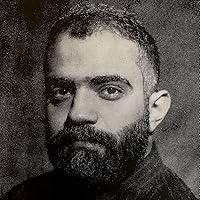
December 12, 2010
Although I believe in God, I believe that there isn't an absolute clear conclusive evidence of his existence. People, whether atheists or believers agree that there's a reason/truth/cause for our existence or our perception to this world, but everyone has their own interpretation of that truth. Aside from all that, I don't believe that the burden of the proof should be on those who say that there is a God, or those who say that there isn't. I believe that every person is entitled to their own belief and opinion without having to justify it to others.
In my opinion, believing in the existence of an omnipotent omnipresent omniscient God, in the Muslim/Christian/Jewish sense requires a leap of faith. And I don't know of any logical reasons that can lead to the conclusion of the existence of God.
What Flew proposes here is his purely logical and scientific journey to believing in the existence of a prime maker of the universe. He supports his assumptions with the usual arguments of the fine tuning of the universe, and the laws of physics. That didn't convince me fully. He attempted to refute other hypotheses and theories, such as the multiverse theory, using the arguments mentioned above. But in my opinion, refuting 10 or 20 or even 1000s of theories and hypotheses doesn't prove the existence of God himself. We exist in a universe where the truth behind our existence and the reason of our being is unknown to us, which means that anything is permitted and plausible.
But anyway, the book itself is actually a good read. My only issue with it is that it didn't meet my expectations and the hype around it.
I say give it a shot, you might like it.
In my opinion, believing in the existence of an omnipotent omnipresent omniscient God, in the Muslim/Christian/Jewish sense requires a leap of faith. And I don't know of any logical reasons that can lead to the conclusion of the existence of God.
What Flew proposes here is his purely logical and scientific journey to believing in the existence of a prime maker of the universe. He supports his assumptions with the usual arguments of the fine tuning of the universe, and the laws of physics. That didn't convince me fully. He attempted to refute other hypotheses and theories, such as the multiverse theory, using the arguments mentioned above. But in my opinion, refuting 10 or 20 or even 1000s of theories and hypotheses doesn't prove the existence of God himself. We exist in a universe where the truth behind our existence and the reason of our being is unknown to us, which means that anything is permitted and plausible.
But anyway, the book itself is actually a good read. My only issue with it is that it didn't meet my expectations and the hype around it.
I say give it a shot, you might like it.

February 7, 2021
كتاب (هناك اله)
هذا الكتاب (لأنتوني فلو) من الكتب اليت أثارت ضجة كبيرة وهو لا شيء.
والمشكلة أن أغلب المسلمين يتشدقون بهذا الكتاب على أن أنتوني فلو من أعظم المفكرين وذو عقل موسوعي!
بالمناسبة،
أنا لا أتفق مع كاتب هذا الكتاب، ولا زلت أرى أن حججه وقت الإلحاد ضعيفة، خصوصاً مشكلة الشر والتي هي مصادرة عن المطلوب.
ما الذي يربط وجود الإله بمشكلة الشر؟
أرى أن مشكلة الشر مشكلة إلحادية خاصة بالدين المسيحي ولا تَرد على الدين الإسلامي،
وذلك لأن الله عز وجل يفعل في ملكه ما يشاء. أليس هو خالق هذا الكون. أيضاً، لا يستطيع إنسان أن ينكر وجود الأوبئة والظلم وغيره، ويقول هذا للأصلح أو هذا لحكمة!
الله تعالى لا يخلق لغاية أو علة بل الله تعالى واجب الوجود خالق هذا الكون ومدبره وهو حكيم يفعل كل شيء لحكمة كما ورد في القرآن العزيز.
إذن، مشكلة الشر لا تتعلق بالوجود والخلق والتدبير بل هي من متعلقات الوجود، فهذه حجة غير برهانية، مع أن الكاتب أشار إلى أنه درس الفلسفة اليونانية وتعلم المنطق والفلسفة وما زال يتعامل مع مشكلة الشر بهذه السطحية.
أما بالنسبة لرجوعه للإيمان،
فأنتوني فلو يزعم أن بأن (التصميم الذكي) هو أعظم ما يستدل به،
وصراحة، هذا بالنسبة لي ليس بدليل برهاني يقيني على وجود اللإله بل هي حجة إقناعية يؤمن بها البعض.
وهذا للأسف، لنظري بأن المؤلف لم يطّلع على علم الكلام وعلم الفلسفة الإسلامية كما يجب،
علم الكلام فيه العديد من الحجج البرهانية اليقينية على وجود الله تعالى وهي من أقوى ما يستدل به العقل البشري،
برهان الخلق وبرهان الحدوث والإمكان.
هناك عدة نقاط لم تعجبني في الكتاب، أهمها:
1. الكتاب طويل جداً ويطنب كثيراً في السرد والحكاية.
2. الكتاب أشبه برواية من كونه كتاب فلسفي أو برهاني.
3. تحيزه ضد الأديان بشكل عام والدين الإسلامي بشكل خاص.
تمّت
2/5
8/2/2021
هذا الكتاب (لأنتوني فلو) من الكتب اليت أثارت ضجة كبيرة وهو لا شيء.
والمشكلة أن أغلب المسلمين يتشدقون بهذا الكتاب على أن أنتوني فلو من أعظم المفكرين وذو عقل موسوعي!
بالمناسبة،
أنا لا أتفق مع كاتب هذا الكتاب، ولا زلت أرى أن حججه وقت الإلحاد ضعيفة، خصوصاً مشكلة الشر والتي هي مصادرة عن المطلوب.
ما الذي يربط وجود الإله بمشكلة الشر؟
أرى أن مشكلة الشر مشكلة إلحادية خاصة بالدين المسيحي ولا تَرد على الدين الإسلامي،
وذلك لأن الله عز وجل يفعل في ملكه ما يشاء. أليس هو خالق هذا الكون. أيضاً، لا يستطيع إنسان أن ينكر وجود الأوبئة والظلم وغيره، ويقول هذا للأصلح أو هذا لحكمة!
الله تعالى لا يخلق لغاية أو علة بل الله تعالى واجب الوجود خالق هذا الكون ومدبره وهو حكيم يفعل كل شيء لحكمة كما ورد في القرآن العزيز.
إذن، مشكلة الشر لا تتعلق بالوجود والخلق والتدبير بل هي من متعلقات الوجود، فهذه حجة غير برهانية، مع أن الكاتب أشار إلى أنه درس الفلسفة اليونانية وتعلم المنطق والفلسفة وما زال يتعامل مع مشكلة الشر بهذه السطحية.
أما بالنسبة لرجوعه للإيمان،
فأنتوني فلو يزعم أن بأن (التصميم الذكي) هو أعظم ما يستدل به،
وصراحة، هذا بالنسبة لي ليس بدليل برهاني يقيني على وجود اللإله بل هي حجة إقناعية يؤمن بها البعض.
وهذا للأسف، لنظري بأن المؤلف لم يطّلع على علم الكلام وعلم الفلسفة الإسلامية كما يجب،
علم الكلام فيه العديد من الحجج البرهانية اليقينية على وجود الله تعالى وهي من أقوى ما يستدل به العقل البشري،
برهان الخلق وبرهان الحدوث والإمكان.
هناك عدة نقاط لم تعجبني في الكتاب، أهمها:
1. الكتاب طويل جداً ويطنب كثيراً في السرد والحكاية.
2. الكتاب أشبه برواية من كونه كتاب فلسفي أو برهاني.
3. تحيزه ضد الأديان بشكل عام والدين الإسلامي بشكل خاص.
تمّت
2/5
8/2/2021

April 8, 2018
اسم الكتاب:هناك إله
العنوان الفرعي:كيف غير أشرس ملاحدة العالم أفكاره؟!
المؤلف:أنتوني فلو
ترجمة:جنات جمال
تقديم:د.محمد العوضي
دار النشر:مركز براهين لدراسة الإلحاد
سنة النشر:٢٠١٧م/الطبعة الأولي
عدد الصفحات:٢٢٢صفحة
"أؤمن أن نشأة الحياة وتنوعها أساسهما مصدر إلهي"
(أنتوني فلو)
هذا الكتاب لفليسوف الأديان البريطاني الشهير "أنتوني فلو" الذي صنف من أشرس الملاحدة،والذي كانت كتابته ومقالاته تشكل حجر أساس فكري للملحدين،ظل كذلك اكثر من خمسين عاماً،ثم بعد ان بلغ من العمر واحد وثمانون عاماً أعلن انه مؤمن بوجود الإله بدافع من البراهين العلمية في هذا الكتاب الذي ألفه للإقرار بوجود الإله.
هذا الكتاب يوضح سبب تغير رأيي"أنتوني فلو" في وجود الإله بالأدلة العلمية،كما ذكر المؤلف ما كان اعتقاده قبل التغير هذا ولماذا؟
فيبدأ المؤلف بسيرته الذاتية التي يبين من خلاله الغرض الأساسي وهو لماذا كان ملحداً وكيف أصبح ملحداً؟
ثم يشرح بعد ذلك اكتشافه للإله بالبراهين والحجج.
ثم اتبع ذلك بملحقين:الأول لروى إبراهام ڤارجيس تحت عنوان "الإلحاد الجديد": تقييم نقدي
لدونكيز،ودنييت،ولويس،وةلبرت،وهاريس،وستنجر" والملحق عبارة عن تقييم لحجج جيل الملحدين المعاصر او الحالي.
أما الملحق الثاني فهو للأسقف "نيكولاس رايت" تحت عنوان كشف الإله لذاته عبر التاريخ الإنساني في شخص يسوع،ويري المؤلف تفضيله للمسيحية،وقد أجاد مركز براهين في التعليقات بالرد النقدى على هذا الملحق في الهوامش.
العنوان الفرعي:كيف غير أشرس ملاحدة العالم أفكاره؟!
المؤلف:أنتوني فلو
ترجمة:جنات جمال
تقديم:د.محمد العوضي
دار النشر:مركز براهين لدراسة الإلحاد
سنة النشر:٢٠١٧م/الطبعة الأولي
عدد الصفحات:٢٢٢صفحة
"أؤمن أن نشأة الحياة وتنوعها أساسهما مصدر إلهي"
(أنتوني فلو)
هذا الكتاب لفليسوف الأديان البريطاني الشهير "أنتوني فلو" الذي صنف من أشرس الملاحدة،والذي كانت كتابته ومقالاته تشكل حجر أساس فكري للملحدين،ظل كذلك اكثر من خمسين عاماً،ثم بعد ان بلغ من العمر واحد وثمانون عاماً أعلن انه مؤمن بوجود الإله بدافع من البراهين العلمية في هذا الكتاب الذي ألفه للإقرار بوجود الإله.
هذا الكتاب يوضح سبب تغير رأيي"أنتوني فلو" في وجود الإله بالأدلة العلمية،كما ذكر المؤلف ما كان اعتقاده قبل التغير هذا ولماذا؟
فيبدأ المؤلف بسيرته الذاتية التي يبين من خلاله الغرض الأساسي وهو لماذا كان ملحداً وكيف أصبح ملحداً؟
ثم يشرح بعد ذلك اكتشافه للإله بالبراهين والحجج.
ثم اتبع ذلك بملحقين:الأول لروى إبراهام ڤارجيس تحت عنوان "الإلحاد الجديد": تقييم نقدي
لدونكيز،ودنييت،ولويس،وةلبرت،وهاريس،وستنجر" والملحق عبارة عن تقييم لحجج جيل الملحدين المعاصر او الحالي.
أما الملحق الثاني فهو للأسقف "نيكولاس رايت" تحت عنوان كشف الإله لذاته عبر التاريخ الإنساني في شخص يسوع،ويري المؤلف تفضيله للمسيحية،وقد أجاد مركز براهين في التعليقات بالرد النقدى على هذا الملحق في الهوامش.
Displaying 1 - 30 of 466 reviews