Jump to ratings and reviews
Rate this book

An Officer and a Spy

Rate this book
A whistle-blower. A witch hunt. A cover-up. Secret tribunals, out-of-control intelligence agencies, and government corruption. Welcome to 1890s Paris • From Robert Harris, the bestselling author of Conclave

NATIONAL BESTSELLER • Winner of the Walter Scott Prize for historical fiction • Winner of the American Library in Paris Book Award

Alfred Dreyfus has been convicted of treason, sentenced to life imprisonment on a far-off island, and publicly stripped of his rank. Among the witnesses to his humiliation is Georges Picquart, an ambitious military officer who believes in Dreyfus's guilt as staunchly as any member of the public. But when he is promoted to head of the French counter-espionage agency, Picquart finds evidence that a spy still remains at large in the military—indicating that Dreyfus is innocent. As evidence of the most malignant deceit mounts and spirals inexorably toward the uppermost levels of government, Picquart is compelled to question not only the case against Dreyfus but also his most deeply held beliefs about his country, and about himself.

496 pages, Hardcover

First published September 26, 2013

3091 people are currently reading
21572 people want to read

About the author

Robert Harris

62 books8,789 followers
ROBERT HARRIS is the author of nine best-selling novels: Fatherland, Enigma, Archangel, Pompeii, Imperium, The Ghost Writer, Conspirata, The Fear Index, and An Officer and a Spy. Several of his books have been adapted to film, most recently The Ghost Writer, directed by Roman Polanski. His work has been translated into thirty-seven languages. He lives in the village of Kintbury, England, with his wife, Gill Hornby.

Ratings & Reviews

What do you think?
Rate this book

Friends & Following

Create a free account to discover what your friends think of this book!

Community Reviews

5 stars
14,190 (42%)
4 stars
13,574 (40%)
3 stars
4,361 (13%)
2 stars
766 (2%)
1 star
295 (<1%)
Displaying 1 - 30 of 3,184 reviews
Profile Image for Jeffrey Keeten.
Author 5 books252k followers
September 4, 2018
”There is no such thing as a secret--not really, not in the modern world, not with photography and telegraphy and railways and newspaper presses. The old days of an inner circle of like-minded souls communicating with parchment and quill pens are gone. Sooner or later most things will be revealed.”

 photo mugshots_alfred-dreyfus_zps80c4bb01.jpg
Captain Alfred Dreyfus’s mugshot

Georges Picquart was as convinced of Captain Alfred Dreyfus’s guilt as anyone else in 1894. In fact for the invaluable service he provided during the affair he becomes the youngest Lieutenant Colonel in the French military. He is also promoted to head the Intelligence department, not the most prestigious appointment given that spying was considered rather unseemly, rather ungentlemanly.

”The air warms up and very soon Paris starts to reek of shit. The stench rises out of the sewers and settles over the city like a putrid gas…. In the newspapers the experts are unanimous that it isn’t as bad as the original ‘great stink’ of 1880…. ‘It is impossible to stand on one’s balcony,’ complains Le Figaro, ‘impossible to sit on the terrace of one of the busy, joyful cafes that are the pride of our boulevards, without thinking that one must be downwind from some uncouth, invisible giant.’ The smell infiltrates one’s hair and clothes and settles in one’s nostrils, even on one’s tongue, so that everything tastes of corruption. Such is the atmosphere on the day I take charge of the Statistical Section.”

 photo Esterhazy_zpsdb49e406.jpg
Major Esterhazy. “His head in profile is flattish and tapers like a vulture’s to a great beak of a nose. His moustache is large and swept back. His eyes are round and protuberant: not natural, but crazy, like glass balls pressed into the skull of a skeleton in a medical school.”

The stench becomes all consuming when Picquart sees a photocopy of the famous Bordereau Letter that was so pivotal in the conviction of Dreyfus. The problem is Picquart recognizes the handwriting, an almost exact match to a Major Ferdinand Esterhazy. A man he suspects of trying to sell secrets to the Germans. In the course of convicting Dreyfus several handwriting experts were consulting until finally they found one that said that Dreyfus was “the probable author” of the letter.

You might be downwind of that uncouth Giant yourself about right now.
 photo Bordereau_zps1e59abc8.jpg
The famous Bordereau Letter that “incriminated” Dreyfus, but should have exonerated him. The original copy of the letter mysteriously disappeared in the 1940s.

So what is this really all about? The evidence against Dreyfus is built on such a tissue of lies that it is impossible to believe that any reasonable person could have found him guilty.

Did I happen to mention that Dreyfus was Jewish?

This all really begins back in 1870 when Germany started a unification program. Two regions Alsace and Moselle were annexed by the Germans. The result of this German aggression is the Franco-Prussian War that was disastrous for the French. They are soundly defeated despite having a large standing army and a jump start on mobilization. The Germans moved quickly, had a better understanding of the current technologies, and how to best deploy them in war. Their troops, to the surprise of the French, turned out to be better trained and were lead by more competent commanders. This defeat leads to a time of zealous nationalism and riding along in the sidecar right along with nationalism is a rise of antisemitism. When word spreads that there is a spy in the French army it only makes sense that it must be a Jew.

 photo DreyfusRabbit_zps4c040d1e.jpg
Dreyfus as a rabbit about to be stewed.

Down with the Jews. Death to the Jews. The anger of the population is boiling, misplaced though it may be, they are convinced that the Jews in some way, some mystical fashion, contributed to the defeat in 1870.

As Picquart continues to investigate Esterhazy, finding more and more evidence that he is a much better candidate to be the German spy than Dreyfus, it becomes apparent that his commanding officers, a covey of white haired generals, are not interested in reopening the Dreyfus case.

Picquart is inexplicably reassigned to a unit in Tunisia. The Siberia of French outposts.

 photo GeorgesPicquart_zpsf9968278.jpg
Georges Picquart in his Tunisian Uniform.

Finally after months of idleness with no word on when he can return to Paris, he requests a weeks leave and returns to Paris to turn over all his information to his lawyer who then takes that information to the man of impeccable character who also happens to be wealthy enough to withstand bribes or threats, Senator Auguste Scheurer-Kestner.

The French generals start to act guilty. Strange, potentially incriminating cables are sent to Picquart. He is arrested and brought up on a series of charges. Emile Zola, a great advocate of Dreyfus and Picquart, is put on trial and convicted to a year in prison. The truth proves to be such a dangerous thing to know.

 photo EmileZola_zpsb99b2e42.jpg
Emile Zola was sentenced to prison for the zeal in which he called for Dreyfus to be released. He escaped to England one step ahead of men coming to arrest him.

Picquart, when he discovers a mounting level of evidence that more than pokes holes in the flimsy conviction of Dreyfus, but actually completely destroys the case against Dreyfus, his first thought is that all of it needed to be brought into the light of day and dealt with before the newspapers get wind of the incongruities infesting the evidence against Dreyfus. After all a secret never remains a secret.

There is little one can do especially in this time period when the power of an organization as formidable as the army decides to fabricate charges against a citizen, backed by a population who wants to see a Jew convicted and wants to see Picquart broken for trying to defend a Jew. Imprisoned Picquart feels a strange sense of relief. The secrets are no longer just his secrets. His needs are simple. He merely needs to feed the mind.

”If my enemies on the General Staff imagine that this represents some kind of hardship for me, they are mistaken. I have a bed and a chair, pen and paper, and plenty of books---Goethe, Heine, Ibsen, Proust kindly sends me his collected writings, Les Plaisirs et les Jours; my sister a new French-Russian dictionary. What more does a man want? I am imprisoned and liberated.”

As a reader, if I have access to books, I’m almost impossible to imprison. Books allow me to be anywhere I want to be. Gray damp walls may surround me, iron bars might grid my vision, but my mind can always fly.

Picquart as a way to relax translates Fyodor Dostoyevsky into French. I liked and respected Picquart, but when I learned that nugget of information I came close to having a man crush.

Robert Harris and I have a long relationship going back to his first novel Fatherland, where he explored the idea of what the world would have been like if Hitler had won WW2. Picking up a Harris book for me has always been a sure thing. In this book he puts us in the mind of Picquart we see his fallacies, his doubts, his courage, his outrage, and ultimately his determination to find justice. His expectations for France are idealistic. No one would have faulted him for losing faith in the country and the army he loves. He never falters in his desire to remind them of how a man of honor and valor is expected to conduct himself.

If you wish to see more of my most recent book and movie reviews, visit http://www.jeffreykeeten.com
I also have a Facebook blogger page at:https://www.facebook.com/JeffreyKeeten
Profile Image for Candi.
707 reviews5,512 followers
March 27, 2017
4.5 stars

"There are occasions when losing is a victory, so long as there is a fight."

This is an excellent work of historical fiction based on a real-life man of honor and duty, French Army officer Georges Picquart, and his determination to uncover the truth surrounding the arrest and conviction of Captain Alfred Dreyfus in what is considered to be one of the greatest judicial debacles in history. While France was still stunned by the victory of the Germans in the Franco-Prussian war in 1870, hostilities, distrust and anti-Semitism were all heightened within the military and the people of the republic at the time this novel takes place, the 1890s. As a Jew, an officer within the army, and a man to be secretly envied due to his independent wealth, Captain Dreyfus was an easy target to accuse of treason when French secret intelligence discovered a traitor in their midst.

Major Georges Picquart was not immune to the feelings of bitterness and prejudices at the time of Dreyfus’s conviction. Having personally witnessed Dreyfus’s military degradation which was attended by citizens and servicemen alike, Picquart was only too glad to put his former student out of his mind once and for all. "I had no desire to see the condemned man again. Only two years earlier he had been a student of mine in this very building. Now I had nothing to say to him; I felt nothing for him; I wished he had never been born and I wanted him gone – from Paris, from France, from Europe." Picquart even gets a promotion to Colonel following the degradation and conviction and is assigned to the position of commander of the Statistical Section, the secret intelligence branch of the French Army. Despite the fact that Picquart does not relish espionage, something he considers dirty work, he resigns himself to his new post and devotes himself to his new responsibilities. When Picquart unearths a spy in their midst, he will begin to meticulously probe into the details of the Dreyfus case himself. When a series of mistakes and subsequent cover-ups are revealed, Picquart is forced to choose between his reputation and career or the pursuit of justice. In this pursuit, Picquart learns that he will not have the support of the army and he too will fall under suspicion as his loyalties to the army are tested. "The thing is, I have no wish to destroy my career. Twenty-four years it has taken me to get this far. Yet my career will be pointless to me – will lose the very elements of honour and pride that make it worth having…"

An Officer and a Spy is an extremely riveting account of the Dreyfus affair, as it came to be known, the people involved – including those that will cover their tracks at all costs and those that will seek justice no matter the price, and the eventual reveal of the entire truth as discovered by Picquart. I was completely engaged in this book and couldn’t read fast enough once I reached the halfway mark. Not that it was dull in the first half, not by any means. We are just provided with the background of the case and the details surrounding the trial before the action, so to speak, begins. All of it was very interesting. It is appalling to think of the punishment meted out to Dreyfus following his conviction – that of solitary confinement at the penal colony on Devil’s Island. The lengths that even the highest ranking officers will follow to persecute a man and to protect their own reputations is shocking to say the least. The anti-Semitism depicted during this period seems a premonition of the evil times to come during the reign of Hitler, and it shows just how such a horrendous event as the Holocaust could eventually come to fruition. However, you will find that there are those that will stand up and do the right thing. For that we can be grateful as our faith in humanity can be restored thanks to individuals such as these. I highly recommend this book to those that relish superb historical fiction as well as those that enjoy spy thrillers and mysteries.
Profile Image for Chrissie.
2,811 reviews1,421 followers
March 21, 2021
Who should read this book?

- All who love spy novels
- All who love mysteries and thrillers
- All who are interested in the Dreyfus affair
- All who are interested in issues concerning anti-Semitism
- All who enjoy GOOD historical fiction
- All who would enjoy a book set in Paris in the 1890s
- All interested in Émile Zola or his essay J'accuse !
- All who want books that deliver historical facts in an engaging manner
- All who need a book that focuses on people that are willing to place themselves in danger for a cause they believe in. Keep in mind that Georges Picquart was a real person and of course Dreyfus and Emile Zola and…. Picquart wanted justice; to achieve justice he was willing to put himself in danger, sacrifice his own career and even life. How many people do that? This book is an anti-depressant when you are you are feeling down-and- out.

and for those of you who love audiobooks with excellent narration David Rintoul's reading is simply superb! The icing on the cake.

You do not have to meet all the criteria above; any one of the criteria above is sufficient reason to choose this book.

Do you hear my enthusiasm? I absolutely loved this book.

I have a new hero - Georges Picquart. What an amazing man. The topic of the book is interesting. The author turns historical figures into people you feel empathy for. The author presents historical facts, and never are they dry. He starts the book with a brief explanation of what is fact and what fiction. He draws the feel of Paris in the 1890s. And of course there are love affairs, soirées, the gas lights and the ever present stench of the sewage, rats and filth. It is all here. To top it all off David Rintoul speaks French as the French do - the names, the streets the buildings, the squares. Men AND women - his intonations are perfect for both. You have never heard his narrations? That is another reason to choose this audiobook - simply to hear the marvelous narration.

I loved this book and it restored my faith in the genre historical fiction (which had been going down the drain).

The ending is magnificent too; sorry, I keep thinking of things I must mention.

And Georges Picquart - I ADORE him. What happened to Dreyfus is a must-know but it should have been called the Dreyfus -Picquart affair.
Profile Image for Andrew Smith.
1,252 reviews983 followers
March 25, 2023
In 1898 the French newspaper L’Aurore printed an open letter from writer Emile Zola. Under the banner headline ’J’accuse…!’, Zola accused the government of anti-Semitism and the unlawful jailing of French Army officer Alfred Dreyfus. The letter caused a huge a uproar, as Zola pointed out the serious errors in the case against Dreyfus – who had been packed off to the notorious Devil’s Island in French Guyana - and a lack of serious evidence to back up the charges.

The Dreyfus Affair, as it became known, was a part of European history that had passed me by up to this point. But in this dramatisation – viewed through the eyes of Georges Picquart, the head of a French clandestine intelligence unit – Harris brings events surrounding this famous miscarriage of justice to life. Dreyfus had been found guilty of passing secrets to the Germans, but Picquart starts to believe there’s something seriously wrong when he stumbles across another army officer who he believes is the real spy in the camp. The dialogue is, of course, simply the authors way of bringing the story to the page, but the events and the identity of the historical players are, we are led to believe, historically correct. In fact, the whole thing is broken down into what constitutes a forensic examination of all the key components. It's comprehensive and it’s compelling.

Harris really does this sort of thing so well. I do like a bit of history and when it's served up in this style it really does make the consumption of a protracted and complicated event so much more fun. Excellent stuff - I'm off to seek out more of his work.
Profile Image for Karen.
2,629 reviews1,295 followers
August 16, 2025
"My four golden principles are more important now than ever: take it one step at a time; approach the matter dispassionately; avoid a rush to judgment; confide in nobody until there is hard evidence.”

Harris is undoubtedly a phenomenally talented author when it comes to writing historical fiction. He obviously is well-researched and a master storyteller.

Yet, I wouldn’t have considered reading this one, hadn’t it been for the comments left under my review of his most recent book, “Precipice” by Goodreads friend, Terence M. I recommend you read his review of this book, as well: https://www.goodreads.com/review/show...

It starts with an eerie setting that shows a passionate view of people’s hatefulness towards Jews. During those times, they didn’t see being Jewish as a religion, they saw it as a race to mock. And, in this particular case, Alfred Dreyfus, a Jew, was labeled a traitor towards his country, even when lacking evidence. 20,000 people came to view the moment of his humiliation even as he cried out his innocence.

“…that the human impulse to watch another’s humiliation will always prove sufficient insulation against even the bitterest cold.”

This is the fictionalized account of the true story of ‘The Dreyfus Affair’ which would certainly affect French Society. It started on October 15, 1894 with the arrest for high treason of Captain Alfred Dreyfus.

This is a complicated story. And, his narrator, Lt. Col. Georges Picquart, who believes at first in his guilt, soon becomes the investigator to unravel the truth, before becoming his eventual savior.

Harris takes readers through the various aspects of the affair: the court-martial trial, the investigation, the perjured testimony, the forged documents, the secret files, the mobs of people. While reading, it feels as if we are present amongst history.

When Georges is reading the love letters between Alfred and his wife Lucie, that he is written while he is imprisoned on Devil’s Island, we can’t help but be touched by their passion towards each other.

So, who is the real traitor? What will tip Georges off to save Dreyfus? Will he be saved in time? And, will Georges be rewarded for his investigative work?

This is truly a gripping and thrilling story. And, as a true story, for those who didn’t know the history, we can’t wait to find out what happens in the end. For those who did know the history, I have to believe you can’t wait to find out what happens in the end, too. Because, Harris has a way of keeping readers riveted. Thank you, Terrence.
Profile Image for Shruti.
133 reviews124 followers
January 9, 2020
Incredible. Just brilliant.

I would not hesitate to call An Officer and a Spy a masterpiece. My love for history, spies and conspiracies have without a doubt, placed this book in my favorites shelf. It was so gripping and I was so engrossed that I lost track of time, forgot that I'd planned to go for my jog and ended up emotional eating a bag of chips instead!

A retelling of the Dreyfus affair (I wouldn't recommend clicking on the link if you don't want this book to be spoiled for you but if you aren't worried about that then this scandal is incredibly interesting!)—a conspiracy within the French Ministry of War that led to the most famous miscarriage of justice in history when Alfred Dreyfus was wrongfully convicted of being a German spy in 1894 and exiled for life to Devil's Island—An Officer and a Spy is told from the perspective of an army officer, Major Georges Picquart who was a part of the team of officers that submitted documents proving Dreyfus's guilt. In January 1895, Dreyfus was publicly humiliated at his military degradation and then deported to serve his sentence. Due to Georges Picquart's dedication during the above affair, he was promoted to the position of Colonel and made commander of the Statistical Section of the Ministry of War that dealt with military intelligence. Having always been convinced of Dreyfus's guilt, when new evidence came to light, Picquart was forced to revisit the case and investigate the so-called proof that convicted Dreyfus in the first place. Doubts began to form in his mind and when he finally stumbled upon the truth, he was tasked with the difficult responsibility of convincing the army of the French Republic to admit they had made a mistake.

Robert Harris's narrative skills are brilliant. I admit that the fact that it was a true story and the scandal was an interesting one played a major role in me enjoying this as much as I did but it would not have been possible if it hadn't been for Harris's talent as a writer. He has managed to put forth immensely complicated and chronologically confusing events in the simplest and most intriguing way possible. Dreyfus's imprisonment, Picquart's plight and their subsequent hardship have been depicted with such raw emotion, I found it painful to read keeping in mind that these characters were actual people and their heartbreaking struggle was real. I became attached to the characters; I celebrated every victory and mourned every loss along with Picquart. I felt like I was there through it all.

The back cover of the book calls the Dreyfus affair an epic scandal that continues to resonate today—it is a sad commentary on the state of affairs of a government which valued political image over justice. It has been a while since I've felt such strong emotions for a book and it almost seems to me that every book I read after this one is going to be dull in comparison. So of course, HIGHLY RECOMMENDED.
Profile Image for switterbug (Betsey).
936 reviews1,494 followers
February 22, 2014
Like many people, I am aware of the Dreyfus affair that took place in France in the late 19th century, but my knowledge was mostly peripheral. I knew that Alfred Dreyfus was a French soldier who was accused of spying on France for the Germans. I was born and raised Jewish, so it was also part of my heritage to recognize the persecuted Jews of the past. Harris’s novel awakened my understanding of the political and social climate of that period in history, and informed me of how this colossal miscarriage of justice was authorized, permitted—concocted! And the blatant antisemitism of the time sanctioned the demonization of Dreyfus.

I am an avid novel reader, and historical milestones/events “stick” better if it is chronicled in a novel, where I can engage with the characters and narrative structure. Harris’s book both edified and entertained me on the Alfred Dreyfus affair. It alternated between reflective and dramatic action, as the author constructed a suspenseful spy story that also happened to be credible. He states in the Author’s Note that he used his imagination to dramatize some events, invent personal details, and cut out some figures entirely. However, he remained faithful to the truth.

Georges Picquart, the principal character and narrator, is a Major who served at the École Militaire as a professor of topography. Dreyfus had been his student a few years back. After he attends Dreyfus’s degradation ceremony (stripping of his military honor), the Major receives a promotion to Colonel (at 40, he would be the youngest), and directed to command the Statistical Section (espionage).

“Espionage is grubby work,” he thinks. “Everything I have seen of the Dreyfus case has reinforced that view. It isn’t what I joined the army to do.”

However, as a patriot and devoted army officer, he has no choice but to accept. Early on, we learn that Pacquart played a minor role in Dreyfus’s apprehension, but Harris teases the facts out gradually, providing an air of mystery that heightens as the story progresses. As Pacquart uncovers sinister lies and conspiracies related to the Dreyfus case, he begins to keep his own counsel, and demonstrates what an adept spy he really is. The fallout from that threatens his career, and possibly his life.

One of the most intriguing characters in this story is Dreyfus himself. As described by Harris--inability to observe social cues, poor eye contact, idiosyncrasies, lack of facial expression, and impaired social communication--he would likely be diagnosed with Autism Spectrum Disorder if he lived in contemporary times. (This is not stated in the book--autism is my professional specialty, and I recognize the traits). Is this relevant? Possibly so, as it made him unsavory to the French public (beyond his Jewishness). He failed to elicit their sympathy.

This is my first Harris book. It took me a few chapters to engage; he isn’t literary—his prose is plain-spoken (and sometimes just plain). However, his pacing is excellent, and the structure is measured and tight. Ultimately, the prose works, and nuances deepen. It’s a subdued nail-biter by a superb storyteller.
Profile Image for Terence M [on a brief old bloke's hiatus].
692 reviews372 followers
March 5, 2024
5-Stars – All the stars, all the way!
An Officer and a Spy - Author: Robert Harris
Audiobook - 16:04 Hours - Narrator: David Rintoul

An Officer and the Spy impressed me very much and I enjoyed listening to it, but I pondered on this excellent audiobook for over a week before deciding what to write in my review.

The curricula for my grades 7 to 9 study program at the junior seminary I attended left little room for 19th Century European history, as the good fathers were more concerned that wee lads like me should study the history of the 1st Century, particularly the years circa 27-33 Anno Domini, and of course, beyond!

So, having realised that I am quite ignorant of the history attached to events that lead to the “Franco-Prussian (or German) War” (“Guerre franco-allemande de 1870”; "Deutsch-Französischer Krieg"), July 19 1870 to May 10 1871, and its aftermath, a fair part of my "pondering time" was spent scanning Wikipedia and Encyclopaedia Britannica for some background information.

Fear not, as I will not labour this review with my new-found knowledge, but I will say that the additional context provided by my ruminations has very much improved my understanding and enjoyment of this book. As usual, I will not be reiterating the book’s “blurb”, as I wish to comment more on my impressions of the story, and in particular, the truly excellent narration by David Rintoul.

“The Dreyfus Affair” may be well-known to some, but it was unknown to me. The narration of the book begins with the “Military Degradation” of Captain Alfred Dreyfus by the French Army, following his being found guilty of treason for spying on behalf of the Germans. The Degradation, a humiliating event of course, was witnessed by Major Georges Picquart and treated with disdain by him as being no more than what a traitor, a French Army officer no less, deserved for his treasonous crime against the French Third Republic and the Army.

Major (later Lt Colonel) Picquart was promoted to head the counter-intelligence division of French Army Intelligence and the book is written almost entirely from his perspective. Not long after he started work, he was made aware that secret messages to Germany were discovered in a wastebasket. Despite much obfuscation and determined resistance from his own staff and his superiors, Picquart came to the conclusion that Alsace-born Alfred Dreyfus, a Jew, was wrongfully sentenced for treason. Dreyfus’s imprisonment on Devil’s Island, at the time the world’s most notorious prison, was harsh and became harsher as the Generals denied Picquart’s conclusions and refused to do anything to ameliorate Dreyfus’s imprisonment.

I have heard the expression “J'accuse…!”, before, but I was unaware that it was the headline of an open letter addressed to the President of the French Republic, Félix Faure, and written by a then prominent author, Émile Zola. It was printed simultaneously on the front page of many French newspapers on 13 January 1898 and declared not only Dreyfus’s innocence, but also revealed the name of the man whom Zola believed should have been convicted of this crime, French Army Major Ferdinand Walsin Esterhazy.

Multiple court trials ensued and these proved to be among the most compelling parts of the book.

Listening to David Rintoul’s reading of An Officer and the Spy was an absolute delight. The whole story is set in France (including Devil’s Island, a French territory at the time) and during his narration, Rintoul pronounces, in French, every person’s name, every building, every street and every location, using (what sounds to me like) an impeccable French accent, matched by beautiful intonation. The non-French narrative was delivered in his usual, delightful English, no “zis, or zat, or zeez", or other ‘pretend French’ for David Rintoul. His was simply a wonderful narration that made listening to this audiobook an extremely satisfying and joyful experience.

Although I haven't read or listened to a lot of Historical Fiction, An Officer and the Spy was both comprehensive and compelling. This well-researched history, turned into an intellectual spy story by Robert Harris, is highly recommended to everyone.
Profile Image for Велислав Върбанов.
924 reviews161 followers
July 12, 2025
4.5 ⭐

„Офицер и шпионин“ е силен исторически роман, в който много интересно и правдоподобно е описана легендарната афера „Драйфус“! Във Франция в края на 19-ти век е осъден несправедливо и твърде сурово капитанът от еврейски произход Алфред Драйфус. Заради скалъпеното обвинение в държавна измяна се развихрят страховити и нелепи конспирации... Робърт Харис увлекателно пресъздава атмосферата от онези времена на жесток морален упадък и политическите интриги, когато реално се създават предпоставките за Първата световна война... Със сигурност бих прочел и други книги от този автор!


„И въпреки това с Драйфус се бяха отнесли толкова жестоко - тайният процес, публичното разжалване, каторгата на Дяволския остров, - че светът бе останал с убеждението, че на карта е било заложено самото съществуване на Франция.
- Хората си казват един на друг: „Няма дим без огън“, когато тук всъщност няма никакъв дим. И колкото повече се проточва този скандал, толкова по-огромни и абсурдни стават несъответствията между първоначалното престъпление и колосалните усилия, които се предприемат, за да се прикрие една съдебна грешка.
Виждам как в дъното на масата Зола си води записки. Млъквам, за да отпия глътка вино. Едно от децата в картината на Реноар е яхнало голямо куче. Рисунъкът на козината на кучето прелива в цветовете на роклята на мадам Шарпантие - така онова, което изглежда като естествена поза, всъщност е изкусно обмислено.“
Profile Image for Jill H..
1,637 reviews100 followers
January 25, 2025
I always wondered why people read historical fiction when real history is so fascinating. Then I read a book by this author, Munich and began to understand. It led me to this book.

Harris does not change any historical facts of his subject but instead creates an understory of actions by fictional characters which are believable. He presents the actual participants in the history clearly and fact-based and his research is impressive.

This is the story of the infamous trial and imprisonment on Devil's Island of French Army officer, Alfred Dreyfus, for treason in 1895. History has shown that there was no case except for the anti-Semitism of the Army judges and the deceit swirling below the surface. We follow the doubts of George Picquart who is the head of the counterespionage agency and who originally supported the Dreyfus decision but stumbled upon certain facts that caused him to have second thoughts. (Picquart is a true character who indeed played the major part in proving Dreyfus's innocence). Picquart puts his own future on the line as he delves further into the "proof" used to convict Dreyfus.

I won't go into the Dreyfus case as most history lovers are well aware of the circumstances. The author's additional fictional situations do not change history but add color to the long and drawn out fight for Dreyfus's exoneration. I highly recommend this interesting and well written book.
Profile Image for Beata .
903 reviews1,385 followers
August 1, 2018
Before reading this book I'd had a vague idea of a so-called Dreyfuss affair. After reading it, I was full of respect for Dreyfuss who showed stamina during the trial and even more for his ability to survive his isolation. Robert Harris did a wonderful job.
Profile Image for Blaine.
1,019 reviews1,090 followers
December 28, 2022
“There is no such thing as a secret—not really, not in the modern world, not with photography and telegraphy and railways and newspaper presses. The old days of an inner circle of like-minded souls communicating with parchment and quill pens are gone. Sooner or later most things will be revealed.”

Robert Harris is such an underrated writer, and in An Officer and a Spy he’s written probably his best book (though Fatherland is really great too). Mr. Harris has taken a true story—the Dreyfus Affair in 1890s France—and spun it into a gripping tale that reads like fiction. Of course, it helps that the actual events unfurled like a hard-to-believe Hollywood thriller. The main characters are richly drawn, and the plot moves fast. A really outstanding book. Highly recommended.
Profile Image for Linda.
Author 2 books256 followers
May 12, 2021
An Officer and a Spy is an outstanding historical fiction/ thriller. It provides a historically accurate account of the Dreyfus Affair, the espionage case that ripped apart fin de siecle France. Author Robert Harris selected Lieutenant Colonel George Piquart as his protagonist and chronicled the events which led to his altering his belief in Alfred Dreyfus' guilt.

On October 15, 1894, 35-year-old Alfred Dreyfus, an artillery officer in the French army, was arrested for high treason, spying, and passing on classified information to the Germans. He was tried and convicted on very flimsy evidence and sentenced to life in solitary confinement on Devil's Island, a remote outpost off the coast of Venezuela.

Dreyfus was Jewish and the first "outsider" to rise in the ranks of the French military. According to New York Times reviewer Louis Begley, the military had just introduced merit-based appointments a few years earlier, and many of the anti-semitic general staff were less than pleased to have Dreyfus among them. So when evidence emerged that there was a traitor passing secrets to the Germans, they suspected Dreyfus.

The top generals saw Picquart as a good old boy who shared their prejudices. He initially believed in Dreyfus's guilt and received a promotion to the head of army counter-intelligence as a reward for his role in Dreyfus's court-martial. Ironically, this promotion placed him in the position to learn that the wrong man had been tried and convicted. Yet, despite his prejudices, Piquart was an honorable man who felt that it was his duty to free the innocent Dreyfus and put the real spy Officer Esterhazy in prison.

Robert Harris is a master storyteller. He gradually builds tension and subtly shows Piquart's growing disillusionment, adding evidence and depicting the harrowing events that led the military command to harass and prosecute Piquart and defend the honor of the real spy.
Harris captures the polarization within French society and the rabid anti-Semitism of those who clung to their belief in Dreyfus's guilt, despite all evidence to the contrary.

An Officer and a Spy takes the reader on a suspenseful roller coaster ride that is all the more powerful because it is true. I highly recommend it.
Profile Image for Lisa.
624 reviews229 followers
March 5, 2024
"You can't make this stuff up!" That's exactly how I feel reading Robert Harris' historical novel An Officer and a Spy.

Back in my student days The Dreyfus Affair was a paragraph in a textbook. Robert Harris has done a copious amount of research to faithfully follow the facts and bring this story to life. The short version: This political crisis in France began in 1894 and continued through 1906 and centered on the conviction for treason of Jewish army Captain Alfred Dreyfus for allegedly selling military secrets to the Germans. It turns out that the highest ranking military and intelligence officers railroaded him and then covered up their machinations.

Despite knowing how the story ends, Harris has me on the edge of my seat once the initial exposition is handled. The pacing is perfect, and the story reads like a Dumas novel--full of mystery, intrigue, wrongful imprisonment, and heroic efforts to bring the truth to light.

Harris makes the brilliant choice to have the tale narrated by Georges Picquart, a General Staff officer in Paris during the first Dreyfus court-martial. Picquart is promoted to the rank of lieutenant-colonel and appointed chief of the army's intelligence section where he begins to understand that Dreyfus may be innocent. Harris fully develops Picquart as a multi-dimensional human being. I see him wrestle with his conscience and with his love of the army and faith in it as an institution as he is warned off this investigation time and time again. I also see his love of family and the arts and his concern and compassion for others.

A through line can be drawn from the anti-Semitism demonstrated by the French people in 1894 around the initial conviction straight through to the Vichy government in WWII.

There are many parallels that can be drawn to this day and age, as well as throughout history--the consequences of an institution failing to admit an error and correct course, the inability to keep secrets, "alternative facts," the oppression and mistreatment of those who are different, the denigration of whistle blowers, and more.

Harris captures the attitudes of the French people and the look and feel of the times in his prose.

This novel has sent me searching for more. I can now tell you about the Franco Prussian War of 1870 and what was happening culturally and politically in France in the 1890's and early 1900's.

If you want to learn more about this historical event, love the juiciness of a scandalous trial, enjoy espionage and counterespionage tales, are enticed by complex thrillers, or want to believe that there are men of honor, treat yourself to reading An Officer and a Spy. This novel is historical fiction at its best!

Publication 2013
Profile Image for Ian.
982 reviews60 followers
July 7, 2019
Robert Harris isn't an author I have read before, but I decided to read this on the recommendation of a family member whose opinions I value. I enjoyed it immensely. Basically this is a fictionalized re-telling of the course of the Dreyfus Affair, from the perspective of Col. Georges Picquart, the intelligence officer who originally blew the case open. I knew about the Dreyfus Affair in outline before reading this, but I knew nothing of the detail. As a result this read like a thriller novel to me, and a real page-turner at that. Had it been just a thriller though, I would have dismissed the plot as implausible. The rabid anti-Semitism of the French General Staff, and the depths to which they were willing to sink to cover up their crimes, would have seemed unbelievable had I not known this was basically a true story presented as fiction. The fact the events portrayed really did happen to Dreyfus and Picquart meant that at times I found this uncomfortable to read, such was the level of injustice they suffered.

I suppose that in writing this the author's job was made easier by the fact that he did not have to invent a plot, but I think the decision to base the story around Picquart was a good one, since it allowed the novel to build around his investigation (which initially was into a case he thought was unconnected), and the fact the plot is based on real events does not detract from the quality of the writing.

Bravo Picquart!
Profile Image for Sara.
Author 1 book935 followers
February 5, 2017
I wonder if there is anything more frightening than the misuse of great power against someone who is helpless to defend himself. If you have even been close to such a circumstance, it is harrowing. To have it done to you on such a great scale as experienced by Alfred Dreyfus is almost unthinkable. Add in a generous sprinkling of antisemitism, and you have more than the persecution of an individual, you have the precursor of things to come. For that reason, The Dreyfus Affair, as this episode of French history has come to be known, still figures, not only as a shameful part of French history, but as a major historic event.

This tale, however, is not the tale of Alfred Dreyfus alone. It is more importantly the tale of Colonel Georges Picquart, a man whose honor and sense of justice would not allow him to look the other way and whose involvement was thrust upon him by circumstances beyond his control. Although most of us who have any familiarity with The Dreyfus Affair at all are aware of Emile Zola’s involvement, the name of Col. Picquart was completely new and unknown to me. I am so pleased to have heard this man’s story, because I consider it the hardest of all things to stand for what is right when everyone around you turns the other way and encourages you to do the same. Harder still when you have so much to lose and nothing to gain. Difficult to do when you are in defense of someone you love and admire; nearly impossible when the other individual is not your intimate and in many ways unappealing to you even as a friend or associate.

If you believe in Karma, this book is fraught with it. Knowing that it is based on factual events makes it all the more compelling. As a bonus, Robert Harris has a marvelous writing style and sets the story in motion with mystery and spy craft and intrigue that is captivating. I enjoyed every moment and will not hesitate to read Mr. Harris again.
Profile Image for Jean.
1,815 reviews801 followers
July 18, 2018
I am a big fan of Robert Harris and this book did not let me down. Harris is a master of historical fiction.

This historical fiction tells the story of French officer Georges Picquart (1854-1914) from 1896 to 1906. Picquart became head of the French Army’s Intelligence section after the conviction of Alfred Dreyfus (1859-1935) and his confinement on Devil’s Island. Picquart uncovers a spy and proof of Dreyfus’s innocents. Picquart has to fight bureaucracy, societal opposition as well as anti-Semitism in his attempt to free Dreyfus. Harris brings this period of history to life. I could hardly stop reading the book. I have read many books about the Dreyfus Affair, but this helps to bring the period after conviction to life. I enjoyed the descriptions of the state of spy craft of the period. I enjoyed the dramatic court scene that took place near the end of the book.

I read this as an audiobook downloaded from audible. The book is just over sixteen hours. David Pintour does a good job narrating the book. Pintour is a Scottish actor.


Profile Image for Jan Rice.
585 reviews516 followers
May 8, 2015
I heard the whip crack twice. The driver shouted a command. The wagon accelerated free of the mob, turned left, and disappeared.

An instant later the order was given for the parade to march past. The stamp of boots seemed to shake the ground. Bugles were blown. Drums beat time. As the band struck up "Sambre-et-Meuse" it started to snow. I felt a great sense of release. I believe we all did. Spontaneously we turned to one another and shook hands. It was as if a healthy body had purged itself of something foul and pestilential, and now life could begin anew. (pp. 12-13)

Both papers have the degradation on their front pages--the Journal, indeed, has almost nothing else. Its report is illustrated by a series of crude sketches: of Dreyfus being marched into the parade ground, of the plump little official in his cape reading out the judgment, of the insignia being ripped from Dreyfus's uniform, and of Dreyfus himself looking like a white-haired old man at thirty-five. The headline is "The Expiation": We demanded for the traitor Dreyfus the supreme penalty. We continue to believe that the only appropriate punishment is death..." It is as if all the loathing and recrimination bottled up since the defeat of 1870 has found an outlet in a single individual. (pp. 21-22)


This rendition of the Dreyfus affair recounts how one of those men who at first was as convinced of Dreyfus' guilt as anyone became his preeminent backer and defender after discovering his innocence. The book's main character--the titular officer and spy--is not Alfred Dreyfus but Georges Picquart, who is both that defender and the narrator. Picquart's character development (as well as what will happen next) constitutes a big part of the thrill in this historical fiction, since, after all, the reader is likely to have some basic knowledge of the history.

I didn't know, though, about the backdrop of the public-as-Greek-chorus ravening for Dreyfus' blood because of who he was--the story with Dreyfus-as-guilty-party perfectly meeting society's needs.

I didn't know how to think about the French army in those days, either. Today I heard an American military chief giving a news conference. He was so careful at each turn to defer to the Secretary of Defense. The French army in the last five years of the 19th century was more like the Egyptian army, the way we think of it today. No doubt that's a clumsy analogy, but the army was France. The army couldn't have a traitor, and if it did, that traitor had to be someone who was not "really" French. And once the traitor role had been assigned, the needs of the army took precedence over any other truth. So we see what it's like to go up against power--why everybody says he or she would have spoken out about the child abuser within the sports or religious monolith, or any other wrong within a power structure, and why, mostly, that doesn't happen.

"You want my advice? Well here's a story. When my regiment was in Hanoi, there was a lot of thieving in the barracks. So one day my major and I, we laid a trap and we caught the thief red-handed. It turned out he was the son of the colonel--God knows why he needed to steal from the likes of us, but he did it. Now my major--he was a bit like you, a little bit of the idealistic type, shall we say--he wanted this man prosecuted. The top brass disagreed. Still, he went ahead and brought the case anyway, But at the court-martial it was my major that was broken." (p. 227)


Once we think we have the solution to some puzzle or crime, that's all we can see. We have on blinders. We are virtually blind to other possibilities. Especially if part of what we can see has to do with how our bread is buttered.

I'm currently in the midst of another book, Plato at the Googleplex: Why Philosophy Won't Go Away, in which the current topic is morality. Does politics dictate what the good is? That was certainly the overwhelmingly majority opinion in circa 1895 France.

This book has got me comparing and contrasting scapegoat versus salvific martyr. Intermixed with the expiation-of-evil theme is Picquart's reference to Dreyfus' degradation as "his Calvary." Later, after Picquart has become convinced of Dreyfus' innocence, he is reflecting on the heaping on of abuse he reads of Dreyfus experiencing in his solitary confinement on Devil's Island:

I have seen what the chafing of leg irons can do to a prisoner's flesh: cut it to the bone. In the insect-infested heat of the tropics, the torment must be unendurable. (p. 229)


It seems that behind the judges in every court in which Dreyfus is tried is a painting of the crucifixion or the like.

Is the difference between scapegoat and martyr dependent on the perspective of the viewer? Is it okay for the needs of a society to trump truth and justice if the role of the martyr is as sacrificial lamb rather than scapegoat? In that case do those needs dictate morality? Does politics rule? Or, as my other author says was true for Plato, is it the other way around: does morality dictate what politics should be?

Before I started reading, I felt like avoiding this book. I had recommendations for some actual histories rather than historical fiction. But after reading a number of Goodreads reviews about those other possibilities, I saw that those other books were heavy historical tomes, and it just wouldn't do to take on another one of those, bogged down in several as I already am. So An Officer and a Spy it was. And I must say it was quite a read, fast and enjoyable. Thriller lovers will love it, plus it's well-written. And, as I say, thought-provoking, too.

I'm going to say 4 1/2 stars and round up to 5.

For more information, here's Adam Gopnik writing in The New Yorker on Dreyfus (from 2009): http://www.newyorker.com/magazine/200...

August 25, 2014: This article taken from current events (in eastern Ukraine) so reflected the feeling from the degradation of Dreyfus as communicated by Robert Harris that I decided to include the link.

September 5, 2014: An Officer and a Spy won the 2014 Walter Scott Prize, a British literary award for historical fiction. I see from the Wikipedia entry that Robert Harris also won for one of his previous books.

May 8, 2015: The Spring 2015 issue of Jewish Review of Books contains three articles dealing with antisemitism in France because of current events: the Charlie Hebdo killings and attacks on Jews there. One of the articles is about this book, An Officer and a Spy, which recently has been released in paperback. The other two articles aren't locked, and I'll see about posting them later in appropriate spots. Unfortunately this one is locked. Here's the link, but I don't think nonsubscribers can open it, so I'm going to hit the high points if I can. Also in the past I've been able to make and email a pdf. http://jewishreviewofbooks.com/articl...

The author, Steven Englund, says that post-Charlie Hebdo etc., people are looking to An Officer and a Spy for understanding of current-day France, which he says is unfortunate. Also, he says the ordinary understanding of "the Dreyfus affair" boils down to the targeting of a Jewish army officer by an antisemitic society. He says it wasn't that simple, and it wasn't so much religious as political. He cites three factors: The army--and the republic--were in a sort of reactionary state of bluster and (reactionary nationalism?) after the military drubbing of 1870. The church-state rivalry had been ramped up again, with Catholics thrown into a defensive posture, leading to grassroots antisemitism over the affair (although not from the Catholic hierarchy itself). And, finally, the Third Republic was too weak to deal directly with crises. As a result:

The Affair became politicized, then highly politicized, as it became clear that all sides on the contentious French public scene could use it to do their old business destroying each other's reputations.
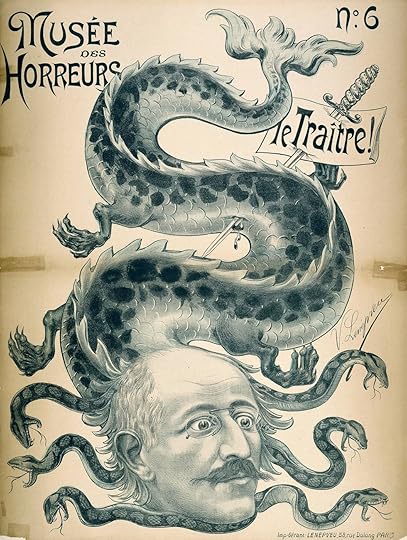
Englund denies that the Affair and obsession with it contorted all France. He says Drumont was the sole major French antisemite with a bunch of adolescent and n'er do well followers who have been mistakenly writ large by hisotry. He says anti-Jewish riots were small affairs that don't measure up to what we imagine. He says their main success was in projecting the myth that the Army's reputation was tied to that of a few criminal officers. Eventually, forthcoming disclosures and support "empowered a craven and weak government to act, and presently the Affair ended."

The preceding paragraph may not be too clear to me, but the following is: The Affair as we think of it was a later construction. It didn't turn on "the Jewish question" but on the rights of the state (raison d'État) versus those of citizens (civil rights?). It gave the much, much more antisemitic countries of Austria and Russia talking points against France. France was democratic and eventually did the right thing, but also had citizens who took polemical advantage of the freedom of expression there. All the Christianity-derived European countries of that time period where characterized by antisemitism, with far less in the French Third Republic.

I don't think Englund intends his article as an apology for antisemitism in France, so if what you read here looks that way, it could be me. I think he wants to avoid an oversimplified rendition, and would like to get that straight before piling further analysis on top of what's there.

Steven Englund is the author of Napoleon: A Political Life. It is highly regarded, particularly in France; and Englund has a Wikipedia page in French but not in English. He's currently working on a book that compares political antisemitism in Germany, Austria-Hungary, and France.
Profile Image for Dolf Patijn.
795 reviews52 followers
November 24, 2013
Robert Harris has done it again. He has written a historical novel that dragged me in so deep that it made me feel uncomfortable as if I was the protagonist. Nail-biting stuff. This time the book is about the Dreyfus affair, a real historic event that took place in between 1894 and 1906.

The story is told by Colonel Georges Picquart, who becomes head of counter-espionage and finds out that there is something really fishy about the whole affair.

This affair had the whole country (France) devided at the time. One of the supporters of Dreyfus was the writer Émile Zola.

Part two of the book in particular is exciting and from then on the book is hard to put down.

This story shows that anti-semitism was very much alive around that time in France. It also shows that politics have always had a dirty side to it. (Robert Harris already showed that in the two Cicero books as well)

With Pompeii, the two books about Cicero, Enigma, Archangel and now an officer and a spy, Robert Harris has proven to be one of the best writers of historical fiction. I'm already looking forward to his next book. Hopefully it will be the third book in his Cicero trilogy but if not, I won't complain as everything I've read of his work so far has been brilliant. (I still have to read Fatherland, come to think of it.)
Profile Image for Geevee.
453 reviews341 followers
July 8, 2014
A very enjoyable, keenly researched and fast paced historical account of the Dreyfus affair that shook France and transfixed Europe in the final years of the 19th Century.

Mr Harris transports the reader to 1894 and the trial of Alfred Dreyfus who is accused if passing secrets to the Germans. From there the story develops around Georges Picquart, a career soldier on a fast track to high command, as he takes up his position to run the intelligence unit that was responsible for unmasking Dreyfus and his crimes; where slowly he discovers information and behaviours that will change people's lives and affect his own far beyond anything he could of imagined.

The detail applied to the writing of the history is overlaid delightfully with the cast of characters, who are all based on real people from the time, enabling the story to build layer by layer with the reader comfortably able to maintain belief in the plotting, the politics and the people involved and their prejudices and pains.

If you enjoy historical fiction with a good measure of mystery and thriller bounded by real characters with believable dialogue and thought then I urge you to read this.


Profile Image for Sam Quixote.
4,801 reviews13.4k followers
April 1, 2016
At the end of the 19th century France was consumed by an incident called The Dreyfus Affair where a man called Alfred Dreyfus was caught allegedly giving French military secrets to Germany. Robert Harris’ An Officer and a Spy, which is set directly in the aftermath of Dreyfus’ conviction, revisits the affair from the perspective of Georges Picquart, the newly appointed spymaster of French Intelligence, who discovers not only that Dreyfus was innocent but that there was a massive conspiracy behind the framing.

I usually like Harris’ novels (I highly recommend The Ghost and The Fear Index - great thrillers) so I was disappointed at how crap An Officer and a Spy turned out to be. At 600 pages it’s longer than Harris’ usual books and you definitely feel its length. Long-winded is a good description of this story rather than the misnomer “thriller”.

Part of the problem is our protagonist, Picquart, who comes off as very standoffish, cold and unlikeable - because of him it always feels like we’re experiencing the story from a distance and can’t get too involved with it. Dreyfus, despite the novel being basically about him, is kept off page for the most part and we never get to know him, making everything that happens feel sort of abstract. The other characters - and there are a lot of supporting characters, mostly military officers - feel identical and one-dimensional.

Harris doesn’t do a good job of providing context for the story. I wasn’t at all familiar with the Dreyfus Affair before reading this and some detail on why Alsace-Lorraine was so contested between France and Germany, and Dreyfus’ relevance with that background, would’ve been useful. He does mention that Germany annexed that land in the last French/German war of 1870 but he doesn’t go further and connect that to Dreyfus and why he did what he supposedly did.

Then there’s the Affair itself - Dreyfus allegedly giving French artillery secrets to the Germans isn’t a very interesting angle to me at all. I understood its importance, I just didn’t care. Then we get into the trial and its particulars and it becomes maddeningly convoluted and tedious to recount.

Generally speaking it is a fascinating story, all the more so given that it’s non-fiction. It’s a massive case of injustice, people are conveniently knocked off, there’s a lot of cloak and daggers, and Picquart was an immensely brave and moral man - Dreyfus too - for enduring such harshness. But Harris’ treatment of it all renders the drama stale and unexciting, not to mention repetitive as the same details are dredged up again and again during endless trials.

I’m sure there are better accounts of the Dreyfus Affair - the material is so rich with intrigue, someone’s bound to have spun it into narrative gold somewhere - but Robert Harris’ fictional take on it is definitely not one of them.
Profile Image for Daniela.
190 reviews90 followers
December 30, 2020
Robert Harris’s 2014 thriller takes on one of the most famous miscarriages of justice, the Dreyfus Case. While the general lines of the case are known – Jewish officer wrongfully accused of treason and the subsequent cover-up by the army – Harris describes details that are certainly unknown to most people.

The Dreyfus case should be seen as a prime example of how widespread and acceptable anti-Semitism was in 19th century Europe. Despite the protests that later erupted the fact is that the fanaticism and hatred the case generated from the beginning can only be explained as a consequence of Dreyfus’s Jewishness. And he wasn’t just Jewish. He was a Jew of German origin and he had money. We are dealing with a triad of prejudice: nationalism, anti-Semitism and capitalism. To divorce the first two in the 19th century is obviously impossible. The Jew is an alien without a “fatherland”, therefore, without honour. But then there is the connection between the anti-capitalist left and anti-Semitism which is, even nowadays, a much more acceptable form of anti-Semitism. You see, we do not hate Jews because they are Jews, we hate them because of how important money is for them.

The novel illustrates quite well the first marriage of concepts, nationalism and anti-Semitism. But it fails, I think, to portray the second. Harris makes a point of stating that many people were jealous of Dreyfus’s wealth. That is undoubtedly true but envy is not enough to explain what lies deeper. While this is a thriller, a form that makes it difficult to deepen certain issues, I feel Harris could have expanded more on other aspects. Although Picquart was an interesting character, he is also surrounded by much more compelling personalities such as Zola, Jaurès, even Clemenceau. It seemed a disservice to glaze over these people, barely giving them lines. Then there’s the fact that Picquart was a much more controversial personality than Harris made him out to be. He was a clear anti-Semite. If the structure of the novel had been different, the story could have gained some unconventional layers. Picquart's problem was not so much Dreyfus but that the army was dishonoring itself by lying and condemning an innocent man. A novel in which the protagonist is genuinely heroic, and suffers personally at the expense of his conscience, whilst still highly prejudiced and despiteful of those he is making a point to defend, would make for an an equally compelling story.

The other main problem is the imbalance between the two parts of the novel, Picquart’s investigation and its results. The first is much more detailed and better written. This is why I believe it was a mistake to focus only on Picquart’s perspective. To accompany the trials and the judicial battle would have been a worthwhile reading experience. I felt that the second part, which deals with those events, was too rushed.

However, there are plenty of attractive aspects to this novel. It’s an amazing fast read, and Harris does manage to convey not only how disgusting but also infantile and primary anti-Semitism was. All racism has something primal in it, the stamp of the fanatic and the uncivilized in the true sense of the word, but anti-Semitism in this specific period of History, which then opens to the horrors of the 20th century, definitely sounds like something out of a spiteful child’s journal. I hate Alfred because he has money. Who cares if he dies if what I want is salvaged? The inhumanity of it is really not quite human. And there we were, supposedly in the centre of “civilization”. Harris does portray this very well. You feel vindicated when people like Mercier, Gonse and Boisdeffre suffer.

An Officer and a Spy also perfectly illustrates the main ideological problem adjacent to all organized armed Forces. An Army can only function on a strict hierarchy, that is, on orders given by superiors to their subordinates. We trust that the orders are necessary to attain a goal that will benefit a large group of people. But what happens when the orders are clearly morally wrong? And what happens when the whole of nationalism feeds a blind obedience to orders because they come from superiors who embody the nation? I don't think there is a sentence that has been more used to justify atrocities than "I was doing my duty, I was obeying orders". Whether we like it or not, Picquart’s position is not consistent. He did defy his superiors. To save the Army's honour he did go against one of its principles. At the end, in a fictionalized meeting between Dreyfus and Picquart, Dreyfus says Picquart did his duty. No, he didn’t. That’s the whole point. Picquart did something far more important than his duty. He obeyed his conscience. The two are not equivalent.
Profile Image for James.
504 reviews
September 28, 2017
Classic Robert Harris - brilliant historical fiction based on the infamous 'Dreyfus affair'. This is Harris at his finest, a gripping fictionalised account of a fascinating true story. Harris brings history to life like no other. Accessible yet intelligent, popular not patronising. Compelling, evocative and thought provoking.
Profile Image for Emiliya Bozhilova.
1,911 reviews381 followers
January 8, 2025
”Това е по-лошо от престъпление. Това е грешка.”
Жозеф Фуше


Кое прави от човека герой, и кое - подлец? Реакцията към грешката. Героят прави всичко по силите си да я поправи, и да не позволи повтарянето и, просто вършейки си работата ден след ден. Подлецът е в състояние да извърши куп нови грешки, за да прикрие старата, докато накрая неразплетеното кълбо се превърне в поредица от престъпления.

Странно е да види човек френския генерален щаб като сбирщина страхливи и политически амбициозни подлеци, както и с надути, шовинистични, безмозъчни и сляпо лоялни подчинени, всички до един гордо наричащи себе си “патриоти”. В точно такова гнездо от пепелянки изкупителната жертва за нечие предателство не е непременно виновният, а този, който е под ръка, и стои добре в заглавията на вестниците. В случая удобен виновник в обвинение в шпионаж се оказва не особено шармантният, по северняшки педантичен и суховат капитан Алфред Драйфус, който на всичкото отгоре има неприятната черта да е евреин (груба грешка през 1894 г.). Обвинителите му обират лаврите, че са заловили национален предател. Тези лаври са толкова неустоими, че няма нужда много да се придиря за реалните факти. Това, което обвинителите недоглеждат, са две неща. Първото: семейството на осъдения ще се бори докрай (и има ресурс за това). Второто: че сред безкрайните униформени редици все още се намират нормално мислещи професионалисти като Жорж Пикар, новоназначеният шеф на Статистическия отдел, който се занимава с всичко друго, но не и със статистика. И че за разлика от “началниците”, Пикар ще реши да упорства и да проследи докрай нишките на целия случай с предаването на военни тайни на чужди сили. Разкритите резултати не радват никого.

Уникалното в случая с Драйфус е, че истината все пак излиза наяве, без политиката и бюрокрацията да успеят да я удушат. Явление, доволно рядко и през 21-ви век.

Харис прекрасно е описал цялата помпозна глупост, аматьорство и късогледство на паркетните военни от края на 19-ти и началото на 20-ти век, което подсказва защо никой няма да потуши навреме очертаващите се пламъци на Първата световна война. Здраво се е заровил във фактологията на случая Драйфус. Срещаме се със знакови фигури като Клемансо и Зола. Много поводи за размисъл се подхвърлят в течение на сюжета: що е то патриотизъм, професионализъм, героизъм, кариеризъм, лоялност, (буржоазен) морал, правосъдие, справедливост, ефективно политическо управление. Но самият главен герой ми остана твърде дистанциран от всичко това, стоеше ми като пришит в сюжета. Мотивацията му, особено на финала, не ме убеди.

И като капак - единият герой, който следваше да е главен, остана бегла сянка между редовете, дори не се сдоби с физиономия. И все пак - макар този сюжет да би бил по-успешен като non fiction, изводите са неприятни, много близки до всеки и въздействащи, и здраво ме държат.

3,5 ⭐️
Profile Image for Chris D..
104 reviews30 followers
June 1, 2023
Robert Harris explores the story of the Dreyfus affair in France in a fantastic novel which never wanes in its intrigue. The era in which the plot is set, the late 19th century is so evocatively told the reader feels like the protagonist of the work is truly telling his story to you. I cannot recommend this book enough. There are lots of characters but a glossery to all the names is provided. I really did not want this book to end. One of my favorite books of the year.
Profile Image for Tim The Enchanter.
360 reviews205 followers
March 13, 2015
A Literary Lawyer winner of a 2015 Gavel Award for

* Best Historical Fiction

My #4 Best Read for 2014

An Intriguing Look into Historical Scandal 5 Stars

Robert Harris has written an intriguing thriller chronicling what is know as the Dreyfus affair. I don't blame you if you know nothing of this event as it was unknown to me when I open the novel. Fans of political thriller, historical fiction and history should find this to be a perfect mesh of genres. While I remain unable to separate the fact from the author's fiction, further investigation leads me to believe this is reasonably accurate version of events.


Plot summary

In 1894 a Captain in the French Army by the name of Alfred Dreyfus was arrested, charge with selling secrets to the Germans, convicted of Treason and sent to serve an inhuman sentence on Devil's Island in French Guiana. The conviction was based on a compilation of poor evidence, anti-Semitism, political pressure and anti-German sentiment. Soon after the conviction, Georges Picquart takes over as the head of the intelligence branch of the Army where he comes to have serious doubts regarding the guilt of Dreyfus. Given the political climate in France and the implications of his discoveries, Picquart does not know whom he can trust and engages in an investigation that may never have a satisfactory resolution.

The Good

An Eye for History

Like the best Historical Fiction, the author has a keen eye for the period and historical accuracy. The story felt properly situation within the time period. The mannerism and speech felt appropriate and little felt out of place. The author also exploring the rampant anti-Semitism that was running through France at the time. This theme was dealt with in a deft manner and never turned into a political statement. It simply came off as an honest description of the attitude of the French during these years.

The Story is not Bad Either

The Dreyfus Affair was a complex and divisive matter in its day. It is no less complex today. The author was masterful in the manner in which he was able to distill the varying reasons for the affair and elegantly lay them out in cohesive manner. This is by no means a "light and fluffy" read. In is multilayered and by its nature is filled with unsatisfactory answers. Amongst the complexities, the story does an admirable job of introducing the reader the counter-intelligence methods of the period. While the novel describes the intelligence branch as the future of the Army the methods used were equally crude, impressive and ripe for misuse.

The Bad

Let's Get to know Each Other

If I have anything negative to say it is that I was a bit disappointed with the development of George Piquart. The character was obviously conflicted through out the story and I would have enjoyed if the author had explored that theme. I appreciate that this may have been deliberate and at any rate, it is a minor complaint. One other issue was the audiobook itself. David Rintoul is a top notch narrator and I take no issue with his performance. I simply question why the narrator is British and not French? The majority of audiobooks use the local accents with their novels. There was not a single French accent to be heard.


Can this Book Stand Alone

Yes. This is not part of a series

Final Thoughts

Some readers will find the pace to be far too slow. Personally, I am a fan of the meandering novel and I did not take issue with the pacing. This is simply a warning to prospective readers. While the intrigue continued to string me along, it was not blistering action and thrills that propelled my interest. The novel is complex, deals with serious issues of politics, legal systems and prejudice. In my opinion, is a Thriller in the best sense.

Content Advisories

It is difficult to find commentary on the sex/violence/language content of book if you are interested. I make an effort to give you the information so you can make an informed decision before reading. *Disclaimer* I do not take note or count the occurrences of adult language as I read. I am simply giving approximations.

Scale 1 - Lowest 5 - Highest

Sex - 2

A subplot involves an extramarital affair. There are several secret rendezvous throughout the story but the sex is generally implied and is not graphic.

Language - 2

The adult language is generally very mild as many of the interactions are between officers and their superiors. As such, the language is often formal and leaves little room for adult language.

Violence - 2.5

There is some violence in the form of suicides/murders. They are simply discovered and the description are moderately graphic. The situation of Richard Dreyfus is discussed from time to time and his living conditions are, at best, squalid. Some readers my find the mental torture inflicted to be disturbing. Outside of this, physical violence is low.
Profile Image for Mike (the Paladin).
3,148 reviews2,161 followers
February 20, 2015
This book happens to be about a subject I was already interested in. This is a fictionalized account of what is generally called the Dreyfus affair. Beginning in 1894 and continuing through 1906 Alfred Dreyfus was falsely accused and unjustly imprisoned on Devil's Island. (Devil's Island was closed so Dreyfus was held alone.) Through the efforts of a relentless investigator and with the help of writer Émile Zola the truth finally came out.

The book is told from the view point of Georges Picquart who risked his career and to some extent his life when (in his capacity as chief of the army's intelligence section) he uncovered facts that not only proved another man guilty as a spy but cleared Dreyfus.

There were problems however. You see the guilty party was a "French Gentleman" and Dreyfus was a Jew. Also clearing Dreyfus would show that the army general staff had been, well....wrong. Couldn't have that.

So the French Army's top ranks pulled together to suppress any evidence of Dreyfus' innocence and of Esterhazy's (Major Ferdinand Walsin Esterhazy, who called himself Count Esterhazy) guilt.

I was already familiar with the details of this case as I'd become interested in it some years ago. There is at least one creditable movie about it and some documentaries as well as notable historical writings. This is a novel about one of the best known spy cases in history that also involves antisemitism, conspiracy and what almost amounted to a coup of the French government.

The book is more than creditably written. It's interesting with the facts laid out in such a way that it reads like a novel. Whether you're familiar with this case or not I recommend this book. It is fictionalized, but the events are historical. I'd hazard that the only truly imaginary parts may be the conversations.

Highly recommended.
Profile Image for Lewis Weinstein.
Author 13 books610 followers
June 3, 2015
An outstanding historical novel, recreating the Dreyfus affair in a way that raised my fury ... at disgusting official misconduct and coverup ... and at blatant antisemitism. Dreyfus himself is portrayed as a very flat and generally unlikable person, who was unlucky to be charged in the first place and then extremely fortunate that men like Picquart, Zola and Clemenceau cared about justice and the real honor of France.
Profile Image for Dan Lutts.
Author 4 books118 followers
November 7, 2019
An Officer and a Spy is about the Dreyfus Affair (1894-1906) which roiled French society, encouraged anti-Semitism, and fostered radicalism. The affair began when a military court convicted Captain Alfred Dreyfus, who was Jewish, of spying for the Germans and sentenced him to solitary life imprisonment on Devil’s island. It turned out that Dreyfus was innocent but the top military brass refused to reopen the case because being wrong would put them in a bad light. Instead, they allowed the real spy to go free. But Colonel Georges Picquart, head of counter-espionage, came to believe that Dreyfus was actually innocent and sacrificed his military career to ferret out the truth.

Combing through primary sources, Robert Harris brings the Dreyfus affair to life with this facts-based novel. The story is narrated in the first person by Georges Picquart and the reader follows Picquart as he goes from thinking Dreyfus is guilty to believing he is innocent, and then he pulls out all stops–including disobeying his superiors' orders not to investigate Dreyfus–in his relentless quest for the truth. One compelling feature of the novel is the primary sources Harris includes–excerpts from Dreyfus’s letters, military communiques, and so on–that give the story a ring of authenticity. Peopling the book with major characters who were really involved in the Dreyfus Affair helps too. The number of characters can be confusing but Harris provides a list of them in the front of the book to help you keep them straight.

For me, the story did begin slowly at first. But that was because Picquart had to gradually realize that Dreyfus might actually be innocent. Once he’s convinced of Dreyfus’s innocence, the pace picks up until sometimes I forgot that I was reading fiction.
Displaying 1 - 30 of 3,184 reviews

Can't find what you're looking for?

Get help and learn more about the design.