Jump to ratings and reviews
Rate this book

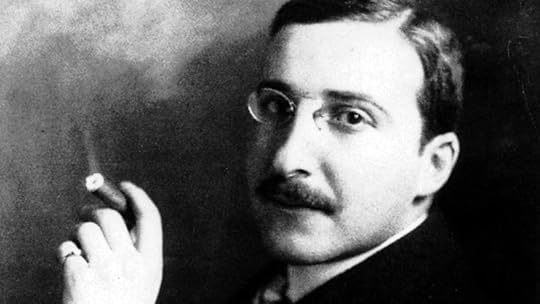
Three Lives: A Biography of Stefan Zweig

Rate this book
A new paperback edition of the only biography in English of Stefan Zweig
Drawing on a great wealth of newly available sources, this definitive biography recounts the eventful life of a great writer spoilt by success-a life lived in the shadow of two world wars, and which ended tragically in a suicide pact.
Matuschek examines three major phases in the life of the world-famous Austrian author-his years of apprenticeship, his years of success as a professional working writer in Salzburg, and finally his years of exile in Britain, the USA and Brazil.
Including the sort of personal detail conspicuously absent from Zweig's memoir, and incorporating newly discovered documents, Matuschek's biography offers us a privileged view into the private world of the master of psychological insight.

384 pages, Paperback

First published October 31, 2006

23 people are currently reading
292 people want to read

About the author

Oliver Matuschek

13 books3 followers

Ratings & Reviews

What do you think?
Rate this book

Friends & Following

Create a free account to discover what your friends think of this book!

Community Reviews

5 stars
45 (38%)
4 stars
48 (41%)
3 stars
18 (15%)
2 stars
4 (3%)
1 star
1 (<1%)
Displaying 1 - 20 of 20 reviews
Profile Image for Kalliope.
738 reviews22 followers
February 16, 2016


Reading this biography after finishing Zweig’s own memoirs, The World of Yesterday, I have the impression I am sitting both at the other side of the window through which we looked at the World of Yesterday--for finally I am staring at the man who signed his memoirs--, but also that I am watching a second run of the parade of the foregone age--although this time it is the editor’s edition.

Matuschek refers to Zweig’s memoirs often but he complements them with copious additional documentation, mostly letters and diaries. He also provides rare photographs from private albums. This book can be read as the autobiography that could have been but never was. Indeed Matuschek has chosen the title that Zweig had originally intended for his biography. Zweig saw three clear phases in his life: his youth until WW1; his maturity and prolific years when he settled in Salzburg until WW2; and the final was his exile.

When I read Zweig’s memoirs, I formed the impression that he had bequeathed to us a gallery of portraits (my review) in which his own was missing. This impression is now confirmed by the quotes included by Matuschek from a draft of those memoirs.

A great deal had to happen, infinitely more in terms of events, catastrophes and trials than has fallen to any other single generation, before I found the courage to embark on a book in which I myself am the main character, or rather the focal point. But nothing could be further from my mind than the desire to thrust myself forward, unless it be in the role of one who presents a slide show. The images are furnished by the times, I merely speak the words to accompany them: and the story I shall tell will not be so much my own personal destiny, but rather that of an entire generation – a unique generation, that has been burdened with destiny like no other in the course of history.

Zweig himself viewing how neutral his testimonial had become changed the original title with the three lives first to “Blick auf mein Leben (Looking back at My Life) and eventually to “Die Welt von Gestern”-- the one we now have.


Zweig with Romain Rolland

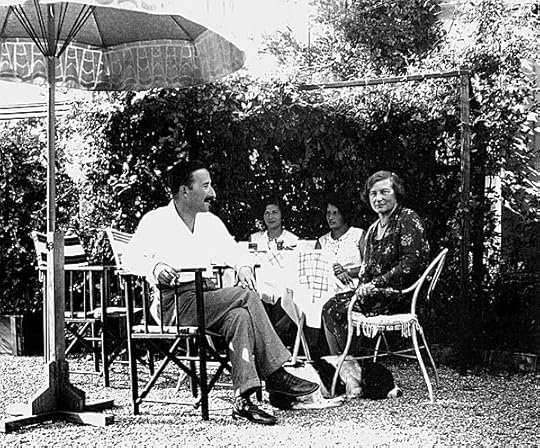
The gallery of people that fills Matuschek’s version of Zweig’s life is less celebratory or commemoratory. We now also meet those people who were close to him but who did not become famous figures. We also, finally, meet the wives. Zweig did not even mention them by their names. In particular Matuschek focuses on Friderike, the first wife, and their nonconventional marriage. We also meet people Zweig did not like, like Friderike’s daughters. Or we see the somewhat darker aspects of some of his friendships. These sombre differences were mostly brought about by politics in an age when politics were deadly. Zweig could not stand the blind nationalism of his admired Verhaeren, but his choices were deemed bourgeois and weak by the much more engaged Romain Rolland.


Zweig with Friderike and her daughters, in the garden in Kapuzinerberg, Salzburg.


We also get a fuller story around Zweig and Hofmannsthal. Not only do we learn that the somewhat older writer never liked Zweig, but that Zweig himself, in spite of the very courteous treatment he devoted to Hofmannsthal in his memoirs, in reality was much more critical of his personality and his dimming literary abilities. Posterity has agreed with Zweig. Hofmannsthal is now mostly known as the librettist of Richard Strauss. His early literary success has been forgotten.

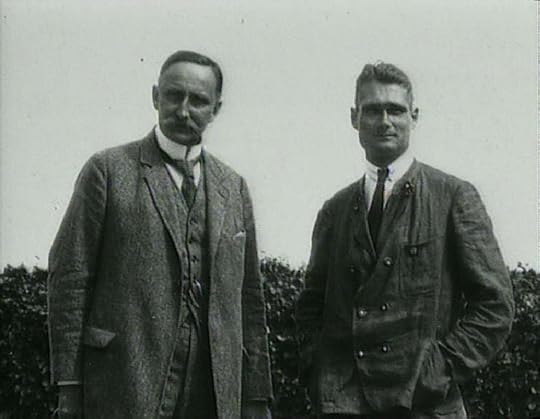
In some other instances Matuschek completes the story. Zweig had introduced to us Karl Haushofer, the diplomat and geographer whom he met in India. His portrayal is that of a very sophisticated and cultured mind. Zweig then admits his later embarrassement when he found out the connections of Haushofer with the Nazis. His ideas on Geopolitik and the Lebensraum had been appropriated by the Nazis; he had become a sort of father figure to Rudolf Hess. Matuschek continues with subsequent events and these give credibility to Zweig’s amiable portrayal. We learn that Haushofer together with his wife and son run into serious trouble with the Gestapo. The son, who had been involved in a plot against Hitler was executed in 1944 and somewhat later the parents committed suicide.

Zweig never learnt of this.


Karl Haushofer with Rudolf Hess.

Zweig’s skills as a storyteller had to make themselves felt as he gave a somewhat fantasized version of his alleged meeting on the same station, sitting in different trains gearing in opposite directions, with the last Emperor of Austria. Karl and Zweig supposedly exchanged glances across their wagons as the former was departing for his exile. Zweig just had to create a poignant moment to bring out the sad irony of the historical episode.

Similarly, the scene of his second wedding is over dramatized. Matuschek has worked out that Zweig conflated events that took place in several days into a single perturbing scene. Zweig has the wedding registrar be the one who informs the couple, there and then, that as England had just entered the war, he had to cancel the ceremony because they had become enemy aliens on the spot.

I harbour the suspicion that if Zweig did not include some people who had been close to him but who were not notable, he did the opposite by including people he had met but with whom he was not particularly close, just because they would be close to the hearts of a literary readership. And I am thinking of James Joyce and his Café Odéon.

Matuschek is very good at developing the full range of Zweig’s abilities and activities as a man of letters. If now his novellas are his better-known works, he was at the beginning of his writing career known more for his poetry and his plays. Zweig was very engaged in the literary world, acting also as promoter of other writers in particular from other nations and languages. His translations were cherished. For example, apart from Romain Rolland and Verhaeren Emile, he also promoted the younger and upcoming Elias Canetti.

As he came from an industrialist family, Zweig also had commercial instinct and acumen. He was very demanding and expected high quality from his editors: in the literary, the material, and in the distribution abilities. Matuschek is very generous in the attention he pays to Zweig’s editors. For a long time he worked with Insel but after the Anschluss of Austria in 1938 his relationship with his editors became difficult as then after one short association with a smaller house he eventually moved to the publishing house that Gottfried Bermann Fischer had set up in Sweden. This house also published Thomas Mann’s books and other writers in exile.

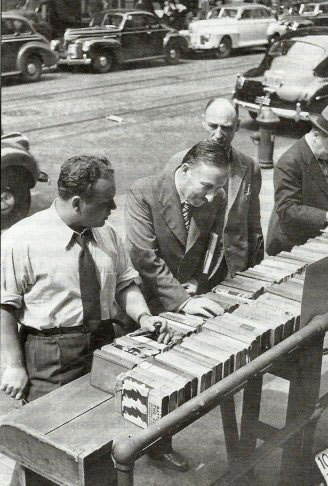
A fascinating aspect in this work has been Matuschek’s attention to Zweig the collector. His main fascination was with the decoding of the creativity process, mostly in writers, but also in musicians. Since he started collecting when he was very young and since he was also a highly successful writer also from young age, Zweig became one of the most important collectors in Europe during his times. He had the economic means and the contacts. He systematically would write to other authors requesting drafts of their compositions, and given who he was, they happily obliged. And the time spent studying the way a Balzac had dithered with his sentences, made Zweig much more conscious of his own writing. It seems Matuschek has also produced a book devoted solely to Zweig’s collecting activities . I certainly could write a full review based on what I have learnt about Zweig’s extraordinary Sammlung.


Buying books in New York.

Matuschek’s last part is very elucidating. Zweig stops at the beginning of the war. His biographer continues with his life of exile: in London, Bath, New York and other places in the US, his trips to South America, his establishment in his beloved Brazil (Petropolis). We can then come closer to understanding his deep discouragement. Even though he had succeeded to escape and could have a better exile than most--since his works had been so widely translated and distributed globally--, he kept very much attuned to the development of the war. When Pearl Harbor was bombed and the US entered the war he realized with horror the fully global nature of the fighting, and could foresee the U-Boats in the Rio Bay.

The last spark of hope dissolved when Singapore fell to the Japanese. Tragically this took place when, according to a letter from his from his second wife, he was beginning to restore a contented and productive life in exile. He had his big project on a study of Balzac illuminating his horizon and he loved Brazil.


But Hitler’s shadow haunted and hunted him and his exile was taking him, in utter despair, to the very edge of the remaining world.

He and his wife just had to find an exit and there was only one sanctuary left.

Profile Image for Teresa.
Author 9 books1,033 followers
August 20, 2014
A serviceable biography, it helped to fill in the gaps I wondered about after my reading of Zweig's The World of Yesterday. On a frivolous note, it also gave me another facet of how the main character in the movie The Grand Budapest Hotel could be based on Zweig.

Unlike with a biography written by Zweig (see Marie Antoinette: The Portrait of an Average Woman), there is no psychoanalyzing here and Matuschek's sources are clearly laid out. The research that went into this seems impeccable and I appreciated having the end-notes after each chapter, instead of the usual placement at the end of the full text. I especially liked reading of the time after Zweig's memoir ends: his English citizenship and his house in Bath; his time in the U.S. before moving to Brazil; and that of his last days and the preparations he and his second wife Lotte made before their deaths. I would've liked more about Lotte, but perhaps Matuschek has given us all that's available.

It may be a fault of the translation and not the author, but several times a placement of a personal pronoun did not always make it clear who was being referred to.
Profile Image for Elena.
97 reviews44 followers
July 13, 2014
Stefan Zweig was one of the most popular and widely read and widely translated authors of the twentieth century, appreciated by the broad reading public as well as by the intellectual elite. He was friends with nearly all the great writers of the age: Rilke, Thomas Mann, Hesse. If he was brilliant, Zweig was his friend. All this fame didn't save him from the terrors of the 20th century. After the Nazis burned his books and forced him to leave his beloved Austria and go into exile, he eventually ended his life in a double suicide with his second wife Lotte in Brazil. Matuschek's biography, available in the original German and in a smooth English translation, is an essential complement to Stefan Zweig's stunning memoir, "The World of Yesterday." This memoir meticulously sidesteps personal information, neither wife is mentioned by name. Matuschek has mastered the scattered papers in dozens of archives, especially Zweig's voluminous correspondence. He sticks to the facts as they are documented, and fills in the puzzling gaps. He quietly corrects and enhances Zweig's own writings, and his first wife Frederike's useful but necessarily biased accounts. Sometimes the reality check is a bit of a wet blanket: So when Zweig writes swooning prose about meeting his ideal poet, Hugo von Hoffmansthal, we also learn Hoffmansthal's opinion of him, not quite so flattering (Still the great Richard Strauss selected Zweig to be his librettist after HvH died.) When Zweig emphasizes his pacifist stance in World War I, Matuschek points out quotes showing that the author initially did support the war, though Zweig quickly changed his mind. When Zweig rejoices in his friendship with Freud, Matuschek uncovers Freud's resentment that Zweig included an influential sketch of him, Freud, together in the same volume with biographies of the quacks Mesmer and Mary Baker Eddy. (Still Freud enjoyed the fame that came with being in Zweig's best seller.) While clearly sympathetic with Zweig and admiring of his obvious genius as a writer, Matuschek is honest about Zweig's flaws, eg he was oddly detached from each of his wives, and unnecessarily cruel to Frederike's daughters by her first marriage. He was offended when the girls did not take an interest in his manuscript collection. Matuschek doesn't get overly judgmental, just the facts. He captures Zweig's restless nature, always traveling, always cultivating a circle of prestigious intellectuals in the great capitals of Europe and the Americas, then retreating from the resulting social obligations into the provinces, only to be bored there and returning to the limelight. The cool prose smooths the story and keeps it from turning into a soap opera. Matuschek intuitively appreciates an important side of Zweig's career, his manuscript collecting. From childhood, Zweig was fascinated by the creative process and loved studying autographs and manuscripts of actors, musicians, and writers. He prized rough drafts with corrections that show this creative process in action. Zweig's archival collection was one of the finest in private hands,including holographs by Beethoven, Goethe, Mozart, and by his friends such as Rilke. He had a treasured collection of 4,000 + autograph catalogs from dealers. Given his emotional attachment to manuscripts, the collection served almost as his surrogate family. So Matuschek takes time to trace its fate once the Nazis begin to threaten the collector. They had his house, where he kept the manuscripts, searched--ostensibly for weapons. Zweig was never the same again. It is shocking to read how the embattled author decided to abandon his priceless holdings, so carefully acquired at great expense and meticulously cataloged. Suddenly he lost interest and dispersed it all. Instead of keeping it intact, some things were sold, others donated to libraries around the world, much went astray during his restless travels in exile back and forth to London, New York, Ossingen, and Brazil. Without directly pointing it out, Matuschek lets the reader understand the depth of his depression when he abandoned his treasures. Instead of speculation about the final suicide(s), he gives Zweig the last word and ends the biography with Zweig's simple but beautiful farewell letter to Frederike, explaining his decision to end his life, twice lamenting the loss of his books, and tellingly consoling her that with her daughters she has much to live for.
Politically Zweig was a pacifist, a believer in a united Europe, and a dedicated humanist. The tragedies of the 20th century knocked him off balance. In a way the current European Union is an effort to recover his kind of vision of a peaceful, united, cultured, humanist world. His vision endured. Matuschek's calm, accurate, detailed account of his life treats everyone in his circle evenhandedly and sympathetically. Even the literary spats are carefully put in context. I consider Matuschek's biography an understated humanist masterpiece, documented with archives in a way Zweig would have appreciated.
Profile Image for M. Sarki.
Author 20 books239 followers
May 9, 2013
Though I enjoyed reading this very much and feel I have a better understanding of Stefan Zweig, I do not feel a review of this book imminent or necessary. It would be my suggestion to continue to read everything by and about this interesting writer and person. Ultimately it is a sad tale mostly due to the environment Zweig found himself in. There was no place left to go to escape the ravages of the second world war and in his mind he would never be able to ever go back home.
Profile Image for Anna Baillie-Karas.
497 reviews64 followers
January 4, 2021
I really enjoyed this biography of Stefan Zweig, one of my favourite authors. Well-written and researched, Zweig is portrayed as an intellect & a sensitive, compassionate man but not without flaws. He avoided family responsibilities, instead focusing on work. Knowing how it ends creates tension, & the book helps make sense of it. The world wars as backdrop puts things into perspective, the end is moving, and by contrast some contemporary novels feel unimportant, or less urgent.
Profile Image for Raúl.
467 reviews53 followers
July 21, 2023
Quien haya leído antes "El mundo de ayer" encontrará interesante esta biografía. Aporta aclaraciones d datos y situaciones de "el mundo de ayer" además de nueva información sobre su vida.
Profile Image for Angelo Marcano.
38 reviews6 followers
May 4, 2021
Excelente lectura complementaria a El mundo de Ayer. Engancha y aporta citas y episodios muy interesantes, además de hermosas fotografías.
Profile Image for Juana.
10 reviews8 followers
September 25, 2017
Este libro es una biografía en el sentido más escueto de la palabra: Matuschek sólo relata los hechos que le ocurrieron a Stefan Zweig, sin ningún tipo de análisis y muchas veces dando más énfasis a la vida privada del autor que a su obra literaria. Es un libro que sería completamente obsoleto si se publicaran las fuentes que utiliza -- principalmente, las cartas y el diario.
Profile Image for Malcolm Yarnell.
26 reviews31 followers
April 14, 2014
Matuschek has given us a short but authoritative critical biography of one of the 20th century's most intriguing authors. A must read for anyone interested in Stefan Zweig and a fine addition to the revival of all things Zweig.
Profile Image for Hermien.
2,309 reviews64 followers
August 5, 2016
I thoroughly enjoyed this biography and am planning to read some of Zweig's books which seem a lot more interesting than I previously thought.
Profile Image for Frank B. Farrell.
41 reviews
May 8, 2024
The novelist Stefan Zweig flourished in the interwar years, when he became one of the most widely published, frequently translated, and popular European authors. Some fellow novelists looked at him condescendingly, claiming that his prose was unmemorable and his psychological readings of his characters predictable and superficial. One writer chose to capture the sensibility of one of his own characters by saying she was the type of person to be found reading a novel by Zweig in a railroad station or hotel lobby. Yet Zweig, after a long period of mostly neglect, has had something of a new life as readers look back with some nostalgia to the European world of hotels and trains, of books and spas, that he portrayed. The director Wes Anderson said that he had used Zweig’s novels as an important basis for his film The Grand Budapest Hotel. Born in Vienna to a well-off family, Zweig made strategic literary networking and letter writing a crucial part of his career as a writer, and he also spent considerable time and money collecting manuscripts from writers, composers, and others. After the Great War, Zweig settled in Salzburg, Austria, and enjoyed enormous success as a best-selling novelist and biographer, writing about, for example, Balzac and Erasmus. In his writing, especially the biographies, he remained a strong defender of liberal-democratic values as the European picture darkened and the intellectual class often split into a communist left and a fascist right. In the 1930s, having divorced his wife Friderike, he then for political reasons as well as taxation considerations left Austria and eventually settled in England with his secretary, Lotte, whom he married. (His Salzburg home had been searched by police looking, as Austria moved to the political right, for weapons that the militias of the Social-Democrats might be using in their confrontation with the government.) He then decided to leave England when German bombers began to attack the country in World War II. New York City, then Ossining, New York, and finally Brazil became his places of refuge. It was in Brazil in 1942, cut off entirely from the Austrian-German-European culture that was his true home, that he committed suicide. Lotte joined him in death, and some question whether he should have worked harder to dissuade her from that action, which was more fundamentally his own.

Stefan Zweig figures prominently in my book Euroconnections: Literature, Philosophy, Religion, and Sexuality, 1880-1940, which explores connections, coincidences, and chance meetings between European intellectuals in the late 19th and early 20th centuries.
Euroconnections Literature, Philosophy, Religion, and Sexuality, 1880-1940 by Frank B. Farrell
You can read the first chapter of Euroconnections for free at the link below:
https://frankbfarrell.substack.com/p/...
Profile Image for Leila Silva Terlinchamp.
98 reviews2 followers
August 30, 2022
Terminei, semana passada, a leitura da biografia de Stefan Zweig escrita por Oliver Matuschek. O título, Três Vidas, se refere às fases da vida do escritor sendo a primeira a sua juventude até a Primeira Guerra Mundial, a segunda a sua maturidade, os anos passados em Salzburg até o início da Segunda Guerra Mundial e a terceira seria o tempo no exílio. Esse era também o título que Zweig pretendia dar às suas memórias antes de optar por O Mundo de Ontem. Matuschek observa que nem a primeira nem a segunda esposa de Zweig são mencionadas em suas memórias.

Stefan Zweig era um dos homens mais famosos de sua época e um dos escritores mais traduzidos e mais vendidos, ou melhor, que mais vendia livros. Vendia muito no Brasil, inclusive. Ele conhecia todas as personalidades importantes de seu tempo, escritores, pintores, músicos. Einstein e Freud por exemplo liam seus livros, Freud não somente lia como mandava sua crítica ao autor. Zweig escreveu sobre algumas dessas celebridades, Emile Verhaeren, Romain Rolland e Freud, por exemplo. Este último parece não ter apreciado muito o perfil traçado por Zweig.

Depois da chegada dos nazistas ao poder Zweig teve que replanejar sua carreira e se concentrar em vender em outras línguas já que na Alemanha estava proibido. Apesar de todas as restrições Zweig ainda continuou um best-seller.
Seu título de doutor foi retirado pelos nazistas, assim como o de todos os outros judeus.
O alemão passou a ser considerada uma “língua do inimigo” e cartas para os EUA não podiam mais ser enviadas nessa língua. Zweig tinha família e amigos no país.

O autor descreve o Brasil como um paraíso tropical, era um entusiasta das belezas naturais e também do povo que ele considerava muito acolhedor mesmo sem conseguir se comunicar devidamente em português. Escreveu Brasil, País do Futuro que, ao contrário do que esperava, recebeu duras críticas porque o país estava vivendo sob a ditadura de Vargas e alguns entendiam, pelo tom efusivo, elogioso que o autor corroborava o sistema.

Suas novelas são quase totalmente desprovidas de ironia e sarcasmo, ao contrário de suas cartas.

Zweig tinha muitas dúvidas quanto ao valor do seu trabalho e sofria com as críticas negativas.
Profile Image for Peter.
Author 11 books82 followers
January 14, 2020
This biography will only be of interest to a small community of people who care about Zweig's role in Europe's literary firmaent in the late 19th and early 20th century. Few people read Zweig's plays or other books these days because they are largely parochial in the sense that they are locked into a specific time and place. I read it because my family lived in Vienna during part of that time, and my mother had several copies of his books in German and English. That said, the author does his best to make Zweig's life and literary output interesting, although he does get overly caught up in such things as who visited Zweig in Salzburg and how the house was laid out, etc.
Profile Image for Valerie.
286 reviews
March 14, 2021
Vermutlich ist diese Biographie eher etwas für Leute, die damit arbeiten möchten; für mich war es leider etwas zu dröge geschrieben, was bei einer so beeindruckenden Persönlichkeit wie Zweig schon einiges heißen will. Aber ich ziehe mehr als einmal meinen Hut vor dieser akribischen Rechercheleistung!
345 reviews
January 16, 2022
Eine wirklich gut recherchierte und ansprechende Biografie über Stefan Zweig. Die Sprache passt sich der Sprache Zweigs an und zeigt den Werdegang des einzigartigen Schriftstellers penibel auf. Für Zweig Fans ein Muss!
Profile Image for Itziar.
168 reviews2 followers
March 4, 2018
Großartige Dokumentationsarbeit und echt schön geschrieben. Wenn man etwas über diese wunderbare Person kennen möchte, ist diese Biographie zu empfehlen, zusammen mit "Der Welt von Gestern".
Profile Image for Caterina Radzich.
86 reviews28 followers
November 2, 2024
Una biografía lúcida y minuciosa de un autor prolífico que tuvo una vida turbulenta e injusta. Muy recomendable.
Profile Image for Chris si.
23 reviews
April 8, 2025
Was bleibt mir anderes zu sagen als: wahrlich eine ganz famose Biografie über Stefan Zweig!
Profile Image for Rob.
420 reviews25 followers
August 30, 2015
Apparently Zweig originally wanted to give his memoir The World of Yesterday the title My Three Lives, a structure which Matuschek runs with in shaping this appealing but not wildly revealing biography. The first life is that he lives in Vienna as a child of privilege and enthusiastic man on the literary scene. The second is lived in Salzburg, following his return from Switzerland in the First World War, as he becomes a famous and successful author. The third, only a few years long, is his exile from his homeland(s), which ends in his well-publicised suicide.

Using additional sources from letters written to and by Zweig, the biographer aims to question some of Zweig's own descriptions of events from his life. In some cases, this is fairly revealing - such as Mahler's last voyage, in which the over-enthusiastic young Austrian seems to have made quite a nuisance of himself - and in others, it is less so, as we see a certain reserve when discussing Zweig's alleged peccadilloes. While I'm not huge on too much dirty linen in biographies, here there seems to be a range of gaps that are not addressed in any way.

What does come across is the nature of Zweig as a cosmopolitan polymath, deeply enthusiastic and refreshingly unequipped with an overweening ego. In some ways, this may have been the fruit of his financial comfort from day one, something that allowed him to earn almost as much without working as his older brother who ran the family business, and allowed him to indulge a world-class habit as a collector of original manuscripts and autographs. Much of the value of this superb collection was lost when Zweig was forced out of Austria in 1939.

Despite his wealth, he was nevertheless a workaholic, prone to loading himself with a wide range of projects, many of which served to forge for him a curious position as a writer who was highly popular in his day, if unappreciated by some of his (largely jealous) peers, then often forgotten in the latter part of the 20th century, before storming back lately as a result of several classic novellas. His suicide pact with his second wife, made in Brazil, also makes for a rather lurid if poignant end, not long after the decisive entrance of the US in the Second World War.

Clive James sees him as the perfect embodiment of the cultural, cosmopolitan creature, a child of the arts. He also sees the suicide as the aesthete having perceived the utter rejection of the aesthetic ideal by the thuggish forces of Fascism and Nazism. He saw no place for one such as him in whatever world remained after the latest conflagration. Matuschek more or less follows the same line: once Zweig was no longer a part of a café culture, he had disappointing stepdaughters and a cooling marriage to undermine his efforts. His wealth was compromised by the stunning shocks of the 20th century, while his collection was blighted by the inability to take it with him into exile.

His Jewishness is mild, from a lack of religious practice while tending to anti-Zionism in his belief that the diaspora is a better expression of the cosmopolitan contribution of the Jew. More than anything, his religion lay in his humanism rather than any rites, obviously made less complicated by his personal lack of want.

We should give thanks for his ability to combine his fandom with a sensitive understanding of human vicissitudes. Derided by many at the time as a writer for the largely female masses, he is now a prime exponent of the psychological novella, having crafted a number of practically perfect works, alongside his biographical sketches of famous figures, which were highly influential in the development of the way we write biographies. Reading Stefan Zweig is both pleasurable and salutary, a combination that we know all too well is not easy to achieve and maintain.
Displaying 1 - 20 of 20 reviews

Can't find what you're looking for?

Get help and learn more about the design.