Jump to ratings and reviews
Rate this book

Providence

Rate this book
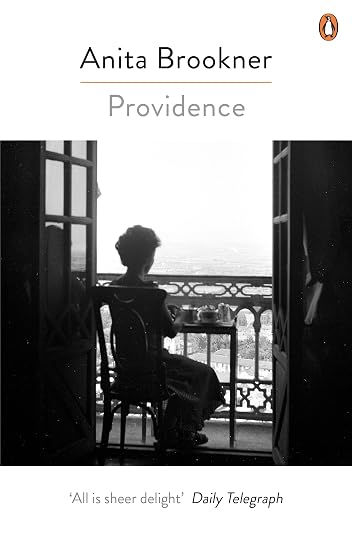
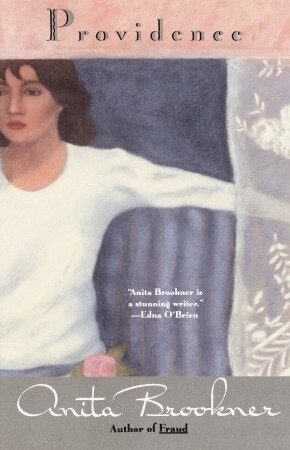
Kitty Maule longs to be "totally unreasonable, totally unfair, very demanding, and very beautiful." She is instead clever, reticent, self-possessed, and striking. For years. Kitty has been tactfully courting her colleague Maurice Bishop, a detached, elegant English professor. Now, running out of patience, Kitty's amorous pursuit takes her from rancorous academic committee rooms and lecture halls to French cathedrals and Parisian rooming houses, from sittings with her dress-making grandmother to seances with a grandmotherly psychic. Touching, funny, and stylistically breathtaking, Providence is a brightly polished gem of romantic comedy.

183 pages, Paperback

First published January 1, 1982

48 people are currently reading
739 people want to read

About the author

Anita Brookner

60 books655 followers
Anita Brookner published her first novel, A Start In Life in 1981. Her most notable novel, her fourth, Hotel du Lac won the Man Booker Prize in 1984. Her novel, The Next Big Thing was longlisted (alongside John Banville's, Shroud) in 2002 for the Man Booker Prize. She published more than 25 works of fiction, notably: Strangers (2009) shortlisted for the James Tait Black Memorial Prize, Fraud (1992) and, The Rules of Engagement (2003). She was also the first female to hold a Slade Professorship of Fine Arts at Cambridge University.

Ratings & Reviews

What do you think?
Rate this book

Friends & Following

Create a free account to discover what your friends think of this book!

Community Reviews

5 stars
188 (23%)
4 stars
329 (41%)
3 stars
212 (27%)
2 stars
45 (5%)
1 star
11 (1%)
Displaying 1 - 30 of 99 reviews
Profile Image for Jan-Maat.
1,687 reviews2,504 followers
Read
July 10, 2025
This is a super little novel, it's extremely two-dimensional, there is barely a plot, it is the same as possibly everything else that Brookner wrote, the characters are all invitingly shallow; it's a joy.

Reading this my first thought was of the composition Pictures at an exhibition, but I did not want this to become a musical review, so possibly instead I could say that that reading is like wandering through an art gallery and scrutinising each of the pictures in a room, each character a portrait, each scene a landscape or genre piece. There is a guide with you who confidently points out features to attend to in each pictures, discusses the stylistic development of the artists or the genre and the technical aspects of each painting.

If you read the Wikipeadia entry for Anita Brookner herself - even if you ignore any information about this novel Providence you will understand the work perfectly. Brookner's family were Polish-Jews who Anglicised their name from Bruckner so as not to sound to much like a very Catholic Austrian composer whose knees would become flat from praying too much - but enough! I didn't want this to become a musical review. Brookner never married, in the 1980s she began to publish at a rate of a book every year for a while, for most of her life she taught at the Courtnould Institute of Art in London.

Those elements are all present (sand in her writing generally) her heroine here is part French, the maternal grandfather has a Russian background. The young lady is profoundly alienated, she has a double identity - she is Therese with her grandparents - who brought her up and who she regularly visits - while among the English she is for no apparent reason; Kitty. She works at a university teaching Romanticism, she has a tutorial group on Adolphe by Benjamin Constant, I haven't read that so maybe it's just my imagination but that book is I suspect in conversation with this one, perhaps this story is the mirror image of that one as we see the story from the female side over interpreting words and finding meaning where there is none. Therese-Kitty is not married but believes that wedding bells are just about audible, faintly in the distance - whether they are are not constitutes the plot, such as it is.

Her intended bridegroom is one Maurice Bishop, he's a self satisfied penis incapable of erection, maybe that's slightly unfair, he might not be self satisfied, I think the attraction for Therese is that he is profoundly rooted, in Gloucester as it turns out, Kitty, as befits your typical rootless cosmopolitan, lives in London, but they both teach at the same institution which is not the Courtnould Institute - it is located out of London for a start!

Which brings me along to feminism or the women's movement more generally, this novel is set towards the tail end of les trente glorieuses, but it feels adrift in time, in places more like the 1960s than the 70s, even more like the 50s, perhaps these novels had a long gestation period within Brookner before leaping out fully formed from her head. Maybe you have heard of the phrase A woman needs a man like a fish needs a bicycle, well in this book it is more of a case that a woman needs a man like a sweet pea needs a frame, or a vine a trellis. Maybe she doesn't actually need it, but she thinks that she does, this is true of Therese, of her divorcee neighbour Caroline, of the busty student Miss Fairchild - women with large bosoms make a forceful impression upon Therese - which is an avenue one could explore, indirectly of fellow (unmarried) educator Pauline whose life perceived by Therese as the joyless drudgery of caring for her aged mother or the aged dog as opposed to the meaningful drudgery of caring for a husband which would be satisfying and fulfilling, amusingly the grandparents who brought Therese up have a happy relationship, grandma was a businesswoman and granddad assisted her. Therese though sees meaning and structure in life only in the idea of becoming a wife. It is as though she has internalised the fashion magazines that she gives to her grandmaman and desires the flat image of a bride in a wedding gown to be her life, as though the world of advertising and promotion is the gospel, certainly she seems to find no intrinsic value in her teaching, ironically she analyses Romantic texts while being enslaved to romantic frameworks herself.

Clothes are foregrounded here, Kitty is always well dressed, many of her pieces were made by her grandmother, they are well fitting, well made, entirely becoming, they do not give her pleasure, for Therese, they mark her out as different and not belonging. Her eyes are drawn to the clothes of English people, the descriptions give the sense that those garments are crumpled, casual, and thoughtlessly thrown on. Kitty appears to yearn for dissolution into that kind of anonymity.

This is an early Brookner, it pairs wonderfully with The latecomers , romanticism and it's discontents or the film of Hotel du lac, ripe pears, mature cheese, light white wine or a dark and fruity red. Guaranteed not to spoil your appetite between longer book books. Go forth and read it!


Profile Image for William2.
860 reviews4,049 followers
July 2, 2018
As always, Brookner writes from the perspective of the mid-20th century woman. Such women, and Brookner’s oeuvre is rife with them, almost always see themselves as part of a couple, yet this is a bond which they find difficult if not impossible to attain. If it does occur, the companions are like two strangers in the same house. I am reminded of V.S. Naipaul’s often brilliant writings about finding one’s subject matter as a writer. Jorge Luis Borges wrote in his essay “On Blindness,”—I paraphrase—that one’s experiences, one’s pain, one’s humiliations, these comprise the clay from which the artist makes his art. For Borges blindness was both limiting but also liberating; it meant an ever closer embrace of his beloved books as his sight diminished over the years. From that erudition, that clay, came his amazing short stories and poems. Naipaul’s clay was his upbringing in Trinidad and later struggle as ‘the other’ in postcolonial England; from this came his superb novels and nonfiction. Brookner’s clay was the social isolation experienced by certain English women—or women in England—in the middle of the twentieth century, and often their inability, as complex individuals, to connect with a partner, even if married to him. She once said in a Paris Review interview that she felt her own parents bore her in order to take care of them in their old age. This is very like Brookner’s many women characters who seem to be missing a piece of their early development. For Kitty Mortimer that missing piece is her father who died in the war within months of siring her. Kitty never had a mother-father model on which to base her own behavior, so with men she’s kind of running blind, making it up as she goes along. Her mother, who was French, now deceased, met her English naval officer in Paris. He brought her to home where they married and honeymooned during his embarkation leave. Perhaps because of this split nationality, Kitty is driven by an overwhelming self-induced pressure to assimilate culturally. She must be viewed by others as British. She hides behind this assumed mask of Englishness, but whatever is she afraid of? She’s all but jumping out of her socks and then she has the misfortune to fall for a handsome and very vain academic who treats her badly. He frequently signals his nonavailabity but without that parental model she is unable to recognize the signals. The reader sees them, but poor Kitty does not. She chases the vain and pious Maurice, the academic, as he tours of the cathedrals of France. This leads to heartbreak. There’s more: her grandmother, Louise, a successful couturier now retired, who dresses Kitty in Chanel knockoffs while smoking herself to death; Kitty’s lonely neighbor, Caroline, who drags her to a cockney psychic for dubious solace; Brookner’s brilliant use of the novel-within-the-novel idea, since Kitty, a lecturer and scholar on the Romantic Tradition, is teaching Benjamin Constant’s Adolphe which serves up many parallels relevant or in marked contrast to Kitty’s own plight. The novel is beautifully written and would certainly repay any number of close rereadings. It is the 2nd of Brookner’s 23 novels.
Profile Image for Proustitute (on hiatus).
264 reviews
March 31, 2019
No one does loneliness like Brookner.

Providence feels more controlled than the other books of hers I've read, in the sense that it reads almost like an extremely well-choreographed play, each scene very tight and taut, each emotional shift in protagonist Kitty Maule's mind orchestrated with a very deft hand—most times omniscient, and other times delving directly into her thoughts.

Unlike some of the other lonely and socially-estranged protagonists that populate Brookner's novels, Kitty is more independent, self-willed, and self-governed: while her upbringing leaves her feeling alienated and unsure as to which culture or nation she belongs (her mother's side of the family is French; her father, whom she never knew, British), she seems to carve out a niche for herself in the academic world, researching the Romantic tradition.

Brookner intersperses scenes from Kitty's seminar on Benjamin Constant's Romantic novel Adolphe with Kitty's own struggles to gain recognition as an academic, as an individual, and also to gain the admiration and love she desires from another scholar, Maurice Bishop. Kitty has several female role models, none of whom seem to fit her own particular sense of being in the world: her neighbor, Caroline, who is fashion-conscious, divorced, and drags Kitty to a psychic; her colleague, Pauline, who is also lassoed in by family, caring for her elderly, blind mother, yet able to balance an academic career of her own; and her aging grandmother, who clings to Parisian ways and modes of fashion despite living in London, and who wishes to see Kitty married before she dies.

The love interest aspect of Providence is more interesting than ones I've encountered in previous Brookner's: Maurice is more accessible than the typical Brookner protagonist's object of obsession, and it is through the lens of aesthetics and academics that Kitty and Maurice can relate to one another on almost equal footing—apart, that is, from Maurice's faith and Kitty's lack of faith, and, too, apart from a past love affair that Maurice clings to stubbornly like an albatross and against which Kitty feels powerless to assert herself.

Despite its strengths in the very controlled way it's plotted, unlike the meandering Falling Slowly , Providence fails slightly with its abrupt ending: admittedly, it works, but it doesn't satisfy or bring the various threads with which Brookner is working to a pleasing denouement. There is less pathos here than in her other books, and, perhaps, this is why the ending left at least this reader feeling as if something was missing, or as if the ending was rushed without much thought... something made all the more glaring given the extreme composure of the novel as a whole. Indeed, more seems to happen in the discussions of Adolphe's considerations of love, individuality, and the Romantic hero's predicament than it does at the end of Providence when it comes to Kitty: the intertextual foregrounding doesn't altogether work, then.
Profile Image for Blair.
2,041 reviews5,862 followers
September 4, 2018
Oh, poor Kitty Maule. I don't know how on earth I came to read an Anita Brookner novel with the expectation that there might really be a happy ending, but Providence manipulates the reader's emotions so effectively that I read much of it with my heart in my mouth, hoping against hope for an at least mildly positive outcome. The final third unfolds with an almost unbearable sense of high-wire tension that rivals the finest thrillers.

Like Ruth in A Start in Life, one might say of Kitty that her 'life has been ruined by literature'. Like Frances in Look At Me, she makes horrified judgements of others that reflect her own fears far more than the reality of these people's lives. Some of the blurbs for Providence refer to it as a romantic comedy, but romantic tragedy is more like it – Kitty and her beloved both believe in divine providence of a sort, but unbeknownst to Kitty she is on a very different path to the carelessly handsome and popular Maurice Bishop.

And the infuriating Miss Fairchild! How perfectly she seems to embody that odd word 'limpid' – both its true meaning of beautiful clarity and its inevitable negative associations and somewhat ugly sound.

As with all Brookner's writing, certain passages leapt out at me with an emotional vividity that made me think 'nobody writes like this anymore' – yet her novels aren't particularly old (this one's from 1982) and I can't really think of anyone, from any era, who writes quite like Brookner.

p59: 'I do not want to be trustworthy, and safe, and discreet. I do not want to be the one who understands and sympathizes and soothes. I do not want to be reliable... I want to be totally unreasonable, totally unfair, very demanding, and very beautiful. I want to be part of a real family. I want my father to be there and to shoot things. I do not want my grandmother to tell me what to wear. I want to wear jeans and old sweaters belonging to my brother whom of course I do not have.'

p66: 'Kitty felt a sort of irritated languor, very different from her usual state of calm if timid determination. Although she looked on Caroline's activities sternly, she wondered with genuine humility if she could ever be such a woman, delighting in her own appearance, devoting much time and effort to embellishing it, regarding her small outing as a genuine point of reference in the day, fascinated by her ultimate fate and waiting for others to bring it about. Kitty had frequently felt that she lacked some essential feminine quality, that this resided in the folklore passed on by women who possessed a knowledge that she was forced to supplement by reading books.'

p72: 'I must grow up, she thought. I must stop being so humble. I can make decisions and initiate actions like anyone else. I am not stupid. I am not poor. If I want to do something I do not have to wait for permission. I am old enough to make up my own mind. My mother was a widow at eighteen. My father was a corpse at twenty-one. I am wasting time. I shall waste no more.'

p88: 'Oh, I am misbegotten, she thought. I am not anywhere at home. I believe in nothing. I am truly in an existentialist world. There are no valid prophecies.'

TinyLetter | Twitter | Instagram | Tumblr
Profile Image for J.
484 reviews1 follower
September 25, 2012
There was a period a few years back where I read a stack of Anita Brookner novels, one after another. I didn't especially want to continue, but it seemed like too much trouble to stop. At some point I realized I was getting very depressed.

Anyway, Providence is very much in line with Brookner's other books. There's the frustratingly inert heroine, lacking some very basic ability to pursue her own happiness; patiently waiting out her dull, sparkless existence; single and contemptuous of other single women. Nothing much happens, except the small and large disappointments that you, the reader, can predict right from the start, but which the heroine realizes much too late. It's dull and it's dismal, but so precisely observed and beautifully written that it is, in a perverse way, a pleasure to read.
Profile Image for Lobstergirl.
1,922 reviews1,436 followers
December 9, 2024

Kitty Maule is an accomplished 30-year-old, a university teacher of Romance literature who has gotten tenure by the novel's end. But like Brookner's other heroines I've read to this point, she can't seem to help being a doormat, in this case for her art historian lover Maurice. Maurice is sometimes affectionate, but often distant. He tells her that he's in love with someone else - his former fiancée, who left him to serve the poor in India. "I regard myself as married," he tells Kitty. But Kitty is undiscouraged and continues to pursue him. At a restaurant she feeds him her food: "He was eating for them both, and that was how she would have it." Similarly Ruth Weiss, the heroine of Brookner's first novel The Debut, once cooked an elaborate meal in college for a handsome man who showed up hours late, at which point only a small portion of the meal was salvageable; she fed it to him, going hungry herself.

Kitty is teaching Benjamin Constant's novel Adolphe to a small group of advanced students, and their discussions form a good part of Providence. Unfortunately these passages were dry as dust. Nor were Kitty's interactions with her Old World grandparents captivating.

I do like Brookner, I plan to read all of her, I'm not deterred by a dud.
Profile Image for Sarah.
548 reviews34 followers
June 7, 2014
It's true, Anita Brookner wrote the same book over and over again. But I happen to like this book she kept writing.

As always, her writing is relatable, lovely, literary but accessible. Well crafted, overall.

Hotel du Lac is still her best in my opinion.
Profile Image for Dale .
94 reviews34 followers
January 6, 2025
Another beautifully written novel by Anita Brookner! I could feel every sigh, heartbeat and anguishing anticipation. Very moving.
Profile Image for Ali.
1,241 reviews393 followers
July 13, 2013
Providence is described on Goodreads and elsewhere as romantic comedy –not sure that I see it in quite those terms, but it is a novel I enjoyed very much. This is an early Brookner novel – in fact it was only Brookner’s second novel. In her first novel –A start in Life, the main character believes her life has been ruined by literature. In this novel, Kitty Maule is similarly affected by her literature. Kitty wishes to be "totally unreasonable, totally unfair, very demanding, and very beautiful." Instead Kitty is an attractive woman of thirty, she can barely remember her French mother, and spends time worrying about her grandparents, submitting herself to her grandmother’s dressmaking – and plagued by her annoying neighbour Caroline who plays her radio loudly to stave off loneliness. Kitty is a lecturer in literature working with a small difficult group on the classic French novel Adolphe. Kitty’s desire for success in her romantic life even drives her to consult a clairvoyant.
“Her main preoccupation was whether Maurice would ask her to go with him to France. She would be useful, she knew, could do all the boring things, while he got on with driving the car and getting from one place to another and being inspired by what he saw. French after all, was her mother tongue; she could save him a lot of time and trouble. But how to suggest this? The suggestion must surely come from him, and he was still bent over his maps, his hand blindly reaching for the cup of coffee she had poured from him. It seemed as if he could take the cathedrals of France without any human company to dilute them, his passion for the absolute, for God and beauty sustaining him where she herself would have calculated the moment at which she might have crept out to the patisserie.”
For Kitty has been having a somewhat lukewarm romance with fellow academic Maurice. Cool and immaculate Maurice has a sorrow in his past from which he is still suffering. Maurice also has his faith, his absolute belief in divine providence. After two years Maurice is often a disappointment to Kitty; she feeds off his occasional endearments and small kindnesses. Kitty’s romantic pursuit of Maurice takes her to France, a depressing room in a Parisian guest house where she waits for Maurice to break off his tour of French cathedrals to pay her a hurried visit. While Kitty nervously prepares for a lecture, and wonders how about Maurice’s commitment, Maurice is considering his own future.
Providence is a quiet, beautifully observed and enjoyable novel, it is the kind of novel where little happens – but I like novels like that, and there is some truly brilliant characterisation. The pervading atmosphere of the novel is one I recognised as typically Brookner – just it is less bleak than some of her later novels – although there are no smiles at the end, we can hardly expect that now. I often find it hard to like Brookner’s central character, but in Kitty Maule I find she has created a character I actually rather did like. It was Maurice I couldn’t take to. Kitty is a fairly typical Brookner heroine (if that’s the right word) she does rather wait for things to happen – she compares herself with the other unmarried women that she knows – and allows herself to remain disappointed in her life and in her relationship and does nothing to further her own happiness. The ending was for me, therefore in no way unexpected. Providence would actually provide an excellent starting point for anyone coming to Anita Brookner’s work for the first time.
Profile Image for JacquiWine.
676 reviews174 followers
October 19, 2016
4.5 Stars

Anita Brooker is another of those writers I’ve been meaning to read or revisit for a while. I liked her Booker Prize-winning novel, Hotel du Lac, when I read it some thirty years ago, but I didn’t love it. That said, my tastes in literature have changed quite substantially since the days of my early twenties when I was young and carefree and too foolish to know any better. Now that I’ve come to appreciate the work of writers such as Elizabeth Taylor, Penelope Fitzgerald and Barbara Pym, I thought it would be a good time to try Brookner again, all the more so given her passing in March of this year. (Julian Barnes wrote a beautiful piece about her for The Guardian, which you can read here.) Anyway, to cut a long intro short, I really loved Providence (Brookner’s second novel, first published in 1982), so much so that I’d like a few more of her early books over the next year or two.

I suspect there is a reasonable degree of Brookner herself in Kitty Maule, the central character in this short but subtle novel of life’s hopes, expectations and various misfortunes. Kitty, an intelligent, sensitive and presentable young woman in her thirties, lives on her own in a flat near Chelsea. By her own admission, Kitty is somewhat difficult to place, her father having died shortly before she was born, and her mother some three years ago. Fortunately for Kitty, she is not entirely alone in the world. Her French grandmother, the dressmaker Maman Louise, and her grandfather, Vadim, have lived in London ever since they moved to the city shortly after their marriage several decades earlier.

Kitty works as a college tutor in literature, her key area of focus being literature in the Romantic Tradition. For some time she has been harbouring hopes of a budding romance with one of her colleagues, the rather passive and thoughtless Maurice Bishop, one of the key players in her department. Maurice, however, seems rather reluctant to commit. While he is happy to drop round to Kitty’s flat for the occasional dinner of an evening, Maurice demonstrates very little in the way of warmth or affection for her. In many ways, I thought him a rather selfish man in spite of a broken relationship in his past. It turns out that Maurice is still rather emotionally attached to Lucy, the childhood sweetheart whom he had hoped to marry. Alas, Lucy’s faith and calling in life intervened and so the marriage wasn’t to be. At least that’s what Maurice tells Kitty one evening when they are together in her flat. Kitty, for her part, cannot help but wish for something more in her life. She is tired of being admired for her sensible nature and professional expertise. In short, she wants to feel loved and cherished.

But I want more, she thought, blowing her nose resolutely. I do not want to be trustworthy, and safe, and discreet. I do not want to be the one who understands and sympathizes and soothes. I do not want to be reliable, I do not want to do wonders with Professor Redmile’s group, I do not even care what happens to Larter. I do not want to be good at pleasing everybody. I do not even want to be such a good cook, she thought, turning the tap with full force on to a bowl rusted with the stains of her fresh tomato soup. I want to be totally unreasonable, totally unfair, very demanding, and very beautiful. I want to be part of a real family. I want my father to be there and to shoot things. I do not want my grandmother to tell me what to wear. I want to wear jeans and old sweaters belonging to my brother whom of course I do not have. I do not want to spend my life in this rotten little flat. I want wedding present. I want to be half of a recognized couple. I want a future away from this place. I want Maurice. (pp. 59-60)

To read the rest of my review, please click here:

https://jacquiwine.wordpress.com/
Profile Image for George.
3,263 reviews
August 23, 2025
A character based novel about Kitty Maule, a young, independent, clever, reticent woman who is half French and feels aware that she is viewed as an outsider in England, whilst she is very English. Her mother was French and her father, English. Her father died before Kitty was born. Her mother died shortly afterwards. Kitty is brought up by her grandparents. Kitty lives by herself and regularly visits her grandparents. She falls in love with Maurice, a history professor at the university where she teaches. His childhood sweet heart who he had thought he would marry, runs off with another man, leaving him badly hurt. Maurice, whilst friendly towards Kitty, never shows any real loving affection for her.

Another very good character based novel by Anita Brookner. This book was first published in 1982.
Profile Image for Khrustalyov.
87 reviews10 followers
May 25, 2023
I've often found myself wondering when life will get started. When I will really be swept up in something that takes over everything and feels somehow purposeful. A real life, not the moment-by-moment questioning of small decisions and repeated behaviours, but the sense of something, if not momentous, then that just feels right. A great transformation, a break from the past, an 'a-ha!' moment of realisation. 'So, this,' I will think, 'is what I was waiting to become all this time!' And how nice if this could just happen by itself, as it ought to really, because I have waited long enough for it. It will just come, surely it will, if only I trust in providence.

Of course, it doesn't work this way in real life. Unfortunately for Kitty Maule, the bright and introverted protagonist of Brookner's novel, it doesn't always work that way in fiction either.

Providence is a beautifully written novel about how difficult it is to help ourselves, how loneliness can pass on from one generation to the next, and the temporary relief we can take in assuming that a divine hand will nudge everything our way when the time comes. Brookner's sense of the interior world is remarkable and she captures something so unique about being a white woman who is middleclass and English during the late stages of the empire's decline - as well, perhaps, as something interesting about England's strange relationship with France and Europe more generally.

Brookner wields a remarkably deft hand in writing her characters, whole novels of personality written into limpid sentences. All of the characters in Kitty's milieu take on totemic significance, representing her feelings of anxiety of what she might become if she is not saved. Her dotish grandparents who she loves but is desperate to break from, her tragic mother, her silly neighbour Caroline who is mired in her own past of marital failure, and her colleague and friend Pauline who Kitty seems to believe has become strangely sexless after so many lonely years in the country living with her blind mother. Over all of these characters looms the handsome and successful Maurice who Kitty has fallen in love with and who is, to the reader, at best emotionally ignorant and at worst an incorrigible egoist. But it is Maurice alone that represents the potential future that Kitty so badly desires. She variously despairs over and is convinced of Maurice's powers as her own personal providence.

Brookner plays an artful game in situating this very 20th century novel in the Romantic tradition, a tradition that Kitty is in fact researching in her university work. While the novel could indeed have been a more straight-forward romance in the mould of many others of the 1980s, Brookner pushes us into a much emotionally and thematically richer terrain, one that perhaps answers one of Kitty's own research questions: is the Romantic Tradition still alive today? Brookner's subtly intricate and intelligent novel may itself have an answer for us.
Profile Image for James Henderson.
2,225 reviews159 followers
June 14, 2018

Anita Brookner was an English art historian and author who presented a bleak view of life in her fiction, much of which deals with the loneliness experienced by middle-aged women who meet romantically unsuitable men and feel a growing sense of alienation from society.

If you have not read Anita Brookner Providence is a wonderful novel with which to start. I daresay you will not look back as you traverse some of her many (too numerous to count) novels of romance and the social difficulties of young women - and sometimes not so young - in love. In this one the protagonist, Kitty Maule, longs to be "totally unreasonable, totally unfair, very demanding, and very beautiful." She is instead clever, reticent, self-possessed, and striking. For years Kitty has been tactfully courting her colleague Maurice Bishop, a detached, elegant English professor.

Brookner uses Kitty's specialty of Romantic literature, the novel Adolphe by Benjamin Constant in particular, as a centerpiece of her interaction with her students. But this novel also reflects on Kitty's imagined relationship with Maurice. Kitty has a lively imagination; at one point while reading a novel her mind wanders to the famous story of Paolo and Francesca from Dante's Divine Commedy and she ponders their apotheosis of a kiss follwed by death. As she slowly runs out of patience, Kitty's amorous pursuit takes her from rancorous academic committee rooms and lecture halls to French cathedrals and Parisian rooming houses, from sittings with her dress-making grandmother to seances with a grandmotherly psychic. About two thirds through the novel she sees Maurice praying to the Virgin and has an epiphany: "I am alone, and she leaned against a pillar, her throat aching." Her imagination could carry her only so far and her relationship of Maurice begins to seem ephemeral at best.

Brookner demonstrates her mastery of character and of the telling of detail in Providence. Touching, funny, and stylistically breathtaking, the novel is a brightly polished gem of romantic comedy tinged with regret. My favorite moments are the many literary references which warm the heart of this inveterate bibliophile. The best of Brookner that I have read is Hotel du Lac for which she was awarded the Booker Prize. However, if you do not want to start at the deep end you should try reading Providence first.
Profile Image for Anna.
300 reviews67 followers
January 7, 2021
[4.5*]

My exploration of Anita Brookner continues. I find deepest pleasure in Brookner's melancholy for some reason - even though nothing much happened in the book I was always looking forward to reading it. I guess this means that I've found a good fit for myself.

I find it fascinating though how little we know about the love interests of Brookner's heroines, which define so much about them, as if their features are irrelevant, only their existence is. And, to be fair, there isn't much we know about the heroines either, apart from their innate desire to be loved and their inability to have this desire fulfilled. Is it because they are too passive? Or too willing, making themselves undesirable? Or is it because having this desire fulfilled would contradict who they are? I have to say that I keep guessing and - hence - keep reading.
Profile Image for Mary Durrant .
348 reviews187 followers
May 6, 2017
Beautifully written .
I really felt for Kitty and hoped it would all work out, wasn't quite the ending I expected !
905 reviews10 followers
January 23, 2018
It baffles and frustrates me that the publisher of this novel has termed it "women's fiction," presumably because it's about a woman, and love, when it's really a delicately constructed novel about what Brookner always writes about: how shall we live? Its protagonist is a scholar of "the romantic tradition," and the seminars on Adolphe over which she presides with humble exactness are witty, searching, and precise, as is the book. It's ending is utterly ordinary and profoundly devastating. A perfect novel about loneliness, hope, and the brave and vain struggle against displacement of every kind.
Profile Image for Samye88.
25 reviews8 followers
January 23, 2018
Tragicomic and delusional, Kitty Maul witnesses her own fantasy unravels...calls to mind Barbara Pym than Brookner. Excellent read!
Profile Image for Nicole.
357 reviews187 followers
June 24, 2014
At least one other person on this site said something along the lines of this: all the Brookner books are essentially the same book, yet somehow you don't care because the writing is so good.

I'm on my third, and that sounds about right to me.

I also find it interesting that the central character is always a woman who, if I were to know her in person, I would want to shake and shake screaming SNAP OUT OF IT!!!, but that in the context of the novel, she never bothers me at all. In fact, I find time with these women in the context of the narrative to be extremely pleasant, and I have infinite patience for them, and infinite interest in their weird, largely self-made problems.
1,088 reviews1 follower
February 2, 2016
This story is a repetition of Hotel Du Lac. Well written but I've already read it.

Kitty Maule longs to be "totally unreasonable, totally unfair, very demanding, and very beautiful." She is instead clever, reticent, self-possessed, and striking. For years. Kitty has been tactfully courting her colleague Maurice Bishop, a detached, elegant English professor. Now, running out of patience, Kitty's amorous pursuit takes her from rancorous academic committee rooms and lecture halls to French cathedrals and Parisian rooming houses, from sittings with her dress-making grandmother to seances with a ...
Profile Image for Dianne.
13 reviews
July 22, 2010
I made it through this book - wanted to shake Kitty all the way through.
Profile Image for Fariha.
443 reviews8 followers
March 22, 2025
“I simply want to live with someone so that I can begin my life.”


This was my second book of Anita Brookner's and she's so far 2 for 2. I find her writing charming, poignant, witty, so easy to get lost in and so beautifully executed that you don't realise you've been carried away until you turn the last page.

This book takes place over the course of a single year in Kitty's life, but itcovers so much more as we learn of the history of her parents, her grandparents, their loves, their losses, and their decisions which led to the life Kitty leads now. She has fallen in love with a fellow professor at the university that she lectures in, and through the course of the year, as she attempts to make sense of the confusing relationship she is in, she somehow finds herself.

"I must grow up. I must stop being so humble. I can make decisions and initiate actions like anyone else. I am not stupid. I am not poor. If I want to do something, I do not have to wait for permission. Iam old enough to make up my own mind. .... I am wasting time. I shall waste no more."


Simultaneous to her personal journey, Kitty is teaching a course on the Romantic Tradition using a novel, Adolphe to encourage discussions with her student about the author's idea of love, and meaning of the novel. These discussions run parallel to the events of the books. Brookner cleverly has students picking apart facets of the novel that relate directly to Kitty's experience / internal thoughts and feelings. We are there in the classroom too, pontificting alngside the students on the Romantic Tradition, the Absurd, the concept of the Romantic Hero.

" 'It is felt that attachments which have been made without reflection can be broken without any harm being done.'

'Remember that sentence,' said Kitty. 'That is what the novel is all about.' "


Such a small book that contained so much. A particularly beautiful aspect was Kitty's grandparents love for each other. Their lives, their interactions, the sheer love pouring out of them in just their mundane, everyday existence.

" 'Tu te souviens, Ma Louise?" murmured Vadim.
'Everything,' said Louise, in a voice that Kitty had never heard before. 'I remember everything.' "


It is a common marker of Brookner's work, that the cast of characters are all so full of such life. You feel nostalgic and pained as elderly grandparents reminisce, partly due to the visceral writing and partly due to the masterful story telling; you mourn a life you didn't live with the neighbour Caroline, you sweat alongside Madame Eva in her stuffy back room... these characters are all so real.

The other work I read by Brookner - Hotel du Lac remained with me. I think about it always. I believe Kitty, and this book, will join it in the garden of memory I hold in my brain.


Profile Image for Troy Alexander.
276 reviews63 followers
October 3, 2023
I thoroughly enjoyed this book. It has all the ingredients you would expect in a Brookner tale: a lonely, slightly neurotic woman, academia, a mix of London and country, unrequited love, history, descriptions of simple food that you immediately want to eat (lunch was bread and cheese, peaches, and strong coffee).

Four rather than five stars, only because I could see the ending coming.
Profile Image for Jae.
384 reviews37 followers
dnf
June 26, 2023
Read to 16% then couldn't take any more. Too dated and depressing for me.
Profile Image for Roberta.
1,411 reviews129 followers
August 19, 2017
Kitty Maule è una giovane donna inglese, di origini francesi, che, innamorata del collega Maurice, decide di abbandonare la malleabilità che è il segno distintivo del suo carattere per precipitare, finalmente, le cose.
Kitty (o Thérèse, come in realtà si chiama e viene chiamata dai nonni francesi) è una ragazza docile, estremamente elegante (grazie alle creazioni della nonna sarta) e sognatrice, che a lungo tempo ha corteggiato il collega, un conferenziere adorato dalle donne e osteggiato da qualche collega uomo per la scarsa esattezza filologica delle sue dissertazioni sulle cattedrali inglesi, preparandogli la cena, battendo a macchina le sue note e accettando le sue decisioni. Per lo meno fino al giorno in cui decide di recarsi anche lei in Francia, dove lui sta facendo un tour delle cattedrali per il suo prossimo ciclo di conferenze, e di dargli appuntamento a Parigi, la città dell'amore.

http://robertabookshelf.blogspot.it/2...
Profile Image for Laura.
7,133 reviews606 followers
December 14, 2018
Kitty Maule wants to be 'totally unreasonable, totally unfair, very demanding, and very beautiful.' Instead, she is clever, hesitant and too patient for her own good. For years, she has been in love with her colleague Maurice Bishop, a charming English lecturer who seems not to notice her feelings. But when there comes a chance to accompany Maurice to France on a study of French cathedrals, Kitty sees an opportunity to be the woman she has always wanted to be as well as at last make the man she wants fall in love with her.
Profile Image for Kirsty.
2,792 reviews190 followers
June 20, 2017
The majority of Brookner's works of fiction are similar in terms of their look at troubled, or sometimes unknowingly naive, women. They are, however, none the worse for it. Brookner demonstrates a real knowledge of her protagonists, and it is no different within Providence. Kitty is expertly drawn, and I was interested in her plight and backstory throughout. An intelligent and well written account of a career in academia is also given. Well worth a read.
44 reviews
November 12, 2009
grew to hate the main character. unlike in books such as 1984 or some Austens, this was clearly not a deliberate move to make a point, you were supposed to like her, the author simply failed to evoke any sympathetic feelings in me. i became annoyed at being forced to be close to her at all times. the story was both bleak and somewhat non-existent.
NB: terrible editing in the edition i read!
Profile Image for Meg.
1,947 reviews41 followers
December 2, 2014
What can I say about this book? nothing. that is the impression it left with me. Nothing at all happened. It's not that I need a good plot, plenty of books without any storyline are brilliant. they just need some interesting characters or beautiful prose to make them worthwhile. This book had none of the above.
2 reviews
July 7, 2011
I was blown away by this novel. I got it simply as a summer read, but once I reached the end I realized I had actually stumbled upon a new potential favorite author! I cannot wait to read another book by Brookner.
Displaying 1 - 30 of 99 reviews

Can't find what you're looking for?

Get help and learn more about the design.