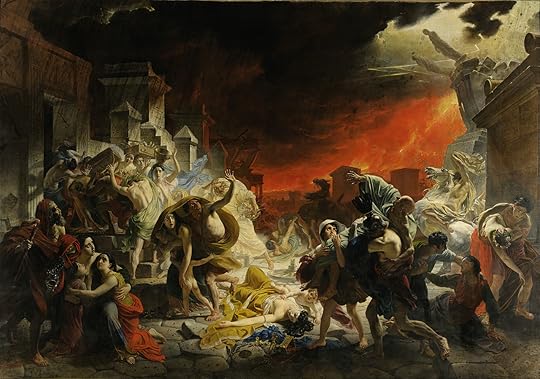
Resurrecting Pompeii provides an in-depth study of a unique site from antiquity with information about a population who all died from the same known cause within a short period of time.
Pompeii has been continuously excavated and studied since 1748. Early scholars working in Pompeii and other sites associated with the AD 79 eruption of Mount Vesuvius were seduced by the wealth of artefacts and wall paintings yielded by the site. This meant that the less visually attractive evidence, such as human skeletal remains, were largely ignored.
Recognizing the important contribution of the human skeletal evidence to the archaeology of Pompeii, Resurrecting Pompeii remedies that misdemeanour, and provides students of archaeology and history with an essential resource in the study of this fascinating historical event.
Resurrecting Pompeii explores the fascination with human remains from the first discovery in the eighteenth century to the realisation that the forms of bodies were also preserved. Through its history, the excavations reflected the development of the history and philosophy of classical archaeology. In the beginning, skeletons were props for the construction of theatrical displays for the amusement of visiting dignitaries. Pompeii was essentially two separate sites: the archaeological site and that which displayed to the nobility and the general public.
This divergence into two strands led to further embellishment, with Edward Bulwer-Lytton's 'The last Days of Pompeii' in 1834. From now on, the history of Pompeii would be linked to a romantic ideal.
The second part of the book aims to expunge the embellishment and bring back the study of Pompeii to the realms of science, devoid of the romantic attitude. Statements such as 'the young survived, whilst the old were left behind' is tested, and discredited through the use of skeletal remains. Furthermore, the problems of identifying sex and age are explained.
In conclusion, Pompeii becomes more real, and yet less real. The idea of Pompeii is a falsehood, yet its allure continues.
Estelle was my first tutor in classical archaeology back in 1993...I remember the class. Estelle entered a small room off the Nicholson Museum at the University of Sydney where a bunch of over awed 18 year old's cowered. She carried a large cardboard box. She placed the box on a table and dumped out the contents. She told us to put it all together...a human skeleton... with a difference. There was an extra bone. No-one knew what it was...Estelle did, she was trying to trick us. It was the bone from a dog's penis. Using this experience as a background, this is how I read this book. Designed for the lay person, but including technical information, this book reveals much insight into the lives of those who lived and died at Pompeii and the research into their remains. I loved it, especially knowing the research that went into it...but I was expecting a trick.
The bulk of the book is describing skeletal evidence from Pompeii, which is not a popular-interest description at all; but everything else (about 30% of the whole, I would say) gives a very detailed and fascinating account of the disaster. There are some interesting things based on the author's research; for example, the substantial difference in anthropological data of the skeletons from Pompeii and Herculaneum (it's very hard to explain, in my opinion); the relative averageness of the remains: it does not seem that the people who died in the eruption were those left behind; if anything, they seem like a very regular portion of the city population (there are few children, but it might be connected to the fact that children's bones could have been misidentified through the centuries and simply lost). The average number of people found in Pompeii is something like 1500 (or a little bit higher — the number 2000 was quoted for centuries, and is criticized by Lazer for being unfounded).
My e-copy was very bad and lacked some of the illustrations.
UPDATE: I reread the book (which is strange, because I this is the book of the type I leave a detailed trace of in my research records; but I haven't) in a good PDF copy, pictures and all. It's an excellent book. Even there, though, there are traces of 'modern' sensibilities about the remains, which I find disturbing.
The title was misleading and my guess is that the publisher added the word 'Resurrecting' in order to boost sales. I was expecting conclusions about the life of the Pompeians whose remains were studied. What I found instead was nonetheless a complete and detailed account of Pompeian bones. An account of high academic quality due to its precision. The details go on and on, this sometimes leads to loss of structure in the text. I missed clear conclusions. The book also includes a detailed report on the history of how skeletons were handled starting from the day Pompeii was discovered. It is a great achievement to make this detailed report and it is a good stepping stone for future research. Also I see its use to validate older research.
While writing her introductory piece the author observes: “As humans, we suffer from the double whammy of being both sentient and mortal. We may attempt to defy our chronological age with Botox and plastic surgery, but whatever we do, we will eventually die. Death is a taboo subject in modern Western society and has largely been removed from view. Denial does not change the fact that our ultimate demise is an unavoidable rite of passage. The most common question I overheard from passing tourists during my years of fieldwork in Pompeii was, ‘So where are the dead bodies?’ Perhaps this can be interpreted as a recognition of a need to view one’s fate rather than just a gratuitous act of voyeurism.”
This book proffers meticulous data and analysis about what the emaciated evidence regarding Poempeii can essentially provide. Lazer demonstrates that the biological substantiation does not sustain the element of the stories that have been told to us up until now. Nevertheless, it does acquiesce enticing glimpses into the lives and deaths of the victims, providing students of archaeology and history with an essential resource in the study of this fascinating historical event.
The primary portion of the book deems why there was so much attention in this material and yet only negligible research was undertaken until the latter part of the 20th century. The second part of the book deals with the information that the skeletal material and casts can provide. It is chiefly concerned with the dilemmas associated with a compromised sample.
The value of the Pompeian material was also considered to be diminished by the discovery of a huge number of skeletons in the nearby site of Herculaneum in the 1980s. Despite their immediacy and annihilation as a result of the AD 79 eruption of Mt Vesuvius, Pompeii is fundamentally an unusual site and the finds from one cannot be seen as transposable with the other. The Pompeian material provides exclusive information and with some effort yields deficient but alluring glances into the lives and deaths of the inhabitants of this town.
This book is more about storytelling and analytical process than an attempt to produce the definitive work on the human remains from Pompeii.
There is some well-presented research in this book. Estelle Lazer is meticulous in the presentation of her findings. She gives us a detailed picture of what happened in AD79. However, the book has many irritating formatting issues. It constantly dodges between blocked text and ragged right, odd gaps appear in the middle of words and some titles are not emphasized. The footnotes do not work correctly.