Designed for laypeople, these commentaries deal seriously with the biblical text without being overly technical. Introductory information, doctrinal themes, problem passages, and practical applications are examined.
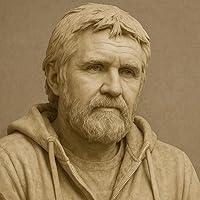
Walter C. Kaiser Jr. (PhD, Brandeis University) is president emeritus of Gordon-Conwell Theological Seminary in South Hamilton, Massachusetts. He previously taught at Trinity Evangelical Divinity School and at Wheaton College. Kaiser is active as a preacher, speaker, researcher, and writer and is the author of more than forty books, including Preaching and Teaching from the Old Testament and The Majesty of God in the Old Testament.
This is a solid read. It is a basic commentary with a few technical details, but not thorough by any stretch. I removed a star for being too brief and not engaging in a few spots. Good interpretation and solid overview.
If you would have told me that Ecclesiastes would become one of my favorite books in the Bible I don't think I would have believed you. Walter Kaiser, Jr. helped me understand this book in a whole new way. What I loved about Kaiser's study was that he clarified a lot of difficult to understand passages, after which the whole tone of Ecclesiastes changed for me. Kaiser's commentary reads more like a devotional, although there is plenty of scholarship on every page. His study brings one back to the basic truth that we will not understand all that happens in this life because we can't. Our God-assigned task to to fear him and keep His commandments. That is all we need to do.
Other quotes I loved: "Life must be lived with eternity's values in view" " The duty is ours, the results are God's. No one can penetrate the wholeness or the specific details of His work. How God works out His purposes in detail may escape us, but our ignorance does not stop the result, nor should it prevent our wholehearted involvement in life to the glory of God. "
"The one who fears God dreads nothing more than God's disfavor. Such a worshipper wants nothing more than to know the living God intimately and submit to His will. And God Himself wants to be known and obeyed by man."
I read a 1979 version of the book and was delighted to find out there is an updated version that is expanded! I can't wait to get my hands on that one.
I started this expository commentary because the author was Old Testament scholar Walter Kaiser. The commentary Interesting insights:a.) Ecclesiastes 3:21 should not be an interogative. This fact is very important in interpreting the text, and his argument is given on pages 70-71 of why the article in the Hebrew is not interrogative but indicative. b.) Ecclesiastes 7:16 is probably better translated as "Do not be wise in your own eyes", rather than "Do not be overly wise", since the Hebrew verb is reflexive; simarly, the "do not be excessively righteous" that parallels this verb should also be taken as "do not be self-righteous"; thus, the popular assumption that this verse teaches not to be totally righteous is an incorrect interpretation and does not make sense in the following context's admonition to live with wisdom. c.) The word translated in English as "chance" in 9:11, can also be translated as "occurence" (Page103)
Kaiser's work is very concise but often helpful. His commentary was one of the first conservative works to remind us that Ecclesiastes is not pessimistic in focus but very positive and rich. Though brief, it has been very influential.