

What do you think?

Systematic Theology, Vol 2: Existence and the Christ
In this volume, the second of his three-volume reinterpretation of Christian theology, Paul Tillich comes to grips with the central idea of his system—the doctrine of the Christ. Man's predicament is described as the state of "estrangement" from himself, from his world, and from the divine ground of his self and his world. This situation drives man to the quest for a new state of things, in which reconciliation and reunion conquer estrangement. This is the quest for the Christ.
195 pages, Paperback
First published July 31, 2012
About the author
Paul Tillich
299 books448 followersPaul Tillich was a German-American theologian and Christian existentialist philosopher. Tillich was – along with his contemporaries Rudolf Bultmann (Germany), Karl Barth (Switzerland), and Reinhold Niebuhr (United States) – one of the four most influential Protestant theologians of the 20th century. Among the general populace, he is best known for his works The Courage to Be (1952) and Dynamics of Faith (1957), which introduced issues of theology and modern culture to a general readership. Theologically, he is best known for his major three-volume work Systematic Theology (1951–63), in which he developed his "method of correlation": an approach of exploring the symbols of Christian revelation as answers to the problems of human existence raised by contemporary existential philosophical analysis.
Ratings & Reviews
Friends & Following
Create a free account to discover what your friends think of this book!
Community Reviews
Displaying 1 - 14 of 14 reviews

February 2, 2016
After reading Tillich's Systematic Theology several times, my view of reality has been transformed into something that makes sense at every level.

January 1, 2026
Those who have not read Vol 1 may access my review of same at Systematic Theology, Vol 1. Alternatively, I've posted a more concise summary of Vol 1 in the comments to this review of Vol 2.
God As Being
In the introduction to volume II, Tillich begins by identifying three different ways that people tend to think about God. The first is to identify God as the “highest being”, which is a perspective that sees God as finite, or as bearing individual substance. The second is to identify God with the universe, which is a pantheistic or naturalistic sort of perspective. The third perspective, and the one that Tillich apparently embraces, is that God is “being” itself.
Tillich’s idea is that God is found in the experience of a holiness that transcends ordinary experience. Christ serves as the demonstration of the sort of extraordinary experiences that manifest God out of finitude and into enduring spiritual being. It is through Christ that our eyes are opened to see God as being-itself. Through Christ, we can grasp for the power of being.
To better understand this, we must realize that man cannot reach God under his own power. Men have many questions. Who are we? Why are we here? What are we? Where do we come from? Where are we going? Man’s very “being” is infused with persistent questions about his existence. Anxiety arises out of these existential questions in the form of guilt, which is a complex emotion that emerges when we are subconsciously convicted that we are living in a way that is inappropriate for our highest being.
We must ask ourselves from whence does such an emotion like guilt come? Would a robot that waivers from its programming feel guilt or a need for forgiveness? Would the creator of a robot even allow a robot to waiver from its programming? If we think of robotic programming as synonymous with our instinctual movements, then freewill is distinguished as something else, something that calls us beyond the mere life of programmed, animalistic, instinct into a higher state of being.
Freewill emerges when we contest instinctual movements such as overeating, sexual promiscuity, substance abuses and many others. The consciousness of freewill is a unique and complicated manifestation within the human psyche that seeks to extend us beyond the finitude of a merely existential life. It speaks to us of potentiality, of positive evolutionary growth, of creativity within the life force, and it leads us towards true being.
God, as perfection, leads us away from the deteriorations of finitude and towards His infinite spirituality, making us more than merely animalistic. With God leading the way, man can begin to control instinct and start actualizing his potentiality, that is, to begin physical realization of the divine mind. The power to do this only arises with the deliberating and deciding that comes through prayerful connection with God. In this way, the image of God in man can arise and be witnessed in physicality.
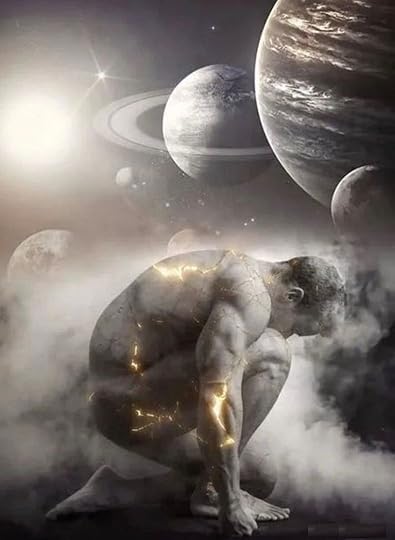
Belief
As man becomes aware of this new reality, he also better understands the old reality as a state of estrangement from God, which is amplified with evil and anxiety. Man wants to be god-like and his failures in this regard are labeled as sin. Man must first accept what he is before he can begin to deal with sin, which is to recognize that he is not God.
We see there is no absolute discontinuity between animal bondage and human freedom, but rather a slow and continuous transformation. We are constantly challenged and must apply ourselves to the game. How different is the placement of the forbidden tree in the Garden of Eden from the placement of boundaries on a football field or basketball court? Both challenge us to the game, to do our best, to persevere to excellence, to recognize the penalties for going astray, and to keep ourselves focused upon our goals.
Help comes when man more clearly sees how the message of Christ helps illuminate transition into the new reality, but personal responsibility is an essential element in the process. Casting literalistic absurdities aside, one makes decisions about who and what they are; and who and what they want to be, whether consciously or subconsciously.
All of us are constantly transforming into something, either for better or worse, becoming more or less physical or spiritual. All people can feel the workings of the conscience as an impetus to do good and to refrain from evil. Some hug closely to the tug of righteousness while others harden themselves against it.
Christ calls for a decision, namely the decision for New Being, and our answer is given by stepping into a new reality. This is a factual transformation of the circumstances in one’s personal life. In this context, “belief” is not acceptance of statements without evidence, but rather discovery of the factual power of Christ’s message as the way, the truth, and the life.
Belief is devotion to the goodness of God and is motivated by ones love of goodness. Love is the power which overcomes estrangement from God and casts us into being. Elimination of sin in man requires volitional union with God and resistance to the demonic structures that drive men towards pathological accumulation and self-aggrandizement.
The Trap of Collective Blindness
Until he becomes motivated by love, man is dominated by the crazed desire to cognitively draw the universe into his self (what Nietzsche labeled the “Will to Power”), which leaves him estranged and void of true spirituality. But love is not always so easily found and there is much “aloneness” in the world. Union with other beings is necessary for one to exercise their will to power in conjunction with love.
Loneliness is so intolerable that it drives man to surrender his lonely self to the collective. The danger in this sort of acquiescence is whether the individual is being accepted by other individuals or simply embracing a predefined collective spirit just to alleviate his solitude. In the latter circumstance, members jettison their radical questioning and endeavor to mirror the thought processes of the collective. To the extent that dogma proliferates, the individual’s interior manifestation of the Ultimate Concern may be shut off in favor of the predetermined concerns of the collective.
To the extent that a member finds it difficult to accept the collective vision, he succumbs to unconscious dishonesty. By embracing the collective vision instead of his own, he commits a sort of psychological suicide and is often encouraged to do so by the collective’s dictum to “die to self” by accepting all that it promulgates without question. In fact, the collective’s alleged love for him may actually be conditioned upon such acceptance, such that the individual is always threatened by a return to isolation.
Hence, true unconditional love is not often highly manifest in collectives, as evidenced by the fact that one rarely finds highly diversified congregations that include prostitutes, homeless, or even minorities. Instead, one often finds social climbers, the generationally indoctrinated, promoters of specific businesses, and the arrogantly self-righteous. Truly, unconditional love is only manifest amidst open forgiveness and collectives tend to lack any sort of forgiveness for contrarian viewpoints against their central doctrines.
Love and Being
Because unconditional love can only manifest amidst forgiveness, the idea of “eternal condemnation” is theologically untenable. We must resist the tendency of condemning others and corrupting the loving image of Christ into a pitiless judge. Love is not something that can be commanded, conjured out of rituals, or produced by literalistic distortions.
Legalism does not manufacture love, nor does asceticism. Mystical rituals, intellectual work, charismatic bellowing, pietism, sacraments, literalism, revivalism, and deep meditations do not manufacture love. These are all artificial attempts to achieve something that is beyond our control. We cannot control our ability to love.
We can fake love, as do many fundamentalists who prance around bearing masks of joy. But fake love is not truly loving others. We must recognize our ability to love as a gift, not as something we can easily put on or off like a set of clothes. Love just happens.
Certainly, it is easier to love our children, those we find attractive, and those who aid us, but even this easier love is automatic and not self-induced. Broader love, for those detested by society, imprisoned, ugly, diseased or hateful is even more elusive and occurs only as a spiritual blessing for those who have experienced agape and become devoted themselves to the Ultimate Concern. The inability to self-manufacture love reveals the deep inadequacy of theologies that focus on human attempts at self-salvation.
Ultimately, the invitation into love and being comes as a gift exerted from the mystery of Being. Man finds his invitation into Being apart from reliance upon himself and his self-saving attempts. The appearance of Being comes with our surrender into love.
In Being, an individual allows themselves to manifest the spiritual energy of God and to be governed by same, as opposed to blindly following the collective or the pathological state of self-aggrandizement.
Christianity
In Christianity, New Being is manifest in Christ who, as such, transforms historical existence. In other words, the transhistorical character of Jesus endures as a spiritual conduit for embryonic development of new being in the souls of men even unto this day. The life of Christ displays the finite physical manifestation transitioning into enduring spirit in time and space. Death was not able to push Jesus into the past. His spirit endures into the present.,
Christ intrudes into history to transform man’s existence and to renew the universe, like the first blossom to emerge, the first hatching of spirit out of humanity, leading the way towards eternal spiritual existence. The Trinidadian symbology reveals that God is infinite and eternally capable of producing various finite potentialities of Himself, even within the souls of men. Atonement is the sacrifice for showing us the way, for setting the historical context, such that we may find the New Being. For Christians, Christ is the penultimate of what is to come: the way, the truth, and the life.
So long as there is human history, the New Being in Jesus is present and effective, enduring with those who believe every day. The New Being becomes accessible to men from the spirit of Christ. The Fourth Gospel provides the theological foundation for this in the passages ascribed to Jesus: “He who believes in me does not believe in me, but in Him who has sent me.” Or in the other synoptic gospels where Jesus remarks: “Why ye call me good? Only God is good.” Christ’s goodness is goodness because He participates in the goodness of God by entering into the Being of God and allowing God into His being. Such entry into being is available to all men. No one can deny the millions of examples of people who have found themselves transformed into the state of faith.
The man Christ resisted temptations because He was/is united with God, which is the state of Being through which all men may find the power of resistance. The availability of that opportunity is true grace. The intention of the gospels and the life of Jesus is to bring God into man. For every man that succeeds in harboring God, even intermittently, there arises opportunities to expand Godliness about in the world.
Scripture presents Jesus to us as a man. Like all men, he is subject to death. Like all men, he experiences anxiety over the threat of death and the limits of the span of life given to him. He struggles with making others understand and is deeply affected by the misery of the masses. He is subject to uncertainty about the limits of his power. He acknowledges the feelings of being left alone by God. As he himself states, he is the “son of man”. In Jesus, the eternal unity of God and man became historical reality, that is, New Being.
Conclusion
To truly understand the message of Christ we must understand that he was a human man for otherwise the expectation and hope for our own transcendence is jeopardized. The scripture is clear about the finitude of Jesus and does not attribute omnipotence, omniscience, or omnipresence to him, at least not until he gains his spiritual existence.
This is the New Being in Jesus that we see; it is the picture of a human life that is subjected to all the consequences of existential estrangement but bridges that estrangement for permanent unity with God, even unto death. We gain three important things from the revelation of the life of Christ: (1) Manifestation of God in humanity (2) Capability for accessing God unto ourselves through the life of Jesus and (3) Help in getting there through the Spirit of self-surrendering love.
For Jesus, like for all men, the earth is a testing ground wherein we compete against temptations. What do we stand for? What courage can we manifest for goodness? Can we participate in the atoning act of God by accepting and forgiving others? Can we choose to emerge from mythology, literalism, and superstition into a new reality of Being? We can achieve only by allowing ourselves to be grasped by the divine presence, by choosing the Being through which we are strengthened, and by accepting that we are accepted.
All those who experience his living presence, who rise out of the deadness of finite life into the wholeness of spiritual life, see that resurrecting into new being is indeed a transformative inner event, a true virgin birth.
-End-
God As Being
In the introduction to volume II, Tillich begins by identifying three different ways that people tend to think about God. The first is to identify God as the “highest being”, which is a perspective that sees God as finite, or as bearing individual substance. The second is to identify God with the universe, which is a pantheistic or naturalistic sort of perspective. The third perspective, and the one that Tillich apparently embraces, is that God is “being” itself.
Tillich’s idea is that God is found in the experience of a holiness that transcends ordinary experience. Christ serves as the demonstration of the sort of extraordinary experiences that manifest God out of finitude and into enduring spiritual being. It is through Christ that our eyes are opened to see God as being-itself. Through Christ, we can grasp for the power of being.
To better understand this, we must realize that man cannot reach God under his own power. Men have many questions. Who are we? Why are we here? What are we? Where do we come from? Where are we going? Man’s very “being” is infused with persistent questions about his existence. Anxiety arises out of these existential questions in the form of guilt, which is a complex emotion that emerges when we are subconsciously convicted that we are living in a way that is inappropriate for our highest being.
We must ask ourselves from whence does such an emotion like guilt come? Would a robot that waivers from its programming feel guilt or a need for forgiveness? Would the creator of a robot even allow a robot to waiver from its programming? If we think of robotic programming as synonymous with our instinctual movements, then freewill is distinguished as something else, something that calls us beyond the mere life of programmed, animalistic, instinct into a higher state of being.
Freewill emerges when we contest instinctual movements such as overeating, sexual promiscuity, substance abuses and many others. The consciousness of freewill is a unique and complicated manifestation within the human psyche that seeks to extend us beyond the finitude of a merely existential life. It speaks to us of potentiality, of positive evolutionary growth, of creativity within the life force, and it leads us towards true being.
God, as perfection, leads us away from the deteriorations of finitude and towards His infinite spirituality, making us more than merely animalistic. With God leading the way, man can begin to control instinct and start actualizing his potentiality, that is, to begin physical realization of the divine mind. The power to do this only arises with the deliberating and deciding that comes through prayerful connection with God. In this way, the image of God in man can arise and be witnessed in physicality.
Belief
As man becomes aware of this new reality, he also better understands the old reality as a state of estrangement from God, which is amplified with evil and anxiety. Man wants to be god-like and his failures in this regard are labeled as sin. Man must first accept what he is before he can begin to deal with sin, which is to recognize that he is not God.
We see there is no absolute discontinuity between animal bondage and human freedom, but rather a slow and continuous transformation. We are constantly challenged and must apply ourselves to the game. How different is the placement of the forbidden tree in the Garden of Eden from the placement of boundaries on a football field or basketball court? Both challenge us to the game, to do our best, to persevere to excellence, to recognize the penalties for going astray, and to keep ourselves focused upon our goals.
Help comes when man more clearly sees how the message of Christ helps illuminate transition into the new reality, but personal responsibility is an essential element in the process. Casting literalistic absurdities aside, one makes decisions about who and what they are; and who and what they want to be, whether consciously or subconsciously.
All of us are constantly transforming into something, either for better or worse, becoming more or less physical or spiritual. All people can feel the workings of the conscience as an impetus to do good and to refrain from evil. Some hug closely to the tug of righteousness while others harden themselves against it.
Christ calls for a decision, namely the decision for New Being, and our answer is given by stepping into a new reality. This is a factual transformation of the circumstances in one’s personal life. In this context, “belief” is not acceptance of statements without evidence, but rather discovery of the factual power of Christ’s message as the way, the truth, and the life.
Belief is devotion to the goodness of God and is motivated by ones love of goodness. Love is the power which overcomes estrangement from God and casts us into being. Elimination of sin in man requires volitional union with God and resistance to the demonic structures that drive men towards pathological accumulation and self-aggrandizement.
The Trap of Collective Blindness
Until he becomes motivated by love, man is dominated by the crazed desire to cognitively draw the universe into his self (what Nietzsche labeled the “Will to Power”), which leaves him estranged and void of true spirituality. But love is not always so easily found and there is much “aloneness” in the world. Union with other beings is necessary for one to exercise their will to power in conjunction with love.
Loneliness is so intolerable that it drives man to surrender his lonely self to the collective. The danger in this sort of acquiescence is whether the individual is being accepted by other individuals or simply embracing a predefined collective spirit just to alleviate his solitude. In the latter circumstance, members jettison their radical questioning and endeavor to mirror the thought processes of the collective. To the extent that dogma proliferates, the individual’s interior manifestation of the Ultimate Concern may be shut off in favor of the predetermined concerns of the collective.
To the extent that a member finds it difficult to accept the collective vision, he succumbs to unconscious dishonesty. By embracing the collective vision instead of his own, he commits a sort of psychological suicide and is often encouraged to do so by the collective’s dictum to “die to self” by accepting all that it promulgates without question. In fact, the collective’s alleged love for him may actually be conditioned upon such acceptance, such that the individual is always threatened by a return to isolation.
Hence, true unconditional love is not often highly manifest in collectives, as evidenced by the fact that one rarely finds highly diversified congregations that include prostitutes, homeless, or even minorities. Instead, one often finds social climbers, the generationally indoctrinated, promoters of specific businesses, and the arrogantly self-righteous. Truly, unconditional love is only manifest amidst open forgiveness and collectives tend to lack any sort of forgiveness for contrarian viewpoints against their central doctrines.
Love and Being
Because unconditional love can only manifest amidst forgiveness, the idea of “eternal condemnation” is theologically untenable. We must resist the tendency of condemning others and corrupting the loving image of Christ into a pitiless judge. Love is not something that can be commanded, conjured out of rituals, or produced by literalistic distortions.
Legalism does not manufacture love, nor does asceticism. Mystical rituals, intellectual work, charismatic bellowing, pietism, sacraments, literalism, revivalism, and deep meditations do not manufacture love. These are all artificial attempts to achieve something that is beyond our control. We cannot control our ability to love.
We can fake love, as do many fundamentalists who prance around bearing masks of joy. But fake love is not truly loving others. We must recognize our ability to love as a gift, not as something we can easily put on or off like a set of clothes. Love just happens.
Certainly, it is easier to love our children, those we find attractive, and those who aid us, but even this easier love is automatic and not self-induced. Broader love, for those detested by society, imprisoned, ugly, diseased or hateful is even more elusive and occurs only as a spiritual blessing for those who have experienced agape and become devoted themselves to the Ultimate Concern. The inability to self-manufacture love reveals the deep inadequacy of theologies that focus on human attempts at self-salvation.
Ultimately, the invitation into love and being comes as a gift exerted from the mystery of Being. Man finds his invitation into Being apart from reliance upon himself and his self-saving attempts. The appearance of Being comes with our surrender into love.
In Being, an individual allows themselves to manifest the spiritual energy of God and to be governed by same, as opposed to blindly following the collective or the pathological state of self-aggrandizement.
Christianity
In Christianity, New Being is manifest in Christ who, as such, transforms historical existence. In other words, the transhistorical character of Jesus endures as a spiritual conduit for embryonic development of new being in the souls of men even unto this day. The life of Christ displays the finite physical manifestation transitioning into enduring spirit in time and space. Death was not able to push Jesus into the past. His spirit endures into the present.,
Christ intrudes into history to transform man’s existence and to renew the universe, like the first blossom to emerge, the first hatching of spirit out of humanity, leading the way towards eternal spiritual existence. The Trinidadian symbology reveals that God is infinite and eternally capable of producing various finite potentialities of Himself, even within the souls of men. Atonement is the sacrifice for showing us the way, for setting the historical context, such that we may find the New Being. For Christians, Christ is the penultimate of what is to come: the way, the truth, and the life.
So long as there is human history, the New Being in Jesus is present and effective, enduring with those who believe every day. The New Being becomes accessible to men from the spirit of Christ. The Fourth Gospel provides the theological foundation for this in the passages ascribed to Jesus: “He who believes in me does not believe in me, but in Him who has sent me.” Or in the other synoptic gospels where Jesus remarks: “Why ye call me good? Only God is good.” Christ’s goodness is goodness because He participates in the goodness of God by entering into the Being of God and allowing God into His being. Such entry into being is available to all men. No one can deny the millions of examples of people who have found themselves transformed into the state of faith.
The man Christ resisted temptations because He was/is united with God, which is the state of Being through which all men may find the power of resistance. The availability of that opportunity is true grace. The intention of the gospels and the life of Jesus is to bring God into man. For every man that succeeds in harboring God, even intermittently, there arises opportunities to expand Godliness about in the world.
Scripture presents Jesus to us as a man. Like all men, he is subject to death. Like all men, he experiences anxiety over the threat of death and the limits of the span of life given to him. He struggles with making others understand and is deeply affected by the misery of the masses. He is subject to uncertainty about the limits of his power. He acknowledges the feelings of being left alone by God. As he himself states, he is the “son of man”. In Jesus, the eternal unity of God and man became historical reality, that is, New Being.
Conclusion
To truly understand the message of Christ we must understand that he was a human man for otherwise the expectation and hope for our own transcendence is jeopardized. The scripture is clear about the finitude of Jesus and does not attribute omnipotence, omniscience, or omnipresence to him, at least not until he gains his spiritual existence.
This is the New Being in Jesus that we see; it is the picture of a human life that is subjected to all the consequences of existential estrangement but bridges that estrangement for permanent unity with God, even unto death. We gain three important things from the revelation of the life of Christ: (1) Manifestation of God in humanity (2) Capability for accessing God unto ourselves through the life of Jesus and (3) Help in getting there through the Spirit of self-surrendering love.
For Jesus, like for all men, the earth is a testing ground wherein we compete against temptations. What do we stand for? What courage can we manifest for goodness? Can we participate in the atoning act of God by accepting and forgiving others? Can we choose to emerge from mythology, literalism, and superstition into a new reality of Being? We can achieve only by allowing ourselves to be grasped by the divine presence, by choosing the Being through which we are strengthened, and by accepting that we are accepted.
All those who experience his living presence, who rise out of the deadness of finite life into the wholeness of spiritual life, see that resurrecting into new being is indeed a transformative inner event, a true virgin birth.
-End-

June 13, 2012
This is a great follow up to the first volume of Systematic Theology. I can see why Tillich might be unpopular with typical Evangelical Fundamentalists. While the first volume pushed the line toward Process Theology and Open Theism, Tillich continues to be controversial by advocating an Adoptionist Christology and a symbolic ressurection. His arguments are compelling and thought provoking, and if they are valid then the merging of Christianity with modern society will be uncontroversial at all. Tillich may seem to be a liberal theologian from a fundamentalist perspective, but it would be a mistake to classify him as such. Tillich has just as much conviction and respect for authority as any fundamentalist might have, but his penetrating intellect has given him a perspective that should not be ignored. He provides a thought provoking historical analysis to back up his claims and of course communicates everything in existential terms which is a challenge to accept because it almost completely redefines what most people think Christianity is. Tillich has provided a shocking update to the Christian faith. This is done in every generation, but Tillich has gone farther perhaps then any other mainstream theologian. Whether or not he has lost Christianity along the way will be left for smarter people then myself to decide, but he should not be forgotten. I recommend this book for anyone interested in theology, as theology.
July 2, 2024
THE SECOND VOLUME OF THE MAJOR WORK OF A CHRISTIAN PHILOSOPHER
Paul Tillich (1886-1965) was a German-American theologian and Christian philosopher, who was dismissed from his teaching position in Germany after Hitler came to power in 1933. He came to America, where he taught at Union Theological Seminary and the Harvard Divinity School. [NOTE: page numbers below refer to the 187-page hardcover edition.]
He wrote in the Preface to this 1951 book, “So many have asked for and urged the speedy publication of the second volume of ‘Systematic Theology’ that I am afraid that its actual appearance will be something of an anticlimax… The problems discussed in this volume constitute the heart of every Christian theology---the concept of man’s estrangement and the doctrine of the Christ… This volume is smaller than the first and the projected third one, but it contains the largest of the five parts of the system… Here I want to say a word to the prospective critics of this volume. I hope to receive much valuable criticism… But I cannot accept criticism as valuable which merely insinuates that I have surrendered the substance of the Christian message because I have used a terminology which consciously deviates from the biblical or ecclesiastical language. Without such deviation, I would not have deemed it worthwhile to develop a theological system for our period.”
He states, “Man has freedom in contrast to all other creatures… But man is finite, excluded from the infinity to which he belongs. One can say that nature is finite necessity, God is infinite freedom, man is finite freedom. It is finite freedom which makes possible the transition from essence to existence… Traditional theology discussed the possibility of the Fall in terms of Adam’s … freedom to sin. This freedom was not seen in unity with the total structure of his freedom and therefore was considered as a questionable divine gift… But the freedom of turning away from God is a quality of the structure of freedom as such. The possibility of the Fall is dependent on all the qualities of human freedom taken in their unity… Only he who is in the image of God has the power of separating himself from God. His greatness and his weakness are identical. Even God could not remove the one without removing the other.” (III, B2, pg. 31-33)
He explains, “Creation and the Fall coincide in so far as there is no point in time and space in which created goodness was actualized and had existence. This is a necessary consequence of the rejection of the literal interpretation of the paradise story. There was no ‘utopia’ in the past, just as there will be no ‘utopia’ in the future. Actualized creation and estranged existence are identical. Only biblical literalism has the right to deny this assertion… If God creates here and now, everything he has created participates in the transition from essence to existence… Creation is good in its essential character. If actualized, it falls into universal estrangement through freedom and destiny… In spite of its tragic universality, existence cannot be derived from essence.” (I, B5, pg. 44)
He points out, “Nevertheless, the word ‘sin’ cannot be overlooked. It expressed what is not implied in the term ‘estrangement,’ namely, the personal act of turning away from that to which one belongs. Sin… expresses personal freedom and guilt in contrast to tragic guilt and the universal destiny of estrangement… Man’s predicament is estrangement, but his estrangement is sin. It is not a state of things… but a matter of both personal freedom and universal destiny. For this reason the term ‘sin’ must be used after it has been interpreted religiously.” (I, C1, pg. 46)
He observes, “The theological paradox is not ‘irrational.’ But the transition from essence to existence, from the potential to the actual, from dreaming innocence to existential guilt and tragedy, is irrational… We encounter the irrationality of this transition from essence to existence in everything, and its presence is irrational, not paradoxical. It is an undeniable fact which must be accepted, although it contradicts the essential structure of everything created.” (I, E5, pg. 91) He adds, “The paradoxical statement that the situation of the Christian… is not a paradox beside the christological paradox: that Jesus is the Christ… This is neither irrational nor absurd, and it is neither reflectively nor dialectically rational; but it is paradoxical, that it, against man’s self-understanding and expectations. The paradox is a new reality and not a logical riddle.” (pg. 92)
He asserts, “Christianity is what it is through the affirmation that Jesus of Nazareth, who has been called ‘the Christ,’ is actually … he who brings the new state of things, the New Being. Wherever the assertion that Jesus is the Christ is maintained, there is the Christian message; wherever this assertion is denied, the Christian message is not affirmed. Christianity was born, not with the birth of the man who is called ‘Jesus,’ but in the moment in which one of his followers was driven to say to him, ‘Thou are the Christ.’ And Christianity will live as long as there are people who repeat this assertion.” (II, 1, pg. 97)
He argues, “The problem is: Exactly what can faith guarantee? And the inevitable answer is that faith can guarantee only its own foundation, namely, the appearance of that reality which has created the faith. This reality is the New Being, who conquers existential estrangement and thereby makes faith possible. This alone faith is able to guarantee---and that because its own existence is identical with the presence of the New Being. Faith itself is the immediate… evidence of the New Being within and under the conditions of existence. Precisely that is guaranteed by the very nature of the Christian faith. No historical criticism can question the immediate awareness of those who find themselves transformed into the state of faith.” (II, A6, pg. 114)
He explains, “New Being is essential being under the condition of existence, conquering the gap between essence of existence… The term ‘New Being’… points directly to the cleavage between essential and existential being---and is the restorative principle of the whole of this theological system… The New Being … in new in two respects: it is new in contrast to the merely potential character of essential being; and it is new over against the estranged character of existential being… There are other ways of expressing the same idea. The New Being is new in so far as it is the conquest of the situation under the law---which is the old situation… Where there is New Being, there is no commandment and no judgment. If, therefore, we call Jesus as the Christ the New Being, we say with Paul that the Christ is the end of the law.” (II, B1, pg. 118-119)
He states, “The third expression of the New Being in Jesus as the Christ is his suffering. It includes his violent death and is a consequence of the inescapable conflict between the forces of existential estrangement and the bearer of that by which existence is conquered. Only by taking suffering and death upon himself could Jesus be the Christ, because only in this way could he participate completely in existence and conquer every force of estrangement which tried to dissolve his unity with God… The sacrificial death of the Christ is, for him, the [work] which makes it possible for God to overcome the conflict between his love and his wrath.” (II, B3, pg. 123)
He says, “The symbol ‘Son of Man’… agrees with the eschatological frame; the symbol of the ‘Messiah’ agrees with the passages in which the healing and preaching activity of Jesus are reported… But in all cases the substance is untouched. It shines through as the power of the New Being is a threefold color: first and decisively, as the undisrupted unity of the center of his being with God; second, as the serenity and majesty of him who preserves this unity against all the attacks coming from estranged existence; and, third, as the self-surrendering love which represents and actualized then divine love in taking the existential self-destruction upon himself. There is no passage in the Gospels… which take away the power of this threefold manifestation of the New Being in the biblical picture of Jesus as the Christ.” (II, B6, pg. 138)
He asserts, “There are three theories which try to make the event of the Resurrection probable. The most primitive theory… is the physical one.. Theologically speaking, it is a rationalization of the event, interpreting it with physical categories that identify resurrection with the presence of absence of a physical body. Then the absurd question arises as to what happened to the molecules which comprise the corpse of Jesus of Nazarelth. Then absurdity becomes compounded into blasphemy. A second attempt… is the spiritualistic one… in analogy to the self-manifestationsof the souls of the dead in spiritualistic experiences… The third attempt ... is the psychological one… But the psychological theory misses the reality of the event which is presupposed in the symbol---the event of the Resurrection of the Christ.” (II, D3, pg. 155-156)
He summarizes about the ‘Threefold Character of Salvation,’ “(a) Salvation as participation in the New Being (Regeneration)… It is the objective side, the relation of the New Being to those who are grasped by it… (b) Salvation as acceptance of the New Being (Justification)… Justification brings the element of ‘in spite of’ into the process of salvation… Justification is first an objective event and then a subjective reception… (c) Salvation as transformation by the New Being (Sanctification)… Sanctification is the process in which the power of the New Being transforms personality and community, inside and outsief the church.” (II, E5, pg. 176-180)
Tillich's magnum opus is certainly a cornerstone of any complete modern theological library.
Paul Tillich (1886-1965) was a German-American theologian and Christian philosopher, who was dismissed from his teaching position in Germany after Hitler came to power in 1933. He came to America, where he taught at Union Theological Seminary and the Harvard Divinity School. [NOTE: page numbers below refer to the 187-page hardcover edition.]
He wrote in the Preface to this 1951 book, “So many have asked for and urged the speedy publication of the second volume of ‘Systematic Theology’ that I am afraid that its actual appearance will be something of an anticlimax… The problems discussed in this volume constitute the heart of every Christian theology---the concept of man’s estrangement and the doctrine of the Christ… This volume is smaller than the first and the projected third one, but it contains the largest of the five parts of the system… Here I want to say a word to the prospective critics of this volume. I hope to receive much valuable criticism… But I cannot accept criticism as valuable which merely insinuates that I have surrendered the substance of the Christian message because I have used a terminology which consciously deviates from the biblical or ecclesiastical language. Without such deviation, I would not have deemed it worthwhile to develop a theological system for our period.”
He states, “Man has freedom in contrast to all other creatures… But man is finite, excluded from the infinity to which he belongs. One can say that nature is finite necessity, God is infinite freedom, man is finite freedom. It is finite freedom which makes possible the transition from essence to existence… Traditional theology discussed the possibility of the Fall in terms of Adam’s … freedom to sin. This freedom was not seen in unity with the total structure of his freedom and therefore was considered as a questionable divine gift… But the freedom of turning away from God is a quality of the structure of freedom as such. The possibility of the Fall is dependent on all the qualities of human freedom taken in their unity… Only he who is in the image of God has the power of separating himself from God. His greatness and his weakness are identical. Even God could not remove the one without removing the other.” (III, B2, pg. 31-33)
He explains, “Creation and the Fall coincide in so far as there is no point in time and space in which created goodness was actualized and had existence. This is a necessary consequence of the rejection of the literal interpretation of the paradise story. There was no ‘utopia’ in the past, just as there will be no ‘utopia’ in the future. Actualized creation and estranged existence are identical. Only biblical literalism has the right to deny this assertion… If God creates here and now, everything he has created participates in the transition from essence to existence… Creation is good in its essential character. If actualized, it falls into universal estrangement through freedom and destiny… In spite of its tragic universality, existence cannot be derived from essence.” (I, B5, pg. 44)
He points out, “Nevertheless, the word ‘sin’ cannot be overlooked. It expressed what is not implied in the term ‘estrangement,’ namely, the personal act of turning away from that to which one belongs. Sin… expresses personal freedom and guilt in contrast to tragic guilt and the universal destiny of estrangement… Man’s predicament is estrangement, but his estrangement is sin. It is not a state of things… but a matter of both personal freedom and universal destiny. For this reason the term ‘sin’ must be used after it has been interpreted religiously.” (I, C1, pg. 46)
He observes, “The theological paradox is not ‘irrational.’ But the transition from essence to existence, from the potential to the actual, from dreaming innocence to existential guilt and tragedy, is irrational… We encounter the irrationality of this transition from essence to existence in everything, and its presence is irrational, not paradoxical. It is an undeniable fact which must be accepted, although it contradicts the essential structure of everything created.” (I, E5, pg. 91) He adds, “The paradoxical statement that the situation of the Christian… is not a paradox beside the christological paradox: that Jesus is the Christ… This is neither irrational nor absurd, and it is neither reflectively nor dialectically rational; but it is paradoxical, that it, against man’s self-understanding and expectations. The paradox is a new reality and not a logical riddle.” (pg. 92)
He asserts, “Christianity is what it is through the affirmation that Jesus of Nazareth, who has been called ‘the Christ,’ is actually … he who brings the new state of things, the New Being. Wherever the assertion that Jesus is the Christ is maintained, there is the Christian message; wherever this assertion is denied, the Christian message is not affirmed. Christianity was born, not with the birth of the man who is called ‘Jesus,’ but in the moment in which one of his followers was driven to say to him, ‘Thou are the Christ.’ And Christianity will live as long as there are people who repeat this assertion.” (II, 1, pg. 97)
He argues, “The problem is: Exactly what can faith guarantee? And the inevitable answer is that faith can guarantee only its own foundation, namely, the appearance of that reality which has created the faith. This reality is the New Being, who conquers existential estrangement and thereby makes faith possible. This alone faith is able to guarantee---and that because its own existence is identical with the presence of the New Being. Faith itself is the immediate… evidence of the New Being within and under the conditions of existence. Precisely that is guaranteed by the very nature of the Christian faith. No historical criticism can question the immediate awareness of those who find themselves transformed into the state of faith.” (II, A6, pg. 114)
He explains, “New Being is essential being under the condition of existence, conquering the gap between essence of existence… The term ‘New Being’… points directly to the cleavage between essential and existential being---and is the restorative principle of the whole of this theological system… The New Being … in new in two respects: it is new in contrast to the merely potential character of essential being; and it is new over against the estranged character of existential being… There are other ways of expressing the same idea. The New Being is new in so far as it is the conquest of the situation under the law---which is the old situation… Where there is New Being, there is no commandment and no judgment. If, therefore, we call Jesus as the Christ the New Being, we say with Paul that the Christ is the end of the law.” (II, B1, pg. 118-119)
He states, “The third expression of the New Being in Jesus as the Christ is his suffering. It includes his violent death and is a consequence of the inescapable conflict between the forces of existential estrangement and the bearer of that by which existence is conquered. Only by taking suffering and death upon himself could Jesus be the Christ, because only in this way could he participate completely in existence and conquer every force of estrangement which tried to dissolve his unity with God… The sacrificial death of the Christ is, for him, the [work] which makes it possible for God to overcome the conflict between his love and his wrath.” (II, B3, pg. 123)
He says, “The symbol ‘Son of Man’… agrees with the eschatological frame; the symbol of the ‘Messiah’ agrees with the passages in which the healing and preaching activity of Jesus are reported… But in all cases the substance is untouched. It shines through as the power of the New Being is a threefold color: first and decisively, as the undisrupted unity of the center of his being with God; second, as the serenity and majesty of him who preserves this unity against all the attacks coming from estranged existence; and, third, as the self-surrendering love which represents and actualized then divine love in taking the existential self-destruction upon himself. There is no passage in the Gospels… which take away the power of this threefold manifestation of the New Being in the biblical picture of Jesus as the Christ.” (II, B6, pg. 138)
He asserts, “There are three theories which try to make the event of the Resurrection probable. The most primitive theory… is the physical one.. Theologically speaking, it is a rationalization of the event, interpreting it with physical categories that identify resurrection with the presence of absence of a physical body. Then the absurd question arises as to what happened to the molecules which comprise the corpse of Jesus of Nazarelth. Then absurdity becomes compounded into blasphemy. A second attempt… is the spiritualistic one… in analogy to the self-manifestationsof the souls of the dead in spiritualistic experiences… The third attempt ... is the psychological one… But the psychological theory misses the reality of the event which is presupposed in the symbol---the event of the Resurrection of the Christ.” (II, D3, pg. 155-156)
He summarizes about the ‘Threefold Character of Salvation,’ “(a) Salvation as participation in the New Being (Regeneration)… It is the objective side, the relation of the New Being to those who are grasped by it… (b) Salvation as acceptance of the New Being (Justification)… Justification brings the element of ‘in spite of’ into the process of salvation… Justification is first an objective event and then a subjective reception… (c) Salvation as transformation by the New Being (Sanctification)… Sanctification is the process in which the power of the New Being transforms personality and community, inside and outsief the church.” (II, E5, pg. 176-180)
Tillich's magnum opus is certainly a cornerstone of any complete modern theological library.
March 22, 2025
A more clear exposition of his theories than in volume I. I recommend skipping Vol 1 and starting here. I think the criticism he received for the first volume made him sharpen and clarify his argument. In this volume, he makes it clear that this is existential philosophy and only secondarily theology. The work is an existential framework spray-painted with a thin coat of Christian terminology (symbols).
The first half or so of this volume is about the estrangement of man from essential being. In the state of existence, man is estranged from the foundations of essential being (God). This results in anxiety, despair, angst, etc. In the second half, enter Jesus. He is a pretty good guy (who may not have existed), not a perfect mind, you know, but he was able to bring essential being into existential being. This is the New Being. This type of removes his estrangement from the ground of being (God, for those not following along). There is no incarnation or anything like that. All those traditional theological statements are ‘symbols’ of this New form of Being. (He loves to call everything a symbol - gives him carte blanche to fill the concept with his particular ideas.) What matters is not what Jesus did or said, but that he had this New Being which bridged the estrangement. What matters is people recognized the Christ in him, which is in fact what Christ is, the recognition of the Christness. Yes, circular i know.
It is not hard to see that a church that propagated this “theology” would not endure for the next generation. There is no there there. One (thin) coat of paint is as good as any other for this existential framework. Substitute in the religious symbols of your choosing. As the dust jacket blurb notes of the work: “…the author’s saturation in the main currents of thought….” So saturated in the existentialism and psychoanalytics of the 1950s that it has no enduring value. No author can escape his own historic epoch. Writings of the 1950s, both liberal and conservative, are characterized by hubris. The peak of modernism, where confidence was high that the final answers had finally been discovered, only for the modernist foundations to crumble in the next decade or so.
The work has a negative focus. A kind of reverse fundamentalism. He often calls ideas his disagreements with as demonic. That includes most of orthodox, creedal Christianity. What he actually means by that is hard to know. In his negation, he attempts to show how historic orthodox theology is completely wrong. In the end, he negates so much that there is virtually nothing left. We are left only with the potential for New Being. Yes, that is a valid formulation, but if that is all, what’s the point?
It should really be called “Systematic Existentialism with a Christian twist” (said ‘tweest’ like Serge in Beverly Hills Cop) .
The physical book itself is wonderful! Nothing beats these old hardcovers. Excellent paper and print quality. Fabric-covered boards. Tight-sewn binding, heavy dust jacket. As good 60 years after it was printed as it was new. Dust jacket price: $4.50 or $47 in 2025. What happened that we can’t get this kind of quality hardcover? This copy was also no doubt printed in the US. What happened to book publishing?
The first half or so of this volume is about the estrangement of man from essential being. In the state of existence, man is estranged from the foundations of essential being (God). This results in anxiety, despair, angst, etc. In the second half, enter Jesus. He is a pretty good guy (who may not have existed), not a perfect mind, you know, but he was able to bring essential being into existential being. This is the New Being. This type of removes his estrangement from the ground of being (God, for those not following along). There is no incarnation or anything like that. All those traditional theological statements are ‘symbols’ of this New form of Being. (He loves to call everything a symbol - gives him carte blanche to fill the concept with his particular ideas.) What matters is not what Jesus did or said, but that he had this New Being which bridged the estrangement. What matters is people recognized the Christ in him, which is in fact what Christ is, the recognition of the Christness. Yes, circular i know.
It is not hard to see that a church that propagated this “theology” would not endure for the next generation. There is no there there. One (thin) coat of paint is as good as any other for this existential framework. Substitute in the religious symbols of your choosing. As the dust jacket blurb notes of the work: “…the author’s saturation in the main currents of thought….” So saturated in the existentialism and psychoanalytics of the 1950s that it has no enduring value. No author can escape his own historic epoch. Writings of the 1950s, both liberal and conservative, are characterized by hubris. The peak of modernism, where confidence was high that the final answers had finally been discovered, only for the modernist foundations to crumble in the next decade or so.
The work has a negative focus. A kind of reverse fundamentalism. He often calls ideas his disagreements with as demonic. That includes most of orthodox, creedal Christianity. What he actually means by that is hard to know. In his negation, he attempts to show how historic orthodox theology is completely wrong. In the end, he negates so much that there is virtually nothing left. We are left only with the potential for New Being. Yes, that is a valid formulation, but if that is all, what’s the point?
It should really be called “Systematic Existentialism with a Christian twist” (said ‘tweest’ like Serge in Beverly Hills Cop) .
The physical book itself is wonderful! Nothing beats these old hardcovers. Excellent paper and print quality. Fabric-covered boards. Tight-sewn binding, heavy dust jacket. As good 60 years after it was printed as it was new. Dust jacket price: $4.50 or $47 in 2025. What happened that we can’t get this kind of quality hardcover? This copy was also no doubt printed in the US. What happened to book publishing?

February 17, 2018
A stunning successor to volume one. This volume is much shorter and more concerned with Christology.
April 14, 2023
"Nooooooo you're just reading him wrong"

May 18, 2025
I found the pages near the end on the atonement both comforted me and gave me a sense of profound optimism for the future 😊

August 12, 2011
Normally I like to write a semi-substantial review after reading books such as this. This, however, is not the time for Tillich's volume 2 of his seminal Systematic Theology. I will need at least one more read to formulate any coherant thoughts on this thrilling yet puzzling volume.
Unlike traditional theologies, Tillich does no less than re-invent the language we use to describe the Christ-event and its ramifications of the, to use Tillich's language, existential estrangement of humanity to God.
My initial impression is that I commend Tillich for this effort and I laud his attempt to re-orient talk of sin. I am curious about his take on the historical AND symbolic nature of the Christ event. I am appreative of his efforts to speak of the atonement in a broader way. However, I am a bit suspicious of what seems like an adoptionist Christology and often, as in the example of history vs. symbol, he tries to have the best of both worlds.
I am looking forward to reading this again, hopefully soon. At any rate it has given me much food for thought.
Unlike traditional theologies, Tillich does no less than re-invent the language we use to describe the Christ-event and its ramifications of the, to use Tillich's language, existential estrangement of humanity to God.
My initial impression is that I commend Tillich for this effort and I laud his attempt to re-orient talk of sin. I am curious about his take on the historical AND symbolic nature of the Christ event. I am appreative of his efforts to speak of the atonement in a broader way. However, I am a bit suspicious of what seems like an adoptionist Christology and often, as in the example of history vs. symbol, he tries to have the best of both worlds.
I am looking forward to reading this again, hopefully soon. At any rate it has given me much food for thought.
August 30, 2014
This is one of those rare ratings that warrants a review. First of all, I mostly skimmed it/read it quickly as a sampling of Tillich's ideas to decide if I want to read more of him in my free time.As a Protestant theologian, I find Tillich much too liberal to get behind, but as an Existentialist philosopher who believed that Christian revelation held the answers to existential questions, I find Tillich much more approachable. Maybe that's just a matter of semantics, but that's okay considering how concerned Tillich is with language (one of the things I really liked about him).While I disagreed with many of Tillich's ideas, I found the book to be incredibly thought-provoking and well constructed. There were also ideas, such as the existential implications of both The Fall and reconciliation through Jesus ("a man who lived under the conditions of existence without being overcome by them," or something to that effect) that I found brilliant. Tillich, much like Nietzsche, is one of those important and influential thinkers that should be read regardless of what one thinks of him.

July 7, 2016
This volume starts strong with an amazing analysis of existance and enstrangement but it ends up being repetitive and leaves too much unanswered. Let me illustrate this complaint: Tillich tells us dozens of times that Christ restaures the creation by curing the enstrangement but he never properly explains what does this means and how does it happens. Many questions will probably be answered in the 3rd volume.
January 2, 2013
The most interesting part of Tillich's system so far. I read the first two volumes straight through but will take a break after this one, as I feel it gives the core of his ideas, especially his existentialist perspective. It was interesting to compare Marcus Borg's more recent work on the historical Jesus to Tillich's comments here on the failure of the search for the historical Jesus.
Want to Read
March 12, 2011HI Chelsea,
Iam bero,please can you help me to read SYSTEMATIC THEOLOGY1,2,3
If you want to help me my email
omarya_2020@hotmail.com
THANKS FOR ALL
Iam bero,please can you help me to read SYSTEMATIC THEOLOGY1,2,3
If you want to help me my email
omarya_2020@hotmail.com
THANKS FOR ALL

February 10, 2010
Even better than Volume 1- he's more clear about his complex systematic theology here.
Displaying 1 - 14 of 14 reviews